Records of the Grand Historian
Read the Shiji
Sima Qian’s Records of the Grand Historian with the original text, a Japanese reading, Japanese and English translations, commentary and narration. 116 of the 130 volumes are here so far; the chronological tables and a few others are still to come. New here? Start with the Guide.
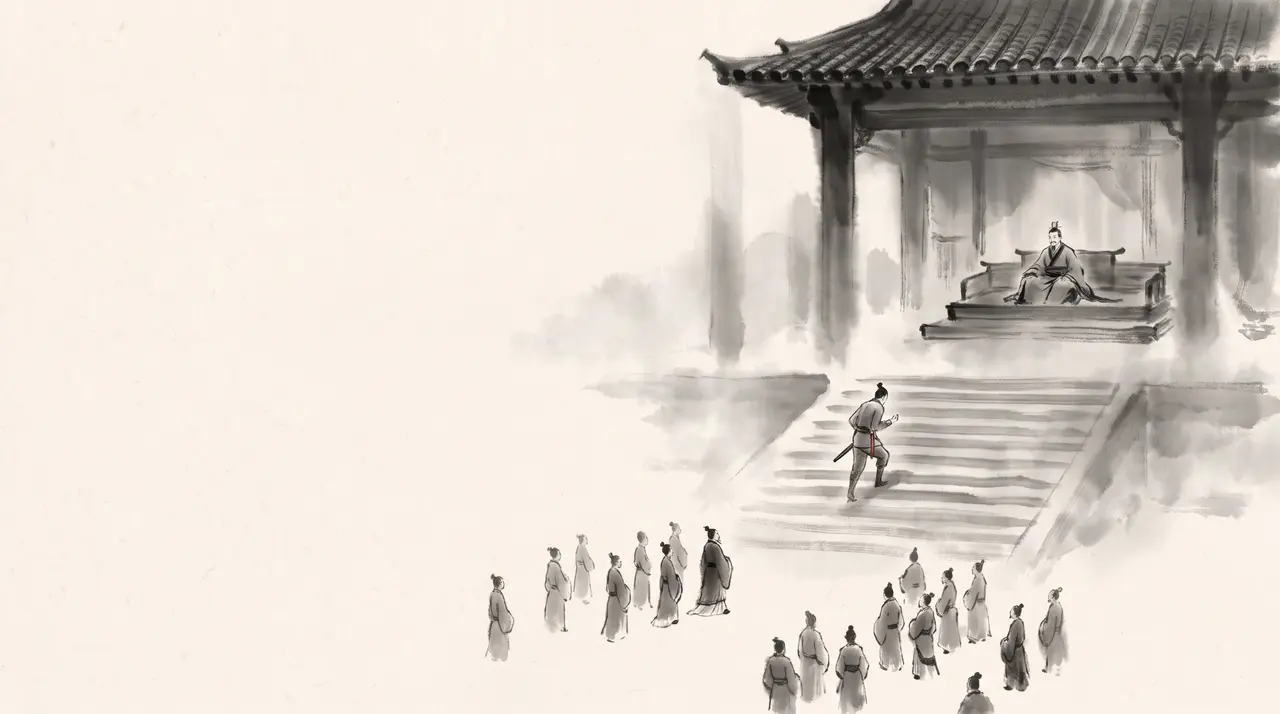
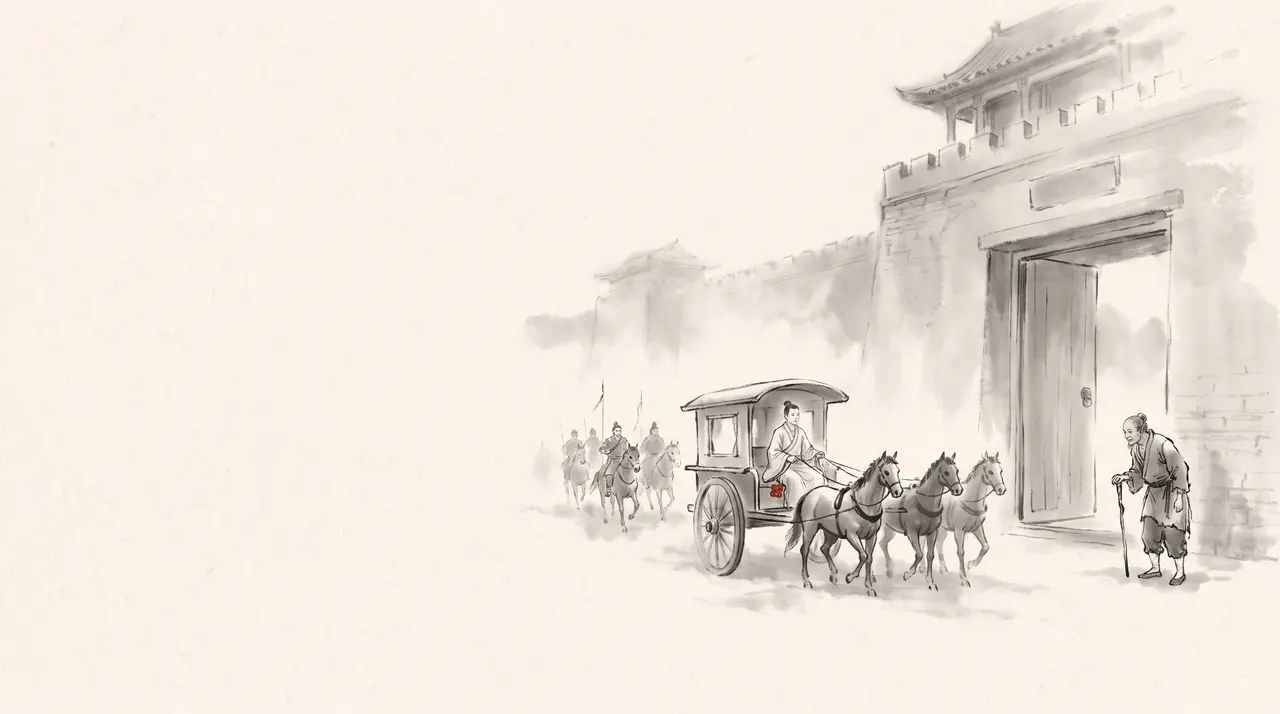
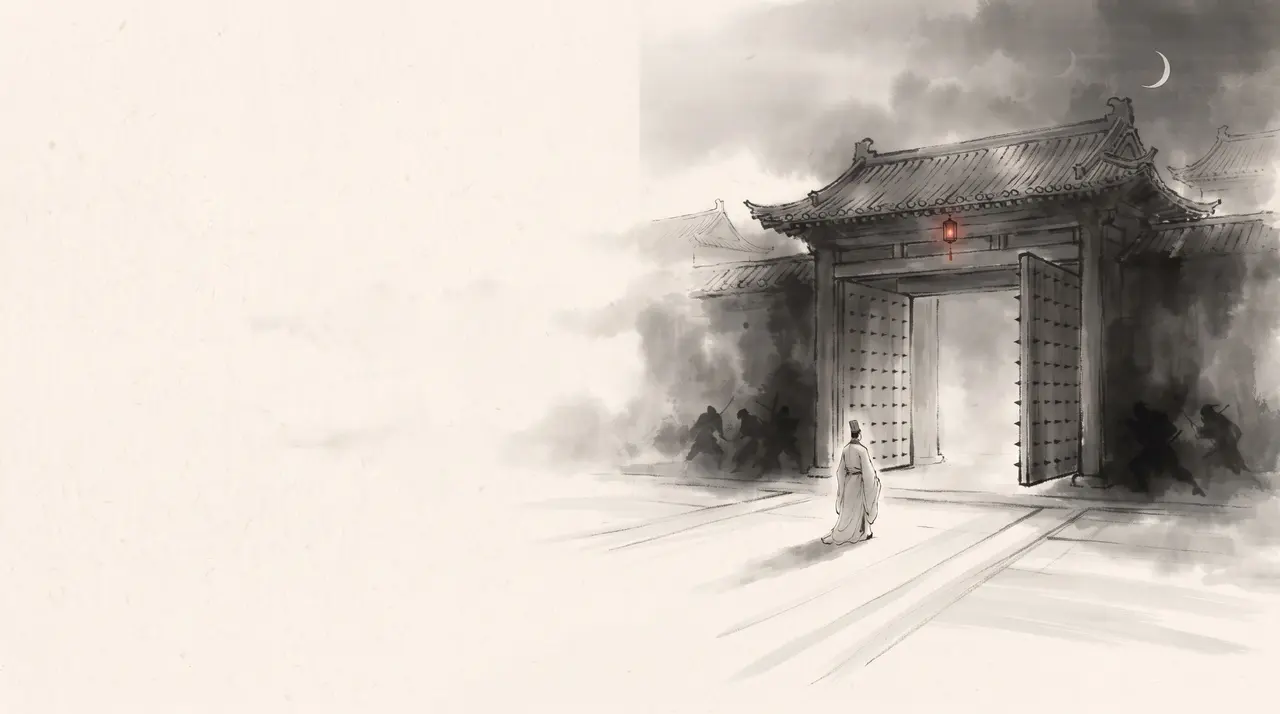
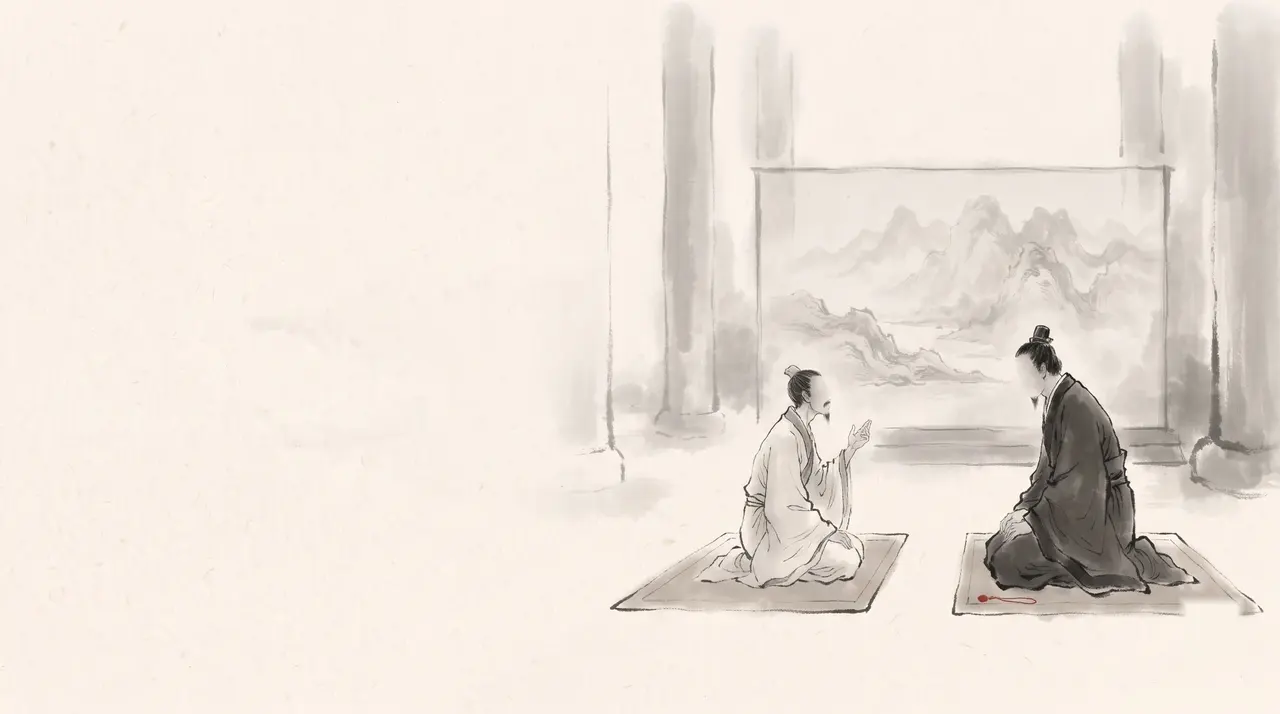
Illustration made with AI
Chapters to read
New to the Shiji? The chapters that each tell one famous scene are the easiest place to start.
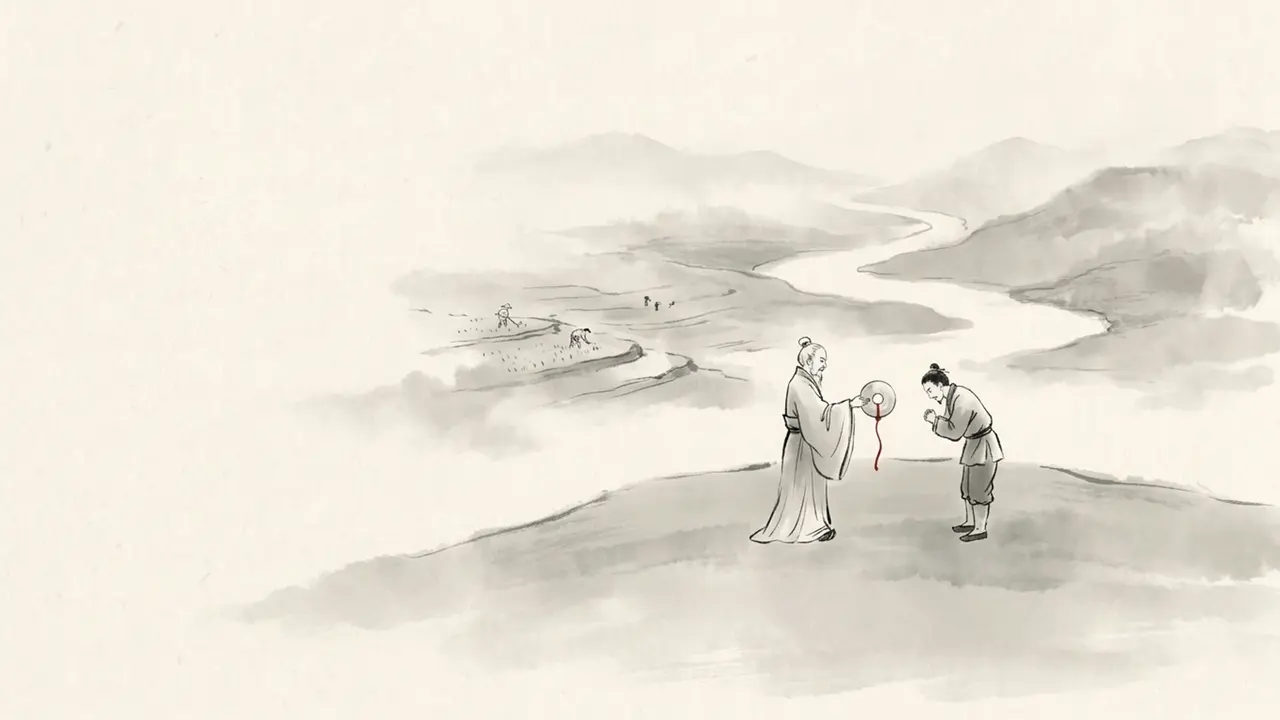 The Yellow Emperor, and Yao Yields the Throne to Shun 黃帝與堯舜The first of the 130 volumes of the Shiji. Of the five legendary emperors, this selection tells of the Yellow Emperor, and of Yao and Shun. In an age of disorder the Yellow Emperor trained his troops, brought the lords together, defeated the violent Chiyou at Zhuolu and became Son of Heaven. Yao, whose "humanity was like Heaven and wisdom like a god", grew old and chose as his heir not his own son Danzhu but Shun, a man from among the common people. Shun's blind father, his stepmother and his arrogant half-brother tried again and again to kill him. They set fire to a granary while he was on the roof and filled in a well while he was at the bottom, yet he escaped and went on serving them as a good son. Saying that he would not harm the whole realm to benefit one man, Yao gave the realm to Shun, and Shun in turn passed it not to his son but to Yu. Sima Qian ends by telling how he travelled the land himself to check the old traditions.
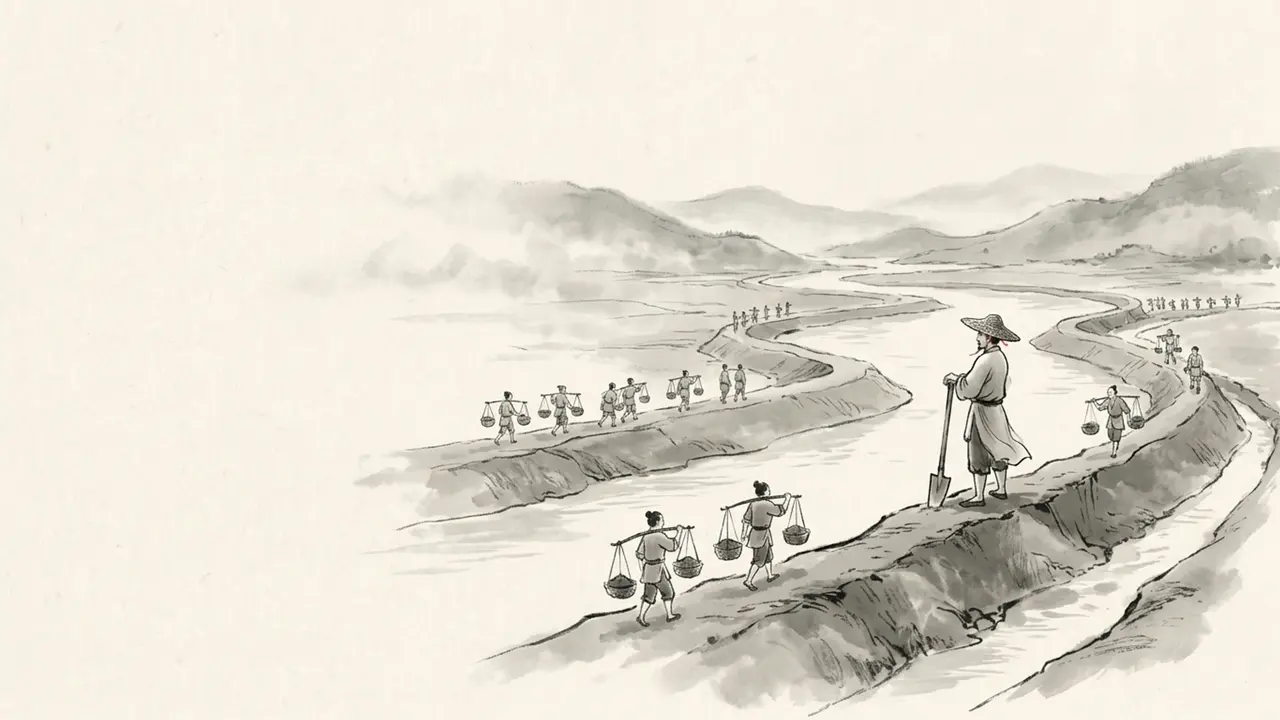 Yu Tames the Flood, and the Rise and Fall of Xia 禹治水與夏之興亡The story of Xia, said to be the first Chinese dynasty. In Yao's time a great flood rose to the sky and the people suffered. Gun, charged with taming it, failed after nine years and was put to death by Shun at Mount Yu. Shun gave the work to Gun's son Yu. Grieving for his father's failure, Yu spent thirteen years away from home, passing his own gate without going in. Travelling by cart, boat and sledge, he cut through mountains and opened channels for the rivers until the nine provinces were ordered. Shun made Yu his heir, and Yu founded the Xia dynasty. After Yu died, the lords chose his son Qi, and from then on the throne passed from father to son. Xia began to decline under Kong Jia, who was obsessed with keeping dragons, and the tyrant Jie was overthrown by Tang of Shang.
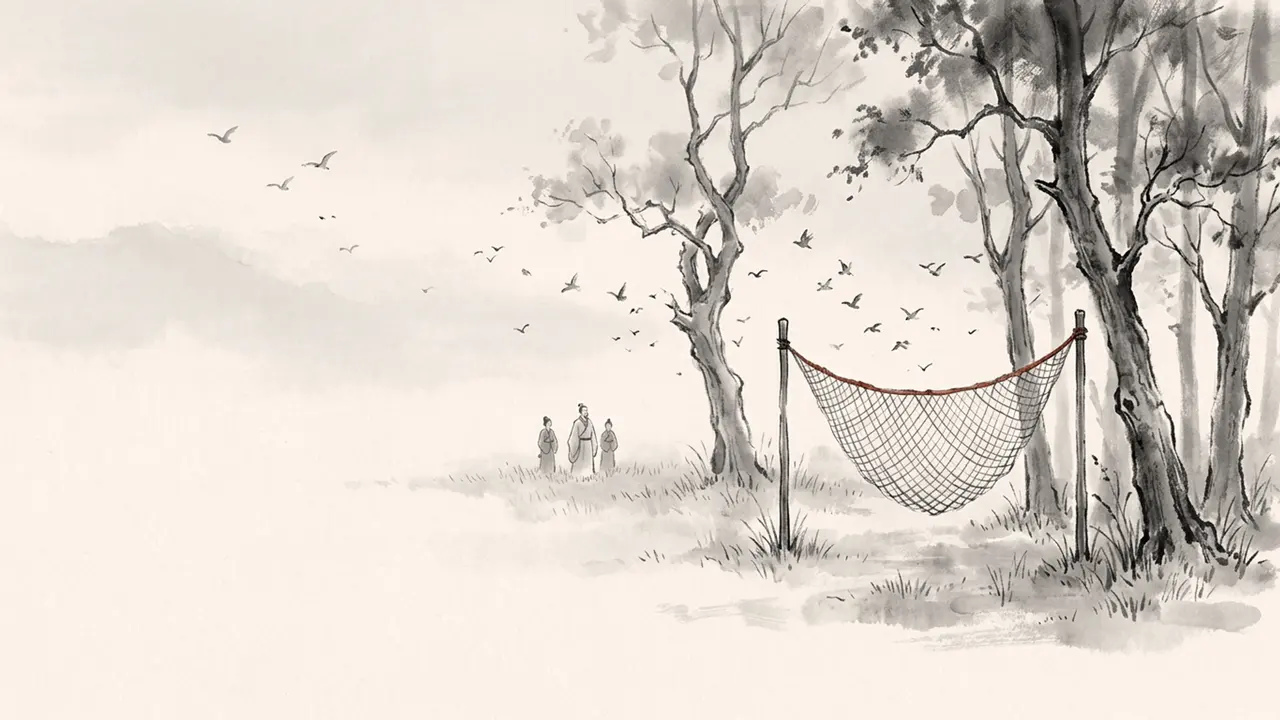 Tang's Net, and the Tyrant's Lake of Wine 成湯與帝紂The story of Yin, or Shang, the dynasty that followed Xia. Its ancestor Xie was born after his mother swallowed the egg of a swallow. Tang, its founder, saw a hunter spreading nets on all four sides and praying that every bird in the world would fly into them; he had three sides taken down, and the lords said that his virtue reached even to birds and beasts. Tang made Yi Yin, who had first come to him as a cook, his chief minister, overthrew the tyrant Jie and founded Yin. Later King Wu Ding restored the dynasty by finding the sage he had seen in a dream among convicts building earth walls. But the last king, Zhou, brilliant and strong, doted on Daji, held night-long revels beside a lake of wine and a forest of hanging meat, made people walk a red-hot bronze pillar, and cut open the heart of his uncle Bi Gan, who had dared to warn him. Defeated by King Wu of Zhou at Muye, he put on his jade robes and threw himself into the fire.
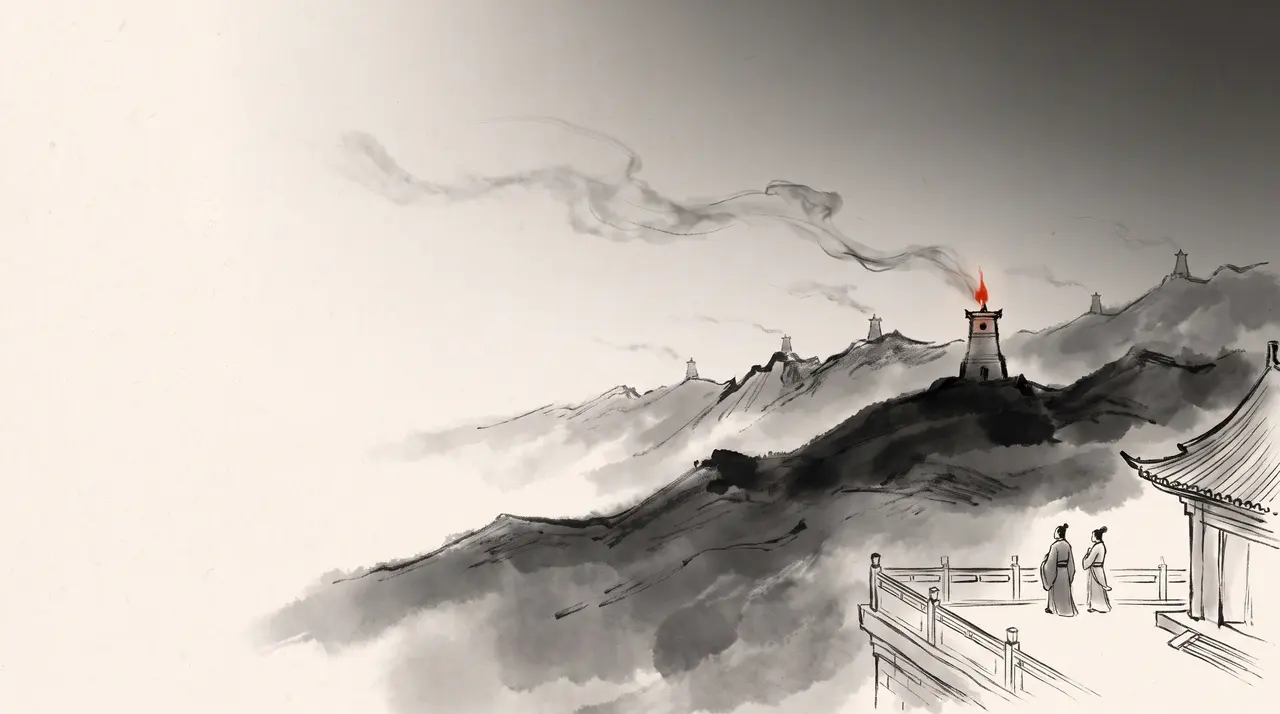 Silencing the People, and the Beacon Fires 厲王與幽王Two scenes of Zhou in decline. The tyrant King Li set a shaman to spy on his critics and put them to death, until people meeting in the road dared only exchange glances. The Duke of Shao warned him that stopping the mouths of the people is more dangerous than damming a river, but the king would not listen, and three years later the people drove him out; while he was gone, two ministers ruled jointly in what was called the Gonghe. His grandson, King You, doted on Bao Si, a beauty whose uncanny birth was said to go back to the spittle of dragons, and set aside his queen and heir for her. Bao Si never laughed, until she saw the lords come racing to a false beacon fire. To please her the king lit the beacons again and again, until no one believed them. When an enemy really came, no help arrived.
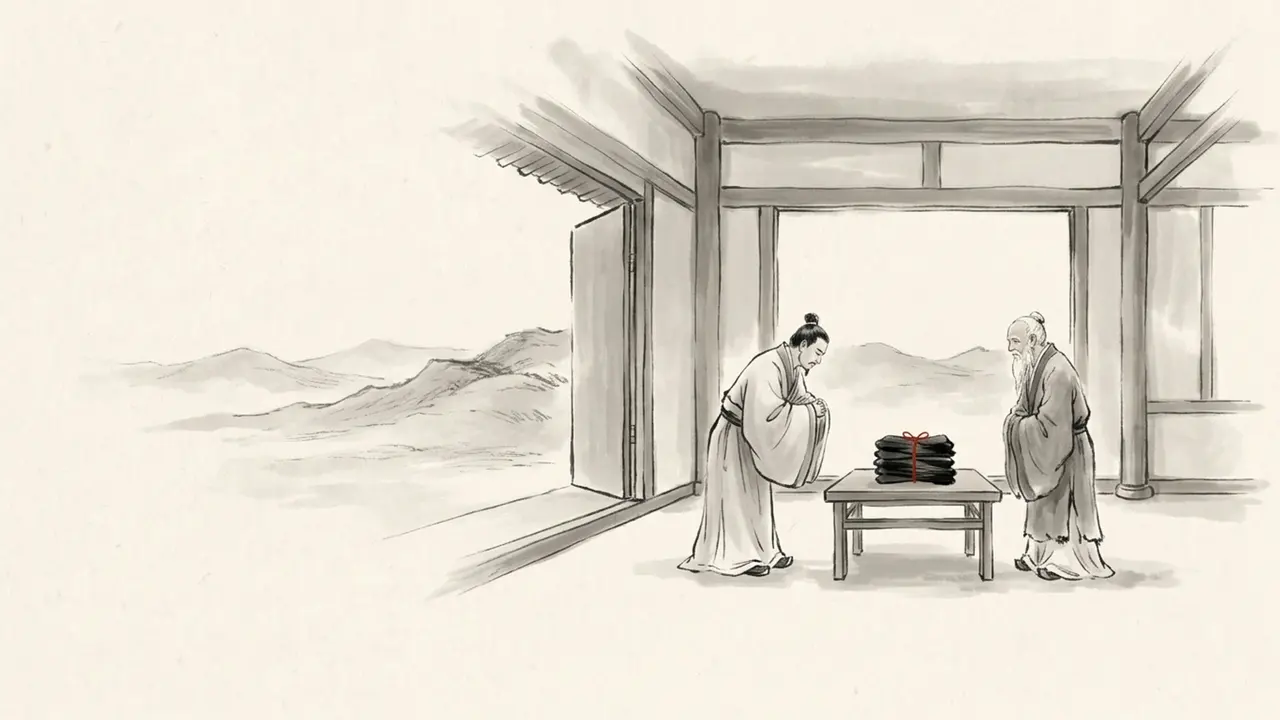 Duke Mu of Qin and the Five-Ramskin Minister 秦繆公與百里傒The story of Duke Mu, who made Qin, then a small state on the western edge of the Chinese world, a great power more than four hundred years before the First Emperor. He ransomed Baili Xi, an old minister of the fallen state of Yu, for five black ramskins, gave him the government and called him "the Grandee of the Five Ramskins"; on Baili Xi's advice he also brought in his friend Jian Shu. When Jin starved, he sent it grain in spite of old wrongs, yet Jin repaid him by attacking. In that battle his life was saved by three hundred villagers from the foot of Mount Qi, who had once caught and eaten his runaway horse and been given wine instead of punishment. Later, against the warnings of his two old ministers, he sent an army to surprise the state of Zheng, and Jin destroyed it in the pass of Xiao. Duke Mu met his returning generals in mourning clothes and blamed himself; when they took their revenge he buried the bones of the dead and swore an oath against his own mistake. He won over You Yu, a wise man of the Rong, and became overlord of the western tribes, but at his death one hundred and seventy-seven people were made to follow him into the grave, three of Qin's best ministers among them.
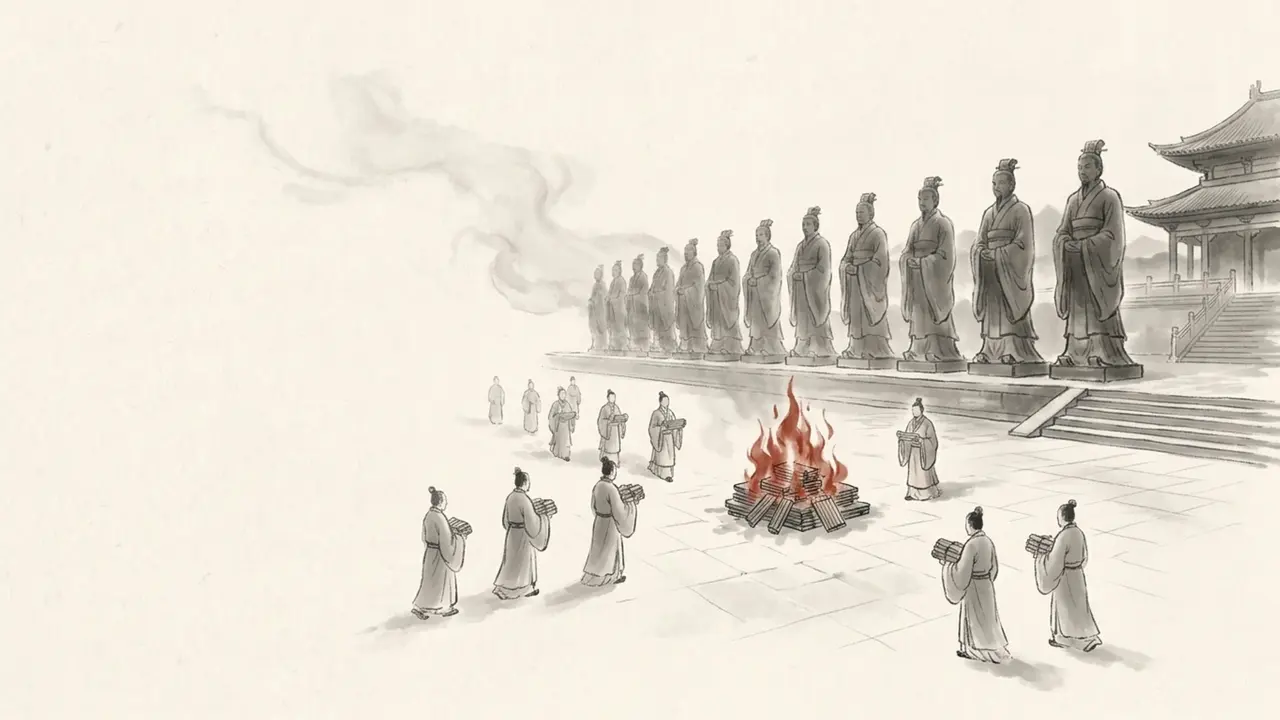 Uniting the Realm, Burning the Books 并天下與焚書The story of how King Zheng of Qin united the realm and became the First Emperor, up to the burning of the books and the burial of the scholars. Zheng was born in Handan, the capital of Zhao, and became king of Qin at thirteen. When he had destroyed all six rival states, he decided that the word "king" was too small for what he had done, and made a new title, "huangdi", from the names of the legendary sovereigns of old. He would be the First Emperor, and his heirs would be counted the Second, the Third and so on for ten thousand generations. Rejecting a plan to make his sons kings, he followed Li Si and divided the realm into thirty-six commanderies; he gathered up all the weapons and melted them into twelve giant bronze figures, and made weights, measures, axle widths and the written script the same everywhere. Xu Fu, a magician from Qi, set sail with thousands of boys and girls to find the immortals on three holy mountains in the sea. Later, to silence the scholars who praised the past to attack the present, Li Si had the histories and the classics burned; and when the magicians hunting for the elixir of life ran away, more than four hundred and sixty scholars in Xianyang were buried in pits. Fusu, the emperor's eldest son, protested and was sent away to Meng Tian on the northern frontier. Then a stone fell from the sky, carved with the words: "The First Emperor will die, and the land will be divided."
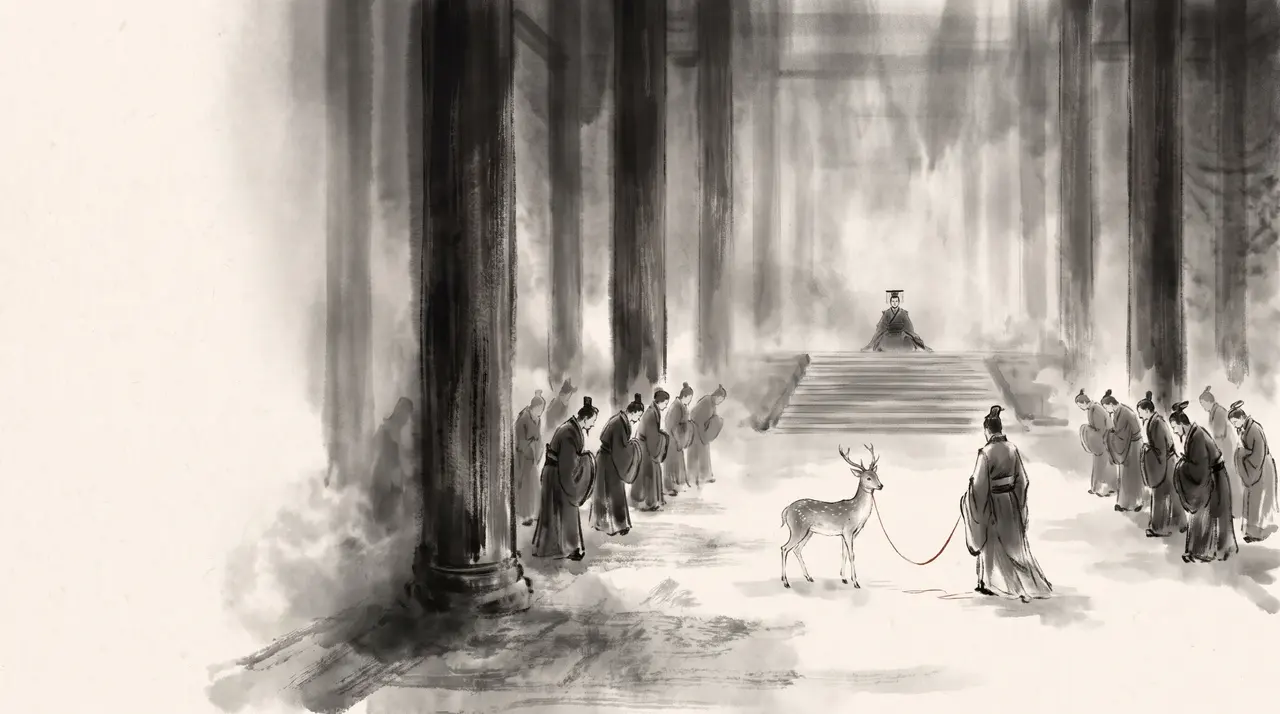 The Fall of Qin: Calling a Deer a Horse 指鹿為馬The First Emperor, who unified the realm, dies on a tour at Shaqiu. Zhao Gao, with Chancellor Li Si, forges the emperor's last command, drives the eldest son Fusu to suicide and puts the youngest son, Huhai, on the throne as the Second Emperor. Later Zhao Gao tests the court by calling a deer a horse, and drives the Second Emperor to his death. But Ziying, the new king he sets up, stabs him to death, and soon surrenders to the Lord of Pei. Qin falls.
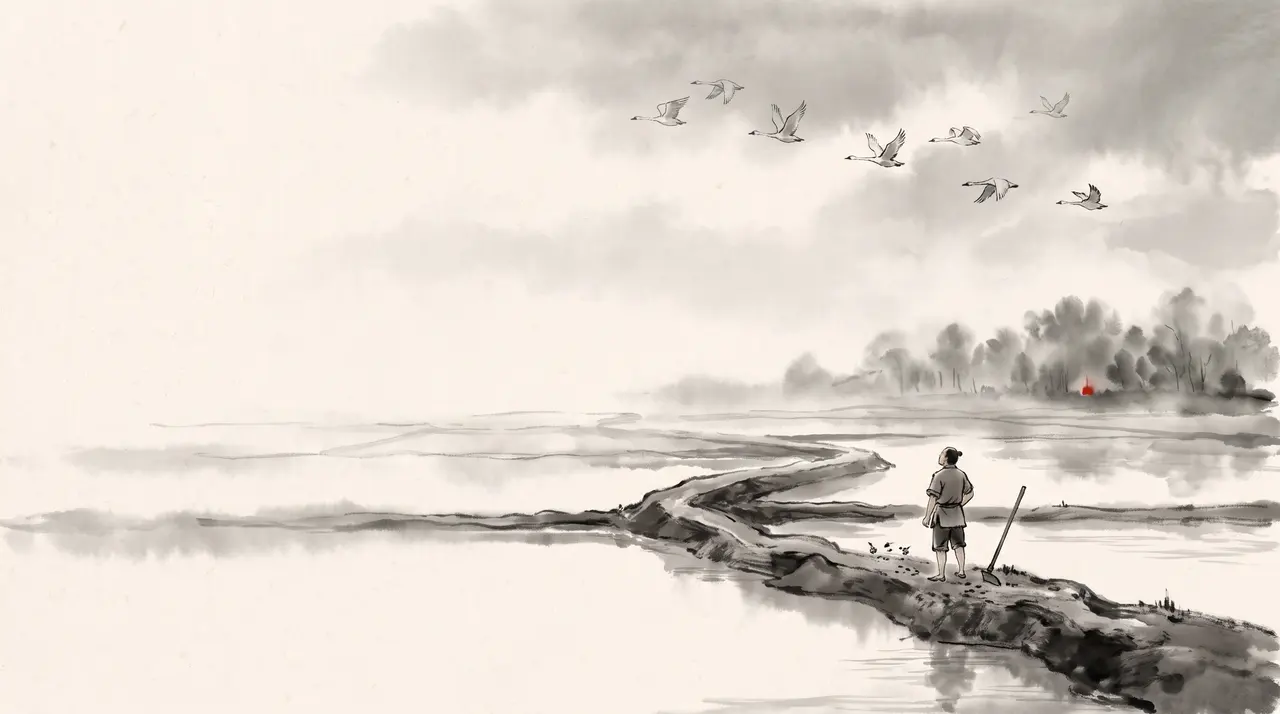 Chen Sheng's Uprising: The Ambition of the Swan 鴻鵠之志As a young hired plowman, Chen Sheng declares, "How can swallows and sparrows know the ambitions of the swan?" In the first year of the Second Emperor of Qin, on their way to guard the frontier, he and Wu Guang are held up by heavy rain; late for the deadline, they all face death. "Kings, lords, generals and ministers: are they a breed apart?" he asks, and the men rise with him. Often called the first great peasant revolt in history, it lasted only six months for Chen Sheng himself, but lit the fire that brought down Qin.
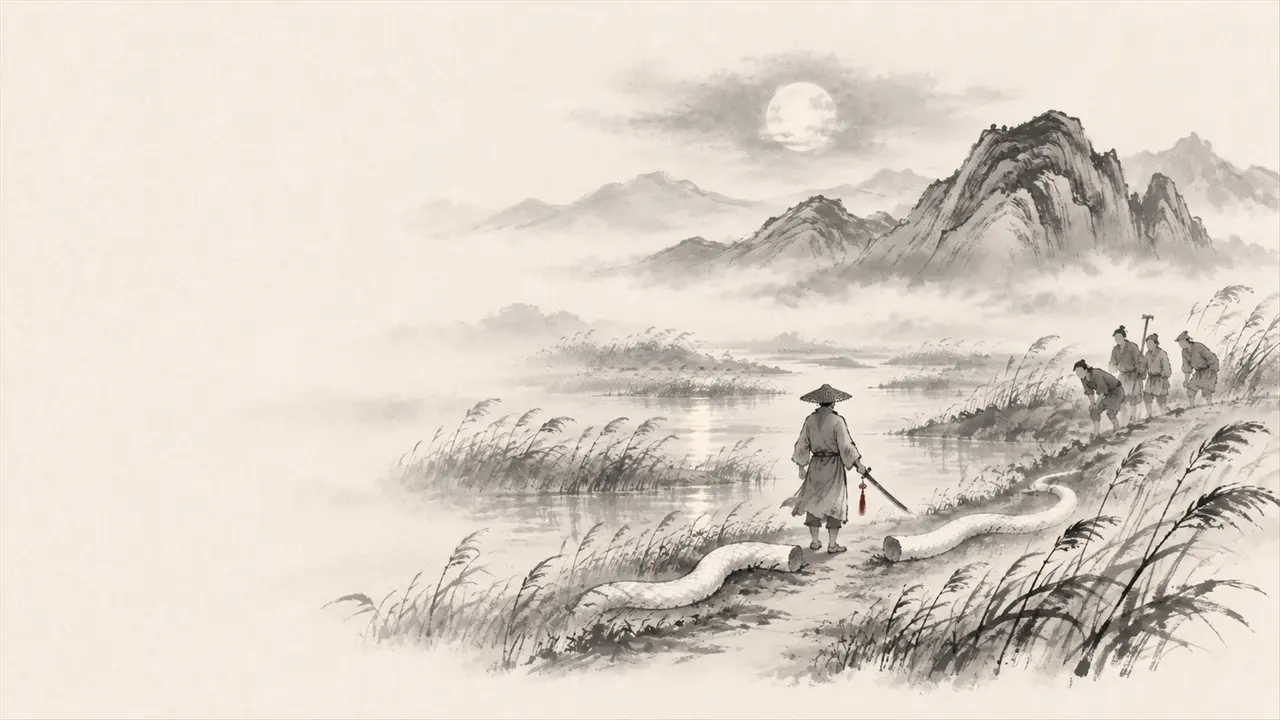 The Son of the Red Emperor 赤帝子斬之The early life of Liu Bang, Gaozu, founder of Han. Born, it was said, after his mother met a dragon by a marsh, Liu Ji was a station head who neglected the family's work and loved wine and women; when he lay drunk a dragon was seen above him, and the wine shops tore up his debts each year. Watching the First Emperor pass, he sighed, "This is what a real man should be!" He walked into a banquet with a card claiming a gift of ten thousand cash, though he had not a coin, and the face-reader Lord Lü was so taken with him that he gave him his daughter, the future Empress Lü. Having let a gang of labourers escape, he fled into the marshes; one night he cut down a great snake across his path, and an old woman wept that the son of the White Emperor had been slain by the son of the Red Emperor. When the First Emperor spoke of a Son of Heaven's aura in the southeast, he hid in the hills, but Empress Lü always found him by the cloud above him. When Chen Sheng rose, the elders of Pei killed their magistrate and welcomed Liu Ji, who after declining again and again became Lord of Pei under red banners.
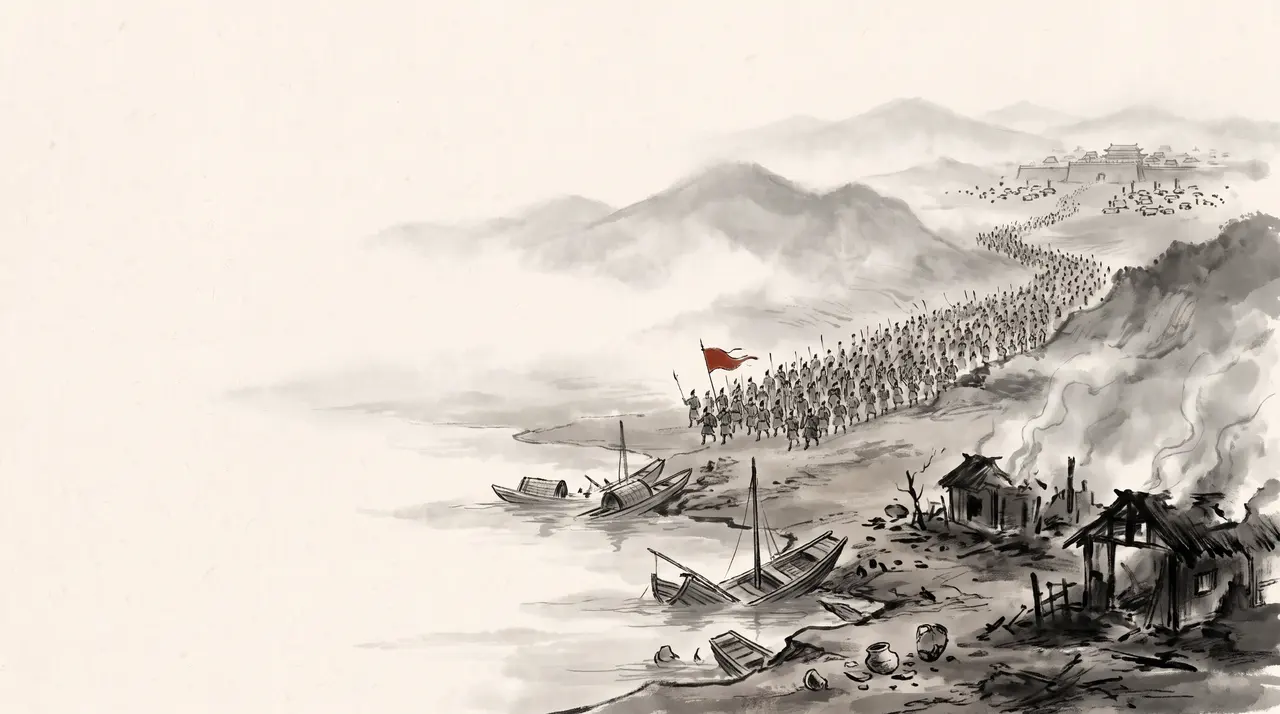 The Rise of Xiang Yu: The Battle of Julu 鉅鹿之戰The young Xiang Yu watches the First Emperor's procession and says, "That man could be replaced." After Chen Sheng's revolt he rises with his uncle Xiang Liang at Kuaiji. When Xiang Liang has been killed and the new supreme general, Song Yi, will not advance, Xiang Yu beheads him and takes command. At Julu he sinks the boats and smashes the cooking pots so that his men cannot retreat, and crushes the great Qin army; the generals of the other lords crawl to him on their knees. The rise of Xiang Yu, before the Feast at Hongmen.
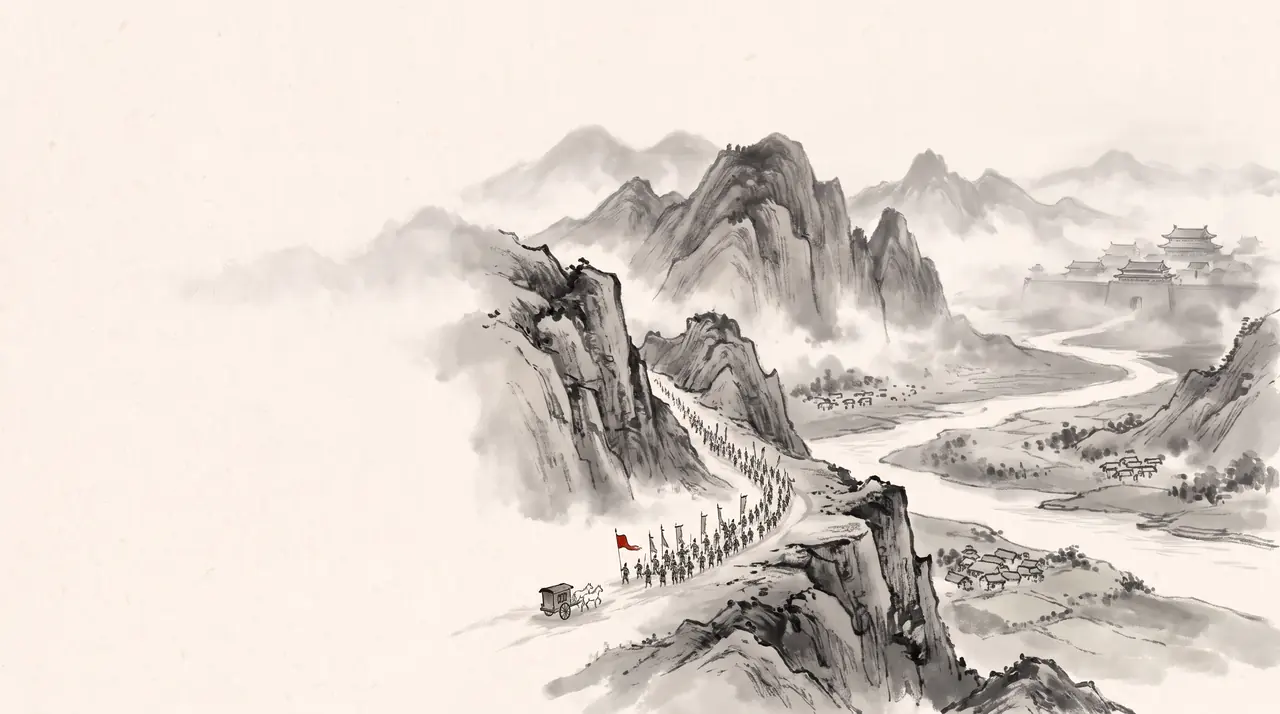 Into the Pass: A Pact of Three Laws 約法三章Marching on the Qin capital, the Lord of Pei (Liu Bang) breaks through the Wu Pass, enters the land within the passes and accepts the surrender of Ziying, King of Qin. He leaves the treasure untouched and promises "just three laws", winning the hearts of the people. This scene gave rise to the saying "a pact of three laws", and comes just before the Feast at Hongmen.
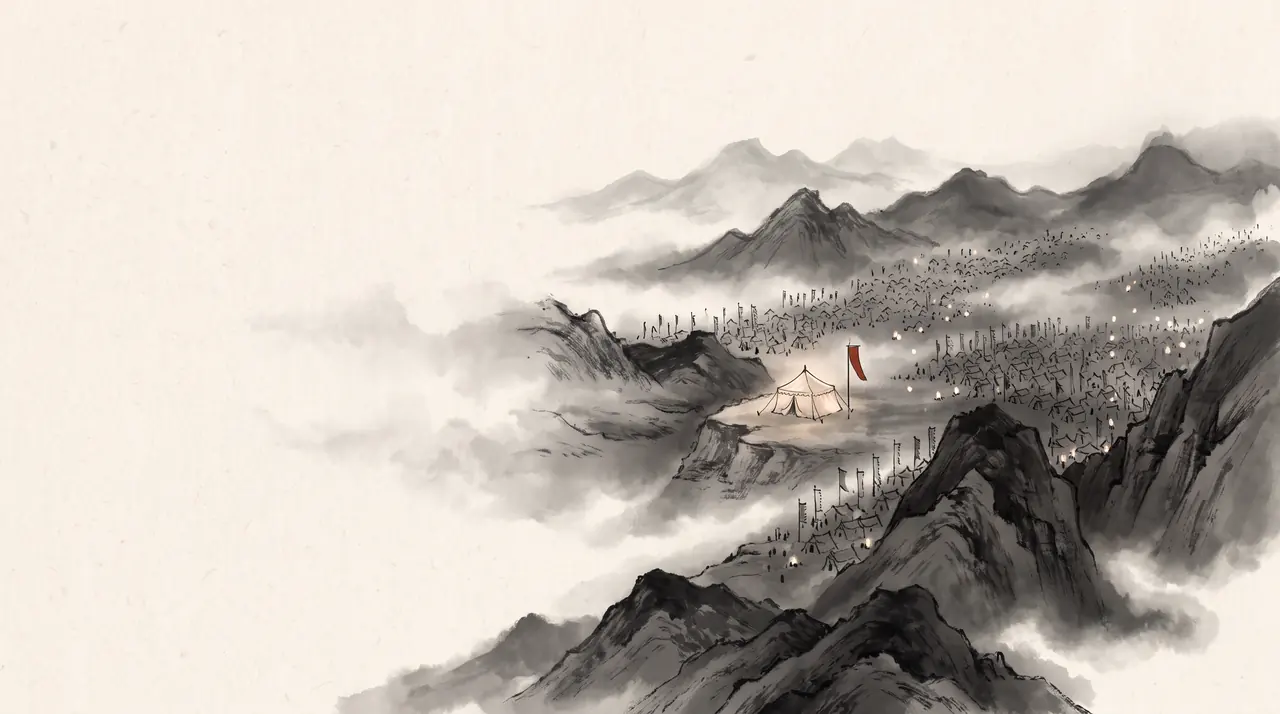 The Feast at Hongmen 鴻門之會After the fall of Qin, Xiang Yu plans to destroy the Lord of Pei (Liu Bang), who entered the Qin heartland first. At a feast at Hongmen come Fan Zeng's signals, Xiang Zhuang's sword dance and Fan Kuai's bursting in, and the Lord of Pei barely escapes. One of the most famous scenes in the Shiji, it foreshadows the war between Chu and Han.
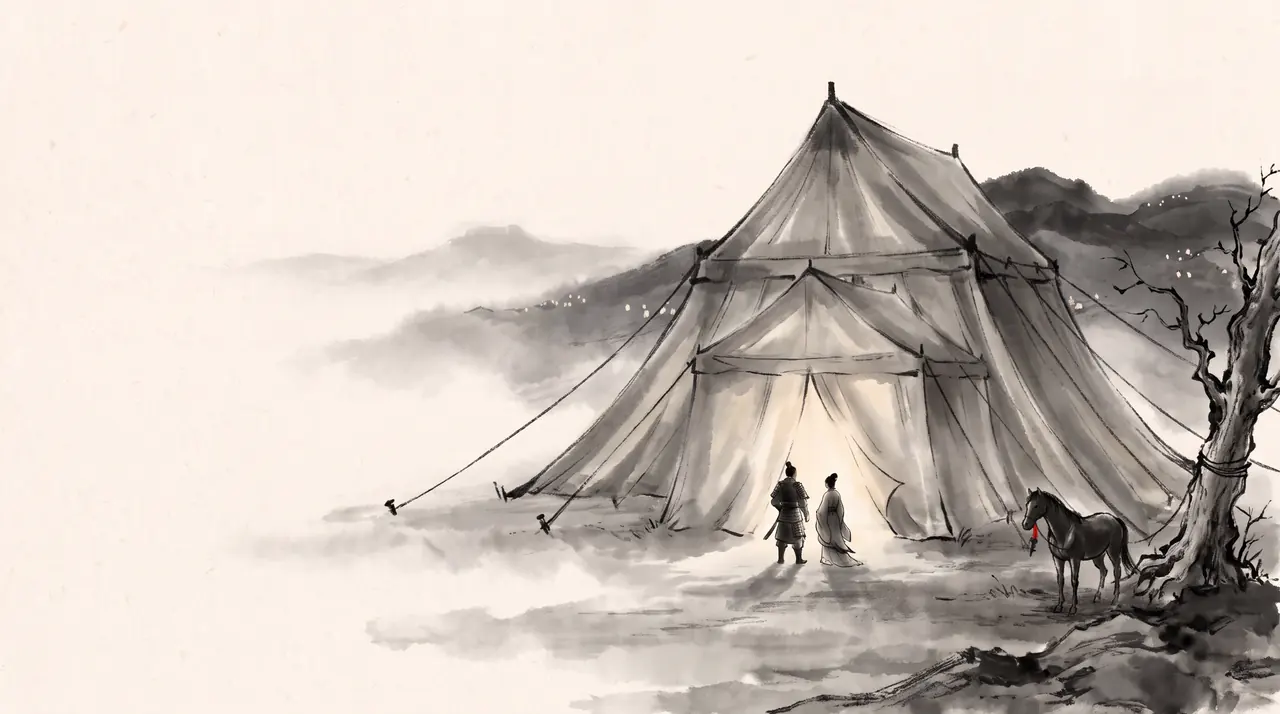 Songs of Chu on Every Side 垓下之圍Surrounded by the Han army at Gaixia, Xiang Yu hears the songs of Chu on every side and sings his farewell to Lady Yu and his horse Zhui. He breaks out with a handful of riders, fights a last battle at Dongcheng, refuses to cross the Wu River to safety, and takes his own life. The scene behind the saying "songs of Chu on every side".
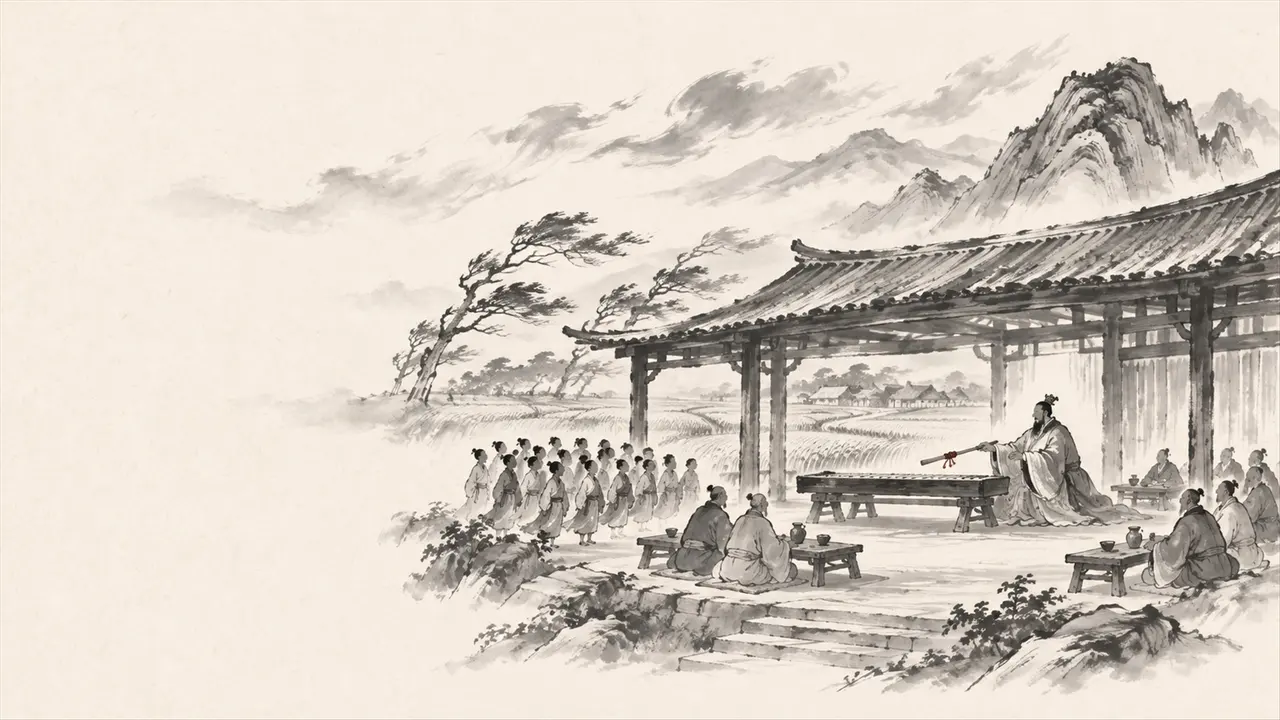 A Great Wind Rises 大風起兮雲飛揚Liu Bang, Gaozu, as emperor after the fall of Xiang Yu. Urged by the lords and ministers, he declined three times before taking the throne. At a banquet in Luoyang he asked why he had won the realm and Xiang Yu lost it, and answered himself: in strategy he was no match for Zhang Liang, in government and supply no match for Xiao He, in command of a million men no match for Han Xin, but he could use them. His father, told by a steward that the emperor's father is still his subject, met his son at the gate holding a broom. At the feast in Xiao He's splendid Weiyang Palace, Gaozu joked that his father had called him a good-for-nothing, and asked whether he or his hard-working brother had built the bigger estate. Coming home to Pei after defeating Qing Bu, he had the village boys sing "A great wind rises, and the clouds fly," and danced in tears. Wounded by a stray arrow, he refused treatment, and told Empress Lü that after Xiao He should come Cao Can, then Wang Ling and Chen Ping, and that Zhou Bo would keep the Liu clan safe.
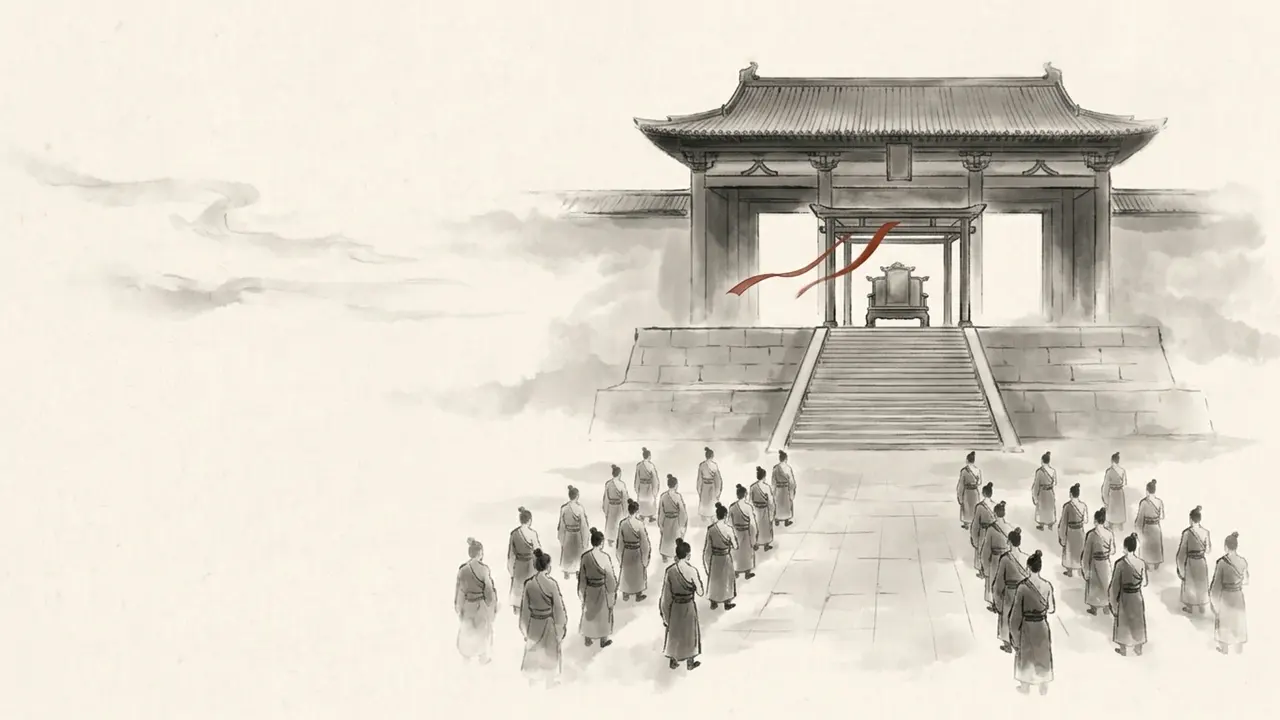 Empress Lü's Rule and the Fall of the Lü Clan 呂后稱制與諸呂之誅The story of Empress Lü, wife of Liu Bang, the first Han emperor. Gaozu wanted to replace his gentle heir, the future Emperor Hui, with Ruyi, the son of his favourite, Lady Qi, but his ministers stopped him. When Gaozu died, the empress poisoned Ruyi, had Lady Qi's hands and feet cut off and called her "the human swine". Emperor Hui, made to look at her, never recovered and died young. Holding power herself, the empress broke the oath that Gaozu and his ministers had sworn, that if anyone not of the Liu clan became a king the whole realm should attack him, and made king after king of her own Lü clan. Wang Ling objected and was pushed aside; Chen Ping and Zhou Bo went along and waited. When she died, Zhou Bo entered the Northern Army and called on those loyal to the Lü to bare their right shoulders and those loyal to the Liu to bare their left, and every man bared his left. Liu Zhang, the Marquis of Zhuxu, killed Lü Chan, and the Lü clan was destroyed. Sima Qian ends by noting that through all of this the common people were at last able to rest from war.
 The Emperor Who Ended Mutilation 除肉刑與遺詔The story of Emperor Wen, the fifth emperor of the Han. After the fall of the Lü clan, the ministers in the capital invited Liu Heng, King of Dai, to be emperor. Most of his advisers suspected a trap, but his commandant Song Chang argued that the Liu family's hold on the realm was secure, and the tortoise shell gave the lucky sign of the "great crossing", so Liu Heng went to Chang'an and, after much hesitation, took the throne. As emperor he abolished the laws that punished a criminal's whole family, and the crime of speaking ill of the emperor. When a Qi official, Chunyu Yi, was sentenced to mutilation, his youngest daughter Tiying wrote to offer herself as a government slave so that her father could make a fresh start; moved, Emperor Wen abolished mutilating punishments altogether. In twenty-three years he added nothing to his palaces and parks, and gave up building a terrace when he learned it would cost as much as ten ordinary families owned. On his deathbed he left a will forbidding long mourning and a costly funeral. Sima Qian asks: "Was this not humanity?"
 Too Fast, Too Soon 錯為之不以漸也The chronicle of Emperor Jing, son of Emperor Wen, who reigned from 157 to 141 BCE. Because the three sons of Emperor Wen's first queen all died young, the son of Empress Dowager Dou came to the throne. He halved the land tax and made a marriage peace with the Xiongnu. In his third year seven kingdoms led by Wu and Chu rose against Chao Cuo's policy of cutting their lands; the emperor had Chao Cuo executed and sent Dou Ying and Zhou Yafu to crush them. Later he deposed his heir, Lady Li's son, as King of Linjiang, and made Lady Wang's son Liu Che, the future Emperor Wu, crown prince; the King of Linjiang was summoned and died in the Commandant's office. The annals record comets, eclipses, earthquakes and hailstorms and the renaming of offices in a plain, dry voice. The Grand Historian judges that Chao Cuo moved too fast and so set off the revolt, and that the kingdoms were weakened and the realm made safe only later, by Zhufu Yan's plan.
 Still Hoping to Meet the Real Thing 冀遇其真The annals of Emperor Wu, "the present emperor" whom Sima Qian served. The original is thought to have been lost early, and the present text is almost entirely copied from the Emperor Wu section of the Treatise on the Feng and Shan Sacrifices — a record of the emperor's long search for gods and immortals. Newly enthroned, he planned the great sacrifices with Confucian scholars, but his grandmother Empress Dowager Dou, a follower of the Yellow Emperor and Laozi, stopped them. He worshipped "the Spirit Lady", the ghost of a woman of Changling; made a general of the magician Shaoweng, who showed him the dead Lady Wang by night, then executed him when a forged message found in an ox's belly gave him away; enshrined in his palace a spirit said to have cured him at Ganquan; welcomed a bronze cauldron dug from the earth at Fenyin as a treasure; and prayed to the Great One with a "spirit banner" before the war on Southern Yue. His magicians sought the immortals of Penglai and reported giant footprints by the sea and an old man leading a dog, but nothing ever came of it — and still the emperor kept them, hoping to meet the real thing.
 Cocks Crowing, Dogs Barking, Smoke for Ten Thousand Li 鳴鷄吠狗,煙火萬里A treatise that ties together pitch, war and the calendar. The six pitch standards are the root of every measure a king lays down, above all in war, where "watching the enemy one knows good or ill, hearing the sound one foretells victory". Sima Qian argues that arms are what sages use to punish the violent and calm a disordered age — as a household cannot do without the rod, the realm cannot do without punitive war — yet Jie, Zhou and the Second Emperor of Qin fell because their appetite for force knew no end. Gaozu rested his armies once the realm was won, and Emperor Wen refused his generals' call to conquer Southern Yue and Chaoxian, calling arms "instruments of ill omen" and making peace even with the Xiongnu; so the people rested on their farms, grain fell to a dozen cash, and "cocks crowed and dogs barked, and kitchen smoke stretched ten thousand li". The second half links the eight winds with the twenty-eight lunar lodges and the twelve pitches with the twelve branches, and shows how to reckon the notes from the length of the Yellow Bell pipe.
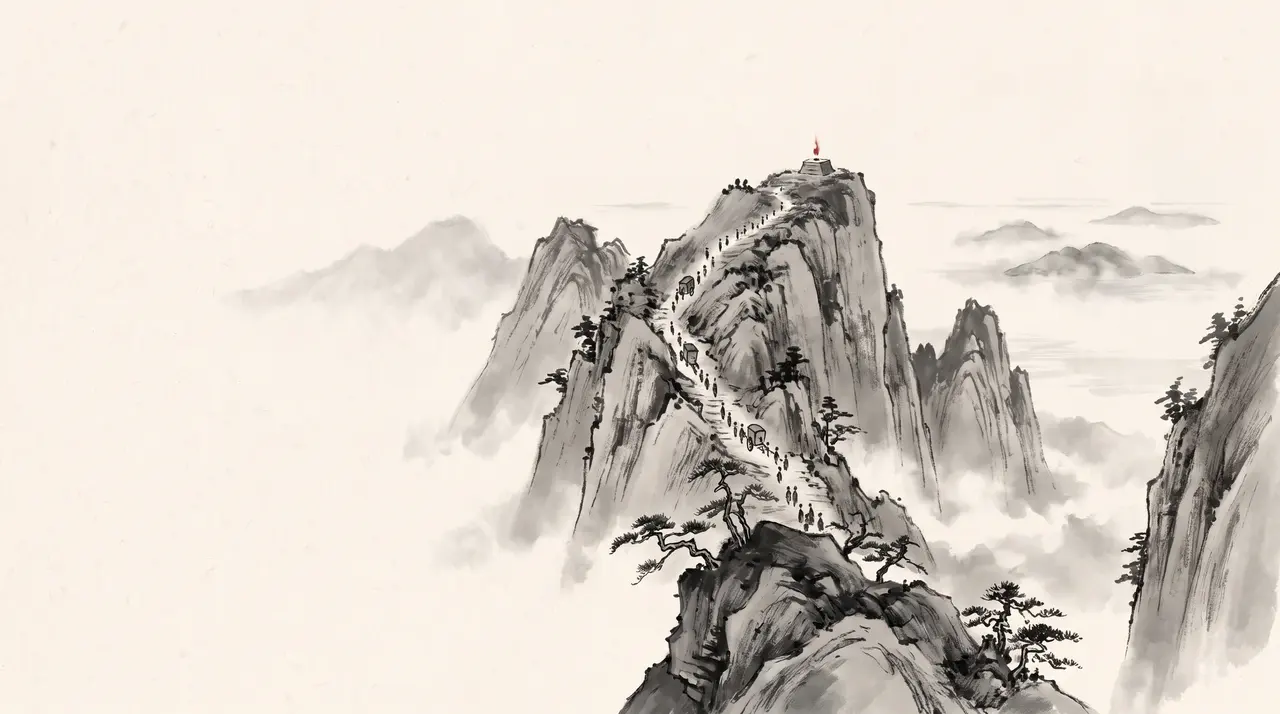 Emperors in Search of the Immortals 求僊與封禪The "Treatises" are the part of the Shiji that deals with institutions, one subject at a time, and this one is about the feng and shan: the supreme rites in which a ruler who had received Heaven's mandate worshipped Heaven on the summit of Mount Tai and Earth on a small hill at its foot. The First Emperor climbed Mount Tai to perform them, but was caught by a storm on the way, to the glee of the Confucian scholars he had shut out. He kept sending ships after the elixir of the three holy mountains in the sea, Penglai, Fangzhang and Yingzhou, until he died on one of his journeys. A century later Emperor Wu of Han also sought the immortals. The magician Li Shaojun, said to be hundreds of years old, told him that by worshipping the god of the stove he could turn cinnabar into gold and meet the immortals. Luan Da boasted that he could make gold and find the drug of immortality, and was given four generals' seals. When Gongsun Qing told how the Yellow Emperor had cast a cauldron and ridden a dragon up to Heaven, the emperor said that if he could be like the Yellow Emperor he would leave his wives and children as easily as kicking off his slippers. Then Emperor Wu performed the feng and shan on Mount Tai. Sima Qian, who went with him, wrote down what the magicians did, outside and in.
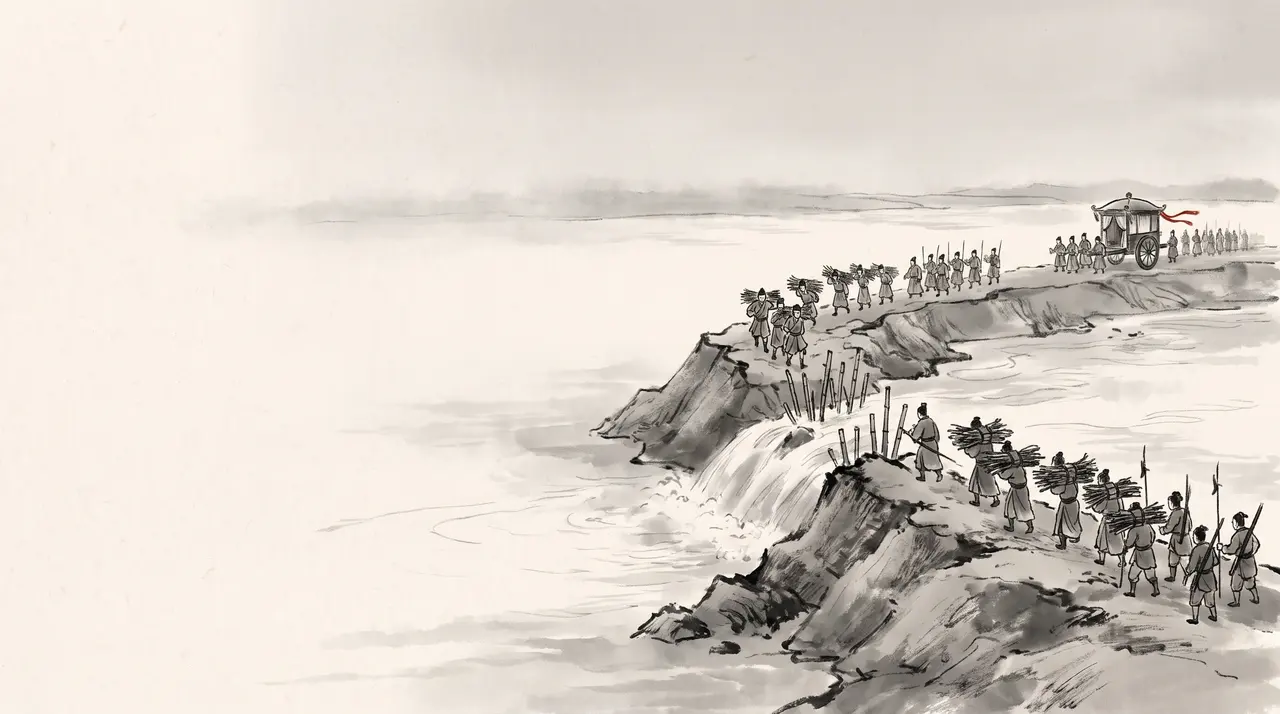 The Breach at Huzi 瓠子決兮將柰何A treatise on the history of flood control and canal building. Yu spent thirteen years taming the floods, passing his own gate without going in; he cut channels along the mountains and split the Yellow River into nine streams to lead it to the sea. Later the Hong Canal linked Song, Zheng, Chen and Cai, and Li Bing, governor of Shu, divided the Min River to water the plain of Chengdu. In the Warring States period the state of Han sent the water engineer Zheng Guo to wear Qin out with a huge canal; when the plot was found out, Zheng Guo said the canal would still profit Qin, and the finished Zheng Guo Canal made the land within the pass so rich that Qin went on to unite the realm. Under Emperor Wu the Yellow River broke its banks at Huzi, and the chancellor Tian Fen, to protect his own estates, said it was Heaven's doing and had the repairs stopped. More than twenty years later the emperor came to the breach himself, sank a white horse and a jade disc in the river, had every official from the generals down carry brushwood to close it, and sang: "The river has burst at Huzi; what can we do?" Sima Qian carried brushwood too, and says the song moved him to write this treatise.
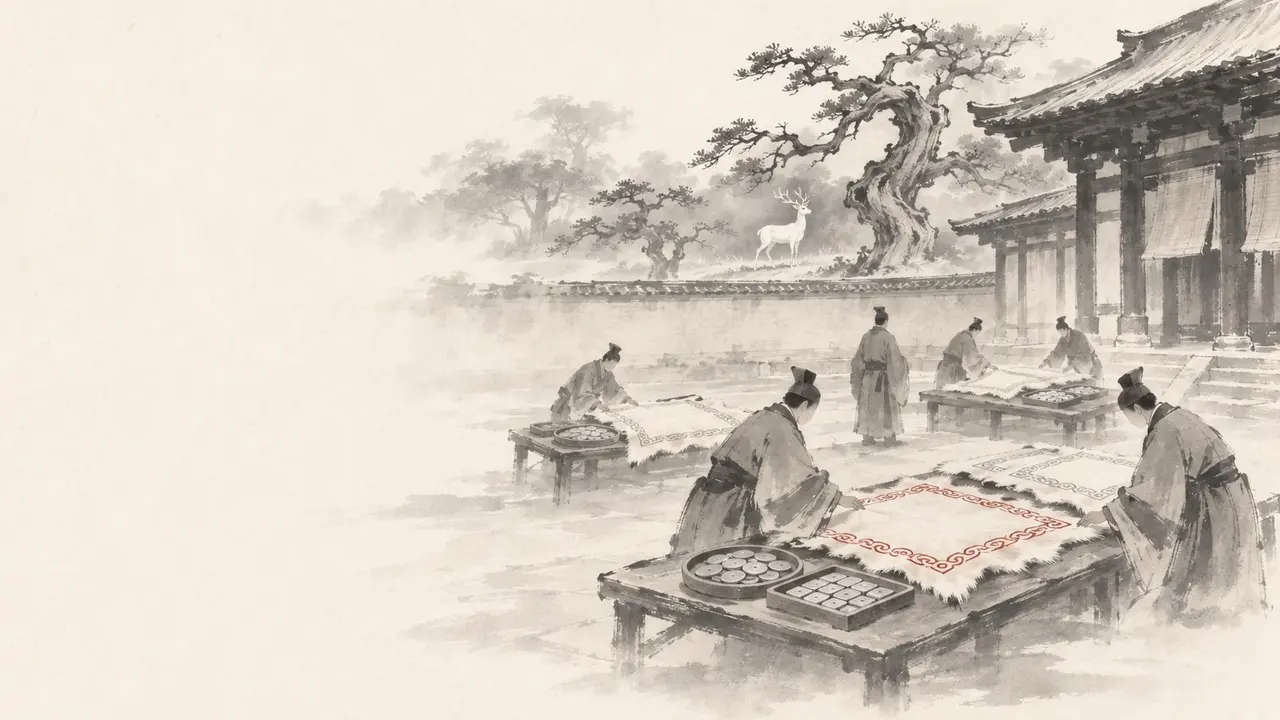 Boil Sang Hongyang, and Heaven Will Send Rain 亨弘羊,天乃雨A history of money and public finance from the founding of Han to the reign of Emperor Wu. In the first years after Qin, Han was so poor that even the Son of Heaven could not find four horses of one colour. Seventy years later, when Emperor Wu came to the throne, the strings of the coins in the capital rotted and the grain in the granaries overflowed and spoiled. But "when things reach their height they decline." Wars with the Xiongnu and great works emptied the treasury, and the emperor created hide money of white deerskin worth four hundred thousand cash, "white metal" coins marked with a dragon, a horse and a tortoise, and a tax on merchants' wealth. The herdsman Bu Shi offered half his property to the state and was later raised to office; the minister Yan Yi, who questioned the hide money, was put to death for merely curling his lip, "criticising in his belly." Informing on hidden wealth ruined most merchants of middling means, and Sang Hongyang set up state buying and selling to even out prices: "equal distribution" and the "balanced standard." In a year of drought Bu Shi said: "Boil Sang Hongyang, and Heaven will send rain."
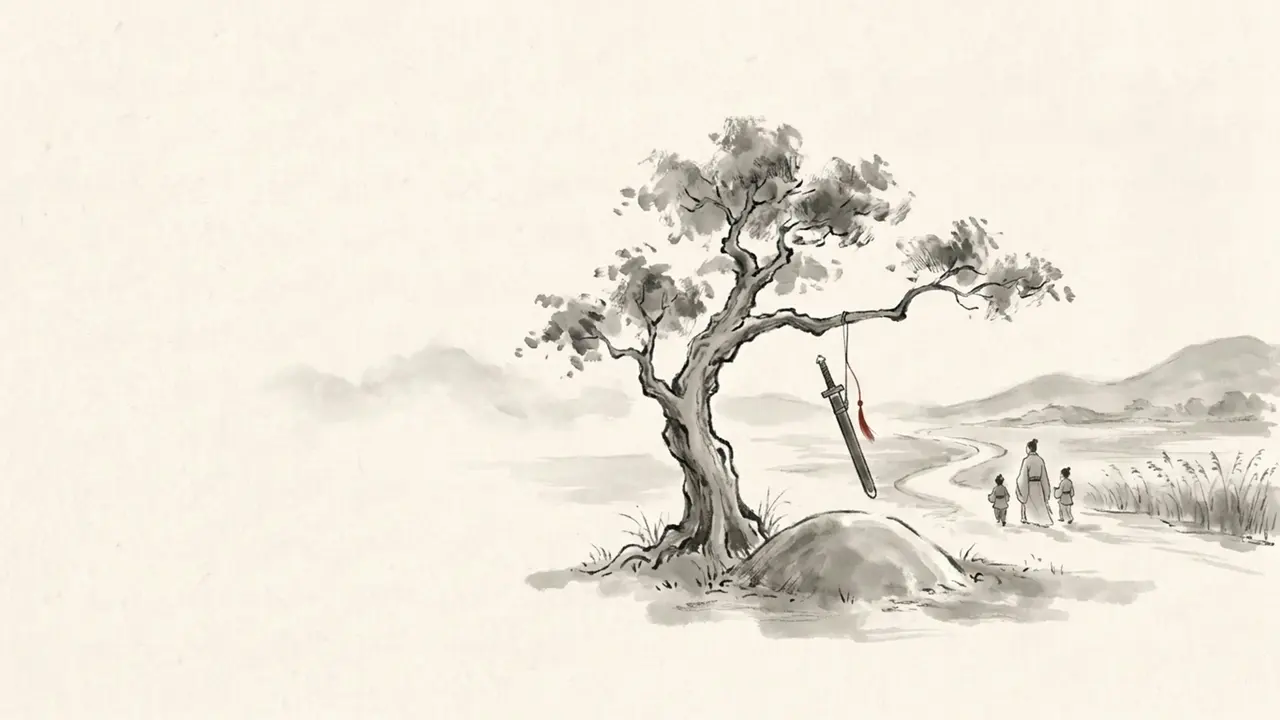 Taibo Gives Up a Kingdom, and Jizha's Sword 太伯與季札The beginnings of the southern state of Wu, and the story of the sage Jizha who was born there. Taibo, eldest son of King Tai of Zhou, learned that his father wished the succession to go to his youngest brother, Jili, and to Jili's son Chang, the future King Wen. So he went south with his brother Zhongyong to the lands of the Jing barbarians, tattooed his body and cut his hair to show that he could not be king. Moved by his righteousness, the people there made him their ruler, and the state of Wu was born. Centuries later Jizha, youngest son of King Shoumeng of Wu, refused the throne each time his brothers tried to give it to him, and went off to farm. On his embassies to other states he foresaw where their politics were heading. On his way home he found that the ruler of Xu, who had admired his sword, was dead, and he hung the sword on a tree by the grave, saying: "In my heart I had already given it to him." When his nephew Prince Guang had King Liao murdered by the assassin Zhuan Zhu and seized the throne, Jizha accepted him: "If the sacrifices go on and the people have a ruler, he is my lord." The chapter ends with Fuchai, Guang's son, defeated by Yue, regretting that he had not listened to Wu Zixu, and taking his own life.
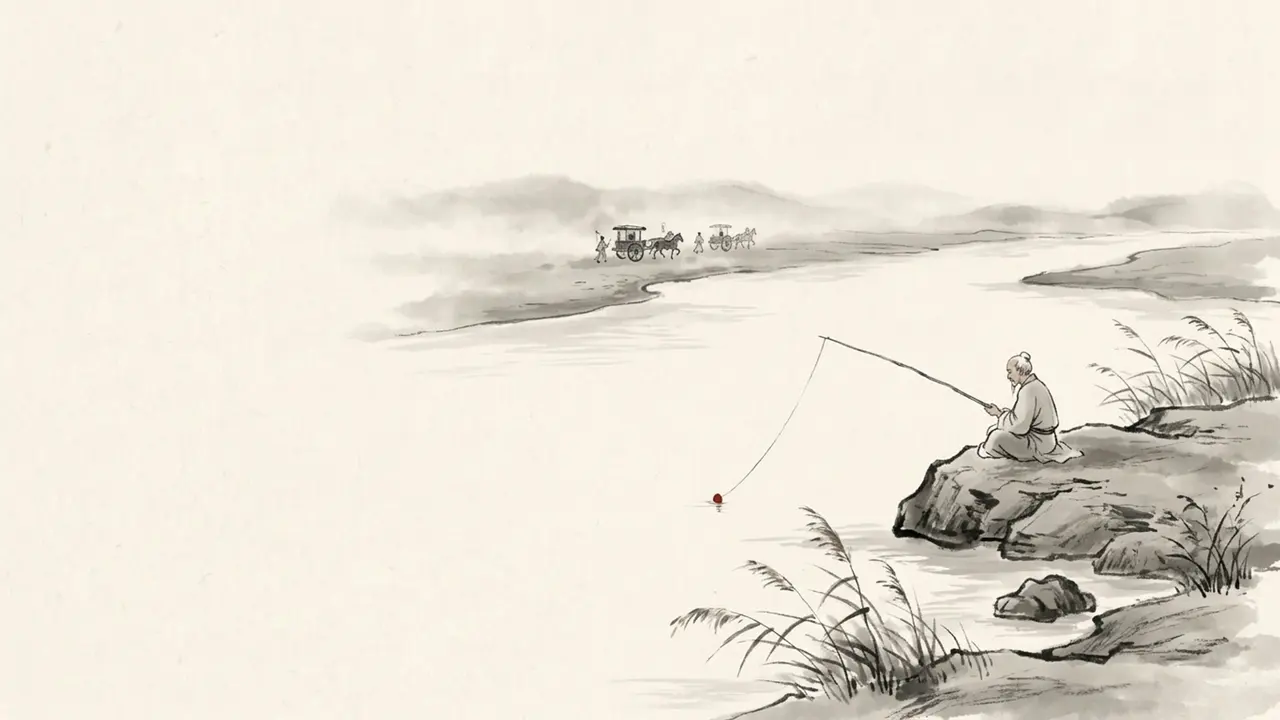 Taigong Wang, and the Death of Duke Huan 太公望與齊桓公The story of Lü Shang, known as Taigong Wang, who helped found the Zhou dynasty, and of the state of Qi that he founded. Old and poor, Lü Shang was fishing beside the Wei River when the Earl of the West, the future King Wen, came by on a hunt. Delighted, the earl said that his grandfather, the Grand Duke, had long hoped for such a man, called him "the one the Grand Duke hoped for", and made him his teacher. With strategy and ingenious plans Lü Shang helped King Wen and King Wu, and at Muye they destroyed the tyrant Zhou of Yin. Enfeoffed at Yingqiu in Qi, he hurried there through the night on the word of an innkeeper, and arrived before the people of Lai could seize the land. Centuries later Duke Huan of Qi, with Guan Zhong's help, became the first hegemon of the realm. But he ignored Guan Zhong's dying advice and kept close Yi Ya, who had cooked his own son for him, and Shu Diao, who had castrated himself to serve him. When the duke died, five of his sons fought over the throne, and his body lay unburied for sixty-seven days until the worms crawled out under the door.
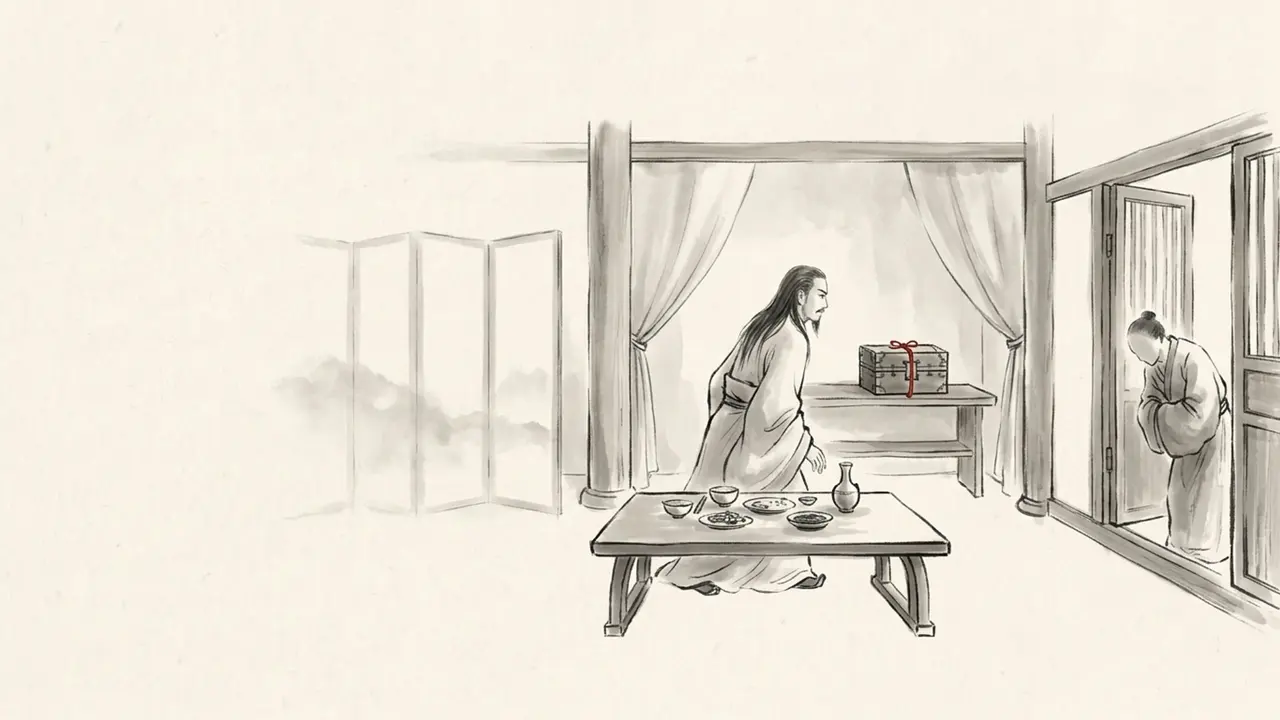 The Duke of Zhou, Who Spat Out His Food 周公吐哺The story of the Duke of Zhou, younger brother of King Wu and the sage whom Confucius revered above all others. When King Wu, conqueror of the Shang, fell gravely ill, the duke prayed to their three royal ancestors to take him instead of his brother, and locked the prayer in a casket bound with metal bands. When King Wu died and the boy King Cheng came to the throne, the duke, fearing that the realm would break away, ruled in his place. His brothers spread the rumour that he meant to harm the young king, and rose in revolt together with the people of the old Shang, but the duke put the rising down. To his son Boqin, who went to rule the fief of Lu, he said: "Three times in one hair-washing I have to clutch my wet hair and get up, and three times in one meal I have to spit out my food, to receive the men who come to see me; and still I fear I may lose the worthiest men in the realm." When King Cheng grew up, the duke handed the government back and returned to the rank of a subject. After his death a storm flattened the crops, and King Cheng opened the casket, found the duke's prayer and wept. Last of all, the duke compares Boqin, who took three years to change the customs of Lu, with the Grand Duke of Qi, who settled his state in five months, and sighs that one day Lu will serve Qi.
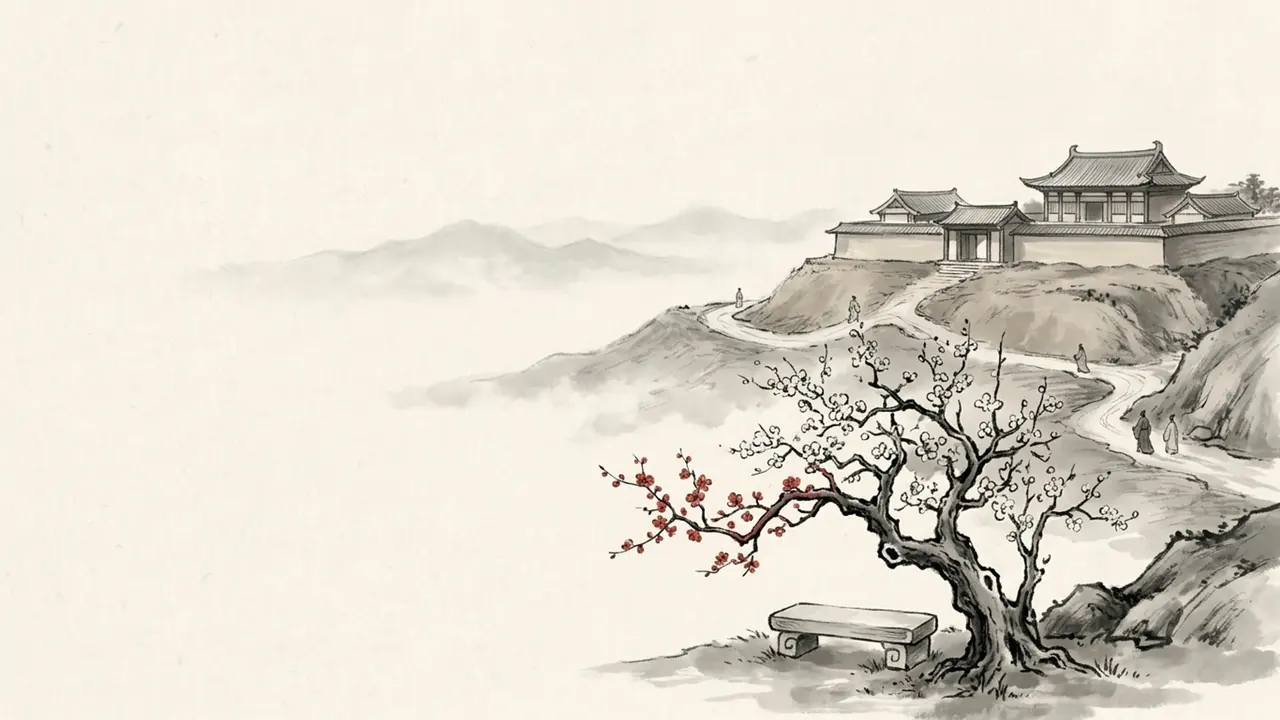 "Begin with Me, Guo Wei" 先從隗始The story of Yan, the northernmost of the states. Its founder, Shi the Duke of Shao, a kinsman of King Wu of Zhou, used to judge cases beneath a pear tree, and the people loved him so much that after his death they would not cut the tree down, and sang of it in the poem "The Sweet Pear Tree". Seven hundred years later, King Kuai of Yan was talked into copying the legendary Yao, who had offered his throne to the hermit Xu You, and handed his whole kingdom to his chancellor Zizhi. The state fell into chaos, Qi invaded, and Kuai died. The new ruler, King Zhao, humbled himself to attract men of talent and asked Guo Wei for advice. "If you truly want to bring in good men," Guo Wei said, "begin with me. Then men far better than I am will not think a thousand li too far to come." King Zhao built Guo Wei a palace and served him as his teacher, and Yue Yi, Zou Yan and Ju Xin came from all over the realm, until at last Yan crushed Qi and took its revenge. Later, though, Yan threw an army against Zhao on Li Fu's reckless advice and was routed by Lian Po, and in the end Crown Prince Dan sent Jing Ke to stab the king of Qin, failed, and Yan was destroyed. Sima Qian concludes that a state as weak as Yan lasted eight or nine hundred years only thanks to the virtue of the Duke of Shao.
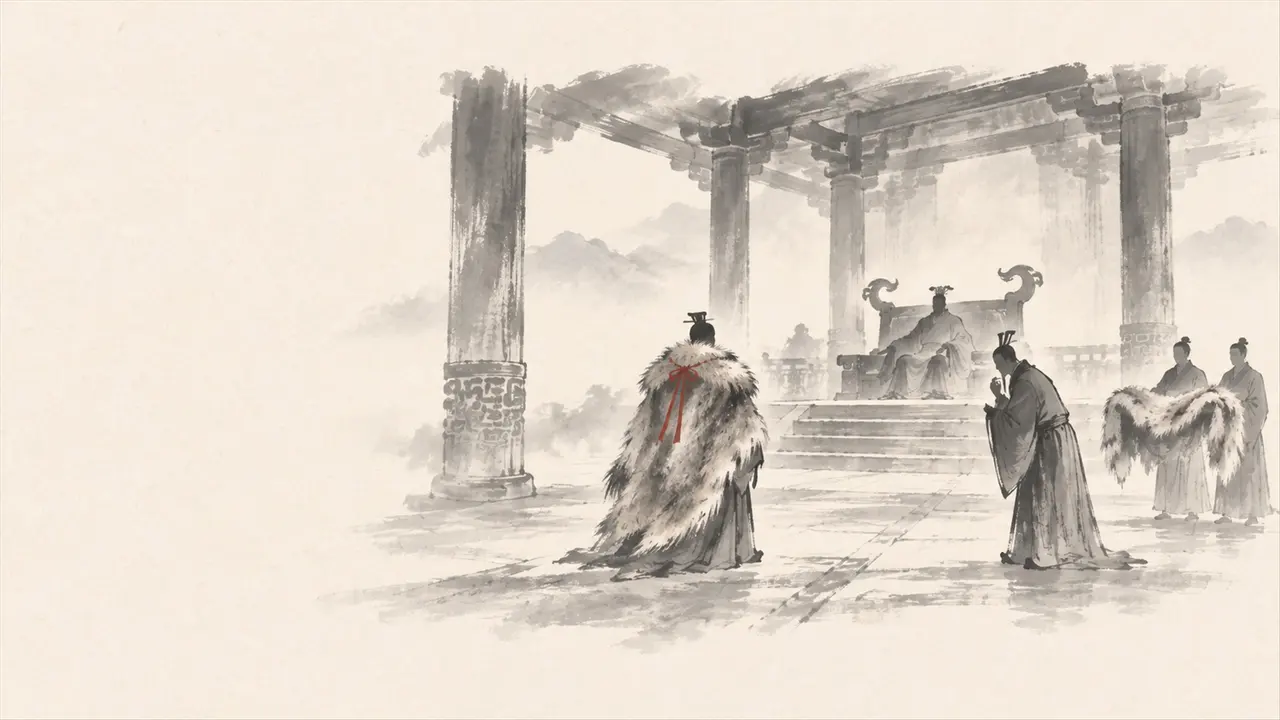 Where Virtue Was Never Built 唯德之不建The houses of Guan Shu Xian and Cai Shu Du, sons of King Wen of Zhou and brothers of King Wu, and of their brother Cao Shu Zhenduo. King Wen had ten sons by one mother, and when King Wu overthrew Shang the brothers were given fiefs. After King Wu died and the Duke of Zhou ruled for the boy King Cheng, Guan Shu and Cai Shu suspected the duke and rebelled with Wugeng, son of the last Shang king; Guan Shu was killed and Cai Shu banished, but his son Hu mended his ways and the duke restored Cai. Later rulers of Cai saw their marquis carried off by Chu over the Lady of Xi, were attacked by Qi over a quarrel in a pleasure boat, killed a father who had stolen a son's bride, and lost a marquis to three years' detention over a fur coat; at last Chu destroyed Cai. In the House of Cao, Duke Gong, who had insulted the exiled Chong'er, was captured by him as Duke Wen of Jin, and a later ruler who raised up a man named in an ominous dream lost the state to Song.
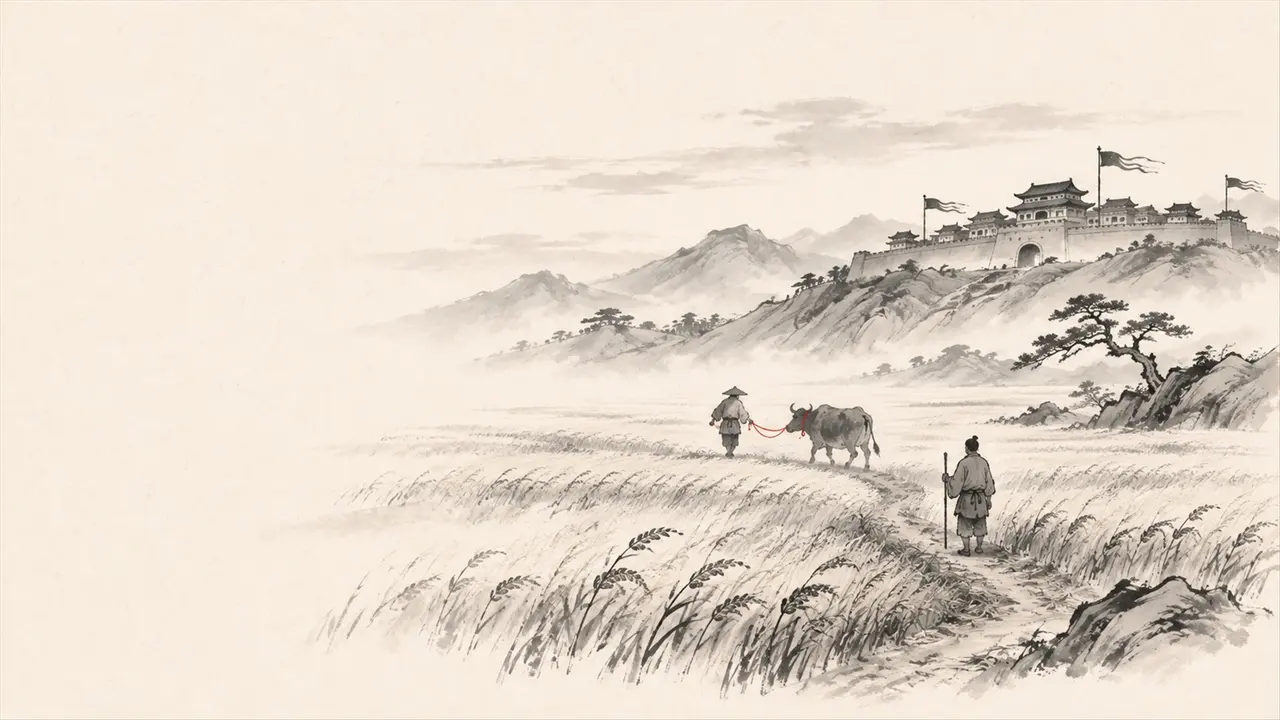 A Kingdom Weighed Against One Word 輕千乘之國而重一言The histories of Chen, descended from the sage-king Shun, and Qi, descended from Yu. King Wu of Zhou enfeoffed Gui Man, a descendant of Shun, at Chen. When Wan, son of Duke Li of Chen, was born, a Zhou historian divined with the Book of Changes that his descendants would hold a state abroad, in place of the Jiang clan; Wan later fled Chen's strife to Qi, and his descendants, the Tian clan, would one day take Qi. Duke Ling of Chen shared the lady Xia Ji with two of his grandees and was shot dead by her son Xia Zhengshu. King Zhuang of Chu punished Zhengshu and made Chen a county of Chu, but when Shen Shushi told him that seizing a man's ox because it trampled a field was going too far, he gave Chen back; Confucius praised him for weighing a kingdom of a thousand chariots lighter than a single word. Chen was finally destroyed by King Hui of Chu, and little Qi thirty-four years later. The Grand Historian praises the virtue of Shun, which lived on in the Tian clan's Qi.
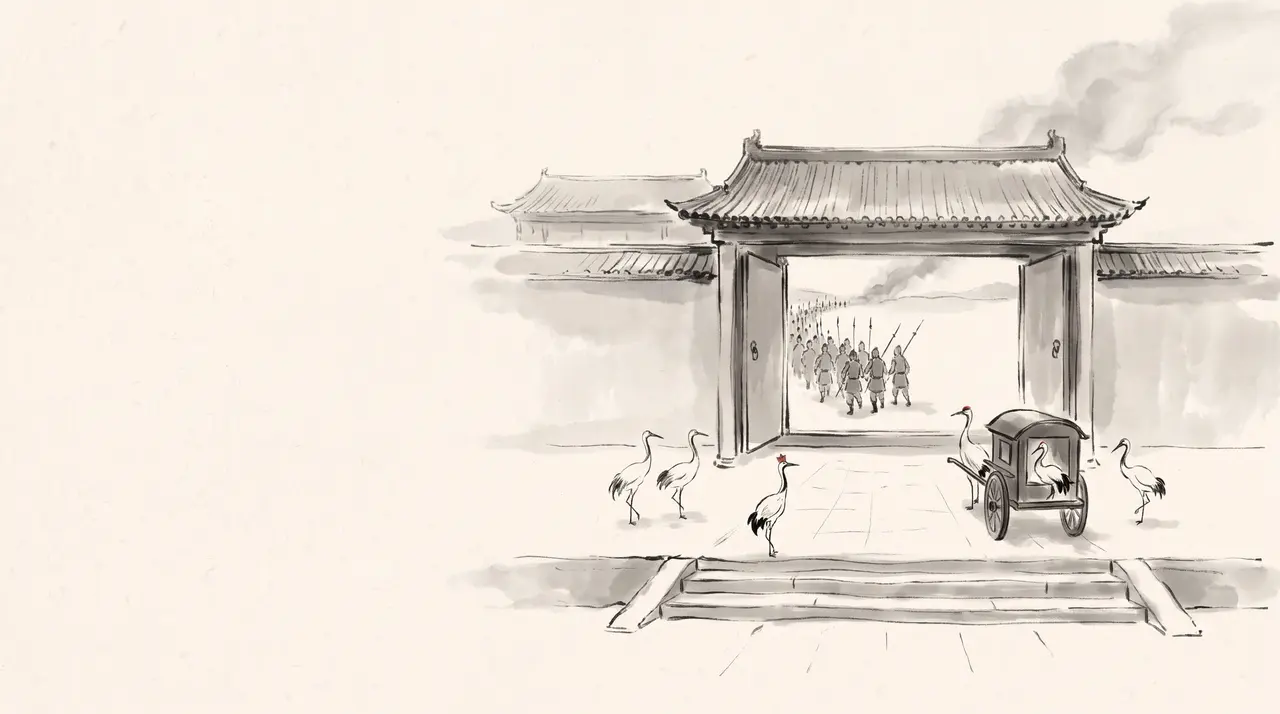 The Duke Who Loved Cranes 君好鶴,鶴可令擊翟The story of Wei, founded by Kangshu, a younger brother of King Wu of Zhou. After the fall of Shang, Kangshu was made ruler of Wei over the people of Shang, and the Duke of Zhou warned him that King Zhou had fallen through drink. In the Spring and Autumn period, Zhouxu killed his brother Duke Huan and seized the throne, but the old minister Shi Que, though his own son had joined Zhouxu, had him destroyed by a trick. Duke Xuan took the bride meant for his heir Ji for himself, and later, with the sons she bore him, turned against Ji and arranged for him to be killed. Ji's half-brother Shou went ahead in his place and was killed first; Ji then came forward, saying, "It is I you were meant to kill," and died too. Duke Yi loved cranes so much that he gave them carriages of rank, and when the Di attacked, his soldiers said, "Let the cranes fight," and Wei nearly perished. Duke Wen rebuilt it with the help of Duke Huan of Qi, lowering taxes and sharing the people's hardships. Later, in the struggle between father and son for the throne, Confucius's disciple Zilu was cut down, and died retying his cap strings, saying, "A gentleman does not take off his cap even in death."
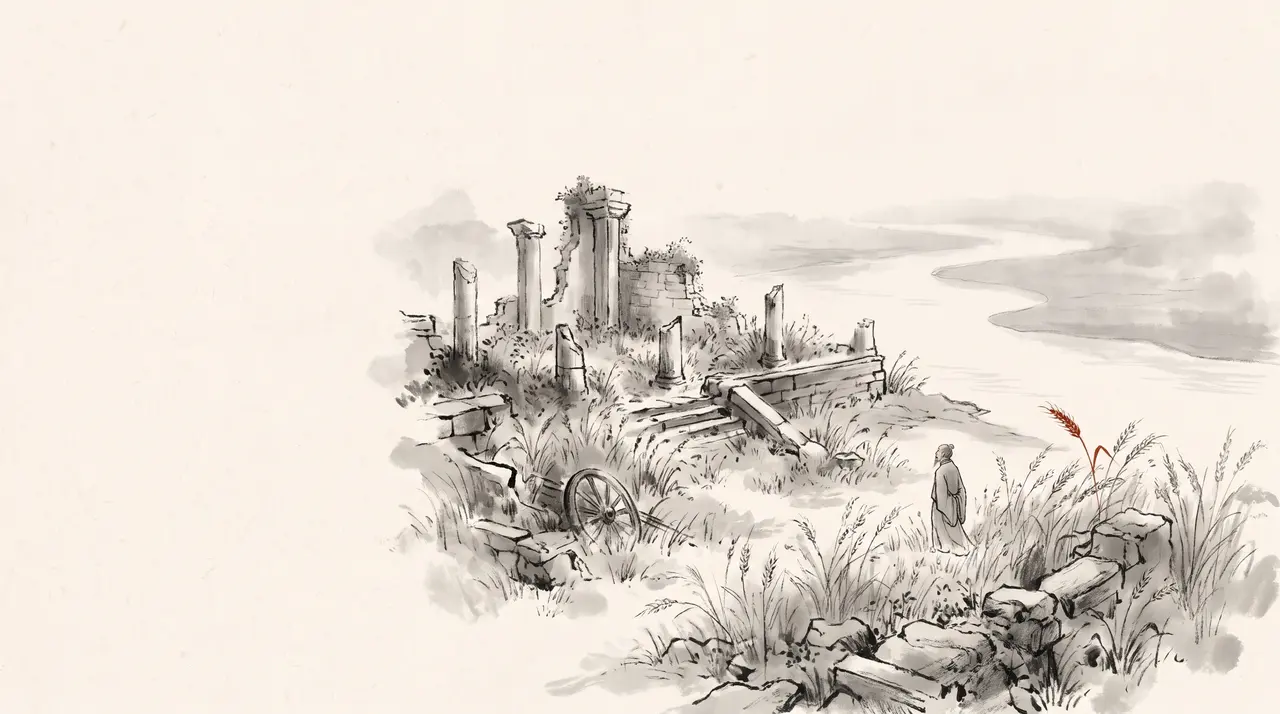 The Three Good Men of Yin, and the Kindness of Duke Xiang 殷有三仁與宋襄之仁The story of Song, the state where the royal house of Yin lived on. The Viscount of Wei, elder brother of the tyrant Zhou of Yin, warned him again and again in vain, and left. Their uncle Jizi, seeing Zhou make chopsticks of ivory, sighed that jade cups would follow, then rare delicacies from far away, and there would be no stopping; when his warnings went unheard, he let his hair down, feigned madness and became a slave. Prince Bi Gan spoke out ready to die, and was cut open by a king who had heard that "a sage's heart has seven openings". After the fall of Yin, the Viscount of Wei was given Song to carry on the sacrifices of Yin, and Jizi, passing the ruins of the Yin capital overgrown with wheat, made "The Song of the Wheat Ears". In the Spring and Autumn period Duke Xiang of Song, hoping to become overlord, fought Chu at the Hong River and refused to attack until the enemy had crossed and drawn up its ranks; he was routed, and "the kindness of Duke Xiang" became a byword for misplaced chivalry. There follow the general Hua Yuan, carried into the enemy camp by a driver who had been left out of the mutton soup; a besieged capital so starved that "people exchange their children to eat them"; Duke Jing, who would not pass a heavenly omen on to his minister, his people or his harvest; and King Yan, who shot arrows at Heaven, was called "Jie of Song", and lost the state.
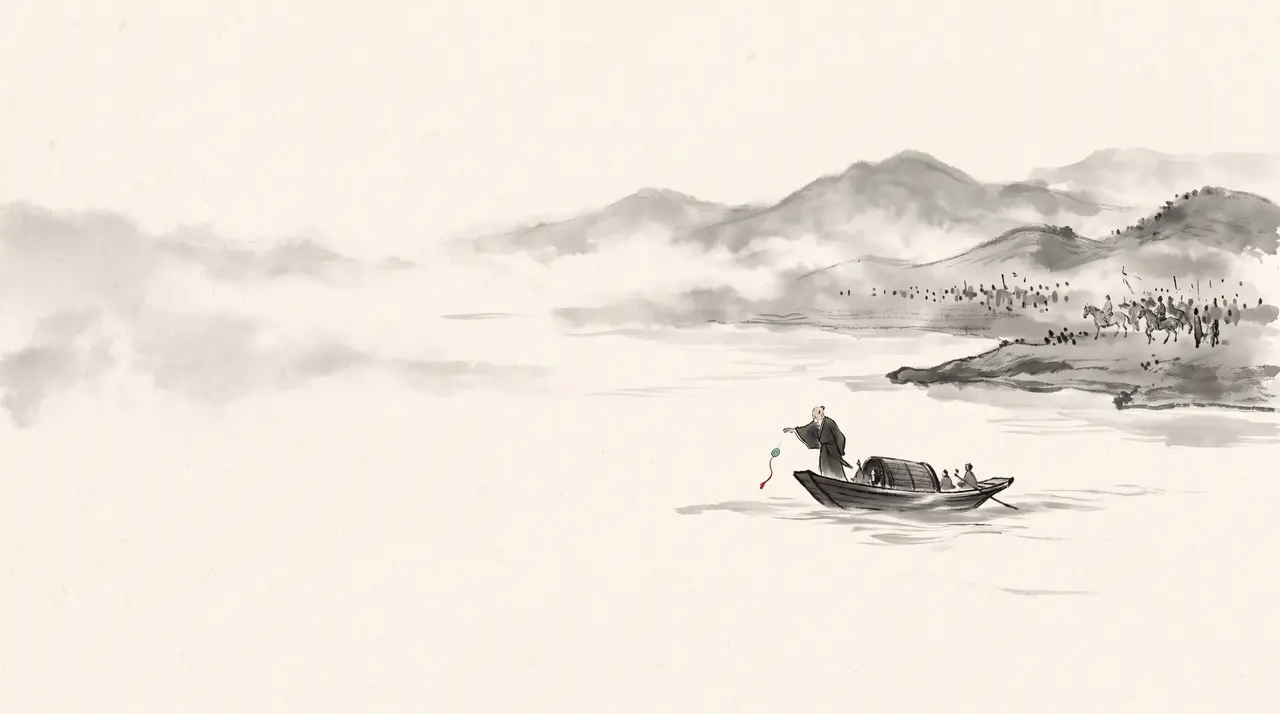 The Wanderings of Chong'er 重耳出亡Prince Chong'er of Jin was driven from his country at forty-three by the plots of Lady Li, the favorite of his father, Duke Xian. With a band of able followers he wandered through Di, Wey, Qi, Cao, Song, Zheng, Chu and Qin. He went hungry and was handed a clod of earth by a peasant. In Qi he sank into comfort until his wife and his men got him drunk and carried him off. Some states treated him with honor and others with contempt. To the king of Chu he promised that if they ever met in battle, he would draw back three days' march. After nineteen years, at sixty-two, he returned with the help of Qin and became Duke Wen of Jin, while Jie Zhitui, overlooked in the rewards, vanished into the mountains with his mother. At Chengpu, Duke Wen kept his promise, drew back, and then crushed Chu, becoming hegemon after Duke Huan of Qi.
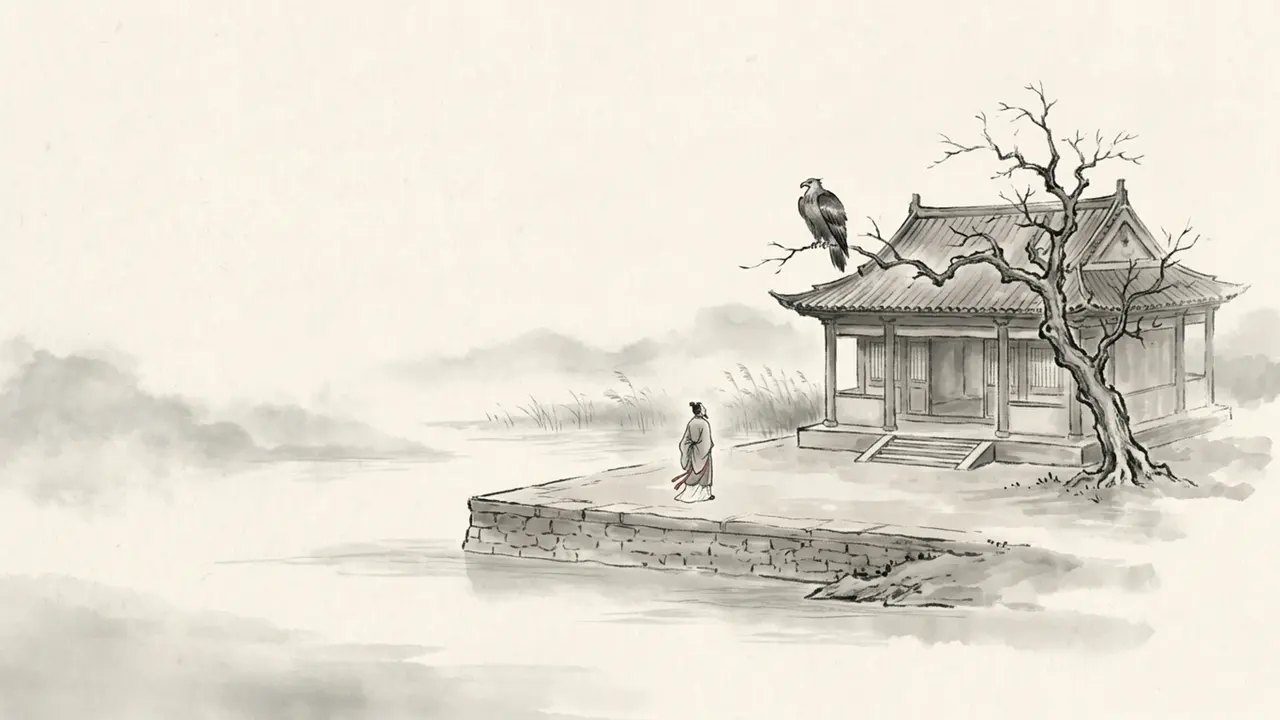 King Zhuang's Silent Bird, and the Fall of King Ling 莊王與靈王The story of two kings of Chu, the great southern power. For three years after taking the throne, King Zhuang issued no orders and gave himself up to pleasure, decreeing death for anyone who dared to remonstrate. When Wu Ju put a riddle to him about a bird that had neither flown nor sung for three years, he answered: "When it flies it will soar to the sky; when it sings it will startle the world," and soon he took up the government and became hegemon. He marched near the Zhou capital and asked about the size and weight of the royal cauldrons, and was told that their worth lay in virtue, not in the cauldrons. He also showed his greatness of heart, sparing the ruler of Zheng when he surrendered and lifting the siege of Song when its people were reduced to exchanging their children for food. A few generations later, King Ling killed his nephew to seize the throne, lorded it over the lords and even asked Zhou for its cauldrons, until a revolt broke out at home while he was away at war. Hearing of his son's death, he said: "I have killed many men's sons myself." Abandoned by his followers, he wandered the mountains and starved to death.
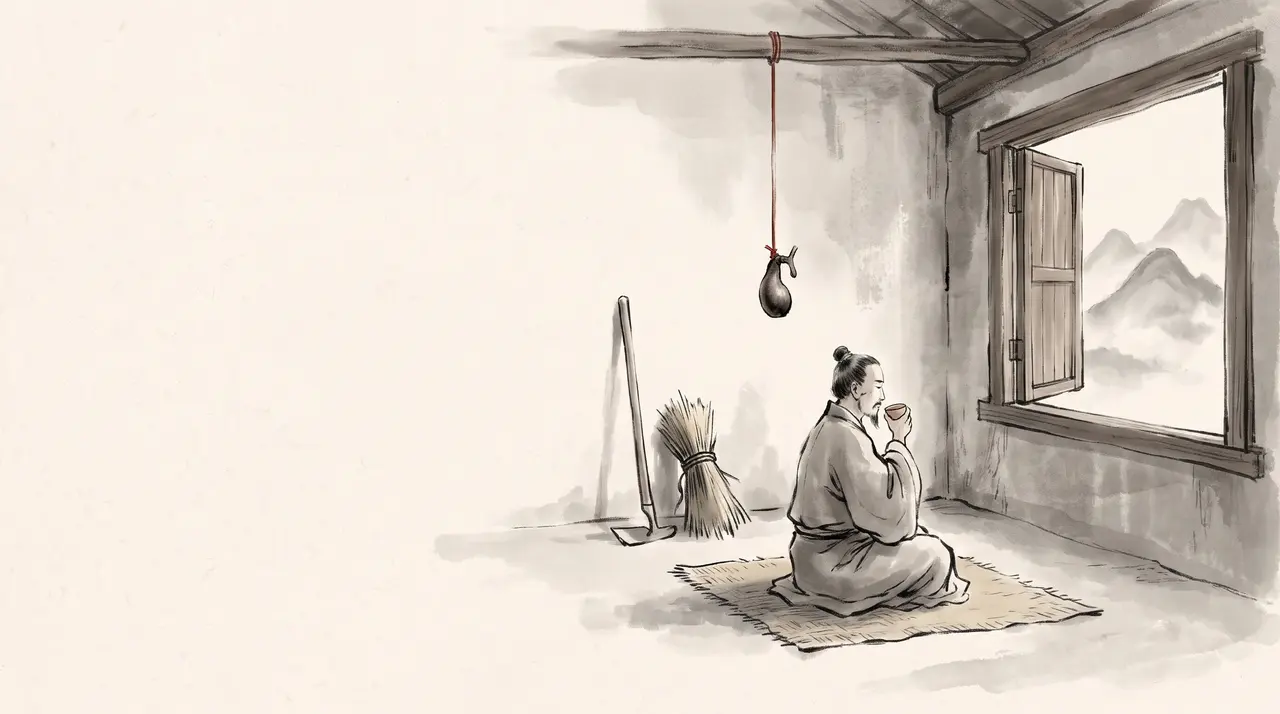 Goujian of Yue: The Shame of Kuaiji 會稽之恥Goujian, King of Yue, kills King Helü of Wu in battle, but Helü's son Fuchai traps him on Mount Kuaiji, and he saves his life only by swearing to become Wu's servant. Back home, Goujian tastes bitter gall and asks himself, "Have you forgotten the shame of Kuaiji?" He shares the toil of his people and builds up his strength. More than twenty years later he destroys Wu, and Fuchai dies saying he has "no face to meet Wu Zixu." After the victory his great minister Fan Li leaves Yue with the warning that "when the cunning hare is dead, the hunting dog is boiled." He becomes chief minister in Qi, and then a great merchant at Tao, known as Lord Zhu of Tao.
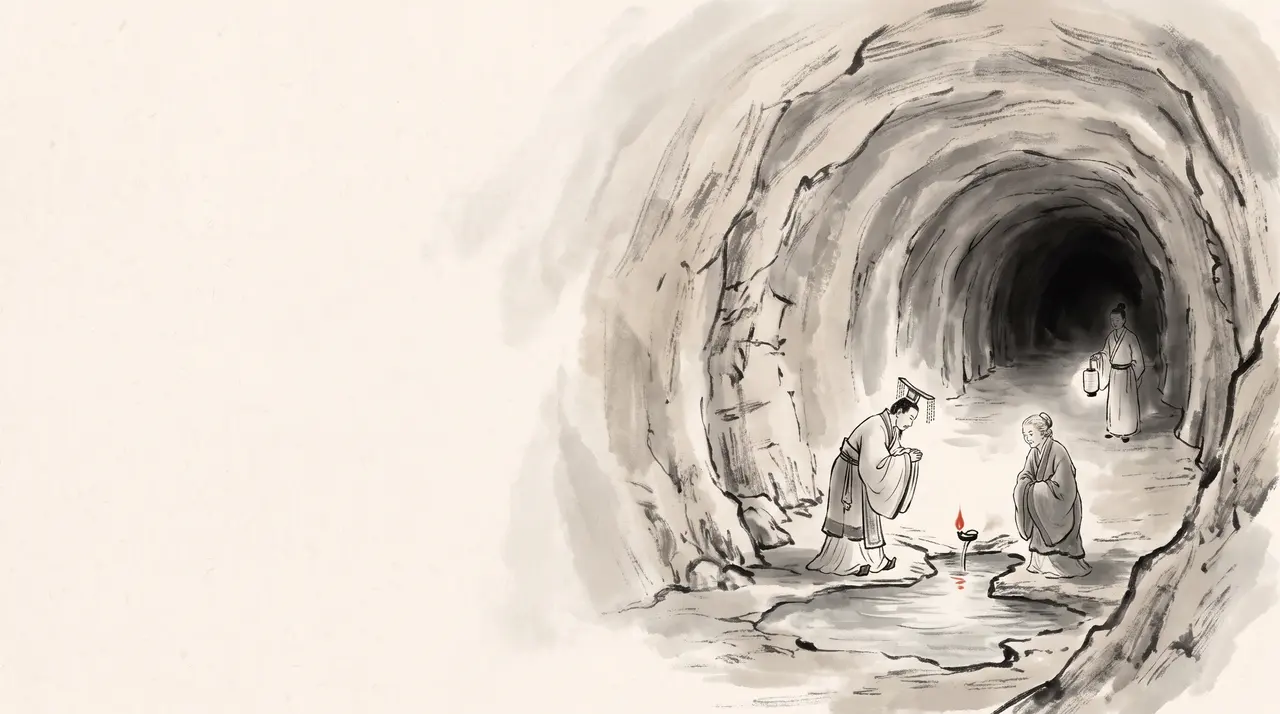 Until We Meet at the Yellow Springs 不至黃泉,毋相見也The story of Zheng, a state founded by a prince of the Zhou royal house. Duke Huan, brother of King Xuan of Zhou, saw the misrule of King You and, on the advice of the historian Bo, moved his people east to the Luo River, laying the foundation of his state. Duke Zhuang was born in a difficult birth and his mother, Wu Jiang, never loved him; she doted on his younger brother Duan and helped him attack Zheng. After driving Duan out, Duke Zhuang sent his mother away, swearing, "We will not meet again until we reach the Yellow Springs." He soon regretted it, and on Ying Kaoshu's advice had a tunnel dug down to the springs, and met his mother there. When the daughter of the powerful minister Zhai Zhong learned of a plot to kill her father, her mother told her, "You have only one father; any man can be a husband," and she warned him. Under Duke Ling, Zigong said his twitching index finger meant he would eat something rare; denied a share of the turtle soup, he dipped his finger in the pot and licked it, and in the end killed the duke. Duke Xiang surrendered to King Zhuang of Chu, coming out stripped to the waist and leading a sheep, and the king spared his state. Later the chief minister Zichan protected little Zheng by government based on ritual, and when he died, Confucius wept, calling him a man of the old love for others.
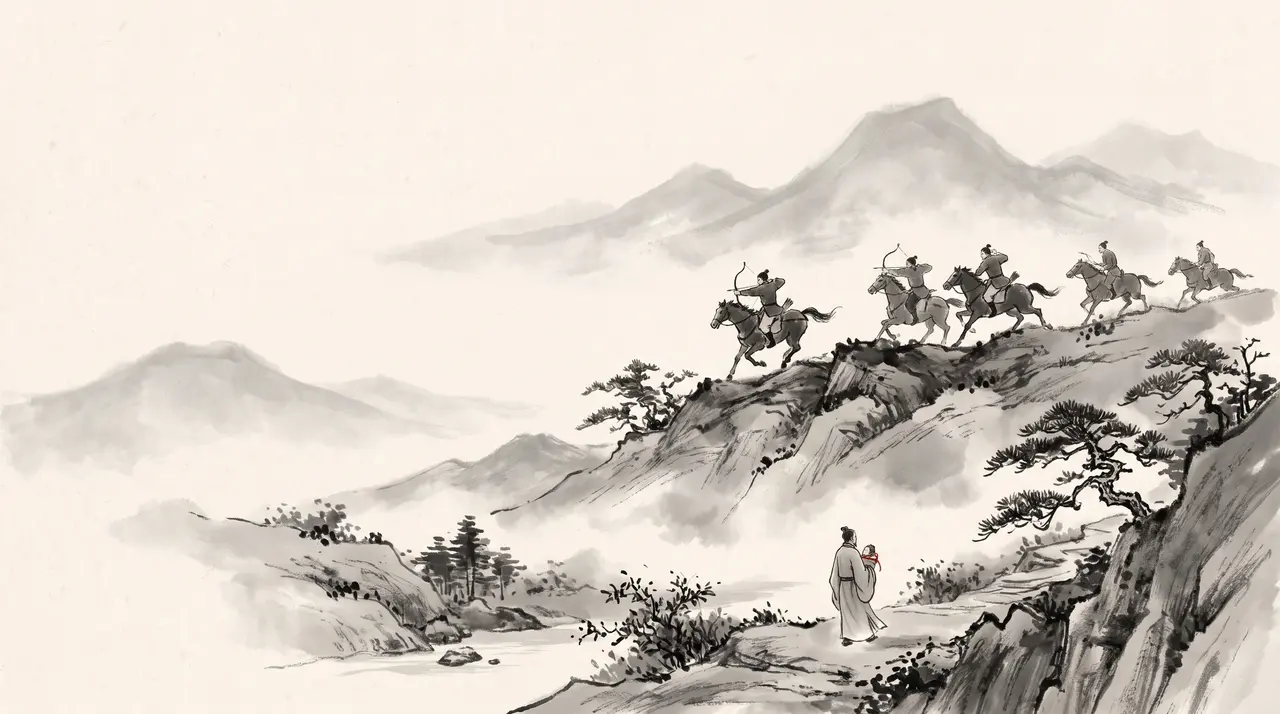 The Orphan of Zhao, and Riding in Nomad Dress 趙氏孤兒・胡服騎射Two stories of the great Zhao clan of Jin. The first is the Orphan of Zhao. When the powerful minister Tu'an Gu wiped out the Zhao, only Zhao Shuo's pregnant wife survived. To save the boy she bore, the retainer Gongsun Chujiu said that dying was easy and raising the orphan hard, and died himself with another baby in the orphan's place, while Cheng Ying took on the name of a traitor to bring up the real heir. Fifteen years later the Zhao were restored, and Cheng Ying killed himself to report to his dead comrade. The second, more than two centuries later, is King Wuling of Zhao's "nomad dress and mounted archery". When the king set out to dress like the horsemen of the north and train cavalry, his uncle Prince Cheng objected that he was abandoning the culture of the Middle Kingdom. The king argued that dress and ritual exist for convenience, and carried his reform through.
 Five Ways to Judge a Man 居視其所親The history of Wei, one of the great Warring States carved out of Jin. Its first marquis, Wen, studied with Confucius's disciple Zixia, bowed from his carriage whenever he passed the village of the recluse Duangan Mu, and sent Ximen Bao to govern Ye well; even Qin said Wei could not be attacked while its ruler honoured worthy men. When he had to choose a chancellor, Li Ke told him to look at five things: whom a man keeps close, whom he gives to when rich, whom he recommends when risen, what he will not do in straits and what he will not take when poor, and then set the indignant Zhai Huang straight. But his grandson King Hui was crushed by Qi at Maling, his crown prince captured and his general Pang Juan killed; when he asked Mencius how he would profit the state, Mencius answered: "Benevolence and righteousness, and that is all." Later the ninety-year-old Tang Ju talked the King of Qin into sending help, but Wei was steadily cut down by Qin, and in the end its capital Daliang was flooded and the state destroyed. Sima Qian visited the ruins and wrote that Heaven was making Qin unite the realm.
 A Hidden Kindness Repaid 天下之陰德The history of Han, the smallest of the seven warring states and the first destroyed by Qin. When Tu'an Gu set out to wipe out the Zhao clan, Han Jue, a minister of Jin, warned Zhao Shuo to flee, and later moved Duke Jing to restore the orphan Zhao Wu to his house. Han, Wei and Zhao together destroyed the Earl of Zhi, then divided Jin and became lords. Under Marquis Zhao the state was well governed with Shen Buhai as chancellor, but in a year of drought the marquis built a lofty gate; Qu Yijiu foretold that he would never go out through it, and he died as it was finished. King Xuanhui, trusting the sham rescue promised by Chen Zhen of Chu, broke with Qin against Gongzhong's warning and was badly beaten. Qin's pressure grew, Han lost Shangdang, which led to the battle of Changping, sent Han Fei to Qin only to see him killed, and in 230 BCE King An was captured and Han came to an end.
 The King Whose Treasures Were His Ministers 吾臣有檀子者The story of the Tian clan, descendants of a prince of Chen, who took over the state of Qi, became its kings, and were finally destroyed by Qin. When Chen Wan was born, a Zhou historian foretold that his heirs would prosper in another state. He later fled civil strife to Qi and served Duke Huan. His descendant Tian Qi collected taxes with a small measure and lent grain with a large one, and the people's hearts turned to the Tian. Tian Chang killed Duke Jian and took power, telling the next duke, "You bestow the favours, and I will carry out the punishments"; his great-grandson Tian He was at last recognised by Zhou as a lord. In the Warring States period, King Wei rewarded the governor of Jimo, of whom he heard only evil but who governed well, with ten thousand households, and boiled alive the governor of E, who was praised by all because he bribed the king's attendants. When King Hui of Wei asked him whether he had any treasures, he answered that his treasures were the ministers who guarded his realm. The last king, Jian, followed a chancellor bribed by Qin, surrendered without a fight, and the people sang in grief: "Is it pine? Is it cypress?"
 A Dog Without a Home 喪家之狗Confucius was born to a poor family in Lu, and as a child he played at performing the rites. Past fifty he was given a share in the government of Lu, and at the meeting at Jiagu he faced down the ruler of Qi with words alone. But when his lord lost himself in a troupe of dancing girls sent by Qi, he left the country. For fourteen years he wandered from state to state and no one would use him. In Kuang he was nearly killed, in Zheng he was mocked as a homeless dog, and between Chen and Cai he ran out of food, yet he went on playing the lute and singing with his students. In old age he returned to Lu, put the classics in order, read the Book of Changes until its bindings broke three times, and wrote the Spring and Autumn Annals. Sima Qian gave this commoner a "hereditary house," a place reserved for lords, and called him the supreme sage.
 The Empress and Her Lost Brother 姊去我西時The story of the empresses and empresses dowager of the Han and their families, the imperial in-laws. Sima Qian says that the rise and fall of dynasties owes much to their queens, but that marriage and children are matters of fate beyond human power. Lady Bo, once in the harem of Wei Bao, was told by the physiognomist Xu Fu that she would bear a Son of Heaven. When Wei Bao fell, she entered Liu Bang's harem but was ignored, until he heard her friends laughing at an old promise, took pity on her and called her to him; the son she bore became Emperor Wen. Lady Dou asked to be sent to Zhao, near her home, but a eunuch's mistake sent her to Dai, where the king, the future Emperor Wen, loved her and made her empress. Her younger brother Dou Guangguo, sold by kidnappers as a small child, was the only survivor when a bank collapsed at a charcoal camp, and came forward when he heard his sister had become empress. "When my sister left, she washed my hair and fed me," he said, and the empress held him and wept. Empress Dowager Wang had been married before, until her mother took her back and sent her into the crown prince's palace. Lady Li, mother of Emperor Jing's heir, was so jealous that she lost the emperor's favour, and Lady Wang's son, the future Emperor Wu, became heir. Wei Zifu, a singing girl, caught Emperor Wu's eye and became empress.
 Survival Lies in Whom You Trust 存亡在所任The houses of Liu Jiao, Gaozu's younger brother who became King of Chu, and of Liu You, Gaozu's son King You of Zhao. When the young Gaozu brought guests to his eldest brother's widow, she pretended the soup was gone and scraped the pot to send them away; Gaozu never forgot it, and as emperor left her son unenfeoffed until his father spoke up, then made him "Marquis of the Scraped Pot". Liu Jiao became King of Chu, but his grandson Liu Wu killed the ministers who warned him, joined the Revolt of the Seven States under Liu Bi of Wu, and killed himself in defeat; on Empress Dowager Dou's advice Emperor Jing let Liu Jiao's son Liu Li carry on the house of Chu. Liu Sui, King of Zhao, likewise burned his ministers alive, rebelled, and killed himself when Handan was flooded. The Grand Historian concludes that survival depends on whom a ruler trusts.
 A Kingdom Won by a Clever Guest 權激呂氏The story of two distant kinsmen of the Liu clan who became kings: Liu Jia of Jing and Liu Ze of Yan. In the war against Chu, Liu Jia slipped behind enemy lines to burn Chu's stores and won over Chu's Grand Marshal Zhou Yin, helping bring victory at Gaixia; with few sons and brothers of his own, Gaozu made him King of Jing, but he was killed in Qing Bu's rebellion. Liu Ze had once given two hundred catties of gold to Master Tian, a schemer from Qi. Two years later Master Tian lavishly entertained Zhang Ziqing, Empress Lü's favourite eunuch, persuaded him that making Lü Chan a king would please the empress, and then that making Liu Ze a king too would quiet the Liu clan; so Liu Ze became King of Langya, and by the time the empress regretted it and sent riders after him, he was through the pass. After her death Liu Ze helped make the King of Dai emperor and became King of Yan, but his grandson Dingguo lost the kingdom through bestial crimes.
 Hoe Up What You Did Not Sow 非其種者,鉏而去之The story of Liu Fei, Gaozu's eldest son, who became King Daohui of Qi, and his descendants. When his younger brother Emperor Hui treated him as an equal, Empress Lü was so angry that he saved his life only by giving up a commandery. As the empress made one member of the Lü clan after another a king, Liu Fei's twenty-year-old son Liu Zhang, Marquis of Zhuxu, asked at her banquet to run the drinking by military law, sang a ploughing song ending "what was not sown by you, hoe it up and throw it out," and cut down a drunken Lü who slipped away from the feast. When the empress died, Liu Zhang urged his brother the King of Qi to raise troops and was himself the first to cut down Lü Chan as the Lü clan was destroyed. But the King of Qi was passed over for the throne because his mother's brother was "a tiger wearing a cap," and the King of Dai became Emperor Wen. Wei Bo, who had urged the king to rise, escaped punishment by trembling before Guan Ying. Later the royal line of Qi ended when King Li, hounded by Zhufu Yan, killed himself.
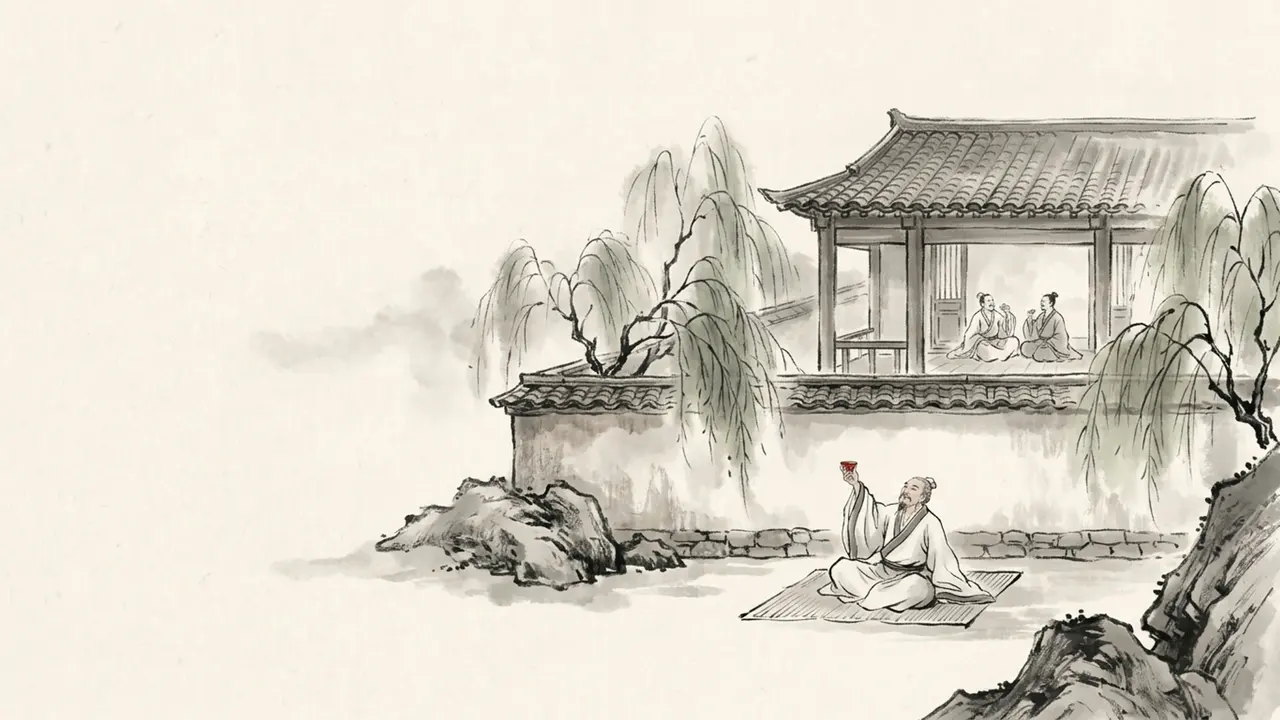 Following Xiao He's Rules 蕭規曹隨The story of Cao Can, the second chancellor of the Han. A prison clerk in Pei, he joined Liu Bang's rising together with Xiao He, and fought beside Han Xin across half the realm. When peace came, he became chancellor of Qi, the kingdom of Gaozu's eldest son. There he called in Master Gai, an expert in the teachings of the Yellow Emperor and Laozi, who told him that if government was pure and quiet the people would settle by themselves; and in nine years Qi was well governed. When Xiao He died, Cao Can told his servants to pack, saying "I am going to be chancellor", and sure enough he was summoned. As chancellor of the Han he changed nothing that Xiao He had laid down. He drank day and night, and whenever anyone came to give him advice, he plied him with wine and sent him home drunk. When the young Emperor Hui asked him why, he replied: "Is Your Majesty the equal of Gaozu? Am I the equal of Xiao He? If we keep the laws that Gaozu and Xiao He laid down, is that not enough?" The people sang that Xiao He made the laws and Cao Can kept them without fail; from this comes the saying "Xiao made the rules and Cao followed them".
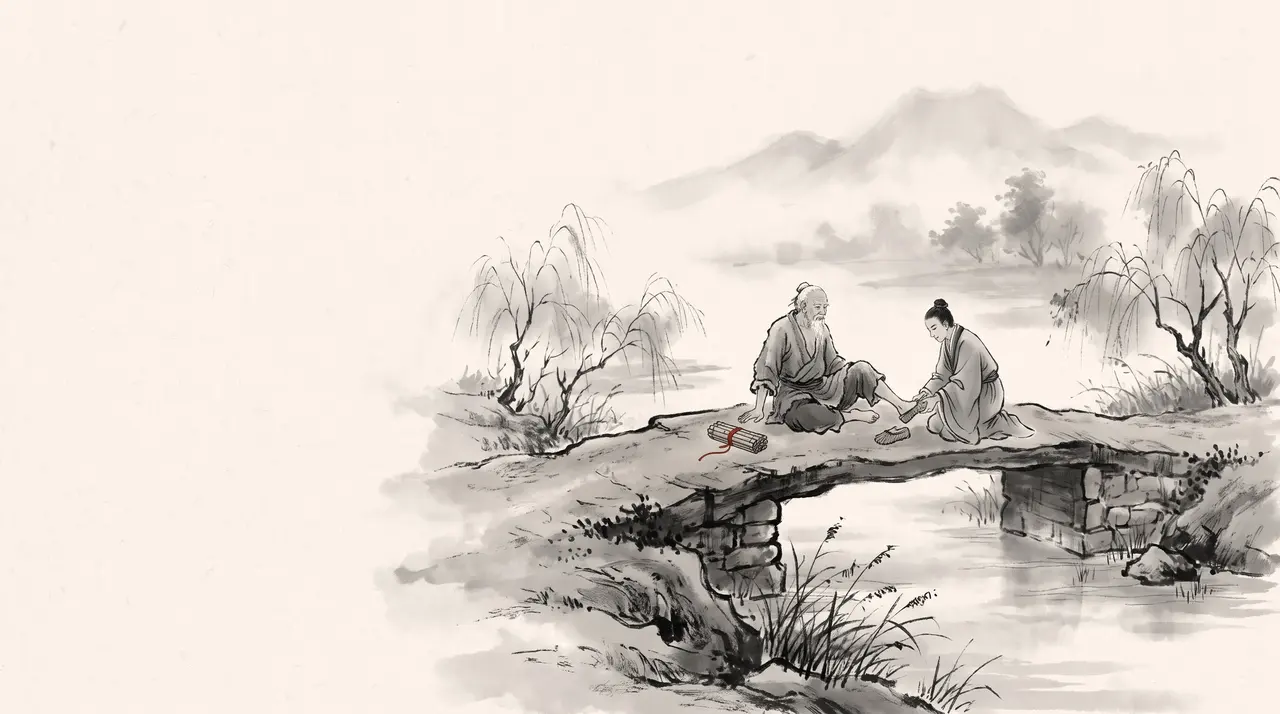 Zhang Liang: The Old Man on the Bridge 圯上受書Born into a family that had served as chancellors of Hann, Zhang Liang tries to avenge his land by attacking the First Emperor at Bolangsha, fails, and goes into hiding at Xiapi. There an old man on a bridge makes him fetch his shoe, tests him again and again, and at last gives him the Art of War of Taigong. Later he meets the Lord of Pei (Liu Bang), sees him as "sent by Heaven," and becomes the strategist who "made plans in the command tent and decided victory a thousand li away."
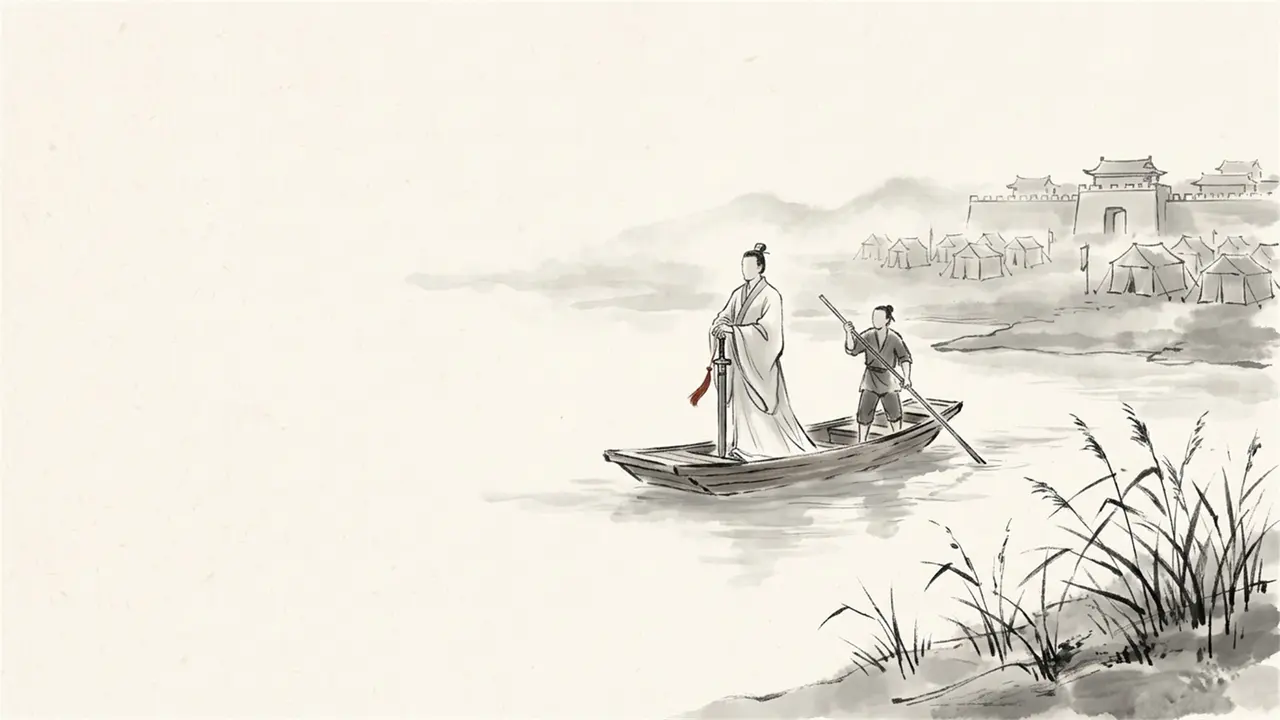 Chen Ping: Six Secret Stratagems 六出奇計Chen Ping was born poor, but his elder brother supported him so that he could study, and when he divided the meat fairly at a village festival he said he would govern the world just as fairly. He served Wei and Chu without being used, and went over to Han with nothing but himself. Though slandered for sleeping with his sister-in-law and taking bribes, he was kept for his talent. With forty thousand catties of gold he sowed distrust between Xiang Yu and his adviser Fan Zeng until Fan Zeng left. He went on to devise six secret stratagems: stepping on the King of Han's foot to make him accept Han Xin as King of Qi, capturing Han Xin with a pretended royal tour to Yunmeng, and getting Gaozu out of the Xiongnu siege at Pingcheng. Under Emperor Wen he became chancellor, and explained that a chancellor's task is to see that every official does his own job.
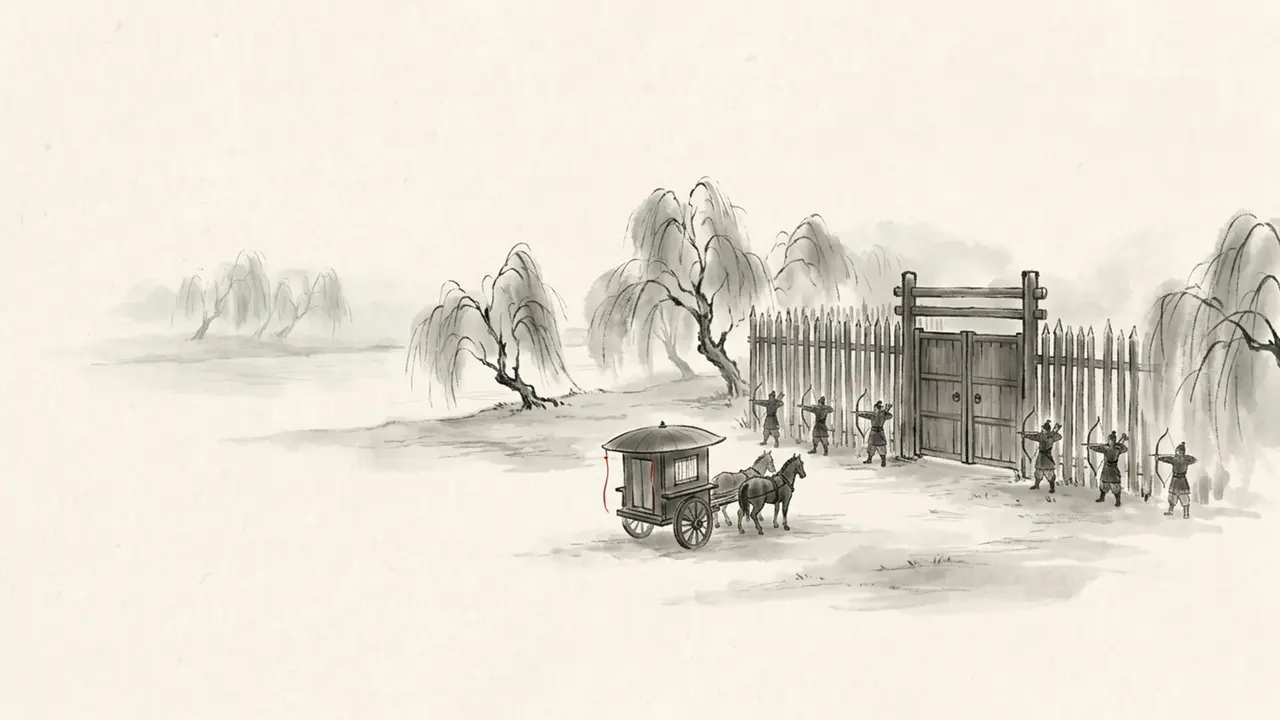 Zhou Bo and Zhou Yafu: The Camp at Xiliu 周勃與周亞夫Two generations of one family: Zhou Bo, one of the founders of Han, and his son Zhou Yafu. Zhou Bo was a plain man who had made his living weaving mats and playing the pipes at funerals, and Gaozu judged that he could be trusted with great affairs. He destroyed the Lü clan and put Emperor Wen on the throne, yet later he was thrown into prison on suspicion of rebellion and said: "I have led an army of a million men, but I never knew how mighty a jailer is." His son Yafu was told by a physiognomist that nine years after reaching the heights he would starve to death. Encamped at Xiliu, he made even Emperor Wen, who came to encourage the troops, obey the rules of the camp, and the emperor said: "This is a true general." He put down the Rebellion of the Seven States and became chancellor, but his unbending nature cost him Emperor Jing's favour. Served a piece of meat with no chopsticks, he let his displeasure show; at last, accused of plotting rebellion, he refused to eat, coughed blood and died.
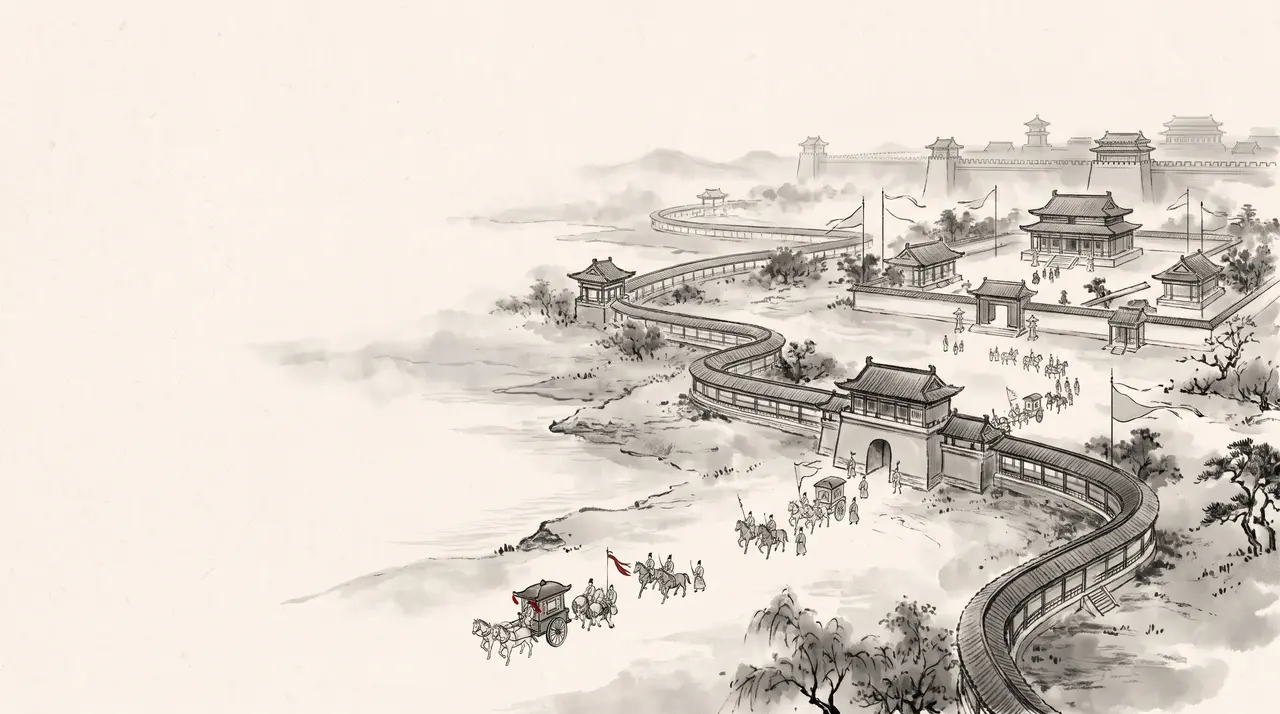 The Prince Who Wanted the Throne 帝果殺吾子The story of Liu Wu, King Xiao of Liang, Emperor Jing's full brother and the favourite son of Empress Dowager Dou. Over wine, Emperor Jing told him he would pass the throne to him; the king knew it was not meant, yet was secretly delighted. In the Rebellion of the Seven States he held his capital, Suiyang, and had Han Anguo and others hold back Wu and Chu, playing a great part in crushing the revolt. With his rich lands he built an Eastern Park three hundred li around, flew the emperor's banners and had his road cleared like the Son of Heaven. When Emperor Jing deposed his heir, the empress dowager wanted Liang to succeed, but Yuan Ang and others opposed it. In his anger the king and his men Yang Sheng and Gongsun Gui had Yuan Ang and over ten other ministers assassinated, and the emperor was furious. The king slipped into the capital in a plain cart and knelt at the executioner's block to beg forgiveness, and mother and sons wept together, but the emperor never trusted him again. When he died of a fever, the empress dowager cried, "The emperor has killed my son after all," and Emperor Jing divided Liang into five kingdoms for his five sons. Even after his death, his family fought over a treasured wine vessel.
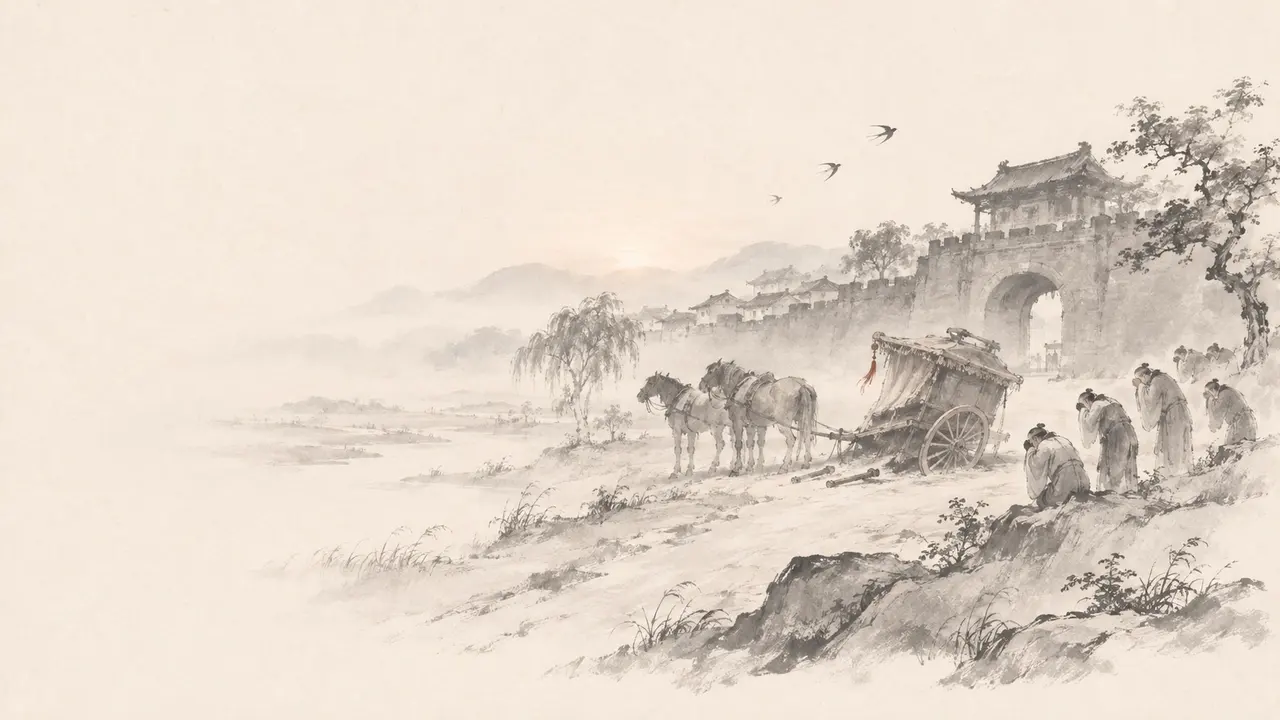 A King Should Spend His Days on Music and Pleasure 王者當日聽音樂聲色The story of Emperor Jing's thirteen sons, grouped into five clans by their five mothers. King Xian of Hejian loved Confucian learning and gathered scholars around him. King Min of Linjiang, the deposed crown prince, set out for the capital, his carriage axle snapped, and he killed himself rather than face the interrogator. King Yi of Jiangdu fought the rebels of Wu at fifteen. King Yu of Jiaoxi was so cruel that he poisoned the officials sent to govern his kingdom. Pengzu, King of Zhao, humble to the point of fawning, used tricks of argument to ruin every official sent to him and patrolled Handan himself by night. King Jing of Zhongshan, who loved wine and women and had over a hundred and twenty descendants, told his brother that a king should spend his days on music and pleasure; Liu Bei of the Three Kingdoms would later claim descent from him. King Ding of Changsha was born after his mother, a maid, was sent to the emperor in her mistress's place. At the end Sima Qian notes how, after the revolt of Wu and Chu, the kings lost their power, until some of them rode in ox carts.
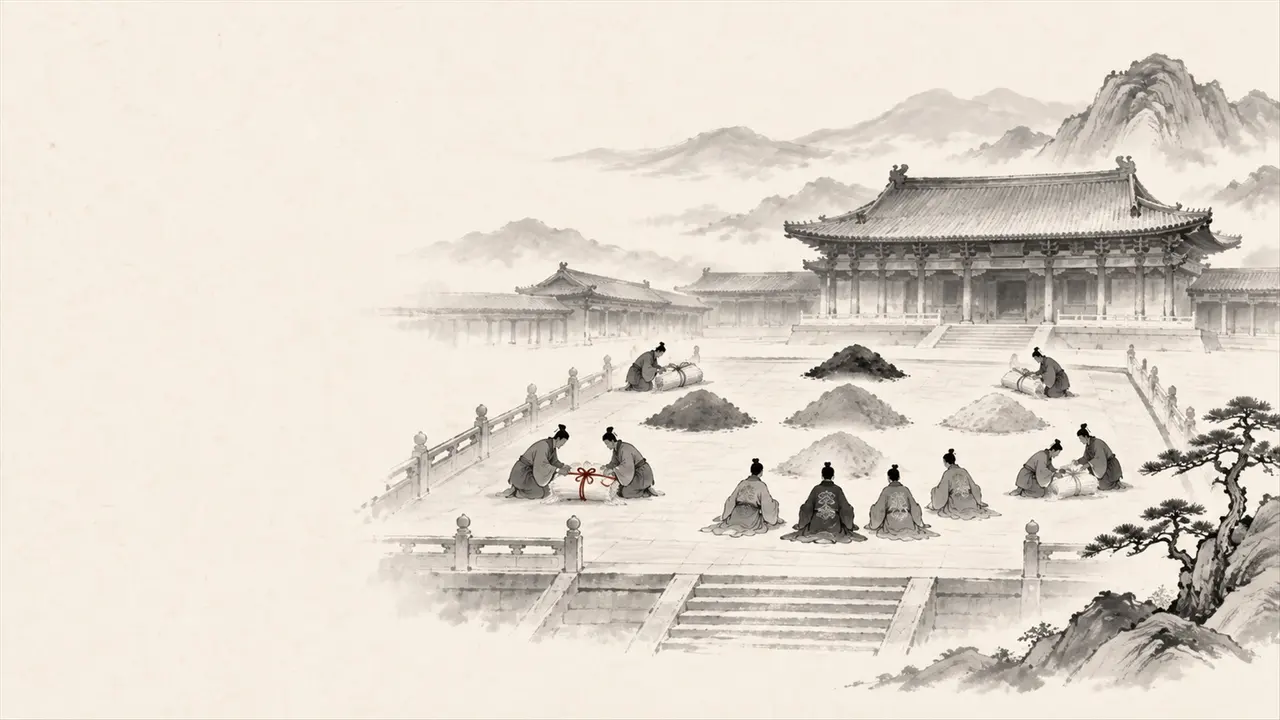 Guard Your State, Tend Your People 保國艾民,可不敬與The record of how Emperor Wu made three of his sons, Liu Hong, Liu Dan and Liu Xu, kings. In 117 BCE Huo Qubing, the Grand Marshal, sent up a memorial noting that the princes still had no rank, and the chancellor and ministers asked that they be made kings; again and again the emperor refused, saying sons not yet trained could not rule cities, and offered only marquisates. At last, after repeated pleas, Liu Hong became King of Qi, Liu Dan King of Yan and Liu Xu King of Guangling, and the emperor gave each a charter of admonitions fitted to his land. Sima Qian kept these documents as they were, finding their language splendid. Master Chu's additions tell how the princes' mother Lady Wang hoped for Luoyang, explain the five-coloured earth a king received from the altar of the Son of Heaven, and follow the kings of Yan and Guangling as they defied their charters, plotted rebellion and both died by their own hand.
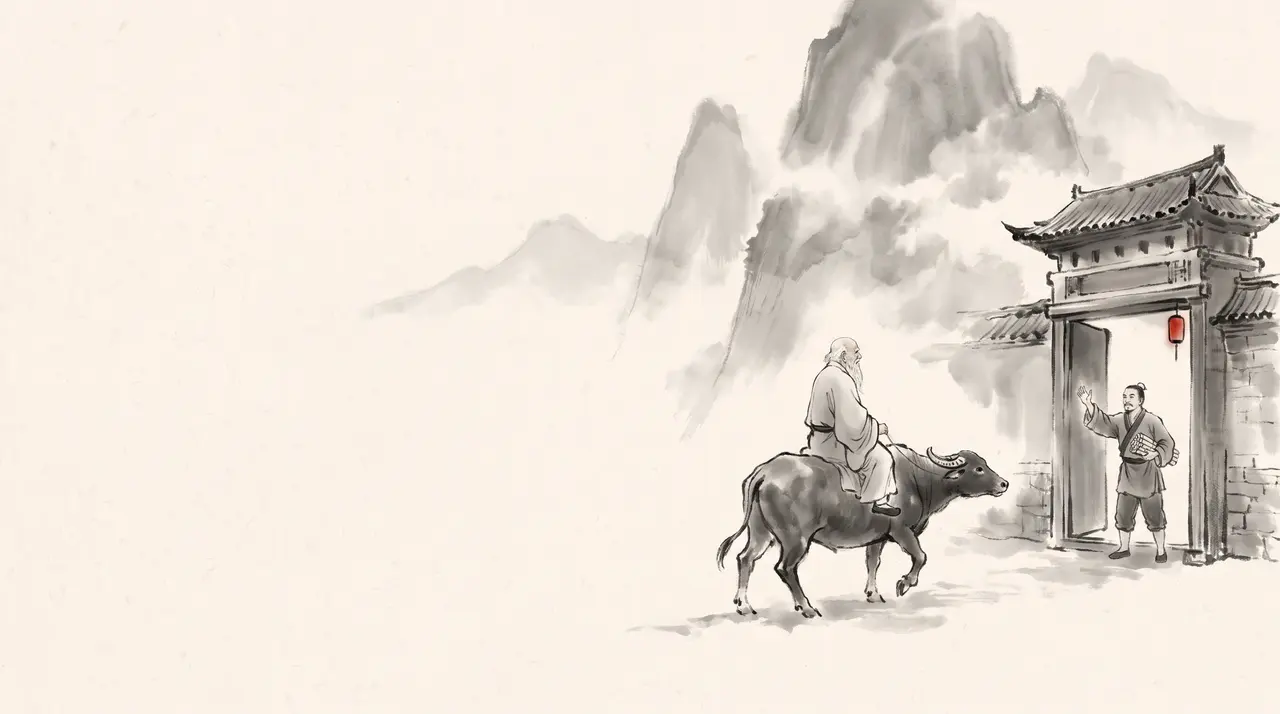 Laozi and Han Fei: The Dragon's Reversed Scale 逆鱗Laozi, keeper of the Zhou archives, told Confucius, who had come to ask about ritual, to rid himself of pride and desire, and Confucius told his disciples, "Laozi is like a dragon." As Laozi left Zhou, the keeper of the pass asked him to write a book, and he left behind some five thousand characters. Zhuangzi, offered the post of chancellor of Chu, refused, saying he did not want to be the sacrificial ox that is fed and dressed in finery before it is killed. Han Fei, a prince of Hann, stammered but wrote brilliantly; in "The Difficulties of Persuasion" he explained how hard it is to win over a ruler, who, like a dragon, has a reversed scale on his throat that kills anyone who touches it. King Zheng of Qin was thrilled by Han Fei's books, but his old classmate Li Si envied him, and Han Fei died in a Qin prison after being made to take poison.
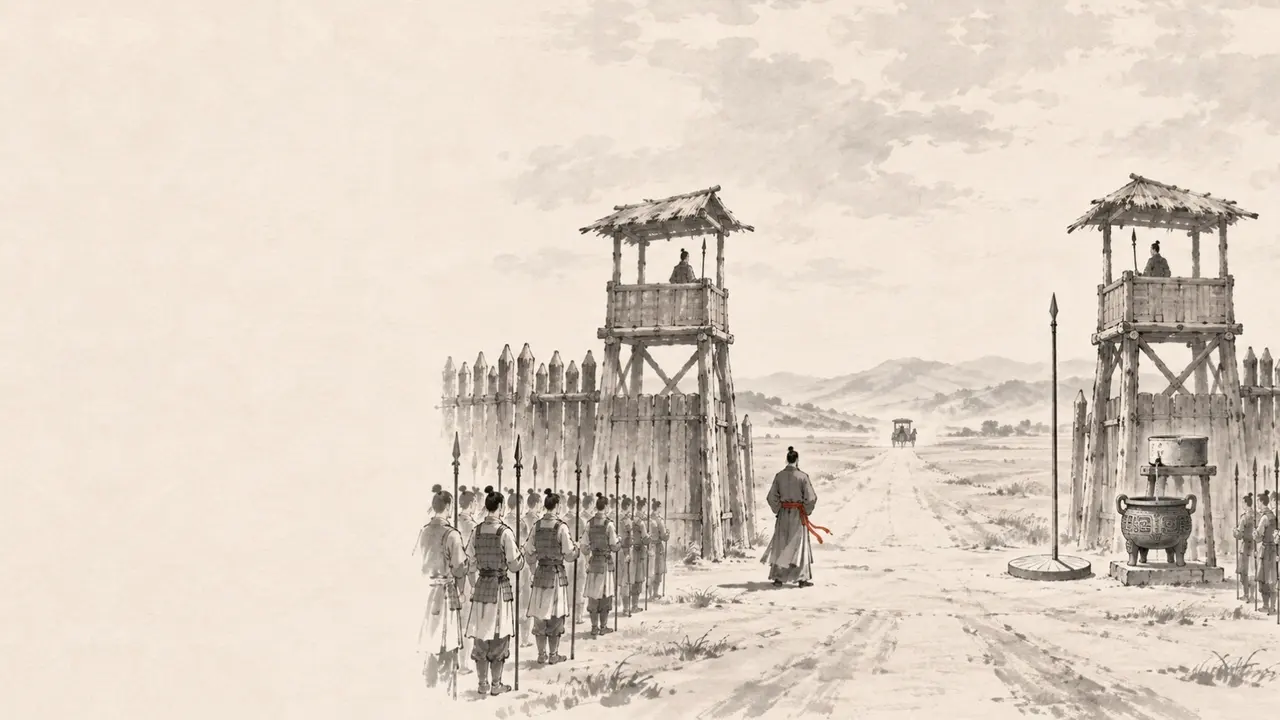 The General Who Beheaded the Late Inspector 將在軍,君令有所不受The story of Sima Rangju, also called Tian Rangju, a great general of Qi in the Spring and Autumn period. When Jin and Yan defeated Qi, the minister Yan Ying recommended Rangju, a son of a lesser branch of the Tian. Being of low rank, Rangju asked for one of Duke Jing's favourites, Zhuang Jia, to act as army inspector so the soldiers would obey. Told to meet at the camp gate at noon, Zhuang Jia lingered at a farewell party and arrived in the evening. Rangju had him beheaded under military law, and the whole army trembled. When a messenger galloped into the camp with a pardon, Rangju said, "When a general is with his army, there are orders even from his lord that he does not accept," and beheaded the messenger's driver and part of his carriage instead. Yet he saw to his soldiers' quarters, food and sick himself and shared his own rations equally with them, so that even the sick begged to fight; the armies of Jin and Yan withdrew when they heard of it. Later Rangju was slandered and died, but his methods were collected by King Wei of Qi as the Methods of the Sima.
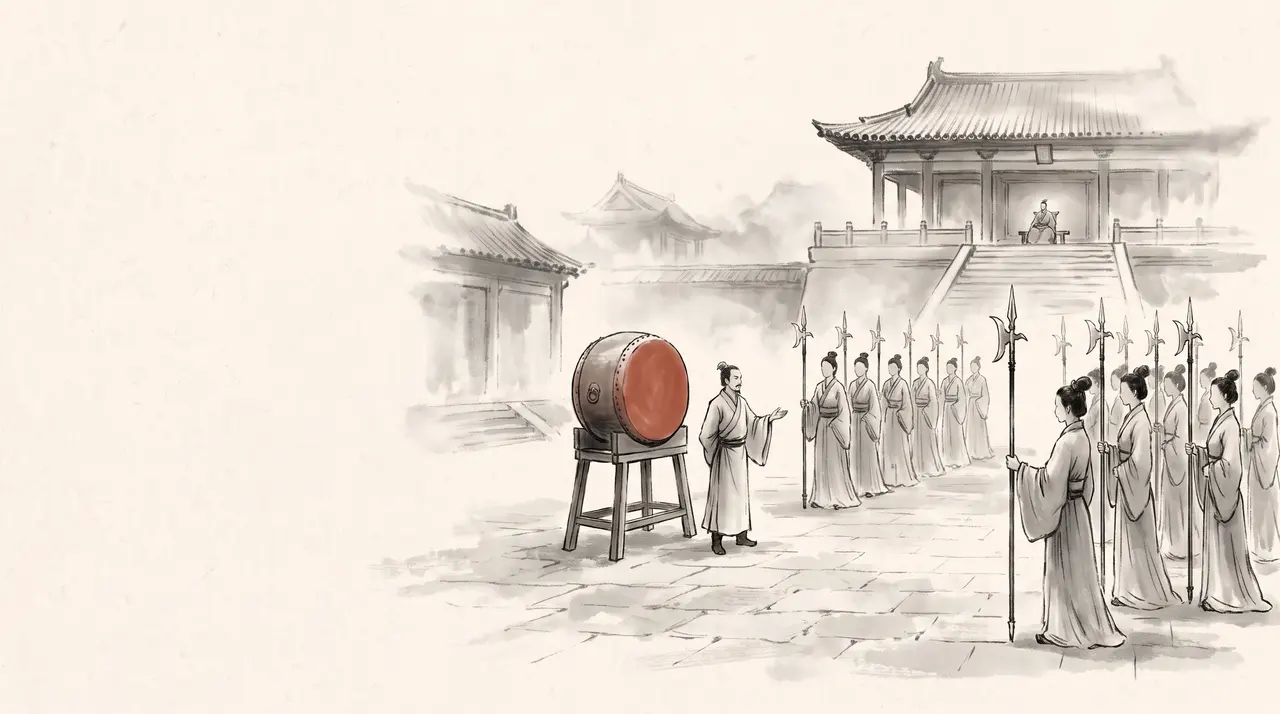 Sunzi: The Palace Women and the Battle of Maling 孫子勒兵The strategist Sun Wu drills the palace women of King Helü of Wu as soldiers and beheads the king's two favorite consorts when they will not obey, to show what military discipline means. More than a century later his descendant Sun Bin, whose feet were cut off by his jealous fellow student Pang Juan, escapes to Qi and wins the trust of the general Tian Ji with a trick for winning horse races. He defeats Wei at Guiling by "besieging Wei to rescue Zhao," then lures Pang Juan to his death at Maling by cutting the number of his cooking fires day by day. The chapter ends with the general Wu Qi, who sucked the pus from a soldier's abscess, and his saying that a state's safety "lies in virtue, not in rugged ground."
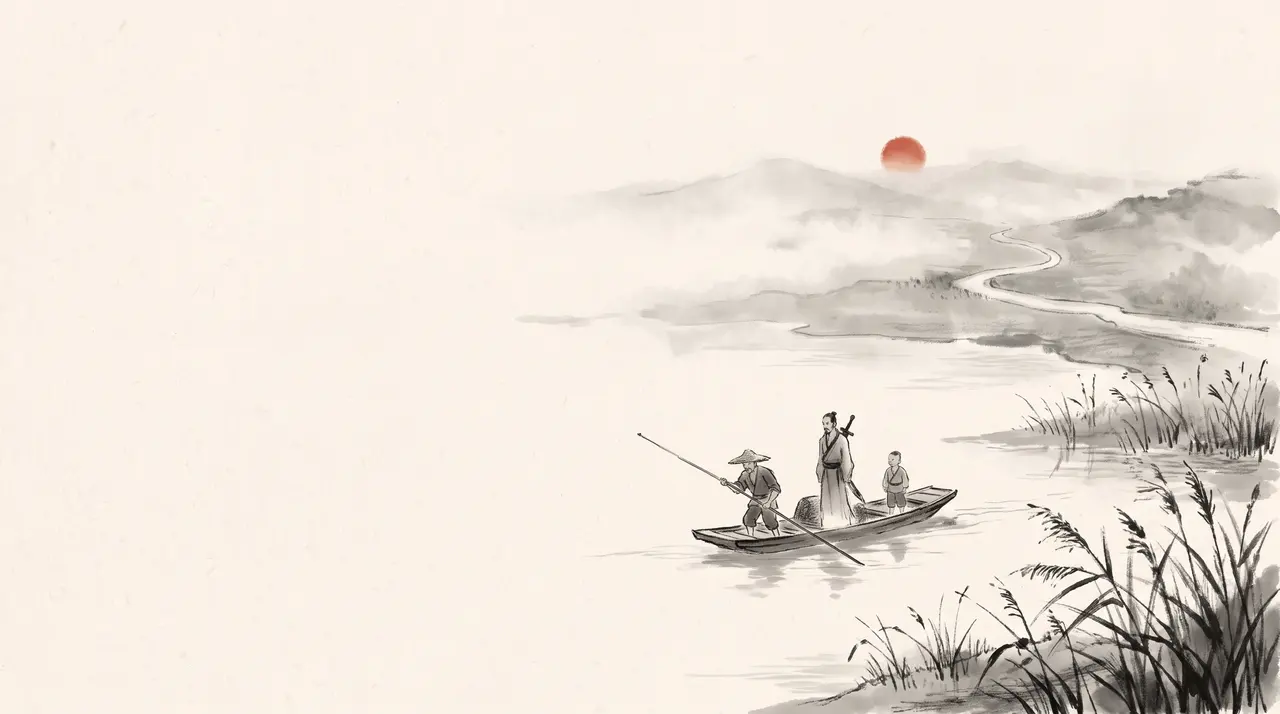 Wu Zixu: The Day Is Late and the Road Is Long 日莫途遠Wu Zixu of Chu loses his father and brother when King Ping believes a slanderer. He escapes his pursuers and flees to Wu, and when he helps King Helü of Wu take the Chu capital, he digs up the dead King Ping and whips the corpse three hundred times. Rebuked by his old friend Shen Baoxu, he answers that "the day is late and the road is long." Later he warns King Fuchai of Wu again and again that he will regret it if he does not destroy Goujian of Yue, but the king will not listen, and a slanderer has Zixu ordered to kill himself. His last words: "Gouge out my eyes and hang them on the east gate, so that I can watch Yue destroy Wu."
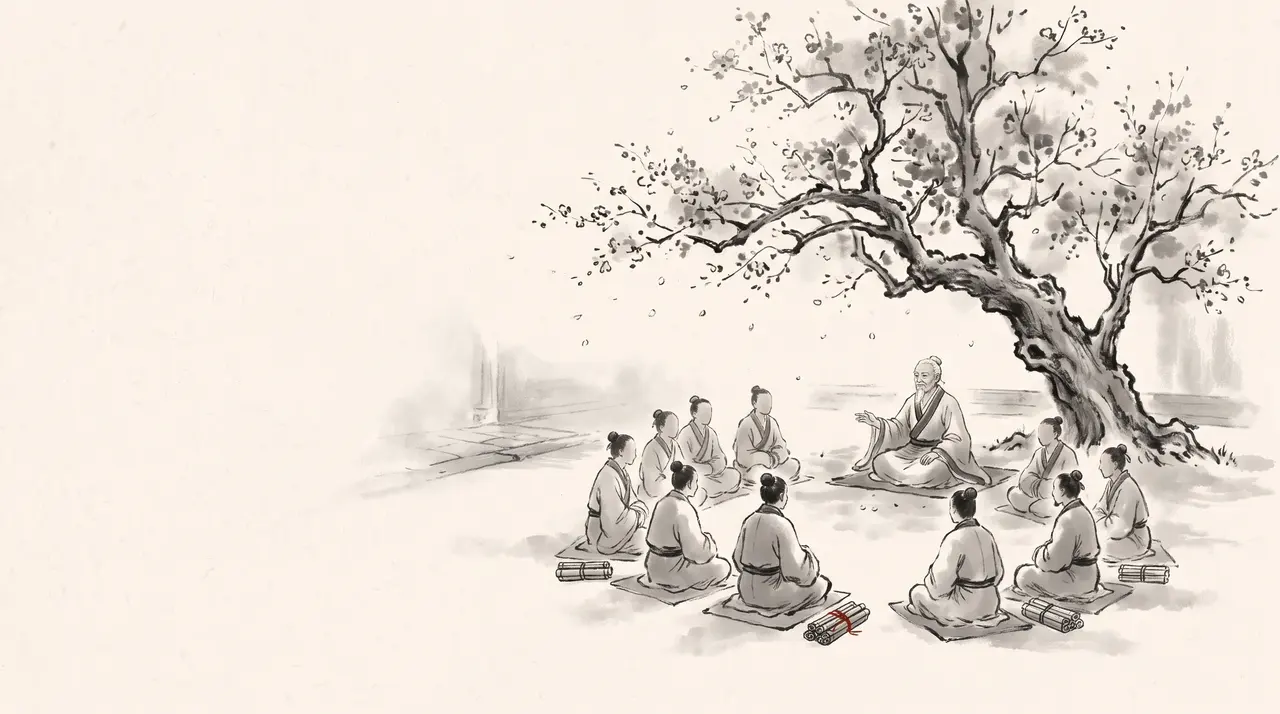 Hearing One and Knowing Ten 聞一知十The lives of the varied characters who gathered around Confucius. Yan Hui found joy in study in a poor alley and died young. Zilu came to bully the Master in a rooster-feather cap, stayed to become his student, and died in a civil war in Wey retying the strings of his cap. Zai Yu was called "rotten wood" for sleeping by day. Zigong, a genius of persuasion, went to Qi, Wu, Yue and Jin to save Lu, and changed the fate of five states in a single journey. Tantai Mieming was misjudged for his looks, Yuan Xian was poor without shame, and You Ruo, set up as teacher for looking like Confucius, was driven from the seat when he could not answer. Short stories bring to life the people who stood in the shadow of the Master's words.
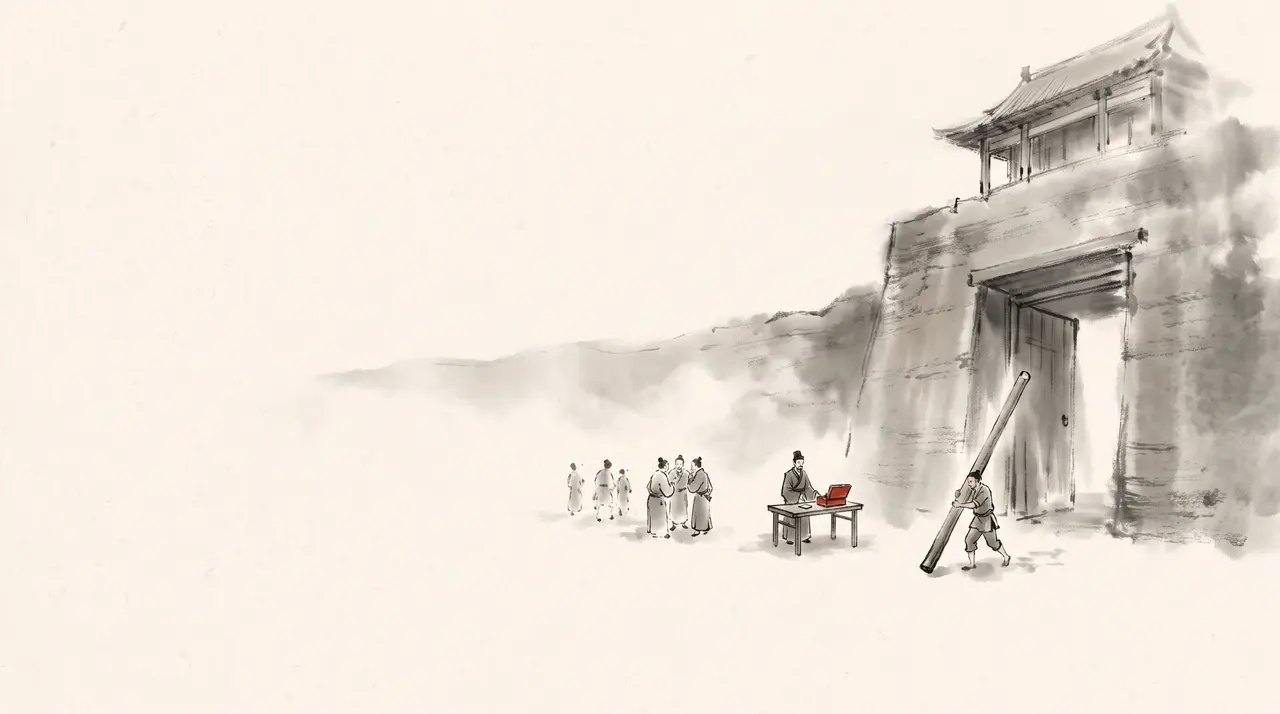 Lord Shang: Fifty Gold for Moving a Log 徙木之信Born into a branch of the ruling house of Wey, Shang Yang finds no use for his talents in Wei and goes west to Qin, where he wins over Duke Xiao with "the art of making a state strong." Under the duke he remakes the laws: the people are formed into groups of five and ten households that watch over one another, and rank depends on merit in war. To make the people trust the new laws, he pays fifty pieces of gold to a man who moves a log from one city gate to another, and he punishes even the crown prince's tutors. Qin grows rich and strong, and Shang Yang is given the land of Shang and called Lord Shang. But when Duke Xiao dies, he is accused of rebellion. At an inn on the run, he sighs that he has been caught by his own laws, and in the end his body is torn apart by chariots.
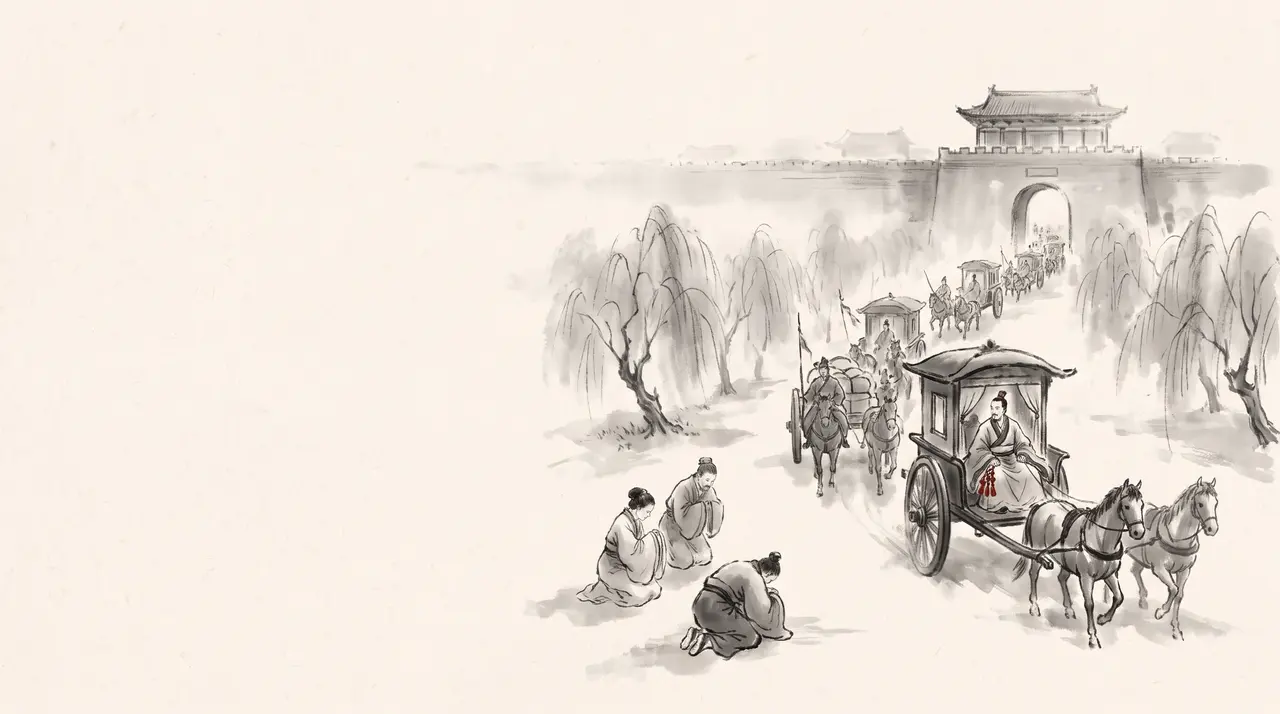 Su Qin: Better the Beak of a Chicken 寧為雞口Su Qin of Luoyang in Eastern Zhou set out as a persuader, failed, and was laughed at by his family. He shut himself in his room and studied the strategy book Yin Fu for a year. Qin would not employ him, but he won over Yan and Zhao and built the "vertical" alliance of six states against Qin. To the King of Hann he said, "Better to be the beak of a chicken than the rump of an ox." When he passed through his hometown wearing the seals of six chancellorships, the family that had scorned him lay prostrate before him. Later the alliance fell apart, and Su Qin worked in Qi on Yan's behalf until an assassin stabbed him. As he lay dying, he had his own body torn apart by chariots to flush out his killer.
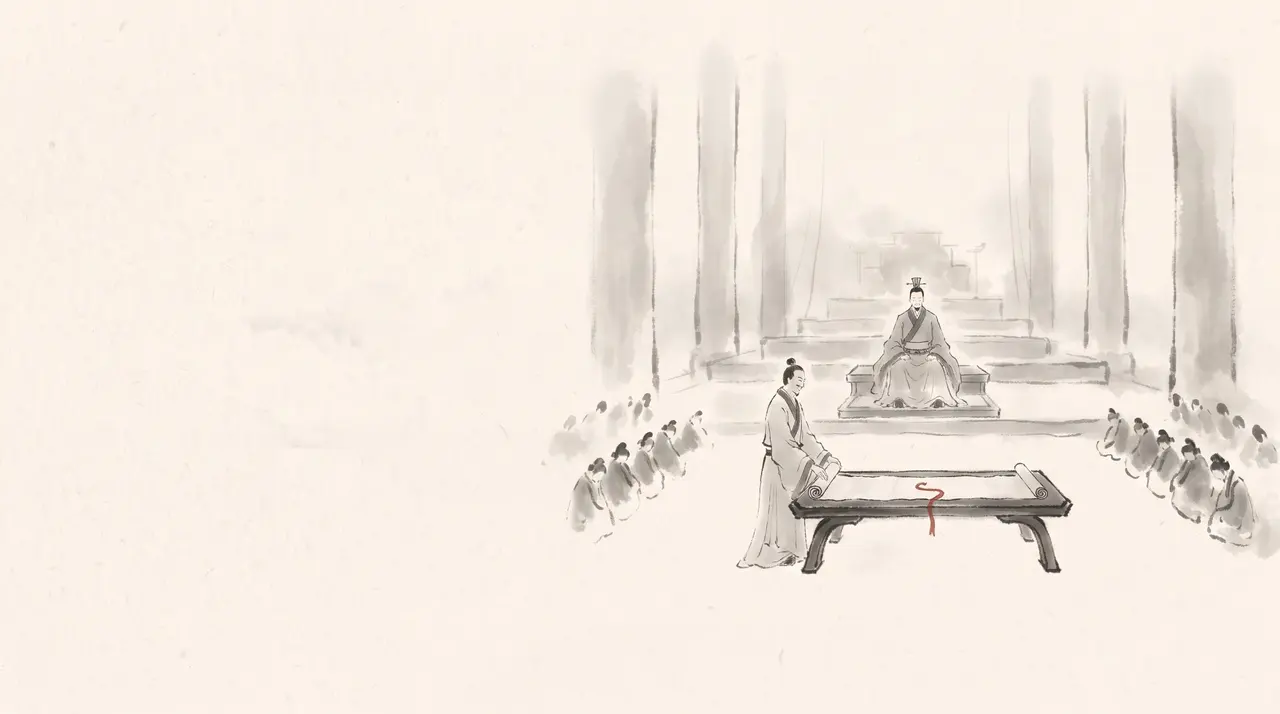 Zhang Yi: Is My Tongue Still There? 吾舌尚在Zhang Yi of Wei studied with Su Qin under Master Guigu. Beaten in Chu on suspicion of stealing a jade disc, he said, "As long as my tongue is still there, that is enough." Deliberately humiliated by his old classmate Su Qin, he was spurred on, and with Su Qin's secret help he entered the service of King Hui of Qin. As chancellor of Qin he built the "horizontal" alliances that tied each state to Qin one by one, and he tricked King Huai of Chu into breaking with Qi with a promise of six hundred li of land. When the furious King Huai seized him, he saved his life through the king's favorite, Zheng Xiu, and in the end brought Chu into alliance with Qin.
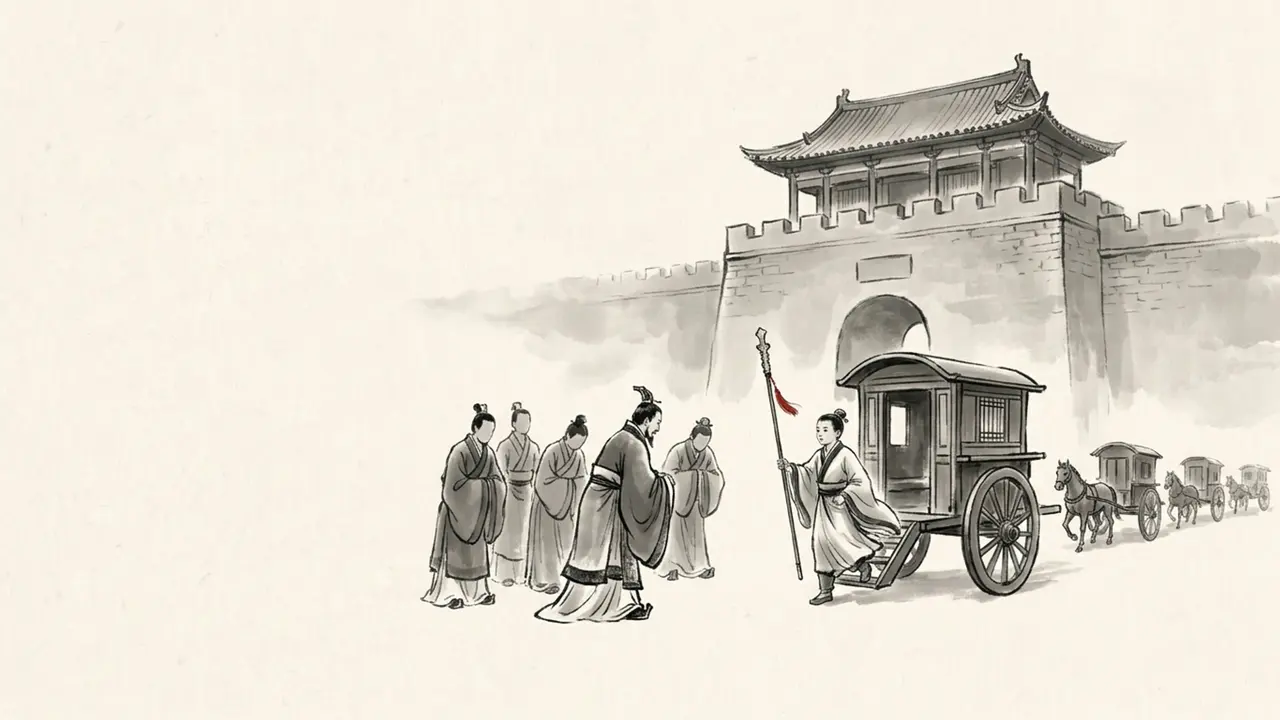 Gan Luo, a Minister at Twelve 甘羅十二The stories of three clever men who served Qin in the Warring States period. Chuli Ji, half-brother of King Hui, was called "the Bag of Wisdom"; on his deathbed he foretold that in a hundred years his tomb would lie between the palaces of a Son of Heaven, and under the Han it came true. When King Wu ordered Gan Mao to take the great Han city of Yiyang, Gan Mao first told him the story of Zeng Shen's mother, who ran for her life when three people in a row told her that her son had killed a man. "If my siege goes slowly," he said, "far more than three will slander me." So the king swore an oath with him at Xirang, and when the siege dragged on and the critics spoke up, Gan Mao reminded him, "Xirang is still there", and went on to take the city. His grandson Gan Luo served the chancellor Lü Buwei at the age of twelve. He talked the general Zhang Tang into a journey he dreaded by reminding him how Bai Qi had died, and then went himself as envoy to Zhao, and without a battle persuaded its king to hand five cities to Qin. For this he was made a high minister.
 Brought Down by One Man's Words 一夫開說The life of Wei Ran, Marquis of Rang, younger brother of Queen Dowager Xuan, mother of King Zhaoxiang of Qin. When King Wu died without a son, Wei Ran put down the struggle among the princes and set his nephew on the throne, then ruled together with the queen dowager. As chancellor of Qin he raised Bai Qi to command, who cut down two hundred and forty thousand men of Han and Wei at Yique and took Ying, the capital of Chu, carrying Qin's borders far to the east. Besieging Daliang, he listened to Xu Gu, a minister of Wei, and lifted the siege. But his wealth came to exceed the royal house's, and when Fan Ju, newly arrived from Wei, told the king that the queen dowager ruled alone and the marquis wielded power among the lords, Wei Ran was dismissed, sent out through the pass, and died on his fief at Tao.
 Bai Qi and Wang Jian: The Generals Who Conquered for Qin 長平之戰Bai Qi, a general of Qin, took more than seventy cities in his life, and at Changping he buried alive four hundred thousand surrendered soldiers of Zhao. But he fell out with the chancellor Fan Ju, refused to lead the attack on Handan and angered the king. Before killing himself he said, "At Changping I tricked the surrendered men and killed them all; that alone is enough to deserve death." Later, after the young general Li Xin, who claimed two hundred thousand men would be enough, was crushed by Chu, the great general Wang Jian destroyed Chu with six hundred thousand. Before setting out he kept begging the king for fields and houses, so that the king would not suspect him.
 A Square Peg in a Round Hole 持方枘欲內圜鑿A collective biography of the thinkers of the Warring States. Sima Qian begins by saying that whenever he read how King Hui of Liang asked Mencius what profit he would bring his state, he put down the book and sighed. Mencius taught the virtue of Yao, Shun and the Three Dynasties, but the lords, bent on wealth, power and shifting alliances, would not listen, so he wrote the seven books of the Mencius with his disciples. Zou Yan, the philosopher of yin and yang and the five phases, taught that China was only one eighty-first of the world, and was received in great honour: King Hui came out to meet him, and King Zhao of Yan swept the road before him. Sima Qian contrasts this with the hardships of Confucius and Mencius: "Try to fit a square peg into a round hole, and it will not go in." The scholars of the Jixia academy in Qi included Chunyu Kun, who stayed silent before King Hui because he saw that the king's mind was on a fine horse and a singer. Last comes Xunzi, three times head of the scholars of Qi and later magistrate of Lanling in Chu, who hated the corrupt politics of his age and wrote tens of thousands of words before he died.
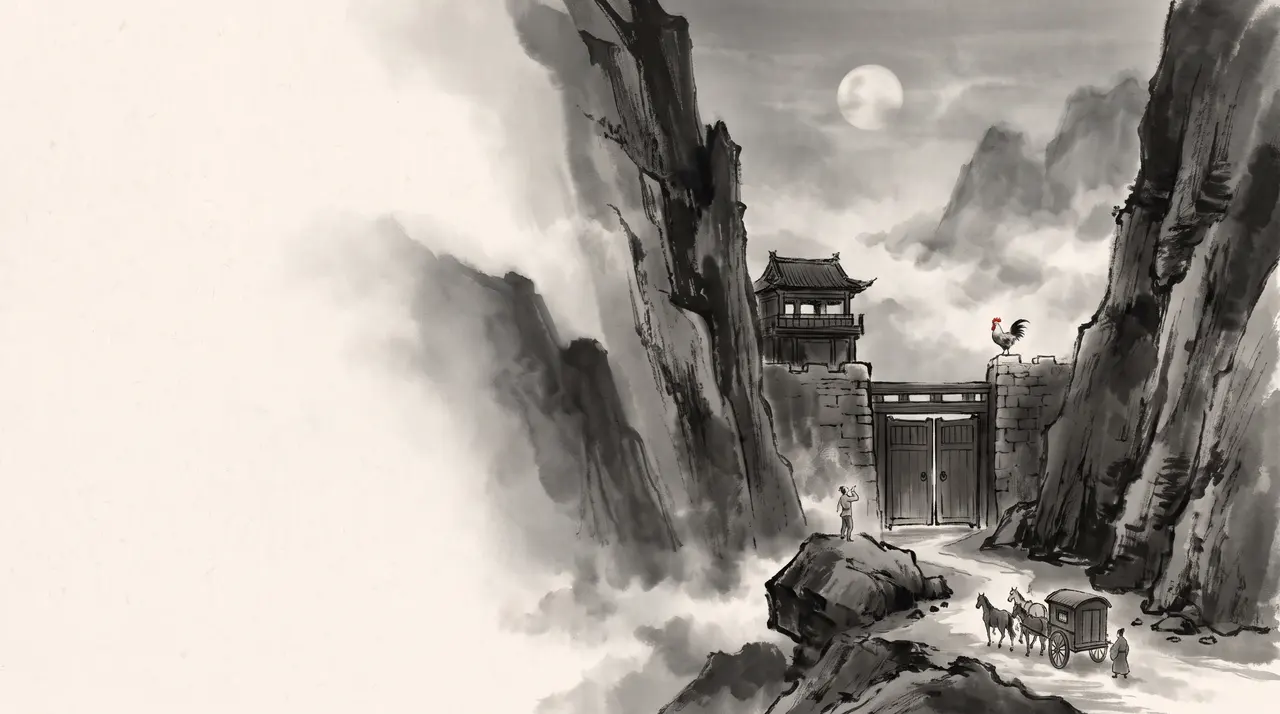 Lord Mengchang: The Cock-Crow and the Dog-Thief 鷄鳴狗盜Tian Wen, later Lord Mengchang, is born on the fifth day of the fifth month, a date said to bring harm to parents, and his father nearly abandons him. But the boy silences his father with a clever question and in time becomes his heir. Lord Mengchang keeps thousands of retainers, high and low alike. When King Zhao of Qin holds him prisoner, he escapes through the Hangu Pass thanks to two men the other guests despised: a thief who steals like a dog and a man who crows like a cock. His retainer Feng Huan, who sings complaints about his treatment, wins the hearts of the people of Xue by burning their debt contracts, and when Lord Mengchang falls from power, Feng Huan reminds him that people crowd the market only in the morning.
 Lord Pingyuan: Mao Sui Puts Himself Forward 毛遂自薦Lord Pingyuan, a prince of Zhao, kept thousands of guests. When he will not behead a lady who laughed at a lame man, half his guests leave him, and he hurriedly has her executed. When Qin besieges Handan, he goes to Chu to ask for help. For the twentieth place in his party, Mao Sui, who has gone unnoticed for three years, puts himself forward. "A worthy man is like an awl in a bag: its point shows at once," says the lord. "Then put me in the bag today," Mao Sui replies. In the palace of Chu he advances on the king, sword in hand, and makes him swear the alliance, and Lord Pingyuan declares that "Master Mao's three-inch tongue is stronger than an army of a million."
 Lord Xinling: The Stolen Tally 竊符救趙Lord Xinling, a prince of Wei, honored men regardless of their station and gathered three thousand guests. He went in his own carriage to fetch Hou Ying, a seventy-year-old gatekeeper, and did not change his expression even when Hou Ying kept him waiting in the market. When Qin besieged Handan, the King of Wei, afraid of Qin, halted his relief army. Lord Xinling set out to die with his guests, but Hou Ying gave him a plan: have Lady Ru steal the army's tally from the king's bedchamber. With the butcher Zhu Hai, Lord Xinling seized General Jin Bi's army and saved Zhao, and Hou Ying, as he had promised, faced north and took his own life. Later Qin's agents turned the king against Lord Xinling, and he drank himself to death.
 Lord Chunshen: When You Should Decide and Do Not 當斷不斷Huang Xie of Chu persuades King Zhao of Qin not to attack Chu: "When two tigers fight, a worthless dog profits from their exhaustion." He smuggles the crown prince of Chu, a hostage in Qin, out of the country in disguise and stays behind to face death, but is pardoned thanks to Qin's chancellor. When the prince becomes king, Huang Xie becomes chief minister, is named Lord Chunshen and keeps three thousand guests. But for the childless king he provides Li Yuan's sister, already pregnant by him, and her son becomes crown prince. His retainer Zhu Ying warns him that Li Yuan plans to kill him, but Lord Chunshen will not listen, and just after the king's death he is cut down by Li Yuan's assassins at the palace gate.
 Fan Ju: Befriend the Far, Attack the Near 遠交近攻Fan Ju of Wei, suspected of selling secrets to Qi, is beaten nearly to death by the Wei chancellor Wei Qi, rolled in a reed mat and thrown into a latrine. Playing dead, he escapes, changes his name to Zhang Lu and goes to Qin, where he becomes chancellor after advising King Zhao to "befriend the distant and attack the near." Then Xu Gu, the man who once betrayed him, arrives as an envoy from Wei. Fan Ju goes to see him in rags, and Xu Gu, pitying him, gives him a thick silk robe. When Xu Gu learns who the chancellor really is, he strips to the waist and begs for his life. Fan Ju spares him because the robe "showed the feeling of an old friend," but demands the head of Wei Qi.
 The Conquest of Qi and the Letter to the King of Yan 樂毅伐齊與報燕王書The story of Yue Yi, the great general of Yan in the Warring States period. King Zhao of Yan, whose country had been trampled by Qi, attracted the worthies of the realm by first honouring the ordinary Guo Wei, and when Yue Yi came to Yan as an envoy from Wei, the king kept him and gave him high office. Allied with Zhao, Chu, Han and Wei, Yue Yi broke Qi, then stayed on alone and took more than seventy of its cities in five years, until only Ju and Jimo held out. But King Zhao died, and the new King Hui had never liked Yue Yi; Tian Dan of Qi spread rumours, Yue Yi was relieved of command, and fearing for his life he fled to Zhao. His successor was crushed by Tian Dan, and Qi won back every city. When King Hui wrote to reproach him, Yue Yi replied with his "Letter to the King of Yan", recalling the trust between him and the late king and the fate of Wu Zixu, and ending: "When a gentleman of old broke off a friendship, he spoke no evil of his friend." It is said that no one in later ages could read it without weeping.
 Returning the Jade Intact to Zhao 完璧歸趙The King of Qin offers fifteen cities for the famous jade disc of Mr. He. The envoy Lin Xiangru, by wit and nerve, brings the disc back to Zhao intact. This scene gave Chinese and Japanese their word for "perfect".
 Friends unto Death 刎頸之交At the meeting at Mianchi, Lin Xiangru pays the King of Qin back for insulting the King of Zhao and saves Zhao's honor. When the general Lian Po resents his rise, Xiangru avoids a quarrel for the sake of the state. Learning why, Lian Po comes with thorns on his back to apologize, and the two become "friends unto death".
 Zhao Kuo and Li Mu: Gluing the Pegs of the Zither 膠柱鼓瑟Zhao She, a general of Zhao, wins fame by defeating Qin at Eyu. His son Zhao Kuo can out-argue even his father on the art of war, but the father fears that "if Zhao is ever broken, it will be Kuo who breaks it." At Changping, the King of Zhao, taken in by Qin's agents, replaces Lian Po with Zhao Kuo, who walks into Bai Qi's trap and loses four hundred thousand men. Lian Po ends his days in exile, and Li Mu, the great defender of the northern frontier, is killed through Qin's schemes. Then Zhao falls.
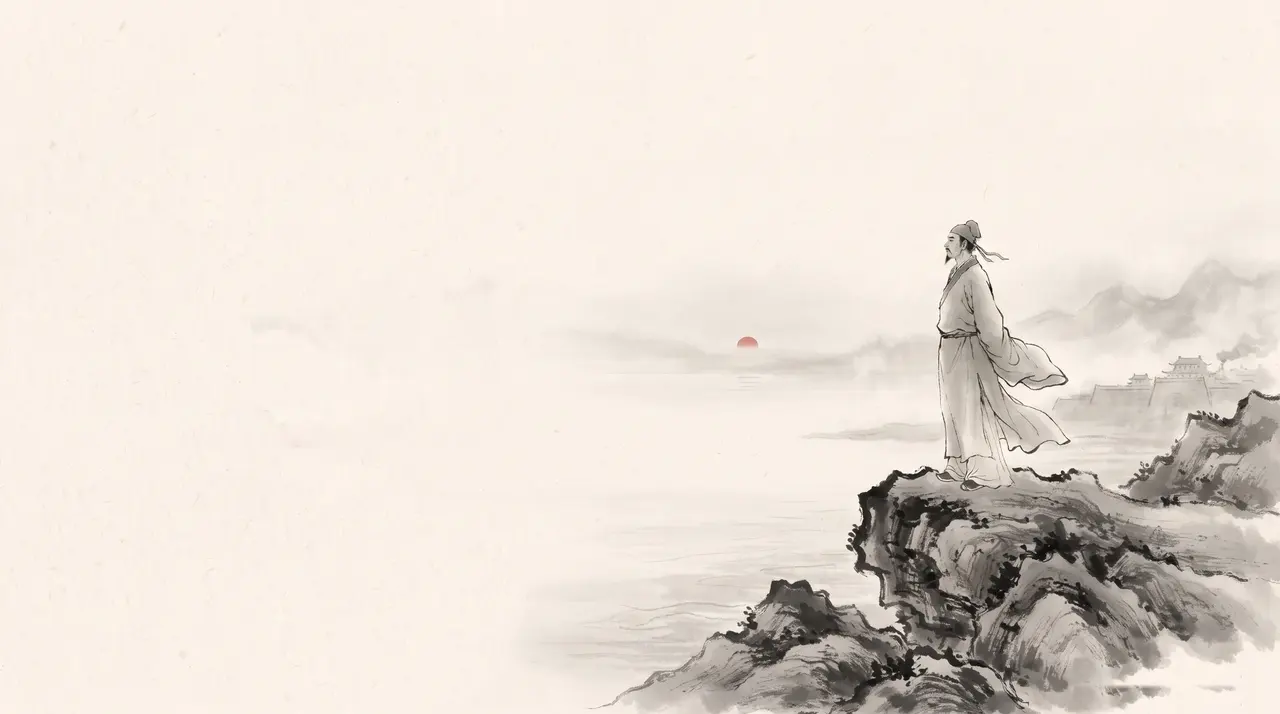 Lu Zhonglian: I Would Rather Walk into the Eastern Sea 蹈東海而死When Qin besieged Handan, the capital of Zhao, Xinyuan Yan, an envoy of Wei, urged Zhao to honor the King of Qin as emperor so that Qin would withdraw. Lu Zhonglian of Qi, who happened to be in Handan, went to see him and said, "If Qin makes itself emperor and rules the world, I will walk into the Eastern Sea and die. I will not be its subject." He set out the harm of making Qin emperor until Xinyuan Yan gave up the idea. The Qin army pulled back fifty li, and soon Lord Xinling's relief army lifted the siege. When Lord Pingyuan tried to give him a thousand gold, Lu Zhonglian said, "What makes a gentleman valuable is that he resolves other people's troubles and takes nothing," and went away.
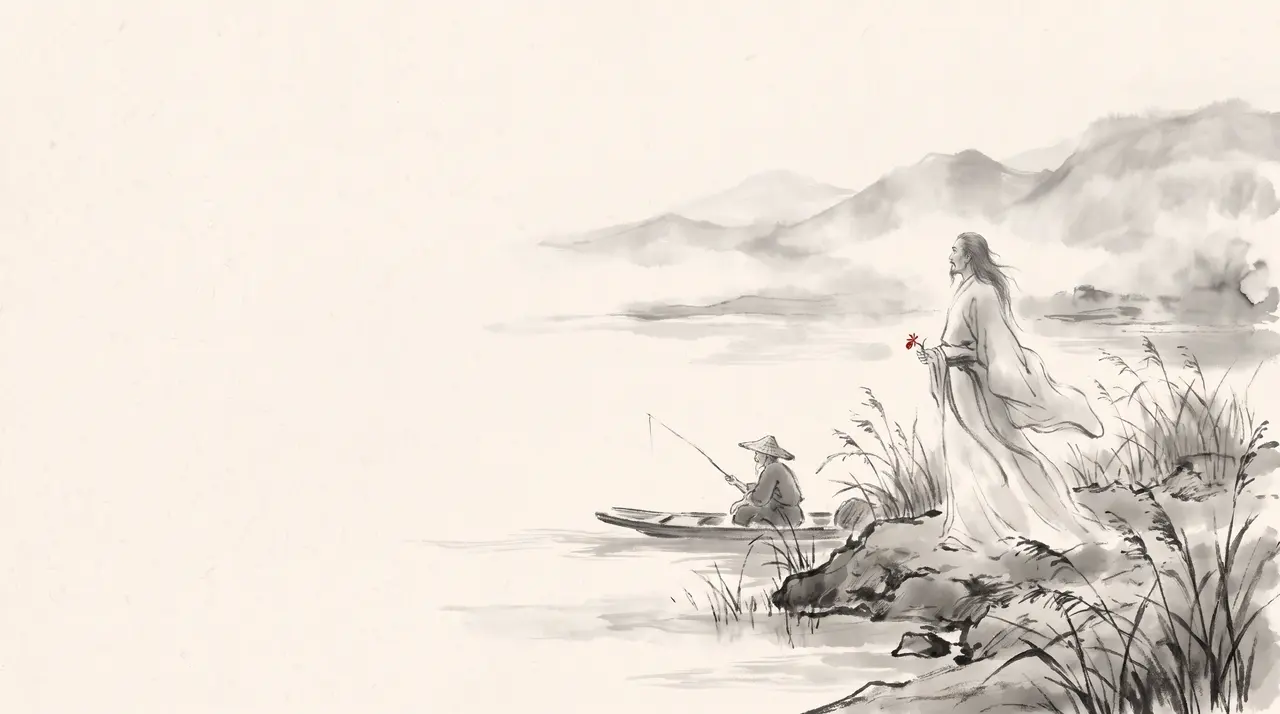 Qu Yuan: All the World Is Drunk 眾人皆醉Qu Yuan of Chu, once trusted by King Huai, is pushed aside after a rival's slander, and out of his sorrow he composes the long poem "Encountering Sorrow." King Huai, tricked by Zhang Yi of Qin with a promise of six hundred li of land, breaks his alliance with Qi and is badly beaten by Qin; then, against Qu Yuan's advice, he goes to Qin, is held there and dies. Under the next king, Qu Yuan is banished and wanders, haggard, along the riverbanks. When a fisherman asks why he does not just go along with the world, he answers, "The whole world is muddy, and I alone am clear; all men are drunk, and I alone am sober." Then he clasps a stone and drowns himself in the Miluo River.
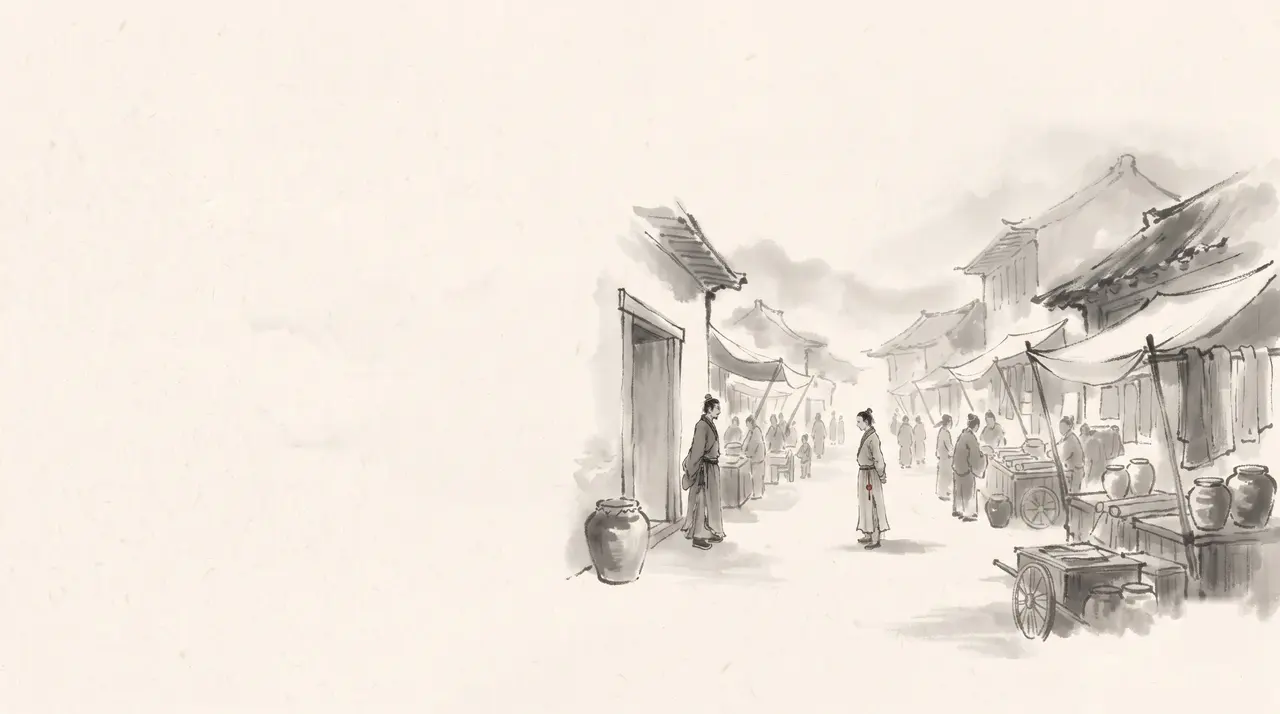 Lü Buwei: A Rare Treasure Worth Hoarding 奇貨可居Lü Buwei, a great merchant, notices Zichu, a prince of Qin held as a neglected hostage in Handan, and says, "This is a rare treasure worth hoarding." Staking his fortune, he goes to Qin, wins over the childless Lady Huayang and has Zichu named heir. He also gives Zichu his own favorite concubine, whose son is Zheng, the future First Emperor. When Zichu becomes king, Lü Buwei becomes chancellor; under Zheng he is honored as "Second Father," has his three thousand guests compile Lü's Annals, and hangs it at the market gate with a thousand pieces of gold for anyone who can improve a single character. But he is brought down with Lao Ai's rebellion, and at last, cornered by the King of Qin, he drinks poison.
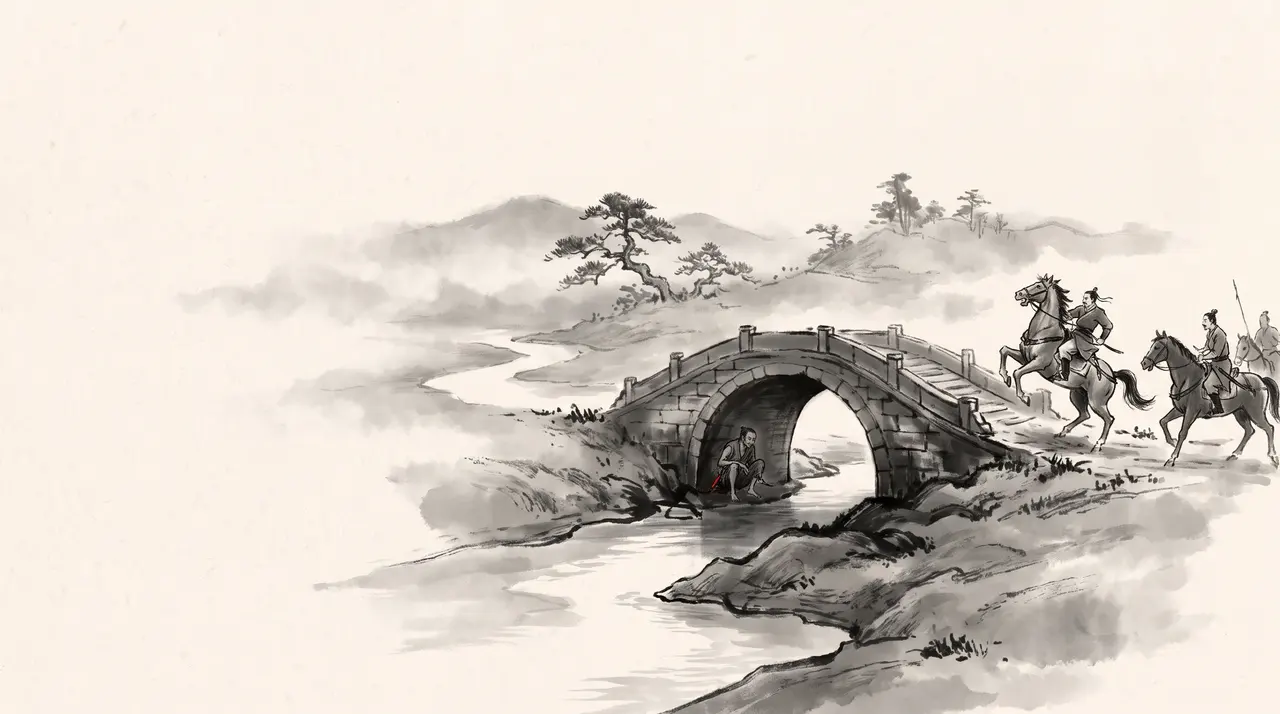 Yu Rang: Dying for the One Who Knows You 豫讓Of the five assassins in the Biographies of the Assassins, this is the story of Yu Rang of Jin. When Zhi Bo, who had treated him as the finest man in the state, was destroyed by Viscount Xiang of Zhao, Yu Rang vowed revenge, saying that a man of honour dies for the one who knows his worth. Disguised as a convict, he lay in wait in the palace privy, was found out, and was let go as a man of honour. Then he lacquered his skin and swallowed charcoal, so that not even his wife knew him, and went after the viscount again. When a friend said it would be easier to become the viscount's retainer and strike from close by, he refused: that would be serving a lord with a divided heart. Caught at last under a bridge, he asked to strike the viscount's robe, fulfilled his vow, and took his own life.
 Jing Ke Strikes at the King of Qin 荊軻刺秦王At the request of Prince Dan of Yan, Jing Ke approaches King Zheng of Qin, the future First Emperor, with a poisoned dagger rolled up inside a map. The farewell song at the Yi River, a moment of struggle in the Xianyang Palace, and failure. The best known of all the assassins' stories.
 Li Si: The Granary Rat and the Yellow Dog 黃犬之歎As a minor clerk in Chu, Li Si compares the rats in the latrine with the rats in the granary and decides that a man's worth depends on where he places himself. He studies under Xunzi and goes to Qin; when the king orders all foreigners expelled, he changes his mind with the words "Mount Tai does not refuse any clod of earth." He rises to be the First Emperor's chancellor, but at the height of his glory he worries that "things must not grow too great." After the emperor's death Zhao Gao talks him into forging the will. In the end Zhao Gao brings him down, and on his way to execution he sighs that he would like to go hunting hares with his yellow dog once more.
 Zhang Er and Chen Yu: Friends unto Death, and After 刎頸之交Zhang Er and Chen Yu, two famous men of Daliang in Wei, were a generation apart in age, but they became friends who would have their throats cut for each other. Hunted by Qin, they hid together as gatekeepers; in Chen Sheng's rising they won the land of Zhao and made Wu Chen its king. But when the Qin army besieged Julu, Chen Yu, outside the city, held back, saying his army was too small, and when Zhang Er was rescued he blamed him. Chen Yu angrily threw down his general's seal, and when Zhang Er accepted it the two broke apart. Chen Yu later attacked Zhang Er; Zhang Er went over to Han and in the end, with Han Xin, had Chen Yu beheaded on the Zhi River. The chapter closes with Zhang Er's son, Zhang Ao, King of Zhao, and his minister Guan Gao, who risked everything to prove his master innocent.
 The Tattooed King 當刑而王The story of Ying Bu, the convict with a tattooed face who became a king, and who was known ever after as Qing Bu, "Bu the Tattooed". As a youth he was told by a fortune-teller that he would be punished and then become a king, and when he was sentenced to have his face tattooed, he laughed: "That must be it!" Sent to labour on the First Emperor's tomb at Mount Li, he made friends with the leaders of the convicts and escaped with a band of them to the Yangzi, where they became bandits. In the risings against Qin he joined Xiang Yu, led his vanguard to victory after victory, carried out the massacre of two hundred thousand surrendered Qin soldiers, and was made King of Jiujiang. But when Xiang Yu called on him for troops, he pleaded illness, and the envoy Sui He talked him into going over to Liu Bang. Liu Bang received him while having his feet washed, and Ying Bu was so furious that he wanted to kill himself; then he saw that his lodgings were as grand as the king's own, and he was overjoyed. Made King of Huainan when peace came, he took fright when Han Xin was executed and the pickled flesh of Peng Yue was sent round to the lords. A servant's accusation over a favourite concubine drove him into open revolt. When Liu Bang asked him why he had rebelled, he answered: "I want to be emperor, that is all." He was defeated and killed.
 Han Xin: Peerless in the Realm 國士無雙As a young man, the poor Han Xin lives off other people and even crawls between a bully's legs. When he deserts Liu Bang for want of a chance, Xiao He rides after him, calls him "peerless in the realm" and has him made supreme general. Later, against Zhao, he wins a great victory by drawing up his army with its back to a river.
 The End of Han Xin: When the Hare Is Dead 狡兔死良狗亨Kuai Tong urges Han Xin, now King of Qi, to break with Han and split the realm in three, but Han Xin refuses out of gratitude to Liu Bang. After Xiang Yu falls, Han Xin becomes King of Chu, rewards the washerwoman with a thousand pieces of gold and gives a post to the bully who made him crawl. But he is accused of rebellion and arrested, crying, "When the cunning hare is dead, the good hound is boiled." Later, accused of plotting with Chen Xi, he is lured into the palace by Empress Lü and Xiao He and beheaded. The end of the man "peerless in the realm," with the famous words "the more the better."
 Like a Lame Man Who Longs to Walk 如痿人不忘起The lives of three men whom Liu Bang made great and who ended by fleeing north to the Xiongnu. Han Xin, King of Han — not the Marquis of Huaiyin — was a descendant of the royal house of Han, who told the King of Han that his soldiers all longed to go home east, and that their eagerness could win him the realm. Moved north to Taiyuan to face the Xiongnu, he was suspected for sending envoys to seek peace, and surrendered to them at Mayi; Gaozu marched against him and was surrounded by the Xiongnu for seven days on Mount Baideng. Han Xin wrote to a Han general that, guilty of three crimes, he could not ask to live, and was killed. Lu Wan, born in the same village on the same day as Gaozu, rose to be King of Yan, but during Chen Xi's revolt his dealings with the Xiongnu, urged by his minister Zhang Sheng, came to light; he fled to the Xiongnu and died among them. Chen Xi, suspected for the crowds of guests he kept, was driven into revolt.
 The Dog Butcher and the Silk Seller 屠狗賣繒The stories of four men from Liu Bang's home country who became great ministers of the Han. Fan Kuai was a dog butcher in Pei. At the feast at Hongmen, when he heard that Liu Bang was in danger, he forced his way past the guards with his shield, drank the great cup of wine and ate the raw pork shoulder that Xiang Yu gave him, and saved his master. When Liu Bang, old and ill, shut himself away with only a eunuch for company, Fan Kuai burst through the door and wept: "Have you forgotten Zhao Gao?" But because he had married Empress Lü's sister, he was suspected of siding with her clan, and was nearly beheaded. Li Ji, the son of Li Shang, tricked his close friend Lü Lu into giving up the Northern Army, and was said to have sold his friend. Xiahou Ying was a driver at the Pei county stables. When the young Liu Bang injured him in play, Xiahou Ying spent more than a year in prison and took hundreds of lashes rather than give his friend away. In the rout at Pengcheng, when Liu Bang, fleeing for his life, kept kicking his two children out of the carriage to lighten it, Xiahou Ying picked them up every time; the boy became Emperor Hui. Guan Ying had been a silk seller; he led the cavalry that chased Xiang Yu to Dongcheng, where his men cut the hegemon down. Sima Qian marvels that men who once killed dogs and sold silk left names that would last for ever.
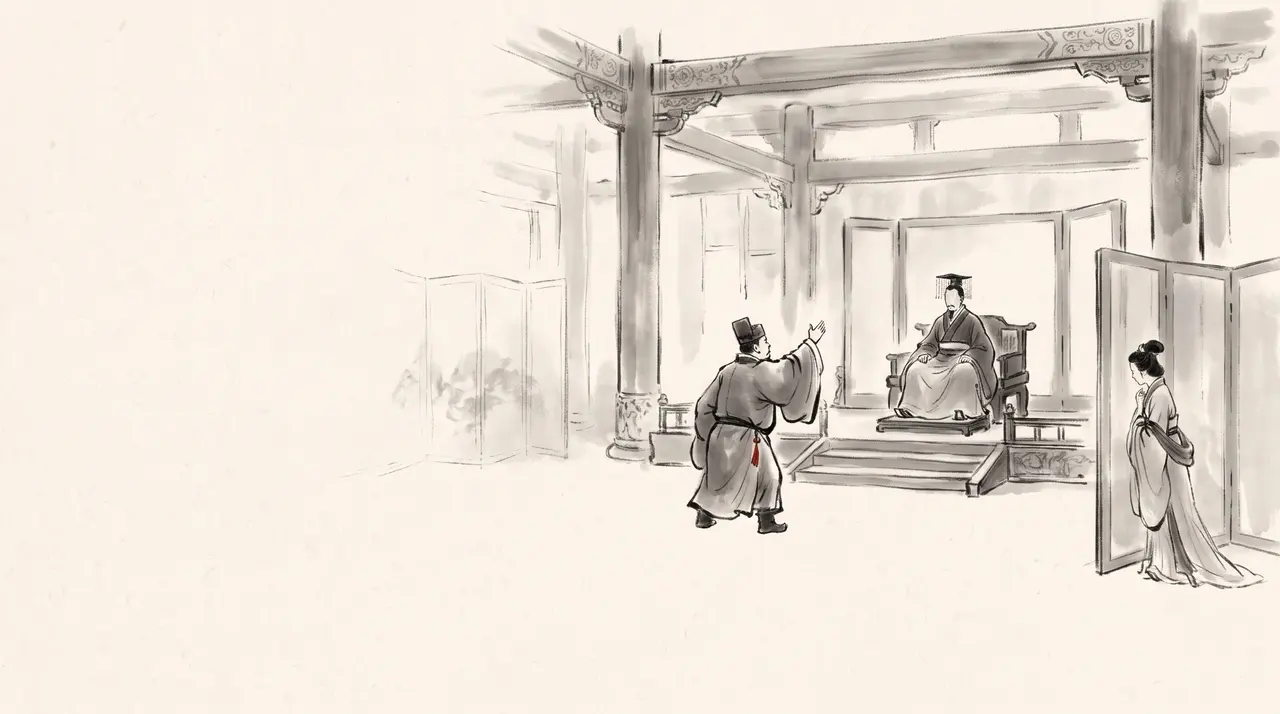 The Stammering Minister 周昌期期The stories of three chancellors and ministers of the early Han. Zhang Cang had been a Qin clerk; when he was about to be beheaded for a crime in Liu Bang's army, his body, stripped for execution, was so big and white, like a gourd, that Wang Ling noticed him and saved his life. He became a great chancellor, expert in the calendar and the musical pitches, honoured Wang Ling like a father all his life, and lived to over a hundred. Zhou Chang stammered, but he was utterly straight. When Liu Bang wanted to replace Empress Lü's son as heir with Ruyi, the son of Lady Qi, Zhou Chang said: "I c-can't say it with my mouth, but I k-k-know it's wrong," and made the emperor laugh, and saved the heir; Empress Lü knelt to thank him. Later he was sent to be chancellor of Zhao to protect Ruyi, but Empress Lü summoned the boy and poisoned him, and Zhou Chang died three years later. Shentu Jia, Emperor Wen's chancellor, summoned the emperor's favourite Deng Tong for clowning at court and was about to behead him, until the emperor sent a messenger to beg for him. But when he tried to punish Chao Cuo, the emperor Jing protected Chao Cuo, and Shentu Jia died vomiting blood, saying he should have beheaded him first.
 The Wild Scholar Li Yiji, and Ruling from Horseback 酈生與陸賈Two persuaders in the service of Liu Bang. Li Yiji was a poor gatekeeper over sixty whom everyone called "the wild scholar". When the Lord of Pei, who despised Confucians, received him while two women washed his feet, Li bowed without kneeling and rebuked him for sprawling before an elder, and the Lord of Pei hastily straightened his clothes and gave him the seat of honour. Later Li talked the seventy cities of Qi into surrender with nothing but his tongue, but when Han Xin attacked Qi anyway, the King of Qi believed he had been betrayed and had Li boiled alive. Lu Jia persuaded Zhao Tuo, who had made himself king in the far south, to submit to Han; to Gaozu, who mocked the classics, he said: "You won the realm on horseback, but can you rule it from horseback?", and wrote the New Discourses. In the days of the Lü clan he urged Chancellor Chen Ping to make a firm friend of General Zhou Bo, laying the ground for the fall of the Lü.
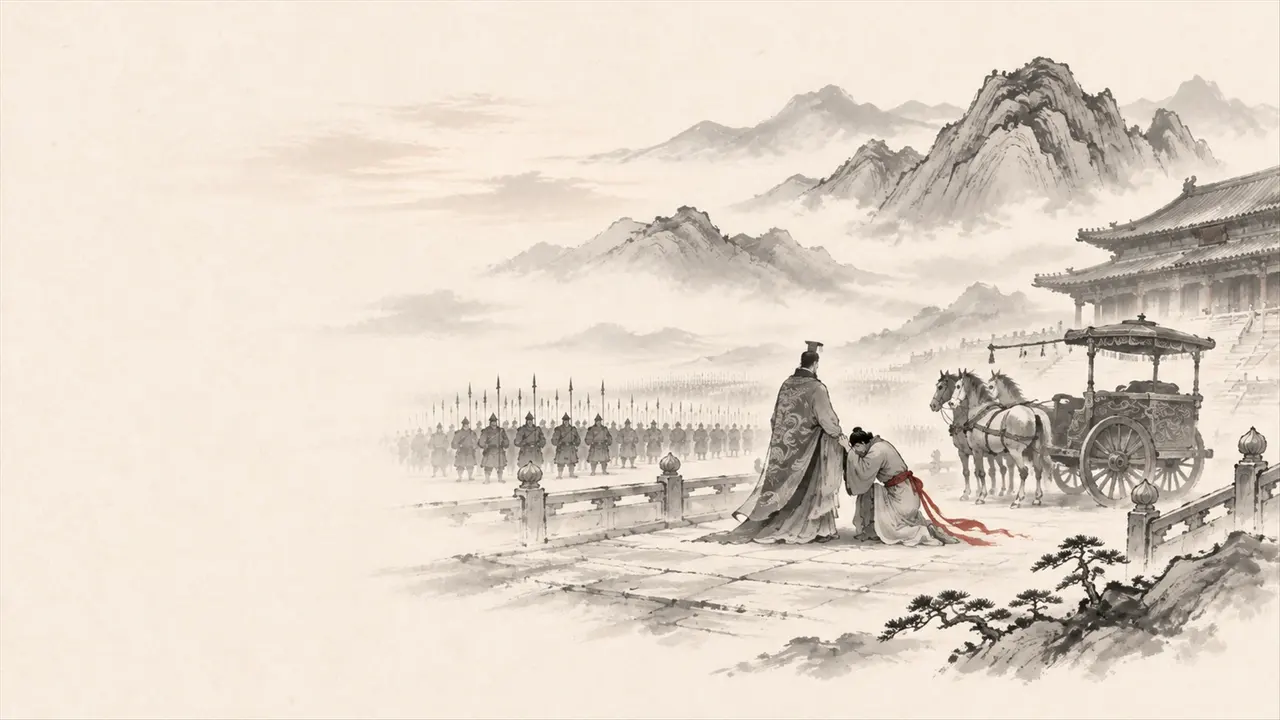 The General Who Wept for His Lord 未嘗不垂涕The lives of three generals who followed Liu Bang from the start. Fu Kuan fought Qin and Chu as a cavalry commander, helped Han Xin and Cao Can conquer Qi, became Marquis of Yangling and served as chancellor of Qi and Dai. Jin Xi campaigned everywhere as Commandant of Cavalry, broke the armies of Zhao, took the King of Jiangling alive and settled the commandery of Nan, becoming Marquis of Xinwu; his record is kept in detail — ninety heads, fourteen armies broken, fifty-nine cities taken. Zhou Xie, who always rode beside Gaozu in his carriage, never left him even when the fighting went badly. When Gaozu meant to march against Chen Xi himself, Zhou Xie wept that even the First Emperor had never gone in person — was there no one else to send? — and Gaozu was touched that he loved him so. The Grand Historian calls the first two men's success a gift of Heaven, and Zhou Xie a true gentleman of steady heart.
 The Day Gaozu Knew He Was Emperor 知為皇帝之貴The stories of two men who gave the new Han state its shape. Lou Jing of Qi, on his way to frontier duty, asked to see Liu Bang still wearing his sheepskin coat, and told him to make his capital not at Luoyang but in the old land of Qin, walled in by mountains and rivers. Zhang Liang agreed, Liu Bang moved west that same day, and gave Lou Jing the imperial surname Liu. Liu Jing was jailed for warning against an attack on the Xiongnu, but released when Liu Bang was trapped by them for seven days at Pingcheng, and he devised the policy of marrying a princess to the Chanyu. Shusun Tong had been a Qin court scholar; he soothed the Second Emperor by calling Chen Sheng's rising mere petty theft, then escaped Qin as if from a tiger's jaws. Serving Liu Bang, he saw a court where drunken ministers hacked at the pillars with their swords, and told him that Confucians were no use for winning an empire but could help to keep one; then he devised the rites of the court. When the ceremony was performed in perfect order in the Changle Palace, Liu Bang said: "Today at last I know how noble it is to be emperor." Sima Qian ends by saying that a coat worth a thousand gold is not made from the fur of a single fox: the Han too was built on many men's wisdom.
 Yuan Ang, Chao Cuo and the Rebellion of the Seven States 袁盎與鼂錯Two ministers of Emperors Wen and Jing who hated each other. Yuan Ang told Emperor Wen that the proud chancellor Zhou Bo was "a minister who happened to win merit, not a minister who lives and dies with the state"; he stopped the emperor from galloping down a dangerous slope, and when the favourite Lady Shen tried to sit level with the empress, he moved her seat and asked the emperor: "Have you forgotten the human swine?" Chao Cuo, a stern and brilliant student of Legalism, was known as the crown prince's "bag of wisdom". When the prince became Emperor Jing, Chao Cuo set out to cut down the lands of the kings and strengthen the throne; his father, saying that the Liu would be safe but the Chao in danger, poisoned himself. Ten days later Wu, Chu and five other kingdoms rose in revolt in the name of punishing Chao Cuo, and on the advice of his enemy Yuan Ang, Emperor Jing had Chao Cuo beheaded in the Eastern Market still in his court robes. The rebellion went on all the same, and the emperor later admitted that he regretted it. Yuan Ang, in his turn, was murdered by assassins sent by the King of Liang.
 "The Law Belongs to the Whole Realm" 法者天下公共The stories of two men who spoke their minds to Emperor Wen of the Han. Zhang Shizhi went ten years without promotion and was about to give up when Yuan Ang spotted his worth. When Emperor Wen wanted to promote a glib junior clerk who had answered all his questions, Zhang Shizhi warned him that great men like Zhou Bo were slow of speech, and that Qin had fallen by trusting clever officials. As commandant of justice, he fined a man who had frightened the emperor's horses, and when the emperor raged he replied: "The law is something the Son of Heaven shares with the whole realm. If it is made heavier than it is, the people will not trust it." For a thief who stole a jade ring from Gaozu's temple he asked only the death the law laid down, and talked the emperor out of wiping out the man's whole family. Old Master Wang made him kneel before the whole court to tie his garters, and so made his name greater still. The other man, Feng Tang, was an aged palace attendant who told Emperor Wen to his face: "Even if Your Majesty had Lian Po and Li Mu, you could not use them." Then he explained that a general on the frontier must be left free to act, and saved Wei Shang, the governor of Yunzhong, who had been punished for miscounting the heads of the enemy by six.
 Counting the Horses 六馬Biographies of men who had neither learning nor eloquence, but rose by care and filial devotion. Shi Fen began serving Gaozu at fifteen; he and his four sons all became officials of two thousand dan, so he was called the Lord of Ten Thousand Dan. He always stepped down from his carriage at the palace gate, and when his sons or grandsons did wrong he did not scold them but refused to eat. His eldest son Shi Jian, an old man himself, still washed his father's underclothes with his own hands, and trembled for his life when he found a stroke missing from the character "horse" in a memorial. Even the youngest and most easygoing son, Shi Qing, when the emperor asked how many horses drew his carriage, counted them one by one with his whip before raising his hand: "Six." The chapter also tells of Wei Wan, who kept six swords from the late emperor unused; Zhi Buyi, who, accused of an affair with his brother's wife, said only, "I have no elder brother"; and Zhang Ou, who wept as he sealed sentences of death. Sima Qian judges them by Confucius' saying that a gentleman wishes to be slow in speech and quick in action.
 Let the Liang Affair Rest 上毋以梁事為也The lives of Tian Shu of Zhao and his son Tian Ren. Tian Shu served Zhang Ao, King of Zhao. When the plot of Guan Gao and others to murder Gaozu came to light and a decree declared that anyone who followed the king would be punished to the third degree of kin, Tian Shu, with Meng Shu and others, shaved his head, put on an iron collar and, calling himself a slave of the royal house, followed the king to Chang'an; Gaozu, struck by their loyalty, made them governors. Asked by Emperor Wen whether he knew any true elder of the realm, he defended Meng Shu, dismissed after a Xiongnu raid, as exactly that. Under Emperor Jing he investigated the murder of Yuan Ang ordered by the King of Liang, found out the truth, and persuaded the emperor to let it rest for the empress dowager's sake. As chancellor of Lu he made the king repay what he had taken from the people himself. His son Tian Ren, in Master Chu's additions, was picked out with his friend Ren An from among Wei Qing's retainers, but both were put to death in the affair of the crown prince.
 The Six Incurables 六不治The lives of two great physicians of ancient China. Bian Que is said to have received a secret drug and books from a mysterious old man, and to have gained the power to see inside the body. He raised up the Crown Prince of Guo, who was thought to be dead, with needles and medicine, but said: "I cannot bring the dead to life. He was going to live, and I only got him up." Four times he warned Marquis Huan of Qi of his advancing illness and was ignored, and he listed the six kinds of patient who cannot be cured. His fame led a jealous court physician of Qin to have him killed. Under the Han, Chunyu Yi, Master Cang, was charged with a crime, and his youngest daughter Tiying wrote to Emperor Wen offering herself as a slave in his place, which led to the end of mutilating punishments. The case records he submitted are a precious source for the history of medicine.
 The Face of a Rebel 若狀有反相The story of Liu Pi, King of Wu, who led the Rebellion of the Seven States under Emperor Jing. Liu Pi, son of Liu Bang's elder brother, was made King of Wu after fighting against Ying Bu, but Liu Bang told him: "You have the look of a rebel. Fifty years from now there will be trouble in the south-east; will it be you? Never rebel." Wu grew rich by casting coins from its copper mountains and boiling sea water for salt, and won its people over by taxing them nothing. Under Emperor Wen, the heir of Wu quarrelled with the crown prince, the future Emperor Jing, over a board game, and was struck dead with the board. From then on the King of Wu claimed to be ill and stopped coming to court. When Emperor Jing came to the throne, Chao Cuo urged him to cut down the kings' lands: "Cut them and they will rebel; leave them and they will rebel. Cut them and they will rebel sooner, with less harm." The King of Wu plotted with the King of Jiaoxi and others, and at sixty-two led his own army out with seven states in revolt. Emperor Jing followed Yuan Ang's advice and had Chao Cuo executed, but the King of Wu would not stop: "I am already the Emperor of the East." When Liang held firm and Zhou Yafu cut off Wu's supplies, the starving army of Wu broke, and the king fled to Dong'ou, where he was killed. The rebellion was crushed in three months.
 The Quarrel at the Wedding Feast 首鼠兩端The story of two in-laws of the imperial house who fought each other at the start of Emperor Wu's reign. Dou Ying, Marquis of Weiqi, was a nephew of Emperor Wen's empress Dou, and as grand general had done great service in the Rebellion of the Seven States. When Emperor Jing said over wine that he would pass the throne to his brother the King of Liang, Dou Ying told him: "The realm is Gaozu's realm," and earned the hatred of Empress Dowager Dou. Tian Fen, Marquis of Wu'an, was the younger brother of Emperor Jing's empress Wang. When Emperor Wu came to the throne he became chancellor, appointed officials as he pleased, and grew so arrogant that the emperor asked him why he did not take the arsenal too. When Empress Dowager Dou died and Dou Ying lost his power, the only man who stood by him was Guan Fu, a blunt general who could not hold his drink. At the feast for Tian Fen's wedding, Guan Fu, angered by the rudeness of Tian Fen and his guests, cursed the company and was arrested. Dou Ying tried to save him, and Emperor Wu had the two marquises argue the case in the Eastern Court of the empress dowager; but the ministers would not take a clear side, and the empress dowager, furious, refused to eat. Guan Fu was executed with his whole clan, and Dou Ying was beheaded for forging an imperial edict. That spring, Tian Fen fell ill and died, as if haunted by the ghosts of the two men.
 Can Dead Ashes Burn Again? 死灰獨不復然乎The story of Han Anguo, who served King Xiao of Liang and later became Emperor Wu's grand secretary. Having made his name defending Liang in the Rebellion of the Seven States, he wept before Emperor Jing's sister to plead the King of Liang's loyalty and filial love, when the emperor and Empress Dowager Dou were angry at the king's extravagance, and made peace between the brothers. When he was in prison for an offence and the jailer Tian Jia insulted him, he said: "Do you think dead ashes cannot burn again?" "If they do, I'll piss on them," said Tian Jia. Soon Han Anguo was made chief minister of Liang, but he forgave Tian Jia, who had fled, and treated him well. When the King of Liang hid Gongsun Gui and Yang Sheng, who had had Yuan Ang murdered, Han Anguo wept as he reproached him until he gave them up. Under Emperor Wu, when the Xiongnu asked for peace, he argued against war: "At the end of its flight, an arrow from the strongest crossbow cannot pierce the thinnest silk." The next year a plan was made to lure the Xiongnu into an ambush at Mayi, and Han Anguo was one of its generals; but the Chanyu learned of the trap from a captured officer and turned back. In his last years, defeated by the Xiongnu, he fell into gloom, coughed blood, and died.
 Modu and the Whistling Arrow 鳴鏑The history of the Xiongnu, the nomads who followed their horses and sheep across the northern steppe. Modu, the Chanyu's heir, trained his men with a whistling arrow, beheading any who did not shoot at what it struck, until they shot his best horse, his beloved wife and finally his father, and he took the throne. He lulled the Donghu by giving up a horse and a queen, then destroyed them the moment they asked for land, "the root of the state," and united the steppe. He surrounded Gaozu for seven days at Baideng and forced Han into a humiliating peace. The defecting eunuch Zhonghang Yue taught the Xiongnu not to depend on Chinese goods and out-argued Han envoys. Emperor Wu moved from the failed trap at Mayi to all-out war, and the victories came at a heavy price. At the close, choosing his words with care, Sima Qian says twice that everything depends on choosing the right generals and ministers.
 The Xiongnu Are Not Yet Destroyed 匈奴未滅Wei Qing was born the son of a slave woman in a marquis's household. He herded sheep and was treated as a slave by his half brothers. When his sister Wei Zifu won the love of Emperor Wu his fate changed, and victory after victory over the Xiongnu carried him to the rank of Grand General. He was a careful man who gave credit to his officers and kept to the law. His nephew Huo Qubing won his first battle at eighteen, took the land west of the Yellow River, received the surrender of the Hunye King, and on the great campaign north of the Gobi offered sacrifice to Heaven on Mount Langjuxu. He is remembered for saying that he could not think of a home while the Xiongnu were undestroyed, but he also ignored the hunger of his men. Together they transformed the northern frontier, yet the glory of the Wei family did not last. Sima Qian, whose sympathies lie with Li Guang, portrays them both with a cool pen.
 My Day Is Ending and the Road Is Long 吾日暮途遠The story of two very different men who rose under Emperor Wu. Gongsun Hong herded pigs in his youth, began to study after forty and became an erudite at sixty. He slept under a hemp quilt and ate one meat dish, never contradicted the emperor in court but let him choose; when the blunt Ji An called his quilt a sham, he admitted it so gracefully that he rose higher still, becoming chancellor and Marquis of Pingjin. But beneath his broad manner he was deep and jealous, and quietly paid back those who crossed him. Zhufu Yan, shut out by the Confucians of Qi, wandered from court to court in poverty until a single letter made Emperor Wu exclaim "Why have we met so late?" and promote him four times in a year. He proposed the decree that let lords divide their lands among their sons, weakening them without a fight; the ministers feared his tongue and paid him bribes. "My day is ending and the road is long," he said; but when the King of Qi killed himself, Gongsun Hong pressed for his death, and he and his clan were executed. Of all his thousands of guests, only Kong Che came to bury him.
 Two Heroes Cannot Both Stand 兩雄不俱立The ninety-three years of the kingdom of Southern Yue, in what is now Guangdong, Guangxi and northern Vietnam, from its founding to its fall. Zhao Tuo, a Qin official, was told by the dying commandant Ren Xiao that this land could become a kingdom of its own, and when Qin fell he made himself King of Southern Yue. Under Empress Lü he even called himself emperor, but when Emperor Wen sent Lu Jia to him, he wrote humbly as "the old man, great chief of the barbarians, your subject Tuo", declared that "two heroes cannot both stand", and gave up the imperial title. Four reigns later, when the queen mother, a woman from the Central States, tried to hand the kingdom to the Han, the chancellor Lü Jia, who had served three kings, stood against her. At a banquet the queen mother even tried to spear him; in the end Lü Jia killed the king, the queen mother and the Han envoys, and wiped out Han Qianqiu's relief force. Emperor Wu sent Lu Bode and Yang Pu with their armies; the city of Panyu burned and surrendered, and Southern Yue became nine commanderies.
 A King's Head for the Son of Heaven 殺王以謝天子The story of Minyue and Dong'ou (Donghai), kingdoms of Yue descended from King Goujian, in what is now Fujian and Zhejiang. Wuzhu and Yao, stripped of their kingdoms by Qin, were made kings again for helping Han. Early in Emperor Wu's reign, when Minyue besieged Dong'ou and it begged for help, the Grand Commandant Tian Fen said the Yue were always fighting, but the palace grandee Zhuang Zhu argued that a Son of Heaven who would not save a small state could not be father to ten thousand, and troops went by sea. Later, when Minyue attacked Southern Yue and Han armies drew near, the king's brother Yushan and the clan killed King Ying and sent his head to Han, saving the kingdom. Made King of Eastern Yue, Yushan sat on the fence during the war on Southern Yue and at last carved a seal reading "Martial Emperor" and rebelled; attacked from all sides, he was killed by his own men, and the emperor moved the people to the Yangzi and Huai, leaving the land empty.
 Both Armies Shamed, No General Rewarded 兩軍俱辱,將率莫侯The rise and fall of the kingdom of Chaoxian in the north of the Korean peninsula, and its conquest by Emperor Wu. When Lu Wan, King of Yan, fled to the Xiongnu, a man of Yan named Man led over a thousand followers east, his hair tied in a mallet-shaped knot and dressed as a barbarian, and became king at Wangxian. As an "outer vassal" of Han he grew strong, but his grandson Youqu harboured fugitives from Han and never came to court. The Han envoy She He murdered the Chaoxian lesser king who escorted him home and claimed to have "killed a general," and so began the war. Emperor Wu sent the General of Towered Ships, Yang Pu, by sea and the General of the Left, Xun Zhi, by land; both fared badly, and a chance of surrender was wrecked by mutual suspicion. The two generals quarrelled over credit, and Gongsun Sui, sent to settle things, seized the General of Towered Ships. In the end the ministers of Chaoxian killed Youqu and surrendered, and the land became four commanderies. Yet both victorious generals were punished, and Sima Qian ends: "Both armies were shamed, and not one of the commanders was made a marquis."
 Which Is Bigger, Han or Us? 漢孰與我大An account of the peoples of the south-west, in what are now Yunnan, Guizhou and western Sichuan, and of how Han set up commanderies among them. In the Warring States period the Chu general Zhuang Qiao marched as far as Lake Dian, but when Qin cut off his way home, he stayed and became king of Dian. Early in Emperor Wu's reign, Tang Meng was served a relish made in Shu while visiting Nanyue, learned that a river route led from Shu through Yelang to Nanyue, and urged that a road be opened to Yelang. Building it cost many soldiers' lives, and it was halted at Gongsun Hong's urging. Then Zhang Qian reported seeing cloth and bamboo staffs from Shu in Daxia, and Emperor Wu sent men to find a route to Shendu, or India. The king of Dian, receiving the envoys, asked: "Which is bigger, Han or us?" The lord of Yelang asked the same. With no roads to the outside world, each thought his own land the greatest. After Nanyue fell, Han set up seven commanderies in the south-west, and when the king of Dian at last surrendered, he was given a royal seal.
 Zhuo Wenjun, the Tavern and the Rhapsodies 卓文君與子虛之賦The story of Sima Xiangru, the greatest writer of Emperor Wu's reign. His childhood name was "Puppy", but he admired Lin Xiangru and took his name. When his career stalled and he went home poor, a magistrate friend arranged for him to be invited to a feast at the house of the great magnate Zhuo Wangsun, where his playing on the zither won the heart of Zhuo's newly widowed daughter, Wenjun. She slipped away by night and ran to him, only to find a house with nothing in it but four bare walls. The two of them opened a tavern in Linqiong; Wenjun served wine at the counter and Xiangru, in a workman's loincloth, washed the cups in the market, until her ashamed father gave them a share of his wealth. Later Emperor Wu read his "Rhapsody of Sir Vacuous" and sighed that he had not lived in the same age as its author, and a dog-keeper from Xiangru's home county told him the author was still alive. Xiangru stammered and was often ill, but his writing moved an emperor; when he died, all he left was a single scroll on the great sacrifices to Heaven.
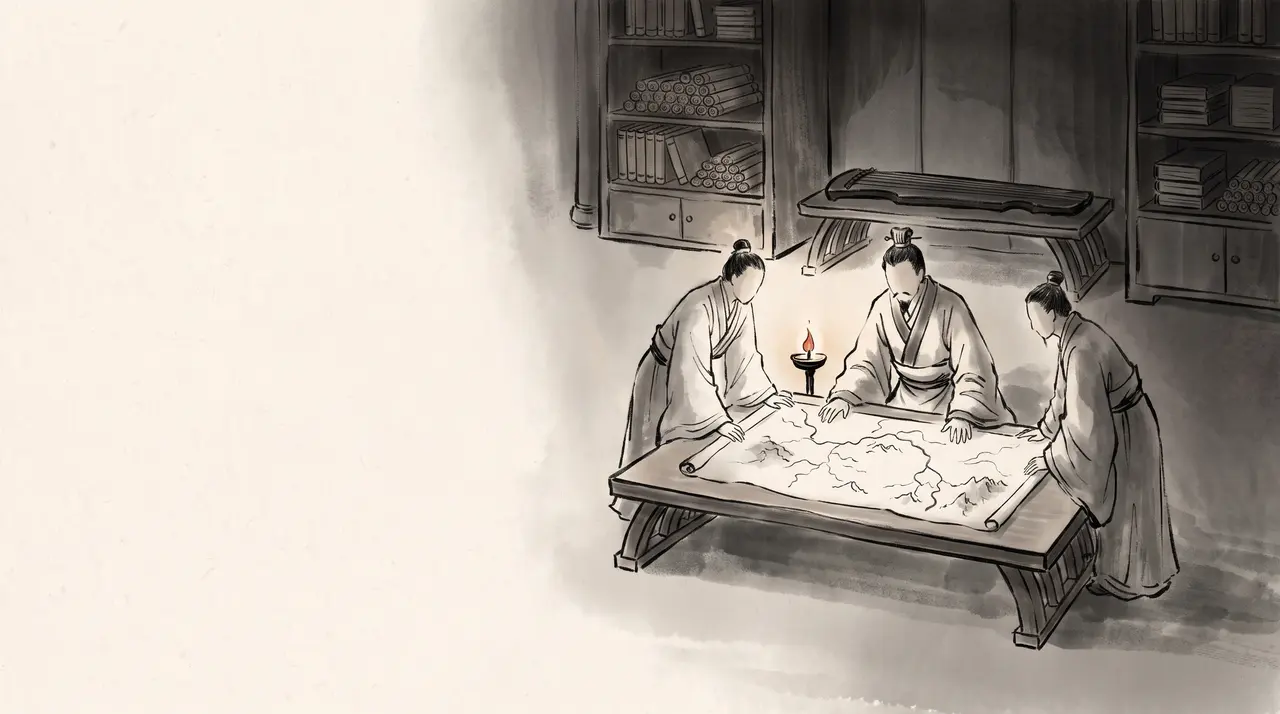 A Foot of Cloth Can Still Be Sewn 一尺布,尚可縫The story of a father and son of the Han royal house, kings of Huainan, who plotted rebellion one after the other and lost their kingdom. Liu Chang, Gaozu's youngest son, was born in prison after his mother was arrested in the King of Zhao's plot; finding no one to help her, she killed herself. When he grew up, Liu Chang beat to death with an iron mallet the Marquis of Biyang, who had let his mother die, and his brother Emperor Wen forgave him. But he grew ever more arrogant, plotted rebellion, and on his way into exile in Shu starved himself to death in a caged cart. The people sang, "A foot of cloth can still be sewn, a peck of millet can still be husked, but two brothers cannot bear each other," and Emperor Wen grieved. His son Liu An was a scholarly king who loved books and the zither and gathered many guests, but seeing that Emperor Wu had no heir, he secretly eyed the throne. When the king spread out his maps night after night to plan where his armies would march, Wu Bei warned him with the story of Wu Zixu. But the plot leaked out, Liu An cut his own throat, and his family was wiped out.
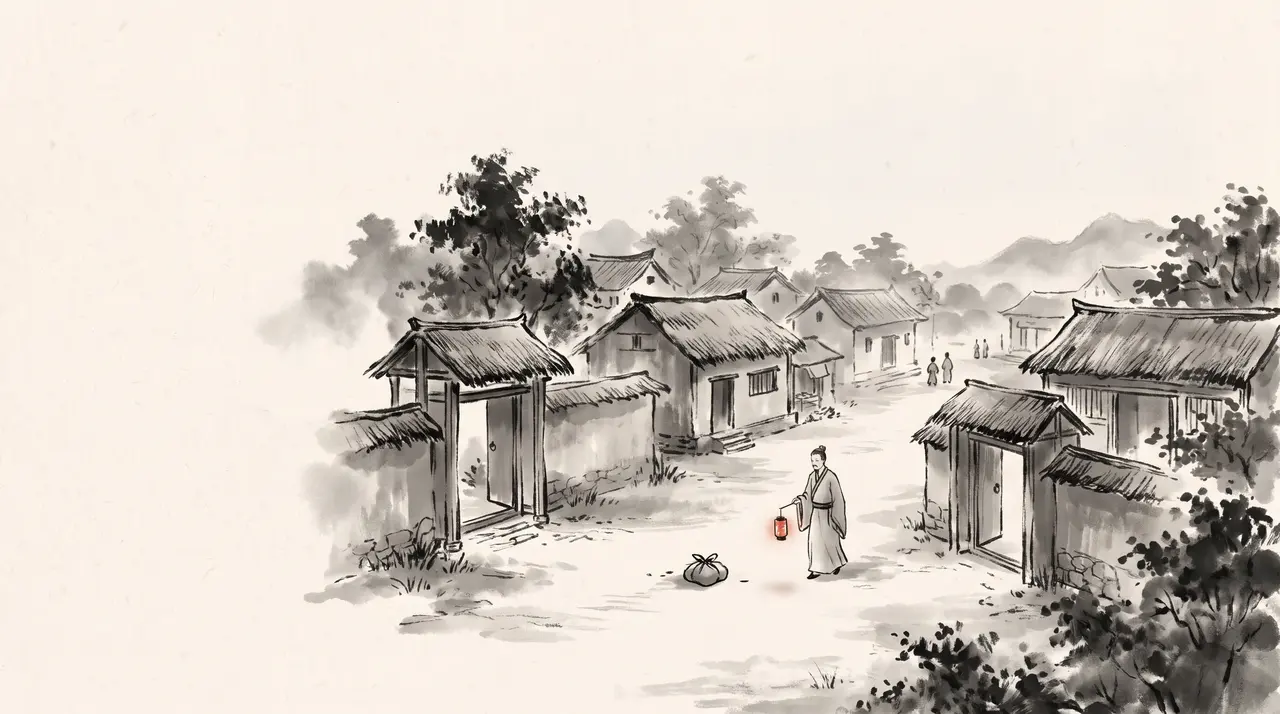 No One Picked Up What Was Dropped on the Road 道不拾遺The stories of five officials who governed by the law and by reason. Sima Qian says that keeping to one's duty and following what is right is enough to govern well: "Why must one be harsh?" He tells of ministers and officials of the Spring and Autumn period. When the king of Chu changed the coinage and the markets fell into chaos, Sunshu Ao had it changed back at once. To get people to raise their low carriages, he gave no order, but simply had the thresholds of the village gates raised, and the people raised their carriages themselves. When Zichan became chief minister of Zheng, the state grew better ordered year by year, until no one locked their gates at night, and no one picked up what others had dropped on the road. Gongyi Xiu of Lu refused a gift of fish precisely because he loved fish. Shi She of Chu let a murderer go when he found it was his own father, and took his own life even though the king forgave him. Li Li of Jin, having wrongly condemned a man to death, refused to put the blame on his subordinates, and fell on his sword.
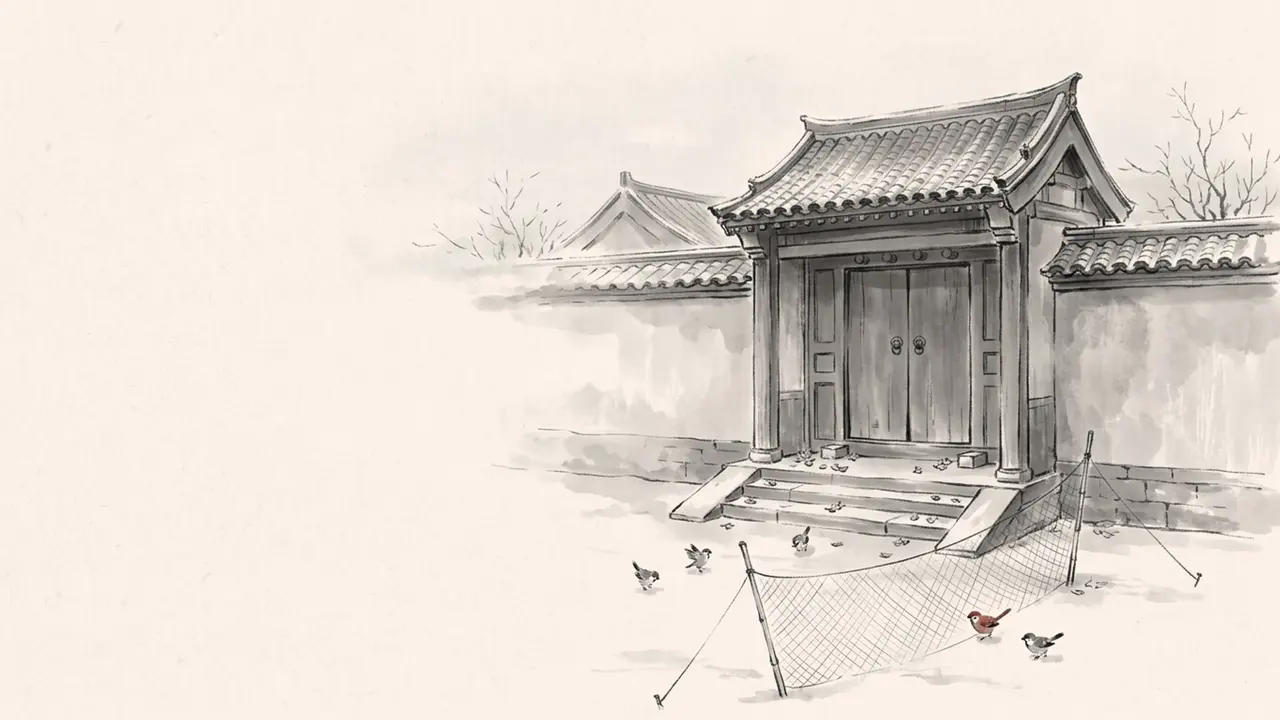 Ji An, the Man Who Would Not Bow 後來者居上The story of Ji An, who told Emperor Wu of the Han exactly what he thought, to his face, for years. Sent to inspect a fire, he saw starving people on the way, opened the government granaries on his own authority by claiming an imperial order he did not have, and asked to be punished for it. As a governor he was often ill and stayed in bed, yet because he left the details to others and looked only at the main lines, his commandery was soon well run. When the emperor gathered Confucian scholars and spoke of ruling like the sage kings of old, Ji An said: "Your Majesty is full of desires inside, and shows humanity and justice outside." The emperor was furious, yet he admitted that Ji An came close to being a true pillar of the state, and would not even receive him without his cap on. Ji An cursed the hair-splitting legal expert Zhang Tang, and refused to bow to the empress's brother, the great general Wei Qing. When men who had once been his juniors rose above him, he told the emperor: "Your Majesty uses your ministers like firewood: the ones who come last are piled on top." He argued against making the people suffer to entertain the surrendered Xiongnu king of Hunye, lost his post for a while, and in old age was sent to govern Huaiyang because, the emperor said, his mere presence could govern it from his bed. Sima Qian ends with the story of Master Zhai, whose gate was crowded with guests while he held office and so empty when he lost it that you could have spread a net for sparrows there.
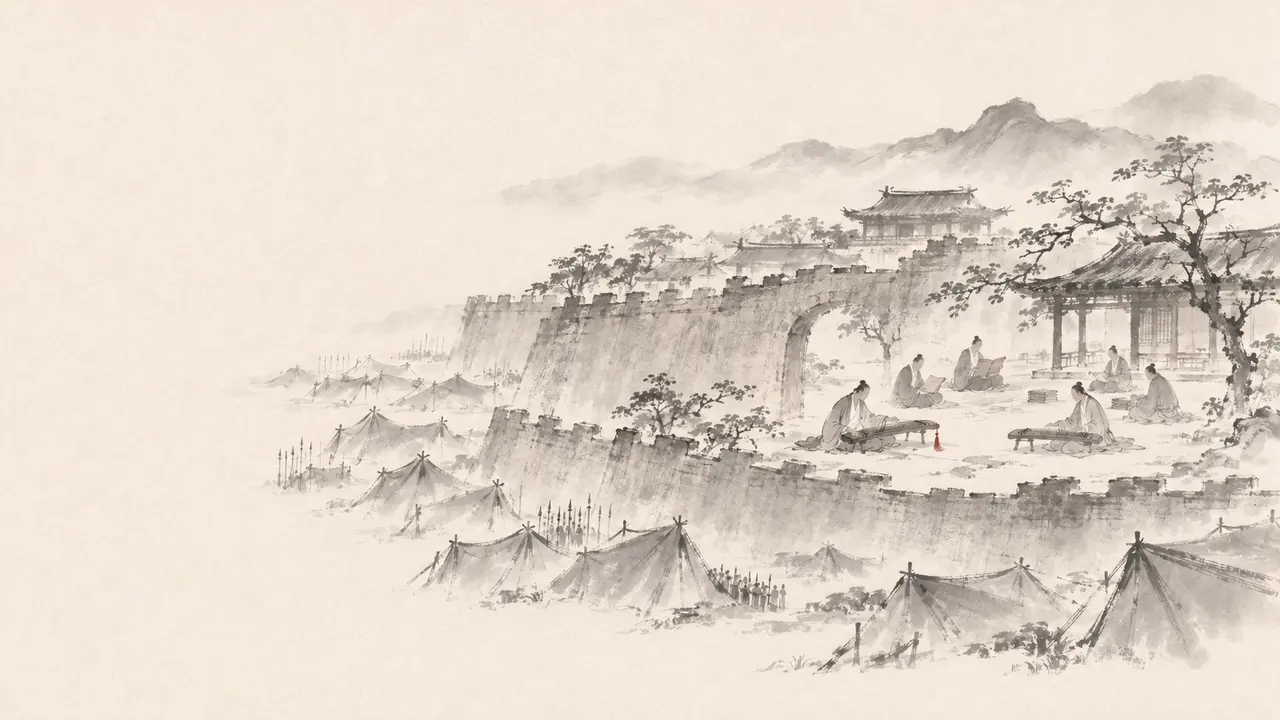 Do Not Bend Your Learning to Please the World 無曲學以阿世The scholars who carried the Confucian tradition from the death of Confucius through the burning of the books under Qin to the age of Han. Sima Qian tells how he always puts down the book and sighs when he reads the statutes that encourage learning, and begins with Confucius, unemployed by over seventy rulers, making the Spring and Autumn Annals. When Qin burned the Songs and Documents, the Confucians of Lu carried Confucius's ritual vessels to the rebel Chen She; when Gaozu besieged Lu, strings and singing could still be heard inside the walls. The octogenarian Master Shen silenced Emperor Wu by telling him that government is not a matter of many words but of action. Master Yuan Gu argued before Emperor Jing over whether the founders of Shang and Zhou had received Heaven's mandate or murdered their lords, called Laozi "the talk of servants," was thrown into a pig pen by the angry Empress Dowager Dou and killed the pig with one thrust; summoned again at ninety, he told the sidelong-glancing Gongsun Hong: "Do not bend your learning to please the world." Here too are Master Fu, who hid the Documents in a wall when Qin burned the books, and Dong Zhongshu, who did not look at his garden for three years.
 Trembling Without Cold 不寒而栗The stories of officials who held the people down with harsh punishments under Emperors Jing and Wu. Sima Qian begins with words of Confucius and Laozi: laws are tools of government, not the source of a clean or a corrupt age. In the early Han, he says, the net of the law was so loose that even a fish big enough to swallow a boat could slip through, and yet the land was well governed. Zhi Du spared neither princes nor ministers and was called "the Grey Hawk". Ning Cheng held his subordinates as tight as a bundle of wet firewood, and men said: "Better to meet a tigress with cubs than Ning Cheng's anger." As a boy, Zhang Tang caught a rat that had stolen meat and put it on trial, to his father's amazement; he rose to great power as Emperor Wu's grand secretary, but was framed and killed himself, leaving less than five hundred gold. Yi Zong had over four hundred people executed in a single day, so that the whole commandery trembled without cold, and Wang Wenshu, when spring came and executions had to stop, sighed: "If only winter were one month longer!" Du Zhou judged as the emperor wished, saying that law was simply what the ruler approved. Yet Sima Qian also says that in their harsh way these men did their jobs.
 Zhang Qian Opens the West 張騫鑿空Seeking an ally against the Xiongnu, Emperor Wu called for an envoy to go to the Yuezhi in the far west. Zhang Qian, a palace gentleman, volunteered. He was soon captured by the Xiongnu and held for more than ten years, but he never gave up the Han staff of office. He escaped, crossed Dayuan and Kangju, and at last reached the Yuezhi, only to find they had no wish for revenge, and he came away without getting to the point of his mission. Of more than a hundred men, two came home after thirteen years. What he reported about the lands of the west changed the Han view of the world. Grapes and alfalfa came east, and envoys streamed back and forth. Then, wanting its famous horses, Emperor Wu sent great armies against Dayuan, and after four years of war and terrible losses he got a few dozen fine horses.
 The Man Who Owned a Copper Mountain 當貧餓死The story of favourites who rose not by talent but by pleasing an emperor. Sima Qian quotes a saying: working hard on the land is no match for a good year, and serving well is no match for being liked. Emperor Wen dreamed he was trying to climb up to Heaven, and a boatman in a coat with a hole in the back pushed him up. When he woke he searched for the man, and found Deng Tong wearing that very coat. He doted on Deng Tong, and when a physiognomist said Deng Tong would die poor and starving, the emperor said, "I am the one who can make him rich," and gave him a copper mountain where he could cast coins; "Deng coins" spread across the realm. When the crown prince, the future Emperor Jing, learned that Deng Tong used to suck the pus from the emperor's sore while he himself had shrunk from it, he was ashamed and bore Deng Tong a grudge. Once Jing was emperor, Deng Tong lost everything, down to his last hairpin, and died in someone else's house. Emperor Wu's favourite Han Yan made the King of Jiangdu kneel by the road, mistaking his carriage for the emperor's, and was later ordered to die. The singer Li Yannian lost favour when his sister Lady Li died, and his whole family was put to death.
 A Word in Jest 談言微中The lives of those who joked before kings, slipping the truth in with the laughter and saving their states. Chunyu Kun of Qi woke an idle king with a riddle about a bird that neither flew nor sang for three years, and with a story about a farmer who prayed for everything over a single pig's trotter he got the gift for an allied army raised tenfold. You Meng of Chu stopped a king from burying his favorite horse with a minister's honors by urging him to use a king's, and saved the poor son of a great chancellor. You Zhan of Qin won rest for guards standing in the rain, and talked the Second Emperor out of lacquering the city wall. The later part, added by another hand, tells of the wit of Dongfang Shuo and of Ximen Bao, who put an end to brides for the River God.
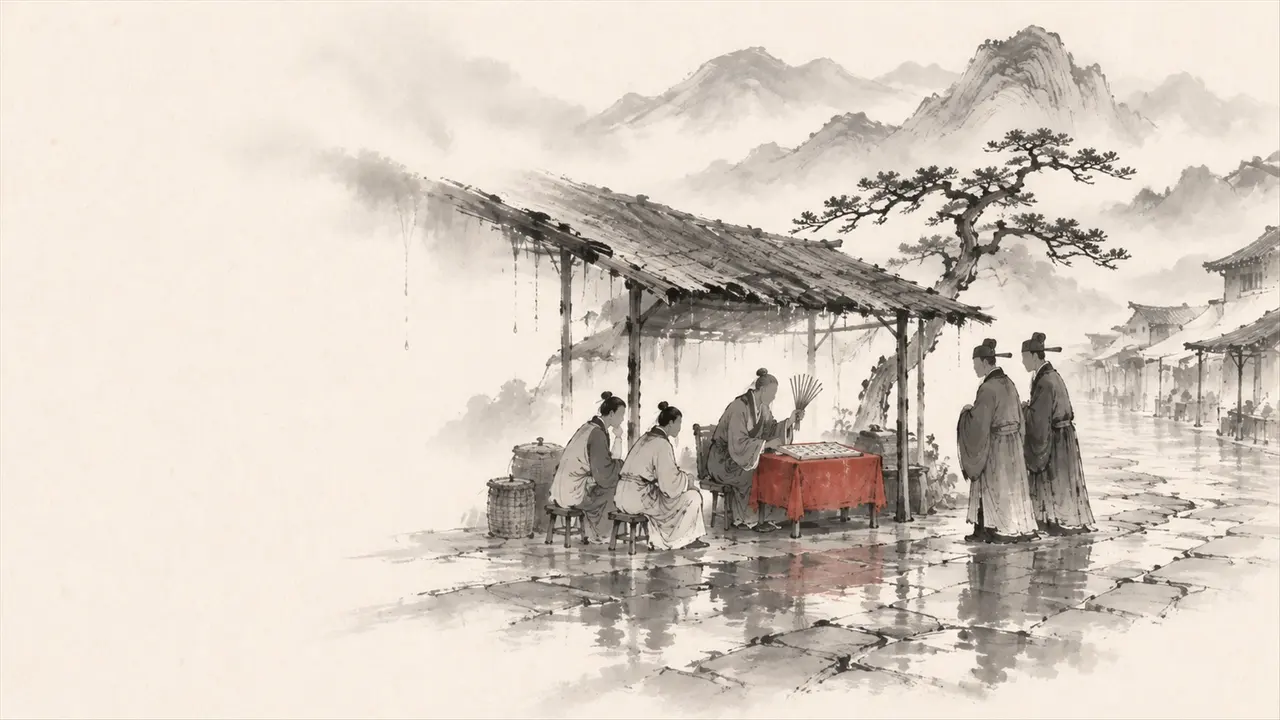 The Higher the Way, the Safer 道高益安,勢高益危Biographies of the rizhe, diviners of lucky and unlucky days — though the only story told is that of Sima Jizhu of Chu, who read fortunes in the Eastern Market of Chang'an. One day after rain, Song Zhong, a palace grandee, and Jia Yi, an erudite, went to his stall, saying that the sages of old, if not at court, were to be found among diviners and doctors. Impressed by his talk, they still asked why he lived so low and worked at so dirty a trade. Sima Jizhu laughed till he held his belly, told them the officials scrambling for rank at court were robbers without swords, and argued that divination helps people and has both courtesy and virtue. The two were left speechless, and later sighed to each other that the higher one's Way, the safer, and the higher one's power, the more danger. Soon afterwards Song Zhong was punished and Jia Yi died of grief.
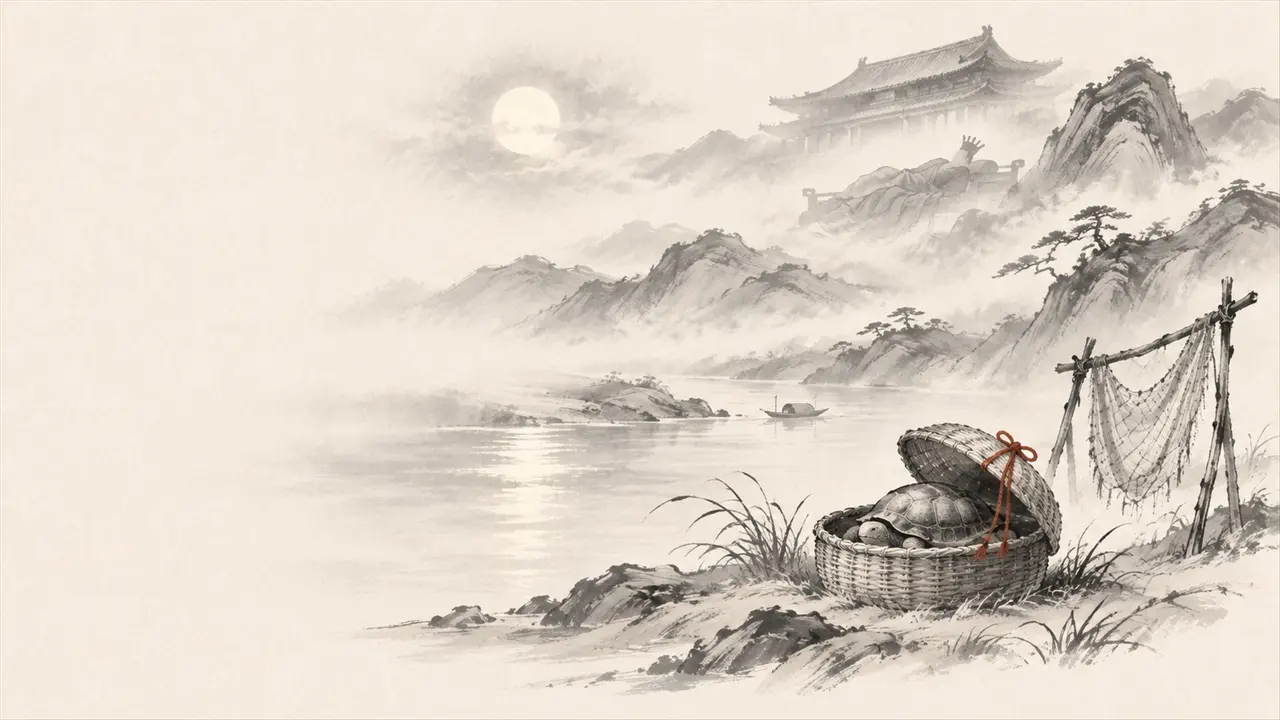 Nothing Is Ever Perfect 物安可全乎The volume on divination by tortoise shell and milfoil stalks. Sima Qian's preface tells how the sage-kings always settled doubts by divination when founding states; how the readings of the Duke of Zhou and Duke Wen of Jin came true, while Duke Xian of Jin and King Ling of Chu ignored ill omens and met disaster; and how he heard in the south of tortoises a thousand years old playing on lotus leaves. The rest was lost, and Master Chu filled it with what he learned from the officials of divination. At its heart is the tale of King Yuan of Song: a divine tortoise, envoy of the Yangzi, is caught in a fisherman's net and appears to the king in a dream begging for help. The king wants to set it free, but the scholar Wei Ping argues that refusing a treasure Heaven gives invites disaster; at last the king kills the tortoise, divines with its shell, and Song becomes the strongest of states. Master Chu observes that the tortoise that knew the future could not free itself from a fisherman's basket, and closes with words of Confucius: not even Heaven is perfect — how could anything be?
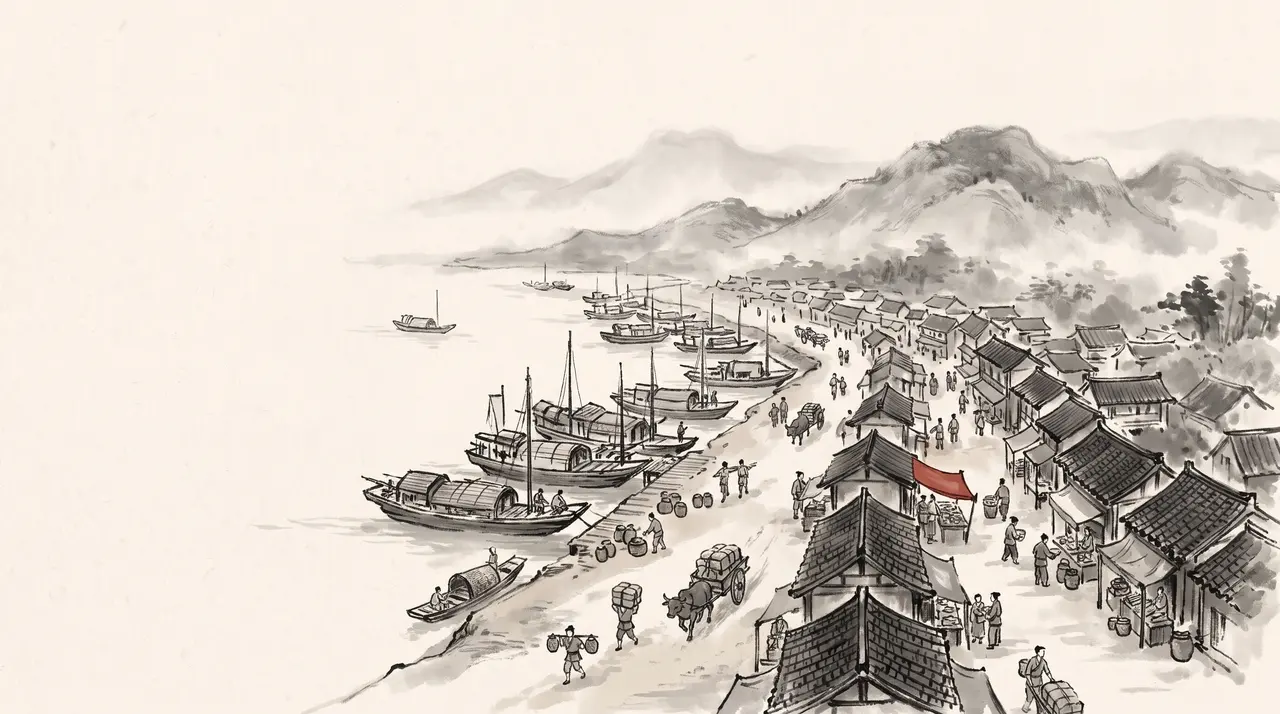 All the World Comes for Profit 天下熙熙The lives of those who grew rich by trade rather than rank or war, and one of the most unusual volumes of the Shiji. Sima Qian states flatly that people want wealth by nature, without being taught, and writes: "All the world comes bustling after profit." The best government, he argues, simply lets people follow their own business, and the worst competes with them for gain. Here are Fan Li, who won Yue its victory and then became a merchant; Zigong, whose wealth spread the fame of Confucius; the quick-eyed Bai Gui; the herdsman Luo of Wuzhi and the widow Qing, honored by the First Emperor; Diao Jian, who made use of the slaves others feared; and the Ren family, who stored grain through the wars. With a strikingly modern eye, he portrays the "untitled lords" who, without any office, stood equal to kings.
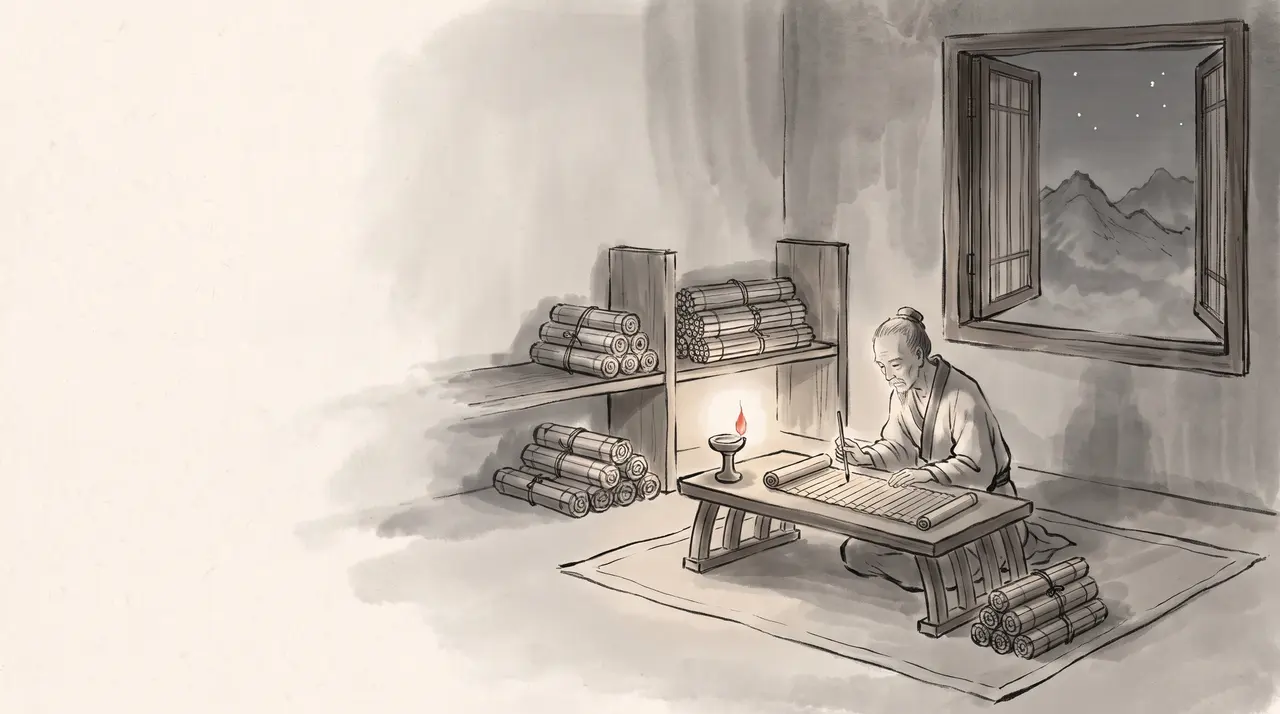 The Grand Historian's Own Account: Why He Wrote 發憤著書In the last volume of the Shiji, Sima Qian tells his own story. After traveling the realm as a young man, he receives his task from his dying father, Sima Tan: "Do not forget what I meant to write." As Grand Historian he resolves to carry on the work of Confucius's Spring and Autumn Annals. Then he defends the general Li Ling, angers Emperor Wu and is castrated. In his despair he remembers that King Wen, Confucius, Qu Yuan, Sun Bin and Han Fei all wrote their works in the midst of suffering, and that they "told of things past while thinking of those to come." So at last he completes one hundred and thirty chapters, from the Yellow Emperor down to his own day.
 The Hereditary House of Chancellor Xiao 蕭相國世家Xiao He, a clerk in Pei, protected Liu Bang when he was still a commoner and served him as chancellor once he rose in arms. When the army entered Xianyang and the other generals rushed for the treasure, Xiao He alone took the laws, registers and maps of Qin, which let the Han know the lie of the land and the size of the population. However often Liu Bang was defeated, Xiao He kept sending men and grain from the land within the passes, and when the empire was won he was ranked first: hounds chase the game, said Liu Bang, but it is the hunter who looses them and points the way. In later years, to quiet the emperor's suspicions, he refused rewards, deliberately bought up land cheaply to spoil his own name, and was even thrown into prison for a request he made on the people's behalf. On his deathbed he named Cao Can, with whom he had never got along, as his successor.
 Biography of Boyi 伯夷列傳Sima Qian takes up the brothers Boyi and Shuqi, who starved rather than serve a new dynasty, and uses their story to ask whether Heaven truly rewards the good.
 The Biographies of Guan Zhong and Yan Ying 管晏列傳The lives of two great ministers of Qi in the Spring and Autumn period. Guan Zhong, a poor man, often cheated his friend Bao Shuya and ended up a prisoner when the prince he served was defeated, yet Bao Shu never blamed him and recommended him for a post above his own. Guan Zhong made Duke Huan of Qi the first hegemon, and said: "My parents gave me life, but it was Bao Shu who knew me." A century later came Yan Ying, small and frugal, who spoke plainly to three rulers in turn. He ransomed a worthy convict with one of his own horses, and promoted a driver who changed his ways after his wife's rebuke. Sima Qian wrote that if Master Yan were alive, he would gladly hold his whip.
 The Biography of Tian Dan 田單列傳In 284 BCE the great Yan general Yue Yi invaded Qi and took more than seventy cities, until only Ju and Jimo held out. Tian Dan, a minor market official, escaped with his clan by sheathing their axle ends in iron, and for that good sense the people of Jimo made him their general. He spread rumors that had Yue Yi removed, set up a "divine teacher" to hold the city together, goaded the Yan army into acts that filled his people with rage, and lulled the enemy with a false surrender. Then one night he loosed a thousand oxen with blades on their horns and burning reeds on their tails, broke the Yan army and won back all seventy cities. The chapter ends with two stories from the fall and rise of Qi: the Queen Dowager Junwang, and Wang Zhu, who died rather than serve the conqueror.
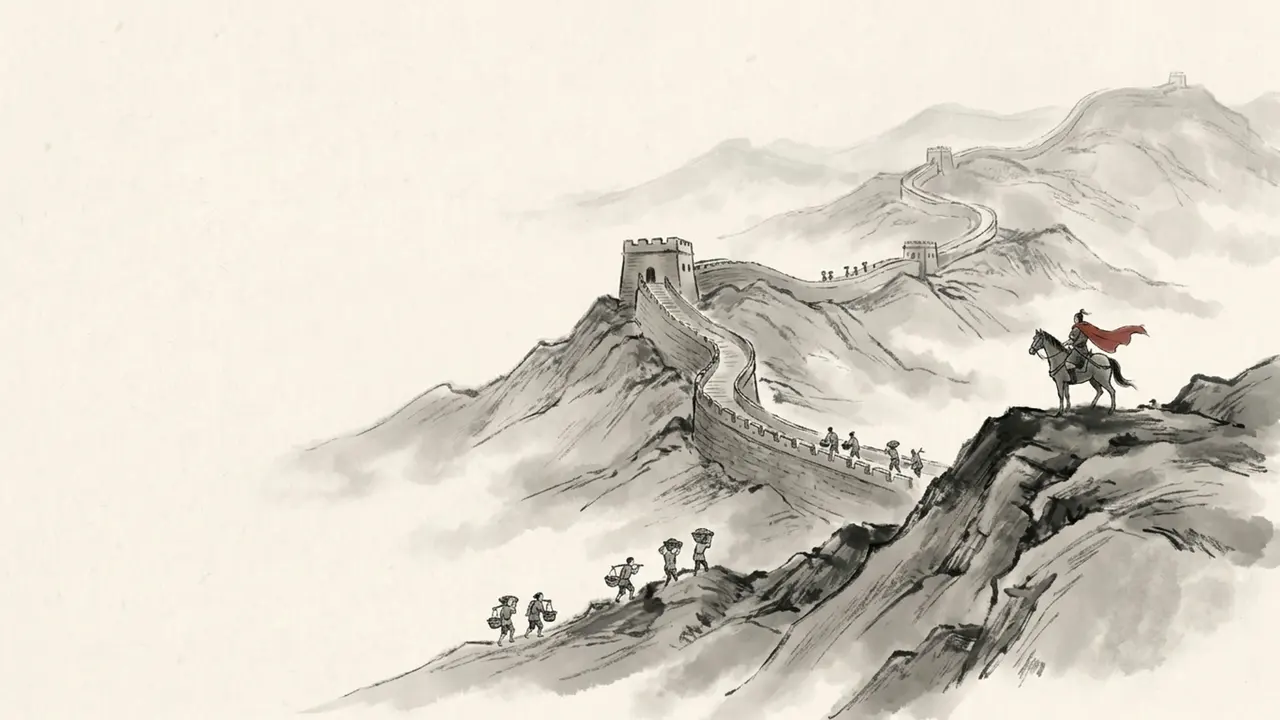 The Biography of Meng Tian 蒙恬列傳The story of Meng Tian, general of the First Emperor, and his brother Meng Yi. Their grandfather Meng Ao and father Meng Wu had both been generals of Qin. After the realm was united, Meng Tian led three hundred thousand men to drive the Xiongnu back from the north, built a Long Wall more than ten thousand li long from Lintao in the west to Liaodong in the east, and spent more than ten years on the frontier. His brother Meng Yi served close to the emperor, and had once sentenced the eunuch Zhao Gao to death, as the law required, for a serious crime. When the First Emperor died suddenly at Shaqiu, Zhao Gao, who hated the Meng, plotted with the chancellor Li Si and the emperor's youngest son Huhai to forge the emperor's orders, sending death to his eldest son Fusu and to Meng Tian. Fusu killed himself, but Meng Tian was suspicious and asked for the order to be confirmed, and was arrested. Ziying's protest went unheard. Meng Yi was killed, and Meng Tian, who could have rebelled with three hundred thousand men behind him and did not, took poison, saying that his crime was to have cut the veins of the earth with his wall. Sima Qian, who walked along the wall himself, judges that a man who spent the people's strength so lightly deserved his fate, and should not have blamed the veins of the earth.
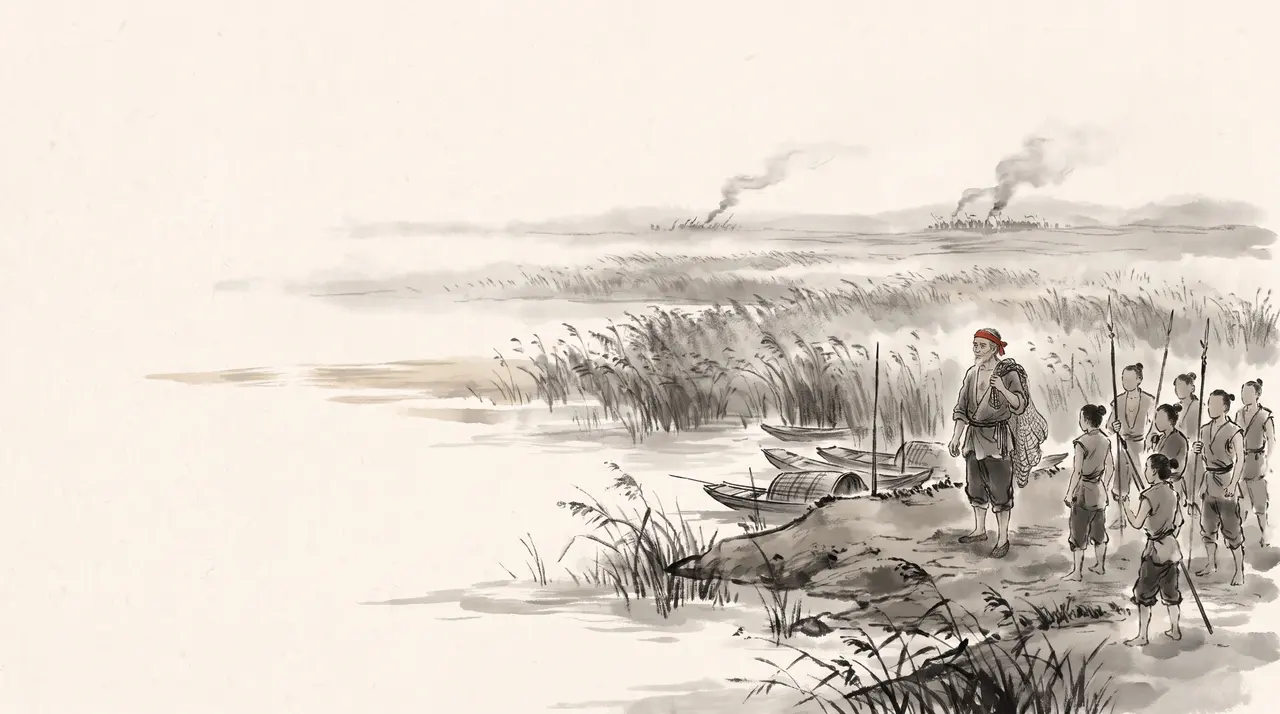 The Biographies of Wei Bao and Peng Yue 魏豹彭越列傳The stories of two men who were kings in the land of Wei at the end of the Qin and the beginning of the Han. Wei Jiu, a prince of the old house of Wei, was made king in the rising of Chen Sheng; besieged by the Qin general Zhang Han, he agreed to surrender to save his people and then burned himself to death. His brother Wei Bao followed Xiang Yu and became King of Western Wei, and later went over to Han; but he could not stand the way Liu Bang cursed men as if they were slaves, and turned against him, saying that a man's life passes like a white colt glimpsed through a crack. Han Xin captured him, and he was killed while guarding Xingyang. The other man, Peng Yue, was a fisherman and bandit of the Juye marshes. When young men insisted on making him their leader, he beheaded one latecomer to show them what discipline meant. In the war between Chu and Han he roamed the land of Liang, cutting Chu's supply lines, and when Zhang Liang advised Liu Bang to promise him a kingdom, he joined the battle of Gaixia and became King of Liang. But when he pleaded illness instead of marching against Chen Xi's rebellion, he was accused of treason and arrested. Pardoned and sent into exile in Shu, he met Empress Lü on the road and begged her for mercy; she promised to help, then told Gaozu that sparing him would only store up trouble, and Peng Yue and his whole clan were wiped out.
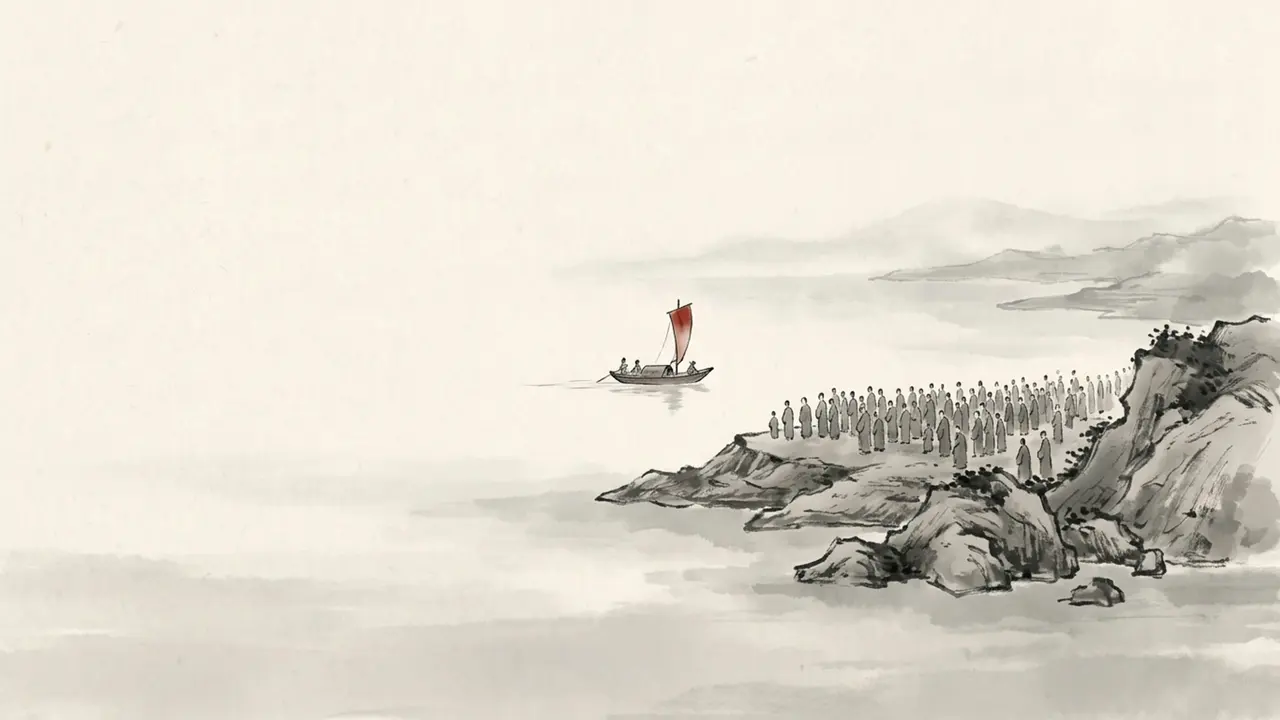 The Biography of Tian Dan 田儋列傳The story of three brothers of the old royal house of Qi, Tian Dan, Tian Rong and Tian Heng, who one after another became kings of Qi at the end of the Qin. When Chen Sheng rose, Tian Dan killed his county magistrate and proclaimed himself King of Qi, but was soon killed by the Qin general Zhang Han. His brother Tian Rong drove out Tian Jia, whom the people of Qi had made king, and left Xiang Liang to his fate; so Xiang Yu hated him and gave him no kingdom. In his anger Tian Rong killed the kings Xiang Yu had set up and took the whole of Qi, but Xiang Yu attacked him and he was killed. The youngest brother, Tian Heng, gathered the scattered troops, fought back against Xiang Yu, and ruled Qi with Tian Rong's son as king. But after he trusted the Han envoy Li Yiji and lowered his guard, Han Xin fell on Qi, and Tian Heng boiled Li Yiji alive and fled. When Han won the realm, Tian Heng retreated to an island in the sea with five hundred followers. Liu Bang summoned him, promising to make him a king or a marquis, and he set out for Luoyang with two retainers. But thirty li from the capital he cut his own throat, saying that he had once called himself a king just as the king of Han had done, and could not bear to serve him now as a captive. His two retainers killed themselves beside his grave, and when the five hundred on the island heard of his death, they all killed themselves too.
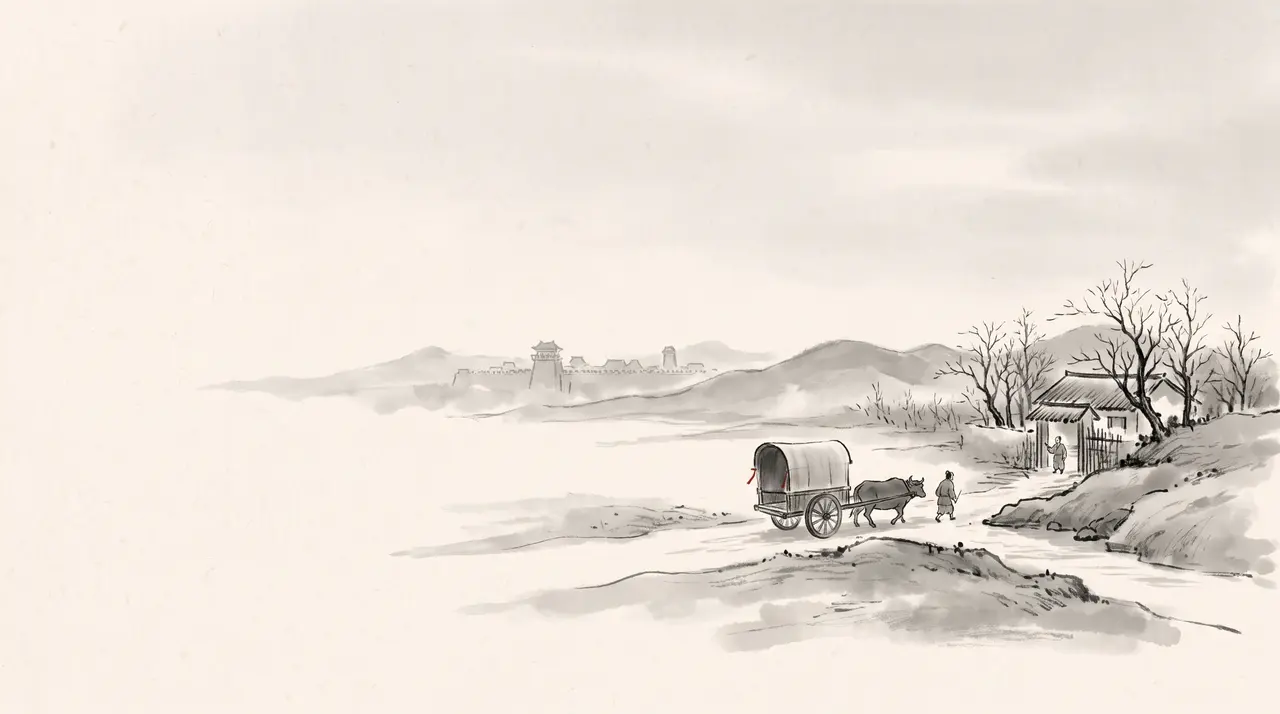 The Biographies of Ji Bu and Luan Bu 季布欒布列傳The lives of two men of honour at the start of Han. Ji Bu, a Chu general who had hard-pressed Liu Bang, had a price of a thousand gold on his head, but disguised as a slave he was hidden by the knight-errant Zhu Jia, pardoned, and taken into Han service. Before Empress Lü he told Fan Kuai that his boasting deserved beheading, and he warned Emperor Wen against calling and dismissing men on hearsay. He was so true to his word that people said "better one promise from Ji Bu than a hundred catties of gold." Luan Bu, for his part, broke the law to weep beneath the severed head of his lord Peng Yue, executed for rebellion, and facing the boiling cauldron he spoke so well of Peng Yue's services that Emperor Gaozu pardoned him. Sima Qian praises both: Ji Bu for bearing disgrace in order to live, and Luan Bu for not fearing death.
 The Biography of General Li Guang 李將軍列傳Born into a family of master archers, Li Guang fought the Xiongnu on the northern frontier more than seventy times, under Emperors Wen, Jing and Wu. With only a hundred riders he dismounted in front of thousands and made them withdraw; captured, he stole an enemy horse and escaped; the Xiongnu called him "the Flying General of Han." Once he shot at a rock in the grass, taking it for a tiger, and the arrow sank into the stone. He shared his rewards with his men and would not drink until they had drunk. Yet his merit was never recognized, and while lesser men became marquises, he never did. On his last campaign he lost his way and, rather than face the clerks, took his own life, and people who had never known him wept. The surrender of his grandson Li Ling to the Xiongnu would change the fate of Sima Qian himself.
 The Biographies of the Wandering Knights 游俠列傳The wandering knights were men of no office or family who kept their word at the risk of their lives and threw themselves into the troubles of others. They often broke the law, and scholars left them out of the record. Sima Qian regretted this. In a world where "he who steals a belt hook is executed, and he who steals a state becomes a lord," he argues, their good faith deserves attention. In the early Han, Zhu Jia saved many lives and never asked for thanks, and a thousand carriages came to the funeral of Ju Meng's mother. Guo Xie changed from a young killer into a master peacemaker, but his very fame led the court of Emperor Wu to destroy him and all his clan.
How to read
- For each passage you can read the original, the Japanese translation, the English translation and the commentary side by side.
- Choose which layers to show with the checkboxes at the top of a chapter.
- Where audio is available, tap a passage to play from that point.