Hereditary Houses · Vol. 33
The Hereditary House of the Duke of Zhou of Lu 魯周公世家
The Duke of Zhou, Who Spat Out His Food 周公吐哺
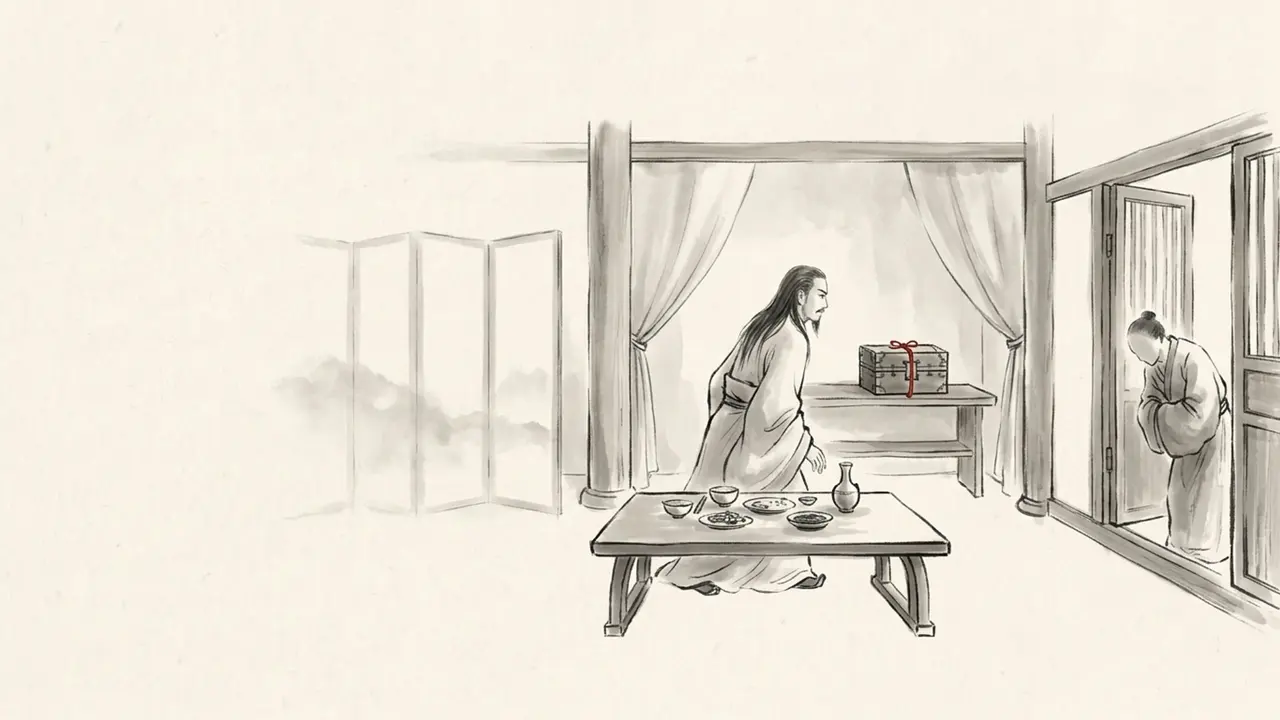
The story of the Duke of Zhou, younger brother of King Wu and the sage whom Confucius revered above all others. When King Wu, conqueror of the Shang, fell gravely ill, the duke prayed to their three royal ancestors to take him instead of his brother, and locked the prayer in a casket bound with metal bands. When King Wu died and the boy King Cheng came to the throne, the duke, fearing that the realm would break away, ruled in his place. His brothers spread the rumour that he meant to harm the young king, and rose in revolt together with the people of the old Shang, but the duke put the rising down. To his son Boqin, who went to rule the fief of Lu, he said: "Three times in one hair-washing I have to clutch my wet hair and get up, and three times in one meal I have to spit out my food, to receive the men who come to see me; and still I fear I may lose the worthiest men in the realm." When King Cheng grew up, the duke handed the government back and returned to the rank of a subject. After his death a storm flattened the crops, and King Cheng opened the casket, found the duke's prayer and wept. Last of all, the duke compares Boqin, who took three years to change the customs of Lu, with the Grand Duke of Qi, who settled his state in five months, and sighs that one day Lu will serve Qi.
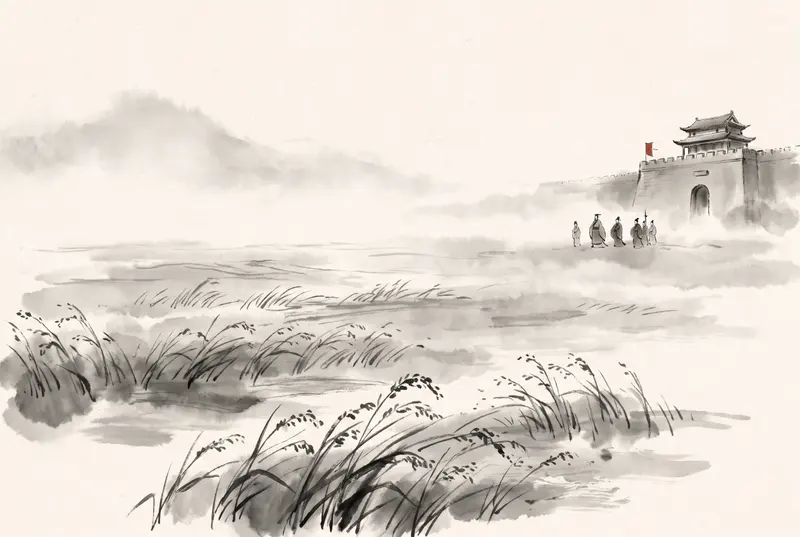
This page has the scene "The Duke of Zhou, Who Spat Out His Food" from this volume, not the whole volume.
Audio
The audio is synthetic speech.
Video
Passage 1
Original
周公旦者,周武王弟也。自文王在時,旦爲子孝,篤仁,異於群子。及武王即位,旦常輔翼武王,用事居多。武王九年,東伐至盟津,周公輔行。十一年,伐紂,至牧野,周公佐武王,作牧誓。破殷,入商宮。已殺紂,周公把大鉞,召公把小鉞,以夾武王,釁社,告紂之罪于天,及殷民。釋箕子之囚。封紂子武庚祿父,使管叔、蔡叔傅之,以續殷祀。遍封功臣同姓、戚者。封周公旦於少昊之虛曲阜,是爲魯公。周公不就封,留佐武王。
Kundoku (Japanese reading)
周公旦は、周の武王の弟なり。文王の在りし時より、旦は子と為りて孝、篤仁にして、群子に異なる。武王の位に即くに及び、旦常に武王を輔翼し、事を用うること居多なり。武王の九年、東に伐ちて盟津に至る。周公輔けて行く。十一年、紂を伐ちて牧野に至る。周公武王を佐け、牧誓を作る。殷を破り、商宮に入る。已に紂を殺し、周公大鉞を把り、召公小鉞を把りて、以て武王を夾み、社に釁り、紂の罪を天に告げ、殷の民に及ぼす。箕子の囚を釈く。紂の子武庚禄父を封じ、管叔・蔡叔をして之を傅けしめ、以て殷の祀を続がしむ。遍く功臣・同姓・戚者を封ず。周公旦を少昊の虚曲阜に封じ、是を魯公と為す。周公封に就かず、留まりて武王を佐く。
Japanese
周公旦は、周の武王の弟である。父の文王が生きていたころから、旦は子として孝行で、思いやりが深く、ほかの兄弟たちとは違っていた。武王が位につくと、旦はいつも武王を助け、政治をとりしきることが多かった。武王の九年、東へ兵を進めて盟津まで来たとき、周公は付き従った。十一年、殷の紂王を討って牧野に至ったとき、周公は武王を助け、出陣の誓いのことば「牧誓」を作った。殷を破って殷の宮殿に入り、紂を殺したあと、周公は大きなまさかりを、召公は小さなまさかりを持って武王の左右に立ち、土地の神の社に犠牲の血を注いで、紂の罪を天と殷の民に告げた。とらわれていた箕子を解き放った。紂の子の武庚禄父を諸侯に立て、管叔と蔡叔をその後見役にして、殷の祖先の祭りを続けさせた。手柄のあった臣下や同族、親戚に、広く領地を与えた。周公旦は、古の帝王少昊の都の跡、曲阜に封じられ、魯公となった。しかし周公は領地へ行かず、都にとどまって武王を助けた。
English
Dan, the Duke of Zhou, was the younger brother of King Wu of Zhou. Even while their father King Wen was alive, Dan was a dutiful son, deeply kind, and different from his brothers. When King Wu came to the throne, Dan was always at his side to help him, and took charge of most affairs. In King Wu's ninth year, when the army marched east to Mengjin, the Duke of Zhou went with him. In the eleventh year, when they attacked Zhou of Shang and reached Muye, the Duke of Zhou assisted King Wu and composed the "Oath at Muye". They broke the Shang and entered the Shang palace. When Zhou of Shang had been killed, the Duke of Zhou holding a great axe and the Duke of Shao holding a small axe stood on either side of King Wu. They anointed the altar of the earth with blood and proclaimed the crimes of Zhou of Shang to Heaven and to the people of Shang. They freed Jizi from prison. They made Wugeng Lufu, the son of Zhou of Shang, a lord, with Guan Shu and Cai Shu to watch over him, so that the sacrifices of Shang could go on. Fiefs were given to all who had served well, and to kinsmen and relatives. Dan, the Duke of Zhou, was given Qufu, the old city of the ancient sovereign Shaohao, and became Duke of Lu. But the Duke of Zhou did not go to his fief; he stayed to help King Wu.
Notes (JA)
- 周公旦: 文王の子、武王の弟。名は旦。周の礼と制度を定めたとされ、孔子は夢に見るほど慕った。
- 牧野: 殷の都朝歌の南の野。武王が紂を破った決戦の地(004-zhou の章)。
- 管叔・蔡叔: ともに武王の弟。殷の遺民を見張る役(三監)を任された。
- 曲阜: 今の山東省曲阜市。のちに孔子が生まれる魯の都。
Notes (EN)
- The Duke of Zhou (周公旦): son of King Wen, said to have shaped the rites and institutions of Zhou; Confucius dreamed of him.
- Muye (牧野): the plain where King Wu defeated the last Shang king (chapter 004).
- Guan Shu and Cai Shu (管叔・蔡叔): younger brothers of King Wu, set to watch the conquered Shang.
- Qufu (曲阜): capital of Lu in Shandong, later the birthplace of Confucius.
Word notes
- dutiful/ˈdutəfəl/adjective
doing what is expected out of respect and duty
In the text: “Dan was a dutiful son”
Similar words: obedient — doing as told · devoted — loyal and loving
- anoint/əˈnɔɪnt/verb
to put oil or blood on something as part of a ceremony
In the text: “They anointed the altar of the earth with blood”
Similar words: consecrate — make holy · smear — spread over
Passage 2
Original
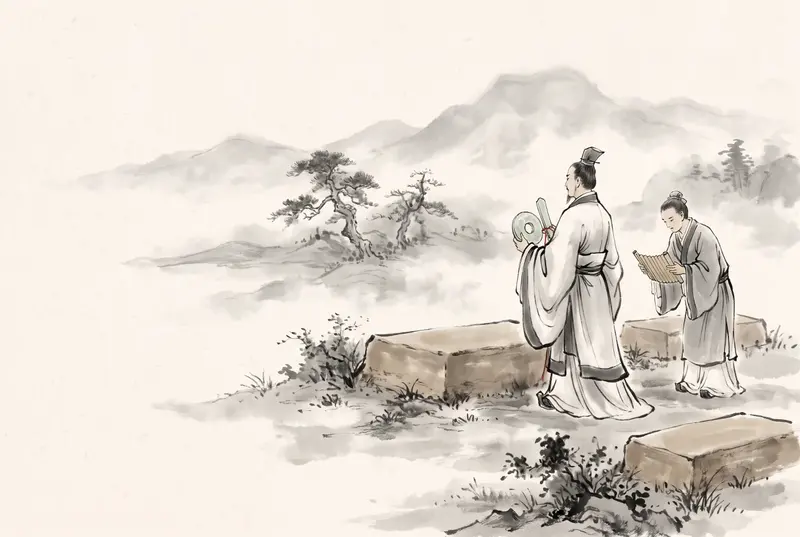
武王克殷二年,天下未集,武王有疾,不豫,群臣懼,太公、召公乃繆卜。周公曰:『未可以戚我先王。』周公於是乃自以爲質,設三壇,周公北面立,戴璧秉圭,告于太王、王季、文王。史策祝曰:『惟爾元孫王發,勤勞阻疾。若爾三王是有負子之責於天,以旦代王發之身。旦巧能,多材多藝,能事鬼神。乃王發不如旦多材多藝,不能事鬼神。乃命于帝庭,敷佑四方,用能定汝子孫于下地,四方之民罔不敬畏。無墜天之降葆命,我先王亦永有所依歸。今我其即命於元龜,爾之許我,我以其璧與圭歸,以俟爾命。爾不許我,我乃屏璧與圭。』周公已令史策告太王、王季、文王,欲代武王發,於是乃即三王而卜。卜人皆曰吉,發書視之,信吉。周公喜,開籥,乃見書遇吉。周公入賀武王曰:『王其無害。旦新受命三王,維長終是圖。茲道能念予一人。』周公藏其策金縢匱中,誡守者勿敢言。明日,武王有瘳。
Kundoku (Japanese reading)
武王殷に克ちて二年、天下未だ集まらず。武王疾有りて豫ばず。群臣懼れ、太公・召公乃ち繆卜せんとす。周公曰く、「未だ以て我が先王を戚えしむべからず」と。周公是に於いて乃ち自ら以て質と為り、三壇を設け、周公北面して立ち、璧を戴き圭を秉りて、太王・王季・文王に告ぐ。史策に祝して曰く、「惟れ爾の元孫王発、勤労して疾に阻まる。若し爾三王是れ子を負うの責を天に有らば、旦を以て王発の身に代えよ。旦は巧能にして、多材多芸、能く鬼神に事う。乃ち王発は旦の多材多芸に如かず、鬼神に事うる能わず。乃ち命を帝庭に受け、四方を敷佑し、用て能く汝の子孫を下地に定め、四方の民敬畏せざる罔し。天の降せる葆命を墜とすこと無くんば、我が先王も亦た永く依帰する所有らん。今我其れ命に元亀に即かん。爾の我に許さば、我其の璧と圭とを以て帰りて、以て爾の命を俟たん。爾我に許さずんば、我乃ち璧と圭とを屏けん」と。周公已に史をして策もて太王・王季・文王に告げしめ、武王発に代わらんと欲し、是に於いて乃ち三王に即きて卜す。卜人皆吉と曰う。書を発きて之を視るに、信に吉なり。周公喜び、籥を開き、乃ち書を見るに吉に遇う。周公入りて武王を賀して曰く、「王其れ害無からん。旦新たに命を三王に受く。維れ長く終わりを是れ図らん。茲の道能く予一人を念う」と。周公其の策を金縢の匱の中に蔵し、守る者を誡めて敢えて言うこと勿からしむ。明日、武王瘳ゆる有り。
Japanese
武王が殷に勝って二年、天下はまだまとまっていなかった。武王が病気になり、なかなかよくならなかった。家臣たちは恐れ、太公望と召公はうやうやしく亀の甲で占おうとした。周公は「それでは、わが先祖の王たちを心配させるだけだ」と言った。そして自分の身を差し出すことにし、祭壇を三つ設け、北を向いて立ち、玉の璧を頭にいただき、圭を手に持って、曾祖父の太王、祖父の王季、父の文王に申し上げた。史官に祈りの文を読ませた。「あなたがたの孫である王発(武王)は、働きすぎて病に倒れました。もしあなたがた三王が、天に対して子孫を一人差し出す務めを負っておられるのなら、王発の身の代わりに、旦をお召しください。旦は器用で才能も芸も多く、鬼神によくお仕えできます。王発は旦ほど才芸がなく、鬼神にはうまくお仕えできません。王発は天帝の庭で命を受け、四方の民を守り助け、あなたがたの子孫をこの地上に落ち着かせ、四方の民で敬い恐れない者はいません。天から授かったこの尊い命を落とすことがなければ、先祖の王たちもいつまでもよりどころを持てましょう。いまから大亀の甲でお答えをうかがいます。お許しくださるなら、わたしは璧と圭を持ち帰って、お召しを待ちます。お許しくださらないなら、璧と圭はしまいこみます」。周公は史官に祈りの文を三王に告げさせ、武王の身代わりになろうとして、三王の前で占った。占い師は皆「吉」と言い、占いの書を開いて見ても、確かに吉だった。周公は喜び、鍵を開けて書を見ると、やはり吉だった。周公は武王のもとへ行ってお祝いを述べた。「王には何の害もありません。わたしは三王から新たに命を受けました。長く先々のことをお考えください。三王はあなたのことを気にかけておられます」。周公はその祈りの文を、金の帯で封じた箱(金縢)の中にしまい、番人に固く口止めした。翌日、武王の病はよくなった。
English
Two years after King Wu conquered the Shang, the realm was not yet settled. King Wu fell ill and did not get better. The ministers were afraid, and the Grand Duke and the Duke of Shao wanted to consult the tortoise shell with due reverence. The Duke of Zhou said: "That would only trouble our royal ancestors." Instead he offered himself as a pledge. He set up three altars, stood facing north with a jade disc on his head and a jade tablet in his hands, and spoke to King Tai, King Ji and King Wen. The scribe read out the prayer on the tablets: "Your eldest descendant, King Fa, has worn himself out with labour and fallen ill. If you three kings owe Heaven the duty of providing a son, then take Dan in the place of King Fa. Dan is skilful and clever, with many gifts and many arts, and he can serve the spirits. King Fa has not so many gifts and arts as Dan, and cannot serve the spirits. But he has received his charge in the court of the Lord on High to protect the four quarters. He can settle your descendants here on earth, and there is no one in the four quarters who does not respect and fear him. If the precious charge that Heaven has sent down is not lost, then our royal ancestors too will always have a home to turn to. Now I shall ask your will of the great tortoise. If you grant my request, I will take the disc and the tablet home and wait for your command. If you do not grant it, I will put the disc and the tablet away." When the scribe had read the prayer to King Tai, King Ji and King Wen, asking that Dan take the place of King Fa, the Duke of Zhou divined before the three kings. All the diviners said it was lucky, and when they opened the books and looked, it was truly lucky. The Duke of Zhou was glad. He unlocked the chest and looked at the book, and it was lucky. The Duke of Zhou went in to congratulate King Wu. "Your Majesty will come to no harm," he said. "I have just received a charge from the three kings: to plan for the long future. They have Your Majesty in their thoughts." The Duke of Zhou put the prayer away in a casket bound with metal bands, and told its keepers never to speak of it. The next day King Wu began to recover.
Notes (JA)
- 太王・王季・文王: 周の古公亶父(太王)、その子の季歴(王季)、その子の文王。武王と周公の曾祖父・祖父・父。
- 金縢: 金属の帯で封をした箱。この話は『尚書』の「金縢」篇にもとづく。
- 多材多藝: 才能も芸も多いこと。周公が自分のほうが神々に仕えるのにふさわしいと言って、身代わりを申し出た。
Notes (EN)
- King Tai, King Ji and King Wen: the great-grandfather, grandfather and father of King Wu and the duke.
- The metal-bound casket (金縢): the story comes from the "Metal-Bound Casket" chapter of the Book of Documents.
- Many gifts and many arts (多材多藝): the duke argues that he would serve the spirits better than his brother.
Word notes
- pledge/plɛdʒ/noun
something given to make sure a promise will be kept
In the text: “he offered himself as a pledge”
Similar words: guarantee — a promise that something will happen · security — something given as a guarantee
- diviner/dɪˈvaɪnər/noun
a person who tries to learn the future by special signs
In the text: “All the diviners said it was lucky”
Similar words: fortune-teller — someone who tells the future · seer — a person who sees what is coming
Passage 3
Original
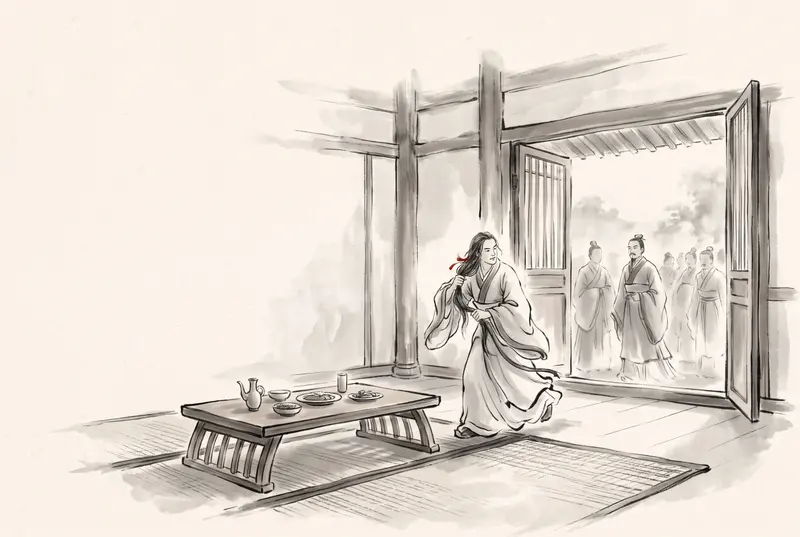
其後武王既崩,成王少,在彊葆之中。周公恐天下聞武王崩而畔,周公乃踐阼代成王攝行政當國。管叔及其群弟流言於國曰:『周公將不利於成王。』周公乃告太公望、召公奭曰:『我之所以弗辟而攝行政者,恐天下畔周,無以告我先王太王、王季、文王。三王之憂勞天下久矣,於今而后成。武王蚤終,成王少,將以成周,我所以爲之若此。』於是卒相成王,而使其子伯禽代就封於魯。周公戒伯禽曰:『我文王之子,武王之弟,成王之叔父,我於天下亦不賤矣。然我一沐三捉髮,一飯三吐哺,起以待士,猶恐失天下之賢人。子之魯,慎無以國驕人。』
Kundoku (Japanese reading)
其の後武王既に崩じ、成王少く、彊葆の中に在り。周公、天下の武王の崩ずるを聞きて畔かんことを恐れ、周公乃ち阼を践み、成王に代わりて政を摂行して国に当たる。管叔及び其の群弟、国に流言して曰く、「周公将に成王に利あらざらんとす」と。周公乃ち太公望・召公奭に告げて曰く、「我の辟けずして政を摂行する所以の者は、天下の周に畔き、以て我が先王太王・王季・文王に告ぐる無からんことを恐るればなり。三王の天下を憂労すること久し。今に於いて而る后に成る。武王蚤く終わり、成王少し。将に以て周を成さんとす。我の之を為すこと此くの若き所以なり」と。是に於いて卒に成王を相け、而して其の子伯禽をして代わりて封に魯に就かしむ。周公伯禽を戒めて曰く、「我は文王の子、武王の弟、成王の叔父なり。我天下に於いて亦た賤しからず。然れども我一沐に三たび髪を捉り、一飯に三たび哺を吐き、起ちて以て士を待つ。猶お天下の賢人を失わんことを恐る。子魯に之かば、慎みて国を以て人に驕ること無かれ」と。
Japanese
その後、武王が亡くなった。成王は幼く、まだおむつにくるまれていた。周公は、武王の死を知って天下の諸侯が背くのを恐れ、天子の位の階段を踏んで、成王に代わって政治を行い、国を治めた。管叔とその弟たちは、国じゅうにうわさを流した。「周公は成王を害そうとしている」。周公は太公望と召公奭に言った。「わたしが身を引かずに政治を代わって行っているのは、天下が周に背き、先祖の太王・王季・文王に申しわけが立たなくなるのを恐れるからだ。三王が天下のために心を砕き、苦労されたのは長いあいだのことで、今になってようやく実を結んだ。武王は早く亡くなり、成王は幼い。周の国を完成させるために、わたしはこうしているのだ」。こうして周公は最後まで成王を補佐し、自分の代わりに息子の伯禽を魯の領地へ行かせた。周公は伯禽を戒めて言った。「わたしは文王の子、武王の弟、成王の叔父で、天下において身分の低い者ではない。それでもわたしは、一度髪を洗うあいだに三度も濡れた髪を握って立ち上がり、一度の食事のあいだに三度も口の中の物を吐き出して立ち上がり、訪ねてくる士に会っている。それでもなお、天下の賢人を逃してしまうのではないかと心配なのだ。お前は魯へ行っても、国を持ったからといって人に対しておごってはならない」。
English
Later King Wu died. King Cheng was young, still a child in swaddling clothes. The Duke of Zhou feared that the realm would rebel against Zhou when it heard of King Wu's death. So he stepped up to the throne and ruled the state in King Cheng's place. Guan Shu and his younger brothers spread a rumour through the land: "The Duke of Zhou means to harm King Cheng." The Duke of Zhou said to Wang the Grand Duke and Shi the Duke of Shao: "I have not stepped aside, but rule in his place, because I fear that the realm will rebel against Zhou, and then I would have nothing to say to our royal ancestors, King Tai, King Ji and King Wen. For a long time the three kings toiled and worried for the realm, and only now has their work been achieved. King Wu died early, and King Cheng is young. I do this so as to complete the house of Zhou." So in the end he served as King Cheng's minister, and sent his own son Boqin to take up the fief in Lu in his place. The Duke of Zhou warned Boqin: "I am the son of King Wen, the brother of King Wu and the uncle of King Cheng. I am not a man of low rank in the realm. Yet three times in one hair-washing I clutch my wet hair, and three times in one meal I spit out my food, to get up and receive men of worth; and still I fear that I may lose the worthiest men in the realm. When you go to Lu, take care never to be proud with people because you have a state."
Notes (JA)
- 踐阼: 天子の位につく階段を踏むこと。周公が天子として政治を行ったかどうかは、後世まで議論になった。
- 流言: 根拠のないうわさ。「流言飛語」のもと。
- 一沐三捉髮,一飯三吐哺: 「吐哺握髪」として知られる。賢者を求めるのに熱心で、客を待たせないこと。三国時代の曹操は「短歌行」で「周公哺を吐きて、天下心を帰す」と詠んだ。
Notes (EN)
- Stepped up to the throne (踐阼): whether the duke actually ruled as king was argued about for centuries.
- Rumour (流言): an ungrounded story spread to ruin someone.
- Spitting out his food and clutching his hair (吐哺握髮): the classic image of a ruler eager for talent; Cao Cao echoed it in a famous poem.
Idioms from this passage: Spitting out one's food and clutching one's hair 吐哺握髪
Word notes
- swaddling clothes/ˈswɑdəlɪŋ kloʊz/phrase
cloth wrapped tightly round a baby
In the text: “still a child in swaddling clothes”
Similar words: wrappings — cloths around something · babyhood — the time of being a baby
- rumour/ˈrumər/noun
a story passed from person to person that may not be true
In the text: “spread a rumour through the land”
Similar words: gossip — talk about others · hearsay — things heard but not proved
British spelling: rumour (US: rumor).
Passage 4
Original
管、蔡、武庚等果率淮夷而反。周公乃奉成王命,興師東伐,作大誥。遂誅管叔,殺武庚,放蔡叔。收殷餘民,以封康叔於衛,封微子於宋,以奉殷祀。寧淮夷東土,二年而畢定。諸侯咸服宗周。
Kundoku (Japanese reading)
管・蔡・武庚等果たして淮夷を率いて反す。周公乃ち成王の命を奉じ、師を興して東伐し、大誥を作る。遂に管叔を誅し、武庚を殺し、蔡叔を放つ。殷の余民を収め、以て康叔を衛に封じ、微子を宋に封じ、以て殷の祀を奉ぜしむ。淮夷東土を寧んじ、二年にして畢く定まる。諸侯咸宗周に服す。
Japanese
管叔・蔡叔・武庚らは、案の定、淮水流域の夷を引き連れて反乱を起こした。周公は成王の命を受けて兵を挙げ、東へ討伐に向かい、そのとき「大誥」を作って天下に告げた。こうして管叔を誅し、武庚を殺し、蔡叔を追放した。殷の遺民を集めて、弟の康叔を衛に、紂の兄の微子を宋に封じ、殷の祖先の祭りを継がせた。淮水の夷と東方の地を平定し、二年ですっかり落ち着いた。諸侯は皆、周の宗家に従った。
English
Guan Shu, Cai Shu, Wugeng and the others did indeed rise in revolt, leading the Yi tribes of the Huai with them. The Duke of Zhou, acting on King Cheng's orders, raised an army and marched east, and composed the "Great Announcement". He put Guan Shu to death, killed Wugeng and banished Cai Shu. He gathered the remaining people of Shang and gave Kang Shu a fief in Wei and the Viscount of Wei a fief in Song, to keep up the sacrifices of Shang. He brought peace to the Huai Yi and the eastern lands, and in two years everything was settled. All the lords submitted to the house of Zhou.
Notes (JA)
- 淮夷: 淮水流域(今の安徽・江蘇省のあたり)にいた人々。
- 大誥: 『尚書』の篇名。東征にあたって天下に告げた文。
- 微子: 紂の兄。殷の祭りを継ぐために宋に封じられた(003-yin の章にも出る)。
- この戦いを、管叔・蔡叔・霍叔の「三監の乱」という。
Notes (EN)
- The Huai Yi (淮夷): peoples of the Huai valley in present-day Anhui and Jiangsu.
- The "Great Announcement" (大誥): a chapter of the Book of Documents.
- The Viscount of Wei (微子): elder brother of the last Shang king, who kept the Shang sacrifices in Song.
Word notes
- banish/ˈbænɪʃ/verb
to send someone away from a place as a punishment
In the text: “banished Cai Shu”
Similar words: exile — force to leave the country · expel — force out
- submit/səbˈmɪt/verb
to accept the power of someone stronger
In the text: “All the lords submitted to the house of Zhou”
Similar words: yield — give in · surrender — stop fighting and give up
Passage 5
Original
成王長,能聽政。於是周公乃還政於成王,成王臨朝。周公之代成王治,南面倍依以朝諸侯。及七年後,還政成王,北面就臣位,匔匔如畏然。初,成王少時,病,周公乃自揃其蚤沈之河,以祝於神曰:『王少未有識,奸神命者乃旦也。』亦藏其策於府。成王病有瘳。及成王用事,人或譖周公,周公奔楚。成王發府,見周公禱書,乃泣,反周公。
Kundoku (Japanese reading)
成王長じ、能く政を聴く。是に於いて周公乃ち政を成王に還し、成王朝に臨む。周公の成王に代わりて治むるや、南面し依を倍にして以て諸侯を朝せしむ。七年の後に及び、政を成王に還し、北面して臣の位に就き、匔匔如として畏るるが然し。初め、成王少き時、病む。周公乃ち自ら其の蚤を揃りて之を河に沈め、以て神に祝して曰く、「王少くして未だ識有らず。神命を奸す者は乃ち旦なり」と。亦た其の策を府に蔵す。成王の病瘳ゆる有り。成王の事を用うるに及び、人或いは周公を譖る。周公楚に奔る。成王府を発き、周公の禱書を見て、乃ち泣き、周公を反す。
Japanese
成王が成長し、自分で政治を聞けるようになった。そこで周公は政治を成王に返し、成王が朝廷に出て政治を行うようになった。周公が成王に代わって治めていたときは、南を向き、屏風を背にして諸侯の朝見を受けていた。七年たって政治を成王に返すと、北を向いて臣下の位につき、つつしみ深く、恐れかしこまっているようだった。これより前、成王が幼かったころ、病気になったことがあった。周公は自分の爪を切って黄河に沈め、神に祈った。「王は幼く、まだ物事が分かりません。神の命にそむいた者がいるとすれば、それはこの旦です」。そして、その祈りの文も宮中の倉にしまっておいた。成王の病はよくなった。成王が自ら政治をとるようになると、ある者が周公の悪口を言った。周公は楚へ逃れた。成王は倉を開いて周公の祈りの文を見ると、泣いて周公を呼びもどした。
English
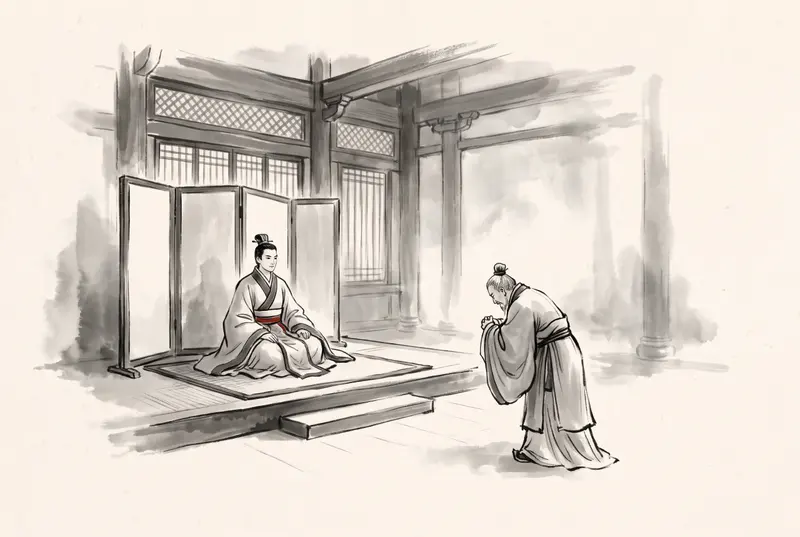
King Cheng grew up and was able to hear the business of government. So the Duke of Zhou handed the government back to King Cheng, and King Cheng came to court himself. While the Duke of Zhou had ruled in King Cheng's place, he had faced south with his back to the screen to receive the lords at court. When after seven years he gave the government back to King Cheng, he faced north and took his place among the subjects, humble and careful, as though in awe. Long before, when King Cheng was a child, he had fallen ill. The Duke of Zhou cut his own nails and sank them in the Yellow River, and prayed to the spirits: "The king is young and does not yet understand. If anyone has offended against the will of the spirits, it is Dan." He also put this prayer away in the archives. King Cheng recovered from his illness. When King Cheng took charge of affairs, someone slandered the Duke of Zhou, and the duke fled to Chu. King Cheng opened the archives, saw the duke's prayer, and wept, and brought the Duke of Zhou back.
Notes (JA)
- 南面・北面: 君主は南を向いて座り、臣下は北を向いて君主に対する。周公は君主の座から臣下の座にもどった。
- 倍依: 屏風(依)を背にすること。天子の座のしるし。
- 揃其蚤: 爪を切ること。自分の身の一部を神にささげて、身代わりを願った。蒙恬もこの話を引いている(088-meng-tian の章)。
Notes (EN)
- Facing south and facing north: a ruler sat facing south, his subjects faced north towards him.
- Cutting his nails (揃其蚤): offering part of himself to the spirits as a pledge. Meng Tian recalls this story before his death (chapter 088).
- The slander and flight to Chu are not in the Book of Documents; Sima Qian follows another tradition here.
Word notes
- humble/ˈhʌmbəl/adjective
not proud; showing you do not think you are important
In the text: “humble and careful, as though in awe”
Similar words: modest — not boastful · meek — quiet and gentle
- archives/ˈɑrkaɪvz/noun
a place where old records are kept
In the text: “put this prayer away in the archives”
Similar words: records — written accounts kept for later · files — stored papers
Passage 6
Original
周公在豐,病,將沒,曰:『必葬我成周,以明吾不敢離成王。』周公既卒,成王亦讓,葬周公於畢,從文王,以明予小子不敢臣周公也。周公卒後,秋未穫,暴風雷雨,禾盡偃,大木盡拔。周國大恐。成王與大夫朝服以開金縢書,王乃得周公所自以爲功代武王之說。二公及王乃問史、百執事,史、百執事曰:『信有,昔周公命我勿敢言。』成王執書以泣,曰:『自今後其無繆卜乎!昔周公勤勞王家,惟予幼人弗及知。今天動威以彰周公之德,惟朕小子其迎,我國家禮亦宜之。』王出郊,天乃雨,反風,禾盡起。二公命國人,凡大木所偃,盡起而筑之。歲則大孰。於是成王乃命魯得郊祭文王。魯有天子禮樂者,以襃周公之德也。
Kundoku (Japanese reading)
周公豊に在りて病み、将に没せんとして曰く、「必ず我を成周に葬れ。以て吾の敢えて成王を離れざるを明らかにせよ」と。周公既に卒す。成王も亦た譲りて、周公を畢に葬り、文王に従わしめ、以て予小子の敢えて周公を臣とせざるを明らかにす。周公卒して後、秋未だ穫らず、暴風雷雨あり、禾尽く偃し、大木尽く抜く。周国大いに恐る。成王、大夫と朝服して以て金縢の書を開き、王乃ち周公の自ら以て功と為して武王に代わらんとするの説を得たり。二公及び王乃ち史・百執事に問う。史・百執事曰く、「信に有り。昔周公我に命じて敢えて言うこと勿からしむ」と。成王書を執りて以て泣きて曰く、「今より後其れ繆卜すること無からんか。昔周公王家に勤労するも、惟れ予幼人知るに及ばず。今天威を動かして以て周公の徳を彰す。惟れ朕小子其れ迎えん。我が国家の礼も亦た之に宜し」と。王郊に出づ。天乃ち雨ふり、風を反し、禾尽く起く。二公国人に命じ、凡そ大木の偃せし所は、尽く起こして之を築かしむ。歳則ち大いに孰す。是に於いて成王乃ち魯に命じて郊して文王を祭るを得しむ。魯に天子の礼楽有る者は、以て周公の徳を襃むるなり。
Japanese
周公は豊の都で病にかかり、亡くなる前に言った。「わたしを必ず成周(洛陽)に葬ってくれ。わたしが成王のそばを離れないことを示すために」。周公が亡くなると、成王はへりくだって、周公を畢(文王の墓のある地)に葬り、文王のそばに置いた。わたしは周公を臣下扱いなどできない、ということを示したのである。周公が亡くなったあと、秋の取り入れの前に、激しい風と雷雨が起こり、稲はことごとく倒れ、大木はことごとく根こそぎになった。周の人々は大いに恐れた。成王は大夫たちと礼服を着て金縢の箱を開き、周公が自分の身を差し出して武王の身代わりになろうとした祈りの文を見つけた。太公と召公と王は、史官や役人たちにたずねた。史官や役人たちは「確かにありました。昔、周公はわたしどもに口止めをされたのです」と答えた。成王は祈りの文を手に取って泣きながら言った。「もう占うまでもない。昔、周公は王家のために苦労されたのに、幼いわたしはそれを知らなかった。いま天は威光を示して、周公の徳を明らかにされたのだ。わたし自らお迎えしよう。わが国の礼から言っても、それがふさわしい」。王が都の郊外に出ると、天は雨を降らせ、風は逆向きに吹き、稲はことごとく起き上がった。太公と召公は人々に命じて、倒れた大木をすべて起こし、根もとに土を盛って固めさせた。その年は大豊作になった。そこで成王は、魯に、天子だけに許される郊外の祭りで文王を祭ることを許した。魯に天子の礼楽があるのは、周公の徳をたたえるためである。
English
The Duke of Zhou fell ill at Feng, and when he was dying he said: "You must bury me at Chengzhou, to show that I dare not leave King Cheng." When the Duke of Zhou had died, King Cheng in his turn humbled himself and buried him at Bi, beside King Wen, to show that he, the little one, did not dare to treat the Duke of Zhou as his subject. After the Duke of Zhou died, in the autumn before the harvest was gathered, there came a fierce wind with thunder and rain. The grain was all beaten down, and great trees were all torn up by the roots. The people of Zhou were terrified. King Cheng and his grandees put on their court robes and opened the writings in the metal-bound casket, and the king found the prayer in which the Duke of Zhou had offered himself in place of King Wu. The two dukes and the king asked the scribe and all the officers, and they said: "It is true. Long ago the Duke of Zhou ordered us never to speak of it." King Cheng held the prayer and wept, and said: "There is no need now to consult the tortoise. Long ago the Duke of Zhou toiled for the royal house, and I, a mere child, did not know it. Now Heaven has shown its power to make the duke's virtue plain. I, the little one, will go out to meet him; that is what the rites of our house require." The king went out to the edge of the city. Then Heaven sent rain, the wind turned back, and the grain all stood up again. The two dukes ordered the people to raise every great tree that had fallen and bank up earth around it. That year the harvest was rich. So King Cheng allowed Lu to offer the suburban sacrifice to King Wen. That Lu had the rites and music of the Son of Heaven was to honour the virtue of the Duke of Zhou.
Notes (JA)
- 成周: 洛邑(今の洛陽)。周公が東方を治めるために造営した都。
- 畢: 今の陝西省咸陽市の北、文王・武王の墓があるとされる地。
- 郊: 都の郊外で天を祭る天子の祭り。魯だけが、周公の功績により特別に許された。
Notes (EN)
- Chengzhou (成周): the eastern capital near present-day Luoyang, built under the duke.
- Bi (畢): north of present-day Xianyang, where Kings Wen and Wu were buried.
- The suburban sacrifice (郊): a rite to Heaven otherwise reserved for the Son of Heaven.
Word notes
- terrified/ˈtɛrəˌfaɪd/adjective
very frightened
In the text: “The people of Zhou were terrified”
Similar words: petrified — too scared to move · horrified — shocked and afraid
- bank up/bæŋk ʌp/phrasal verb
to pile earth or snow against something
In the text: “bank up earth around it”
Similar words: heap — pile up · mound — form a small hill of
Passage 7
Original
周公卒,子伯禽固已前受封,是爲魯公。魯公伯禽之初受封之魯,三年而後報政周公。周公曰:『何遲也?』伯禽曰:『變其俗,革其禮,喪三年然後除之,故遲。』太公亦封於齊,五月而報政周公。周公曰:『何疾也?』曰:『吾簡其君臣禮,從其俗爲也。』及後聞伯禽報政遲,乃嘆曰:『嗚呼,魯後世其北面事齊矣!夫政不簡不易,民不有近;平易近民,民必歸之。』
Kundoku (Japanese reading)
周公卒し、子伯禽固より已に前に封を受け、是を魯公と為す。魯公伯禽の初め封を受けて魯に之くや、三年にして後に政を周公に報ず。周公曰く、「何ぞ遅きや」と。伯禽曰く、「其の俗を変じ、其の礼を革め、喪は三年にして然る後に之を除く。故に遅し」と。太公も亦た斉に封ぜられ、五月にして政を周公に報ず。周公曰く、「何ぞ疾きや」と。曰く、「吾其の君臣の礼を簡にし、其の俗に従いて為せばなり」と。後に伯禽の政を報ずること遅きを聞くに及び、乃ち嘆じて曰く、「嗚呼、魯は後世其れ北面して斉に事えん。夫れ政は簡易ならずんば、民近づくこと有らず。平易にして民に近ければ、民必ず之に帰す」と。
Japanese
周公が亡くなったとき、息子の伯禽はすでに前から領地を受けて魯公となっていた。伯禽ははじめて魯に封じられたとき、三年たってから周公に政治の報告をした。周公が「どうしてこんなに遅かったのか」と聞くと、伯禽は「土地の風俗を変え、礼を改め、喪は三年たってから明けるようにさせました。それで遅くなりました」と答えた。太公望も斉に封じられたが、五か月で周公に報告に来た。周公が「どうしてこんなに早かったのか」と聞くと、太公は「君臣の礼を簡単にし、土地の風俗のままにやらせたからです」と答えた。のちに伯禽の報告が遅かったことを聞いて、周公はため息をついて言った。「ああ、魯は後の世に、北を向いて斉に仕えることになるだろう。政治は簡単でやさしくなければ、民は近づいてこない。わかりやすく民に寄りそえば、民はきっとなつくのだ」。
English
When the Duke of Zhou died, his son Boqin had long since received his fief and become Duke of Lu. When Boqin first went to Lu, it was three years before he came to report on his government to the Duke of Zhou. "Why so slow?" asked the Duke of Zhou. Boqin said: "I changed their customs and reformed their rites. Mourning lasts three years before it can be put off; that is why I was slow." The Grand Duke too had been given a fief, in Qi, and he came to report on his government after five months. "Why so quick?" asked the Duke of Zhou. He said: "I made the rites between ruler and subject simple, and did things according to their own customs." Later, when the Duke of Zhou heard how slow Boqin had been, he sighed and said: "Alas! In later ages Lu will face north and serve Qi. If government is not simple and easy, the people will not come close to it. If it is plain and easy and close to the people, the people are sure to turn to it."
Notes (JA)
- 報政: 領地の政治のようすを本家に報告すること。
- 北面事齊: 北を向いて(臣下として)斉に仕える。実際、春秋・戦国時代を通じて魯は斉に圧迫され続けた。
- 太公: 太公望呂尚。斉の始祖(032-qi-taigong の章)。
Notes (EN)
- Report on his government (報政): to give an account of his new fief to the head of the house.
- Face north and serve Qi (北面事齊): through later centuries Lu was indeed overshadowed by Qi.
- The Grand Duke (太公): Lü Shang, founder of Qi (chapter 032).
Word notes
- reform/rɪˈfɔrm/verb
to change something to make it better
In the text: “I changed their customs and reformed their rites”
Similar words: improve — make better · revise — change and correct
- sigh/saɪ/verb
to breathe out slowly to show sadness or tiredness
In the text: “he sighed and said”
Similar words: groan — make a low sound of pain · moan — make a long sad sound
Passage 8
Original
太史公曰:余聞孔子稱曰『甚矣魯道之衰也!洙泗之閒龂龂如也』。觀慶父及叔牙閔公之際,何其亂也?隱桓之事;襄仲殺適立庶;三家北面爲臣,親攻昭公,昭公以奔。至其揖讓之禮則從矣,而行事何其戾也?
Kundoku (Japanese reading)
太史公曰く、余聞く、孔子称して曰く、「甚だしいかな魯道の衰えたるや。洙泗の間、龂龂如たり」と。慶父及び叔牙・閔公の際を観るに、何ぞ其れ乱れたるや。隠・桓の事、襄仲の適を殺して庶を立つる、三家の北面して臣と為りながら、親ら昭公を攻め、昭公以て奔る。其の揖譲の礼に至りては則ち従うも、行事は何ぞ其れ戻れるや。
Japanese
太史公は言う。孔子が「ひどいものだ、魯の道の衰えようは。洙水と泗水のあたりでは、人々は言い争ってばかりいる」と言ったと聞いている。慶父と叔牙、閔公のころを見ると、なんと乱れていたことか。隠公と桓公のこと、襄仲が正妻の子を殺して側室の子を立てたこと、三家(孟孫・叔孫・季孫)が北を向いて臣下でありながら、自ら昭公を攻め、昭公が国外へ逃げたこと。おじぎをしてゆずり合う礼の形はきちんと守っているのに、行いは何と道にそむいていることか。
English
The Grand Historian says: I have heard that Confucius said: "How far the way of Lu has fallen! Between the Zhu and the Si rivers, people do nothing but wrangle." When I look at the time of Qingfu, Shuya and Duke Min, what disorder there was! There was the affair of Duke Yin and Duke Huan; Xiang Zhong killed the rightful heir and set up the son of a concubine; and the three great families, who faced north as subjects, attacked Duke Zhao themselves, so that he fled. They kept to the rites of bowing and yielding, yet how perverse were their deeds!
Notes (JA)
- 洙泗: 魯の都曲阜を流れる洙水と泗水。孔子が弟子を教えた地として、儒学そのものを指すこともある。
- 隱桓之事: 魯の隠公が弟の桓公の一派に殺された事件。
- 三家: 魯の実権を握った孟孫・叔孫・季孫の三氏(三桓)。昭公は季孫氏を討とうとして敗れ、斉に亡命した。
- 周公が定めた礼の国で、礼の形だけが残り、中身が失われたことを嘆いている。
Notes (EN)
- The Zhu and the Si (洙泗): rivers at Qufu, where Confucius taught.
- The three families (三家): the Mengsun, Shusun and Jisun, who held the real power in Lu; Duke Zhao fled to Qi after failing to crush them.
- Sima Qian laments that in the duke's own state the forms of ritual outlived its spirit.
Word notes
- wrangle/ˈræŋɡəl/verb
to argue noisily for a long time
In the text: “people do nothing but wrangle”
Similar words: quarrel — argue angrily · squabble — argue about small things
- perverse/pərˈvɜrs/adjective
wrong and against what is right or reasonable
In the text: “how perverse were their deeds”
Similar words: contrary — going against what is expected · wicked — morally wrong