Annals · Vol. 6
Basic Annals of the First Emperor of Qin 秦始皇本紀
The Fall of Qin: Calling a Deer a Horse 指鹿為馬
The First Emperor, who unified the realm, dies on a tour at Shaqiu. Zhao Gao, with Chancellor Li Si, forges the emperor's last command, drives the eldest son Fusu to suicide and puts the youngest son, Huhai, on the throne as the Second Emperor. Later Zhao Gao tests the court by calling a deer a horse, and drives the Second Emperor to his death. But Ziying, the new king he sets up, stabs him to death, and soon surrenders to the Lord of Pei. Qin falls.
This page has the scene "The Fall of Qin: Calling a Deer a Horse" from this volume, not the whole volume.
Audio
The audio is synthetic speech.
Video
Passage 1
Original
至平原津而病。始皇惡言死,群臣莫敢言死事。上病益甚,乃為璽書賜公子扶蘇曰:「與喪會咸陽而葬。」書已封,在中車府令趙高行符璽事所,未授使者。
Kundoku (Japanese reading)
平原津に至りて病む。始皇死を言うを悪む。群臣敢えて死事を言うもの莫し。上の病益ます甚だし。乃ち璽書を為りて公子扶蘇に賜いて曰く、「喪と咸陽に会して葬れ」と。書已に封じ、中車府令趙高の符璽の事を行う所に在りて、未だ使者に授けず。
Japanese
始皇帝は平原津まで来て病気になった。始皇帝は「死」という言葉を嫌ったので、家臣たちは誰も死後のことを口にしなかった。病がいよいよ重くなると、始皇帝は印を押した手紙を書いて、公子の扶蘇に与えることにした。「わたしの棺を咸陽で迎えて、葬儀をとり行え」。手紙はもう封をされていたが、皇帝の印と割符を預かる中車府令の趙高のもとに置かれたまま、まだ使者に渡されていなかった。
English
When he reached the Pingyuan ford, the First Emperor fell ill. He hated any talk of death, so none of his ministers dared mention what should happen after his death. As his illness grew worse, he wrote a sealed letter to Prince Fusu: "Meet my coffin at Xianyang and bury me." The letter was sealed, but it stayed in the office of Zhao Gao, Director of the Palace Carriages, who was in charge of the seals and tallies, and was never handed to a messenger.
Notes (JA)
- この節の前(省略): 始皇帝の三十七年(前210年)、始皇帝は丞相の李斯と末子の胡亥を連れて、五度目の巡行に出た。会稽山で禹を祭り、海沿いを北上して瑯邪へ向かった帰り道である。
- 平原津: 黄河の渡し場。今の山東省平原県のあたり。
- 始皇: 始皇帝。前221年に天下を統一し、初めて「皇帝」を名のった。
- 璽書: 皇帝の印(璽)を押して封をした文書。
- 扶蘇: 始皇帝の長子。始皇帝をいさめたため、北方で将軍の蒙恬とともに匈奴への守りについていた。この手紙は、扶蘇に葬儀をとり行わせる、つまり跡継ぎとすることを意味した。
- 中車府令: 皇帝の車馬をつかさどる役所の長。趙高は印と割符(符璽)の管理も兼ねていた。
Notes (EN)
- Before this (left out here): in 210 BCE, the 37th year of his reign, the First Emperor set out on his fifth tour with Chancellor Li Si and his youngest son, Huhai. He sacrificed to Yu the Great at Mount Kuaiji, then went north along the coast to Langya. This is the journey home.
- Pingyuan ford: a crossing of the Yellow River, near present-day Pingyuan in Shandong.
- 始皇 ("the First Emperor"): he unified the realm in 221 BCE and was the first to take the title huangdi, "emperor".
- 璽書: a document sealed with the emperor's seal.
- Fusu: the eldest son. For protesting against his father, he had been sent north to guard against the Xiongnu with General Meng Tian. Asking him to bury his father meant naming him heir.
- 中車府令 ("Director of the Palace Carriages"): head of the office for the emperor's carriages and horses. Zhao Gao also kept the seals and tallies.
Word notes
- messenger/ˈmɛsəndʒər/noun
a person who carries letters or news
In the text: “was never handed to a messenger”
Similar words: courier — someone who delivers things quickly · envoy — a messenger sent by a ruler
- tally/ˈtæli/noun
a token split in two; matching halves proved an order was real
In the text: “the seals and tallies”
Similar words: token — an object that stands for something · tag — a small label
Tally also means a count or score.
Passage 2
Original
七月丙寅,始皇崩於沙丘平臺。丞相斯為上崩在外,恐諸公子及天下有變,乃祕之,不發喪。棺載輼涼車中,故幸宦者參乘,所至上食。百官奏事如故,宦者輒從輼涼車中可其奏事。獨子胡亥、趙高及所幸宦者五六人知上死。
Kundoku (Japanese reading)
七月丙寅、始皇沙丘の平台に崩ず。丞相斯、上の崩ずること外に在るが為に、諸公子及び天下に変有らんことを恐れ、乃ち之を秘して喪を発せず。棺は輼涼車の中に載せ、故の幸宦者参乗し、至る所に食を上る。百官事を奏すること故の如く、宦者輒ち輼涼車の中より其の奏事を可とす。独り子胡亥・趙高及び幸する所の宦者五六人のみ上の死を知る。
Japanese
七月丙寅の日、始皇帝は沙丘の平台で亡くなった。丞相の李斯は、皇帝が都の外で亡くなったので、公子たちや天下に変事が起こるのを恐れ、死を隠して喪を発表しなかった。棺は輼涼車(窓を開け閉めして車内の温度を調節できる寝台車)に載せ、始皇帝のお気に入りだった宦官が同じ車に乗って、行く先々で食事を差し上げた。役人たちはこれまでどおりに政務を申し上げ、宦官がそのたびに車の中から裁可を伝えた。皇帝の死を知っていたのは、子の胡亥、趙高、お気に入りの宦官五、六人だけであった。
English
On the day bingyin of the seventh month, the First Emperor died at the Pingtai terrace in Shaqiu. Because the emperor had died away from the capital, Chancellor Li Si feared that the princes and the realm might rise in revolt. So he kept the death secret and announced no mourning. The coffin was placed in a sleeping carriage with windows that could be opened or closed, a favorite eunuch rode with it, and meals were served wherever they stopped. The officials reported on affairs as before, and each time the eunuch gave the emperor's approval from inside the carriage. Only his son Huhai, Zhao Gao and five or six favored eunuchs knew that the emperor was dead.
Notes (JA)
- 七月丙寅: 前210年の七月。丙寅は干支で数えた日。始皇帝は五十歳だった。
- 崩: 天子が死ぬこと。
- 沙丘: 今の河北省広宗県のあたり。殷の紂王が離宮を置いたとも伝えられる地。
- 丞相斯: 丞相の李斯。始皇帝のもとで法家の政策を進めた中心人物。
- 輼涼車: 窓を開け閉めして、暖かくも涼しくもできる寝台車。
- 参乗: 同じ車に乗ってお供をすること。
- 胡亥: 始皇帝の末子(十八番目の子とされる)。この巡行に願い出てついてきていた。
Notes (EN)
- 七月丙寅: a day in the seventh month of 210 BCE, counted by the sixty-day cycle. The First Emperor was fifty.
- 崩: the word for the death of a Son of Heaven.
- Shaqiu: near present-day Guangzong in Hebei. King Zhou of Shang is said to have had a pleasure palace there.
- Chancellor Li Si: the minister who had carried out the emperor's Legalist policies.
- 輼涼車: a sleeping carriage whose windows could be opened or closed to make it warm or cool.
- Huhai: the youngest son (said to be the eighteenth). He had asked to come on this tour.
Word notes
- revolt/rɪˈvoʊlt/noun
a rebellion against those in power
In the text: “rise in revolt”
Similar words: rebellion — fighting against a government · uprising — a revolt by ordinary people
- eunuch/ˈjuːnək/noun
a castrated man who served in a royal palace
In the text: “a favorite eunuch rode with it”
Similar words: palace servant — a servant in a palace · attendant — someone who serves a person
Passage 3
Original
趙高故嘗教胡亥書及獄律令法事,胡亥私幸之。高乃與公子胡亥、丞相斯陰謀破去始皇所封書賜公子扶蘇者,而更詐為丞相斯受始皇遺詔沙丘,立子胡亥為太子。更為書賜公子扶蘇、蒙恬,數以罪,(其)賜死。語具在李斯傳中。行,遂從井陘抵九原。會暑,上輼車臭,乃詔從官令車載一石鮑魚,以亂其臭。
Kundoku (Japanese reading)
趙高故より嘗て胡亥に書及び獄律令法の事を教う。胡亥私かに之を幸す。高乃ち公子胡亥・丞相斯と陰かに謀りて、始皇の封ぜし所の公子扶蘇に賜う書を破り去り、而して更に詐りて丞相斯始皇の遺詔を沙丘に受くと為し、子胡亥を立てて太子と為す。更に書を為りて公子扶蘇・蒙恬に賜い、数むるに罪を以てし、死を賜う。語は具さに李斯伝の中に在り。行きて、遂に井陘より九原に抵る。会たま暑く、上の輼車臭う。乃ち従官に詔して、車をして一石の鮑魚を載せしめ、以て其の臭いを乱す。
Japanese
趙高は以前から胡亥に文字や裁判・法律のことを教えており、胡亥は趙高をひそかに気に入っていた。そこで趙高は、公子胡亥・丞相李斯とひそかにはかり、始皇帝が封をした扶蘇あての手紙を破り捨てた。そして、丞相李斯が沙丘で始皇帝の遺言を受けたと偽って、子の胡亥を太子に立てた。さらに別の手紙を作って公子扶蘇と蒙恬に送り、二人の罪を数えあげて、死を命じた。このくだりは李斯列伝にくわしい。一行はそのまま進み、井陘を通って九原に着いた。ちょうど暑い時期で、皇帝の車が臭いはじめた。そこで従者たちに命じて、車ごとに一石(約30キログラム)の塩漬けの魚を積ませ、臭いをまぎらわせた。
English
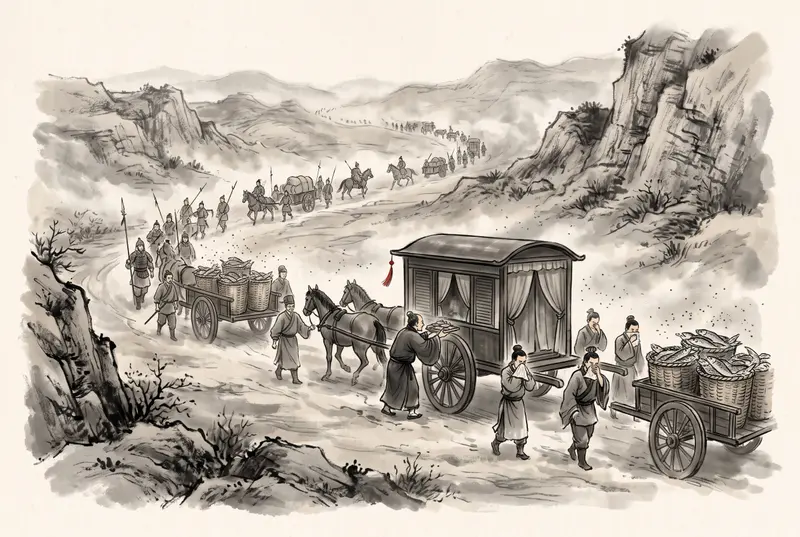
Zhao Gao had once taught Huhai writing and the laws on trials and punishments, and Huhai privately favored him. So Zhao Gao, Prince Huhai and Chancellor Li Si secretly plotted to destroy the sealed letter the First Emperor had written to Prince Fusu. Instead, they falsely claimed that Li Si had received the emperor's last command at Shaqiu, and made his son Huhai crown prince. They also wrote another letter to Prince Fusu and Meng Tian, listing their crimes and ordering them to die. The full account is in the Biography of Li Si. The procession went on by way of Jingxing to Jiuyuan. It was the hot season, and the emperor's carriage began to stink. So the officials in the procession were ordered to load each carriage with a shi of salted fish, about thirty kilograms, to hide the smell.
Notes (JA)
- 沙丘の謀: 趙高・胡亥・李斯が遺言を偽ったこのたくらみは「沙丘の謀」と呼ばれる。くわしいやりとりは巻87「李斯列伝」に書かれている。
- 蒙恬: 秦の将軍。三十万の兵を率いて匈奴を討ち、長城を築いた。扶蘇とともに北方にいた。
- 賜死: 自殺を命じること。扶蘇は命令に従って自殺し、蒙恬はのちに捕らえられて死んだ。
- (其): 校訂者が不要とした字。読まない。
- 九原: 今の内モンゴル自治区包頭市のあたり。一行は、まっすぐ都へ帰らず、北方を回る道をとった。
- 鮑魚: 塩漬けにした魚。強いにおいで遺体のにおいを隠した。今の「あわび」ではない。
- 一石: 秦の重さの単位で、約30キログラム。
Notes (EN)
- The Shaqiu plot: this forgery by Zhao Gao, Huhai and Li Si is known as the "Shaqiu plot". The full story is in Volume 87, the Biography of Li Si.
- Meng Tian: a Qin general who led 300,000 men against the Xiongnu and built the Great Wall. He was in the north with Fusu.
- 賜死: ordering someone to kill himself. Fusu obeyed and killed himself; Meng Tian was later arrested and died.
- (其): a character the editors regard as an error; it is not read.
- Jiuyuan: near Baotou in present-day Inner Mongolia. The procession did not go straight home but took the long road through the north.
- 鮑魚: salted fish, whose strong smell hid the smell of the body (in modern Chinese the word means abalone).
- 一石 ("one shi"): a Qin unit of weight, about thirty kilograms.
Word notes
- plot/plɑt/verb
to plan secretly to do something wrong
In the text: “secretly plotted”
Similar words: scheme — make a clever, often dishonest plan · conspire — plan together in secret
As a noun, plot also means the story of a book or film.
- crown prince/ˌkraʊn ˈprɪns/noun
the son who is chosen to become the next ruler
In the text: “made his son Huhai crown prince”
Similar words: heir — the person who will inherit · successor — the person who comes next
- procession/prəˈsɛʃən/noun
a long line of people or vehicles moving forward together
In the text: “The procession went on”
Similar words: parade — a procession for celebration · column — a long line of troops or vehicles
- stink/stɪŋk/verb
to have a very bad smell
In the text: “began to stink”
Similar words: smell — the general word · reek — smell very strongly and badly
Passage 4
Original
行從直道至咸陽,發喪。太子胡亥襲位,為二世皇帝。九月,葬始皇酈山。始皇初即位,穿治酈山,及并天下,天下徒送詣七十餘萬人,穿三泉,下銅而致槨,宮觀百官奇器珍怪徙臧滿之。令匠作機弩矢,有所穿近者輒射之。以水銀為百川江河大海,機相灌輸,上具天文,下具地理。以人魚膏為燭,度不滅者久之。
Kundoku (Japanese reading)
直道より行きて咸陽に至り、喪を発す。太子胡亥位を襲い、二世皇帝と為る。九月、始皇を酈山に葬る。始皇初めて即位するや、酈山を穿ち治め、天下を并すに及びて、天下の徒の送り詣る者七十余万人、三泉を穿ち、銅を下して槨を致し、宮観・百官・奇器・珍怪、徙して臧めて之に満たす。匠をして機弩矢を作らしめ、穿ちて近づく所の者有らば輒ち之を射しむ。水銀を以て百川・江河・大海と為し、機もて相灌輸す。上は天文を具え、下は地理を具う。人魚の膏を以て燭と為し、滅えざる者を度ること之を久しうす。
Japanese
一行は直道を通って咸陽に着き、ようやく喪を発表した。太子の胡亥が位を継いで、二世皇帝となった。九月、始皇帝を酈山に葬った。始皇帝は即位するとすぐ酈山に墓を掘りはじめ、天下を統一すると、全国から送られてきた労役の囚人は七十万人あまりにのぼった。地下水の層を三つも掘り抜き、銅を流しこんで外棺を据え、宮殿や楼閣の模型、百官の像、珍しい器物や宝物を運びこんで、いっぱいに納めた。職人にからくりの弩を作らせ、墓を掘って近づく者があれば、すぐに矢が放たれるようにした。水銀で多くの川や長江・黄河、大海をかたどり、からくりで水銀を流しめぐらせた。上には天の星々を、下には地上の地形をそなえた。人魚の脂でろうそくを作り、長いあいだ消えないようにした。
English
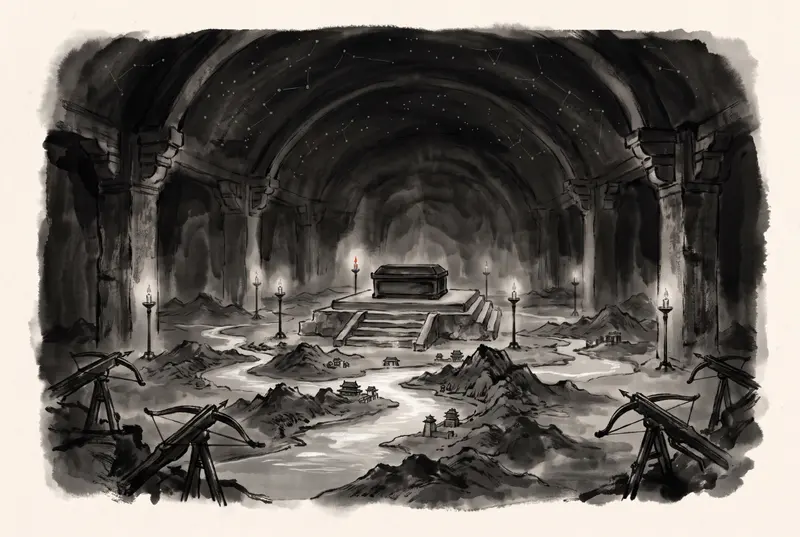
They traveled on by the Straight Road to Xianyang, and only then announced the death. The crown prince Huhai took the throne as the Second Emperor. In the ninth month the First Emperor was buried at Mount Li. When he first became king, he had begun digging a tomb at Mount Li, and after he unified the realm, more than seven hundred thousand convicts were sent there from all over the land. They dug down through three layers of springs, poured in bronze, and set the outer coffin in place. Models of palaces and towers, figures of officials, rare objects and treasures were brought in to fill it. Craftsmen were ordered to make crossbows that would shoot at once at anyone who dug close. Quicksilver was made into the hundred rivers, the Yangtze, the Yellow River and the great sea, and machines kept it flowing. Above were the signs of the heavens; below, the shape of the earth. Candles were made from the fat of "man-fish," so that they would burn for a very long time.
Notes (JA)
- 直道: 蒙恬が造らせた、咸陽から北の九原へまっすぐ通じる軍用道路。
- 二世皇帝: 始皇帝は、自分を「始皇帝」とし、子孫は二世・三世…と数えて万世に伝えるよう定めていた。
- 酈山: 驪山とも書く。咸陽の東、今の陝西省西安市臨潼区にある山。その北のふもとに始皇帝陵がある。陵の東では、のちに兵馬俑が見つかった(『史記』には記されていない)。
- 三泉: 地下水の層を三つ(あるいは深く)掘り抜くこと。
- 槨: 棺を納める外側のひつぎ、あるいは墓室。
- 水銀: 陵墓の上の土からは、ふつうより高い濃度の水銀が検出されていると報告されている。
- 人魚: 想像上の魚、またはサンショウウオやアザラシの類とする説がある。
Notes (EN)
- The Straight Road: a military road built under Meng Tian, running straight north from Xianyang to Jiuyuan.
- The Second Emperor: the First Emperor had decreed that his heirs would be numbered second, third and so on, for ten thousand generations.
- Mount Li: east of Xianyang, in present-day Lintong near Xi'an. The First Emperor's tomb mound lies at its northern foot. The Terracotta Army was later found east of it, though the Shiji does not mention it.
- 三泉 ("three springs"): digging down through three (or many) layers of groundwater.
- 槨: the outer coffin, or the burial chamber.
- Quicksilver (mercury): soil on the tomb mound has been reported to contain unusually high levels of mercury.
- "Man-fish" (人魚): an imaginary fish, or perhaps a giant salamander or a seal.
Word notes
- convict/ˈkɑnvɪkt/noun
a person found guilty of a crime and punished
In the text: “seven hundred thousand convicts”
Similar words: prisoner — someone kept in prison · criminal — someone who has broken the law
As a verb (to find guilty) it is stressed on the second syllable: /kənˈvɪkt/.
- quicksilver/ˈkwɪkˌsɪlvər/noun
an old name for mercury, a liquid metal
In the text: “Quicksilver was made into the hundred rivers”
Similar words: mercury — the modern name · liquid metal — a description
Passage 5
Original
二世曰:「先帝後宮非有子者,出焉不宜。」皆令從死,死者甚眾。葬既已下,或言工匠為機,臧皆知之,臧重即泄。大事畢,已臧,閉中羨,下外羨門,盡閉工匠臧者,無復出者。樹草木以象山。
Kundoku (Japanese reading)
二世曰く、「先帝の後宮の子有るに非ざる者は、出だすは宜しからず」と。皆従死せしむ。死する者甚だ衆し。葬既已に下るや、或るひと言う、工匠機を為り、臧むるもの皆之を知る、臧重ければ即ち泄れんと。大事畢りて、已に臧め、中羨を閉じ、外羨門を下し、尽く工匠の臧むる者を閉じて、復た出づる者無し。草木を樹えて以て山に象る。
Japanese
二世皇帝は言った。「先帝の後宮の女性のうち、子のない者を外へ出すのはよくない」。そして、その全員を始皇帝の死に殉じさせたので、死者はたいへん多かった。棺を下ろし終えると、ある者が言った。「からくりを作った職人たちは、何が納められているかをみな知っています。財宝は莫大ですから、すぐに秘密がもれてしまうでしょう」。葬儀が終わり、すべてを納めると、墓道の中ほどの門を閉じ、外側の門を下ろして、財宝を納めた職人たちをすべて閉じこめた。出てきた者は一人もいなかった。その上に草木を植えて、山のように見せかけた。
English
The Second Emperor said, "It would not be right to send away those of the late emperor's palace women who had no children." He ordered them all to follow the emperor in death, and a great many died. When the coffin had been lowered, someone said that the craftsmen who had built the machines knew everything that was stored there, and that with so much treasure the secret would soon get out. When the great ceremony was over and everything had been stored away, the inner gate of the tomb passage was closed and the outer gate was dropped, shutting in all the craftsmen who had stored the treasures. Not one of them came out again. Grass and trees were planted on top to make it look like a hill.
Notes (JA)
- 先帝: 亡くなった前の皇帝、ここでは始皇帝。
- 後宮: 皇帝の妻や女官たちの住むところ。また、そこに住む女性たち。
- 従死: 主君の死に従って死ぬこと(殉死)。
- 臧: 「蔵」と同じで、納めること、納めた物。
- 羨: 墓室へ通じる道(羨道)。中羨はその中ほどの門、外羨門は外側の門。
- 樹草木以象山: 陵墓に土を盛り、草木を植えて山のように見せた。今も高さ数十メートルの墳丘が残る。
Notes (EN)
- 先帝 ("the late emperor"): here, the First Emperor.
- 後宮: the inner palace, and the women who lived there.
- 從死: to die with one's lord, following him in death.
- 臧: the same as 藏, to store away, or the things stored.
- 羨: the passage leading to the burial chamber; there was an inner gate and an outer gate.
- 樹草木以象山: earth was heaped over the tomb and planted to look like a hill. The mound, still tens of meters high, can be seen today.
Word notes
- follow someone in death/ˌfɑloʊ ˌsʌmwʌn ɪn ˈdɛθ/phrase
to be killed or to die so as to be buried with a dead ruler
In the text: “follow the emperor in death”
Similar words: be sacrificed — be killed as an offering · be buried with — be put in the same tomb
- get out/ˌɡɛt ˈaʊt/phrasal verb
to become known (of a secret)
In the text: “the secret would soon get out”
Similar words: leak — become known without permission · come out — become known
Passage 6
Original
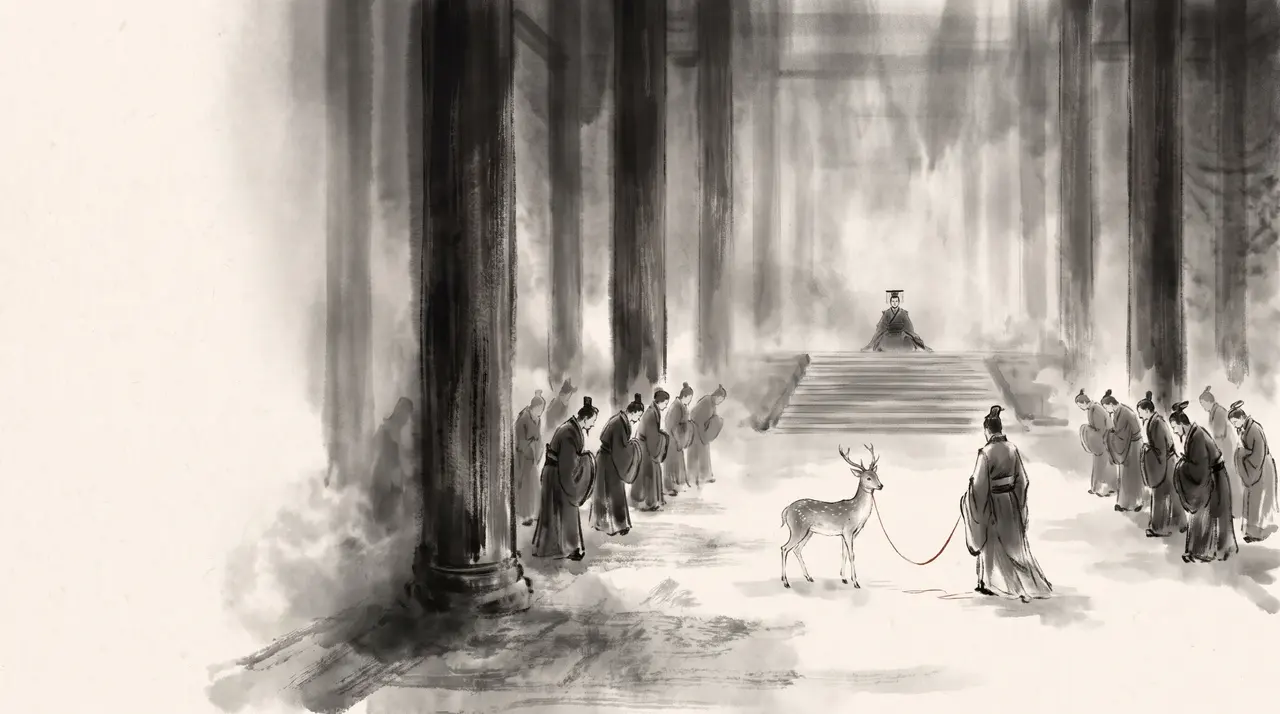
八月己亥,趙高欲為亂,恐群臣不聽,乃先設驗,持鹿獻於二世,曰:「馬也。」二世笑曰:「丞相誤邪?謂鹿為馬。」問左右,左右或默,或言馬以阿順趙高。或言鹿(者),高因陰中諸言鹿者以法。後群臣皆畏高。
Kundoku (Japanese reading)
八月己亥、趙高乱を為さんと欲し、群臣の聴かざらんことを恐れ、乃ち先ず験を設け、鹿を持して二世に献じて曰く、「馬なり」と。二世笑いて曰く、「丞相誤れるか。鹿を謂いて馬と為す」と。左右に問う。左右或いは黙し、或いは馬と言いて以て趙高に阿順す。或いは鹿と言う。高因りて陰かに諸もろの鹿と言う者を中つるに法を以てす。後、群臣皆高を畏る。
Japanese
八月己亥の日、趙高は反乱を起こそうと思ったが、家臣たちが従わないのではないかと心配した。そこでまず試しを仕掛けることにした。鹿を引いてきて二世皇帝に献上し、「馬でございます」と言った。二世皇帝は笑って言った。「丞相は間違えているのではないか。鹿を馬だと言うとは」。そして左右の者にたずねた。左右の者は、黙っている者もいれば、「馬です」と言って趙高にへつらう者もいた。「鹿です」と言う者もいた。趙高は、鹿だと言った者たちを、のちにひそかに法律にかけて罪に陥れた。それからは、家臣たちはみな趙高を恐れるようになった。
English
On the day jihai of the eighth month, Zhao Gao wanted to seize power, but feared the ministers would not go along with him. So first he set up a test. He brought a deer and presented it to the Second Emperor, saying, "This is a horse." The Second Emperor laughed and said, "Are you mistaken, Chancellor? You are calling a deer a horse." He asked those around him. Some kept silent; some said "a horse" to please Zhao Gao; some said "a deer." Afterward, Zhao Gao quietly used the law to bring down everyone who had said "a deer." From then on, all the ministers feared him.
Notes (JA)
- この節の前(省略): 二世皇帝は趙高の言うままに、兄弟や大臣を次々に殺した。前209年に陳勝・呉広が反乱を起こすと(巻48「陳勝・呉広の乱」を参照)、各地で反乱が広がった。李斯も趙高に陥れられて処刑され、趙高が丞相となった。
- 八月己亥: 二世皇帝の三年(前207年)の八月。
- 為乱: 帝位を奪うなど、反乱を起こすこと。
- 設験: 試しを仕掛けること。
- 指鹿為馬: この場面から「鹿を指して馬と為す」という成語が生まれた。権力をかさに着て、間違いを無理に押し通すことのたとえ。日本語の「馬鹿」の語源をこの故事に求める説もあるが、俗説とされることが多い。
- 中: 罪に陥れること。
- (者): 校訂者が不要とした字。読まない。
Notes (EN)
- Before this (left out here): on Zhao Gao's advice, the Second Emperor killed his brothers and high ministers one after another. When Chen Sheng and Wu Guang rose in 209 BCE (see Volume 48, "Chen Sheng's Uprising"), revolts spread everywhere. Li Si too was brought down by Zhao Gao and executed, and Zhao Gao became chancellor.
- 八月己亥: a day in the eighth month of the Second Emperor's third year (207 BCE).
- 設驗: to set up a test.
- 指鹿為馬 ("pointing at a deer and calling it a horse"): this scene gave rise to the saying, used of someone who uses power to force others to accept a lie.
- 中: to trap someone with a charge.
- (者): a character the editors regard as an error; it is not read.
Idioms from this passage: Calling a deer a horse 鹿を指して馬と為す
Word notes
- seize power/ˌsiːz ˈpaʊər/phrase
to take control of a country by force
In the text: “Zhao Gao wanted to seize power”
Similar words: take over — take control · usurp — formal; take power without the right
- mistaken/mɪˈsteɪkən/adjective
wrong in what you think or say
In the text: “Are you mistaken, Chancellor?”
Similar words: wrong — not correct · in error — formal; wrong
- please/pliːz/verb
to make someone happy or satisfied
In the text: “to please Zhao Gao”
Similar words: flatter — praise too much to win favor · satisfy — give someone what they want
Here please is a verb, not the polite word in requests.
Passage 7
Original
閻樂前即二世數曰:「足下驕恣,誅殺無道,天下共畔足下,足下其自為計。」二世曰:「丞相可得見否?」樂曰:「不可。」二世曰:「吾願得一郡為王。」弗許。又曰:「願為萬戶侯。」弗許。曰:「願與妻子為黔首,比諸公子。」閻樂曰:「臣受命於丞相,為天下誅足下,足下雖多言,臣不敢報。」麾其兵進。二世自殺。
Kundoku (Japanese reading)
閻楽前みて二世に即きて数めて曰く、「足下驕恣にして、誅殺無道なり。天下共に足下に畔く。足下其れ自ら計を為せ」と。二世曰く、「丞相見ゆるを得べきや否や」と。楽曰く、「不可なり」と。二世曰く、「吾願わくは一郡を得て王と為らん」と。許さず。又た曰く、「願わくは万戸侯と為らん」と。許さず。曰く、「願わくは妻子と黔首と為り、諸公子に比せん」と。閻楽曰く、「臣命を丞相に受け、天下の為に足下を誅す。足下多言すと雖も、臣敢えて報ぜず」と。其の兵を麾きて進ましむ。二世自殺す。
Japanese
閻楽は二世皇帝の前に進み出て、その罪を数えあげて言った。「あなたはおごりたかぶって勝手気ままにふるまい、道理もなく人を殺した。天下がそろってあなたにそむいている。身の始末はご自分でお決めなさい」。二世皇帝は言った。「丞相に会えないか」。閻楽は言った。「なりません」。二世皇帝は言った。「せめて一つの郡をもらって王になりたい」。許されなかった。また言った。「一万戸の領地をもつ侯でよい」。これも許されなかった。「では、妻子とともに庶民となり、ほかの公子たちと同じ扱いでかまわない」。閻楽は言った。「わたしは丞相の命を受け、天下のためにあなたを誅するのです。あなたがいくら言葉を重ねても、わたしにはお答えできません」。そして兵に合図して進ませた。二世皇帝は自殺した。
English
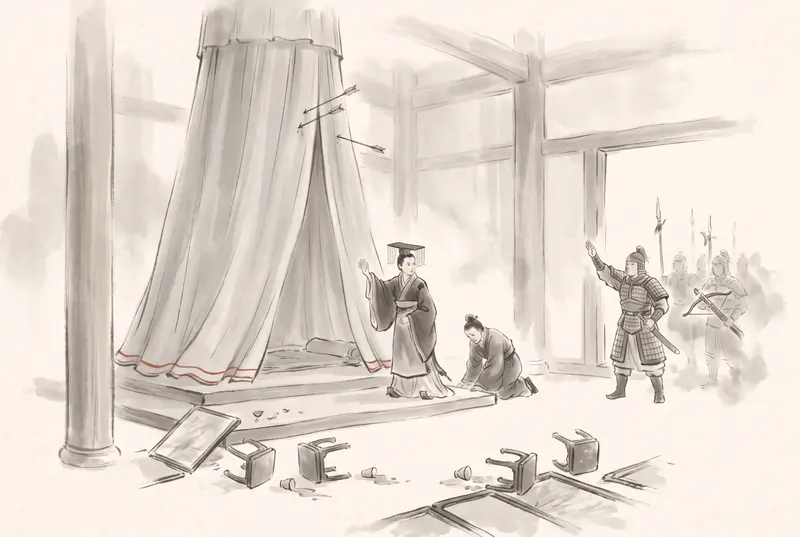
Yan Le stepped up to the Second Emperor and listed his crimes. "You have been arrogant and willful, and have killed without reason. The whole realm has turned against you. You had better decide for yourself what to do." The Second Emperor said, "May I see the Chancellor?" Yan Le said, "You may not." The Second Emperor said, "Then let me have one commandery and be its king." This was refused. He said, "Then let me be a marquis with ten thousand households." This was refused. He said, "Then let me and my wife and children be common people, like the other princes." Yan Le said, "I have my orders from the Chancellor to put you to death for the sake of the realm. Say what you like, I dare not answer you." He waved his soldiers forward. The Second Emperor killed himself.
Notes (JA)
- この節の前(省略): 項羽が鉅鹿で秦軍を破り、沛公(劉邦)が武関を破ると、二世皇帝は反乱を止められない趙高を責めた。罪を着せられるのを恐れた趙高は、娘婿で咸陽の長官の閻楽に兵を率いさせ、二世皇帝のいる望夷宮へ攻めこませた。
- 閻楽: 趙高の娘婿で、咸陽の令(長官)。
- 数: 罪を数えあげて責めること。
- 足下: 相手を呼ぶ言葉。ここでは皇帝として扱わない冷たい呼び方。
- 万戸侯: 一万戸の領地をもつ諸侯。
- 黔首: 庶民。秦では民をこう呼んだ。
- 比諸公子: 二世皇帝が殺した兄弟たちと同じ身分(あるいは同じ扱い)になる、という意。
- 王から侯へ、侯から庶民へと、願いがしだいに小さくなっていくところに、司馬遷の筆の冴えがある。
Notes (EN)
- Before this (left out here): after Xiang Yu crushed the Qin army at Julu and the Lord of Pei (Liu Bang) broke through the Wu Pass, the Second Emperor blamed Zhao Gao for failing to stop the rebels. Afraid of being punished, Zhao Gao had his son-in-law Yan Le, magistrate of Xianyang, lead soldiers into the Wangyi Palace where the emperor was staying.
- Yan Le: Zhao Gao's son-in-law, magistrate of Xianyang.
- 數: to list someone's crimes to his face.
- 足下 ("you"): a cold form of address, refusing to treat him as emperor.
- 萬戶侯: a lord with ten thousand households.
- 黔首 ("the black-headed"): the common people, as Qin called them.
- The emperor's wishes shrink step by step, from king to lord to commoner: a famous touch of Sima Qian's storytelling.
Word notes
- willful/ˈwɪlfəl/adjective
doing what you want, whatever others say
In the text: “arrogant and willful”
Similar words: headstrong — determined to do things your own way · stubborn — refusing to change your mind
British spelling: wilful.
- commandery/kəˈmændəri/noun
a large administrative region of the Qin and Han empires
In the text: “Then let me have one commandery and be its king”
Similar words: province — a large region of a country · district — an area with its own officials
Passage 8
Original
閻樂歸報趙高,趙高乃悉召諸大臣公子,告以誅二世之狀。曰:「秦故王國,始皇君天下,故稱帝。今六國復自立,秦地益小,乃以空名為帝,不可。宜為王如故,便。」立二世之兄子公子嬰為秦王。以黔首葬二世杜南宜春苑中。令子嬰齋,當廟見,受王璽。
Kundoku (Japanese reading)
閻楽帰りて趙高に報ず。趙高乃ち悉く諸大臣・公子を召し、告ぐるに二世を誅せし状を以てす。曰く、「秦は故と王国なり。始皇天下に君たり、故に帝と称す。今六国復た自ら立ち、秦の地益ます小さし。乃ち空名を以て帝と為すは、不可なり。宜しく王と為ること故の如くすべし。便なり」と。二世の兄の子公子嬰を立てて秦王と為す。黔首を以て二世を杜南の宜春苑の中に葬る。子嬰をして斎し、当に廟見して王璽を受けしめんとす。
Japanese
閻楽は戻って趙高に報告した。趙高は大臣や公子たちを残らず呼び集め、二世皇帝を誅したいきさつを告げて言った。「秦はもともと王の国であった。始皇帝が天下を治めたので、帝と称したのだ。いま六国がふたたびそれぞれ王を立て、秦の領土はますます小さくなった。それなのに中身のない名前だけの帝を名のるのはよくない。もとどおり王とするのがよかろう」。そして二世皇帝の兄の子の公子嬰を秦王に立てた。二世皇帝は庶民の礼で、杜の南の宜春苑に葬られた。趙高は子嬰に身を清めさせ、祖先の廟に参拝して、王の印を受けさせることにした。
English
Yan Le went back and reported to Zhao Gao. Zhao Gao called together all the high ministers and princes and told them how the Second Emperor had been put to death. He said, "Qin was once a kingdom. Only because the First Emperor ruled the whole realm did he call himself emperor. Now the six states have set themselves up again, and the land of Qin grows smaller. It would be wrong to keep the empty title of emperor. It is better to be a king as before." He made Prince Ying, the son of the Second Emperor's elder brother, King of Qin. The Second Emperor was buried as a commoner in the Yichun Park south of Du. Ziying was told to purify himself by fasting, so that he could visit the ancestral temple and receive the royal seal.
Notes (JA)
- 六国: 秦に滅ぼされた韓・趙・魏・楚・燕・斉。反乱のなかで、それぞれ王が立てられていた。
- 公子嬰: 子嬰。ここでは「二世の兄の子」とされるが、始皇帝の弟、あるいは扶蘇の子とする記述もあり、系譜ははっきりしない。
- 以黔首葬: 皇帝ではなく、庶民の礼で葬ること。
- 杜南宜春苑: 咸陽の南東、杜県の南にあった庭園。
- 斎: 祭りの前に、飲食や行いを慎んで身を清めること。
- 廟見: 祖先の廟に参拝すること。王位を継ぐための儀式。
Notes (EN)
- The six states: Hann, Zhao, Wei, Chu, Yan and Qi, which Qin had destroyed. During the revolts, each had set up a king again.
- Prince Ying (Ziying): here called the son of the Second Emperor's elder brother, but other accounts make him the First Emperor's brother or Fusu's son; his family line is unclear.
- 以黔首葬: burying him with the rites of a commoner, not an emperor.
- Yichun Park: a park south of Du county, southeast of Xianyang.
- 齋: fasting and purifying oneself before a rite.
- 廟見: visiting the ancestral temple, the ceremony for taking the throne.
Word notes
- title/ˈtaɪtəl/noun
a name that shows rank, such as king or emperor
In the text: “the empty title of emperor”
Similar words: rank — a position in an order · name — the general word
- ancestral/ænˈsɛstrəl/adjective
belonging to or honoring your ancestors
In the text: “visit the ancestral temple”
Similar words: family — of a family · hereditary — passed down from parents
Passage 9
Original
齋五日,子嬰與其子二人謀曰:「丞相高殺二世望夷宮,恐群臣誅之,乃詳以義立我。我聞趙高乃與楚約,滅秦宗室而王關中。今使我齋見廟,此欲因廟中殺我。我稱病不行,丞相必自來,來則殺之。」
Kundoku (Japanese reading)
斎すること五日、子嬰其の子二人と謀りて曰く、「丞相高、二世を望夷宮に殺し、群臣の之を誅せんことを恐れ、乃ち詳りて義を以て我を立つ。我聞く、趙高乃ち楚と約し、秦の宗室を滅ぼして関中に王たらんとすと。今我をして斎して廟に見えしむるは、此れ廟中に因りて我を殺さんと欲するなり。我病と称して行かずんば、丞相必ず自ら来たらん。来たらば則ち之を殺さん」と。
Japanese
身を清めて五日目、子嬰は二人の息子と相談して言った。「丞相の趙高は、二世皇帝を望夷宮で殺した。家臣たちに誅されるのを恐れて、正義をよそおってわたしを立てたのだ。聞くところでは、趙高は楚と手を結び、秦の王族を滅ぼして、自分が関中の王になる約束をしたという。いま、わたしに身を清めさせて廟に参らせようとしているのは、廟の中でわたしを殺すつもりなのだ。わたしが病気だと言って行かなければ、丞相はきっと自分でやって来る。来たら、そのときに殺そう」。
English
After five days of fasting, Ziying made a plan with his two sons. "Chancellor Zhao Gao killed the Second Emperor in the Wangyi Palace. Afraid that the ministers would put him to death, he has pretended to do the right thing and made me king. I hear that Zhao Gao has made a pact with Chu to wipe out the royal house of Qin and become king of the land within the passes. He wants me to fast and visit the temple because he means to kill me there. If I say I am ill and do not go, the Chancellor is sure to come himself. When he comes, we will kill him."
Notes (JA)
- 望夷宮: 咸陽の北東、涇水のほとりにあった宮殿。二世皇帝はここで自殺した。
- 詳: 「佯」と同じで、いつわる、ふりをする。
- 与楚約: 楚(沛公の側)と約束すること。巻8の場面では、趙高が沛公に使いを送り、関中を分けて王になろうと持ちかけたとされる。
- 宗室: 王の一族。
- 関中: 函谷関の西の、秦の本拠地。
Notes (EN)
- Wangyi Palace: a palace northeast of Xianyang on the Jing River, where the Second Emperor killed himself.
- 詳: the same as 佯, to pretend.
- A pact with Chu: Chu here means the Lord of Pei's side. In Volume 8, Zhao Gao sends a messenger to him, offering to share the land within the passes.
- 宗室: the royal clan.
- The land within the passes (關中): the Qin heartland west of the Hangu Pass.
Word notes
- pact/pækt/noun
a formal agreement between two sides
In the text: “made a pact with Chu”
Similar words: agreement — the general word · alliance — an agreement to work together
- pretend/prɪˈtɛnd/verb
to act as if something is true when it is not
In the text: “he has pretended to do the right thing”
Similar words: fake — informal; make something false look real · feign — formal; pretend to have a feeling
Passage 10
Original
高使人請子嬰數輩,子嬰不行,高果自往,曰:「宗廟重事,王柰何不行?」子嬰遂刺殺高於齋宮,三族高家以徇咸陽。
Kundoku (Japanese reading)
高人をして子嬰を請わしむること数輩、子嬰行かず。高果たして自ら往きて曰く、「宗廟は重事なり。王奈何ぞ行かざる」と。子嬰遂に高を斎宮に刺殺し、高の家を三族して以て咸陽に徇う。
Japanese
趙高は何度も使いをやって子嬰を呼んだが、子嬰は行かなかった。はたして趙高は自分でやって来て言った。「宗廟のお参りは大切な儀式です。王はなぜおいでにならないのですか」。子嬰はそこで、斎宮で趙高を刺し殺し、趙高の一族を三族にわたって皆殺しにして、咸陽じゅうに見せしめにした。
English
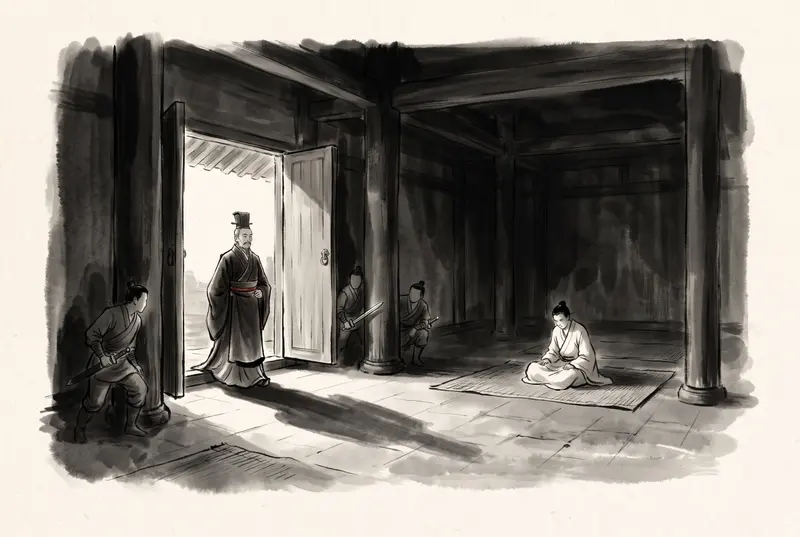
Zhao Gao sent men to summon Ziying several times, but Ziying did not go. Sure enough, Zhao Gao came himself and said, "The ancestral temple is a weighty matter. Why does Your Majesty not go?" Then Ziying stabbed Zhao Gao to death in the fasting hall, wiped out his family to the third degree, and displayed them to the people of Xianyang as a warning.
Notes (JA)
- 数輩: 何度も、何組も。
- 宗廟: 祖先の霊をまつる廟。
- 斎宮: 身を清めるためにこもる建物。
- 三族: 父・母・妻の一族(または父・子・孫)。罪人の一族をまとめて死刑にする、秦のきびしい刑罰。
- 徇: ここでは、罪人を人々に見せしめにすること。
- 『史記』巻87「李斯列伝」では、子嬰が宦官の韓談らとはかって趙高を刺したとされる。
Notes (EN)
- 數輩: several times, several groups of messengers.
- 宗廟: the temple of the royal ancestors.
- 齋宮 ("fasting hall"): a building where one stayed to purify oneself.
- 三族 ("the three clans"): the families of one's father, mother and wife (or father, sons and grandsons). Executing them all was one of Qin's harshest punishments.
- 徇: here, to display criminals to the public as a warning.
- In Volume 87, the Biography of Li Si, Ziying plans the killing with the eunuch Han Tan and others.
Word notes
- summon/ˈsʌmən/verb
to order someone to come
In the text: “sent men to summon Ziying”
Similar words: call — ask to come · send for — ask someone to come to you
- warning/ˈwɔrnɪŋ/noun
something that tells people what will happen if they do wrong
In the text: “as a warning”
Similar words: example — a case that others learn from · deterrent — something that stops people acting
Passage 11
Original
子嬰為秦王四十六日,楚將沛公破秦軍入武關,遂至霸上,使人約降子嬰。子嬰即系頸以組,白馬素車,奉天子璽符,降軹道旁。沛公遂入咸陽,封宮室府庫,還軍霸上。居月餘,諸侯兵至,項籍為從長,殺子嬰及秦諸公子宗族。遂屠咸陽,燒其宮室,虜其子女,收其珍寶貨財,諸侯共分之。滅秦之後,各分其地為三,名曰雍王、塞王、翟王,號曰三秦。項羽為西楚霸王,主命分天下王諸侯,秦竟滅矣。
Kundoku (Japanese reading)
子嬰秦王為ること四十六日、楚の将沛公秦軍を破りて武関に入り、遂に霸上に至り、人をして子嬰に降らんことを約せしむ。子嬰即ち頸に系くるに組を以てし、白馬素車にて、天子の璽符を奉じ、軹道の旁らに降る。沛公遂に咸陽に入り、宮室府庫を封じ、軍を霸上に還す。居ること月余にして、諸侯の兵至る。項籍従長と為り、子嬰及び秦の諸公子・宗族を殺す。遂に咸陽を屠り、其の宮室を焼き、其の子女を虜にし、其の珍宝貨財を収め、諸侯共に之を分かつ。秦を滅ぼすの後、各おの其の地を分かちて三と為し、名づけて雍王・塞王・翟王と曰い、号して三秦と曰う。項羽西楚の霸王と為り、命を主りて天下を分かち諸侯を王とす。秦竟に滅ぶ。
Japanese
子嬰が秦王であったのは四十六日であった。楚の将の沛公が秦軍を破って武関に入り、霸上まで来ると、使者を送って子嬰に降伏を求めた。子嬰はすぐに首に組紐をかけ、白馬に引かせた飾りのない車に乗り、天子の印と割符をささげ持って、軹道のほとりで降伏した。沛公はそのまま咸陽に入り、宮殿や倉庫を封印して、軍を霸上に引き返した。一か月あまりして、諸侯の軍がやって来た。諸侯の盟主となった項籍(項羽)は、子嬰と秦の公子・王族を殺した。そして咸陽の人々を皆殺しにし、宮殿を焼き、男女をとりこにし、宝物や財貨を奪って、諸侯で分け合った。秦を滅ぼしたあと、その領土を三つに分け、雍王・塞王・翟王を置いて、「三秦」と呼んだ。項羽は西楚の覇王となり、天下を分けて諸侯を王に封じる命令を下した。秦はついに滅んだ。
English
Ziying had been King of Qin for forty-six days when the Chu general, the Lord of Pei, defeated the Qin army and came through the Wu Pass. Reaching Bashang, he sent men to arrange Ziying's surrender. At once Ziying hung a cord around his neck, rode in a plain carriage drawn by white horses, carried the emperor's seals and tallies, and surrendered beside the Zhi road. The Lord of Pei then entered Xianyang, sealed up the palaces and storehouses, and took his army back to Bashang. A month or so later the armies of the other lords arrived. Xiang Ji, leader of the alliance, killed Ziying and the princes and clan of Qin. Then he massacred Xianyang, burned its palaces, carried off its men and women, and seized its treasures and wealth, which the lords divided among themselves. After destroying Qin, they split its land into three, under the Kings of Yong, Sai and Di, and called them the Three Qins. Xiang Yu became Hegemon-King of Western Chu, took charge of dividing the realm and made the lords kings. And so Qin was destroyed at last.
Notes (JA)
- 沛公: 劉邦。のちの漢の高祖。武関を破って関中に入るまでは、巻8「関中に入る(約法三章)」にくわしい。
- 系頸以組・白馬素車: 首に組紐をかけ、白馬の引く飾りのない車に乗る。死を覚悟した降伏のしるし。
- 璽符: 天子の印と割符。権力のしるし。
- 軹道: 咸陽の東の地名(亭の名)。
- 封宮室府庫: 宮殿や倉庫を封印して手をつけなかった。巻8の「約法三章」はこのあとのこと。
- 項籍: 項羽。籍が名、羽が字。このあと鴻門の会(巻7)を経て、項羽が咸陽に入る。
- 従長: 諸侯の連合(合従)の長。
- 屠: 町の人々を皆殺しにすること。
- 三秦: 秦の降将の章邯・司馬欣・董翳を、それぞれ雍王・塞王・翟王として関中に置いたもの。
- 西楚霸王: 項羽が名のった称号。「霸王」は諸侯の上に立つ王。
- 始皇帝が天下を統一してから、わずか十五年ほどで秦は滅んだ。
Notes (EN)
- The Lord of Pei: Liu Bang, later Emperor Gaozu of Han. How he came through the Wu Pass is told in Volume 8, "Into the Pass".
- A cord around the neck, a plain carriage and white horses: the signs of a surrender by a man ready to die.
- 璽符: the emperor's seals and tallies, the symbols of power.
- The Zhi road (軹道): a place just east of Xianyang.
- Sealing up the palaces and storehouses: the Lord of Pei left the treasure untouched. The "pact of three laws" in Volume 8 comes right after this.
- Xiang Ji: Xiang Yu. Ji was his personal name and Yu his courtesy name. The Feast at Hongmen (Volume 7) takes place before he enters Xianyang.
- 從長: the leader of the alliance of lords.
- 屠: to massacre the people of a town.
- The Three Qins: three surrendered Qin generals, Zhang Han, Sima Xin and Dong Yi, made Kings of Yong, Sai and Di within the passes.
- Hegemon-King of Western Chu: the title Xiang Yu took, a king above the other kings.
- Qin fell only about fifteen years after the First Emperor had unified the realm.
Word notes
- massacre/ˈmæsəkər/verb
to kill a large number of people cruelly
In the text: “he massacred Xianyang”
Similar words: slaughter — kill many people or animals · butcher — kill brutally
- hegemon/ˈhɛdʒəmɑn/noun
the leader who has power over other rulers
In the text: “Hegemon-King of Western Chu”
Similar words: overlord — a ruler over other rulers · supreme ruler — a ruler with the highest power