Hereditary Houses · Vol. 36
The Hereditary Houses of Chen and Qi 陳杞世家
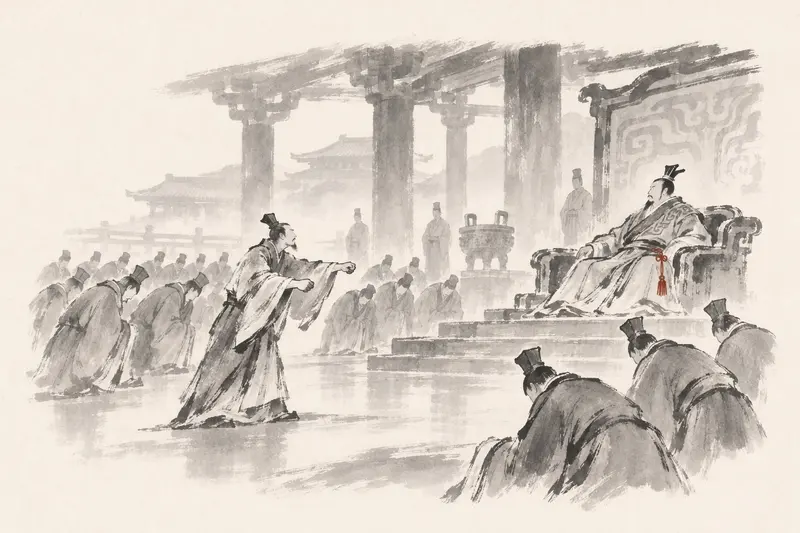
A Kingdom Weighed Against One Word 輕千乘之國而重一言
The histories of Chen, descended from the sage-king Shun, and Qi, descended from Yu. King Wu of Zhou enfeoffed Gui Man, a descendant of Shun, at Chen. When Wan, son of Duke Li of Chen, was born, a Zhou historian divined with the Book of Changes that his descendants would hold a state abroad, in place of the Jiang clan; Wan later fled Chen's strife to Qi, and his descendants, the Tian clan, would one day take Qi. Duke Ling of Chen shared the lady Xia Ji with two of his grandees and was shot dead by her son Xia Zhengshu. King Zhuang of Chu punished Zhengshu and made Chen a county of Chu, but when Shen Shushi told him that seizing a man's ox because it trampled a field was going too far, he gave Chen back; Confucius praised him for weighing a kingdom of a thousand chariots lighter than a single word. Chen was finally destroyed by King Hui of Chu, and little Qi thirty-four years later. The Grand Historian praises the virtue of Shun, which lived on in the Tian clan's Qi.
This page has the scene "A Kingdom Weighed Against One Word" from this volume, not the whole volume.
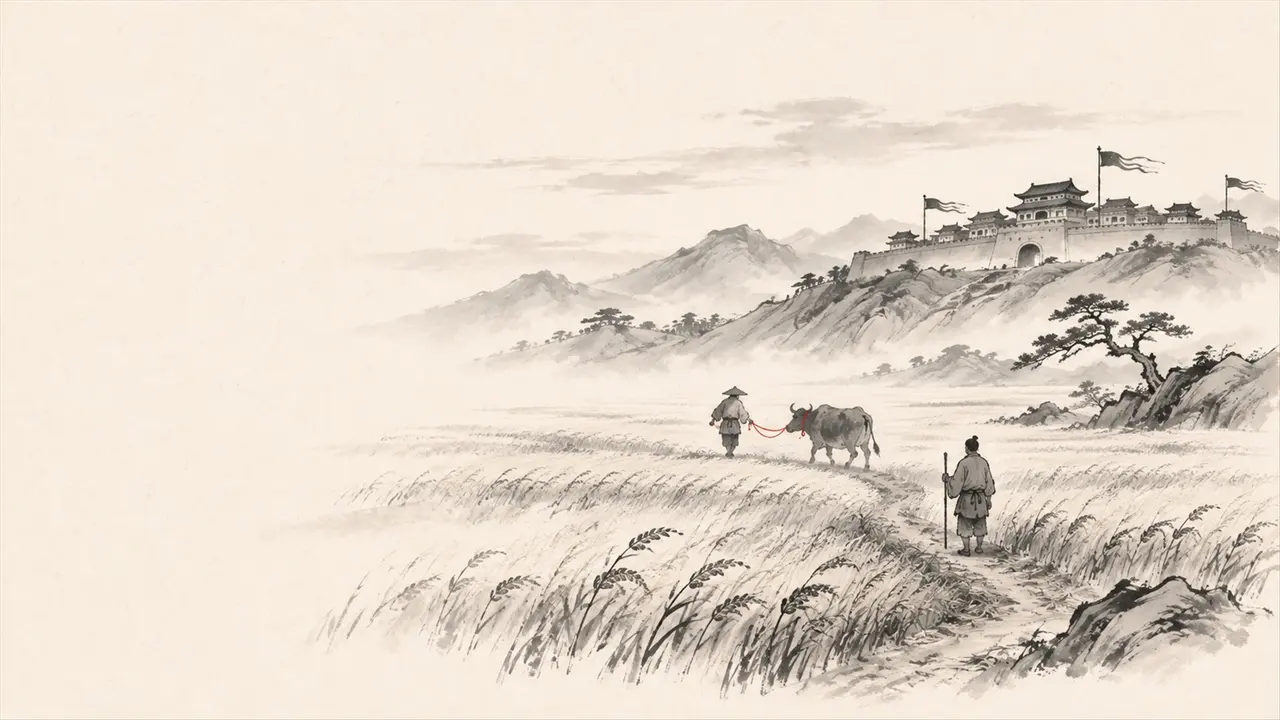
Audio
The audio is synthetic speech.
Video
Passage 1
Original
陳胡公滿者,虞帝舜之後也。昔舜為庶人時,堯妻之二女,居于媯汭,其後因為氏姓,姓媯氏。舜已崩,傳禹天下,而舜子商均為封國。夏后之時,或失或續。至于周武王克殷紂,乃復求舜後,得媯滿,封之於陳,以奉帝舜祀,是為胡公。
Kundoku (Japanese reading)
陳の胡公満は、虞帝舜の後なり。昔舜庶人為りし時、堯之に二女を妻あわせ、媯汭に居らしむ。其の後因りて氏姓と為し、媯氏を姓とす。舜已に崩じ、禹に天下を伝え、而して舜の子商均封国と為る。夏后の時、或いは失い或いは続く。周の武王殷の紂に克つに至り、乃ち復た舜の後を求め、媯満を得て、之を陳に封じ、以て帝舜の祀を奉ぜしむ。是を胡公と為す。
Japanese
陳の胡公満は、虞の帝舜の子孫である。昔、舜がまだ庶民だったころ、堯は二人の娘を舜の妻とし、媯水のほとりに住まわせた。そのため子孫はこれを姓とし、媯氏を名のった。舜が亡くなると天下は禹に伝えられ、舜の子の商均は国を与えられた。夏の時代には、国を失ったり継いだりした。周の武王が殷の紂を破ると、あらためて舜の子孫を探し、媯満を見つけて陳に封じ、帝舜の祭りを続けさせた。これが胡公である。
English
Man, Duke Hu of Chen, was a descendant of Shun, Emperor of Yu. Long ago, when Shun was a commoner, Yao gave him his two daughters as wives and settled them by the Gui River. From this his descendants took their clan name, the surname Gui. When Shun died, the realm passed to Yu, and Shun's son Shangjun was given a state. Under Xia the line was sometimes lost and sometimes carried on. When King Wu of Zhou conquered Zhou of Shang, he sought out the descendants of Shun again, found Gui Man and enfeoffed him at Chen to carry on the sacrifices to Emperor Shun: he was Duke Hu.
Notes (JA)
- 舜: 堯から位を譲られた聖王(001-five-emperors の章)。
- 媯汭: 媯水が川に流れこむあたり。
- 周は、前の王朝の聖王の子孫を国に封じて祭りを続けさせた。
Notes (EN)
- Shun: the sage-king to whom Yao gave the throne (chapter 001).
- By the Gui River (媯汭): where the Gui flows into a larger river.
- Zhou gave fiefs to the descendants of earlier sage-kings so that their sacrifices would continue.
Word notes
- descendant/dɪˈsɛndənt/noun
a person who comes later in the same family line
In the text: “was a descendant of Shun”
Similar words: heir — one who inherits · offspring — children
- sacrifice/ˈsækrɪfaɪs/noun
an offering made to gods or ancestors
In the text: “carry on the sacrifices to Emperor Shun”
Similar words: offering — a gift to a god · rite — a religious ceremony
Passage 2
Original
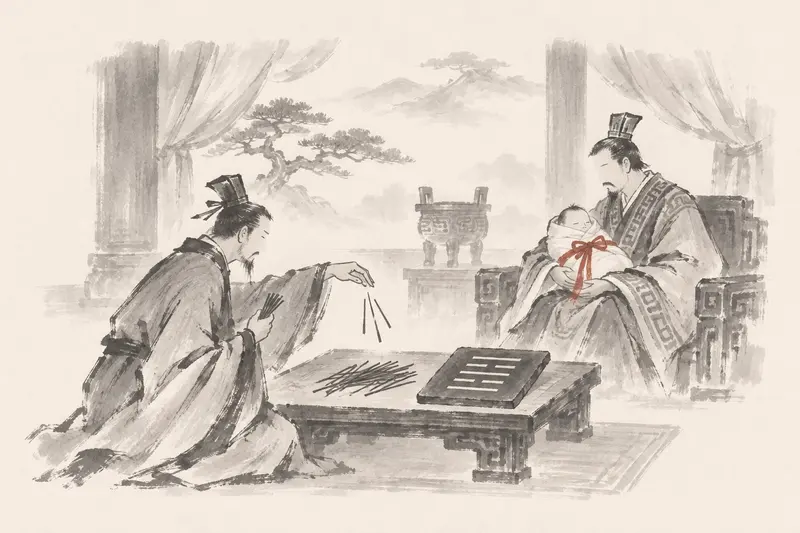
三十八年正月甲戌己丑,桓公鮑卒。桓公弟佗,其母蔡女,故蔡人為佗殺五父及桓公太子免而立佗,是為厲公。桓公病而亂作,國人分散,故再赴。厲公二年,生子敬仲完。周太史過陳,陳厲公使以《周易》筮之,卦得觀之否:「是為觀國之光,利用賓于王。此其代陳有國乎?不在此,其在異國?非此其身,在其子孫。若在異國,必姜姓。姜姓,太嶽之後。物莫能兩大,陳衰,此其昌乎?」
Kundoku (Japanese reading)
三十八年正月甲戌己丑、桓公鮑卒す。桓公の弟佗、其の母は蔡女なり。故に蔡人佗の為に五父及び桓公の太子免を殺して佗を立つ。是を厲公と為す。桓公病みて乱作り、国人分散す。故に再び赴す。厲公の二年、子の敬仲完を生む。周の太史陳を過ぐ。陳の厲公周易を以て之を筮せしむ。卦観の否に之くを得たり。「是れを国の光を観る、用て王に賓たるに利しと為す。此れ其れ陳に代わりて国を有たんか。此に在らずんば、其れ異国に在らんか。其の身に非ずんば、其の子孫に在らん。若し異国に在らば、必ず姜姓ならん。姜姓は、太嶽の後なり。物能く両つながら大なること莫し。陳衰えなば、此れ其れ昌んならんか」と。
Japanese
陳の桓公の三十八年(前707年)正月、桓公鮑が亡くなった。桓公の弟の佗は、母が蔡の娘だったので、蔡の人々は佗のために五父と桓公の太子の免を殺し、佗を立てた。これが厲公である。桓公が病んでいるうちに乱が起こり、国の人々が散りぢりになったので、桓公の死は二度にわたって諸国に知らされた。厲公の二年、子の敬仲完が生まれた。周の太史(記録と占いの役人)が陳に立ち寄ったので、厲公は『周易』で完の将来を占わせた。卦は「観」が「否」に変わるものだった。太史は言った。「これは『国の光を見る。王の客となるのによい』という卦です。この子は陳に代わって国を持つのでしょうか。それがこの国でないなら、よその国でしょう。この子自身でなければ、その子孫でしょう。もしよその国なら、きっと姜姓の国です。姜姓は太嶽の子孫です。ものは二つ同時に大きくなることはできません。陳が衰えれば、この子の家が栄えるのでしょう」。
English
In the first month of the thirty-eighth year, Duke Huan, named Bao, died. His younger brother Tuo had a mother from Cai, so the men of Cai killed Wufu and Duke Huan's heir Mian for Tuo's sake and set Tuo up: this was Duke Li. Disorder had broken out while Duke Huan was ill and the people had scattered, so the duke's death was announced to the states twice. In the second year of Duke Li, his son Wan, Jingzhong, was born. A grand historian of Zhou was passing through Chen, and Duke Li had him divine with the Zhou Changes. He obtained the hexagram Guan changing into Pi: "This means 'beholding the glory of a state; it is favourable to be a guest of the king.' Will he hold a state in place of Chen? If not here, then in another state; if not he himself, then his descendants. If in another state, it will surely be one of the Jiang clan. The Jiang are descendants of the Great Peak. Two things cannot both be great at once: when Chen declines, will this line flourish?"
Notes (JA)
- 観の否に之く: 易の卦「観」の一つの爻が変わって「否」になること。
- 姜姓: 斉の君主の姓。太公望呂尚の家。
- 完の子孫の田氏は、のちに斉の君主の地位を奪う(046-tian-wan の章)。
Notes (EN)
- Guan changing into Pi: one line of the hexagram Guan changes, giving the hexagram Pi.
- The Jiang clan: the ruling house of Qi, the line of Taigong Wang.
- Wan's descendants, the Tian clan, would later seize the rule of Qi (chapter 046).
Word notes
- divine/dɪˈvaɪn/verb
to try to learn the future by special signs
In the text: “had him divine with the Zhou Changes”
Similar words: foretell — say what will happen · predict — say in advance
- flourish/ˈflʌrɪʃ/verb
to grow strong and successful
In the text: “will this line flourish”
Similar words: thrive — grow well · prosper — do well
Passage 3
Original
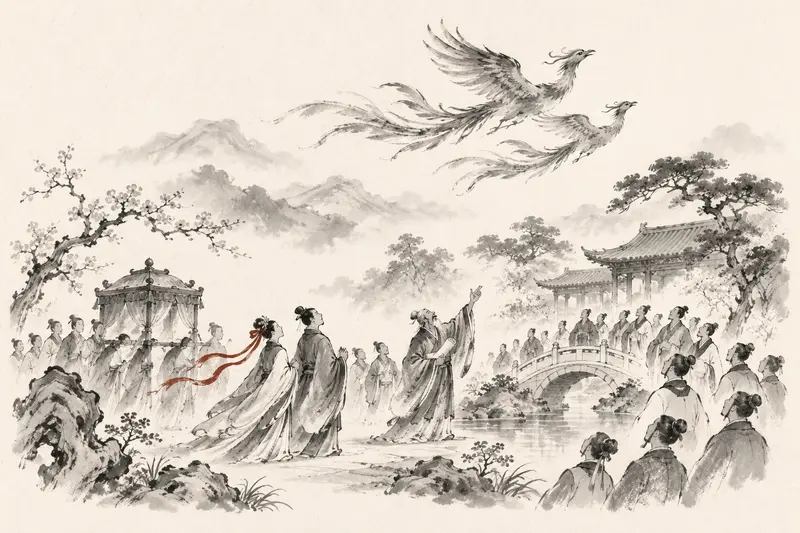
二十一年,宣公後有嬖姬生子款,欲立之,乃殺其太子御寇。御寇素愛厲公子完,完懼禍及己,乃奔齊。齊桓公欲使陳完為卿,完曰:「羈旅之臣,幸得免負檐,君之惠也,不敢當高位。」桓公使為工正。齊懿仲欲妻陳敬仲,卜之,占曰:「是謂鳳皇于飛,和鳴鏘鏘。有媯之後,將育于姜。五世其昌,并于正卿。八世之後,莫之與京。」
Kundoku (Japanese reading)
二十一年、宣公の後に嬖姫有りて子款を生む。之を立てんと欲し、乃ち其の太子御寇を殺す。御寇素より厲公の子完を愛す。完禍の己に及ばんことを懼れ、乃ち斉に奔る。斉の桓公陳完をして卿為らしめんと欲す。完曰く、「羈旅の臣、幸いに負檐を免るるを得たるは、君の恵みなり。敢えて高位に当たらず」と。桓公工正と為さしむ。斉の懿仲陳の敬仲に妻あわせんと欲し、之を卜す。占いに曰く、「是れ鳳皇于に飛び、和鳴鏘鏘たりと謂う。有媯の後、将に姜に育たんとす。五世にして其れ昌え、正卿に并ぶ。八世の後、之と京なる莫し」と。
Japanese
陳の宣公の二十一年(前672年)、宣公にはのちに寵愛した側室がいて、子の款が生まれた。宣公は款を跡継ぎにしようとして、太子の御寇を殺した。御寇はかねてから厲公の子の完をかわいがっていたので、完は災いが自分にも及ぶことを恐れ、斉へ逃げた。斉の桓公は陳完を卿にしようとしたが、完は言った。「よその国から来た身で、重い荷を担ぐ苦労をまぬかれただけでも、殿のお恵みです。高い位はとてもお受けできません」。桓公は完を工正(工人をつかさどる役)とした。斉の懿仲は娘を陳の敬仲(完)に嫁がせようとして占った。占いの言葉はこうだった。「これは『鳳凰がつがいで飛び、声を合わせて美しく鳴く』というものだ。媯氏の子孫が、姜の国で育つ。五代のちに栄えて正卿と肩を並べ、八代のちには、並ぶ者のないほど大きくなる」。
English
In the twenty-first year of Duke Xuan, the duke's later favourite bore him a son, Kuan. Wishing to make Kuan his heir, he killed his heir Yukou. Yukou had always been fond of Wan, son of Duke Li, and Wan, afraid that disaster would reach him too, fled to Qi. Duke Huan of Qi wanted to make Chen Wan a minister, but Wan said: "That a minister wandering from abroad should be spared carrying burdens is already your kindness, my lord. I dare not take a high position." Duke Huan made him Director of Artisans. Yi Zhong of Qi wanted to marry his daughter to Chen Jingzhong and divined about it. The reading said: "This is called 'the phoenixes fly together, singing in harmony, clear and sweet.' A descendant of the Gui will grow up among the Jiang. In five generations he will flourish, ranking with the chief ministers; after eight generations none will be his equal."
Notes (JA)
- 羈旅の臣: よその国から来て仕える家臣。
- 鳳皇于に飛ぶ: 夫婦の仲がよく、子孫が栄えることのたとえ(故事成語のページにある)。
- 陳完は斉で田氏を名のり、八代のちの子孫の田和が斉の君主となった(046-tian-wan の章)。
Notes (EN)
- A minister wandering from abroad (羈旅之臣): one serving in a state not his own.
- Phoenixes flying together: a figure for a happy marriage and flourishing descendants (see the idioms page).
- In Qi, Chen Wan took the name Tian, and his descendant Tian He became ruler of Qi eight generations later (chapter 046).
Word notes
- harmony/ˈhɑːrməni/noun
a pleasing combination of sounds
In the text: “singing in harmony”
Similar words: concord — agreement · unison — all together
- minister/ˈmɪnɪstər/noun
a high official who serves a ruler
In the text: “make Chen Wan a minister”
Similar words: official — a person with public authority · counsellor — an adviser
Passage 4
Original
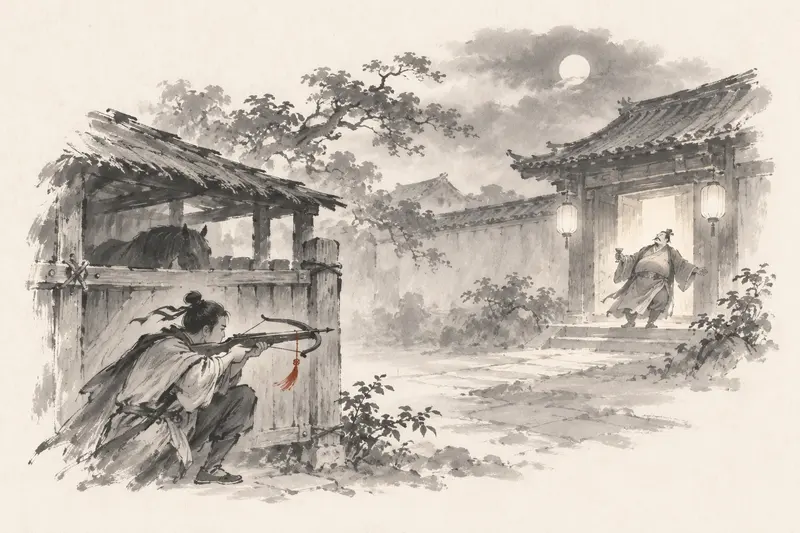
十四年,靈公與其大夫孔寧、儀行父皆通於夏姬,衷其衣以戲於朝。泄冶諫曰:「君臣淫亂,民何效焉?」靈公以告二子,二子請殺泄冶,公弗禁,遂殺泄冶。十五年,靈公與二子飲於夏氏。公戲二子曰:「徵舒似汝。」二子曰:「亦似公。」徵舒怒。靈公罷酒出,徵舒伏弩廏門射殺靈公。孔寧、儀行父皆奔楚,靈公太子午奔晉。徵舒自立為陳侯。徵舒,故陳大夫也。夏姬,御叔之妻,舒之母也。
Kundoku (Japanese reading)
十四年、霊公其の大夫孔寧・儀行父と皆夏姫に通じ、其の衣を衷にして以て朝に戯る。泄冶諫めて曰く、「君臣淫乱せば、民何をか効わん」と。霊公以て二子に告ぐ。二子泄冶を殺さんことを請う。公禁ぜず。遂に泄冶を殺す。十五年、霊公二子と夏氏に飲む。公二子に戯れて曰く、「徴舒汝に似たり」と。二子曰く、「亦た公に似たり」と。徴舒怒る。霊公酒を罷めて出づ。徴舒弩を廏門に伏せて霊公を射殺す。孔寧・儀行父皆楚に奔り、霊公の太子午晋に奔る。徴舒自立して陳侯と為る。徴舒は、故の陳の大夫なり。夏姫は、御叔の妻、舒の母なり。
Japanese
陳の霊公の十四年(前600年)、霊公は大夫の孔寧・儀行父とともに夏姫と通じ、三人とも夏姫の下着を身につけて朝廷でふざけあった。泄冶が諫めた。「君主と臣下がみだらなことをしていては、民は何を手本にすればよいのですか」。霊公がこれを二人に話すと、二人は泄冶を殺したいと願い出た。霊公は止めず、とうとう泄冶は殺された。十五年、霊公は二人と夏氏の家で酒を飲んだ。霊公が二人をからかって言った。「徴舒はおまえたちに似ているな」。二人は言った。「殿にも似ています」。夏徴舒は怒った。霊公が酒宴を終えて出てくると、徴舒は馬小屋の門に弩を隠しておき、霊公を射殺した。孔寧と儀行父は楚へ逃げ、霊公の太子の午は晋へ逃げた。徴舒は自ら陳侯を名のった。徴舒はもともと陳の大夫で、夏姫は御叔の妻、徴舒の母である。
English
In the fourteenth year Duke Ling and his grandees Kong Ning and Yi Hangfu all had relations with Xia Ji, and they wore her undergarments beneath their robes and joked about it at court. Xie Ye remonstrated: "If lord and ministers are wanton, what example will the people follow?" Duke Ling told the two men, and they asked to kill Xie Ye; the duke did not forbid it, and so Xie Ye was killed. In the fifteenth year Duke Ling drank with the two men at the Xia house. The duke teased them: "Zhengshu looks like you." "He looks like you too, my lord," they said. Xia Zhengshu was furious. As Duke Ling left the feast, Zhengshu hid with a crossbow by the stable gate and shot him dead. Kong Ning and Yi Hangfu fled to Chu, and Wu, Duke Ling's heir, fled to Jin. Zhengshu made himself Marquis of Chen. Zhengshu had been a grandee of Chen; Xia Ji was the wife of Yushu and Zhengshu's mother.
Notes (JA)
- 夏姫: 鄭の穆公の娘。多くの男たちの運命を狂わせた美女として語り継がれる。
- 其の衣を衷にす: 夏姫の下着を、自分の服の下に着ること。
- 「徴舒汝に似たり」: 徴舒が誰の子かわからないとからかった言葉。
Notes (EN)
- Xia Ji: a daughter of Duke Mu of Zheng, remembered as a beauty who brought ruin to many men.
- Wearing her undergarments beneath their robes (衷其衣): a flaunting of their affair.
- "Zhengshu looks like you": a jibe that no one knew whose son he was.
Word notes
- wanton/ˈwɒntən/adjective
behaving in an immoral way without control
In the text: “If lord and ministers are wanton”
Similar words: immoral — not good · shameless — without shame
- remonstrate/ˈrɛmənstreɪt/verb
to protest or argue against something
In the text: “Xie Ye remonstrated”
Similar words: protest — object strongly · object — say you disagree
Passage 5
Original
成公元年冬,楚莊王為夏徵舒殺靈公,率諸侯伐陳。謂陳曰:「無驚,吾誅徵舒而已。」已誅徵舒,因縣陳而有之,群臣畢賀。申叔時使於齊來還,獨不賀。莊王問其故,對曰:「鄙語有之,牽牛徑人田,田主奪之牛。徑則有罪矣,奪之牛,不亦甚乎?今王以徵舒為賊弒君,故徵兵諸侯,以義伐之,已而取之,以利其地,則後何以令於天下!是以不賀。」莊王曰:「善。」乃迎陳靈公太子午於晉而立之,復君陳如故,是為成公。孔子讀史記至楚復陳,曰:「賢哉楚莊王!輕千乘之國而重一言。」
Kundoku (Japanese reading)
成公の元年冬、楚の荘王夏徴舒の霊公を殺せしが為に、諸侯を率いて陳を伐つ。陳に謂いて曰く、「驚くこと無かれ。吾徴舒を誅するのみ」と。已に徴舒を誅し、因りて陳を県として之を有す。群臣畢く賀す。申叔時斉に使いして来たり還り、独り賀せず。荘王其の故を問う。対えて曰く、「鄙語に之有り、牛を牽きて人の田を徑れば、田主之が牛を奪うと。徑るは則ち罪有り。之が牛を奪うは、亦た甚だしからずや。今王徴舒の賊として君を弑せしを以て、故に兵を諸侯に徴し、義を以て之を伐つ。已にして之を取り、以て其の地を利とせば、則ち後何を以てか天下に令せん。是を以て賀せず」と。荘王曰く、「善し」と。乃ち陳の霊公の太子午を晋より迎えて之を立て、復た陳に君たること故の如し。是を成公と為す。孔子史記を読みて楚の陳を復するに至り、曰く、「賢なるかな楚の荘王。千乗の国を軽んじて一言を重んず」と。
Japanese
陳の成公の元年(前599年)の冬、楚の荘王は、夏徴舒が霊公を殺したことを理由に、諸侯を率いて陳を攻めた。荘王は陳の人々に言った。「驚かなくてよい。わたしは徴舒を討つだけだ」。しかし徴舒を討つと、そのまま陳を楚の県にしてしまい、家臣たちは皆お祝いを述べた。斉への使いから戻ってきた申叔時だけが、祝いを言わなかった。荘王がわけをたずねると、申叔時は答えた。「ことわざに、『牛を引いて人の畑を通ると、畑の主がその牛を取り上げる』とあります。畑を通ったのは罪ですが、牛まで取り上げるのはひどすぎるのではありませんか。いま王は、徴舒が君主を殺した悪人だからと諸侯の兵を集め、正義のために討ちました。それなのにその国を取って自分の利益にすれば、これからどうやって天下に命令できましょう。だからお祝いを申し上げないのです」。荘王は「もっともだ」と言い、陳の霊公の太子の午を晋から迎えて位につけ、もとのとおり陳の君主とした。これが成公である。孔子は歴史の記録を読んで、楚が陳を元に戻したところまで来ると、言った。「楚の荘王はなんと賢いのだろう。千乗の国を軽んじて、一言を重んじた」。
English
In the winter of the first year of Duke Cheng, King Zhuang of Chu, because Xia Zhengshu had killed Duke Ling, led the lords against Chen. He told Chen: "Do not be alarmed. I only mean to punish Zhengshu." But when he had punished Zhengshu, he made Chen a county of Chu and took it, and all his ministers congratulated him. Shen Shushi, just back from a mission to Qi, alone did not. When King Zhuang asked why, he answered: "There is a country saying: 'A man leads his ox across someone's field, and the owner of the field takes the ox.' Crossing the field was wrong — but is taking the ox not too much? Now, because Zhengshu murdered his lord, Your Majesty called up the lords' troops and punished him in the name of right. If you then take the state for the profit of its land, how will you command the realm hereafter? That is why I do not congratulate you." "Good," said King Zhuang. He brought Wu, heir of Duke Ling of Chen, back from Jin and set him up as lord of Chen as before: this was Duke Cheng. When Confucius, reading the historical records, came to Chu's restoring of Chen, he said: "How worthy was King Zhuang of Chu! He weighed a state of a thousand chariots lightly and a single word heavily."
Notes (JA)
- 楚の荘王: 春秋の五覇の一人。「鳴かず飛ばず」の故事でも知られる(040-chu の章)。
- 牛を牽きて人の田を徑る: 小さな罪に重すぎる罰を与えることのたとえ。
- 千乗の国: 戦車千台を出せる大きな国。
Notes (EN)
- King Zhuang of Chu: one of the five overlords of the Spring and Autumn period, famed for "neither singing nor flying" (chapter 040).
- Leading an ox across a field: a figure for punishing a small wrong too harshly.
- A state of a thousand chariots: a large state able to field a thousand war chariots.
Idioms from this passage: Taking the ox that crossed the field 牛を牽きて人の田を蹊る
Word notes
- annex/əˈnɛks/verb
to take control of a country or region
In the text: “made Chen a county of Chu and took it”
Similar words: seize — take by force · take over — gain control
- congratulate/kənˈɡrætʃʊleɪt/verb
to tell someone you are pleased about their success
In the text: “all his ministers congratulated him”
Similar words: praise — say good things about · compliment — say something kind
Passage 6
Original
三十四年,初,哀公娶鄭,長姬生悼太子師,少姬生偃。二嬖妾,長妾生留,少妾生勝。留有寵哀公,哀公屬之其弟司徒招。哀公病,三月,招殺悼太子,立留為太子。哀公怒,欲誅招,招發兵圍守哀公,哀公自經殺。招卒立留為陳君。四月,陳使使赴楚。楚靈王聞陳亂,乃殺陳使者,使公子棄疾發兵伐陳,陳君留奔鄭。九月,楚圍陳。十一月,滅陳。使棄疾為陳公。招之殺悼太子也,太子之子名吳,出奔晉。晉平公問太史趙曰:「陳遂亡乎?」對曰:「陳,顓頊之族。陳氏得政於齊,乃卒亡。自幕至于瞽瞍,無違命。舜重之以明德。至於遂,世世守之。及胡公,周賜之姓,使祀虞帝。且盛德之後,必百世祀。虞之世未也,其在齊乎?」
Kundoku (Japanese reading)
三十四年、初め、哀公鄭より娶る。長姫悼太子師を生み、少姫偃を生む。二嬖妾、長妾留を生み、少妾勝を生む。留哀公に寵有り。哀公之を其の弟司徒招に属す。哀公病む。三月、招悼太子を殺し、留を立てて太子と為す。哀公怒り、招を誅せんと欲す。招兵を発して哀公を囲守す。哀公自ら経りて殺す。招卒に留を立てて陳の君と為す。四月、陳使いをして楚に赴せしむ。楚の霊王陳の乱るるを聞き、乃ち陳の使者を殺し、公子棄疾をして兵を発して陳を伐たしむ。陳の君留鄭に奔る。九月、楚陳を囲む。十一月、陳を滅ぼす。棄疾をして陳公と為らしむ。招の悼太子を殺すや、太子の子名は呉、出でて晋に奔る。晋の平公太史趙に問いて曰く、「陳遂に亡びんか」と。対えて曰く、「陳は、顓頊の族なり。陳氏政を斉に得て、乃ち卒に亡びん。幕より瞽瞍に至るまで、命に違う無し。舜之を重ぬるに明徳を以てす。遂に至るまで、世世之を守る。胡公に及び、周之に姓を賜い、虞帝を祀らしむ。且つ盛徳の後は、必ず百世祀らる。虞の世未だし。其れ斉に在らんか」と。
Japanese
陳の哀公の三十四年(前535年)のこと。以前、哀公は鄭から妻をめとり、姉の方が悼太子師を、妹の方が偃を生んだ。また寵愛する二人の側室がいて、姉の方が留を、妹の方が勝を生んだ。留は哀公にかわいがられ、哀公は留を弟の司徒の招に託した。哀公が病気になると、三月、招は悼太子を殺して留を太子に立てた。哀公は怒って招を討とうとしたが、招は兵を出して哀公を取り囲み、哀公は首をつって死んだ。招はとうとう留を陳の君主に立てた。四月、陳は楚に使いを送って知らせたが、楚の霊王は陳が乱れていると聞いて使者を殺し、公子棄疾に兵を出させて陳を攻めた。陳の君主の留は鄭へ逃げた。九月、楚は陳を囲み、十一月に陳を滅ぼして、棄疾を陳公とした。招が悼太子を殺したとき、太子の子の呉は晋へ逃げた。晋の平公が太史の趙にたずねた。「陳はこのまま滅びるのか」。趙は答えた。「陳は顓頊の一族です。陳氏が斉で政治を握ったときに、陳は本当に滅びるでしょう。幕から瞽瞍に至るまで、天命に背いた者はいませんでした。舜はそれに明らかな徳を重ね、遂に至るまで代々それを守りました。胡公のときに周が姓を与え、虞の帝舜を祭らせたのです。それに、大きな徳を持つ人の子孫は、必ず百代にわたって祭られます。虞の世はまだ終わっていません。それは斉で続くのでしょう」。
English
In the thirty-fourth year of Duke Ai: earlier, Duke Ai had taken wives from Zheng; the elder bore his heir Shi, later called the Mourned Heir, and the younger bore Yan. He also had two favourite concubines; the elder bore Liu and the younger Sheng. Liu was the duke's favourite, and he entrusted him to his younger brother Zhao, Minister over the Masses. When Duke Ai fell ill, in the third month Zhao killed the heir and made Liu heir instead. Duke Ai, furious, wanted to put Zhao to death, but Zhao surrounded him with troops, and Duke Ai hanged himself. Zhao then made Liu lord of Chen. In the fourth month Chen sent an envoy to announce it to Chu. King Ling of Chu, hearing that Chen was in disorder, killed the envoy and sent Prince Qiji with troops against Chen. Liu, lord of Chen, fled to Zheng. In the ninth month Chu besieged Chen, and in the eleventh month it destroyed Chen and made Qiji Duke of Chen. When Zhao killed the heir, the heir's son, named Wu, fled to Jin. Duke Ping of Jin asked the Grand Historian Zhao: "Is this the end of Chen?" He answered: "Chen is of the clan of Zhuanxu. Only when the Chen clan has taken the government of Qi will it finally perish. From Mu down to Gusou, none of them defied Heaven's command. Shun added bright virtue to it, and down to Sui they kept it generation after generation. When it came to Duke Hu, Zhou gave him a surname and had him sacrifice to the Emperor of Yu. Besides, the descendants of great virtue are always sacrificed to for a hundred generations. The age of Yu is not yet over. Will it go on in Qi?"
Notes (JA)
- 幕・瞽瞍・遂: 舜の先祖と子孫の名。瞽瞍は舜の父。
- 陳氏政を斉に得て: 陳完の子孫の田氏が斉の政治を握ること。この予言は、のちに田氏が斉の君主となることで実現する。
- 陳はこのとき一度滅びたが、楚の平王に再興された。
Notes (EN)
- Mu, Gusou and Sui: ancestors and descendants of Shun; Gusou was Shun's father.
- The Chen clan taking the government of Qi: the Tian, descendants of Chen Wan, would rule Qi, fulfilling the prophecy.
- Chen was destroyed this time but restored by King Ping of Chu.
Word notes
- entrust/ɪnˈtrʌst/verb
to give someone a duty or person to care for
In the text: “he entrusted him to his younger brother”
Similar words: hand over — give · commit — give into care
- defy/dɪˈfaɪ/verb
to refuse to obey
In the text: “none of them defied Heaven's command”
Similar words: disobey — not obey · resist — fight against
Passage 7
Original
二十四年,楚惠王復國,以兵北伐,殺陳湣公,遂滅陳而有之。是歲,孔子卒。杞東樓公者,夏后禹之後苗裔也。殷時或封或絕。周武王克殷紂,求禹之後,得東樓公,封之於杞,以奉夏后氏祀。
Kundoku (Japanese reading)
二十四年、楚の恵王国を復し、兵を以て北伐し、陳の湣公を殺し、遂に陳を滅ぼして之を有す。是の歳、孔子卒す。杞の東楼公は、夏后禹の後の苗裔なり。殷の時或いは封ぜられ或いは絶ゆ。周の武王殷の紂に克ち、禹の後を求め、東楼公を得て、之を杞に封じ、以て夏后氏の祀を奉ぜしむ。
Japanese
陳の湣公の二十四年(前479年)、楚の恵王は国を取り戻すと、兵を北に出して陳の湣公を殺し、そのまま陳を滅ぼして楚のものにした。この年、孔子が亡くなった。杞の東楼公は、夏の禹の血を引く子孫である。殷の時代には、封じられたり絶えたりした。周の武王は殷の紂を破ると、禹の子孫を探して東楼公を見つけ、杞に封じて、夏の祭りを続けさせた。
English
In the twenty-fourth year, King Hui of Chu, having recovered his state, sent troops north, killed Duke Min of Chen, and so destroyed Chen and took it. In that year Confucius died. Donglou, Duke of Qi, was a distant descendant of Yu, sovereign of Xia. Under Shang the line was sometimes given a fief and sometimes cut off. When King Wu of Zhou conquered Zhou of Shang, he sought out the descendants of Yu, found the Duke of Donglou and enfeoffed him at Qi to carry on the sacrifices of the house of Xia.
Notes (JA)
- 杞: 小さな国で、「杞憂(天が落ちてこないかと心配する)」の故事でも知られる。
- 杞は陳より三十四年遅れて、前445年に楚に滅ぼされた。
Notes (EN)
- Qi (杞): a small state, also known from the saying about the man of Qi who worried the sky would fall.
- Qi was destroyed by Chu in 445 BCE, thirty-four years after Chen.
Word notes
- recover/rɪˈkʌvər/verb
to get back something lost
In the text: “having recovered his state”
Similar words: regain — get back · restore — bring back
Passage 8
Original
舜之後,周武王封之陳,至楚惠王滅之,有世家言。禹之後,周武王封之杞,楚惠王滅之,有世家言。契之後為殷,殷有本紀言。殷破,周封其後於宋,齊湣王滅之,有世家言。后稷之後為周,秦昭王滅之,有本紀言。皋陶之後,或封英、六,楚穆王滅之,無譜。伯夷之後,至周武王復封於齊,曰太公望,陳氏滅之,有世家言。伯翳之後,至周平王時封為秦,項羽滅之,有本紀言。垂、益、夔、龍,其後不知所封,不見也。右十一人者,皆唐虞之際名有功德臣也;其五人之後皆至帝王,餘乃為顯諸侯。滕、薛、騶,夏、殷、周之閒封也,小,不足齒列,弗論也。
Kundoku (Japanese reading)
舜の後は、周の武王之を陳に封じ、楚の恵王之を滅ぼすに至る。世家有りて言う。禹の後は、周の武王之を杞に封じ、楚の恵王之を滅ぼす。世家有りて言う。契の後は殷と為る。殷は本紀有りて言う。殷破れ、周其の後を宋に封じ、斉の湣王之を滅ぼす。世家有りて言う。后稷の後は周と為り、秦の昭王之を滅ぼす。本紀有りて言う。皋陶の後は、或いは英・六に封ぜられ、楚の穆王之を滅ぼす。譜無し。伯夷の後は、周の武王に至りて復た斉に封ぜられ、太公望と曰う。陳氏之を滅ぼす。世家有りて言う。伯翳の後は、周の平王の時に至りて封ぜられて秦と為り、項羽之を滅ぼす。本紀有りて言う。垂・益・夔・龍は、其の後封ぜらるる所を知らず。見えざるなり。右十一人の者は、皆唐虞の際の名ありて功徳有る臣なり。其の五人の後は皆帝王に至り、余は乃ち顕諸侯と為る。滕・薛・騶は、夏・殷・周の間に封ぜられ、小にして歯列するに足らず。論ぜざるなり。
Japanese
舜の子孫は、周の武王が陳に封じ、楚の恵王に滅ぼされた。世家に書いてある。禹の子孫は、周の武王が杞に封じ、楚の恵王に滅ぼされた。世家に書いてある。契の子孫は殷となり、本紀に書いてある。殷が滅びると、周はその子孫を宋に封じ、斉の湣王に滅ぼされた。世家に書いてある。后稷の子孫は周となり、秦の昭王に滅ぼされた。本紀に書いてある。皋陶の子孫は英や六に封じられたが、楚の穆王に滅ぼされた。系譜は残っていない。伯夷の子孫は、周の武王のときにふたたび斉に封じられ、太公望と呼ばれたが、陳氏に滅ぼされた。世家に書いてある。伯翳の子孫は、周の平王のときに封じられて秦となり、項羽に滅ぼされた。本紀に書いてある。垂・益・夔・龍の子孫は、どこに封じられたかわからず、記録に見えない。以上の十一人は、皆、堯・舜の時代に名を知られた功と徳のある臣である。そのうち五人の子孫は皆帝王となり、ほかは名高い諸侯となった。滕・薛・騶は夏・殷・周の間に封じられた国だが、小さくて並べて論じるほどではないので、取り上げない。
English
The descendants of Shun: King Wu of Zhou enfeoffed them at Chen, and King Hui of Chu destroyed it — told in its Hereditary House. The descendants of Yu: King Wu of Zhou enfeoffed them at Qi, and King Hui of Chu destroyed it — told in its Hereditary House. The descendants of Xie became Shang, told in its Basic Annals; when Shang fell, Zhou enfeoffed its descendants in Song, and King Min of Qi destroyed it — told in its Hereditary House. The descendants of Hou Ji became Zhou, and King Zhaoxiang of Qin destroyed it — told in its Basic Annals. The descendants of Gao Yao were enfeoffed at Ying and Liu, and King Mu of Chu destroyed them; there is no genealogy. The descendants of Boyi were enfeoffed again in Qi under King Wu of Zhou — this was Taigong Wang — and the Chen clan destroyed it — told in its Hereditary House. The descendants of Boyi of Ying were enfeoffed as Qin under King Ping of Zhou, and Xiang Yu destroyed it — told in its Basic Annals. Of Chui, Yi, Kui and Long, it is not known where their descendants were enfeoffed; they do not appear. These eleven men were all famous ministers of merit and virtue in the time of Yao and Shun. The descendants of five of them all became emperors and kings, and the rest became eminent lords. Teng, Xue and Zou were enfeoffed during Xia, Shang and Zhou, but they were too small to be ranked with these, and are not discussed.
Notes (JA)
- 十一人: 舜・禹・契・后稷・皋陶・伯夷・伯翳・垂・益・夔・龍。堯・舜に仕えた伝説の臣たち(001-five-emperors の章)。
- ここの伯夷は、孤竹の伯夷とは別人で、舜に仕えて礼をつかさどった臣。
- 五人の後は帝王に至る: 舜(虞)・禹(夏)・契(殷)・后稷(周)・伯翳(秦)。
Notes (EN)
- The eleven: Shun, Yu, Xie, Hou Ji, Gao Yao, Boyi, Boyi of Ying, Chui, Yi, Kui and Long, legendary ministers of Yao and Shun (chapter 001).
- This Boyi is not Boyi of Guzhu, but the minister of rites under Shun.
- Five whose descendants became kings: Shun (Yu), Yu (Xia), Xie (Shang), Hou Ji (Zhou) and Boyi of Ying (Qin).
Word notes
- eminent/ˈɛmɪnənt/adjective
famous and respected
In the text: “became eminent lords”
Similar words: distinguished — famous and admired · prominent — well known
Passage 9
Original
太史公曰:舜之德可謂至矣!禪位於夏,而後世血食者歷三代。及楚滅陳,而田常得政於齊,卒為建國,百世不絕,苗裔茲茲,有土者不乏焉。至禹,於周則杞,微甚,不足數也。楚惠王滅杞,其後越王句踐興。
Kundoku (Japanese reading)
太史公曰く、舜の徳至れりと謂うべし。位を夏に禅り、而して後世血食する者三代を歴たり。楚の陳を滅ぼすに及び、而して田常政を斉に得、卒に国を建つることを為し、百世絶えず。苗裔茲茲として、土を有つ者乏しからず。禹に至りては、周に於いては則ち杞、微なること甚だし。数うるに足らざるなり。楚の恵王杞を滅ぼす。其の後越王句践興る。
Japanese
太史公は言う。舜の徳は、この上ないものと言うべきである。位を夏の禹に譲ったが、その子孫は三代にわたって祭られ続けた。楚が陳を滅ぼすと、こんどは田常が斉の政治を握り、ついに国を建て、百代も絶えなかった。子孫は次々に栄え、土地を持つ者が絶えなかった。禹については、周の時代の杞はとても小さく、数えるほどのものではない。楚の恵王が杞を滅ぼしたのち、同じ禹の子孫とされる越王句践が興った。
English
The Grand Historian says: The virtue of Shun may be called perfect. He yielded the throne to Xia, yet his descendants received sacrifices through three dynasties. When Chu destroyed Chen, Tian Chang took the government of Qi, and in the end founded a state that did not fail for a hundred generations; his descendants multiplied, and there was never a lack of them holding land. As for Yu, under Zhou there was Qi, so slight it hardly counts. King Hui of Chu destroyed Qi; after that Goujian, King of Yue, arose.
Notes (JA)
- 血食: いけにえの肉を供えて祭られること。子孫が続いていることを表す。
- 田常: 陳完の子孫。斉の簡公を殺して政治を握った(046-tian-wan の章)。
- 越王句践: 越の王家も禹の子孫とされた(041-goujian の章)。
Notes (EN)
- Receiving sacrifices (血食): being offered meat at the ancestral rites, a sign that one's line lives on.
- Tian Chang: a descendant of Chen Wan who killed Duke Jian of Qi and took the government (chapter 046).
- Goujian, King of Yue: the house of Yue too claimed descent from Yu (chapter 041).
Word notes
- multiply/ˈmʌltɪplaɪ/verb
to increase greatly in number
In the text: “his descendants multiplied”
Similar words: increase — grow larger · proliferate — grow fast in number
- yield/jiːld/verb
to give up something to someone else
In the text: “He yielded the throne to Xia”
Similar words: cede — give up · surrender — hand over