Biographies · Vol. 84
Biographies of Qu Yuan and Master Jia 屈原賈生列傳
Qu Yuan: All the World Is Drunk 眾人皆醉
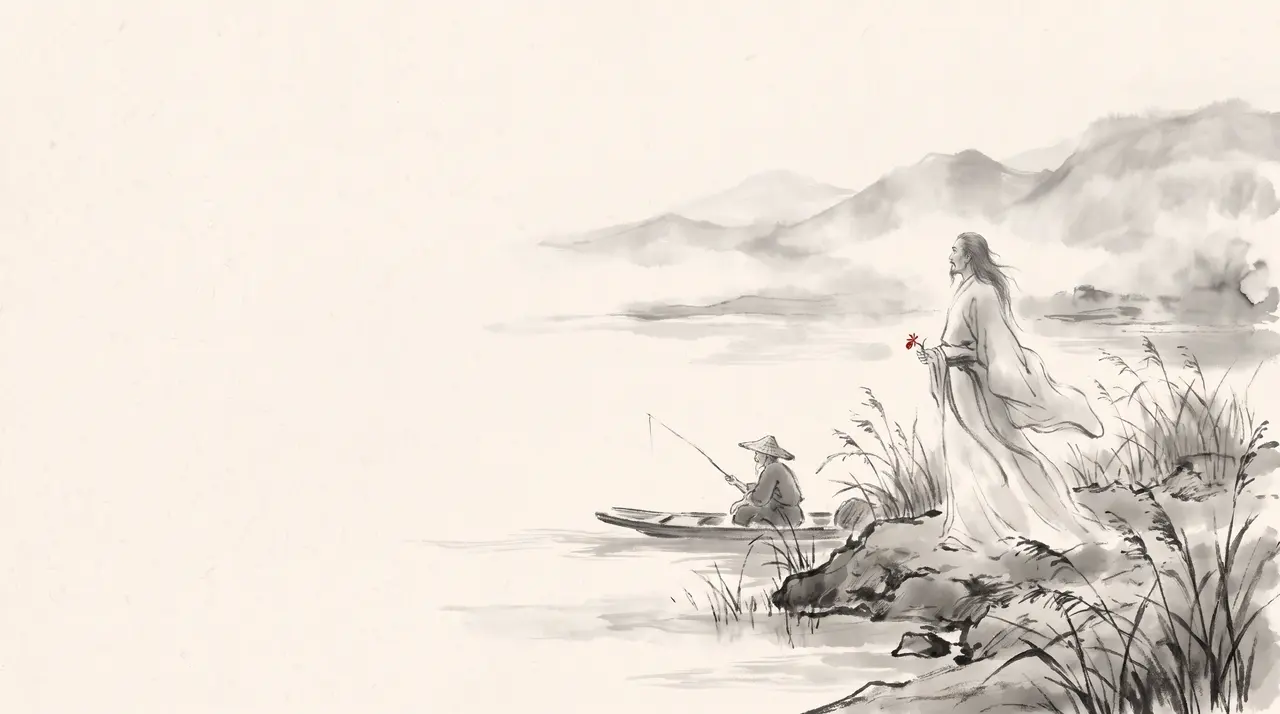
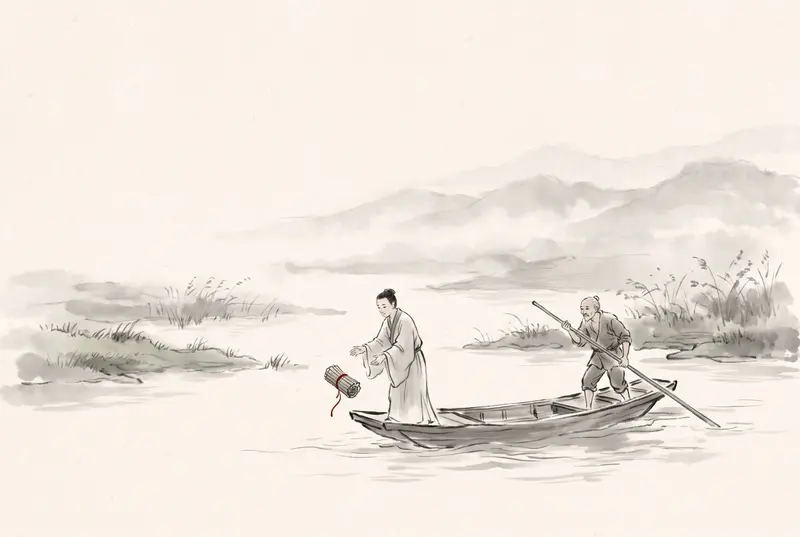
Qu Yuan of Chu, once trusted by King Huai, is pushed aside after a rival's slander, and out of his sorrow he composes the long poem "Encountering Sorrow." King Huai, tricked by Zhang Yi of Qin with a promise of six hundred li of land, breaks his alliance with Qi and is badly beaten by Qin; then, against Qu Yuan's advice, he goes to Qin, is held there and dies. Under the next king, Qu Yuan is banished and wanders, haggard, along the riverbanks. When a fisherman asks why he does not just go along with the world, he answers, "The whole world is muddy, and I alone am clear; all men are drunk, and I alone am sober." Then he clasps a stone and drowns himself in the Miluo River.
This page has the scene "Qu Yuan: All the World Is Drunk" from this volume, not the whole volume.
Audio
The audio is synthetic speech.
Video
Passage 1
Original
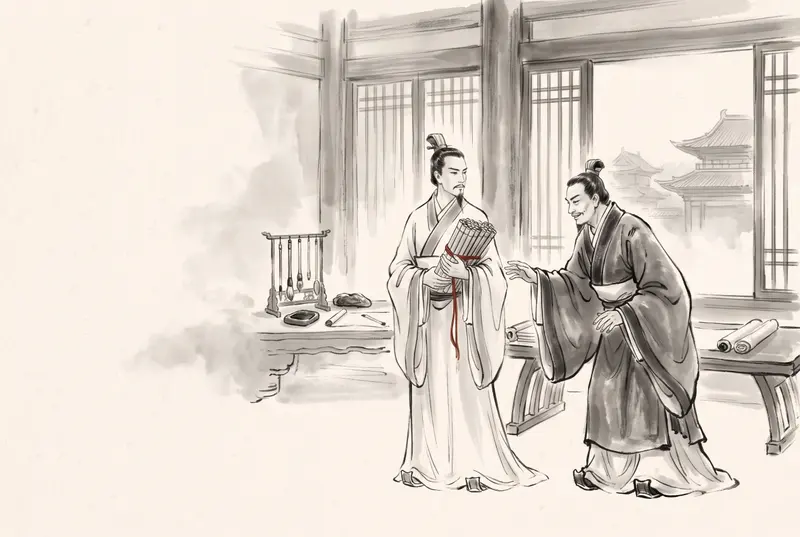
屈原者,名平,楚之同姓也。為楚懷王左徒。博聞彊志,明於治亂,嫻于辭令。入則與王圖議國事,以出號令;出則接遇賓客,應對諸侯。王甚任之。上官大夫與之同列,爭寵而心害其能。懷王使屈原造為憲令,屈平屬草槁未定。上官大夫見而欲奪之,屈平不與。因讒之曰:「王使屈平為令,眾莫不知,每一令出,平伐其功,(曰)以為『非我莫能為』也。」王怒而疏屈平。
Kundoku (Japanese reading)
屈原なる者は、名は平、楚の同姓なり。楚の懐王の左徒と為る。博聞彊志、治乱に明らかにして、辞令に嫻う。入りては則ち王と国事を図議して、以て号令を出だし、出でては則ち賓客に接遇し、諸侯に応対す。王甚だ之に任ず。上官大夫之と列を同じくし、寵を争いて心に其の能を害む。懐王屈原をして憲令を造為せしむ。屈平草稿を属りて未だ定めず。上官大夫見て之を奪わんと欲す。屈平与えず。因りて之を讒して曰く、「王屈平をして令を為らしむること、衆知らざる莫し。一令の出づる毎に、平其の功を伐りて、以為えらく『我に非ずんば能く為す莫し』と」と。王怒りて屈平を疏んず。
Japanese
屈原は名を平といい、楚の王家と同じ姓の一族である。楚の懐王の左徒(側近の大臣)を務めた。見聞が広く記憶力にすぐれ、国の治乱の道理に明るく、言葉の使い方に巧みだった。宮中では王と国の政治を相談して命令を出し、外では客をもてなし、諸侯の使者に応対した。王は屈原を深く信頼していた。上官大夫は屈原と同じ位にいて、王の寵愛を争い、屈原の才能を心の中でねたんでいた。懐王が屈原に国の法令を作らせたとき、屈平(屈原)が下書きを書いてまだ仕上げないうちに、上官大夫がそれを見て横取りしようとしたが、屈平は渡さなかった。そこで上官大夫は屈原の悪口を言った。「王が屈平に法令を作らせていることは、だれもが知っています。法令が一つ出るたびに、屈平は自分の手柄を自慢して、『わたしでなければ作れない』と言っています」。王は怒って、屈平を遠ざけた。
English
Qu Yuan, whose name was Ping, belonged to a branch of the royal clan of Chu. He served King Huai of Chu as Counselor of the Left. He was widely read and had a strong memory, understood what makes states rise and fall, and was skilled with words. At court he planned affairs of state with the king and issued his orders; abroad he received guests and dealt with the envoys of the lords. The king trusted him completely. The High Officer Shangguan, who held the same rank, competed with him for the king's favor and secretly envied his ability. When King Huai had Qu Yuan draft the laws of the state, Qu Ping had written a draft but not finished it when the High Officer saw it and tried to take it from him. Qu Ping would not give it up. So the High Officer slandered him: "Everyone knows that Your Majesty has Qu Ping draft the laws. Every time a law is issued, Ping boasts of his merit, saying, 'No one but me could have done it.'" The king was angry and kept Qu Ping at a distance.
Notes (JA)
- 屈原: 戦国時代の楚の政治家・詩人(前340ごろ〜前278年ごろ)。名は平、原は字。『楚辞』の中心となる作品を残した。
- 楚之同姓: 楚の王家と同じ羋姓の一族。
- 左徒: 楚の官職。王の側近として政治や外交を担った。
- 博聞彊志: 見聞が広く、記憶力が強い。
- 嫻于辭令: 言葉の使い方に巧み。
- 上官大夫: 楚の大臣。名は伝わらない。
- 憲令: 国の法令。
- 伐其功: 手柄を自慢する。
- (曰): 校訂者が不要とした字。読まない。
Notes (EN)
- Qu Yuan (c. 340–278 BCE): statesman and poet of Chu, whose works lie at the heart of the Songs of Chu. Ping was his name and Yuan his courtesy name.
- Of the royal clan: he shared the Mi surname of the kings of Chu.
- Counselor of the Left (左徒): an office in Chu, a close adviser in government and diplomacy.
- 博聞彊志: widely read, with a strong memory.
- 嫻于辭令: skilled with words.
- The High Officer Shangguan: a minister of Chu whose name is unknown.
- 憲令: the laws of the state.
- 伐其功: to boast of one's merit.
- (曰): a character the editors mark as extra; it is not read.
Word notes
- envy/ˈɛnvi/verb
to want what someone else has, and feel unhappy about it
In the text: “secretly envied his ability”
Similar words: be jealous of — feel envy toward · covet — want badly what belongs to another
- slander/ˈslændər/verb
to say false things about someone to damage their name
In the text: “the High Officer slandered him”
Similar words: defame — harm someone's good name · malign — speak badly of
Passage 2
Original
屈平疾王聽之不聰也,讒諂之蔽明也,邪曲之害公也,方正之不容也,故憂愁幽思而作《離騷》。離騷者,猶離憂也。夫天者,人之始也;父母者,人之本也。人窮則反本,故勞苦倦極,未嘗不呼天也;疾痛慘怛,未嘗不呼父母也。屈平正道直行,竭忠盡智以事其君,讒人間之,可謂窮矣。信而見疑,忠而被謗,能無怨乎?屈平之作《離騷》,蓋自怨生也。
Kundoku (Japanese reading)
屈平王の聴くの聡ならず、讒諂の明を蔽い、邪曲の公を害い、方正の容れられざるを疾む。故に憂愁幽思して離騒を作る。離騒なる者は、猶お憂いに離うがごときなり。夫れ天なる者は、人の始めなり。父母なる者は、人の本なり。人窮すれば則ち本に反る。故に労苦倦極すれば、未だ嘗て天を呼ばずんばあらず。疾痛惨怛すれば、未だ嘗て父母を呼ばずんばあらず。屈平道を正しくし行いを直くし、忠を竭くし智を尽くして以て其の君に事う。讒人之を間す。窮すと謂うべし。信にして疑われ、忠にして謗らる。能く怨み無からんや。屈平の離騒を作るは、蓋し怨みより生ずるなり。
Japanese
屈平は、王が人の言葉を聞き分ける力がなく、悪口とへつらいが王の目をくらませ、よこしまな者が正しい政治をそこない、まっすぐな者が受け入れられないことを悲しんだ。そこで憂いに沈み、深く思い悩んで「離騒」を作った。「離騒」とは、憂いに出会う、という意味である。そもそも天は人の始まりであり、父母は人の根本である。人は追いつめられると根本に立ち返る。だから、苦しみ疲れはてたときには天を呼ばない者はなく、病や痛みに苦しむときには父母を呼ばない者はない。屈平は道を正しく守り、まっすぐに行い、まごころと知恵の限りを尽くして君主に仕えたのに、悪口を言う者に仲を裂かれた。追いつめられたというほかはない。誠実なのに疑われ、忠実なのにそしられて、恨まずにいられようか。屈平が「離騒」を作ったのは、思うに、その恨みから生まれたのである。
English
Qu Ping grieved that the king could not tell truth from falsehood, that slander and flattery clouded his sight, that crooked men harmed the public good, and that upright men had no place. So, in sorrow and deep thought, he composed "Encountering Sorrow." The title Li Sao means something like "meeting with sorrow." Heaven is where man begins, and father and mother are man's root. When a man is at the end of his road, he turns back to his root. So no one worn out by toil and suffering fails to cry out to Heaven, and no one in pain and anguish fails to cry out for father and mother. Qu Ping kept to the right way and acted with integrity, giving all his loyalty and all his wisdom to serve his lord, yet a slanderer came between them. He was truly at the end of his road. Faithful, yet doubted; loyal, yet slandered: could he help feeling resentment? Qu Ping's "Encountering Sorrow" was surely born of that resentment.
Notes (JA)
- 聽之不聰: 人の言葉を聞き分ける力がない。
- 讒諂: 悪口とへつらい。
- 邪曲・方正: よこしまな者と、まっすぐな者。
- 離騷: 屈原の代表作とされる長詩。『楚辞』の中心。「離」を「出会う」と読むか「離れる」と読むかには諸説ある。
- 人窮則反本: 人は追いつめられると根本に立ち返る。
- 信而見疑,忠而被謗: 誠実なのに疑われ、忠実なのにそしられる。屈原の生き方を表す言葉としてよく引かれる。
- この節と次の節は、司馬遷が屈原と「離騒」について述べた評論の部分。
Notes (EN)
- 聽之不聰: unable to tell truth from falsehood.
- 讒諂: slander and flattery.
- 邪曲・方正: crooked men and upright men.
- "Encountering Sorrow" (離騷, Li Sao): the long poem traditionally attributed to Qu Yuan, the centerpiece of the Songs of Chu. Whether li means "meeting" or "leaving" is debated.
- 人窮則反本: at the end of his road, a man turns back to his root.
- 信而見疑,忠而被謗: "faithful yet doubted, loyal yet slandered," often quoted as the summary of Qu Yuan's life.
- This passage and the next are Sima Qian's own essay on Qu Yuan and his poem.
Word notes
- falsehood/ˈfɔlsˌhʊd/noun
something that is not true; a lie
In the text: “could not tell truth from falsehood”
Similar words: lie — a false statement · untruth — formal; a lie
- resentment/rɪˈzɛntmənt/noun
a bitter feeling about being treated unfairly
In the text: “could he help feeling resentment?”
Similar words: bitterness — anger and hurt · grievance — a feeling of having been wronged
Passage 3
Original
《國風》好色而不淫,《小雅》怨誹而不亂。若《離騷》者,可謂兼之矣。上稱帝嚳,下道齊桓,中述湯武,以刺世事。明道德之廣崇,治亂之條貫,靡不畢見。其文約,其辭微,其志絜,其行廉。其稱文小而其指極大,舉類邇而見義遠。其志絜,故其稱物芳;其行廉,故死而不容自疏。濯淖汙泥之中,蟬蛻於濁穢,以浮游塵埃之外,不獲世之滋垢,皭然泥而不滓者也。推此志也,雖與日月爭光可也。
Kundoku (Japanese reading)
国風は色を好みて淫せず、小雅は怨誹して乱れず。離騒の若き者は、之を兼ぬと謂うべし。上は帝嚳を称し、下は斉桓を道い、中は湯・武を述べて、以て世事を刺る。道徳の広崇、治乱の条貫を明らかにして、畢く見えざる靡し。其の文は約、其の辞は微、其の志は絜く、其の行いは廉なり。其の文を称すること小にして其の指は極めて大、類を挙ぐること邇くして義を見すこと遠し。其の志絜し、故に其の物を称すること芳し。其の行い廉なり、故に死すとも自ら疏んずるを容さず。淖汚泥の中に濯われ、濁穢に蝉蛻して、以て塵埃の外に浮游し、世の滋垢を獲ず。皭然として泥すれども滓まざる者なり。此の志を推せば、日月と光を争うと雖も可なり。
Japanese
『詩経』の「国風」は恋を歌っても乱れず、「小雅」は恨みやそしりを歌っても秩序を失わない。「離騒」は、その両方を兼ねているといえる。上は伝説の帝嚳をたたえ、下は斉の桓公を語り、その間に殷の湯王や周の武王のことを述べて、いまの世の中を風刺している。道徳の広く高いこと、国が治まり乱れる筋道を明らかにして、すべてを描きつくしている。その文は簡潔で、言葉には奥深い意味がこもり、志は清らかで、行いはいさぎよい。題材としてとりあげるものは小さいが、こめられた意味はきわめて大きく、身近なものをたとえに使いながら、遠く深い道理を示している。志が清らかだから、香りのよい草花をたとえに使い、行いがいさぎよいから、死んでも自分の信念から離れることを許さなかった。泥の中にいても洗い清められ、汚れの中から蝉がぬけがらを脱ぐように抜け出して、ちりやほこりの外に漂い、世の中の汚れに染まらない。泥の中にあっても白く清らかで、黒く染まらない人である。この志をおし広めれば、太陽や月と光を競うことさえできるだろう。
English
The "Airs of the States" in the Book of Songs sing of love without wantonness, and the "Lesser Odes" voice resentment and complaint without disorder. "Encountering Sorrow" can be said to combine both. It praises Emperor Ku of high antiquity, speaks of Duke Huan of Qi in later times, and recounts Tang and King Wu in between, in order to criticize the affairs of its day. It makes clear the breadth and height of virtue and the pattern of order and disorder, leaving nothing unshown. Its style is concise and its words subtle; its aim is pure and its conduct clean. The things it names are small, but what it points to is very great; its examples are close at hand, but the meaning it reveals reaches far. Because his aim was pure, the things he named were fragrant; because his conduct was clean, he would not let even death part him from it. Washed clean in the midst of mud and mire, shedding the filth like a cicada its shell, he floated free beyond the dust and was never stained by the grime of the world, gleaming white, in the mud but not blackened by it. Extend this spirit, and it could vie with the sun and the moon for brightness.
Notes (JA)
- 國風・小雅: 『詩経』の二つの部分。国風は各国の民謡、小雅は宮廷の歌。
- 好色而不淫: 恋を歌っても、みだらにならない。
- 怨誹而不亂: 恨みやそしりを述べても、乱れない。
- 帝嚳: 伝説の五帝の一人。
- 齊桓: 斉の桓公。春秋時代の最初の覇者。
- 稱物芳: 香りのよい草花をたとえに使う。「離騒」には蘭や蕙などの香草がたくさん出てくる。
- 蟬蛻: 蝉がぬけがらを脱ぐように、汚れから抜け出す。
- 皭然泥而不滓: 泥の中にあっても白く清らかで、黒く染まらない。
- 與日月爭光: 太陽や月と光を競う。最高のほめ言葉。
Notes (EN)
- The "Airs of the States" and the "Lesser Odes": two parts of the Book of Songs, folk songs of the states and songs of the court.
- 好色而不淫: singing of love without wantonness.
- 怨誹而不亂: voicing complaint without disorder.
- Emperor Ku: one of the legendary Five Emperors.
- Duke Huan of Qi: the first overlord of the Spring and Autumn period.
- 稱物芳 ("the things he named were fragrant"): "Encountering Sorrow" is full of fragrant plants such as orchids and melilot.
- 蟬蛻: shedding the filth as a cicada sheds its shell.
- 皭然泥而不滓: gleaming white in the mud, not stained by it.
- 與日月爭光 ("vie with the sun and moon for brightness"): the highest praise.
Word notes
- wantonness/ˈwɑntənnəs/noun
behavior with no control or morals
In the text: “sing of love without wantonness”
Similar words: excess — too much · indecency — improper behavior
- cicada/sɪˈkeɪdə/noun
a large insect that sings loudly in summer and leaves its old shell behind
In the text: “like a cicada its shell”
Similar words: locust — a grasshopper-like insect · husk — a dry outer shell
Passage 4
Original
屈平既絀,其後秦欲伐齊。齊與楚從親,惠王患之。乃令張儀詳去秦,厚幣委質事楚,曰:「秦甚憎齊,齊與楚從親。楚誠能絕齊,秦願獻商、於之地六百里。」楚懷王貪而信張儀,遂絕齊,使使如秦受地。張儀詐之曰:「儀與王約六里,不聞六百里。」楚使怒去,歸告懷王。懷王怒,大興師伐秦。秦發兵擊之,大破楚師於丹、淅,斬首八萬,虜楚將屈丐,遂取楚之漢中地。懷王乃悉發國中兵以深入擊秦,戰於藍田。魏聞之,襲楚至鄧。楚兵懼,自秦歸。而齊竟怒不救楚,楚大困。
Kundoku (Japanese reading)
屈平既に絀けらる。其の後秦斉を伐たんと欲す。斉は楚と従親なり。恵王之を患う。乃ち張儀をして詳りて秦を去り、幣を厚くし質を委ねて楚に事えしめて曰く、「秦甚だ斉を憎む。斉は楚と従親なり。楚誠に能く斉を絶たば、秦願わくは商・於の地六百里を献ぜん」と。楚の懐王貪りて張儀を信じ、遂に斉を絶ち、使いをして秦に如きて地を受けしむ。張儀之を詐りて曰く、「儀王と六里を約す。六百里を聞かず」と。楚の使い怒りて去り、帰りて懐王に告ぐ。懐王怒り、大いに師を興して秦を伐つ。秦兵を発して之を撃ち、大いに楚の師を丹・淅に破り、斬首八万、楚の将屈丐を虜にし、遂に楚の漢中の地を取る。懐王乃ち悉く国中の兵を発して以て深く入りて秦を撃ち、藍田に戦う。魏之を聞き、楚を襲いて鄧に至る。楚の兵懼れ、秦より帰る。而して斉竟に怒りて楚を救わず。楚大いに困しむ。
Japanese
屈平が退けられたあと、秦は斉を攻めようとした。しかし斉は楚と合従の同盟を結んでいたので、秦の恵王はそれを気にかけた。そこで張儀に秦を去ったふりをさせ、手厚い贈り物を持たせて楚に仕えさせた。張儀は言った。「秦は斉をひどく憎んでいますが、斉は楚と同盟を結んでいます。もし楚が斉と縁を切るなら、秦は商・於の地六百里を献上いたします」。楚の懐王は欲に目がくらんで張儀を信じ、とうとう斉と縁を切って、土地を受け取る使者を秦に送った。ところが張儀は、だましてこう言った。「わたしが王と約束したのは六里です。六百里などとは聞いていません」。楚の使者は怒って帰り、懐王に報告した。懐王は激怒し、大軍を起こして秦を攻めた。秦は兵を出して迎え撃ち、丹水と淅水のあたりで楚の軍を大いに破って八万の首を取り、楚の将軍屈丐を捕らえ、楚の漢中の地を奪った。懐王は国中の兵をすべて動員して秦に深く攻めこみ、藍田で戦った。魏はそれを聞いて楚の留守を襲い、鄧まで攻め入った。楚の兵は恐れて秦から引き上げた。斉も怒って楚を救わなかったので、楚はひどく苦しんだ。
English
After Qu Ping was pushed aside, Qin wanted to attack Qi. But Qi had an alliance with Chu, and King Hui of Qin was troubled by it. So he had Zhang Yi pretend to leave Qin and enter the service of Chu with rich gifts. Zhang Yi said, "Qin hates Qi bitterly, but Qi is allied with Chu. If Chu will truly break with Qi, Qin would like to present it with six hundred li of land at Shang and Yu." King Huai of Chu, greedy, believed Zhang Yi. He broke with Qi and sent an envoy to Qin to receive the land. Zhang Yi deceived him, saying, "I promised the king six li. I never heard of six hundred." The envoy of Chu left in anger and reported to King Huai. King Huai, furious, raised a great army and attacked Qin. Qin met it with its own troops, crushed the Chu army on the Dan and the Xi, took eighty thousand heads, captured the Chu general Qu Gai and seized the Chu land of Hanzhong. King Huai then sent every soldier in his state deep into Qin and fought at Lantian. When Wei heard of it, it struck at Chu and reached Deng. The Chu troops took fright and came home from Qin. And Qi, still angry, would not help Chu. Chu was in desperate straits.
Notes (JA)
- 絀: 退けられる。
- 從親: 合従の同盟。
- 惠王: 秦の恵文王(巻68の章の太子)。
- 張儀: 魏の人で、秦の宰相。諸国を秦と個別に結ばせる「連衡」策で知られる遊説家。
- 詳: いつわる、ふりをする。
- 委質: 家臣として仕える。
- 商、於之地: 商鞅の領地だった地(巻68の章を参照)。
- 六里,不聞六百里: 六里と言ったので、六百里とは聞いていない。張儀の有名な詐術。
- 丹、淅: 丹水と淅水。今の河南省西部。前312年の戦い。
- 漢中: 今の陝西省南部。
- 藍田: 今の陝西省西安市の南東。
- 鄧: 今の河南省鄧州市のあたり。
Notes (EN)
- 絀: pushed aside.
- 從親: an alliance of the eastern states.
- King Hui of Qin: King Huiwen (the crown prince of Volume 68).
- Zhang Yi: a man of Wei who became chancellor of Qin, known for drawing the states into separate deals with Qin.
- 詳: to pretend.
- 委質: to enter someone's service.
- Shang and Yu: Shang Yang's old fief (see Volume 68).
- "Six li, not six hundred": Zhang Yi's famous trick.
- The Dan and the Xi: rivers in western Henan. The battle was in 312 BCE.
- Hanzhong: in present-day southern Shaanxi.
- Lantian: southeast of present-day Xi'an.
- Deng: near present-day Dengzhou in Henan.
Word notes
- greedy/ˈɡriːdi/adjective
wanting more than you need, especially money or land
In the text: “King Huai of Chu, greedy, believed Zhang Yi”
Similar words: grasping — eager to get more · covetous — wanting what others have
- break with/ˈbreɪk wɪθ/phrasal verb
to end a relationship or alliance
In the text: “If Chu will truly break with Qi”
Similar words: cut ties with — end a relationship · part with — separate from
- deceive/dɪˈsiːv/verb
to make someone believe something false
In the text: “Zhang Yi deceived him”
Similar words: trick — make a fool of · dupe — deceive someone trusting
- crush/krʌʃ/verb
to defeat completely
In the text: “crushed the Chu army on the Dan and the Xi”
Similar words: rout — defeat and drive away · overwhelm — defeat with greater force
- dire straits/daɪr streɪts/idiom
a very difficult or dangerous situation
In the text: “Chu was in desperate straits”
Similar words: predicament — a difficult situation · plight — a bad situation
The text says "desperate straits"; "dire straits" is the more common form.
Passage 5
Original
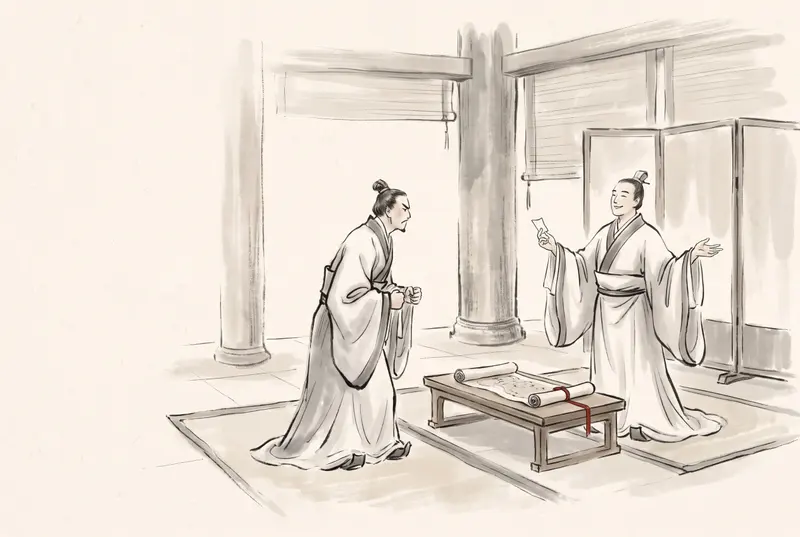
明年,秦割漢中地與楚以和。楚王曰:「不願得地,願得張儀而甘心焉。」張儀聞,乃曰:「以一儀而當漢中地,臣請往如楚。」如楚,又因厚幣用事者臣靳尚,而設詭辯於懷王之寵姬鄭袖。懷王竟聽鄭袖,復釋去張儀。是時屈平既疏,不復在位,使於齊,顧反,諫懷王曰:「何不殺張儀?」懷王悔,追張儀不及。
Kundoku (Japanese reading)
明年、秦漢中の地を割きて楚に与えて以て和す。楚王曰く、「地を得るを願わず。張儀を得て心を甘んぜんことを願う」と。張儀聞きて、乃ち曰く、「一儀を以て漢中の地に当たらば、臣請う往きて楚に如かん」と。楚に如き、又幣を厚くして事を用うる者の臣靳尚に因りて、詭弁を懐王の寵姫鄭袖に設く。懐王竟に鄭袖に聴き、復た張儀を釈き去らしむ。是の時屈平既に疏んぜられ、復た位に在らず。斉に使いし、顧りみて反り、懐王を諫めて曰く、「何ぞ張儀を殺さざる」と。懐王悔いて、張儀を追うも及ばず。
Japanese
翌年、秦は漢中の地を楚に返して和睦を求めた。楚王は言った。「土地などほしくない。張儀を手に入れて、恨みを晴らしたい」。張儀はそれを聞くと言った。「わたし一人で漢中の地に見合うのなら、わたしが楚へ参りましょう」。張儀は楚に行くと、権力を握っていた家臣の靳尚に手厚い贈り物をし、懐王のお気に入りの側室の鄭袖に、言葉たくみに取り入った。懐王はとうとう鄭袖の言うことを聞いて、張儀を放してやった。このとき屈平はすでに遠ざけられて官職を離れていたが、斉への使いから戻ってくると、懐王をいさめて言った。「なぜ張儀を殺さなかったのですか」。懐王は後悔して張儀を追わせたが、間に合わなかった。
English
The next year Qin offered to cede the Hanzhong land back to Chu to make peace. The King of Chu said, "I do not want land. I want Zhang Yi, to satisfy my heart." When Zhang Yi heard this, he said, "If I alone am worth all of Hanzhong, let me go to Chu." He went to Chu, bribed Jin Shang, a minister in power, and plied the king's favorite concubine, Zheng Xiu, with clever arguments. In the end King Huai listened to Zheng Xiu and let Zhang Yi go. By this time Qu Ping had been pushed aside and no longer held office. He had been sent to Qi, and when he returned he rebuked King Huai: "Why did you not kill Zhang Yi?" King Huai regretted it and sent men after Zhang Yi, but too late.
Notes (JA)
- 甘心: 恨みを晴らして満足する。
- 用事者: 権力を握っている者。
- 靳尚: 楚の家臣。
- 詭辯: たくみにいつわる弁舌。
- 鄭袖: 懐王の寵姫。
- 顧反: 戻ってくる。
Notes (EN)
- 甘心: to satisfy one's grudge.
- 用事者: a man in power.
- Jin Shang: a minister of Chu.
- 詭辯: clever, deceptive arguments.
- Zheng Xiu: King Huai's favorite concubine.
- 顧反: to come back.
Word notes
- cede/siːd/verb
to give land or power to another state, usually unwillingly
In the text: “to cede the Hanzhong land back to Chu”
Similar words: surrender — give up · hand over — give to another
- bribe/braɪb/verb
to give money or gifts to make someone do what you want
In the text: “bribed Jin Shang, a minister in power”
Similar words: buy off — informal; bribe · pay off — give money for a favor
Passage 6
Original
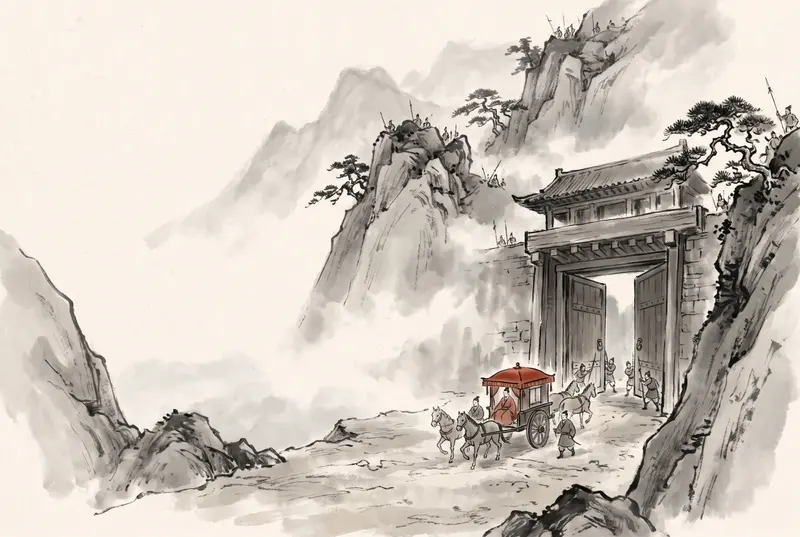
時秦昭王與楚婚,欲與懷王會。懷王欲行,屈平曰:「秦虎狼之國,不可信,不如毋行。」懷王稚子子蘭勸王行:「奈何絕秦歡?」懷王卒行。入武關,秦伏兵絕其後,因留懷王,以求割地。懷王怒,不聽。亡走趙,趙不內。復之秦,竟死於秦而歸葬。長子頃襄王立,以其弟子蘭為令尹。楚人既咎子蘭以勸懷王入秦而不反也。
Kundoku (Japanese reading)
時に秦の昭王楚と婚し、懐王と会せんと欲す。懐王行かんと欲す。屈平曰く、「秦は虎狼の国なり。信ずべからず。行く毋きに如かず」と。懐王の稚子子蘭王に行くを勧む、「奈何ぞ秦の歓を絶たん」と。懐王卒に行く。武関に入るや、秦兵を伏せて其の後を絶ち、因りて懐王を留め、以て地を割かんことを求む。懐王怒りて、聴かず。亡れて趙に走る。趙内れず。復た秦に之き、竟に秦に死して帰り葬らる。長子頃襄王立ち、其の弟子蘭を以て令尹と為す。楚人既に子蘭の懐王に秦に入るを勧めて反らざるを以て咎む。
Japanese
そのころ、秦の昭王は楚と婚姻を結び、懐王と会見したいと言ってきた。懐王が行こうとすると、屈平は言った。「秦は虎や狼のような国で、信用できません。行かないほうがよろしい」。しかし懐王の末の子の子蘭は、「秦との友好を断ってどうするのです」と言って、行くようにすすめた。懐王はとうとう出かけた。武関に入ると、秦は兵を伏せておいて退路を断ち、懐王を引き留めて、土地を割いて差し出せと要求した。懐王は怒って聞き入れなかった。懐王は逃げて趙に行ったが、趙は受け入れなかった。また秦に戻され、とうとう秦で死に、遺体となって楚に帰って葬られた。長男の頃襄王が位につき、弟の子蘭を令尹(宰相)にした。楚の人々は、子蘭が懐王に秦行きをすすめたために、王が帰らなかったのだと責めた。
English
At this time King Zhao of Qin, who was related to Chu by marriage, asked to meet King Huai. King Huai wanted to go. Qu Ping said, "Qin is a state of tigers and wolves. It cannot be trusted. You had better not go." But King Huai's youngest son, Zilan, urged him to go: "Why break off our friendship with Qin?" In the end King Huai went. As soon as he entered the Wu Pass, Qin cut off his retreat with hidden troops, held him there and demanded that he cede territory. King Huai was angry and would not agree. He escaped and fled to Zhao, but Zhao would not take him in. He was taken back to Qin, died there at last, and was sent home to be buried. His eldest son came to the throne as King Qingxiang and made his younger brother Zilan chief minister. The people of Chu blamed Zilan for urging King Huai to go to Qin, from which he never came back.
Notes (JA)
- 婚: 婚姻による親戚関係。
- 虎狼之國: 虎や狼のような国。秦をさしてよく言われた(巻75の章を参照)。
- 子蘭: 懐王の末子。
- 武關: 秦の南東の関所(巻8の章を参照)。
- 死於秦: 前296年。懐王の死は楚の人々の深い恨みとなり、のちに項梁は懐王の孫を立てて「懐王」と名のらせた(巻7の章を参照)。
- 頃襄王: 楚の王(巻78の章を参照)。
- 令尹: 楚の宰相。
Notes (EN)
- 婚: kinship by marriage.
- A state of tigers and wolves: a common description of Qin (see Volume 75).
- Zilan: King Huai's youngest son.
- The Wu Pass: the southeastern gateway of Qin (see Volume 8).
- Died in Qin: in 296 BCE. His death left a deep grudge in Chu; much later Xiang Liang set up King Huai's grandson under the same title, "King Huai" (see Volume 7).
- King Qingxiang: see Volume 78.
- 令尹: the chief minister of Chu.
Word notes
- trust/trʌst/verb
to believe that someone is honest and will not harm you
In the text: “It cannot be trusted”
Similar words: rely on — depend on · have faith in — believe in
- urge/ɜrdʒ/verb
to try hard to persuade someone to do something
In the text: “Zilan, urged him to go”
Similar words: press — urge strongly · encourage — give support to do something
- retreat/rɪˈtriːt/noun
the way back for an army or traveler
In the text: “cut off his retreat”
Similar words: withdrawal — moving back · escape route — a way to get away
- territory/ˈtɛrɪˌtɔri/noun
land that belongs to a state
In the text: “demanded that he cede territory”
Similar words: land — ground; country · domain — land ruled by one ruler
Passage 7
Original
屈平既嫉之,雖放流,睠顧楚國,系心懷王,不忘欲反,冀幸君之一悟,俗之一改也。其存君興國而欲反覆之,一篇之中三致志焉。然終無可奈何,故不可以反,卒以此見懷王之終不悟也。人君無愚智賢不肖,莫不欲求忠以自為,舉賢以自佐,然亡國破家相隨屬,而聖君治國累世而不見者,其所謂忠者不忠,而所謂賢者不賢也。懷王以不知忠臣之分,故內惑於鄭袖,外欺於張儀,疏屈平而信上官大夫、令尹子蘭。兵挫地削,亡其六郡,身客死於秦,為天下笑。此不知人之禍也。《易》曰:「井泄不食,為我心惻,可以汲。王明,并受其福。」王之不明,豈足福哉?
Kundoku (Japanese reading)
屈平既に之を嫉む。放流せらると雖も、楚国を睠顧し、心を懐王に繫け、反らんと欲するを忘れず、君の一たび悟り、俗の一たび改まらんことを冀幸す。其の君を存し国を興して之を反覆せんと欲すること、一篇の中に三たび志を致す。然れども終に奈何ともすべき無し。故に以て反るべからず。卒に此を以て懐王の終に悟らざるを見る。人君は愚智賢不肖と無く、忠を求めて以て自ら為し、賢を挙げて以て自ら佐けしめんと欲せざる莫し。然れども国を亡ぼし家を破ること相随属し、而して聖君の国を治むること累世にして見えざるは、其の所謂忠なる者忠ならずして、所謂賢なる者賢ならざればなり。懐王忠臣の分を知らざるを以て、故に内は鄭袖に惑い、外は張儀に欺かれ、屈平を疏んじて上官大夫・令尹子蘭を信ず。兵挫け地削られ、其の六郡を亡い、身は秦に客死して、天下の笑いと為る。此れ人を知らざるの禍なり。易に曰く、「井泄えて食らわれず、我が心の惻みを為す。以て汲むべし。王明らかなれば、并びに其の福を受けん」と。王の明らかならざる、豈に福するに足らんや。
Japanese
屈平は子蘭を憎んだ。追放された身ではあったが、楚の国をふり返っては思い、心を懐王にかけて、朝廷に戻ることを忘れず、君主がいつか悟り、世の風潮がいつか改まることを願っていた。君主を守り、国を盛り返して、すべてを立て直したいという志を、一篇の詩の中で何度もくり返し述べている。しかし、とうとうどうすることもできず、朝廷に戻ることはかなわなかった。こうして、懐王が最後まで悟らなかったことがわかる。君主というものは、愚かでも賢くても、忠実な家臣を求めて自分のために働かせ、賢い者を取り立てて自分を助けさせたいと思わない者はない。それなのに、国を滅ぼし家を破る者が次々に現れ、聖王が国をよく治めることが何代も見られないのは、君主が忠実だと思っている者が実は忠実ではなく、賢いと思っている者が実は賢くないからである。懐王は忠臣とは何かがわかっていなかった。だから内では鄭袖に惑わされ、外では張儀にだまされ、屈平を遠ざけて上官大夫や令尹の子蘭を信じた。その結果、軍は敗れ、領土は削られて六つの郡を失い、自らはよその国の秦で死んで、天下の笑いものとなった。これは人を見る目がなかったために起きたわざわいである。『易経』に「井戸の泥をさらって水が澄んでいるのに、だれも飲まないのは、わたしの心を痛ませる。この水は汲めるのだ。王が賢明なら、ともにその恵みを受けられるのに」とある。王が賢明でなければ、どうして恵みを受けることができようか。
English
Qu Ping hated Zilan. Though banished, he looked back longingly at Chu, his heart still bound to King Huai, never forgetting his wish to return, hoping that his lord might awaken and the ways of the age change. His longing to preserve his lord, restore the state and set everything right again appears three times in a single poem. But in the end nothing could be done, and he could not return. From this we see that King Huai never awoke. Every ruler, wise or foolish, worthy or unworthy, wants loyal men to serve him and able men to help him. Yet ruined states and broken houses follow one after another, and for generation after generation no sage ruler is seen governing well, because those he thinks loyal are not loyal, and those he thinks able are not able. King Huai did not know what a loyal minister was. So at home he was led astray by Zheng Xiu, abroad he was deceived by Zhang Yi; he kept Qu Ping at a distance and trusted the High Officer Shangguan and the chief minister Zilan. His armies were broken, his land carved up, six commanderies lost, and he himself died a stranger in Qin, a laughingstock to the world. That is the disaster of not knowing men. The Book of Changes says, "The well is cleaned, but no one drinks; it grieves my heart. Its water can be drawn. If the king is wise, all share in the blessing." When the king is not wise, what blessing can there be?
Notes (JA)
- 嫉: 憎む。
- 放流: 追放される。
- 睠顧: ふり返って思う。
- 一篇之中三致志焉: 一篇の詩(「離騒」)の中で、三度も志を述べている。
- 人君無愚智賢不肖: 君主は、愚かでも賢くても。
- 六郡: 楚が秦に奪われた六つの郡。
- 客死: よその土地で死ぬ。
- 井泄不食: 『易経』井の卦の言葉。井戸の泥をさらってきれいになったのに、だれも飲まない。すぐれた人が用いられないことのたとえ。
- この節は、司馬遷が懐王と屈原について述べた評論の部分。
Notes (EN)
- 嫉: to hate.
- 放流: banished.
- 睠顧: to look back longingly.
- Three times in a single poem: in "Encountering Sorrow."
- 人君無愚智賢不肖: every ruler, wise or foolish.
- Six commanderies: the six regions Chu lost to Qin.
- 客死: to die in a foreign land.
- "The well is cleaned, but no one drinks": from the "Well" hexagram of the Book of Changes; a worthy man left unused.
- This passage is Sima Qian's own reflection on King Huai and Qu Yuan.
Word notes
- banish/ˈbænɪʃ/verb
to send someone away from their home as a punishment
In the text: “Though banished”
Similar words: exile — force to live abroad · expel — force to leave
- longingly/ˈlɔŋɪŋli/adverb
in a way that shows you want something very much
In the text: “he looked back longingly at Chu”
Similar words: wistfully — with sad longing · yearningly — with strong desire
- astray/əˈstreɪ/adverb
away from the right way
In the text: “led astray by Zheng Xiu”
Similar words: off course — away from the right path · amiss — wrong
- laughingstock/ˈlæfɪŋˌstɑk/noun
a person everyone laughs at
In the text: “a laughingstock to the world”
Similar words: joke — a person or thing laughed at · figure of fun — someone people mock
Passage 8
Original
令尹子蘭聞之大怒,卒使上官大夫短屈原於頃襄王,頃襄王怒而遷之。屈原至於江濱,被髪行吟澤畔。顏色憔悴,形容枯槁。漁父見而問之曰:「子非三閭大夫歟?何故而至此?」屈原曰:「舉世混濁而我獨清,眾人皆醉而我獨醒,是以見放。」漁父曰:「夫聖人者,不凝滯於物而能與世推移。舉世混濁,何不隨其流而揚其波?眾人皆醉,何不餔其糟而啜其醨?何故懷瑾握瑜而自令見放為?」屈原曰:「吾聞之,新沐者必彈冠,新浴者必振衣,人又誰能以身之察察,受物之汶汶者乎?寧赴常流而葬乎江魚腹中耳,又安能以皓皓之白而蒙世俗之溫蠖乎?」
Kundoku (Japanese reading)
令尹子蘭之を聞きて大いに怒り、卒に上官大夫をして屈原を頃襄王に短らしむ。頃襄王怒りて之を遷す。屈原江浜に至り、髪を被りて沢畔に行吟す。顔色憔悴し、形容枯槁す。漁父見て之に問いて曰く、「子は三閭大夫に非ずや。何の故にして此に至るや」と。屈原曰く、「世を挙げて混濁して我独り清み、衆人皆酔いて我独り醒めたり。是を以て放たる」と。漁父曰く、「夫れ聖人なる者は、物に凝滞せずして能く世と推移す。世を挙げて混濁せば、何ぞ其の流れに随いて其の波を揚げざる。衆人皆酔わば、何ぞ其の糟を餔いて其の醨を啜らざる。何の故に瑾を懐き瑜を握りて自ら放たれしむるを為すや」と。屈原曰く、「吾之を聞く、新たに沐する者は必ず冠を弾き、新たに浴する者は必ず衣を振るう、と。人又誰か能く身の察察たるを以て、物の汶汶たる者を受けんや。寧ろ常流に赴きて江魚の腹中に葬られんのみ。又安くんぞ能く皓皓の白きを以て世俗の温蠖を蒙らんや」と。
Japanese
令尹の子蘭はそれを聞いて大いに怒り、とうとう上官大夫に、頃襄王の前で屈原の悪口を言わせた。頃襄王は怒って、屈原を遠くへ追放した。屈原は長江のほとりにやって来て、髪をふり乱したまま、沢のほとりを歌いながら歩いた。顔色はやつれ、体はやせ衰えていた。一人の漁師が見かけてたずねた。「あなたは三閭大夫さまではありませんか。どうしてこんなところに」。屈原は言った。「世の中はみな濁っているのに、わたしだけが澄んでいる。人々はみな酔っているのに、わたしだけが醒めている。だから追放されたのだ」。漁師は言った。「聖人というものは、物事にこだわらず、世の中とともに移り変わっていけるものです。世の中がみな濁っているなら、どうしてその流れに乗って、波を立てないのですか。人々がみな酔っているなら、どうして酒かすを食べ、薄い酒をすすらないのですか。どうして美しい玉を胸に抱くような清い心を持ち続けて、自分から追放されるようなことをなさるのです」。屈原は言った。「髪を洗ったばかりの者は、必ず冠のちりをはじいてからかぶり、体を洗ったばかりの者は、必ず衣のほこりをはたいてから着ると聞いている。清らかな身に、汚れたものを受け入れられる者がいるだろうか。それくらいなら、いっそ川の流れに身を投げて、魚の腹に葬られたほうがよい。どうしてこの真っ白な身に、世の中のちりや汚れをかぶることができようか」。
English
When the chief minister Zilan heard of this he was furious, and in the end he had the High Officer Shangguan slander Qu Yuan to King Qingxiang. King Qingxiang, angered, banished him far away. Qu Yuan came to the banks of the Yangzi and wandered along the edge of the marshes with his hair unbound, chanting as he went. His face was haggard and his body withered. A fisherman saw him and asked, "Are you not the Grand Master of the Three Clans? What has brought you to this?" Qu Yuan said, "The whole world is muddy, and I alone am clear; all men are drunk, and I alone am sober. That is why I was banished." The fisherman said, "A sage does not cling to things but moves along with the world. If the whole world is muddy, why not follow its current and stir up its waves? If all men are drunk, why not eat their dregs and sip their thin wine? Why hold fast to your jade and gems and get yourself banished?" Qu Yuan said, "I have heard that one who has just washed his hair always flicks the dust from his cap, and one who has just bathed always shakes out his clothes. Who can let his clean body take on the grime of things? I would rather throw myself into the flowing river and be buried in the bellies of its fish. How could I let my shining whiteness be covered with the dirt of the world?"
Notes (JA)
- 短: 悪口を言う。
- 遷: 遠くへ追放する。屈原は長江の南へ流された。
- 被髪行吟澤畔: 髪をふり乱し、沢のほとりを歌いながら歩く。
- 顏色憔悴,形容枯槁: 顔色はやつれ、体はやせ衰える。「憔悴」「枯槁」の言葉のもと。
- 漁父: 年老いた漁師。この問答は『楚辞』の「漁父」にも見える。
- 三閭大夫: 楚の王族の三つの家(昭・屈・景)を取りまとめる役。屈原の官職。
- 舉世混濁而我獨清,眾人皆醉而我獨醒: 世の中はみな濁っているが自分だけは澄み、人々はみな酔っているが自分だけは醒めている。屈原の言葉として最も有名なもの。
- 餔其糟而啜其醨: 酒かすを食べ、薄い酒をすする。世の中に調子を合わせること。
- 懷瑾握瑜: 美しい玉を抱き持つ。清く美しい心や才能を持つこと。
- 新沐者必彈冠: 髪を洗ったばかりの者は、冠のちりをはじいてからかぶる。
- 汶汶: 汚れているさま。
- 溫蠖: ちりやほこり、汚れ(読みと意味には諸説ある)。
Notes (EN)
- 短: to slander.
- 遷: to banish to a distant place. Qu Yuan was exiled south of the Yangzi.
- 被髪行吟澤畔: wandering by the marshes with hair unbound, chanting.
- 顏色憔悴,形容枯槁: a haggard face and a withered body.
- The fisherman (漁父): the same dialogue appears as "The Fisherman" in the Songs of Chu.
- Grand Master of the Three Clans (三閭大夫): the officer in charge of the three royal clans of Chu (Zhao, Qu and Jing); Qu Yuan's title.
- "The whole world is muddy, and I alone am clear; all men are drunk, and I alone am sober": the most famous words attributed to Qu Yuan.
- 餔其糟而啜其醨 ("eat their dregs and sip their thin wine"): going along with the crowd.
- 懷瑾握瑜 ("holding fast to jade and gems"): keeping one's purity and talent.
- One who has just washed his hair flicks the dust from his cap.
- 汶汶: dirty, grimy.
- 溫蠖: dirt and dust (the meaning is debated).
Idioms from this passage: All are drunk, and I alone am sober 衆人皆酔いて我独り醒めたり
Word notes
- haggard/ˈhæɡərd/adjective
looking very tired and ill, with a thin face
In the text: “His face was haggard”
Similar words: gaunt — thin and bony · worn — looking tired
- withered/ˈwɪðərd/adjective
dried up and thin, like an old plant
In the text: “his body withered”
Similar words: shriveled — dried and wrinkled · wasted — very thin from illness
- sober/ˈsoʊbər/adjective
not drunk; thinking clearly
In the text: “I alone am sober”
Similar words: clear-headed — thinking clearly · awake — not asleep; aware
- muddy/ˈmʌdi/adjective
full of mud; not clear or clean
In the text: “The whole world is muddy”
Similar words: murky — dark and dirty · turbid — formal; muddy
- cling/klɪŋ/verb
to hold on tightly; to refuse to give something up
In the text: “A sage does not cling to things”
Similar words: hold on to — keep hold of · stick to — refuse to change
- dregs/drɛɡz/noun
the solid bits left at the bottom of wine
In the text: “eat their dregs”
Similar words: lees — the dregs of wine · sediment — matter that sinks to the bottom
- grime/ɡraɪm/noun
dirt that covers a surface
In the text: “take on the grime of things”
Similar words: dirt — dust or mud · filth — disgusting dirt
- belly/ˈbɛli/noun
the stomach
In the text: “buried in the bellies of its fish”
Similar words: stomach — the organ where food goes · gut — informal; the stomach
Passage 9
Original
亂曰:浩浩沅、湘兮,分流汨兮。修路幽拂兮,道遠忽兮。曾唫恒悲兮,永嘆慨兮。世既莫吾知兮,人心不可謂兮。懷情抱質兮,獨無匹兮。伯樂既歿兮,驥將焉程兮?人生稟命兮,各有所錯兮。定心廣志,餘何畏懼兮?曾傷爰哀,永嘆喟兮。世溷不吾知,心不可謂兮。知死不可讓兮,願勿愛兮。明以告君子兮,吾將以為類兮。」於是懷石遂自(投)[沈]汨羅以死。
Kundoku (Japanese reading)
乱に曰く、浩浩たる沅・湘、分流して汨たり。修路は幽く払われ、道は遠くして忽たり。曾ち唫じて恒に悲しみ、永く嘆慨す。世既に吾を知る莫く、人心は謂うべからず。情を懐き質を抱きて、独り匹無し。伯楽既に歿す、驥将に焉くにか程られん。人生命を稟け、各おの錯く所有り。心を定め志を広くす、余何ぞ畏懼せん。曾ち傷み爰に哀しみ、永く嘆喟す。世溷りて吾を知らず、心は謂うべからず。死の譲るべからざるを知る、願わくは愛しむこと勿からん。明らかに以て君子に告ぐ、吾将に以て類と為さんとす」と。是に於いて石を懐きて遂に自ら汨羅に沈みて以て死す。
Japanese
(「懐沙」の結びの歌に言う。) 広々と流れる沅水と湘水、分かれて流れ、ごうごうと音を立てる。長い道は暗く草におおわれ、行く先は遠くかすんでいる。ため息をつき、いつも悲しみ、いつまでも嘆き続ける。世の中にわたしを知る者はなく、人の心は語り合うこともできない。まごころと誠実さを抱いたまま、わたしはひとり、並ぶ者もない。名馬を見分けた伯楽はもういない、駿馬はだれに見いだされるというのか。人はそれぞれ天命を受け、それぞれの置かれる場所がある。心を定め、志を大きく持てば、何を恐れることがあろう。心を痛め、悲しみ、いつまでも嘆息する。世の中は濁ってわたしを知らず、この心は語り合うこともできない。死は避けられないと知っている、どうか命を惜しむまい。はっきりと君子たちに告げよう、わたしは古の忠臣たちと同じ道をゆくのだと。 こうして屈原は石を抱き、自ら汨羅の淵に沈んで死んだ。
English
(The envoi of "Embracing Sand" says:) Vast and wide, the Yuan and the Xiang divide their streams and rush away. The long road is dark and overgrown, the way far off and dim. I sigh and grieve without end, lamenting forever. The world does not know me, and there is no one to share my heart. Holding my feelings and keeping my true nature, I stand alone, without a match. Bole, who knew horses, is gone; who now will judge the thoroughbred? Each man receives his fate from Heaven, and each has his appointed place. With my heart settled and my resolve broad, what is there for me to fear? Wounded and sorrowing, I sigh forever. The world is muddied and does not know me; there is no one to share my heart. I know that death cannot be refused; let me not cling to life. I tell you plainly, gentlemen: I will follow those who went before me. Then he clasped a stone, and at last he sank himself in the Miluo River and died.
Notes (JA)
- この節の前(省略): 屈原は「懐沙」の賦を作った。この節はその結びの部分(「乱」)。
- 懷沙: 『楚辞』の一篇。「砂(または石)を抱く」という題で、死を決意した歌とされる。
- 亂: 楚の歌の結びの部分。全体をまとめる歌。
- 兮: 歌の調子をととのえる言葉。読まずに、間をとって読むことが多い。
- 沅、湘: 沅水と湘水。洞庭湖に注ぐ川で、屈原がさまよった地(巻130の章で司馬遷も旅した)。
- 伯樂: 馬の良し悪しを見分ける名人。人材を見いだす人のたとえ。「驥」は一日に千里を走る名馬。
- 以為類: 古の忠臣たちと同じ仲間となる。手本とする(解釈には諸説ある)。
- (投)[沈]: 「投」を「沈」に改めたという印。
- 汨羅: 湖南省の川。屈原が身を投げた日は五月五日と伝えられ、ちまきや竜舟の行事の起源とされる。前278年ごろ。
Notes (EN)
- Before this (left out here): Qu Yuan composed the poem "Embracing Sand." This passage is its envoi.
- "Embracing Sand" (懷沙): a poem in the Songs of Chu, traditionally taken as his song of resolve before death.
- 亂: the envoi that sums up a Chu song.
- 兮: a particle that marks the rhythm of the verse.
- The Yuan and the Xiang: rivers flowing into Lake Dongting, where Qu Yuan wandered; Sima Qian traveled there too (see Volume 130).
- Bole: the legendary judge of horses, an image for one who discovers talent; 驥 is a horse that runs a thousand li a day.
- 以為類: to join the company of the loyal men of old, to take them as a model (the meaning is debated).
- (投)[沈]: the editors replace 投 with 沈.
- The Miluo: a river in Hunan. Qu Yuan is said to have drowned himself on the fifth day of the fifth month, the origin of the Dragon Boat Festival and its rice dumplings. Around 278 BCE.
Word notes
- lament/ləˈmɛnt/verb
to express great sadness about something
In the text: “lamenting forever”
Similar words: mourn — feel sad about a death or loss · grieve — feel deep sorrow
- thoroughbred/ˈθɜroʊˌbrɛd/noun
a horse of very good breeding, fast and strong
In the text: “who now will judge the thoroughbred?”
Similar words: steed — literary; a fine horse · charger — a war horse
- clasp/klæsp/verb
to hold something tightly in your hands or arms
In the text: “he clasped a stone”
Similar words: grip — hold tightly · clutch — hold tightly, often in fear
Passage 10
Original
屈原既死之後,楚有宋玉、唐勒、景差之徒者,皆好辭而以賦見稱;然皆祖屈原之從容辭令,終莫敢直諫。其後楚日以削,數十年竟為秦所滅。自屈原沈汨羅後百有餘年,漢有賈生,為長沙王太傅,過湘水,投書以弔屈原。
Kundoku (Japanese reading)
屈原既に死するの後、楚に宋玉・唐勒・景差の徒なる者有り。皆辞を好みて賦を以て称せらる。然れども皆屈原の従容たる辞令を祖とするも、終に敢えて直諫する莫し。其の後楚日に以て削られ、数十年にして竟に秦の滅ぼす所と為る。屈原の汨羅に沈みしより後百有余年、漢に賈生有り。長沙王の太傅と為り、湘水を過ぎ、書を投じて以て屈原を弔う。
Japanese
屈原が死んだあと、楚には宋玉・唐勒・景差といった人々がいて、みな言葉を好み、賦(韻文の作品)によって名を知られた。しかし、みな屈原のゆったりとした美しい言葉づかいを手本にしただけで、とうとう、王を正面からいさめる者は一人もいなかった。その後、楚は日に日に領土を削られ、数十年後には、ついに秦に滅ぼされた。屈原が汨羅に沈んでから百年あまりのち、漢に賈生(賈誼)という人がいた。長沙王の守り役となって湘水を渡るとき、文を書いて水に投げ入れ、屈原を弔った。
English
After Qu Yuan's death, there were men in Chu such as Song Yu, Tang Le and Jing Cha who all loved fine words and were praised for their rhapsodies. But they all modeled themselves on Qu Yuan's graceful language, and none of them ever dared to rebuke the king directly. After that Chu was cut down day by day, and a few decades later it was finally destroyed by Qin. More than a hundred years after Qu Yuan sank himself in the Miluo, there was Master Jia of Han. When he was tutor to the King of Changsha and crossed the Xiang River, he threw a piece of writing into the water to mourn Qu Yuan.
Notes (JA)
- 宋玉・唐勒・景差: 屈原のあとの楚の文人。宋玉は『楚辞』の「九弁」の作者とされる。
- 賦: 韻をふんだ長い文学作品。漢代に大いに流行した。
- 祖: 手本とする。
- 從容辭令: ゆったりとした、美しい言葉づかい。
- 直諫: 王を正面からいさめる。
- 為秦所滅: 前223年、楚は秦に滅ぼされた。
- 賈生: 賈誼(前200〜前168年)。漢の文帝に仕えた若き学者(巻61の章を参照)。この巻の後半は賈誼の伝(ここでは省略)。
- 投書以弔屈原: 文を湘水に投げ入れて屈原を弔う。賈誼の「弔屈原賦」。
Notes (EN)
- Song Yu, Tang Le, Jing Cha: poets of Chu after Qu Yuan. Song Yu is the traditional author of "Nine Changes" in the Songs of Chu.
- 賦: the rhapsody, a long rhymed literary form that flourished under the Han.
- 祖: to take as a model.
- 從容辭令: graceful, unhurried language.
- 直諫: rebuking the king directly.
- Destroyed by Qin: Chu fell in 223 BCE.
- Master Jia: Jia Yi (200–168 BCE), the young scholar who served Emperor Wen of Han (see Volume 61). The second half of this volume (left out here) is his biography.
- Threw writing into the river: Jia Yi's "Lament for Qu Yuan."
Word notes
- rhapsody/ˈræpsədi/noun
here, the fu: a long poem of the Han and earlier, with rich language
In the text: “were praised for their rhapsodies”
Similar words: ode — a poem of praise · verse — poetry
- mourn/mɔrn/verb
to feel or show great sadness because someone has died
In the text: “to mourn Qu Yuan”
Similar words: grieve for — feel sorrow for · lament — express sorrow
Passage 11
Original
太史公曰:余讀離騷、天問、招魂、哀郢,悲其志。適長沙,觀屈原所自沈淵,未嘗不垂涕,想見其為人。及見賈生弔之,又怪屈原以彼其材,游諸侯,何國不容,而自令若是。讀服烏賦,同死生,輕去就,又爽然自失矣。
Kundoku (Japanese reading)
太史公曰く、余離騒・天問・招魂・哀郢を読み、其の志を悲しむ。長沙に適き、屈原の自ら沈みし所の淵を観て、未だ嘗て涕を垂れて、其の人と為りを想見せずんばあらず。賈生の之を弔うを見るに及びて、又屈原の彼の其の材を以て、諸侯に游ばば、何れの国か容れざらん、而るに自ら是くの若くならしむるを怪しむ。服鳥の賦を読むに、死生を同じくし、去就を軽んず。又爽然として自失す。
Japanese
太史公(司馬遷)は言う。わたしは「離騒」「天問」「招魂」「哀郢」を読んで、屈原の志を悲しく思った。長沙に行き、屈原が身を沈めた淵を見たときは、涙を流して、その人柄を思い浮かべずにはいられなかった。賈生が屈原を弔った文を読むと、こんどは、屈原ほどの才能があれば、諸侯の国を回ればどこの国でも受け入れられただろうに、なぜ自分をこんなふうに追いこんだのかと、ふしぎに思った。ところが賈生の「服鳥の賦」を読むと、そこでは生と死を同じものと見て、官職につくか去るかも軽く考えていて、わたしはまた、ぼうぜんとして我を忘れてしまったのである。
English
The Grand Historian says: I have read "Encountering Sorrow," "Heavenly Questions," "Summoning the Soul" and "Lament for Ying," and I grieve for the man's spirit. When I went to Changsha and saw the pool where Qu Yuan drowned himself, I could not help shedding tears and picturing what kind of man he was. Then, reading Master Jia's lament for him, I wondered why, with talent like his, he did not travel among the lords, any one of whom would surely have welcomed him, instead of bringing himself to such an end. But when I read Master Jia's "Rhapsody on the Owl," which sees life and death as one and makes light of holding or leaving office, I was left dazed and at a loss once more.
Notes (JA)
- 離騷・天問・招魂・哀郢: いずれも『楚辞』の作品で、屈原の作とされる(「招魂」は宋玉の作とする説もある)。
- 適長沙: 司馬遷が若いころの旅で長沙に行ったこと(巻130の章を参照)。
- 想見其為人: その人柄を思い浮かべる。
- 服烏賦: 賈誼の「鵩鳥賦」。不吉とされたミミズクが部屋に入ってきたのをきっかけに、生と死を同じと見る道家の考えを述べた。
- 同死生,輕去就: 生と死を同じものと見て、官職につくか去るかを軽く考える。
- 爽然自失: ぼうぜんとして我を忘れる。屈原の死を惜しむ気持ちと、生死にこだわらない考えとの間で、司馬遷自身が揺れていることを表す。
Notes (EN)
- "Encountering Sorrow," "Heavenly Questions," "Summoning the Soul," "Lament for Ying": poems of the Songs of Chu attributed to Qu Yuan ("Summoning the Soul" is sometimes credited to Song Yu).
- Went to Changsha: on Sima Qian's travels as a young man (see Volume 130).
- 想見其為人: picturing what kind of man he was.
- "Rhapsody on the Owl": Jia Yi's poem, prompted by an owl, a bird of ill omen, flying into his room; it sets out the Daoist view that life and death are one.
- 同死生,輕去就: seeing life and death as one, and making light of taking or leaving office.
- 爽然自失: dazed and at a loss; Sima Qian is torn between grief at Qu Yuan's death and the view that one should not cling to life.
Word notes
- shed tears/ʃɛd tɪrz/phrase
to cry
In the text: “I could not help shedding tears”
Similar words: weep — cry · sob — cry noisily
- dazed/deɪzd/adjective
unable to think clearly, as after a shock
In the text: “I was left dazed”
Similar words: bewildered — confused · stunned — too shocked to react