Biographies · Vol. 86
Biographies of the Assassins 刺客列傳
Yu Rang: Dying for the One Who Knows You 豫讓
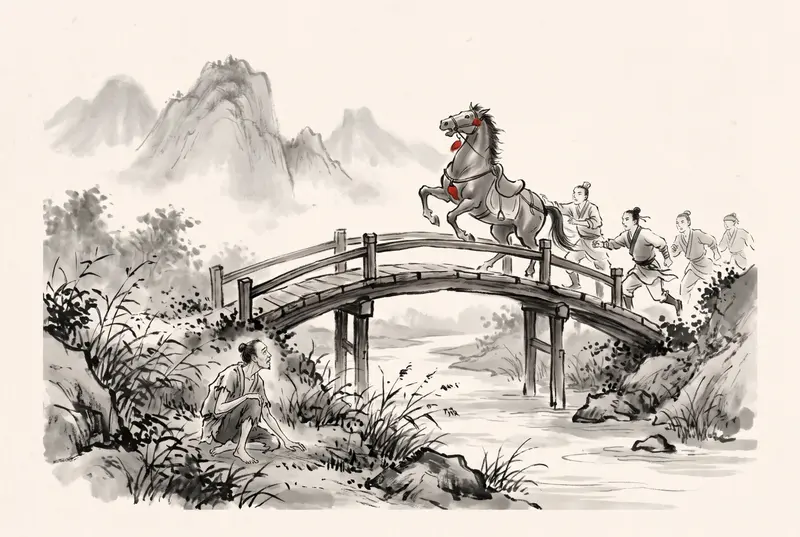
Of the five assassins in the Biographies of the Assassins, this is the story of Yu Rang of Jin. When Zhi Bo, who had treated him as the finest man in the state, was destroyed by Viscount Xiang of Zhao, Yu Rang vowed revenge, saying that a man of honour dies for the one who knows his worth. Disguised as a convict, he lay in wait in the palace privy, was found out, and was let go as a man of honour. Then he lacquered his skin and swallowed charcoal, so that not even his wife knew him, and went after the viscount again. When a friend said it would be easier to become the viscount's retainer and strike from close by, he refused: that would be serving a lord with a divided heart. Caught at last under a bridge, he asked to strike the viscount's robe, fulfilled his vow, and took his own life.
This page has the scene "Yu Rang: Dying for the One Who Knows You" from this volume, not the whole volume.
Audio
The audio is synthetic speech.
Video
Passage 1
Original
其後七十餘年而晉有豫讓之事。豫讓者,晉人也,故嘗事范氏及中行氏,而無所知名。去而事智伯,智伯甚尊寵之。及智伯伐趙襄子,趙襄子與韓、魏合謀滅智伯,滅智伯之後而三分其地。趙襄子最怨智伯,漆其頭以爲飲器。豫讓遁逃山中,曰:「嗟乎!士爲知己者死,女爲説己者容。今智伯知我,我必爲報讎而死,以報智伯,則吾魂魄不愧矣。」
Kundoku (Japanese reading)
其の後七十余年にして晋に豫譲の事有り。豫譲なる者は、晋の人なり。故嘗て范氏及び中行氏に事うるも、名を知らるる所無し。去りて智伯に事う。智伯甚だ之を尊寵す。智伯の趙襄子を伐つに及び、趙襄子韓・魏と合謀して智伯を滅ぼし、智伯を滅ぼすの後にして其の地を三分す。趙襄子最も智伯を怨み、其の頭に漆して以て飲器と為す。豫譲山中に遁逃して曰く、「嗟乎、士は己を知る者の為に死し、女は己を説ぶ者の為に容づくる。今智伯我を知る。我必ず為に讎を報いて死し、以て智伯に報いば、則ち吾が魂魄愧じざらん」と。
Japanese
それから七十年あまりして、晋で豫譲の事件が起こった。豫譲は晋の人である。もとは范氏や中行氏に仕えたが、名を知られることはなかった。そこを去って智伯に仕えると、智伯は彼をたいそう重んじ、かわいがった。やがて智伯が趙襄子を攻めると、趙襄子は韓・魏とひそかに手を結んで智伯を滅ぼし、その領地を三つに分けた。趙襄子は智伯をもっとも恨み、その頭蓋骨に漆を塗って酒器にした。豫譲は山の中へ逃れて言った。「ああ、士は自分を知ってくれる者のために死に、女は自分を愛してくれる者のために化粧をするという。智伯は私を知ってくれた。私は必ず仇を討って死に、智伯の恩に報いよう。そうすれば、死んでも魂は恥じることがない」。
English
More than seventy years later, in Jin, came the affair of Yu Rang. Yu Rang was a man of Jin. He had once served the Fan and Zhonghang clans, but there he made no name for himself. He left them to serve Zhi Bo, who honoured and favoured him greatly. When Zhi Bo attacked Viscount Xiang of Zhao, the viscount secretly joined with Han and Wei, destroyed Zhi Bo, and divided his lands among the three of them. Viscount Xiang hated Zhi Bo above all, and had his skull lacquered and made into a drinking vessel. Yu Rang fled into the mountains and said: "Alas! A man of honour dies for the one who knows his worth, as a woman makes herself beautiful for the one who delights in her. Zhi Bo knew my worth. I will avenge him and die for it, and so repay him; then my soul will have nothing to be ashamed of."
Notes (JA)
- 其後七十餘年: 前の段の専諸の事件(呉王僚の暗殺)から数えて、と司馬遷は書く。豫譲の事件は前453年ごろのこと。
- 范氏・中行氏: 晋の有力な六つの家(六卿)のうちの二家。前5世紀のはじめ、ほかの卿たちとの争いに敗れて滅んだ。
- 智伯: 晋の卿、智瑶。当時の晋でいちばんの勢力を持っていた。
- 趙襄子: 趙無恤。のちの趙の国の基礎を築いた人。
- 三分其地: 韓・魏・趙が智氏の領地を分けた(前453年)。この三家がのちに晋を三つに分け、戦国時代が始まる。
- 飲器: 酒を飲む器。古注には「便器」と解する説もある。
- 士爲知己者死,女爲説己者容: 「説」は「悦」と同じ。「士は己を知る者の為に死す」の形で知られる。
Notes (EN)
- Seventy years later: Sima Qian counts from the previous story in this chapter, Zhuan Zhu's assassination of the king of Wu. Yu Rang's story belongs to about 453 BCE.
- The Fan and Zhonghang (范氏・中行氏): two of the six great ministerial houses of Jin, destroyed early in the fifth century BCE in struggles with the others.
- Zhi Bo (智伯): Zhi Yao, the most powerful minister in Jin at the time.
- Viscount Xiang of Zhao (趙襄子): Zhao Wuxu, who laid the foundations of the later state of Zhao.
- Divided his lands: Han, Wei and Zhao shared out the Zhi lands in 453 BCE; these three houses later split Jin itself, opening the Warring States period.
- Drinking vessel (飲器): some old commentaries read it as a chamber pot.
- "A man of honour dies for the one who knows his worth" (士爲知己者死) became a proverb.
Idioms from this passage: A man of honour dies for the one who knows his worth 士は己を知る者の為に死す
Word notes
- divide/dɪˈvaɪd/verb
to share something out into parts
In the text: “divided his lands among the three of them”
Similar words: split — break into parts · share out — give each a part
- avenge/əˈvɛndʒ/verb
to punish someone for a wrong done to another
In the text: “I will avenge him”
Similar words: revenge — pay back a wrong · repay — give back what is owed
Passage 2
Original
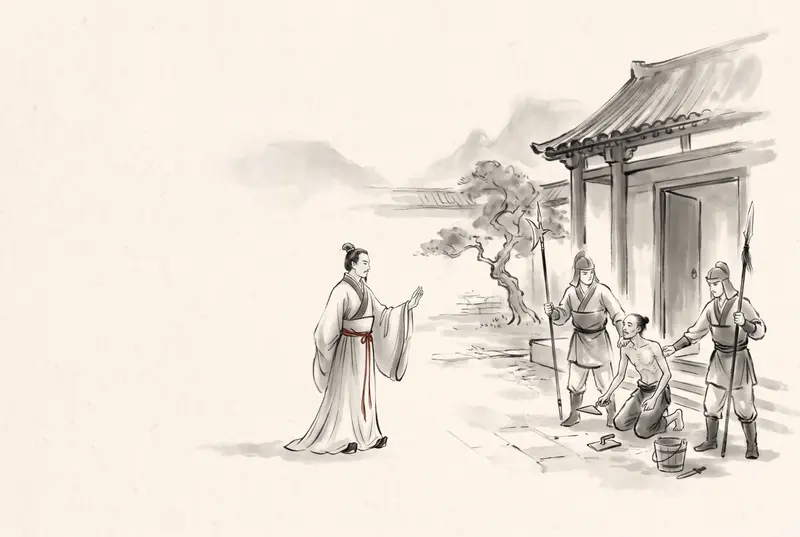
乃變名姓爲刑人,入宮涂廁,中挾匕首,欲以刺襄子。襄子如廁,心動,執問涂廁之刑人,則豫讓,内持刀兵,曰:「欲爲智伯報仇!」左右欲誅之。襄子曰:「彼義人也,吾謹避之耳。且智伯亡無後,而其臣欲爲報仇,此天下之賢人也。」卒醳去之。
Kundoku (Japanese reading)
乃ち名姓を変じて刑人と為り、宮に入りて廁を涂り、中に匕首を挟み、以て襄子を刺さんと欲す。襄子廁に如き、心動く。廁を涂る刑人を執えて問えば、則ち豫譲なり。内に刀兵を持ち、曰く、「智伯の為に仇を報いんと欲す」と。左右之を誅せんと欲す。襄子曰く、「彼は義人なり。吾謹みて之を避けんのみ。且つ智伯亡びて後無し。而るに其の臣為に仇を報いんと欲す。此れ天下の賢人なり」と。卒に醳して之を去らしむ。
Japanese
そこで名前を変え、刑罰を受けた囚人になりすまして宮殿に入り込み、便所の壁を塗る仕事をしながら、懐に匕首を隠して襄子を刺そうとした。襄子は便所へ行くと、胸騒ぎがした。壁を塗っている囚人を捕らえて問いただすと、豫譲であった。体に刃物を隠し持っていて、「智伯のために仇を討とうとしたのだ」と言った。側近たちは彼を殺そうとした。襄子は言った。「あれは義人だ。私が用心して避ければよいだけのことだ。それに智伯は滅んで跡継ぎもいないのに、その家臣が仇を討とうとしている。これは天下の賢人である」。そしてついに彼を許して立ち去らせた。
English
So he changed his name, passed himself off as a convict labourer, and got into the palace plastering the privy, with a dagger hidden on him, meaning to stab Viscount Xiang. When the viscount went to the privy, his heart gave a start. He had the convict plasterer seized and questioned: it was Yu Rang, with a blade hidden on him. "I meant to avenge Zhi Bo!" he said. The attendants wanted to kill him, but the viscount said: "He is a man of honour. I shall simply take care to keep out of his way. Besides, Zhi Bo is dead and has no heir, and still his retainer would avenge him. This is one of the worthiest men in the world." In the end he let him go.
Notes (JA)
- 刑人: 刑罰を受けて労役に服している者。
- 涂廁: 便所の壁を土で塗る。
- 心動: 胸騒ぎがする。
- 醳: 「釈」と同じ。許して放す。
Notes (EN)
- Convict labourer (刑人): a man serving a sentence of hard labour.
- Plastering the privy (涂廁): coating the walls of the latrine with clay.
- Let him go (醳): the same as 釋, to release.
Word notes
- convict/ˈkɑnvɪkt/noun
a person found guilty of a crime
In the text: “passed himself off as a convict labourer”
Similar words: prisoner — a person held for a crime · criminal — a person who breaks the law
British spelling in the text: labourer (US: laborer).
- attendant/əˈtɛndənt/noun
a person who serves and guards someone important
In the text: “The attendants wanted to kill him”
Similar words: servant — a person who serves · guard — a person who protects
Passage 3
Original
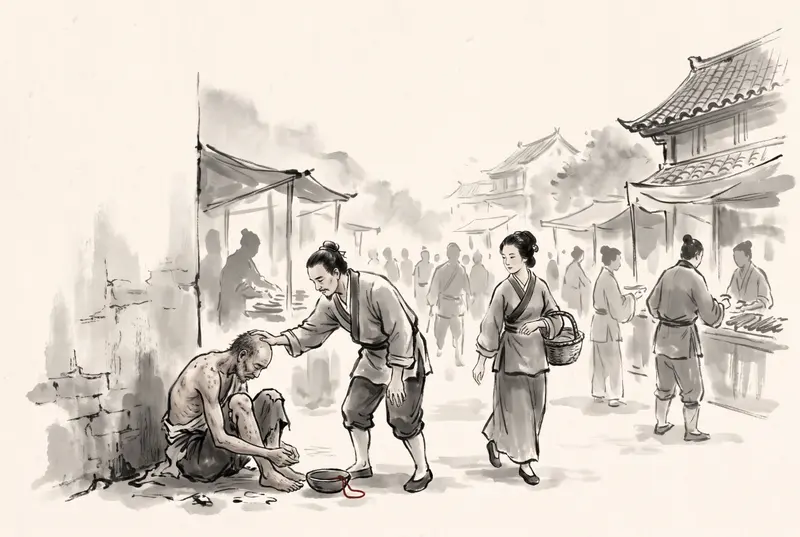
居頃之,豫讓又漆身爲厲,呑炭爲啞,使形狀不可知,行乞於市。其妻不識也。行見其友,其友識之,曰:「汝非豫讓邪?」曰:「我是也。」其友爲泣曰:「以子之才,委質而臣事襄子,襄子必近幸子。近幸子,乃爲所欲,顧不易邪?何乃殘身苦形,欲以求報襄子,不亦難乎!」豫讓曰:「既已委質臣事人,而求殺之,是懷二心以事其君也。且吾所爲者極難耳!然所以爲此者,將以愧天下後世之爲人臣懷二心以事其君者也。」
Kundoku (Japanese reading)
居ること頃之くして、豫譲又身に漆して厲と為り、炭を呑みて啞と為り、形状をして知るべからざらしめ、市に行乞す。其の妻も識らざるなり。行きて其の友に見ゆ。其の友之を識りて曰く、「汝は豫譲に非ずや」と。曰く、「我是なり」と。其の友為に泣きて曰く、「子の才を以て、質を委ねて臣として襄子に事えば、襄子必ず子を近幸せん。子を近幸せば、乃ち欲する所を為さん。顧って易からずや。何ぞ乃ち身を残い形を苦しめ、以て襄子に報いんことを求めんと欲する。亦難からずや」と。豫譲曰く、「既已に質を委ねて人に臣事し、而も之を殺さんことを求むるは、是れ二心を懐きて以て其の君に事うるなり。且つ吾が為す所の者は極めて難きのみ。然れども此を為す所以の者は、将に以て天下後世の人臣と為りて二心を懐き以て其の君に事うる者を愧じしめんとすればなり」と。
Japanese
しばらくして、豫譲は今度は体に漆を塗って、できものだらけの病人のようになり、炭を飲んで声をつぶし、姿かたちがわからないようにして、市場で物乞いをした。妻でさえ気づかなかった。道で友人に出会うと、友人は気づいて言った。「おまえは豫譲ではないか」。「そうだ」と答えた。友人は彼のために泣いて言った。「おまえほどの才能があるなら、家臣として襄子に仕えれば、襄子はきっとおまえをそば近くに置いてかわいがるだろう。そうなれば、思いどおりのことができる。そのほうがかえってたやすいではないか。どうしてわざわざ体を傷つけ、姿を苦しめてまで、襄子に仇を討とうとするのか。難しすぎるではないか」。豫譲は言った。「いったん家臣として人に仕えておきながら、その人を殺そうとするのは、二心を抱いて主君に仕えることだ。たしかに私のしようとしていることは、このうえなく難しい。それでもこうするのは、天下の、そして後の世の、二心を抱いて主君に仕える家臣たちを恥じ入らせるためなのだ」。
English
Some time later, Yu Rang smeared his body with lacquer to raise sores like a leper's, and swallowed charcoal to ruin his voice, so that no one could tell who he was, and he went begging in the market. Not even his wife knew him. On the road he met a friend, who recognised him. "Aren't you Yu Rang?" "I am." The friend wept for him and said: "A man of your ability could pledge himself to Viscount Xiang and serve as his retainer, and the viscount would surely keep you close and favour you. Once he did, you could do as you wished. Wouldn't that be easier? Why maim your body and torment yourself trying to repay him this way? Isn't it far too hard?" Yu Rang said: "To pledge myself as a man's retainer and then try to kill him would be serving my lord with a divided heart. What I am doing is very hard, I know. But I do it to shame every retainer, in this age and in ages to come, who serves his lord with a divided heart."
Notes (JA)
- 漆身爲厲: 漆にかぶれさせて皮膚をただれさせ、癩(重い皮膚病)の病人のように見せる。「厲」は「癩」と同じ。
- 呑炭爲啞: 熱い炭を飲んでのどを焼き、声を変える。
- 委質: 主君に礼物をささげて臣下となること。
- 近幸: そば近くに置いてかわいがる。
- 二心: ふたごころ。主君に背く心。
Notes (EN)
- Lacquered his body (漆身爲厲): lacquer irritates the skin; he raised sores to look like a leper.
- Swallowed charcoal (呑炭爲啞): to burn his throat and change his voice.
- Pledge himself (委質): to present a gift to a lord and become his retainer.
- A divided heart (二心): disloyalty to one's lord.
Word notes
- recognise/ˈrɛkəɡˌnaɪz/verb
to know who someone is when you see them
In the text: “who recognised him”
Similar words: identify — say who someone is · know — be familiar with
British spelling; US: recognize.
- maim/meɪm/verb
to hurt someone so that part of the body is damaged for good
In the text: “Why maim your body”
Similar words: injure — hurt · disfigure — spoil the look of
Passage 4
Original
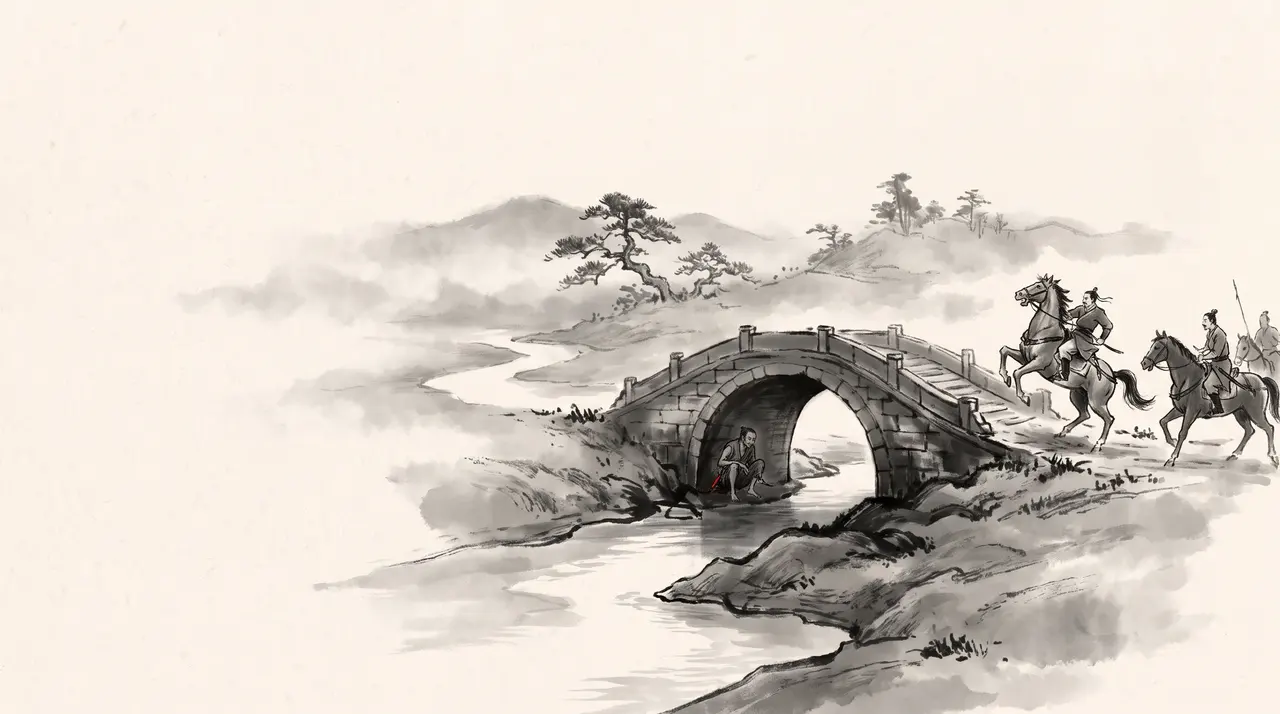
既去,頃之,襄子當出,豫讓伏於所當過之橋下。襄子至橋,馬驚,襄子曰:「此必是豫讓也。」使人問之,果豫讓也。於是襄子乃數豫讓曰:「子不嘗事范、中行氏乎?智伯盡滅之,而子不爲報讎,而反委質臣於智伯。智伯亦已死矣,而子獨何以爲之報讎之深也?」豫讓曰:「臣事范、中行氏,范、中行氏皆衆人遇我,我故衆人報之。至於智伯,國士遇我,我故國士報之。」
Kundoku (Japanese reading)
既に去り、頃之くして、襄子当に出でんとす。豫譲当に過ぐべき所の橋の下に伏す。襄子橋に至るに、馬驚く。襄子曰く、「此れ必ず是れ豫譲ならん」と。人をして之を問わしむれば、果して豫譲なり。是に於いて襄子乃ち豫譲を数めて曰く、「子は嘗て范・中行氏に事えずや。智伯尽く之を滅ぼすも、子は為に讎を報いず、而して反って質を智伯に委ねて臣たり。智伯も亦已に死せり。而るに子独り何を以て之が為に讎を報いることの深きや」と。豫譲曰く、「臣范・中行氏に事う。范・中行氏は皆衆人もて我を遇す。我故に衆人もて之に報ゆ。智伯に至りては、国士もて我を遇す。我故に国士もて之に報ゆ」と。
Japanese
友人と別れてまもなく、襄子が外出することになった。豫譲は襄子が通るはずの橋の下に身を潜めた。襄子が橋にさしかかると、馬が驚いた。襄子は「これはきっと豫譲だ」と言い、人をやって調べさせると、はたして豫譲であった。そこで襄子は豫譲を責めて言った。「おまえはかつて范氏や中行氏に仕えていたではないか。智伯は彼らをことごとく滅ぼしたのに、おまえは仇を討つどころか、かえって智伯の家臣になった。その智伯ももう死んでいる。それなのに、なぜ智伯のためにだけ、これほど深く仇を討とうとするのか」。豫譲は言った。「私は范氏・中行氏に仕えましたが、彼らは私を並の人間として扱いました。だから私も並の人間として報いたのです。智伯は、私を国でいちばんの士として扱ってくれました。だから私も国士として報いるのです」。
English
Soon after he had parted from his friend, Viscount Xiang was to go out, and Yu Rang hid under a bridge he would have to cross. When the viscount reached the bridge, his horse shied. "This must be Yu Rang," he said, and sent men to look: it was indeed Yu Rang. Then the viscount took him to task: "Did you not once serve the Fan and Zhonghang clans? Zhi Bo wiped them out, yet you did not avenge them; instead you pledged yourself to Zhi Bo as his retainer. Now Zhi Bo too is dead. Why are you so set on avenging him alone?" Yu Rang said: "I served the Fan and Zhonghang clans, and they treated me as an ordinary man, so I repaid them as an ordinary man would. Zhi Bo treated me as the finest man in the state, so I repay him as the finest man in the state would."
Notes (JA)
- 數: 罪を一つ一つ数え上げて責める。
- 智伯盡滅之: 実際には、范氏・中行氏は智氏と趙氏などの連合に敗れた。
- 衆人: 普通の人。
- 國士: 国中でいちばんの人物。「国士無双」の国士(巻92淮陰侯列伝、このサイトに掲載)。
Notes (EN)
- Took him to task (數): listed his offences one by one.
- Zhi Bo wiped them out: in fact the Fan and Zhonghang fell to an alliance that included both the Zhi and the Zhao.
- The finest man in the state (國士): the same phrase as in "Han Xin has no equal in the state" (Shiji 92, on this site).
Word notes
- shy/ʃaɪ/verb
(of a horse) to jump or turn suddenly because it is frightened
In the text: “his horse shied”
Similar words: startle — jump with surprise · rear — rise up on the back legs
- ordinary/ˈɔrdənˌɛri/adjective
not special; like most others
In the text: “treated me as an ordinary man”
Similar words: common — usual, found everywhere · average — typical
Passage 5
Original
襄子喟然嘆息而泣曰:「嗟乎豫子!子之爲智伯,名既成矣,而寡人赦子,亦已足矣。子其自爲計,寡人不復釋子!」使兵圍之。豫讓曰:「臣聞明主不掩人之美,而忠臣有死名之義。前君已寬赦臣,天下莫不稱君之賢。今日之事,臣固伏誅,然願請君之衣而撃之焉,以致報讎之意,則雖死不恨。非所敢望也,敢布腹心!」
Kundoku (Japanese reading)
襄子喟然として嘆息し泣きて曰く、「嗟乎豫子、子の智伯の為にする、名既に成れり。而して寡人の子を赦すも、亦已に足れり。子其れ自ら計を為せ。寡人復た子を釈さず」と。兵をして之を囲ましむ。豫譲曰く、「臣聞く、明主は人の美を掩わず、而して忠臣には名に死するの義有りと。前に君已に臣を寛赦し、天下君の賢を称せざる莫し。今日の事、臣固より誅に伏せん。然れども願わくは君の衣を請いて之を撃ち、以て讎を報ゆるの意を致さば、則ち死すと雖も恨みず。敢えて望む所に非ざるなり。敢えて腹心を布く」と。
Japanese
襄子はため息をつき、涙を流して言った。「ああ、豫子よ。おまえが智伯のために尽くしたことで、名はもう立った。私がおまえを許したのも、一度で十分だ。覚悟を決めよ。もうおまえを放すことはしない」。そして兵に豫譲を取り囲ませた。豫譲は言った。「名君は人の美点を覆い隠さず、忠臣には名のために死ぬという道義がある、と聞いております。先にあなたは私を寛大にお許しになり、天下にあなたの賢明さをたたえない者はおりません。今日のことで、私はもとより処刑されるべき身です。ただ、願わくはあなたの衣をいただいてそれを撃ち、仇を討つ思いを果たせれば、死んでも心残りはありません。望める立場でないのは承知のうえで、胸の内を申し上げます」。
English
The viscount sighed deeply and wept. "Ah, Master Yu! What you have done for Zhi Bo has already made your name, and my pardoning you once is enough. Make up your mind to your fate: I will not let you go again." He had soldiers surround him. Yu Rang said: "I have heard that an enlightened ruler does not hide another man's merit, and that a loyal retainer has a duty to die for his name. You pardoned me generously before, and all the world praises your goodness. For today's deed I must of course be put to death. But I beg for your robe, so that I may strike it and so carry out my wish for revenge; then I will die without regret. I do not dare to hope for it, but I lay my heart open before you."
Notes (JA)
- 豫子: 「子」は相手を敬う呼び方。
- 自爲計: 自分の身の振り方を決めよ、つまり覚悟せよ。
- 布腹心: 心の内をすべて打ち明ける。
Notes (EN)
- Master Yu (豫子): 子 is a term of respect.
- Make up your mind (自爲計): literally "make your own plans", that is, prepare for death.
- Lay my heart open (布腹心): to speak one's innermost thoughts.
Word notes
- pardon/ˈpɑrdən/verb
to free someone from punishment
In the text: “my pardoning you once is enough”
Similar words: forgive — stop being angry about a wrong · spare — choose not to harm
- merit/ˈmɛrɪt/noun
a good quality that deserves praise
In the text: “does not hide another man's merit”
Similar words: virtue — goodness · worth — value
Passage 6
Original
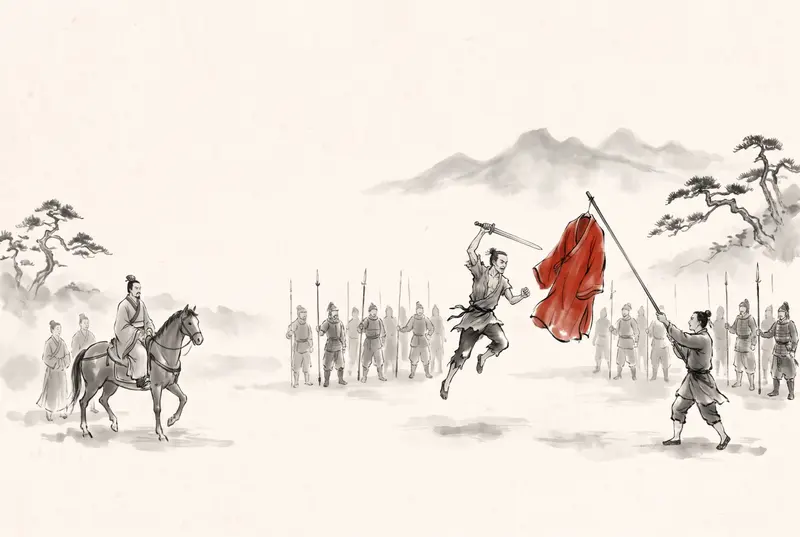
於是襄子大義之,乃使使持衣與豫讓。豫讓拔劍三躍而撃之,曰:「吾可以下報智伯矣!」遂伏劍自殺。死之日,趙國志士聞之,皆爲涕泣。
Kundoku (Japanese reading)
是に於いて襄子大いに之を義とし、乃ち使いをして衣を持ちて豫譲に与えしむ。豫譲剣を抜き三たび躍りて之を撃ちて曰く、「吾以て下りて智伯に報ずべし」と。遂に剣に伏して自殺す。死するの日、趙国の志士之を聞き、皆為に涕泣す。
Japanese
そこで襄子はその心意気に深く感じ入り、使いに衣を持たせて豫譲に与えた。豫譲は剣を抜き、三度跳び上がってその衣を斬りつけ、「これで地下の智伯に報告できる」と言った。そして剣の上に身を伏せて自ら命を絶った。その日、趙の国の志ある人々はこれを聞いて、みな涙を流した。
English
The viscount was deeply moved by his sense of honour, and had a messenger take his robe to Yu Rang. Yu Rang drew his sword, leapt three times and struck at it, saying: "Now I can go down and report to Zhi Bo!" Then he fell on his sword and died. On the day of his death, the men of purpose throughout Zhao heard of it, and all wept for him.
Notes (JA)
- 大義之: その義を大いにほめたたえる。
- 下報智伯: 地下(あの世)の智伯に報告する。
- 伏劍: 剣を立て、その上に身を伏せて死ぬ。
- 志士: 高い志を持つ人。
Notes (EN)
- Go down and report (下報): to report to Zhi Bo in the world below.
- Fell on his sword (伏劍): set the blade upright and threw himself on it.
- Men of purpose (志士): men of high ideals.
Word notes
- leap/lip/verb
to jump high or far
In the text: “leapt three times”
Similar words: jump — push off the ground · spring — jump quickly
Past tense: leapt or leaped.
- weep/wip/verb
to cry
In the text: “all wept for him”
Similar words: cry — shed tears · mourn — feel sad for someone who died
Past tense: wept.