Biographies · Vol. 127
The Biographies of the Diviners 日者列傳
The Higher the Way, the Safer 道高益安,勢高益危
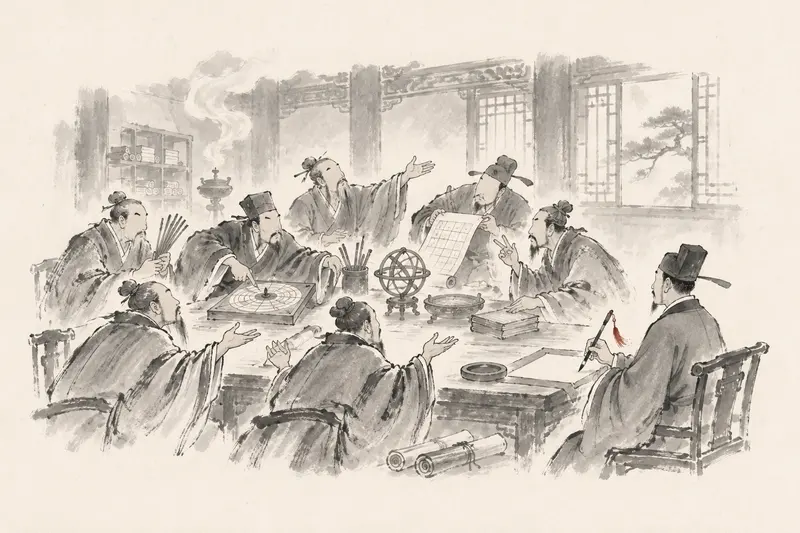
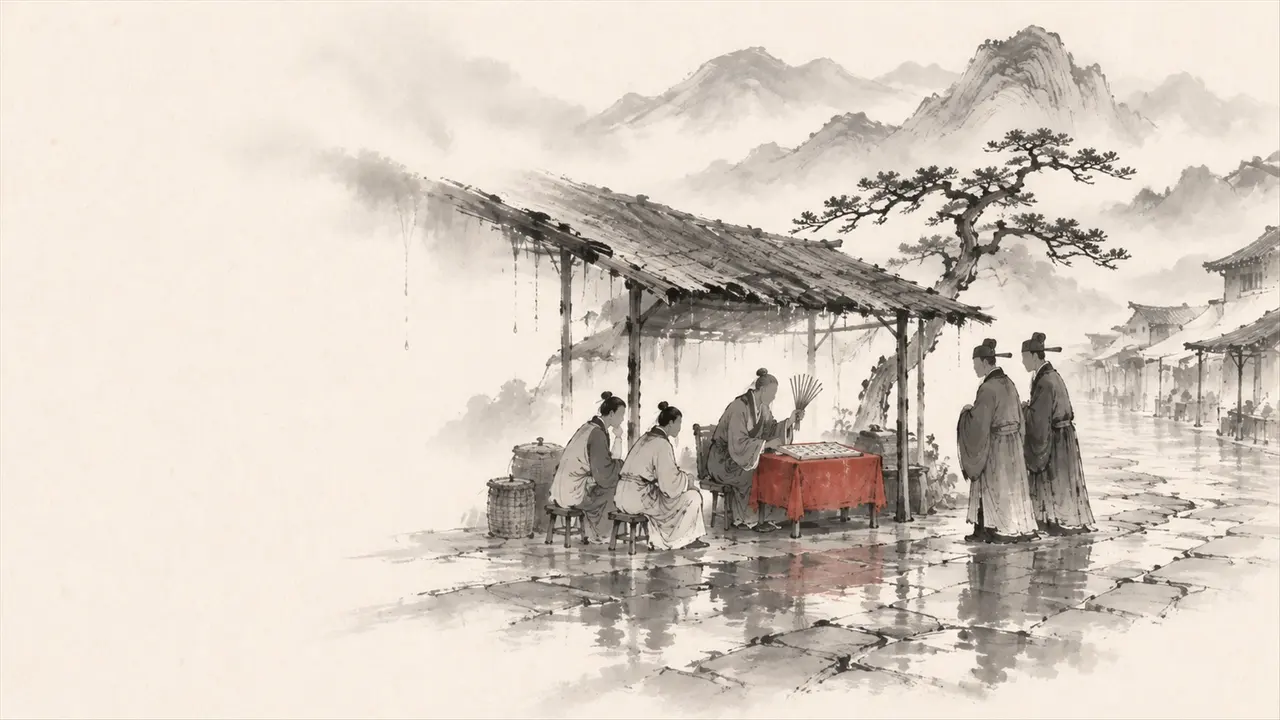
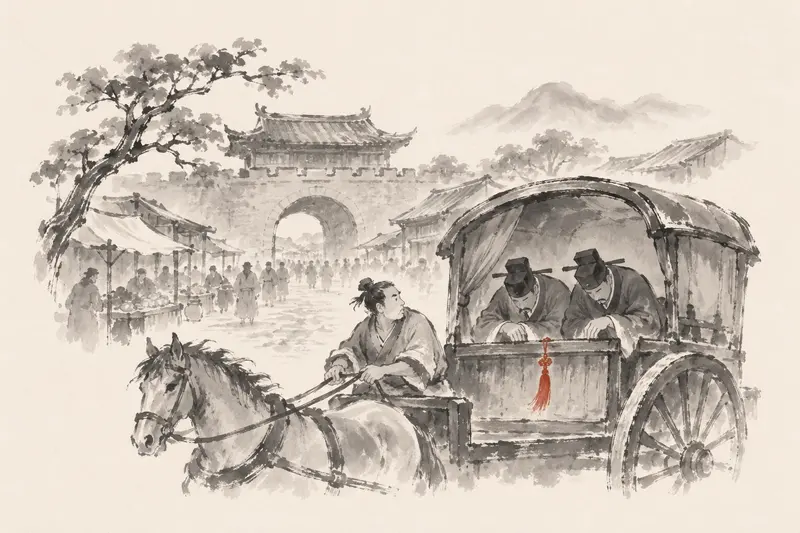
Biographies of the rizhe, diviners of lucky and unlucky days — though the only story told is that of Sima Jizhu of Chu, who read fortunes in the Eastern Market of Chang'an. One day after rain, Song Zhong, a palace grandee, and Jia Yi, an erudite, went to his stall, saying that the sages of old, if not at court, were to be found among diviners and doctors. Impressed by his talk, they still asked why he lived so low and worked at so dirty a trade. Sima Jizhu laughed till he held his belly, told them the officials scrambling for rank at court were robbers without swords, and argued that divination helps people and has both courtesy and virtue. The two were left speechless, and later sighed to each other that the higher one's Way, the safer, and the higher one's power, the more danger. Soon afterwards Song Zhong was punished and Jia Yi died of grief.
This page has the scene "The Higher the Way, the Safer" from this volume, not the whole volume.
Audio
The audio is synthetic speech.
Video
Passage 1
Original
自古受命而王,王者之興何嘗不以卜筮決於天命哉!其於周尤甚,及秦可見。代王之入,任於卜者。太卜之起,由漢興而有。司馬季主者,楚人也。卜於長安東市。
Kundoku (Japanese reading)
古より命を受けて王たるに、王者の興るや何ぞ嘗て卜筮を以て天命に決せざらんや。其の周に於けるや尤も甚だしく、秦に及びて見るべし。代王の入るや、卜者に任ず。太卜の起こるは、漢の興るに由りて有り。司馬季主は、楚人なり。長安の東市に卜す。
Japanese
昔から天命を受けて王となった者で、王が国を興すとき、占いによって天命を確かめなかったことがあっただろうか。周の時代にはとくにさかんで、秦の時代にもそれが見られる。代王(文帝)が都に入って皇帝となるときも、占い師にまかせた。太卜(占いをつかさどる役所)が始まったのは、漢が興ってからである。司馬季主は楚の人で、長安の東の市で占いをしていた。
English
Since ancient times, when men received the mandate and became kings, has there ever been a rising king who did not consult divination to settle the will of Heaven? This was most marked under Zhou, and can be seen under Qin as well. When the King of Dai came in to take the throne, he trusted to a diviner. The office of the Grand Diviner began with the rise of Han. Sima Jizhu was a man of Chu, who read fortunes in the Eastern Market of Chang'an.
Notes (JA)
- 日者: 日の吉凶を占う人。題は「日者」だが、本文は司馬季主の話だけである。
- 卜筮: 卜は亀の甲羅を焼いて、筮は筮竹を使って占うこと。
- 代王の入るや: 文帝は都に入る前に占わせ、「大横」という吉の兆しを得た(010-emperor-wen の章)。
- 原文は日者列伝の一部が失われ、のちに補われたものと考えられている。
Notes (EN)
- Diviners (日者): those who read the luck of days; despite the title, only Sima Jizhu's story is told.
- Divination (卜筮): bu by cracks in heated tortoise shell, shi by counting milfoil stalks.
- When the King of Dai came in: before entering the capital, the future Emperor Wen had his fortune read and got the lucky sign "Great Crosswise" (chapter 010).
- Part of this volume is thought to have been lost and later restored.
Word notes
- divination/ˌdɪvɪˈneɪʃən/noun
trying to learn the future from special signs
In the text: “who did not consult divination”
Similar words: fortune-telling — telling the future · augury — reading omens
- diviner/dɪˈvaɪnər/noun
a person who tries to tell the future
In the text: “he trusted to a diviner”
Similar words: fortune-teller — one who tells fortunes · soothsayer — an old word for a diviner
Passage 2
Original
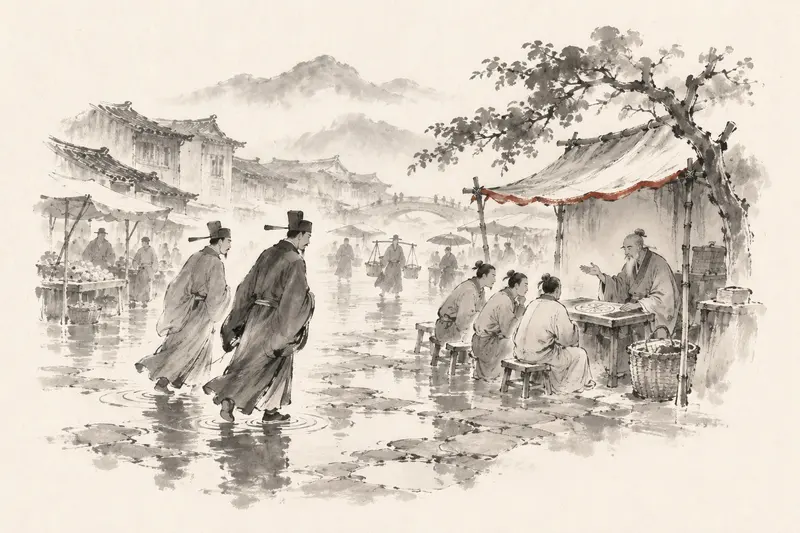
宋忠爲中大夫,賈誼爲博士,同日俱出洗沐,相從論議,誦易先王聖人之道術,究遍人情,相視而嘆。賈誼曰:「吾聞古之聖人,不居朝廷,必在卜醫之中。今吾已見三公九卿朝士大夫,皆可知矣。試之卜數中以觀采。」二人即同輿而之市,游於卜肆中。天新雨,道少人,司馬季主閒坐,弟子三四人侍,方辯天地之道,日月之運,陰陽吉凶之本。二大夫再拜謁。司馬季主視其狀貌,如類有知者,即禮之,使弟子延之坐。坐定,司馬季主復理前語,分別天地之終始,日月星辰之紀,差次仁義之際,列吉凶之符,語數千言,莫不順理。宋忠、賈誼瞿然而悟,獵纓正襟危坐,曰:「吾望先生之狀,聽先生之辭,小子竊觀於世,未嘗見也。今何居之卑,何行之汙?」
Kundoku (Japanese reading)
宋忠中大夫為り、賈誼博士為り。日を同じくして倶に出でて洗沐し、相従いて論議し、易・先王聖人の道術を誦し、人情を究め遍くし、相視て嘆ず。賈誼曰く、「吾聞く、古の聖人は、朝廷に居らざれば、必ず卜医の中に在りと。今吾已に三公九卿朝士大夫を見る。皆知るべし。試みに之を卜数の中に観采せん」と。二人即ち輿を同じくして市に之き、卜肆の中に游ぶ。天新たに雨ふり、道に人少なし。司馬季主閒坐し、弟子三四人侍し、方に天地の道、日月の運、陰陽吉凶の本を弁ず。二大夫再拝して謁す。司馬季主其の状貌を視るに、知有る者に類するが如し。即ち之を礼し、弟子をして之を延きて坐せしむ。坐定まり、司馬季主復た前語を理め、天地の終始、日月星辰の紀を分別し、仁義の際を差次し、吉凶の符を列ぬ。語ること数千言、理に順わざる莫し。宋忠・賈誼瞿然として悟り、纓を猟め襟を正して危坐して曰く、「吾先生の状を望み、先生の辞を聴くに、小子窃かに世を観るも、未だ嘗て見ざるなり。今何ぞ居の卑しく、何ぞ行いの汙れたる」と。
Japanese
宋忠は中大夫、賈誼は博士であった。同じ日に二人そろって休みをとり、一緒に議論をして、『易』や昔の王・聖人の教えを唱え、人の心のありさまをすみずみまで考えて、顔を見合わせてため息をついた。賈誼は言った。「昔の聖人は、朝廷にいなければ、必ず占い師や医者の中にいると聞く。わたしはもう三公・九卿や朝廷の役人たちを見たが、皆どの程度の人かわかってしまった。ためしに占い師の中を見て回ろう」。二人はすぐに同じ車に乗って市へ行き、占いの店を見て回った。雨が上がったばかりで、道には人が少なかった。司馬季主はのんびり座り、弟子が三、四人そばに控えていて、ちょうど天地の道理、太陽と月の運行、陰陽と吉凶のもとについて論じているところだった。二人の大夫は二度おじぎをして面会を求めた。司馬季主は二人の姿を見て、知恵のある人らしいと思い、礼をもって迎え、弟子に案内させて座らせた。座が落ち着くと、司馬季主はさきほどの話を整えなおし、天地の始まりと終わり、太陽・月・星の決まりを説き分け、仁と義の境目を順序立て、吉と凶のしるしを並べて語った。話は数千語に及び、すべて筋が通っていた。宋忠と賈誼ははっとして悟り、冠のひもを整え、襟を正して座りなおし、言った。「先生のお姿を拝見し、先生のお言葉をうかがうと、わたしどもがひそかに世の中を見てきたなかで、一度も出会ったことのない方です。それなのに、どうしてこれほど低い地位にいて、これほど汚れた仕事をしておられるのですか」。
English
Song Zhong was a palace grandee and Jia Yi an erudite. On the same day both went off on their bath leave, and together they discussed things, reciting the Book of Changes and the teachings of the former kings and sages, probing every corner of human nature, until they looked at each other and sighed. Jia Yi said: "I have heard that the sages of old, if they were not at court, were sure to be found among diviners and doctors. I have now seen the three dukes, the nine ministers and all the officers and grandees of the court, and I know them all for what they are. Let us try looking among the diviners." The two at once rode together to the market and wandered among the diviners' stalls. It had just rained and there were few people on the road. Sima Jizhu was sitting at his ease with three or four disciples in attendance, discoursing on the Way of Heaven and Earth, the motions of the sun and moon, and the roots of yin and yang, good fortune and bad. The two grandees bowed twice and asked to see him. Sima Jizhu, looking them over, thought they seemed men of understanding; he received them courteously and had a disciple show them to seats. When they were settled, he took up his earlier talk again, setting out the beginning and end of Heaven and Earth and the order of the sun, moon and stars, ranking the bounds of humaneness and duty, and listing the signs of good and ill fortune. He spoke several thousand words, and all of it followed reason. Song Zhong and Jia Yi were startled into understanding. They straightened their hat strings and collars, sat up straight and said: "Seeing how you look and hearing what you say, sir, we have never met your like in all our humble observation of the world. Why then do you live so low, and why is your work so dirty?"
Notes (JA)
- 賈誼: 若くして文帝に重んじられた学者(084-qu-yuan の章)。
- 洗沐: 役人の休日。五日に一度、髪を洗うための休みがあった。
- 三公九卿: 朝廷の最も高い位の大臣たち。
- 纓を猟め襟を正す: 冠のひもを整え、襟をただす。かしこまること。
Notes (EN)
- Jia Yi: the young scholar favoured by Emperor Wen (chapter 084).
- Bath leave (洗沐): officials' day off, given every five days to wash their hair.
- The three dukes and nine ministers: the highest officers of the court.
- Straightening hat strings and collars: tidying oneself out of respect.
Word notes
- erudite/ˈɛrʊdaɪt/noun
a learned scholar holding an official post
In the text: “Jia Yi an erudite”
Similar words: scholar — a learned person · academic — a university teacher
Usually an adjective meaning learned; in Han history it names an official post (博士).
- stall/stɔːl/noun
a small shop or table in a market
In the text: “wandered among the diviners' stalls”
Similar words: booth — a small stand · stand — a table or counter for selling
Passage 3
Original
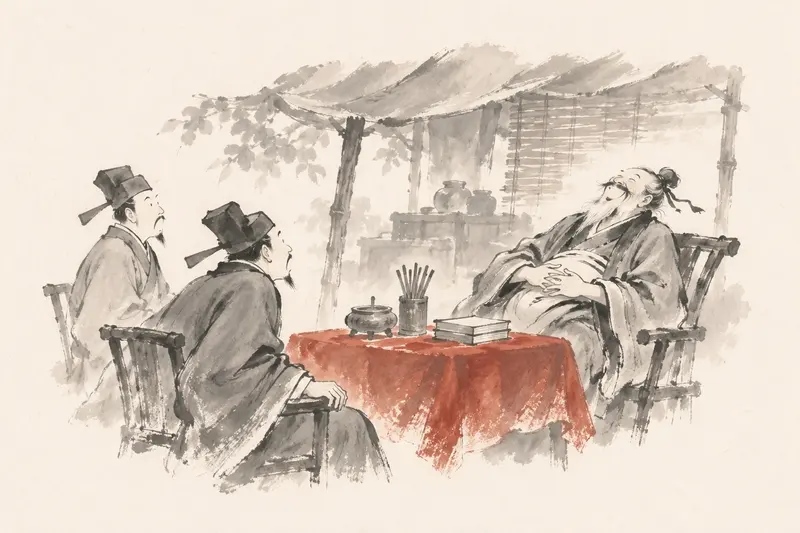
司馬季主捧腹大笑曰:「觀大夫類有道術者,今何言之陋也,何辭之野也!今夫子所賢者何也?所高者誰也?今何以卑汙長者?」二君曰:「尊官厚祿,世之所高也,賢才處之。今所處非其地,故謂之卑。言不信,行不驗,取不當,故謂之汙。夫卜筮者,世俗之所賤簡也。世皆言曰:『夫卜者多言誇嚴以得人情,虛高人祿命以説人志,擅言禍災以傷人心,矯言鬼神以盡人財,厚求拜謝以私於己。』此吾之所恥,故謂之卑汙也。」
Kundoku (Japanese reading)
司馬季主腹を捧げて大いに笑いて曰く、「大夫を観るに道術有る者に類す。今何ぞ言の陋しく、何ぞ辞の野なる。今夫子の賢とする所の者は何ぞや。高しとする所の者は誰ぞや。今何を以て長者を卑汙とする」と。二君曰く、「尊官厚禄は、世の高しとする所なり。賢才之に処る。今処る所其の地に非ず。故に之を卑しと謂う。言信ならず、行い験あらず、取ること当たらず。故に之を汙れたりと謂う。夫れ卜筮する者は、世俗の賤簡する所なり。世皆言いて曰く、『夫れ卜する者は多言誇厳にして以て人情を得、虚しく人の禄命を高くして以て人の志を説ばしめ、擅に禍災を言いて以て人の心を傷つけ、矯りて鬼神を言いて以て人の財を尽くし、厚く拝謝を求めて以て己に私す』と。此れ吾の恥ずる所なり。故に之を卑汙と謂うなり」と。
Japanese
司馬季主は腹を抱えて大笑いして言った。「お二人を見ると、道理をわきまえた方のようなのに、どうしてそんなに見識の狭いことを言い、そんなに粗野な言葉を使われるのか。いったい、あなたがたが優れていると思うのは何で、立派だと思うのは誰なのか。どうして長者を、低い、汚れているなどと言うのか」。二人は言った。「高い官職と多い俸禄は、世の人が立派だと思うもので、才能のある人がそこにつくものです。いまあなたがいるのは、ふさわしい場所ではありません。だから低いと言ったのです。言うことが当たらず、行いに効き目がなく、取るものが見合っていない。だから汚れていると言ったのです。占い師は、世の人がいやしんで見下すものです。世の人は皆こう言います。『占い師はおおげさなことを言って人の気を引き、根拠もなく人の運を高く言って喜ばせ、勝手に災いを言い立てて人を不安にし、鬼神のことをでっちあげて人の財産を使い果たさせ、お礼をたくさん求めて自分のふところに入れる』。わたしたちはそれを恥ずかしいことと思うので、低くて汚れていると言ったのです」。
English
Sima Jizhu laughed until he held his belly, and said: "You look like men who have some grasp of the Way, gentlemen; why do you speak so meanly and so crudely? What is it that you count as worthy? Whom do you hold in esteem? Why do you call an elder low and dirty?" The two gentlemen said: "High office and rich salaries are what the world esteems, and men of worth and talent hold them. The place you hold is not a fitting one, so we call it low. Your words are not to be trusted, your deeds bring no results, and what you take is more than you deserve, so we call it dirty. Diviners are despised and slighted by the common run of people. Everyone says: 'Diviners talk big and grand to win people over, make empty promises of high fortune to please them, cry disaster at will to frighten them, invent tales of ghosts and spirits to drain their wealth, and demand heavy thanks to line their own pockets.' That is what we would be ashamed of, and so we call it low and dirty."
Notes (JA)
- 腹を捧げて大いに笑う: 腹を抱えて大笑いする。「捧腹絶倒」のもとになった言葉。
- 禄命: 生まれつきの運命や、出世の見こみ。
Notes (EN)
- Laughing till he held his belly (捧腹大笑): the source of the idiom for helpless laughter.
- Fortune (祿命): one's destined lot and prospects of rank.
Idioms from this passage: Holding one's belly with laughter 捧腹絶倒
Word notes
- crudely/ˈkruːdli/adverb
in a rough or rude way
In the text: “so meanly and so crudely”
Similar words: rudely — impolitely · coarsely — roughly
- despise/dɪˈspaɪz/verb
to dislike someone and think them worthless
In the text: “Diviners are despised”
Similar words: scorn — look down on · look down on — think less of
Passage 4
Original
司馬季主曰:「公且安坐。公見夫被髪童子乎?日月照之則行,不照則止,問之日月疵瑕吉凶,則不能理。由是觀之,能知別賢與不肖者寡矣。「賢之行也,直道以正諫,三諫不聽則退。其譽人也不望其報,惡人也不顧其怨,以便國家利眾爲務。故官非其任不處也,祿非其功不受也;見人不正,雖貴不敬也;見人有污,雖尊不下也;得不爲喜,去不爲恨;非其罪也,雖累辱而不愧也。
Kundoku (Japanese reading)
司馬季主曰く、「公且く安坐せよ。公夫の被髪の童子を見るか。日月之を照らせば則ち行き、照らさざれば則ち止まる。之に日月の疵瑕吉凶を問えば、則ち理むること能わず。是に由りて之を観れば、能く賢と不肖とを知り別つ者は寡なし。賢の行いや、道を直くして以て正諫し、三たび諫めて聴かれざれば則ち退く。其の人を誉むるや其の報いを望まず、人を悪むや其の怨みを顧みず、国家に便にし衆を利するを以て務めと為す。故に官其の任に非ざれば処らず、禄其の功に非ざれば受けず。人の正しからざるを見れば、貴しと雖も敬せず。人の汚れ有るを見れば、尊しと雖も下らず。得るも喜びと為さず、去るも恨みと為さず。其の罪に非ざれば、累辱せらると雖も愧じず。
Japanese
司馬季主は言った。「まあ、落ち着いてお座りなさい。あなたがたは、髪をたらした子どもを見たことがあるでしょう。太陽や月が照らせば歩き、照らさなければ止まります。けれども、太陽や月の欠けやしみ、吉凶についてたずねても、説明はできません。このことから見ても、賢い人と愚かな人を見分けられる者は少ないのです。賢い人の行いとは、こういうものです。道をまっすぐに守って正しく君主をいさめ、三度いさめても聞かれなければ身を引く。人をほめても見返りを望まず、人を憎んでもその恨みを気にせず、国のためになり、多くの人の役に立つことを務めとする。だから、自分に向かない官職にはつかず、手柄に見合わない俸禄は受け取らない。正しくない人を見れば、身分が高くても敬わず、汚れた人を見れば、位が高くてもへりくだらない。位を得ても喜ばず、去っても恨まない。自分の罪でなければ、何度辱められても恥じない。
English
Sima Jizhu said: "Sit easy for a moment, gentlemen. Have you seen a little child with his hair hanging loose? When the sun or moon shines on him he walks, and when it does not he stops; but ask him about the blemishes of the sun and moon, or what is lucky and unlucky, and he cannot explain. From this you can see how few can tell the worthy from the unworthy. The conduct of a worthy man is this: he keeps to the straight Way and remonstrates rightly, and if after three remonstrances he is not heeded, he withdraws. When he praises others he hopes for no return; when he condemns them he does not care for their resentment; he makes it his business to serve the state and benefit the people. So he will not hold an office he is not fit for, nor take a salary he has not earned. When he sees a man who is not upright, he does not respect him, however noble; when he sees a man who is tainted, he does not defer to him, however high. Gaining office does not make him glad, nor losing it bitter. If he is not at fault, he is not ashamed though he be disgraced again and again.
Notes (JA)
- 被髪の童子: 髪をたらした幼い子ども。ものの道理がわからない者のたとえ。
- 三たび諫めて聴かれざれば則ち退く: 儒家の考え方で、仕える者の心得とされた。
Notes (EN)
- A child with loose hair (被髮童子): a figure for someone who cannot grasp the reasons of things.
- Withdrawing after three remonstrances: a Confucian rule for those in service.
Word notes
- remonstrate/ˈrɛmənstreɪt/verb
to argue against what someone is doing
In the text: “remonstrates rightly”
Similar words: protest — object strongly · object — say you disagree
- disgrace/dɪsˈɡreɪs/verb
to bring shame on someone
In the text: “though he be disgraced again and again”
Similar words: shame — make ashamed · humiliate — make someone feel foolish
Passage 5
Original
「今公所謂賢者,皆可爲羞矣。卑疵而前,孅趨而言;相引以勢,相導以利;比周賓正,以求尊譽,以受公奉;事私利,枉主法,獵農民;以官爲威,以法爲機,求利逆暴:譬無異於操白刃劫人者也。初試官時,倍力爲巧詐,飾虛功執空文以罔主上,用居上爲右;試官不讓賢陳功,見偽增實,以無爲有,以少爲多,以求便勢尊位;食飲驅馳,從姬歌兒,不顧於親,犯法害民,虛公家:此夫爲盜不操矛弧者也,攻而不用弦刃者也,欺父母未有罪而弒君未伐者也。何以爲高賢才乎?「盜賊發不能禁,夷貊不服不能攝,姦邪起不能塞,官秏亂不能治,四時不和不能調,歳穀不孰不能適。才賢不爲,是不忠也;才不賢而讬官位,利上奉,妨賢者處,是竊位也;有人者進,有財者禮,是偽也。子獨不見鴟梟之與鳳皇翔乎?蘭芷芎藭棄於廣野,蒿蕭成林,使君子退而不顯眾,公等是也。
Kundoku (Japanese reading)
今公の所謂賢者は、皆羞と為すべし。卑疵して前み、孅趨して言う。相引くに勢を以てし、相導くに利を以てす。比周して正を賓け、以て尊誉を求め、以て公奉を受く。私利を事とし、主法を枉げ、農民を猟る。官を以て威と為し、法を以て機と為し、利を求めて逆暴なり。譬うれば白刃を操りて人を劫かす者に異なる無きなり。初めて官を試むる時、力を倍して巧詐を為し、虚功を飾り空文を執りて以て主上を罔い、上に居るを用て右と為す。官を試むるに賢に譲りて功を陳べず、偽りを見ては実を増し、無を以て有と為し、少を以て多と為し、以て便勢尊位を求む。食飲駆馳し、姫歌児を従え、親を顧みず、法を犯して民を害し、公家を虚しくす。此れ夫の盗を為すに矛弧を操らざる者なり、攻むるに弦刃を用いざる者なり、父母を欺くも未だ罪有らず、君を弑するも未だ伐たれざる者なり。何を以て高しとし賢才と為すや。盗賊発するも禁ずること能わず、夷貊服せざるも摂むること能わず、姦邪起こるも塞ぐこと能わず、官秏乱するも治むること能わず、四時和せざるも調うること能わず、歳穀孰せざるも適うること能わず。才賢にして為さざるは、是れ不忠なり。才賢ならずして官位に託し、上奉を利とし、賢者の処を妨ぐるは、是れ位を窃むなり。人有る者は進め、財有る者は礼するは、是れ偽りなり。子独り鴟梟の鳳皇と翔るを見ざるか。蘭芷芎藭は広野に棄てられ、蒿蕭は林を成す。君子をして退きて衆に顕われざらしむるは、公等是れなり。
Japanese
ところが、あなたがたの言う賢い人は、皆恥ずべき者ばかりです。卑屈に身をかがめて進み出て、小走りにへつらって物を言う。権勢で互いに引き立てあい、利益で互いに誘いあう。徒党を組んで正しい人を退け、そうして名誉を求め、国の俸禄を受け取る。自分の利益ばかり追い、君主の法をねじまげ、農民から獲物のように奪い取る。官職を笠に着て威張り、法をわなのように使い、利益を求めて道に背き乱暴をする。たとえるなら、白い刃を持って人を脅す者と変わりません。はじめて官職についたときは、力を倍にして悪知恵を働かせ、ありもしない手柄を飾りたて、中身のない書類で君主をだまし、上の位につくことを最上とする。官職についても賢い人に譲らず、自分の手柄を言い立て、偽りを見ては事実を水増しし、無いものを有ると言い、少ないものを多いと言って、都合のよい権勢と高い位を求める。飲み食いし、馬を走らせ、女や歌い手を連れ歩き、親をかえりみず、法を犯して民を苦しめ、国の蔵を空にする。これは、矛や弓を持たない盗賊、弦も刃も使わずに攻める者、親をだましながらまだ罰を受けず、君主を殺しながらまだ討たれていない者です。どうしてそんな者を立派だとし、才能があると言えるのでしょう。盗賊が出ても取り締まれず、異民族が従わなくても抑えられず、悪事が起こってもふさげず、役所が乱れても治められず、四季が乱れても整えられず、穀物が実らなくても手を打てない。才能があるのに何もしないのは不忠です。才能もないのに官位にしがみつき、俸禄を得て、賢い人の席をふさぐのは、位を盗むことです。後ろ盾のある者を推し、財産のある者を厚くもてなすのは、偽りです。あなたがたは、フクロウが鳳凰と並んで飛んでいるのを見たことがないのですか。蘭やよろい草などの香草は広い野に捨てられ、よもぎが林のように茂っている。君子を退かせて、世に知られないようにしているのは、あなたがたのような人たちなのです。
English
"But those you call worthy are all men to be ashamed of. They creep forward bowing and scraping, and speak with mincing steps. They draw one another up by influence and lead one another on by gain. They band together to push aside the upright, so as to win honour and draw the state's pay. They pursue private profit, bend their lord's laws and hunt the farmers like game. They make office a weapon and law a trap, and seek gain by outrage and violence — no different from men who hold up travellers at the point of a naked blade. When they first try out in office, they redouble their cunning, dress up false merits and hold up empty documents to deceive the ruler, and count it best to sit above others. Once in office they never yield to the worthy but trumpet their own deeds; they puff up the false into the real, make nothing into something and little into much, all to win convenient power and high rank. They feast and drink and gallop about, with concubines and singing boys in their train; they neglect their parents, break the law, harm the people and empty the public coffers. They are robbers who carry no spear or bow, raiders who use no bowstring or blade; they deceive their parents and are not yet punished, they murder their lords and are not yet brought down. How can you call them high, or men of worth and talent? When robbers rise they cannot stop them; when the barbarians will not submit they cannot hold them; when wickedness springs up they cannot block it; when the offices fall into waste and disorder they cannot set them right; when the seasons are out of joint they cannot bring them into tune; when the harvest fails they cannot make it good. To have talent and do nothing is disloyalty. To have no talent yet cling to office, take the ruler's pay and block the place of a worthy man is to steal one's position. To push forward those with backers and honour those with money is hypocrisy. Have you never seen owls flying alongside the phoenix? Orchids and angelica are thrown out on the open plain, while mugwort and wormwood grow into forests. It is men like you who make gentlemen withdraw and stay unknown to the world.
Notes (JA)
- 比周: 私的な仲間を組むこと。
- 鴟梟と鳳皇: フクロウ(悪い鳥とされた)と鳳凰(めでたい鳥)。悪人と賢人が同じ場所にいることのたとえ。
- 蘭芷芎藭: 香りのよい草。蒿蕭(よもぎ)と対にして、賢人と小人をたとえる。屈原の詩にもよく出る表現。
Notes (EN)
- Banding together (比周): forming private cliques.
- Owls and the phoenix: birds of ill omen and of good omen, a figure for wicked men mingling with the worthy.
- Orchids and angelica against mugwort and wormwood: fragrant and rank herbs, standing for gentlemen and petty men, a pairing familiar from Qu Yuan's poems.
Word notes
- cunning/ˈkʌnɪŋ/noun
clever but dishonest skill
In the text: “they redouble their cunning”
Similar words: craft — clever skill, often sly · guile — sly intelligence
- hypocrisy/hɪˈpɒkrəsi/noun
pretending to have good qualities you do not have
In the text: “is hypocrisy”
Similar words: pretence — a false show · falseness — not being sincere
Passage 6
Original
「述而不作,君子義也。今夫卜者,必法天地,象四時,順於仁義,分策定卦,旋式正棋,然後言天地之利害,事之成敗。昔先王之定國家,必先龜策日月,而後乃敢代;正時日,乃后入家;產子必先占吉凶,后乃有之。自伏羲作八卦,周文王演三百八十四爻而天下治。越王句踐放文王八卦以破敵國,霸天下。由是言之,卜筮有何負哉!「且夫卜筮者,埽除設坐,正其冠帶,然後乃言事,此有禮也。言而鬼神或以饗,忠臣以事其上,孝子以養其親,慈父以畜其子,此有德者也。而以義置數十百錢,病者或以愈,且死或以生,患或以免,事或以成,嫁子娶婦或以養生:此之爲德,豈直數十百錢哉!此夫老子所謂『上德不德,是以有德』。今夫卜筮者利大而謝少,老子之云豈異於是乎?
Kundoku (Japanese reading)
述べて作らざるは、君子の義なり。今夫れ卜する者は、必ず天地に法り、四時に象り、仁義に順い、策を分かちて卦を定め、式を旋らして棋を正し、然る後に天地の利害、事の成敗を言う。昔先王の国家を定むるや、必ず先ず亀策日月にして、而る後に乃ち敢えて代わる。時日を正して、乃ち後に家に入る。子を産めば必ず先ず吉凶を占い、後に乃ち之を有つ。伏羲の八卦を作りしより、周の文王三百八十四爻を演べて天下治まる。越王句践文王の八卦に放いて以て敵国を破り、天下に霸たり。是に由りて之を言えば、卜筮何の負うこと有らんや。且つ夫れ卜筮する者は、埽除して坐を設け、其の冠帯を正し、然る後に乃ち事を言う。此れ礼有るなり。言いて鬼神或いは以て饗け、忠臣以て其の上に事え、孝子以て其の親を養い、慈父以て其の子を畜う。此れ徳有る者なり。而して義を以て数十百銭を置けば、病者或いは以て愈え、且に死なんとするも或いは以て生き、患い或いは以て免れ、事或いは以て成り、子を嫁し婦を娶るも或いは以て生を養う。此の徳為る、豈に直だ数十百銭のみならんや。此れ夫の老子の所謂『上徳は徳とせず、是を以て徳有り』なり。今夫れ卜筮する者は利大にして謝少なし。老子の云う豈に是に異ならんや。
Japanese
「昔の教えを伝えて、勝手に作らないのが、君子の道です。占い師は、必ず天地にのっとり、四季をかたどり、仁義に従い、筮竹を分けて卦を定め、占い盤を回して駒を正し、そのうえで天地の利と害、物事の成功と失敗を言うのです。昔の王が国を定めるときには、必ずまず亀の甲羅と筮竹で日を占ってから、思い切って前の王朝に代わりました。日取りを正してから、家に入りました。子が生まれれば、まず吉凶を占ってから育てました。伏羲が八卦を作ってから、周の文王がそれを三百八十四の爻に広げて、天下は治まりました。越王句践は文王の八卦にならって敵国を破り、天下の覇者となりました。こうして見れば、占いにどんな恥ずべきところがあるでしょう。それに占い師は、掃除をして座を整え、冠と帯を正してから、ようやく話を始めます。これは礼があるということです。占いのことばによって、鬼神がお供えを受けることもあり、忠臣が君主に仕え、孝行な子が親を養い、慈しみ深い父が子を育てることもあります。これは徳があるということです。しかも、義理として数十、百銭を置いていくだけで、病人が治ることもあり、死にかけた人が生き返ることもあり、災難をまぬかれることもあり、仕事がうまくいくこともあり、嫁をやり嫁をもらって暮らしが立つこともあります。この徳が、数十、百銭くらいで済むものでしょうか。これこそ老子の言う『最高の徳は、徳を徳と意識しない。だから徳があるのだ』ということです。占い師は、人に与える利益は大きいのに、受け取るお礼は少ない。老子の言葉と、どこが違うでしょう。
English
"To pass on and not invent is the duty of a gentleman. A diviner always takes Heaven and Earth as his model, follows the pattern of the four seasons and keeps to humaneness and duty; he divides the stalks to fix the hexagram and turns the divining board to set the pieces right, and only then does he speak of the gains and harms of Heaven and Earth and the success or failure of affairs. When the former kings founded their states, they always consulted the tortoise and the stalks about the days and months before they dared to replace the old dynasty; they fixed the right day before they moved into a house; when a child was born they first divined its fortune before they raised it. Since Fu Xi made the eight trigrams and King Wen of Zhou unfolded them into the three hundred and eighty-four lines, the realm has been well governed. Goujian, King of Yue, followed King Wen's trigrams to crush an enemy state and become overlord of the realm. Seen this way, what shame is there in divination? Moreover a diviner sweeps the floor and sets out the seats, straightens his cap and sash, and only then speaks of the matter: that is courtesy. Through his words the ghosts and spirits may receive their offerings, loyal ministers serve their lords, filial sons care for their parents, and loving fathers raise their sons: that is virtue. And for a few dozen or a hundred cash, left out of good faith, the sick may recover, the dying may live, disasters may be avoided, undertakings may succeed, and daughters married and wives taken may find a living. Is virtue like this worth only a few dozen or a hundred cash? This is what Laozi meant by 'The highest virtue does not count itself virtue; that is why it has virtue.' A diviner gives great benefit and takes little thanks — how is that different from what Laozi said?
Notes (JA)
- 述べて作らず: 『論語』述而篇の孔子の言葉。
- 八卦・三百八十四爻: 『易』の記号。伏羲が八卦を作り、文王がそれを六十四卦三百八十四爻に広げたとされる。
- 「上徳は徳とせず」: 『老子』第38章の言葉。
Notes (EN)
- "To pass on and not invent": Confucius's words in the Analects (Shu Er).
- Eight trigrams and 384 lines: the figures of the Book of Changes; Fu Xi is said to have made the trigrams and King Wen to have expanded them into 64 hexagrams of 384 lines.
- "The highest virtue does not count itself virtue": from chapter 38 of the Laozi.
Word notes
- filial/ˈfɪliəl/adjective
of a son or daughter, especially in respect for parents
In the text: “filial sons care for their parents”
Similar words: dutiful — doing one's duty · devoted — loving and loyal
- benefit/ˈbɛnɪfɪt/noun
something good that helps you
In the text: “A diviner gives great benefit”
Similar words: advantage — a helpful thing · good — what helps
Passage 7
Original
「莊子曰:『君子內無饑寒之患,外無劫奪之憂,居上而敬,居下不爲害,君子之道也。』今夫卜筮者之爲業也,積之無委聚,藏之不用府庫,徙之不用輜車,負裝之不重,止而用之無盡索之時。持不盡索之物,游於無窮之世,雖莊氏之行未能增於是也,子何故而云不可卜哉?天不足西北,星辰西北移;地不足東南,以海爲池;日中必移,月滿必虧;先王之道,乍存乍亡。公責卜者言必信,不亦惑乎!「公見夫談士辯人乎?慮事定計,必是人也,然不能以一言説人主意,故言必稱先王,語必道上古;慮事定計,飾先王之成功,語其敗害,以恐喜人主之志,以求其欲。多言誇嚴,莫大於此矣。然欲彊國成功,盡忠於上,非此不立。今夫卜者,導惑教愚也。夫愚惑之人,豈能以一言而知之哉!言不厭多。「故騏驥不能與罷驢爲駟,而鳳皇不與燕雀爲群,而賢者亦不與不肖者同列。故君子處卑隱以辟眾,自匿以辟倫,微見德順以除群害,以明天性,助上養下,多其功利,不求尊譽。公之等喁喁者也,何知長者之道乎!」
Kundoku (Japanese reading)
荘子曰く、『君子は内に饑寒の患い無く、外に劫奪の憂い無く、上に居りて敬し、下に居りて害を為さず。君子の道なり』と。今夫れ卜筮する者の業を為すや、之を積むも委聚無く、之を蔵するも府庫を用いず、之を徙すも輜車を用いず、之を負装するも重からず、止まりて之を用うるも尽索の時無し。尽索せざるの物を持ちて、無窮の世に游ぶ。荘氏の行いと雖も未だ是に増すこと能わざるなり。子何の故にか卜すべからずと云うや。天は西北に足らず、星辰西北に移る。地は東南に足らず、海を以て池と為す。日中すれば必ず移り、月満つれば必ず虧く。先王の道も、乍ち存し乍ち亡ぶ。公卜者に言の必ず信ならんことを責むるは、亦た惑いならずや。公夫の談士辯人を見るか。事を慮り計を定むるは、必ず是の人なり。然れども一言を以て人主の意を説ばしむること能わず。故に言えば必ず先王を称し、語れば必ず上古を道う。事を慮り計を定むるに、先王の成功を飾り、其の敗害を語り、以て人主の志を恐喜せしめ、以て其の欲を求む。多言誇厳なる、此れより大なるは莫し。然れども国を彊くし功を成し、忠を上に尽くさんと欲すれば、此に非ざれば立たず。今夫れ卜する者は、惑えるを導き愚かなるを教うるなり。夫れ愚惑の人、豈に能く一言を以てして之を知らんや。言は多きを厭わず。故に騏驥は罷驢と駟と為ること能わず、而して鳳皇は燕雀と群を為さず、而して賢者も亦た不肖者と列を同じくせず。故に君子は卑隠に処りて以て衆を辟け、自ら匿れて以て倫を辟け、微かに徳順を見して以て群害を除き、以て天性を明らかにし、上を助け下を養い、其の功利を多くして、尊誉を求めず。公の等は喁喁たる者なり。何ぞ長者の道を知らんや」と。
Japanese
「荘子は『君子は内に飢えや寒さの心配がなく、外に奪われる心配がなく、上にいては慎み深く、下にいては害をなさない。これが君子の道だ』と言いました。占い師の仕事というものは、積みあげても山にはならず、しまっておくのに蔵はいらず、運ぶのに荷車もいらず、背負っても重くなく、とどまって使っても尽きることがない。尽きることのないものを持って、果てしない世の中を自由に生きる。荘子の生き方でさえ、これ以上ではないでしょう。それなのに、なぜ占いをしてはいけないと言うのですか。天は西北が足りないので、星は西北へ移っていく。地は東南が足りないので、海が池となっている。太陽は真上に来れば必ず傾き、月は満ちれば必ず欠ける。昔の王の道でさえ、行われたり、すたれたりする。あなたがたが占い師に、言うことが必ず当たるよう求めるのは、心得違いではありませんか。弁舌の立つ遊説の士を見たことがあるでしょう。物事を考え、はかりごとを決めるのは、必ずこういう人たちです。けれども、一言で君主の心を動かすことはできない。だから話せば必ず昔の王を持ち出し、語れば必ず大昔のことを言う。はかりごとを立てるときは、昔の王の成功を飾りたて、失敗の害を語って、君主を怖がらせたり喜ばせたりして、自分の望みをかなえようとする。おおげさなことを言うのに、これ以上のものはありません。それでも、国を強くし、手柄を立て、君主に忠をつくそうとすれば、これでなければできないのです。占い師は、迷っている人を導き、愚かな人を教えるのです。愚かで迷っている人が、一言でわかるはずがありません。言葉は多くてもかまわないのです。だから、駿馬は疲れたロバと並んで四頭立ての馬車を引くことはできず、鳳凰はツバメやスズメと群れをつくらず、賢い人も愚かな人と同じ列には並ばない。だから君子は、低い地位に身を隠して人々を避け、自分を隠して仲間を避け、ひそかに徳を示して多くの害を取り除き、人の生まれ持った性を明らかにし、上の人を助け下の人を養い、多くの利益をもたらしながら、名誉を求めないのです。あなたがたは、口をぱくぱくさせて人に合わせるだけの人です。長者の道など、わかるはずがありません」。
English
"Zhuangzi said: 'The gentleman suffers no hunger or cold within and fears no robbery without; above others he is respectful, below them he does no harm. That is the way of the gentleman.' Now the diviner's trade is such that, pile it up as you will, it makes no heap; to store it needs no storehouse, to move it needs no baggage cart; carried on the back it weighs nothing; and when you stop and use it, it never runs out. Holding a thing that never runs out, he roams a world without end. Not even Zhuangzi's way of life could add to this. Why then do you say one should not divine? Heaven falls short in the northwest, so the stars move to the northwest; Earth falls short in the southeast, so the sea is its pool. When the sun reaches noon it must decline; when the moon is full it must wane; even the Way of the former kings now flourishes, now fails. Is it not muddled of you to demand that a diviner's words must always come true? Have you seen the talkers and debaters? Those who weigh affairs and settle plans are always men like these. Yet they cannot move a ruler's mind with a single word, so whenever they speak they invoke the former kings, and whenever they talk they bring up high antiquity; when they weigh affairs and settle plans, they gild the successes of the former kings and tell of their failures, to frighten or please the ruler and get what they want. Nothing talks bigger and grander than this. Yet if one wants to make a state strong, achieve great things and serve one's lord with full loyalty, nothing else will do. Now the diviner guides the bewildered and teaches the foolish. How can a foolish, bewildered man understand from a single word? There can never be too many words. So a thoroughbred cannot be yoked in a team with a worn-out donkey, the phoenix does not flock with swallows and sparrows, and the worthy do not stand in the same rank as the unworthy. That is why the gentleman lives low and hidden to avoid the crowd, conceals himself to avoid his peers, quietly shows his virtue to rid the people of their troubles and bring their true nature to light, helps those above and nourishes those below, does much good and asks no honour. You gentlemen are mere babblers, agreeing with whatever is said. What do you know of the way of an elder?"
Notes (JA)
- 天は西北に足らず: 天の柱が折れて天が西北に傾き、地が東南に沈んだという古い言い伝えによる。
- 騏驥: 一日に千里を走る名馬。罷驢は疲れたロバ。
- 喁喁: 魚が口をぱくぱくさせるようす。人の言うことに口先だけで合わせること。
Notes (EN)
- Heaven falls short in the northwest: from the old legend that a pillar of Heaven broke, tilting the sky northwest and sinking the earth southeast.
- A thoroughbred (騏驥): a horse that runs a thousand li a day; set against a worn-out donkey (罷驢).
- Babblers (喁喁): like fish opening and closing their mouths, echoing whatever others say.
Word notes
- thoroughbred/ˈθʌrəbrɛd/noun
a horse of very good breeding
In the text: “a thoroughbred cannot be yoked”
Similar words: racehorse — a horse bred for racing · steed — a fine horse; literary
- bewildered/bɪˈwɪldərd/adjective
very confused
In the text: “guides the bewildered”
Similar words: puzzled — unable to understand · baffled — completely confused
Passage 8
Original
宋忠、賈誼忽而自失,芒乎無色,悵然噤口不能言。於是攝衣而起,再拜而辭。行洋洋也,出門僅能自上車,伏軾低頭,卒不能出氣。居三日,宋忠見賈誼於殿門外,乃相引屏語相謂自嘆曰:「道高益安,勢高益危。居赫赫之勢,失身且有日矣。夫卜而有不審,不見奪糈;爲人主計而不審,身無所處。此相去遠矣,猶天冠地屨也。此老子之所謂『無名者萬物之始』也。天地曠曠,物之熙熙,或安或危,莫知居之。我與若,何足預彼哉!彼久而愈安,雖曾氏之義未有以異也。」久之,宋忠使匈奴,不至而還,抵罪。而賈誼爲梁懷王傅,王墮馬薨,誼不食,毒恨而死。此務華絶根者也。
Kundoku (Japanese reading)
宋忠・賈誼忽として自失し、芒乎として色無く、悵然として口を噤みて言うこと能わず。是に於いて衣を摂りて起ち、再拝して辞す。行くこと洋洋たり。門を出でて僅かに能く自ら車に上り、軾に伏して頭を低れ、卒に気を出だすこと能わず。居ること三日、宋忠賈誼に殿門の外に見え、乃ち相引きて屏語し、相謂いて自ら嘆じて曰く、「道高ければ益々安く、勢い高ければ益々危うし。赫赫たるの勢に居れば、身を失うこと且に日有らんとす。夫れ卜して審らかならざる有るも、糈を奪われず。人主の為に計りて審らかならざれば、身処る所無し。此れ相去ること遠し。猶お天冠地屨のごときなり。此れ老子の所謂『名無きは万物の始め』なり。天地は曠曠として、物の熙熙たる、或いは安く或いは危うし。之に居るを知る莫し。我と若と、何ぞ彼に預かるに足らんや。彼は久しくして愈々安し。曾氏の義と雖も未だ以て異なる有らざるなり」と。之を久しくして、宋忠匈奴に使いし、至らずして還り、罪に抵る。而して賈誼梁の懐王の傅と為り、王馬より墮ちて薨ず。誼食らわず、毒恨して死す。此れ華を務めて根を絶つ者なり。
Japanese
宋忠と賈誼はぼうぜんとして我を失い、顔色もなく、がっかりして口をつぐみ、何も言えなかった。そこで衣を整えて立ち上がり、二度おじぎをして別れを告げた。足取りはふらふらとして、門を出ると、やっとのことで自分で車に乗り、車の前の横木に伏して頭をたれ、最後まで息もつけないほどだった。三日たって、宋忠は宮殿の門の外で賈誼に会い、二人で人のいないところへ行って、ひそひそと話し、ため息をついて言った。「道が高ければますます安らかで、権勢が高ければますます危うい。輝かしい権勢の座にいれば、身を滅ぼす日もそう遠くはない。占いが当たらなくても、占い師はお供えの米を取り上げられはしない。だが君主のためにはかりごとをして当たらなければ、身の置きどころがなくなる。この違いは大きい。天にかぶる冠と、地にはく履物ほども違う。これこそ老子の言う『名のないものが万物の始まりだ』ということだ。天地は広々として、万物はにぎやかに生きているが、安らかなものもあれば危ういものもあり、どこに身を置けばよいか誰にもわからない。わたしもあなたも、あの人と肩を並べることなどできない。あの人は長くいればいるほど、ますます安らかになる。曾子の正しい道でさえ、これと変わりはしない」。しばらくして、宋忠は匈奴への使いに出たが、たどり着けずに帰ってきて、罪に問われた。賈誼は梁の懐王の守り役となったが、懐王が馬から落ちて亡くなると、賈誼は食事をとらず、悲しみと悔しさのうちに死んだ。これは、花ばかりを求めて根を断ってしまった者である。
English
Song Zhong and Jia Yi were dumbfounded and lost all composure; their faces went blank, and in dismay they shut their mouths and could not speak. So they gathered their robes, rose, bowed twice and took their leave. They walked away in a daze; outside the gate they could barely climb into their carriage, and they leaned on the crossbar with their heads bowed, unable to draw breath to the end. Three days later Song Zhong met Jia Yi outside the palace gate; they drew each other aside to talk where no one could hear, and sighed together: "The higher one's Way, the safer one is; the higher one's power, the greater the danger. Sitting in dazzling power, it will not be long before we lose ourselves. If a diviner reads wrongly, no one takes away his offering rice; but if one plans wrongly for the ruler, there is no place left to stand. The gap between them is vast, like a cap worn in Heaven and a shoe on the ground. This is what Laozi meant by 'The nameless is the beginning of all things.' Heaven and Earth are wide and empty, all things bustle and throng, some safe and some in danger, and no one knows where to dwell. How could you and I ever stand beside that man? The longer he lives, the safer he grows; even the righteousness of Master Zeng is no different." Some time later Song Zhong was sent as envoy to the Xiongnu, turned back without reaching them, and was punished. Jia Yi became tutor to King Huai of Liang; the king fell from his horse and died, and Jia Yi would not eat, and died in bitter grief. These were men who sought the flower and cut off the root.
Notes (JA)
- 糈: 占い師に供える米。占いのお礼。
- 天冠地屨: 天にかぶる冠と地にはく履物。大きな違いのたとえ。
- 「名無きは万物の始め」: 『老子』第1章の言葉。
- 賈誼の死: 梁の懐王の死を自分の責任と嘆き、一年あまりで亡くなった(084-qu-yuan の章)。
Notes (EN)
- Offering rice (糈): the grain given to a diviner as his fee.
- A cap in Heaven and a shoe on the ground (天冠地屨): a figure for a vast difference.
- "The nameless is the beginning of all things": from chapter 1 of the Laozi.
- Jia Yi's death: blaming himself for King Huai's fall, he died a year or so later (chapter 084).
Word notes
- dumbfounded/ˌdʌmˈfaʊndɪd/adjective
so surprised that you cannot speak
In the text: “were dumbfounded”
Similar words: speechless — unable to speak · astounded — very surprised
- envoy/ˈɛnvɔɪ/noun
a person sent to speak for a ruler
In the text: “was sent as envoy to the Xiongnu”
Similar words: ambassador — an official representative · emissary — one sent on a mission
Passage 9
Original
太史公曰:古者卜人所以不載者,多不見于篇。及至司馬季主,余志而著之。
Kundoku (Japanese reading)
太史公曰く、古者卜人の載せざる所以の者は、多く篇に見えざればなり。司馬季主に至るに及び、余志して之を著す。
Japanese
太史公は言う。昔の占い師たちのことが書かれていないのは、記録に残っていないことが多いからである。司馬季主については、わたしが書きとめて、ここに記した。
English
The Grand Historian says: The diviners of old are not recorded because most of them do not appear in the writings. When it came to Sima Jizhu, I noted him down and wrote of him here.
Notes (JA)
- 太史公の評はとても短い。日者列伝の本文には、司馬遷が書いたものでない部分がまじっていると考えられている。
- 司馬季主と司馬遷は同じ司馬の姓だが、血縁があったかはわからない。
Notes (EN)
- The Grand Historian's comment is very short; parts of this volume are thought not to be Sima Qian's own work.
- Sima Jizhu shares Sima Qian's surname, but it is not known whether they were related.
Word notes
- record/rɪˈkɔːrd/verb
to write something down so that it is kept
In the text: “are not recorded”
Similar words: note — write down · document — record officially
Passage 10
Original
臣爲郎時,與太卜待詔爲郎者同署,言曰:「孝武帝時,聚會占家問之,某日可取婦乎?五行家曰可,堪輿家曰不可,建除家曰不吉,叢辰家曰大凶,歷家曰小凶,天人家曰小吉,太一家曰大吉。辯訟不決,以狀聞。制曰:『避諸死忌,以五行爲主。』」人取於五行者也。
Kundoku (Japanese reading)
臣郎為りし時、太卜の待詔して郎為る者と署を同じくす。言いて曰く、「孝武帝の時、占家を聚会して之に問う、某日婦を取るべきか、と。五行家は可なりと曰い、堪輿家は不可なりと曰い、建除家は吉ならずと曰い、叢辰家は大凶と曰い、暦家は小凶と曰い、天人家は小吉と曰い、太一家は大吉と曰う。弁訟して決せず、状を以て聞す。制して曰く、『諸々の死忌を避け、五行を以て主と為せ』と」。人五行に取る者なり。
Japanese
わたし(褚先生)が郎だったころ、太卜に属して詔を待つ郎と同じ役所にいた。その人がこう話した。「武帝の時代、占い師たちを集めて、『ある日に嫁をもらってよいか』とたずねたことがあった。五行家は『よい』と言い、堪輿家は『いけない』と言い、建除家は『よくない』と言い、叢辰家は『大凶』と言い、暦家は『小凶』と言い、天人家は『小吉』と言い、太一家は『大吉』と言った。言い争っても決まらないので、そのありさまを武帝に申し上げた。武帝は詔を出して言った。『死に関わる忌みはすべて避け、五行を主とせよ』」。人々が五行の占いに従うようになったのは、このためである。
English
When I was a gentleman of the palace, I shared an office with a gentleman awaiting orders under the Grand Diviner, who told me: "In the time of Emperor Wu, the diviners were gathered together and asked whether a certain day was good for taking a wife. The Five Phases school said yes; the Kanyu school said no; the Jianchu school said it was unlucky; the Congchen school said very unlucky; the calendar school said slightly unlucky; the Heaven-and-Man school said slightly lucky; and the Taiyi school said very lucky. They argued and could not decide, and the matter was reported to the emperor. His decree said: 'Avoid every taboo of death, and take the Five Phases as your guide.'" That is why people follow the Five Phases.
Notes (JA)
- 褚先生: 褚少孫。『史記』の欠けた部分を補った学者。
- 五行家・堪輿家など: 日の吉凶を占う、さまざまな流派。堪輿は、のちの風水につながる。
- 同じ日を占っても、七つの流派で答えがばらばらだったという話。
Notes (EN)
- Master Chu: Chu Shaosun, the scholar who filled gaps in the Shiji.
- The Five Phases, Kanyu and other schools: rival methods of reading the luck of days; kanyu is an ancestor of fengshui.
- Seven schools, seven different answers for the same day.
Word notes
- taboo/təˈbuː/noun
something forbidden by custom or belief
In the text: “Avoid every taboo of death”
Similar words: ban — an order not to do something · prohibition — a rule against something