Biographies · Vol. 65
Biographies of Sunzi and Wu Qi 孫子吳起列傳
Sunzi: The Palace Women and the Battle of Maling 孫子勒兵
The strategist Sun Wu drills the palace women of King Helü of Wu as soldiers and beheads the king's two favorite consorts when they will not obey, to show what military discipline means. More than a century later his descendant Sun Bin, whose feet were cut off by his jealous fellow student Pang Juan, escapes to Qi and wins the trust of the general Tian Ji with a trick for winning horse races. He defeats Wei at Guiling by "besieging Wei to rescue Zhao," then lures Pang Juan to his death at Maling by cutting the number of his cooking fires day by day. The chapter ends with the general Wu Qi, who sucked the pus from a soldier's abscess, and his saying that a state's safety "lies in virtue, not in rugged ground."
This page has the scene "Sunzi: The Palace Women and the Battle of Maling" from this volume, not the whole volume.
Audio
The audio is synthetic speech.
Video
Passage 1
Original
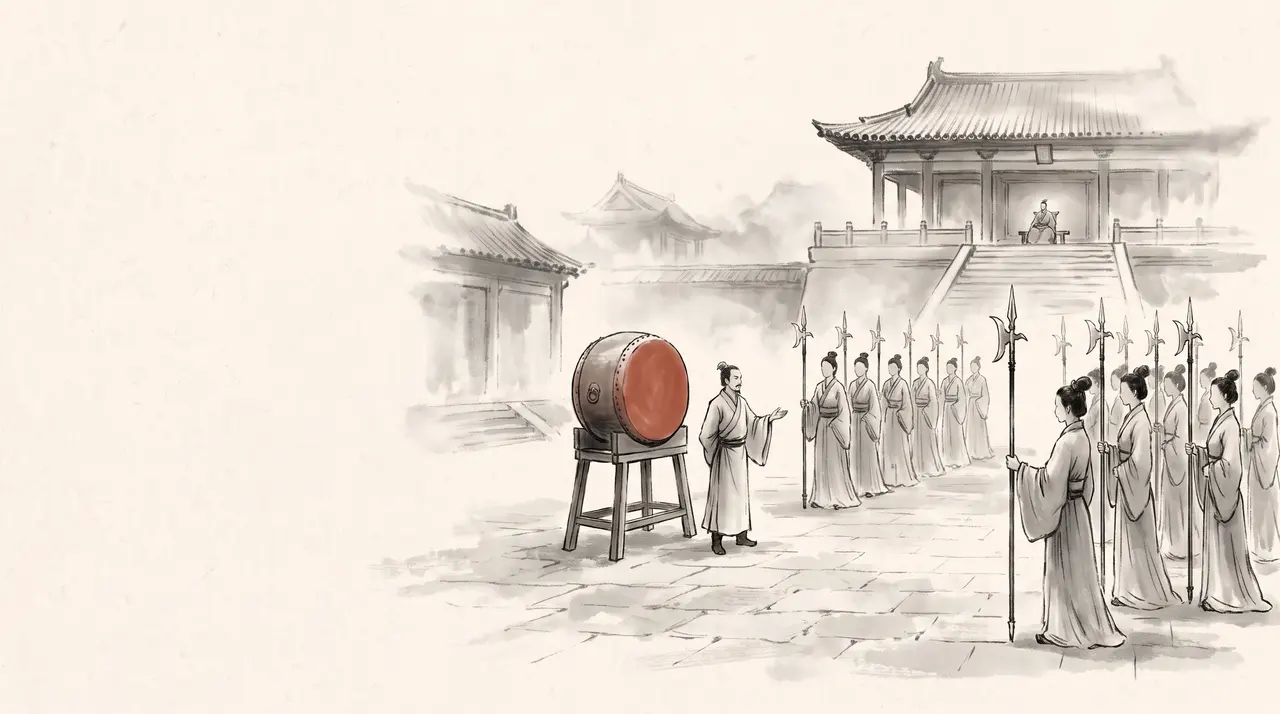
孫子武者,齊人也。以兵法見於吳王闔廬。闔廬曰:「子之十三篇,吾盡觀之矣,可以小試勒兵乎?」對曰:「可。」闔廬曰:「可試以婦人乎?」曰:「可。」於是許之,出宮中美女,得百八十人。孫子分為二隊,以王之寵姬二人各為隊長,皆令持戟。令之曰:「汝知而心與左右手背乎?」婦人曰:「知之。」孫子曰:「前,則視心;左,視左手;右,視右手;後,即視背。」婦人曰:「諾。」約束既布,乃設鈇鉞,即三令五申之。
Kundoku (Japanese reading)
孫子武なる者は、斉の人なり。兵法を以て呉王闔廬に見ゆ。闔廬曰く、「子の十三篇、吾尽く之を観たり。以て小しく試みに兵を勒すべきか」と。対えて曰く、「可なり」と。闔廬曰く、「試みるに婦人を以てすべきか」と。曰く、「可なり」と。是に於いて之を許し、宮中の美女を出だし、百八十人を得たり。孫子分かちて二隊と為し、王の寵姫二人を以て各おの隊長と為し、皆戟を持たしむ。之に令して曰く、「汝而の心と左右の手と背とを知るか」と。婦人曰く、「之を知る」と。孫子曰く、「前なれば則ち心を視よ。左なれば左手を視よ。右なれば右手を視よ。後ろなれば即ち背を視よ」と。婦人曰く、「諾」と。約束既に布き、乃ち鈇鉞を設け、即ち之に三令五申す。
Japanese
孫子、名は武は、斉の人である。兵法の書をもって呉王闔廬にお目通りした。闔廬は言った。「あなたの十三篇は、すべて読んだ。少し兵を動かして試してみせてもらえるか」。孫子は答えた。「よろしゅうございます」。闔廬は言った。「女で試してもよいか」。「よろしゅうございます」。そこで許しが出て、宮中の美女たちを出し、百八十人を集めた。孫子は二つの隊に分け、王のお気に入りの姫二人をそれぞれの隊長にし、全員に戟を持たせた。そして命じた。「おまえたちは、自分の胸と左右の手と背中がわかるか」。女たちは「わかります」と答えた。孫子は言った。「『前』と言ったら胸の方を向け。『左』と言ったら左手の方、『右』と言ったら右手の方、『後ろ』と言ったら背中の方を向け」。女たちは「はい」と答えた。決まりを言い渡すと、処刑用の斧を並べ、何度も繰り返して命令を言い聞かせた。
English
Sunzi, whose name was Wu, was a man of Qi. He was received by Helü, King of Wu, on the strength of his book on war. Helü said, "I have read all thirteen chapters of yours. Could you give me a small trial of drilling troops?" "I could," he answered. "Could you try it with women?" asked Helü. "I could." So the king agreed and sent out the beauties of his palace, a hundred and eighty in all. Sunzi divided them into two companies, made the king's two favorite consorts their captains, and had every woman hold a halberd. Then he gave his orders: "Do you know where your heart is, and your left and right hands, and your back?" "We do," the women said. "When I say 'front,' face toward your heart; 'left,' toward your left hand; 'right,' toward your right hand; 'back,' toward your back." "Yes," said the women. When the rules had been laid down, he set out the executioner's axes and explained the orders again and again.
Notes (JA)
- 孫子武: 孫武。「孫子」は敬称。兵法書『孫子』十三篇の作者とされる。
- 闔廬: 呉の王(在位 前514〜前496年)。伍子胥の助けで王位についた(巻66の章を参照)。
- 勒兵: 兵を整えて動かす、訓練する。
- 寵姬: お気に入りの側室。
- 戟: 戈(か)と矛を合わせた長い武器。
- 而: 「汝」と同じく「おまえ(たち)の」。
- 鈇鉞: 処刑や軍の規律に使う大きな斧。将軍の権威のしるし。
- 三令五申: 何度も繰り返し命令し、言い聞かせること。今も使う四字熟語。
Notes (EN)
- Sunzi (孫子): "Master Sun," Sun Wu, said to be the author of the thirteen-chapter Art of War.
- Helü: King of Wu (r. 514–496 BCE). He came to the throne with Wu Zixu's help (see Volume 66).
- 勒兵: to drill troops.
- 寵姬: a favorite consort.
- Halberd (戟): a long weapon combining a dagger-axe and a spear.
- 鈇鉞: great axes for executions and military discipline, a sign of a general's authority.
- 三令五申 ("three orders, five explanations"): to give orders and explain them again and again; still a common idiom.
Idioms from this passage: Order three times, explain five times 三令五申
Word notes
- consort/ˈkɑnsɔrt/noun
the wife or partner of a king or queen
In the text: “made the king's two favorite consorts their captains”
Similar words: spouse — a husband or wife · concubine — a woman living with a ruler without full marriage
- halberd/ˈhælbərd/noun
a long weapon with an axe blade and a spike on top
In the text: “had every woman hold a halberd”
Similar words: pike — a long spear · spear — a pole with a pointed blade
- executioner/ˌɛksɪˈkjuːʃənər/noun
a person whose job is to kill people who have been sentenced to death
In the text: “he set out the executioner's axes”
Similar words: headsman — old word; an executioner who cuts off heads · hangman — an executioner who hangs people
Passage 2
Original
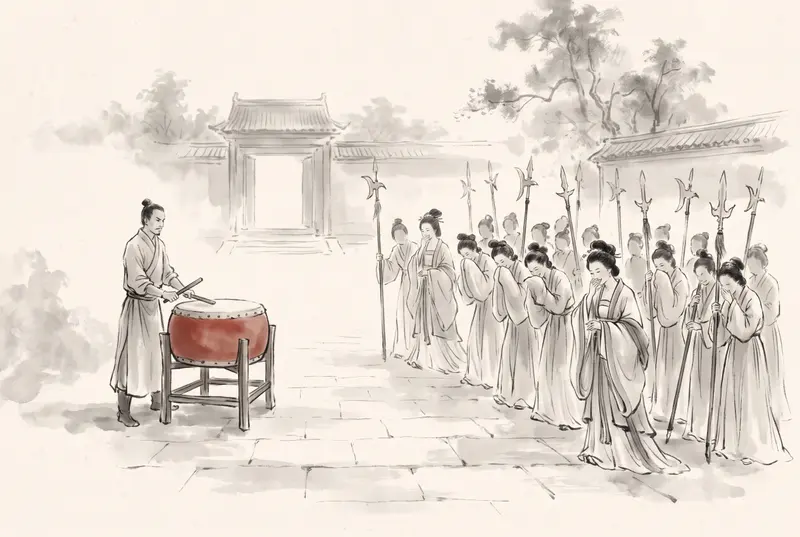
於是鼓之右,婦人大笑。孫子曰:「約束不明,申令不熟,將之罪也。」復三令五申而鼓之左,婦人復大笑。孫子曰:「約束不明,申令不熟,將之罪也;既已明而不如法者,吏士之罪也。」乃欲斬左右隊長。
Kundoku (Japanese reading)
是に於いて之に右を鼓す。婦人大いに笑う。孫子曰く、「約束明らかならず、申令熟せざるは、将の罪なり」と。復た三令五申して之に左を鼓す。婦人復た大いに笑う。孫子曰く、「約束明らかならず、申令熟せざるは、将の罪なり。既已に明らかにして法の如くならざる者は、吏士の罪なり」と。乃ち左右の隊長を斬らんと欲す。
Japanese
そこで太鼓を打って「右」と合図したが、女たちは大笑いした。孫子は言った。「決まりがはっきりせず、命令が行き届いていないのは、将の罪だ」。また何度も命令を言い聞かせてから、太鼓を打って「左」と合図した。女たちはまた大笑いした。孫子は言った。「決まりがはっきりせず、命令が行き届いていないのは、将の罪だ。だが、すでにはっきりさせたのに、そのとおりに動かないのは、隊を率いる者の罪だ」。そして、左右の隊長を斬ろうとした。
English
Then he beat the drum for "right," and the women burst out laughing. Sunzi said, "If the rules are not clear and the orders not well understood, the fault is the general's." He explained the orders again and again, then beat the drum for "left." Again the women burst out laughing. Sunzi said, "If the rules are not clear and the orders not well understood, the fault is the general's. But when they have been made clear and still are not obeyed, the fault is the officers'." And he moved to behead the captains of the two companies.
Notes (JA)
- 鼓: 太鼓を打って合図すること。軍は太鼓で進み、鐘(かね)で退いた。
- 申令: 命令を言い聞かせること。
- 吏士: 隊を率いる者、隊長たち。
- 左右隊長: 二つの隊の隊長、つまり王の寵姫二人。
Notes (EN)
- 鼓 ("drum"): armies advanced to the drum and withdrew to the bell.
- 申令: to explain orders.
- 吏士: officers, those in charge of the ranks.
- The captains of the two companies: the king's two favorite consorts.
Word notes
- burst out/ˌbɜrst ˈaʊt/phrasal verb
to suddenly start laughing or crying
In the text: “the women burst out laughing”
Similar words: break into — suddenly start (laughter, a run) · erupt — suddenly begin noisily
- behead/bɪˈhɛd/verb
to kill someone by cutting off their head
In the text: “moved to behead the captains”
Similar words: decapitate — formal; cut off the head · execute — kill as a legal punishment
Passage 3
Original
吳王從臺上觀,見且斬愛姬,大駭。趣使使下令曰:「寡人已知將軍能用兵矣。寡人非此二姬,食不甘味,願勿斬也。」孫子曰:「臣既已受命為將,將在軍,君命有所不受。」遂斬隊長二人以徇。用其次為隊長,於是復鼓之。婦人左右前後跪起皆中規矩繩墨,無敢出聲。於是孫子使使報王曰:「兵既整齊,王可試下觀之,唯王所欲用之,雖赴水火猶可也。」吳王曰:「將軍罷休就舍,寡人不願下觀。」孫子曰:「王徒好其言,不能用其實。」於是闔廬知孫子能用兵,卒以為將。西破彊楚,入郢,北威齊晉,顯名諸侯,孫子與有力焉。
Kundoku (Japanese reading)
呉王台上より観て、且に愛姫を斬らんとするを見て、大いに駭く。趣かに使いをして令を下さしめて曰く、「寡人已に将軍の能く兵を用うるを知れり。寡人此の二姫に非ざれば、食えども味を甘しとせず。願わくは斬ること勿かれ」と。孫子曰く、「臣既已に命を受けて将と為る。将軍に在りては、君命も受けざる所有り」と。遂に隊長二人を斬りて以て徇う。其の次を用いて隊長と為し、是に於いて復た之を鼓す。婦人左右前後跪起、皆規矩縄墨に中り、敢えて声を出だす無し。是に於いて孫子使いをして王に報ぜしめて曰く、「兵既に整斉す。王試みに下りて之を観るべし。唯だ王の之を用いんと欲する所のままに、水火に赴くと雖も猶お可なり」と。呉王曰く、「将軍罷め休みて舎に就け。寡人下りて観るを願わず」と。孫子曰く、「王は徒らに其の言を好みて、其の実を用うる能わず」と。是に於いて闔廬孫子の能く兵を用うるを知り、卒に以て将と為す。西のかた彊楚を破りて郢に入り、北のかた斉・晋を威し、名を諸侯に顕すは、孫子与りて力有り。
Japanese
呉王は高台の上から見ていたが、愛する姫が斬られそうになったので、ひどく驚いた。急いで使いを出して命じた。「将軍が兵を使いこなせることは、もうよくわかった。わたしはこの二人の姫がいないと、食事もおいしくない。どうか斬らないでくれ」。孫子は言った。「わたしはすでに命を受けて将となりました。将が軍中にあるときは、君主の命令でも従わないことがあるのです」。そしてとうとう隊長二人を斬って、見せしめにした。その次の者を隊長にして、また太鼓を打った。すると女たちは、左・右・前・後ろ、ひざまずくのも立つのも、すべて定規で測ったように決まりどおりで、声を出す者は一人もいなかった。そこで孫子は使いを出して王に報告した。「兵はすっかり整いました。王よ、下りてきてご覧ください。王のお望みのままにお使いになれます。水の中、火の中へ行けと命じても、行くでしょう」。呉王は言った。「将軍はもう終わりにして宿舎で休むがよい。わたしは下りて見る気にはならない」。孫子は言った。「王は兵法の言葉を好まれるだけで、それを実際に使うことはおできにならないのですね」。それでも闔廬は、孫子が兵を使いこなせることを知り、ついに将軍に任じた。呉が西では強国の楚を破って都の郢に入り、北では斉や晋をおびやかして、諸侯の間に名をとどろかせたのは、孫子の力によるところが大きかった。
English
The King of Wu was watching from a terrace. When he saw that his beloved consorts were about to be beheaded, he was horrified and hurried a messenger down with an order: "I can see now that the general knows how to command troops. Without these two consorts, my food would have no taste. I beg you not to behead them." Sunzi said, "I have received my commission as general. When a general is with his army, there are commands of his lord that he does not accept." So he beheaded the two captains as an example to the rest. He made the next women captains and beat the drum again. This time the women turned left, right, front and back, knelt and rose, all exactly as if measured by compass, square and line, and not one dared make a sound. Then Sunzi sent a messenger to report to the king: "The troops are now in order. Your Majesty may come down and look at them. They can be used however Your Majesty wishes; they would go through water and fire." The King of Wu said, "Let the general stop and go back to his quarters. I have no wish to come down and look." Sunzi said, "Your Majesty only likes the words. You cannot put them into practice." Even so, Helü saw that Sunzi could command troops and in the end made him a general. When Wu defeated mighty Chu in the west and entered its capital Ying, and overawed Qi and Jin in the north, winning fame among the lords, Sunzi had a large part in it.
Notes (JA)
- 臺: 高い台、物見台。
- 寡人: 王が自分をへりくだって言う言葉。
- 將在軍,君命有所不受: 将が戦場にいるときは、君主の命令でも従わないことがある。『孫子』九変篇にも同じ趣旨の言葉がある。
- 徇: 見せしめにすること。
- 規矩繩墨: コンパス・定規・墨縄。きちんと決まりどおりであること。
- 郢: 楚の都。今の湖北省荊州市のあたり。呉が郢に入ったのは前506年(巻66の章を参照)。
- 齊晉: 北方の大国、斉と晋。
Notes (EN)
- 臺: a raised terrace for viewing.
- 寡人 ("the lonely one"): how a king refers to himself.
- "There are commands of his lord that he does not accept" (將在軍,君命有所不受): a similar line appears in the Art of War itself.
- 徇: to make an example of someone.
- Compass, square and line (規矩繩墨): perfectly regular.
- Ying: the capital of Chu, near present-day Jingzhou in Hubei. Wu entered it in 506 BCE (see Volume 66).
- Qi and Jin: the great states of the north.
Word notes
- horrified/ˈhɔrɪfaɪd/adjective
very shocked and upset
In the text: “he was horrified”
Similar words: appalled — shocked by something bad · aghast — filled with shock
- commission/kəˈmɪʃən/noun
an official order giving someone a rank or a task
In the text: “I have received my commission as general”
Similar words: appointment — being chosen for a job · mandate — official power to act
A commission is also money paid to a salesperson for each sale.
- kneel/niːl/verb
to go down on your knees (past tense: knelt)
In the text: “knelt and rose”
Similar words: bow — bend the body forward · crouch — bend the knees low
- compass/ˈkʌmpəs/noun
a tool with two arms for drawing circles; also a tool that shows north
In the text: “as if measured by compass, square and line”
Similar words: ruler — a straight tool for measuring · set square — a triangle for drawing right angles
- put into practice/ˌpʊt ˌɪntu ˈpræktɪs/phrase
to actually do what you have planned or learned
In the text: “You cannot put them into practice”
Similar words: carry out — do a plan · apply — use knowledge in a real case
- overawe/ˌoʊvərˈɔ/verb
to make someone feel afraid and respectful through your power
In the text: “overawed Qi and Jin”
Similar words: intimidate — frighten into obeying · daunt — make someone lose courage
Passage 4
Original
孫武既死,後百餘歲有孫臏。臏生阿鄄之閒,臏亦孫武之後世子孫也。孫臏嘗與龐涓俱學兵法。龐涓既事魏,得為惠王將軍,而自以為能不及孫臏,乃陰使召孫臏。臏至,龐涓恐其賢於己,疾之,則以法刑斷其兩足而黥之,欲隱勿見。
Kundoku (Japanese reading)
孫武既に死して、後百余歳にして孫臏有り。臏は阿・鄄の間に生まる。臏も亦た孫武の後世の子孫なり。孫臏嘗て龐涓と倶に兵法を学ぶ。龐涓既に魏に事え、恵王の将軍と為るを得たり。而して自ら以為えらく、能孫臏に及ばずと。乃ち陰かに使いをして孫臏を召さしむ。臏至る。龐涓其の己より賢なるを恐れ、之を疾み、則ち法刑を以て其の両足を断ちて之に黥し、隠して見ること勿からしめんと欲す。
Japanese
孫武が死んでから百年あまりのちに、孫臏という人が出た。孫臏は阿と鄄のあたりの生まれで、やはり孫武の子孫である。孫臏はかつて、龐涓とともに兵法を学んだ。龐涓は魏に仕えて、恵王の将軍になったが、自分の才能は孫臏に及ばないと思っていた。そこで、ひそかに使いを出して孫臏を呼び寄せた。孫臏がやって来ると、龐涓は孫臏が自分よりすぐれているのを恐れ、ねたんで、罪をでっち上げて刑罰により両足を切り落とし、顔に入れ墨をして、世に出られないようにしようとした。
English
More than a hundred years after Sun Wu died, there was Sun Bin. Bin was born between E and Juan, and he too was a descendant of Sun Wu. Sun Bin had once studied the art of war together with Pang Juan. Pang Juan went into the service of Wei and became a general of King Hui, but he believed that his own ability did not match Sun Bin's. So he secretly sent for Sun Bin. When Bin arrived, Pang Juan, afraid that he was the better man, hated him for it. Using the law as a pretext, he had both of Bin's feet cut off and his face tattooed, meaning to keep him hidden from the world.
Notes (JA)
- 孫臏: 斉の兵法家(前4世紀)。「臏」は足を切る刑の名で、本名は伝わらない。著書『孫臏兵法』は1972年に山東省の銀雀山の漢墓から竹簡で見つかった。
- 阿鄄: 今の山東省の陽穀・鄄城のあたり。斉の領地。
- 龐涓: 魏の将軍。
- 惠王: 魏の恵王(在位 前369〜前319年)。都を大梁に移したので、梁の恵王とも呼ばれる。『孟子』にも出てくる。
- 黥: 顔に入れ墨をする刑。
Notes (EN)
- Sun Bin: a strategist of Qi in the 4th century BCE. 臏 is the name of the punishment of cutting off the feet; his real given name is unknown. A lost book of his on war was found on bamboo slips in a Han tomb at Yinqueshan in Shandong in 1972.
- E and Juan: in present-day western Shandong, in the state of Qi.
- Pang Juan: a general of Wei.
- King Hui of Wei (r. 369–319 BCE): he moved his capital to Daliang, so he is also called King Hui of Liang. He appears in the Mencius.
- 黥: tattooing the face as a punishment.
Word notes
- descendant/dɪˈsɛndənt/noun
a person who comes from a certain ancestor
In the text: “he too was a descendant of Sun Wu”
Similar words: offspring — children of a parent · heir — one who inherits
The opposite is ancestor.
- pretext/ˈpriːtɛkst/noun
a false reason given to hide the real one
In the text: “Using the law as a pretext”
Similar words: excuse — a reason given to explain an action · cover — something that hides the truth
Passage 5
Original
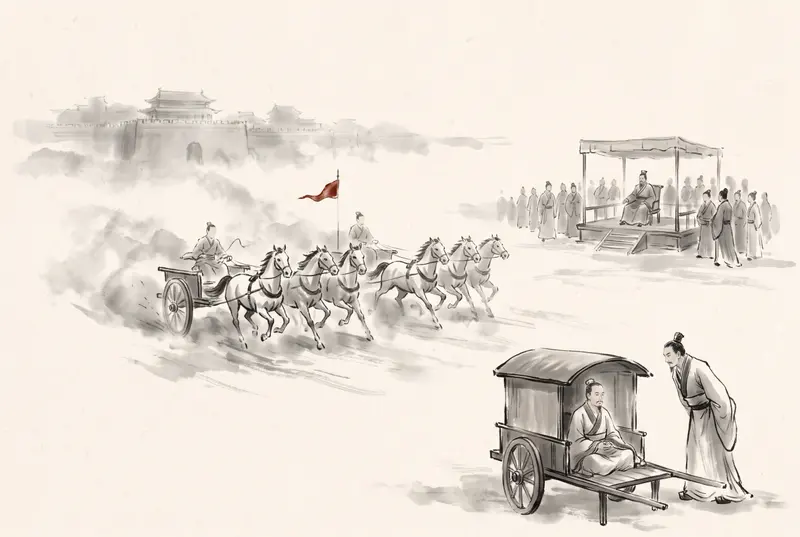
齊使者如梁,孫臏以刑徒陰見,說齊使。齊使以為奇,竊載與之齊。齊將田忌善而客待之。忌數與齊諸公子馳逐重射。孫子見其馬足不甚相遠,馬有上、中、下、輩。於是孫子謂田忌曰:「君弟重射,臣能令君勝。」田忌信然之,與王及諸公子逐射千金。及臨質,孫子曰:「今以君之下駟與彼上駟,取君上駟與彼中駟,取君中駟與彼下駟。」既馳三輩畢,而田忌一不勝而再勝,卒得王千金。於是忌進孫子於威王。威王問兵法,遂以為師。
Kundoku (Japanese reading)
斉の使者梁に如く。孫臏刑徒を以て陰かに見え、斉の使いに説く。斉の使い以て奇と為し、竊かに載せて之と斉に之く。斉の将田忌善みして之を客待す。忌数しば斉の諸公子と馳逐して重射す。孫子其の馬足の甚だしくは相遠からず、馬に上・中・下の輩有るを見る。是に於いて孫子田忌に謂いて曰く、「君弟だ重射せよ。臣能く君をして勝たしめん」と。田忌信じて之を然りとし、王及び諸公子と逐射すること千金。質に臨むに及びて、孫子曰く、「今君の下駟を以て彼の上駟に与て、君の上駟を取りて彼の中駟に与て、君の中駟を取りて彼の下駟に与てよ」と。既に馳すること三輩畢わりて、田忌一たび勝たずして再び勝ち、卒に王の千金を得たり。是に於いて忌孫子を威王に進む。威王兵法を問い、遂に以て師と為す。
Japanese
斉の使者が魏の都の大梁に来たとき、孫臏は刑を受けた囚人の身でひそかに会い、使者に説いた。斉の使者は孫臏をすぐれた人物だと思い、こっそり車に乗せて一緒に斉へ連れ帰った。斉の将軍の田忌は孫臏を気に入り、客として手厚くもてなした。田忌はたびたび斉の公子たちと馬車の競走をして、大金を賭けていた。孫子(孫臏)は、どの馬も足の速さにそれほど差がなく、上・中・下の等級があることに気づいた。そこで孫子は田忌に言った。「あなたはとにかく大きく賭けてください。わたしがあなたを勝たせてみせます」。田忌はそれを信じて、王や公子たちと千金を賭けて競走することにした。いよいよ勝負というとき、孫子は言った。「あなたの下の馬を相手の上の馬に当て、あなたの上の馬を相手の中の馬に当て、あなたの中の馬を相手の下の馬に当てなさい」。三回の競走が終わると、田忌は一回負けて二回勝ち、ついに王から千金を手に入れた。そこで田忌は孫子を威王に推薦した。威王は孫子に兵法をたずね、とうとう軍師にした。
English
When an envoy from Qi came to Liang, Sun Bin, a convict, met him in secret and talked with him. The envoy thought him remarkable and smuggled him back to Qi in his carriage. Tian Ji, a general of Qi, liked him and treated him as an honored guest. Tian Ji often raced chariot teams against the princes of Qi for high stakes. Sunzi noticed that the horses did not differ much in speed, and that they fell into three classes: top, middle and bottom. So he said to Tian Ji, "Just bet high. I can make you win." Tian Ji believed him and wagered a thousand pieces of gold against the king and the princes. When the race was about to begin, Sunzi said, "Now put your bottom team against their top team, your top team against their middle team, and your middle team against their bottom team." When the three races were over, Tian Ji had lost one and won two, and in the end he took the king's thousand pieces of gold. After that Tian Ji recommended Sunzi to King Wei. King Wei asked him about the art of war and made him his military teacher.
Notes (JA)
- 梁: 魏の都、大梁(今の河南省開封市)。魏はこのころ「梁」とも呼ばれた。
- 刑徒: 刑を受けた罪人。
- 田忌: 斉の将軍。斉の王族の一人。
- 馳逐重射: 馬車の競走をして、大金を賭けること。
- 駟: 四頭立ての馬車、またその馬。
- 一不勝而再勝: 一回負けて二回勝つ。今では「田忌の競馬」として、手持ちの力の組み合わせ方のたとえに使われる。
- 威王: 斉の威王(在位 前356〜前320年)。
- 師: 軍師。作戦を立てる役。
Notes (EN)
- Liang: Daliang (present-day Kaifeng, Henan), the capital of Wei, which was also called Liang at this time.
- 刑徒: a convict who has been punished.
- Tian Ji: a general of Qi and a member of its royal clan.
- 馳逐重射: racing chariots for high stakes.
- 駟: a four-horse chariot team.
- Lost one and won two: "Tian Ji's horse race" is still used as a lesson in matching your strengths against an opponent's.
- King Wei of Qi (r. 356–320 BCE).
- 師: a military adviser who plans campaigns.
Word notes
- smuggle/ˈsmʌɡəl/verb
to take someone or something secretly and illegally
In the text: “smuggled him back to Qi”
Similar words: sneak — move secretly · spirit away — take someone away secretly
- wager/ˈweɪdʒər/verb
to bet money on the result of a race or game
In the text: “wagered a thousand pieces of gold”
Similar words: bet — the everyday word · stake — risk money on a result
Passage 6
Original
其後魏伐趙,趙急,請救於齊。齊威王欲將孫臏,臏辭謝曰:「刑餘之人不可。」於是乃以田忌為將,而孫子為師,居輜車中,坐為計謀。田忌欲引兵之趙,孫子曰:「夫解雜亂紛糾者不控棬,救鬬者不搏撠,批亢擣虛,形格勢禁,則自為解耳。今梁趙相攻,輕兵銳卒必竭於外,老弱罷於內。君不若引兵疾走大梁,據其街路,衝其方虛,彼必釋趙而自救。是我一舉解趙之圍而收獘於魏也。」田忌從之,魏果去邯鄲,與齊戰於桂陵,大破梁軍。
Kundoku (Japanese reading)
其の後魏趙を伐つ。趙急にして、救いを斉に請う。斉の威王孫臏を将とせんと欲す。臏辞謝して曰く、「刑余の人は不可なり」と。是に於いて乃ち田忌を以て将と為し、孫子を師と為し、輜車の中に居りて、坐して計謀を為さしむ。田忌兵を引きて趙に之かんと欲す。孫子曰く、「夫れ雑乱紛糾を解く者は控捲せず、闘いを救う者は搏撠せず。亢を批ち虚を擣き、形格し勢禁ずれば、則ち自ら為に解くるのみ。今梁・趙相攻む。軽兵鋭卒必ず外に竭き、老弱内に罷れん。君兵を引きて疾く大梁に走り、其の街路に拠り、其の方に虚なるを衝くに若かず。彼必ず趙を釈きて自ら救わん。是れ我一挙にして趙の囲みを解きて、弊を魏に収むるなり」と。田忌之に従う。魏果たして邯鄲を去り、斉と桂陵に戦い、大いに梁の軍を破る。
Japanese
その後、魏が趙を攻めた。趙は追いつめられ、斉に救いを求めた。斉の威王は孫臏を将軍にしようとしたが、孫臏は断って言った。「刑を受けた身の者は、将軍にはなれません」。そこで田忌を将軍とし、孫子を軍師にして、幌つきの車に乗せ、座ったまま作戦を立てさせた。田忌は兵を率いて趙へ向かおうとした。孫子は言った。「もつれた糸をほどこうとする者は、むやみに引っぱったりしません。けんかを止めようとする者は、自分も殴り合いに加わったりしません。相手の急所を突き、手薄なところをたたいて、形の上でも勢いの上でも動けなくしてしまえば、もつれはひとりでにほどけるものです。いま魏と趙は戦っており、魏の身軽な兵や精鋭は国の外で力を使い果たし、国の中では年寄りや弱い者が疲れきっているはずです。あなたは兵を率いて魏の都の大梁へ急いで進み、その街道を押さえて、いま手薄になっているところを突くのがいちばんです。魏は必ず趙から兵を引いて、自分の国を救おうとするでしょう。これでわれわれは、一度に趙の包囲を解き、しかも魏が疲れたところを討ち取ることができます」。田忌はこれに従った。魏は果たして趙の都の邯鄲から引き上げ、斉と桂陵で戦って、さんざんに打ち破られた。
English
Later Wei attacked Zhao. Zhao was hard pressed and asked Qi for help. King Wei of Qi wanted to make Sun Bin his general, but Bin declined, saying, "A man who has been mutilated by punishment cannot." So Tian Ji was made general and Sunzi his adviser, riding in a covered wagon and making plans from his seat. Tian Ji wanted to lead the army to Zhao. Sunzi said, "One who untangles a snarl does not yank at it, and one who breaks up a fight does not join the brawl. Strike at the throat, hit where it is empty, and when the enemy's position is blocked and its momentum checked, the knot comes undone by itself. Now Liang and Zhao are fighting each other. Liang's light troops and best soldiers must be worn out abroad, and its old and weak exhausted at home. Your best course is to march quickly on Daliang, hold its roads and strike where it is empty right now. Wei will surely let go of Zhao to save itself. In one move we will lift the siege of Zhao and catch Wei worn out." Tian Ji followed his advice. Wei did indeed withdraw from Handan, fought Qi at Guiling, and was crushed.
Notes (JA)
- 刑餘之人: 刑を受けて体を傷つけられた者。
- 輜車: 幌のついた車。
- 控棬: 力まかせに引っぱる(読みと意味には諸説ある)。
- 搏撠: 自分も殴り合う。
- 批亢擣虛: のど元(急所)を打ち、手薄なところを突く。
- 形格勢禁: 形勢の上で、相手が動けなくなること。
- 獘: 「弊」と同じ。疲れ。
- 邯鄲: 趙の都。今の河北省邯鄲市。
- 桂陵: 今の河南省長垣市のあたりとされる。前353年の戦い。「魏を囲んで趙を救う(囲魏救趙)」という兵法の言葉のもとになった。
Notes (EN)
- 刑餘之人: a man left maimed by punishment.
- 輜車: a covered wagon.
- 控棬: to yank or pull hard (the reading is debated).
- 搏撠: to join in the brawl.
- 批亢擣虛: strike at the throat and hit where it is empty.
- 形格勢禁: the enemy's position is blocked and its momentum checked.
- 獘: the same as 弊, exhaustion.
- Handan: the capital of Zhao, present-day Handan in Hebei.
- Guiling: probably near Changyuan in Henan. The battle (353 BCE) gave rise to the stratagem "besiege Wei to rescue Zhao."
Word notes
- mutilate/ˈmjuːtəˌleɪt/verb
to badly damage a body by cutting off a part
In the text: “mutilated by punishment”
Similar words: maim — injure so that a part cannot be used · disfigure — spoil the appearance of
- snarl/snɑrl/noun
a tangled mass of thread, hair or rope
In the text: “One who untangles a snarl”
Similar words: tangle — a twisted mass · knot — a tight twist in a string
As a verb, snarl also means to growl angrily, like a dog.
- siege/siːdʒ/noun
surrounding a city with an army to force it to give up
In the text: “lift the siege of Zhao”
Similar words: blockade — stopping people and goods from getting in or out · encirclement — surrounding completely
- crush/krʌʃ/verb
to defeat completely
In the text: “and was crushed”
Similar words: rout — defeat and make flee · smash — break or defeat with force
Passage 7
Original
後十三歲,魏與趙攻韓,韓告急於齊。齊使田忌將而往,直走大梁。魏將龐涓聞之,去韓而歸,齊軍既已過而西矣。孫子謂田忌曰:「彼三晉之兵素悍勇而輕齊,齊號為怯,善戰者因其勢而利導之。兵法,百里而趣利者蹶上將,五十里而趣利者軍半至。使齊軍入魏地為十萬灶,明日為五萬灶,又明日為三萬灶。」龐涓行三日,大喜,曰:「我固知齊軍怯,入吾地三日,士卒亡者過半矣。」乃棄其步軍,與其輕銳倍日并行逐之。
Kundoku (Japanese reading)
後十三歳、魏趙と韓を攻む。韓急を斉に告ぐ。斉田忌をして将として往かしめ、直ちに大梁に走る。魏の将龐涓之を聞き、韓を去りて帰る。斉の軍既已に過ぎて西せり。孫子田忌に謂いて曰く、「彼の三晋の兵は素より悍勇にして斉を軽んず。斉は号して怯と為す。善く戦う者は其の勢いに因りて之を利導す。兵法に、百里にして利に趣く者は上将を蹶し、五十里にして利に趣く者は軍半ば至る、と。斉の軍をして魏の地に入りて十万の竈を為らしめ、明日は五万の竈を為り、又明日は三万の竈を為らしめよ」と。龐涓行くこと三日、大いに喜びて曰く、「我固より斉の軍の怯なるを知る。吾が地に入りて三日、士卒の亡ぐる者半ばを過ぎたり」と。乃ち其の歩軍を棄て、其の軽鋭と日を倍して并行して之を逐う。
Japanese
それから十三年後、魏は趙と組んで韓を攻めた。韓は斉に急を告げた。斉は田忌を将軍にして出陣させ、まっすぐ大梁へ向かわせた。魏の将軍龐涓はこれを聞くと、韓から引き上げて国へ戻ったが、斉の軍はもう国境を越えて西へ進んでいた。孫子は田忌に言った。「あの三晋(魏・趙・韓)の兵は、もともと気が荒くて勇ましく、斉を見くびっています。斉の兵は臆病だと言われています。戦上手は、相手のこうした勢いを逆手にとって、こちらに有利なほうへ導くものです。兵法には『百里の道を急いで利を追えば、上将軍が倒れ、五十里を急げば、軍の半分しかたどり着かない』とあります。斉の兵が魏の地に入ったら、一日目はかまどを十万作り、次の日は五万、その次の日は三万に減らしてください」。龐涓は三日進んだところで大喜びして言った。「斉の兵が臆病なのはわかっていたが、わが国に入って三日で、逃げた兵が半分を超えたぞ」。そこで歩兵を置き去りにし、身軽な精鋭だけを連れて、二日分の道のりを一日で進んで追いかけた。
English
Thirteen years later, Wei and Zhao attacked Hann, and Hann appealed to Qi for help. Qi sent Tian Ji at the head of an army, marching straight for Daliang. When Pang Juan, the Wei general, heard of it, he left Hann and turned back, but the Qi army had already crossed the border and was heading west. Sunzi said to Tian Ji, "The troops of the three Jin states have always been fierce and brave, and they look down on Qi, which is known for cowardice. A good fighter turns the enemy's own momentum to his advantage. The art of war says that an army that races a hundred li after gain loses its leading general, and one that races fifty li arrives with only half its men. Have our army build cooking fires for a hundred thousand men when it enters Wei, for fifty thousand the next day, and for thirty thousand the day after." After three days of marching, Pang Juan was delighted. "I always knew the Qi army was cowardly," he said. "Three days in our land, and more than half its soldiers have deserted!" So he left his foot soldiers behind and chased the enemy with his light, picked troops, marching two days' distance in one.
Notes (JA)
- 後十三歲: 桂陵の戦いの13年後。前341年ごろ。
- 三晉: 晋が分かれてできた魏・趙・韓の三国。
- 悍勇: 気が荒く勇ましい。
- 因其勢而利導之: 相手の勢いに乗じて、こちらに有利な方へ導く。「因勢利導」という言葉のもと。
- 蹶上將: 先頭の将軍が倒れる、または捕らえられる。『孫子』軍争篇にも似た言葉がある。
- 灶: かまど。兵の数だけ炊事のかまどを作るので、かまどの数で兵の数がわかる。かまどを減らして、兵が逃げていると見せかけた(減竈の計)。
- 倍日并行: 二日分の道のりを一日で進む。
Notes (EN)
- Thirteen years later: around 341 BCE.
- The three Jin (三晉): Wei, Zhao and Hann, the states formed when Jin split up.
- Turn the enemy's momentum to one's advantage (因其勢而利導之): the source of a common Chinese idiom.
- Loses its leading general (蹶上將): a similar line appears in the Art of War.
- Cooking fires (灶): an army's size could be guessed from the number of its cooking fires, so cutting them made it look as if men were deserting.
- 倍日并行: covering two days' march in one.
Idioms from this passage: Fewer cooking fires each day 減竈の計
Word notes
- momentum/moʊˈmɛntəm/noun
the force that keeps something moving forward
In the text: “turns the enemy's own momentum to his advantage”
Similar words: impetus — a driving force · drive — energy to move forward
- cowardice/ˈkaʊərdɪs/noun
lack of courage
In the text: “known for cowardice”
Similar words: timidity — being shy and easily frightened · faintheartedness — lack of courage
The opposite is bravery or courage.
- desert/dɪˈzɜrt/verb
to leave the army without permission
In the text: “its soldiers have deserted”
Similar words: abandon — leave and not come back · run away — escape
Stress the second part: de-SERT. The noun desert (dry land) is stressed on the first part.
Passage 8
Original
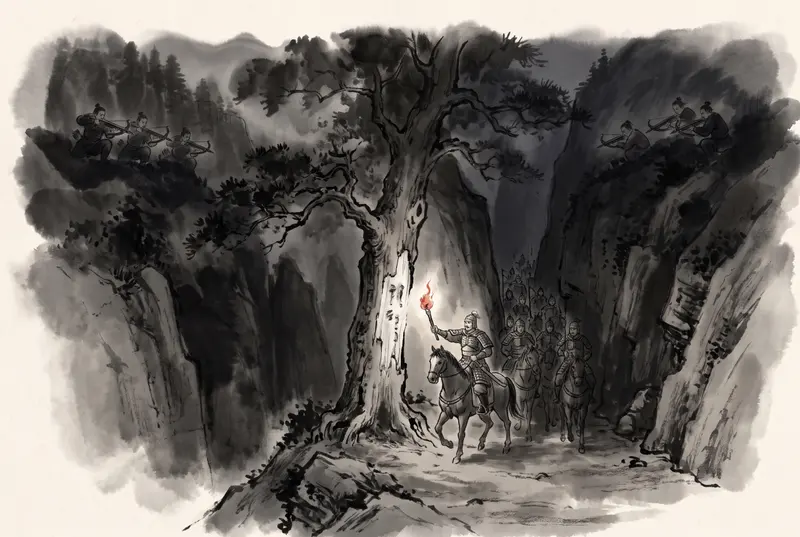
孫子度其行,暮當至馬陵。馬陵道陜,而旁多阻隘,可伏兵,乃斫大樹白而書之曰「龐涓死于此樹之下」。於是令齊軍善射者萬弩,夾道而伏,期曰「暮見火舉而俱發」。龐涓果夜至斫木下,見白書,乃鉆火燭之。讀其書未畢,齊軍萬弩俱發,魏軍大亂相失。龐涓自知智窮兵敗,乃自剄,曰:「遂成豎子之名!」齊因乘勝盡破其軍,虜魏太子申以歸。孫臏以此名顯天下,世傳其兵法。
Kundoku (Japanese reading)
孫子其の行を度るに、暮れに当に馬陵に至るべし。馬陵は道狭くして、旁らに阻隘多く、兵を伏すべし。乃ち大樹を斫りて白くして之に書して曰く、「龐涓此の樹の下に死せん」と。是に於いて斉の軍の善く射る者万弩をして、道を夾みて伏せしめ、期して曰く、「暮れに火の挙がるを見ば倶に発せよ」と。龐涓果たして夜斫木の下に至り、白書を見て、乃ち火を鑽りて之を燭らす。其の書を読むこと未だ畢わらざるに、斉の軍万弩倶に発し、魏の軍大いに乱れて相失う。龐涓自ら智窮まり兵敗るるを知り、乃ち自剄して曰く、「遂に豎子の名を成さしむ」と。斉因りて勝ちに乗じて尽く其の軍を破り、魏の太子申を虜にして以て帰る。孫臏此を以て名天下に顕れ、世其の兵法を伝う。
Japanese
孫子が龐涓の進み具合を計算すると、日暮れに馬陵に着くはずだった。馬陵は道が狭く、両側は険しい地形が多くて、兵を隠しておくのにちょうどよかった。そこで大きな木の皮を削って白くし、「龐涓はこの木の下で死ぬ」と書いた。そして斉の軍の弓の名手一万人に石弓を持たせて、道の両側に伏せさせ、「日が暮れて、火がともるのが見えたら、一斉に射よ」と言い含めた。龐涓は果たして夜になって削られた木の下にやって来た。白いところに字が書いてあるのを見つけると、火をおこして照らした。その文字を読み終わらないうちに、斉の軍の一万の石弓が一斉に放たれ、魏の軍は大混乱に陥って散り散りになった。龐涓は、知恵も尽き、軍も敗れたと悟って、自ら首をはねて言った。「とうとう、あの小僧に名をあげさせてしまった」。斉はこの勝ちに乗じて魏の軍をすっかり打ち破り、魏の太子の申をとりこにして帰った。孫臏はこれによって天下に名を知られ、その兵法は世に伝えられた。
English
Sunzi worked out Pang Juan's pace and reckoned that he would reach Maling at dusk. The road at Maling was narrow, with many steep and difficult places on either side where troops could lie hidden. So he stripped the bark from a large tree to make it white and wrote on it: "Pang Juan will die beneath this tree." Then he ordered ten thousand of the best crossbowmen in the Qi army to lie in ambush on both sides of the road, telling them, "When you see a fire lit after dark, shoot all at once." Pang Juan did indeed reach the stripped tree that night. Seeing writing on the white wood, he struck a light to read it. Before he had finished, ten thousand Qi crossbows fired at once, and the Wei army fell into chaos and scattered. Knowing that his wits were spent and his army beaten, Pang Juan cut his own throat, saying, "So I have made that brat's name after all!" Riding on its victory, Qi destroyed his whole army and returned with Shen, the crown prince of Wei, as its prisoner. This made Sun Bin's name known throughout the realm, and his art of war was handed down in the world.
Notes (JA)
- 馬陵: 今の河北省大名県、または山東省郯城県のあたりとされ、諸説ある。前341年ごろの戦い。
- 阻隘: 険しく狭いところ。
- 斫大樹白: 木の皮を削って、白い木肌を出す。
- 弩: 石弓、クロスボウ。引き金で矢を放つ強い弓。
- 鉆火: 火打ち石などで火をおこす。
- 豎子: 小僧、青二才。人をののしる言葉。
- 太子申: 魏の恵王の太子。
Notes (EN)
- Maling: its site is debated (near Daming in Hebei, or Tancheng in Shandong). The battle was around 341 BCE.
- 阻隘: steep, narrow places.
- 斫大樹白: to strip a tree of its bark so that the white wood shows.
- 弩: the crossbow, fired with a trigger.
- 鉆火: to strike a light.
- 豎子 ("brat"): a term of contempt.
- Shen: the crown prince of Wei, son of King Hui.
Word notes
- reckon/ˈrɛkən/verb
to calculate or judge
In the text: “reckoned that he would reach Maling at dusk”
Similar words: calculate — work out with numbers · estimate — guess the size or time
- ambush/ˈæmbʊʃ/noun
a surprise attack by people who have been hiding
In the text: “to lie in ambush”
Similar words: trap — a plan to catch someone · surprise attack — an attack without warning
- crossbow/ˈkrɔsˌboʊ/noun
a bow fixed on a stock, fired with a trigger
In the text: “ten thousand Qi crossbows fired at once”
Similar words: bow — a weapon for shooting arrows · longbow — a tall bow used by archers
- scatter/ˈskætər/verb
to run away in different directions
In the text: “fell into chaos and scattered”
Similar words: disperse — break up and spread out · flee — run away from danger
Passage 9
Original
起之為將,與士卒最下者同衣食。臥不設席,行不騎乘,親裹贏糧,與士卒分勞苦。卒有病疽者,起為吮之。卒母聞而哭之。人曰:「子卒也,而將軍自吮其疽,何哭為?」母曰:「非然也。往年吳公吮其父,其父戰不旋踵,遂死於敵。吳公今又吮其子,妾不知其死所矣。是以哭之。」
Kundoku (Japanese reading)
起の将と為るや、士卒の最も下なる者と衣食を同じくす。臥すに席を設けず、行くに騎乗せず、親ら贏糧を裹み、士卒と労苦を分かつ。卒に疽を病む者有り。起為に之を吮う。卒の母聞きて之を哭す。人曰く、「子は卒なり。而るに将軍自ら其の疽を吮う。何ぞ哭することを為さん」と。母曰く、「然るに非ざるなり。往年呉公其の父を吮う。其の父戦いて踵を旋らさず、遂に敵に死す。呉公今又其の子を吮う。妾其の死所を知らず。是を以て之を哭す」と。
Japanese
呉起は将軍になると、いちばん身分の低い兵と同じものを着て、同じものを食べた。寝るときは敷物を敷かず、行軍のときは馬にも車にも乗らず、自分で食糧を包んで背負い、兵と苦労を分かち合った。兵の中にはれものを患う者がいると、呉起はその膿を口で吸い出してやった。その兵の母親はこれを聞いて、声をあげて泣いた。ある人が言った。「あなたの息子はただの兵なのに、将軍が自ら膿を吸ってくださった。どうして泣くのですか」。母親は言った。「そうではないのです。昔、呉公はあの子の父親の膿を吸ってくださいました。父親は戦場で一歩も引かずに戦い、とうとう敵に討たれて死にました。呉公はいままた、その子の膿を吸ってくださった。あの子がどこで死ぬことになるのか、わかりません。だから泣いているのです」。
English
As a general, Wu Qi wore the same clothes and ate the same food as the lowest of his soldiers. He slept without a mat, marched without riding a horse or chariot, wrapped and carried his own rations, and shared the soldiers' toil. When one soldier had an abscess, Wu Qi sucked out the pus himself. The soldier's mother heard of it and wept. Someone said to her, "Your son is a common soldier, and the general himself sucked his abscess. Why do you weep?" The mother said, "That is not it. Years ago Lord Wu sucked his father's abscess, and his father fought without ever turning on his heel until he died at the hands of the enemy. Now Lord Wu has sucked my son's. I do not know where he will die. That is why I weep."
Notes (JA)
- この節の前(省略): 呉起は衛の人で、兵を用いるのが得意だった。魯に仕えたのち、魏の文侯に仕えて将軍となり、秦を攻めて五つの城を取った。
- 吳起: 戦国時代初めの兵法家・政治家(前440ごろ〜前381年)。兵法書『呉子』の作者とされる。
- 贏糧: 背負って運ぶ食糧。
- 疽: 悪性のはれもの。
- 吮: 口で吸う。
- 不旋踵: きびすを返さない、一歩も退かない。
- 妾: 女性が自分をへりくだって言う言葉。
Notes (EN)
- Before this (left out here): Wu Qi was a man of Wey who was good at war. After serving Lu, he served Marquis Wen of Wei as a general and took five cities from Qin.
- Wu Qi (c. 440–381 BCE): a strategist and statesman of the early Warring States, said to be the author of the Wuzi, a book on war.
- 贏糧: rations carried on the back.
- 疽: an abscess.
- 不旋踵 ("not turning on his heel"): never retreating a step.
- 妾: how a woman refers to herself humbly.
Word notes
- ration/ˈræʃən/noun
a fixed amount of food given to a soldier
In the text: “carried his own rations”
Similar words: provisions — supplies of food · supplies — things needed for a journey
- abscess/ˈæbsɛs/noun
a painful swelling full of pus
In the text: “When one soldier had an abscess”
Similar words: boil — a red, painful swelling · sore — a painful place on the skin
- turn on your heel/ˌtɜrn ɑn jʊr ˈhiːl/phrase
to turn around and go away quickly
In the text: “without ever turning on his heel”
Similar words: turn back — go back the way you came · retreat — move back from the enemy
Passage 10
Original
魏文侯既卒,起事其子武侯。武侯浮西河而下,中流,顧而謂吳起曰:「美哉乎山河之固,此魏國之寶也!」起對曰:「在德不在險。昔三苗氏左洞庭,右彭蠡,德義不修,禹滅之。夏桀之居,左河濟,右泰華,伊闕在其南,羊腸在其北,修政不仁,湯放之。殷紂之國,左孟門,右太行,常山在其北,大河經其南,修政不德,武王殺之。由此觀之,在德不在險。若君不修德,舟中之人盡為敵國也。」武侯曰:「善。」
Kundoku (Japanese reading)
魏の文侯既に卒し、起其の子武侯に事う。武侯西河に浮かびて下り、中流にして、顧みて呉起に謂いて曰く、「美なるかな山河の固め。此れ魏国の宝なり」と。起対えて曰く、「徳に在りて険に在らず。昔三苗氏は洞庭を左にし、彭蠡を右にす。徳義修まらず、禹之を滅ぼす。夏桀の居は、河・済を左にし、泰・華を右にし、伊闕其の南に在り、羊腸其の北に在り。政を修むること仁ならず、湯之を放つ。殷紂の国は、孟門を左にし、太行を右にし、常山其の北に在り、大河其の南を経。政を修むること徳ならず、武王之を殺す。此に由りて之を観れば、徳に在りて険に在らず。若し君徳を修めずんば、舟中の人尽く敵国と為らん」と。武侯曰く、「善し」と。
Japanese
魏の文侯が亡くなると、呉起はその子の武侯に仕えた。武侯が西河を舟で下ったとき、川の真ん中で振り返って呉起に言った。「なんと見事な山と川の守りだろう。これこそ魏の国の宝だ」。呉起は答えた。「国の守りは、君主の徳にあって、地形の険しさにあるのではありません。昔、三苗氏の国は、左に洞庭湖、右に彭蠡湖がありましたが、徳と義を修めなかったので、禹に滅ぼされました。夏の桀王の都は、左に黄河と済水、右に泰山と華山があり、南には伊闕、北には羊腸の坂がありましたが、仁のない政治をしたので、殷の湯王に追放されました。殷の紂王の国は、左に孟門山、右に太行山があり、北には常山、南には黄河が流れていましたが、徳のない政治をしたので、周の武王に殺されました。これを見れば、守りは徳にあって、地形の険しさにはないとわかります。もし君が徳を修めなければ、この舟の中の者たちまで、みな敵になるでしょう」。武侯は言った。「よくぞ言った」。
English
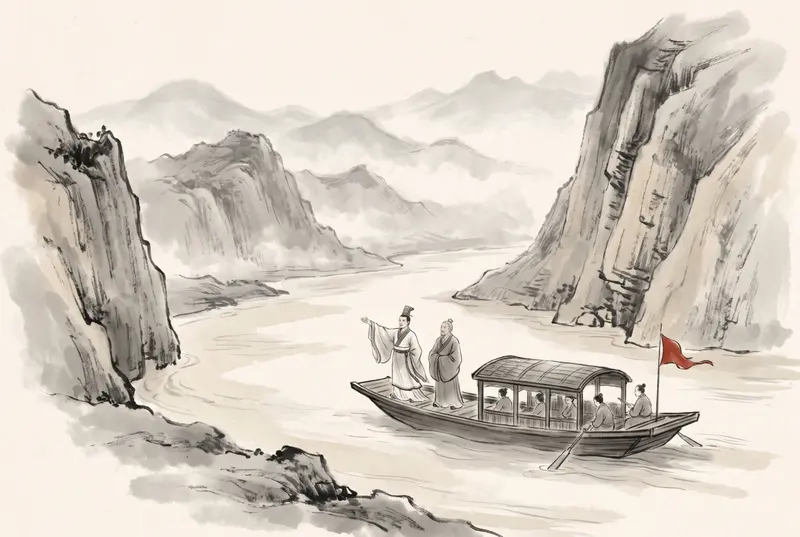
When Marquis Wen of Wei died, Wu Qi served his son, Marquis Wu. Once, sailing down the Western River, Marquis Wu turned to Wu Qi in midstream and said, "How beautiful are the defenses of these mountains and rivers! They are the treasure of the state of Wei." Wu Qi replied, "Safety lies in virtue, not in rugged ground. Long ago the Sanmiao had Lake Dongting on their left and Lake Pengli on their right, but they did not cultivate virtue and right, and Yu destroyed them. The capital of Jie of Xia had the Yellow River and the Ji on its left, Mount Tai and Mount Hua on its right, the Yi Gate to its south and the Sheep's Gut pass to its north, but he governed without humanity, and Tang drove him out. The state of Zhou of Yin had the Meng Gate on its left, the Taihang range on its right, Mount Chang to its north and the Yellow River running past its south, but he governed without virtue, and King Wu killed him. From this you can see that safety lies in virtue, not in rugged ground. If you do not cultivate virtue, my lord, even the people in this boat will become your enemies." "Well said," replied Marquis Wu.
Notes (JA)
- 文侯・武侯: 魏の君主。文侯(在位 前445〜前396年)は人材を集めて魏を強国にした。武侯はその子。
- 西河: 黄河のうち、今の陝西省と山西省の境を南へ流れる部分。呉起はこの地の長官として秦を防いだ。
- 在德不在險: 国を守るのは君主の徳であって、地形の険しさではない。よく知られた言葉。
- 三苗氏: 伝説時代、南方にいたとされる部族。
- 洞庭・彭蠡: 洞庭湖と彭蠡湖(今の鄱陽湖)。
- 夏桀・殷紂: 夏の最後の王の桀と、殷の最後の王の紂。暴君の代表とされる。
- 湯・武王: 殷を開いた湯王と、周を開いた武王。
- 伊闕・羊腸・孟門・太行・常山: いずれも黄河流域の山や峠の名。
- 舟中之人盡為敵國: 同じ舟に乗っている者さえ敵になる。
Notes (EN)
- Marquis Wen and Marquis Wu: rulers of Wei. Marquis Wen (r. 445–396 BCE) gathered able men and made Wei strong. Marquis Wu was his son.
- The Western River (西河): the stretch of the Yellow River that flows south between present-day Shaanxi and Shanxi. Wu Qi guarded it against Qin as governor.
- "Safety lies in virtue, not in rugged ground" (在德不在險): a famous saying.
- The Sanmiao: a legendary people of the south.
- Dongting and Pengli: two great lakes (Pengli is today's Lake Poyang).
- Jie of Xia and Zhou of Yin: the last kings of the Xia and Shang dynasties, the classic tyrants.
- Tang and King Wu: the founders of the Shang and Zhou dynasties.
- Yi Gate, Sheep's Gut, Meng Gate, Taihang, Mount Chang: mountains and passes of the Yellow River region.
- Even the people in this boat (舟中之人): even those closest to you.
Word notes
- midstream/ˈmɪdˌstriːm/noun
the middle of a river
In the text: “in midstream”
Similar words: mid-river — the middle of a river · halfway — in the middle of something
- defense/dɪˈfɛns/noun
something that protects against attack
In the text: “the defenses of these mountains and rivers”
Similar words: protection — keeping safe · fortification — walls and towers built for defense
British spelling: defence.
- rugged/ˈrʌɡɪd/adjective
rough, rocky and hard to cross
In the text: “not in rugged ground”
Similar words: rough — not smooth · craggy — with many steep rocks
- cultivate/ˈkʌltɪˌveɪt/verb
to work to develop a quality or skill
In the text: “they did not cultivate virtue”
Similar words: develop — help grow · nurture — care for so that it grows
Cultivate also means to grow crops on land.
Passage 11
Original
太史公曰:世俗所稱師旅,皆道孫子十三篇,吳起兵法,世多有,故弗論,論其行事所施設者。語曰:「能行之者未必能言,能言之者未必能行。」孫子籌策龐涓明矣,然不能蚤救患於被刑。吳起說武侯以形勢不如德,然行之於楚,以刻暴少恩亡其軀。悲夫!
Kundoku (Japanese reading)
太史公曰く、世俗の師旅を称する所は、皆孫子十三篇・呉起の兵法を道う。世に多く有り。故に論ぜず、其の行事の施設する所の者を論ず。語に曰く、「能く之を行う者は未だ必ずしも能く言わず、能く之を言う者は未だ必ずしも能く行わず」と。孫子の龐涓を籌策するは明らかなり。然れども蚤く患いを刑せらるるに救う能わず。呉起武侯に説くに形勢の徳に如かざるを以てす。然れども之を楚に行い、刻暴少恩を以て其の躯を亡ぼす。悲しいかな。
Japanese
太史公(司馬遷)は言う。世間で軍事について語る人は、みな孫子の十三篇や呉起の兵法を口にする。これらの書は世にたくさん出回っているので、ここでは論じず、彼らが実際に行ったことを取り上げた。ことわざに「よく行う者が、よく語れるとは限らない。よく語る者が、よく行えるとは限らない」とある。孫臏が龐涓を討つ策を立てたのは見事だったが、それより前に、自分が刑を受けるという災いを防ぐことはできなかった。呉起は武侯に、地形の守りは徳に及ばないと説いた。ところがのちに楚で政治を行ったときには、きびしくて情けのないやり方のために、自分の身を滅ぼした。悲しいことだ。
English
The Grand Historian says: when people talk about warfare, they all speak of Sunzi's thirteen chapters and Wu Qi's art of war. These books are widely found, so I do not discuss them here; I write instead about what these men actually did. As the saying goes, "Those who can do a thing cannot always talk about it, and those who can talk about it cannot always do it." Sun Bin's plan against Pang Juan was brilliant, yet he could not save himself earlier from being mutilated. Wu Qi taught Marquis Wu that rugged ground counts for less than virtue, yet when he governed in Chu, his harshness and lack of kindness cost him his life. How sad!
Notes (JA)
- 太史公: 司馬遷のこと(父の司馬談をさす場合もある)。各巻の最後に「太史公曰く」として自分の意見を述べる。巻130の章を参照。
- 師旅: 軍隊、軍事。
- 孫子籌策龐涓: 孫臏(ここでは「孫子」)が龐涓を討つ策を立てたこと。
- 行之於楚(省略した部分): 呉起はのちに魏を追われて楚に行き、宰相として改革を進めたが、王族の恨みを買い、悼王の死後に殺された。
- 刻暴少恩: きびしく乱暴で、思いやりが少ない。
Notes (EN)
- The Grand Historian (太史公): Sima Qian (sometimes his father, Sima Tan). At the end of each volume he gives his own view under this title. See Volume 130.
- 師旅: armies, warfare.
- Sun Bin's plan against Pang Juan: here Sun Bin is called "Sunzi."
- Governed in Chu (left out here): driven out of Wei, Wu Qi went to Chu and pushed through reforms as chief minister, but he made enemies among the nobles and was killed after King Dao died.
- 刻暴少恩: harsh and lacking in kindness.
Word notes
- brilliant/ˈbrɪljənt/adjective
very clever or skillful
In the text: “was brilliant”
Similar words: clever — quick to understand · masterly — showing great skill
- harshness/ˈhɑrʃnəs/noun
being cruel or very strict
In the text: “his harshness and lack of kindness”
Similar words: severity — being very strict · cruelty — causing pain on purpose