Hereditary Houses · Vol. 51
The Hereditary Houses of Jing and Yan 荊燕世家
A Kingdom Won by a Clever Guest 權激呂氏
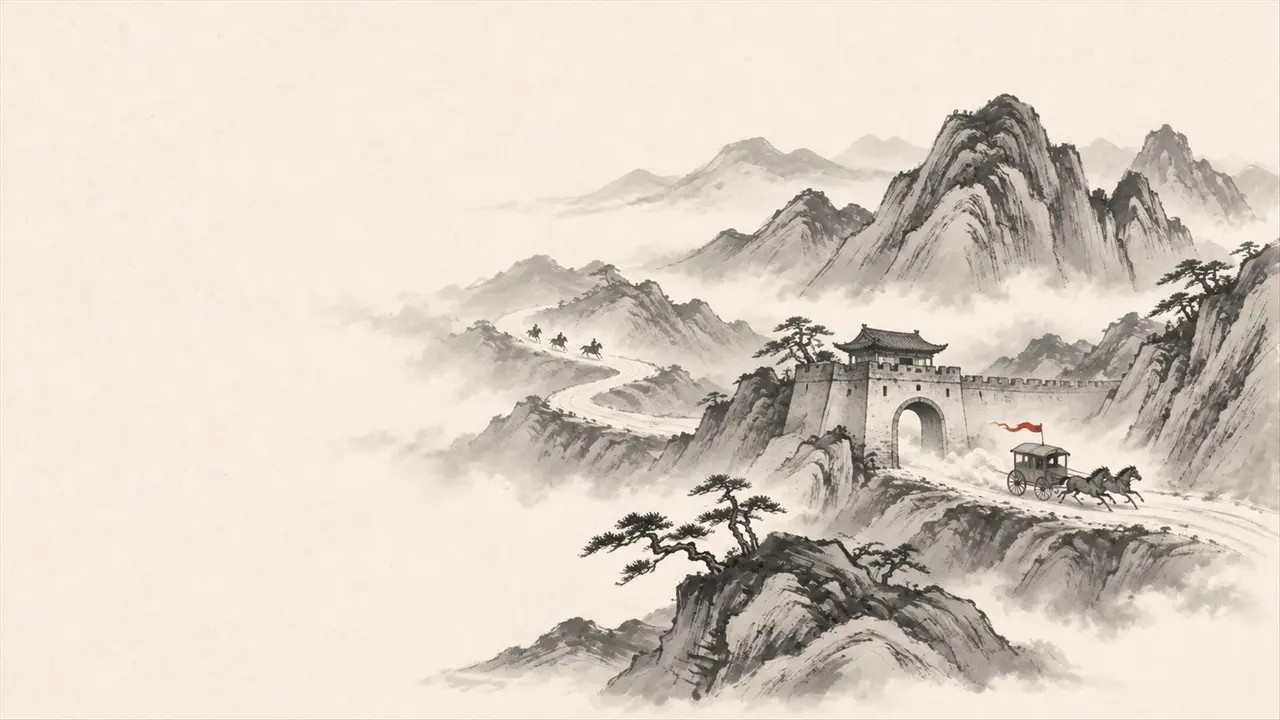
The story of two distant kinsmen of the Liu clan who became kings: Liu Jia of Jing and Liu Ze of Yan. In the war against Chu, Liu Jia slipped behind enemy lines to burn Chu's stores and won over Chu's Grand Marshal Zhou Yin, helping bring victory at Gaixia; with few sons and brothers of his own, Gaozu made him King of Jing, but he was killed in Qing Bu's rebellion. Liu Ze had once given two hundred catties of gold to Master Tian, a schemer from Qi. Two years later Master Tian lavishly entertained Zhang Ziqing, Empress Lü's favourite eunuch, persuaded him that making Lü Chan a king would please the empress, and then that making Liu Ze a king too would quiet the Liu clan; so Liu Ze became King of Langya, and by the time the empress regretted it and sent riders after him, he was through the pass. After her death Liu Ze helped make the King of Dai emperor and became King of Yan, but his grandson Dingguo lost the kingdom through bestial crimes.
This page has the scene "A Kingdom Won by a Clever Guest" from this volume, not the whole volume.
Audio
The audio is synthetic speech.
Video
Passage 1
Original
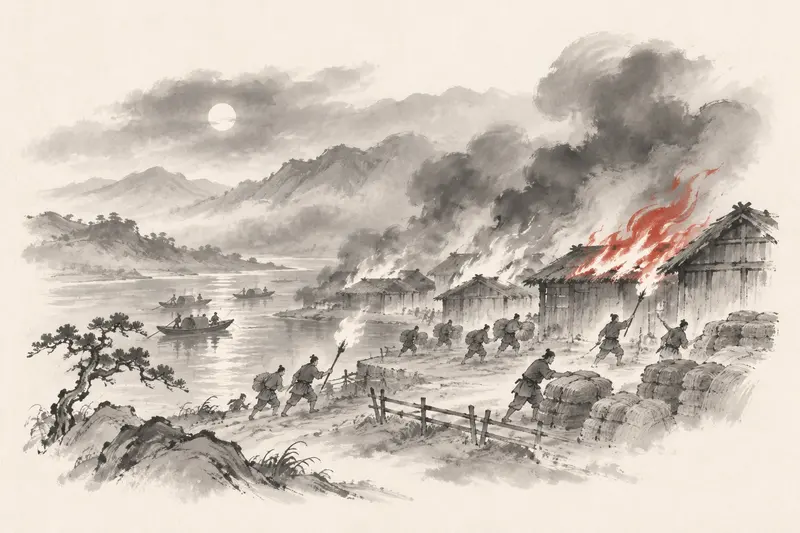
荊王劉賈者,諸劉,不知其何屬。初起時,漢王元年,還定三秦,劉賈為將軍,定塞地,從東擊項籍。漢四年,漢王之敗成皋,北渡河,得張耳、韓信軍,軍修武,深溝高壘,使劉賈將二萬人,騎數百,渡白馬津入楚地,燒其積聚,以破其業,無以給項王軍食。已而楚兵擊劉賈,賈輒壁不肯與戰,而與彭越相保。
Kundoku (Japanese reading)
荊王劉賈は、諸劉なり、其の何れに属するかを知らず。初め起こりし時、漢王の元年、還りて三秦を定むるに、劉賈将軍と為り、塞の地を定め、従いて東して項籍を撃つ。漢の四年、漢王の成皋に敗るるや、北して河を渡り、張耳・韓信の軍を得て、修武に軍し、溝を深くし塁を高くし、劉賈をして二万人、騎数百を将いて、白馬津を渡りて楚の地に入らしめ、其の積聚を焼き、以て其の業を破り、以て項王の軍食に給する無からしむ。已にして楚の兵劉賈を撃つ。賈輒ち壁して与に戦うを肯んぜず、而して彭越と相保つ。
Japanese
荊王の劉賈は劉氏の一族だが、どういう血筋かはわからない。挙兵したばかりのころ、漢王の元年(前206年)、漢王が関中に戻って三秦を平定すると、劉賈は将軍となって塞の地を平定し、漢王に従って東へ項籍(項羽)を攻めた。漢の四年、漢王が成皋で敗れると、北へ黄河を渡って張耳・韓信の軍を手に入れ、修武に陣を構えて、堀を深く、とりでを高くした。そして劉賈に兵二万人と騎兵数百を率いさせ、白馬津を渡って楚の領内に入らせ、蓄えを焼いて楚の生業をこわし、項王の軍に食糧が届かないようにさせた。やがて楚の兵が劉賈を攻めると、劉賈はいつもとりでにこもって戦おうとせず、彭越と助け合って守った。
English
Liu Jia, King of Jing, was one of the Liu clan, though it is not known how he was related. At the beginning, in the first year of the King of Han, when the king came back to settle the Three Qins, Liu Jia became a general, settled the land of Sai and followed the king east to attack Xiang Ji. In the fourth year of Han, when the King of Han had been beaten at Chenggao, he crossed the Yellow River to the north, took over the armies of Zhang Er and Han Xin, and camped at Xiuwu behind deep moats and high ramparts. He sent Liu Jia with twenty thousand men and several hundred horsemen across the Baima ford into the land of Chu, to burn its stores and wreck its livelihood so that King Xiang's army would have nothing to eat. When the troops of Chu attacked Liu Jia, he always stayed behind his walls and refused to fight, holding out together with Peng Yue.
Notes (JA)
- 諸劉: 劉氏の一族。
- 三秦: 項羽が秦の地を三つに分けて、秦から降った将に与えた国(雍・塞・翟)。
- 白馬津: 黄河の渡し場。
- 彭越: 楚の後方をかき乱した将(090-peng-yue の章)。
Notes (EN)
- One of the Liu clan (諸劉): a kinsman of the imperial family.
- The Three Qins: the kingdoms of Yong, Sai and Di, made by Xiang Yu out of Qin for its surrendered generals.
- Baima ford: a crossing of the Yellow River.
- Peng Yue: the general who harried Chu from behind (chapter 090).
Word notes
- rampart/ˈræmpɑːrt/noun
a high wall of earth built for defence
In the text: “behind deep moats and high ramparts”
Similar words: wall — a solid barrier · earthwork — a bank of earth for defence
- livelihood/ˈlaɪvlihʊd/noun
the way someone earns a living
In the text: “wreck its livelihood”
Similar words: living — means of support · income — money earned
Passage 2
Original
漢五年,漢王追項籍至固陵,使劉賈南渡淮圍壽春。還至,使人閒招楚大司馬周殷。周殷反楚,佐劉賈舉九江,迎武王黥布兵,皆會垓下,共擊項籍。漢王因使劉賈將九江兵,與太尉盧綰西南擊臨江王共尉。共尉已死,以臨江為南郡。
Kundoku (Japanese reading)
漢の五年、漢王項籍を追いて固陵に至り、劉賈をして南のかた淮を渡りて寿春を囲ましむ。還り至り、人をして間に楚の大司馬周殷を招かしむ。周殷楚に反し、劉賈を佐けて九江を挙げ、武王黥布の兵を迎え、皆垓下に会し、共に項籍を撃つ。漢王因りて劉賈をして九江の兵を将い、太尉盧綰と西南のかた臨江王共尉を撃たしむ。共尉已に死し、臨江を以て南郡と為す。
Japanese
漢の五年(前202年)、漢王は項籍を追って固陵まで行き、劉賈に南へ淮水を渡って寿春を囲ませた。劉賈は戻ってくると、人を送ってひそかに楚の大司馬の周殷を味方に誘った。周殷は楚に背き、劉賈を助けて九江を挙げて漢につき、武王黥布の兵を迎えて、皆で垓下に集まり、ともに項籍を攻めた。漢王はそこで劉賈に九江の兵を率いさせ、太尉の盧綰とともに西南の臨江王共尉を攻めさせた。共尉はすでに死んでいたので、臨江を南郡とした。
English
In the fifth year of Han, the King of Han pursued Xiang Ji as far as Guling and sent Liu Jia south across the Huai to besiege Shouchun. When Liu Jia came back, he sent men in secret to win over Zhou Yin, Grand Marshal of Chu. Zhou Yin turned against Chu, helped Liu Jia bring over Jiujiang, welcomed the troops of Qing Bu, King Wu, and they all met at Gaixia to attack Xiang Ji together. The King of Han then had Liu Jia lead the troops of Jiujiang, with Lu Wan, the Grand Commandant, southwest against Gong Wei, King of Linjiang. Gong Wei had already died, and Linjiang was made the commandery of Nan.
Notes (JA)
- 周殷: 楚の大司馬(軍の長)。周殷の寝返りは、項羽の滅亡を早めた。
- 黥布: 楚から漢についた将(091-qing-bu の章)。
- 垓下: 項羽が最後に敗れた戦い(007-gaixia の章)。
- 盧綰: 劉邦の幼なじみ(093-lu-wan の章)。
Notes (EN)
- Zhou Yin: Chu's Grand Marshal, whose defection hastened Xiang Yu's fall.
- Qing Bu: a general who went over from Chu to Han (chapter 091).
- Gaixia: Xiang Yu's last battle (chapter 007-gaixia).
- Lu Wan: Liu Bang's childhood friend (chapter 093).
Word notes
- besiege/bɪˈsiːdʒ/verb
to surround a city with an army to capture it
In the text: “to besiege Shouchun”
Similar words: surround — be all around · blockade — cut off supplies
- commandery/kəˈmɑːndəri/noun
a large district of the empire run by a governor
In the text: “was made the commandery of Nan”
Similar words: province — a large region of a country · prefecture — a district under an official
Passage 3
Original
漢六年春,會諸侯於陳,廢楚王信,囚之,分其地為二國。當是時也,高祖子幼,昆弟少,又不賢,欲王同姓以鎮天下,乃詔曰:「將軍劉賈有功,及擇子弟可以為王者。」群臣皆曰:「立劉賈為荊王,王淮東五十二城;高祖弟交為楚王,王淮西三十六城。」因立子肥為齊王。始王昆弟劉氏也。高祖十一年秋,淮南王黥布反,東擊荊。荊王賈與戰,不勝,走富陵,為布軍所殺。高祖自擊破布。十二年,立沛侯劉濞為吳王,王故荊地。
Kundoku (Japanese reading)
漢の六年春、諸侯を陳に会し、楚王信を廃し、之を囚え、其の地を分かちて二国と為す。是の時に当たりてや、高祖の子は幼く、昆弟は少なく、又た賢ならず。同姓を王として以て天下を鎮めんと欲し、乃ち詔して曰く、「将軍劉賈功有り。及び子弟の以て王と為すべき者を択べ」と。群臣皆曰く、「劉賈を立てて荊王と為し、淮東の五十二城に王たらしめ、高祖の弟交を楚王と為し、淮西の三十六城に王たらしめん」と。因りて子肥を立てて斉王と為す。始めて昆弟の劉氏に王たらしむ。高祖の十一年秋、淮南王黥布反し、東のかた荊を撃つ。荊王賈与に戦い、勝たず、富陵に走り、布の軍の殺す所と為る。高祖自ら撃ちて布を破る。十二年、沛侯劉濞を立てて呉王と為し、故の荊の地に王たらしむ。
Japanese
漢の六年の春、高祖は陳に諸侯を集め、楚王韓信を廃して捕らえ、その領地を二つの国に分けた。このころ、高祖の子は幼く、兄弟は少なく、しかも賢くなかった。高祖は同じ劉氏の者を王にして天下を落ち着かせようと思い、詔を出して言った。「将軍の劉賈には手柄がある。それに、子や弟の中から王にふさわしい者を選べ」。家臣たちは皆言った。「劉賈を荊王に立てて淮水の東の五十二の城を治めさせ、高祖の弟の劉交を楚王として淮水の西の三十六の城を治めさせましょう」。また子の劉肥を斉王に立てた。これが、劉氏の兄弟を王にした始まりである。高祖の十一年の秋、淮南王黥布が反乱を起こし、東の荊を攻めた。荊王劉賈は戦ったが勝てず、富陵に逃げ、黥布の軍に殺された。高祖は自ら黥布を攻めて破った。十二年、沛侯の劉濞を呉王に立てて、もとの荊の地を治めさせた。
English
In the spring of the sixth year of Han, the emperor gathered the lords at Chen, deposed Han Xin, King of Chu, arrested him and split his land into two kingdoms. At this time Gaozu's sons were young, his brothers few and not able either. Wishing to make kings of his own clan to steady the realm, he issued a decree: "General Liu Jia has done good service. Choose him, and those of my sons and brothers who are fit to be kings." The ministers all said: "Let Liu Jia be made King of Jing, ruling the fifty-two cities east of the Huai, and Gaozu's younger brother Jiao King of Chu, ruling the thirty-six cities west of the Huai." And his son Fei was made King of Qi. This was the first time brothers of the Liu clan were made kings. In the autumn of Gaozu's eleventh year, Qing Bu, King of Huainan, rebelled and attacked Jing to the east. Liu Jia, King of Jing, fought him and lost; he fled to Fuling and was killed by Qing Bu's army. Gaozu attacked Qing Bu himself and crushed him. In the twelfth year he made Liu Bi, Marquis of Pei, King of Wu, ruling the old land of Jing.
Notes (JA)
- 楚王信: 韓信。陳で捕らえられ、淮陰侯に落とされた(092-han-xin-end の章)。
- 劉交: 高祖の弟。楚の元王となる。
- 劉肥: 斉の悼恵王(052-qi-daohui の章)。
- 劉濞: 呉王。のちに呉楚七国の乱を起こす(106-liu-pi の章)。
Notes (EN)
- Han Xin, King of Chu: arrested at Chen and reduced to Marquis of Huaiyin (chapter 092-han-xin-end).
- Jiao: Gaozu's younger brother Liu Jiao, King Yuan of Chu.
- Fei: Liu Fei, King Daohui of Qi (chapter 052).
- Liu Bi: King of Wu, who later led the Revolt of the Seven States (chapter 106).
Word notes
- depose/dɪˈpoʊz/verb
to remove a ruler from power
In the text: “deposed Han Xin, King of Chu”
Similar words: overthrow — remove by force · dethrone — take the throne from
- decree/dɪˈkriː/noun
an official order from a ruler
In the text: “he issued a decree”
Similar words: order — a command · edict — a public order from a ruler
Passage 4
Original
燕王劉澤者,諸劉遠屬也。高帝三年,澤為郎中。高帝十一年,澤以將軍擊陳豨,得王黃,為營陵侯。高后時,齊人田生游乏資,以畫干營陵侯澤。澤大說之,用金二百斤為田生壽。田生已得金,即歸齊。二年,澤使人謂田生曰:「弗與矣。」田生如長安,不見澤,而假大宅,令其子求事呂后所幸大謁者張子卿。居數月,田生子請張卿臨,親修具。張卿許往。田生盛帷帳共具,譬如列侯。張卿驚。酒酣,乃屏人說張卿曰:「臣觀諸侯王邸弟百餘,皆高祖一切功臣。今呂氏雅故本推轂高帝就天下,功至大,又親戚太后之重。太后春秋長,諸呂弱,太后欲立呂產為[呂]王,王代。太后又重發之,恐大臣不聽。今卿最幸,大臣所敬,何不風大臣以聞太后,太后必喜。諸呂已王,萬戶侯亦卿之有。太后心欲之,而卿為內臣,不急發,恐禍及身矣。」張卿大然之,乃風大臣語太后。太后朝,因問大臣。大臣請立呂產為呂王。太后賜張卿千斤金,張卿以其半與田生。田生弗受,因說之曰:「呂產王也,諸大臣未大服。今營陵侯澤,諸劉,為大將軍,獨此尚觖望。今卿言太后,列十餘縣王之,彼得王,喜去,諸呂王益固矣。」張卿入言,太后然之。乃以營陵侯劉澤為瑯邪王。瑯邪王乃與田生之國。田生勸澤急行,毋留。出關,太后果使人追止之,已出,即還。
Kundoku (Japanese reading)
燕王劉沢は、諸劉の遠属なり。高帝の三年、沢郎中と為る。高帝の十一年、沢将軍を以て陳豨を撃ち、王黄を得て、営陵侯と為る。高后の時、斉人田生游びて資乏しく、画を以て営陵侯沢に干む。沢大いに之を説び、金二百斤を用いて田生の寿と為す。田生已に金を得て、即ち斉に帰る。二年、沢人をして田生に謂わしめて曰く、「与にせざるかな」と。田生長安に如き、沢に見えずして、大宅を仮り、其の子をして呂后の幸する所の大謁者張子卿に事えんことを求めしむ。居ること数月、田生の子張卿の臨まんことを請い、親ら具を修む。張卿往かんことを許す。田生帷帳共具を盛んにし、譬えば列侯の如し。張卿驚く。酒酣にして、乃ち人を屏けて張卿に説きて曰く、「臣諸侯王の邸弟百余を観るに、皆高祖の一切の功臣なり。今呂氏は雅故本より高帝を推轂して天下に就かしむ。功至大なり。又た親戚にして太后の重有り。太后春秋長く、諸呂弱し。太后呂産を立てて呂王と為し、代に王たらしめんと欲す。太后又た重ねて之を発せんとし、大臣の聴かざらんことを恐る。今卿最も幸せられ、大臣の敬する所なり。何ぞ大臣に風して以て太后に聞せしめざる。太后必ず喜ばん。諸呂已に王たれば、万戸侯も亦た卿の有ならん。太后心に之を欲するに、卿は内臣為りて、急に発せざれば、恐らくは禍身に及ばん」と。張卿大いに之を然りとし、乃ち大臣に風して太后に語らしむ。太后朝し、因りて大臣に問う。大臣呂産を立てて呂王と為さんことを請う。太后張卿に千斤の金を賜い、張卿其の半ばを以て田生に与う。田生受けず、因りて之に説きて曰く、「呂産王たるも、諸大臣未だ大いに服せず。今営陵侯沢は、諸劉にして、大将軍為り、独り此れ尚お觖望す。今卿太后に言い、十余県を列して之を王とせば、彼王たるを得て、喜びて去らん。諸呂の王は益々固からん」と。張卿入りて言う。太后之を然りとす。乃ち営陵侯劉沢を以て瑯邪王と為す。瑯邪王乃ち田生と国に之く。田生沢に急ぎ行きて留まること毋かれと勧む。関を出づるに、太后果たして人をして追いて之を止めしむ。已に出でたれば、即ち還る。
Japanese
燕王の劉沢は、劉氏の遠い一族である。高帝の三年に郎中となった。高帝の十一年、将軍として陳豨を攻め、王黄を捕らえて、営陵侯となった。呂后の時代、斉の人田生が旅をして金に困り、策略を売りこもうと営陵侯劉沢に会った。劉沢はたいへん気に入り、金二百斤を田生の長寿の祝いとして贈った。田生は金を受け取ると、すぐに斉へ帰ってしまった。二年たって、劉沢は田生に使いをやって言わせた。「もうわたしの味方はしてくれないのか」。田生は長安へ出てきたが、劉沢には会わず、大きな屋敷を借りて、息子に、呂后のお気に入りの大謁者(宮中の取り次ぎ役の長)張子卿に仕えさせてくれるよう頼ませた。数か月たって、田生の息子が張卿に家へおいでくださるようお願いし、自分でもてなしの用意をした。張卿が行くと承知すると、田生はとばりや道具を盛大にととのえ、まるで列侯のようだった。張卿は驚いた。酒がまわると、田生は人払いをして張卿に説いた。「わたしが見るところ、諸侯王の屋敷は百あまりありますが、皆高祖の功臣たちのものです。いっぽう呂氏は、昔から高帝を押し立てて天下を取らせた功績がとても大きく、そのうえ太后の身内という重みがあります。太后はお年を召され、呂氏の一族はまだ弱い。太后は呂産を呂王に立てて代の地を治めさせたいのですが、自分から言い出すのをためらい、大臣たちが従わないことを恐れておられます。いまあなたは太后にいちばん気に入られ、大臣たちにも敬われています。どうして大臣たちにそれとなく言って、太后に申し上げさせないのですか。太后はきっと喜ばれます。呂氏の一族が王になれば、一万戸の侯の位も、あなたのものです。太后が心でそれを望んでおられるのに、宮中に仕えるあなたが急いで言い出さなければ、災いがあなたに及ぶかもしれません」。張卿はもっともだと思い、大臣たちにそれとなく言って、太后に申し上げさせた。太后は朝廷で大臣たちにたずね、大臣たちは呂産を呂王に立てるよう願い出た。太后は張卿に金千斤を与え、張卿はその半分を田生に与えた。田生はそれを受け取らず、さらに張卿に説いた。「呂産が王になっても、大臣たちはまだ心から従ってはいません。いま営陵侯の劉沢は劉氏の一族で、大将軍です。この人だけがまだ不満を持っています。いまあなたが太后に申し上げて、十あまりの県を与えて王にすれば、劉沢は王になれて喜んで去り、呂氏の王たちの地位はますます固まるでしょう」。張卿が宮中に入って申し上げると、太后はもっともだと思った。こうして営陵侯劉沢は瑯邪王となった。瑯邪王は田生とともに国へ向かった。田生は劉沢に、急いで行き、ぐずぐずしないよう勧めた。函谷関を出たところで、太后はやはり人をやって追いかけ、引きとめようとしたが、もう関を出ていたので、使いはそのまま戻った。
English
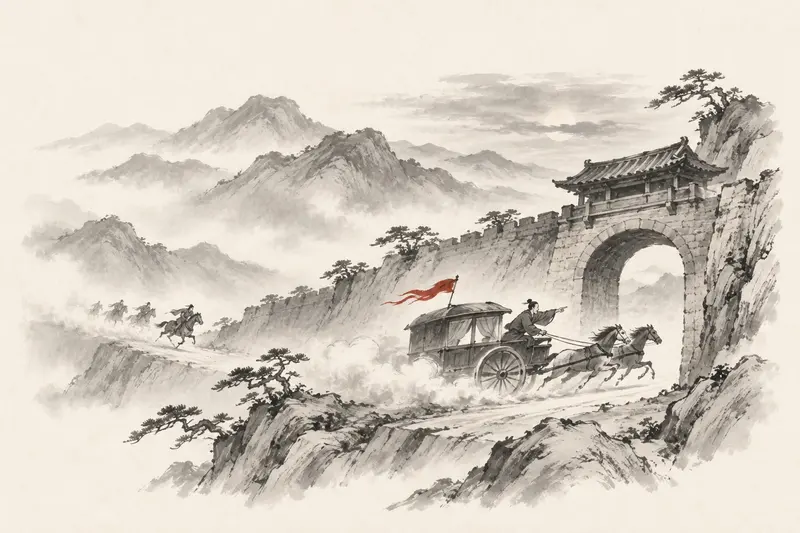
Liu Ze, King of Yan, was a distant member of the Liu clan. In Emperor Gao's third year he became a gentleman of the palace. In the eleventh year, as a general, he attacked Chen Xi, captured Wang Huang and was made Marquis of Yingling. In the time of Empress Lü, a man of Qi called Master Tian, travelling and short of money, went to the Marquis of Yingling with a scheme to sell. Liu Ze was so pleased with him that he gave him two hundred catties of gold as a birthday gift. As soon as Master Tian had the gold, he went home to Qi. Two years later Liu Ze sent someone to say to him: "So you are no longer on my side?" Master Tian went to Chang'an, but instead of seeing Liu Ze he rented a great mansion and had his son seek service with Zhang Ziqing, the chief usher and a favourite of Empress Lü. After some months Master Tian's son asked Zhang Ziqing to visit, and prepared the entertainment himself. When Zhang agreed to come, Master Tian laid out curtains and furnishings as splendid as any marquis's. Zhang was astonished. When the wine had gone round, Master Tian sent everyone away and said to him: "I see more than a hundred mansions of kings and lords here, all belonging to Gaozu's companions in arms. Now the Lü clan, from the very beginning, pushed Emperor Gao on to win the realm; their merit is very great, and they have the weight of being the empress dowager's kin. The empress dowager is growing old and the Lü clan is still weak. She wants to make Lü Chan King of Lü, ruling Dai, but she hesitates to propose it herself, fearing the high ministers will not agree. Now you are her greatest favourite and respected by the ministers. Why not hint to the ministers that they should raise it with her? She will surely be delighted. Once the Lü clan are kings, a marquisate of ten thousand households will be yours too. If she wants it in her heart and you, who serve inside the palace, do not raise it quickly, I fear disaster may fall on you." Zhang thought this very true, and hinted to the ministers that they should speak to the empress dowager. When she held court, she asked the ministers, and they asked that Lü Chan be made King of Lü. The empress dowager gave Zhang a thousand catties of gold, and Zhang gave half to Master Tian. Master Tian would not take it, but went on: "Now that Lü Chan is a king, the ministers are still not truly reconciled. The Marquis of Yingling, Liu Ze, is of the Liu clan and a great general, and he alone is still discontented. If you now speak to the empress dowager and have a dozen counties set aside to make him a king, he will be glad to have his kingdom and go away, and the Lü kings will be safer than ever." Zhang went in and said so, and the empress dowager agreed. So Liu Ze, Marquis of Yingling, was made King of Langya. The King of Langya set off for his kingdom with Master Tian. Master Tian urged him to hurry and not linger. As they went out through the pass, the empress dowager, as expected, sent men after him to stop him; but he was already through, so they turned back.
Notes (JA)
- 田生: 斉の策士。劉沢から受けた金の恩を、二年がかりの策略で返した。
- 大謁者: 宮中の取り次ぎ役の長。宦官がつとめた。
- 原文の「[呂]」は、底本の校訂で補った字。
- 太后がすぐに追っ手を出したのは、劉沢を王にしたことを後悔したためと読める。
Notes (EN)
- Master Tian: a schemer from Qi who repaid Liu Ze's gold with a two-year plot.
- Chief usher (大謁者): head of the palace attendants, an office held by a eunuch.
- The text's "[呂]" is a character supplied by the editors.
- The empress dowager's riders suggest she quickly regretted making Liu Ze a king.
Word notes
- hint/hɪnt/verb
to suggest something without saying it directly
In the text: “Why not hint to the ministers”
Similar words: suggest — put forward an idea · imply — say indirectly
- discontented/ˌdɪskənˈtɛntɪd/adjective
not satisfied with your situation
In the text: “he alone is still discontented”
Similar words: dissatisfied — not pleased · resentful — bitter about unfair treatment
Passage 5
Original
及太后崩,瑯邪王澤乃曰:「帝少,諸呂用事,劉氏孤弱。」乃引兵與齊王合謀西,欲誅諸呂。至梁,聞漢遣灌將軍屯滎陽,澤還兵備西界,遂跳驅至長安。代王亦從代至。諸將相與瑯邪王共立代王為天子。天子乃徙澤為燕王,乃復以瑯邪予齊,復故地。澤王燕二年,薨,謚為敬王。傳子嘉,為康王。
Kundoku (Japanese reading)
太后崩ずるに及び、瑯邪王沢乃ち曰く、「帝少く、諸呂事を用い、劉氏孤弱なり」と。乃ち兵を引きて斉王と合謀して西し、諸呂を誅せんと欲す。梁に至り、漢灌将軍を遣わして滎陽に屯せしむと聞き、沢兵を還して西界に備え、遂に跳驅して長安に至る。代王も亦た代より至る。諸将相瑯邪王と共に代王を立てて天子と為す。天子乃ち沢を徙して燕王と為し、乃ち復た瑯邪を以て斉に予え、故の地に復す。沢燕に王たること二年にして薨ず。謚して敬王と為す。子嘉に伝え、康王と為る。
Japanese
太后が亡くなると、瑯邪王劉沢は言った。「皇帝は幼く、呂氏の一族が政治を握り、劉氏は孤立して弱っている」。そこで兵を率いて斉王と相談し、西へ向かって呂氏の一族を討とうとした。梁まで来たとき、漢が灌将軍(灌嬰)を送って滎陽に軍を置いたと聞き、劉沢は兵を引き返させて西の国境を守らせ、自分は馬を飛ばして長安へ行った。代王も代からやって来た。将軍や大臣たちは瑯邪王とともに代王を立てて天子とした。天子は劉沢を燕王に移し、瑯邪は斉に返して、もとの領地に戻した。劉沢は燕の王となって二年で亡くなり、敬王と呼ばれた。子の劉嘉が後を継ぎ、康王となった。
English
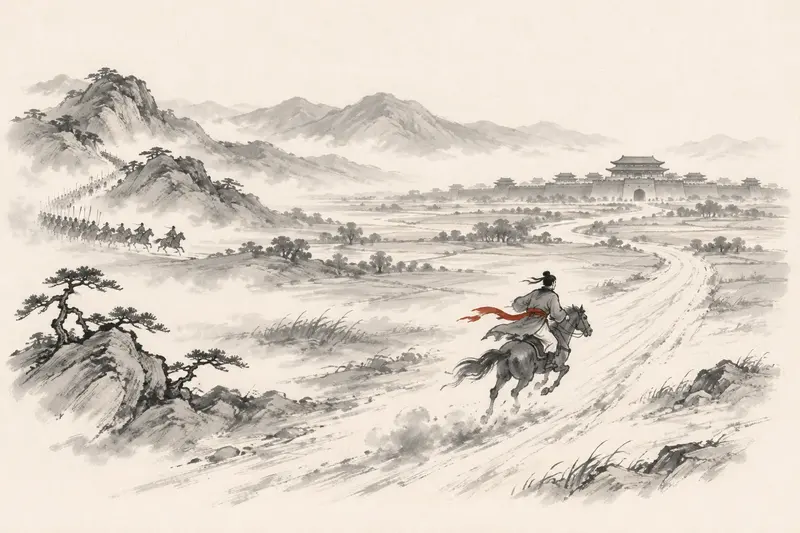
When the empress dowager died, Liu Ze, King of Langya, said: "The emperor is young, the Lü clan hold power, and the Liu clan is isolated and weak." So he led his troops and made plans with the King of Qi to march west and destroy the Lü clan. When he reached Liang and heard that Han had sent General Guan to camp at Xingyang, he turned his troops back to guard the western border and galloped on himself to Chang'an. The King of Dai also came from Dai. The generals and ministers, together with the King of Langya, made the King of Dai Son of Heaven. The new emperor moved Liu Ze to be King of Yan, and gave Langya back to Qi as its old land. After two years as King of Yan, Liu Ze died and was given the posthumous name King Jing. He was succeeded by his son Jia, King Kang.
Notes (JA)
- 斉王と合謀: 斉悼恵王世家では、劉沢は斉王にだまされて兵を奪われたと書かれている(052-qi-daohui の章)。同じ出来事が、巻によって違った形で語られている。
- 灌将軍: 灌嬰。
- 代王: のちの文帝(010-emperor-wen の章)。
Notes (EN)
- Making plans with the King of Qi: in the House of King Daohui of Qi, Liu Ze is tricked by the King of Qi and loses his troops (chapter 052); the two volumes tell the same events differently.
- General Guan: Guan Ying.
- The King of Dai: the future Emperor Wen (chapter 010).
Word notes
- isolated/ˈaɪsəleɪtɪd/adjective
alone and without help
In the text: “the Liu clan is isolated and weak”
Similar words: alone — with no one else · cut off — separated from others
- gallop/ˈɡæləp/verb
to ride a horse at its fastest speed
In the text: “galloped on himself to Chang'an”
Similar words: race — move very fast · charge — rush forward
Passage 6
Original
至孫定國,與父康王姬姦,生子男一人。奪弟妻為姬。與子女三人姦。定國有所欲誅殺臣肥如令郢人,郢人等告定國,定國使謁者以他法劾捕格殺郢人以滅口。至元朔元年,郢人昆弟復上書具言定國陰事,以此發覺。詔下公卿,皆議曰:「定國禽獸行,亂人倫,逆天,當誅。」上許之。定國自殺,國除為郡。
Kundoku (Japanese reading)
孫の定国に至り、父の康王の姫と姦し、子男一人を生む。弟の妻を奪いて姫と為す。子女三人と姦す。定国誅殺せんと欲する所の臣肥如の令郢人有り。郢人等定国を告ぐ。定国謁者をして它の法を以て郢人を劾し捕えて格殺せしめ、以て口を滅す。元朔元年に至り、郢人の昆弟復た上書して具さに定国の陰事を言う。此を以て発覚す。詔して公卿に下す。皆議して曰く、「定国は禽獣の行いあり、人倫を乱し、天に逆らう。当に誅すべし」と。上之を許す。定国自殺し、国除かれて郡と為る。
Japanese
孫の劉定国の代になると、定国は父の康王の側室と通じて男の子を一人生ませ、弟の妻を奪って自分の側室にし、自分の娘三人とも通じた。定国が殺そうとしていた家臣に、肥如県の長の郢人がいた。郢人たちが定国を訴えると、定国は謁者に命じて、別の罪で郢人を捕らえさせ、打ち殺して口をふさいだ。元朔元年(前128年)になって、郢人の兄弟がまた上書して、定国の悪事をくわしく訴えたので、ついに明るみに出た。天子は大臣たちに議論させた。皆が言った。「定国は獣のような行いで、人の道を乱し、天に背きました。死罪にあたります」。天子はこれを許した。定国は自殺し、国は取りつぶされて郡となった。
English
In the time of his grandson Dingguo, Dingguo had relations with a concubine of his father, King Kang, and fathered a son by her. He took his younger brother's wife as his own concubine, and had relations with three of his own daughters. There was a minister he wanted to kill, Ying Ren, magistrate of Feiru. Ying Ren and others denounced Dingguo, and Dingguo had an usher arrest Ying Ren on another charge and beat him to death to silence him. In the first year of Yuanshuo, Ying Ren's brothers sent up another letter setting out Dingguo's hidden crimes in full, and so it all came to light. The matter was sent down to the high ministers, who all agreed: "Dingguo behaved like a beast, overturned the bonds of humanity and defied Heaven. He should be put to death." The emperor approved. Dingguo killed himself, and his kingdom was abolished and made a commandery.
Notes (JA)
- 定国: 燕王劉定国。その悪事を暴いたのは主父偃だとされる(112-pingjin の章)。
- 人倫: 親子・夫婦・兄弟など、人として守るべき関係。
- 劉沢の家は、三代で絶えた。
Notes (EN)
- Dingguo: Liu Dingguo, King of Yan, whose crimes Zhufu Yan is said to have exposed (chapter 112).
- The bonds of humanity (人倫): the proper relations between parents and children, husbands and wives, brothers.
- Liu Ze's line ended in the third generation.
Word notes
- silence/ˈsaɪləns/verb
to stop someone from speaking
In the text: “to silence him”
Similar words: hush — make quiet · gag — stop someone speaking
- abolish/əˈbɒlɪʃ/verb
to end a system or institution officially
In the text: “his kingdom was abolished”
Similar words: end — bring to a stop · scrap — get rid of; informal
Passage 7
Original
太史公曰:荊王王也,由漢初定,天下未集,故劉賈雖屬疏,然以策為王,填江淮之閒。劉澤之王,權激呂氏,然劉澤卒南面稱孤者三世。事發相重,豈不為偉乎!
Kundoku (Japanese reading)
太史公曰く、荊王の王たるや、漢初めて定まり、天下未だ集まらざるに由る。故に劉賈は属疎なりと雖も、然れども策を以て王となり、江淮の間を填む。劉沢の王たるや、権もて呂氏を激す。然れども劉沢卒に南面して孤と称する者三世なり。事発して相重なる、豈に偉ならずや。
Japanese
太史公は言う。劉賈が荊王になれたのは、漢が天下を定めたばかりで、まだまとまっていなかったからである。だから劉賈は血のつながりが遠かったが、はかりごとによって王となり、長江と淮水の間を守った。劉沢が王になれたのは、策略で呂氏の気持ちを動かしたからである。それでも劉沢の家は、最後には王として三代続いた。出来事が次々に重なって身を立てたのは、すばらしいことではないか。
English
The Grand Historian says: Liu Jia became King of Jing because Han had only just been founded and the realm was not yet united. So although he was a distant kinsman, he was made king by design, to hold the land between the Yangzi and the Huai. Liu Ze became king by a trick that played on the Lü clan; yet in the end his line sat facing south as kings for three generations. One thing led to another and raised him up: was that not remarkable?
Notes (JA)
- 南面して孤と称す: 南を向いて座り、自分を「孤」と呼ぶ。王であること。
- 劉沢が王になれたのは、田生の策略(第4節)による。
Notes (EN)
- Sitting facing south (南面稱孤): ruling as a king.
- Liu Ze's kingdom came from Master Tian's scheme (passage 4).
Word notes
- distant/ˈdɪstənt/adjective
far away; here, not closely related
In the text: “he was a distant kinsman”
Similar words: remote — far off · far — a long way
- remarkable/rɪˈmɑːrkəbəl/adjective
unusual and worth noticing
In the text: “was that not remarkable”
Similar words: extraordinary — very unusual · striking — catching the attention