Biographies · Vol. 99
The Biographies of Liu Jing and Shusun Tong 劉敬叔孫通列傳
The Day Gaozu Knew He Was Emperor 知為皇帝之貴
The stories of two men who gave the new Han state its shape. Lou Jing of Qi, on his way to frontier duty, asked to see Liu Bang still wearing his sheepskin coat, and told him to make his capital not at Luoyang but in the old land of Qin, walled in by mountains and rivers. Zhang Liang agreed, Liu Bang moved west that same day, and gave Lou Jing the imperial surname Liu. Liu Jing was jailed for warning against an attack on the Xiongnu, but released when Liu Bang was trapped by them for seven days at Pingcheng, and he devised the policy of marrying a princess to the Chanyu. Shusun Tong had been a Qin court scholar; he soothed the Second Emperor by calling Chen Sheng's rising mere petty theft, then escaped Qin as if from a tiger's jaws. Serving Liu Bang, he saw a court where drunken ministers hacked at the pillars with their swords, and told him that Confucians were no use for winning an empire but could help to keep one; then he devised the rites of the court. When the ceremony was performed in perfect order in the Changle Palace, Liu Bang said: "Today at last I know how noble it is to be emperor." Sima Qian ends by saying that a coat worth a thousand gold is not made from the fur of a single fox: the Han too was built on many men's wisdom.
This page has the scene "The Day Gaozu Knew He Was Emperor" from this volume, not the whole volume.
Audio
The audio is synthetic speech.
Video
Passage 1
Original
劉敬者,齊人也。漢五年,戍隴西,過洛陽,高帝在焉。婁敬脫輓輅,衣其羊裘,見齊人虞將軍曰:「臣願見上言便事。」虞將軍欲與之鮮衣,婁敬曰:「臣衣帛,衣帛見;衣褐,衣褐見:終不敢易衣。」於是虞將軍入言上。上召入見,賜食。
Kundoku (Japanese reading)
劉敬は、斉の人なり。漢の五年、隴西に戍らんとし、洛陽を過ぐ。高帝焉に在り。婁敬輓輅を脱し、其の羊裘を衣て、斉の人虞将軍に見えて曰く、「臣願わくは上に見えて便事を言わん」と。虞将軍之に鮮衣を与えんと欲す。婁敬曰く、「臣帛を衣れば、帛を衣て見え、褐を衣れば、褐を衣て見えん。終に敢えて衣を易えず」と。是に於いて虞将軍入りて上に言う。上召し入れて見え、食を賜う。
Japanese
劉敬は斉の人である。漢の五年、隴西の守りにつくために洛陽を通りかかった。高帝はちょうど洛陽にいた。婁敬(のちの劉敬)は、車を引く横木をはずし、羊の皮の衣を着たまま、同じ斉の人の虞将軍に会って言った。「陛下にお目にかかって、役に立つことを申し上げたい」。虞将軍は、きれいな衣服を貸そうとしたが、婁敬は言った。「わたしは絹を着ていれば絹のまま、粗い布を着ていれば粗い布のままでお目にかかります。決して衣服を着がえたりはいたしません」。そこで虞将軍は宮中に入って帝に伝えた。帝は婁敬を呼び入れて会い、食事を与えた。
English
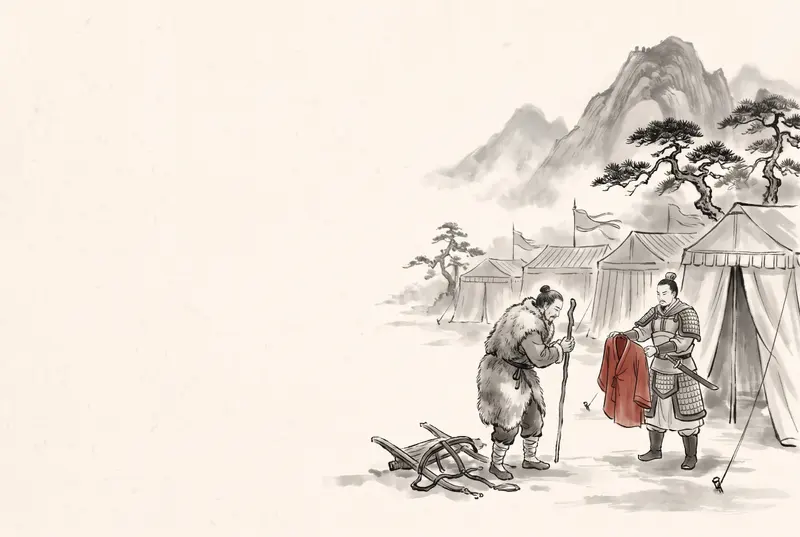
Liu Jing was a man of Qi. In the fifth year of Han, on his way to frontier duty in Longxi, he passed through Luoyang, where Emperor Gao was staying. Lou Jing took off the harness of the cart he was pulling, and in his sheepskin coat went to see a general named Yu, a fellow man of Qi, and said: "I wish to see the emperor and tell him something useful." General Yu wanted to give him fresh clothes. Lou Jing said: "If I am wearing silk, I will see him in silk; if I am wearing coarse wool, I will see him in coarse wool. I will not change my clothes." So General Yu went in and told the emperor. The emperor called him in, saw him, and gave him a meal.
Notes (JA)
- 婁敬: 劉敬のもとの名。このあと劉の姓を与えられる。
- 輓輅: 車を引くための横木。婁敬は兵役のための車を自分で引いていた。
- 羊裘・褐: 羊の毛皮の衣と、粗い毛織物。どちらも庶民の服。
- 隴西: 今の甘粛省東部。西の辺境の守り。
Notes (EN)
- Lou Jing (婁敬): Liu Jing's name before the emperor gave him the surname Liu.
- The harness (輓輅): he was pulling a cart on his way to service.
- Sheepskin and coarse wool (羊裘・褐): the clothes of common people.
Word notes
- harness/ˈhɑrnɪs/noun
straps used to tie a person or animal to a cart
In the text: “took off the harness of the cart”
Similar words: tack — straps for a horse · yoke — frame for pulling
- coarse/kɔrs/adjective
rough, not smooth or fine
In the text: “coarse wool”
Similar words: rough — not smooth · crude — simple and rough
Passage 2
Original
且夫秦地被山帶河,四塞以為固,卒然有急,百萬之眾可具也。因秦之故,資甚美膏腴之地,此所謂天府者也。陛下入關而都之,山東雖亂,秦之故地可全而有也。夫與人鬬,不搤其亢,拊其背,未能全其勝也。今陛下入關而都,案秦之故地,此亦搤天下之亢而拊其背也。」高帝問群臣,群臣皆山東人,爭言周王數百年,秦二世即亡,不如都周。上疑未能決。及留侯明言入關便,即日車駕西都關中。於是上曰:「本言都秦地者婁敬,『婁』者乃『劉』也。」賜姓劉氏,拜為郎中,號為奉春君。
Kundoku (Japanese reading)
且つ夫れ秦の地は山を被り河を帯び、四塞以て固めと為す。卒然として急有るも、百万の衆具うべきなり。秦の故に因りて、甚だ美なる膏腴の地を資る。此れ所謂天府なる者なり。陛下関に入りて之に都せば、山東乱るると雖も、秦の故の地全うして有つべきなり。夫れ人と闘うに、其の亢を搤え、其の背を拊たずんば、未だ其の勝ちを全うする能わざるなり。今陛下関に入りて都し、秦の故の地を案ずるは、此れ亦た天下の亢を搤えて其の背を拊つなり」と。高帝群臣に問う。群臣皆山東の人にして、争いて言う、周は王たること数百年、秦は二世にして即ち亡ぶ、周に都するに如かずと。上疑いて未だ決する能わず。留侯の明らかに関に入るの便を言うに及び、即日車駕西のかた関中に都す。是に於いて上曰く、「本秦の地に都せんことを言う者は婁敬なり。『婁』とは乃ち『劉』なり」と。姓劉氏を賜い、拝して郎中と為し、号して奉春君と為す。
Japanese
(婁敬は、周が洛陽に都を置いたのは徳で人を招くためだったが、戦で天下を取った漢は周とは違う、と述べて続けた。)「そのうえ秦の地は、山を背にして黄河をめぐらし、四方を要害に囲まれて堅固です。急な変事があっても、百万の兵をそろえることができます。秦の残したものをそのまま受けつぎ、豊かでよく肥えた土地を元手にできます。これこそ、いわゆる天の倉です。陛下が関中に入って都を置かれれば、山東(函谷関より東)が乱れても、秦の地はまるごと保つことができます。そもそも人と戦うとき、のどを押さえ、背中を打たなければ、完全に勝つことはできません。いま陛下が関中に入って都を置き、秦の地を押さえるのは、天下ののどを押さえ、背中を打つことなのです」。高帝が群臣にたずねると、群臣は皆山東の出身だったので、口々に「周は数百年も王朝が続いたが、秦は二代で滅んだ。周の都(洛陽)にするほうがよい」と言った。帝は迷って決められなかった。しかし留侯(張良)が、関中に入るほうがよいとはっきり言うと、その日のうちに車を西へ向けて関中に都を置いた。そこで帝は言った。「はじめに秦の地に都を置けと言ったのは婁敬だ。『婁』は『劉』に通じる」。そして劉の姓を与え、郎中に任じて、奉春君と号させた。
English
"Besides, the land of Qin is wrapped in mountains and belted by the river, with passes on all four sides to guard it. If there is a sudden emergency, an army of a million can be raised. Taking over what Qin left, you will have the richest and most fertile land to draw on. This is what is called the storehouse of Heaven. If Your Majesty enters the pass and makes your capital there, then even if the lands east of the mountains fall into chaos, the old land of Qin can be kept whole. When you fight a man, unless you grip his throat and strike his back, you cannot be sure of winning. If Your Majesty enters the pass and makes your capital there, holding the old land of Qin, you will be gripping the realm by the throat and striking its back." Emperor Gao asked his ministers. They were all men from east of the mountains, and they all argued that the Zhou had ruled for several hundred years while Qin had fallen in two generations, and that it would be better to keep the capital in the land of Zhou. The emperor was unsure and could not decide. But when the Marquis of Liu said plainly that it was better to enter the pass, the emperor set off west that very day and made his capital in the land within the pass. Then the emperor said: "The man who first told me to make my capital in the land of Qin was Lou Jing. 'Lou' is the same as 'Liu'." He gave him the surname Liu, made him a palace gentleman, and gave him the title Lord Fengchun.
Notes (JA)
- 被山帶河: 山を背に負い、川を帯のようにめぐらす。守りの堅い土地のたとえ。
- 天府: 天の倉。物産が豊かな土地。
- 搤其亢: のどを押さえる。急所を押さえること。
- 劉の姓を与えられた婁敬は、以後「劉敬」と呼ばれる。漢の都長安はこうして関中に置かれた。
Notes (EN)
- Wrapped in mountains and belted by the river (被山帶河): a land easy to defend.
- The storehouse of Heaven (天府): a land of plenty.
- Gripping the throat (搤其亢): holding the vital point.
- With the surname Liu, Lou Jing became Liu Jing; and so the Han capital Chang'an was built in the land within the pass.
Word notes
- fertile/ˈfɜrtəl/adjective
able to grow many crops
In the text: “the richest and most fertile land”
Similar words: rich — productive · productive — giving good harvests
- storehouse/ˈstɔrˌhaʊs/noun
a building where goods are kept
In the text: “the storehouse of Heaven”
Similar words: warehouse — building for goods · granary — store for grain
Passage 3
Original
漢七年,韓王信反,高帝自往擊之。至晉陽,聞信與匈奴欲共擊漢,上大怒,使人使匈奴。匈奴匿其壯士肥牛馬,但見老弱及羸畜。使者十輩來,皆言匈奴可擊。上使劉敬復往使匈奴,還報曰:「兩國相擊,此宜夸矜見所長。今臣往,徒見羸瘠老弱,此必欲見短,伏奇兵以爭利。愚以為匈奴不可擊也。」是時漢兵已踰句注,二十餘萬兵已業行。上怒,罵劉敬曰:「齊虜!以口舌得官,今乃妄言沮吾軍。」械系敬廣武。遂往,至平城,匈奴果出奇兵圍高帝白登,七日然後得解。高帝至廣武,赦敬,曰:「吾不用公言,以困平城。吾皆已斬前使十輩言可擊者矣。」乃封敬二千戶,為關內侯,號為建信侯。
Kundoku (Japanese reading)
漢の七年、韓王信反す。高帝自ら往きて之を撃つ。晋陽に至り、信の匈奴と共に漢を撃たんと欲するを聞き、上大いに怒り、人をして匈奴に使いせしむ。匈奴其の壮士肥牛馬を匿し、但だ老弱及び羸畜を見す。使者十輩来たりて、皆匈奴撃つべしと言う。上劉敬をして復た往きて匈奴に使いせしむ。還りて報じて曰く、「両国相撃つには、此れ宜しく夸矜して長ずる所を見すべし。今臣往き、徒だ羸瘠老弱を見る。此れ必ず短を見して、奇兵を伏せて以て利を争わんと欲するなり。愚以為えらく匈奴撃つべからずと」と。是の時漢兵已に句注を踰え、二十余万の兵已に業に行く。上怒り、劉敬を罵りて曰く、「斉の虜。口舌を以て官を得、今乃ち妄言して吾が軍を沮む」と。敬を広武に械繫す。遂に往き、平城に至る。匈奴果たして奇兵を出だし、高帝を白登に囲む。七日にして然る後に解くるを得たり。高帝広武に至り、敬を赦して曰く、「吾公の言を用いず、以て平城に困しむ。吾皆已に前の使十輩の撃つべしと言う者を斬れり」と。乃ち敬を封ずること二千戸、関内侯と為し、号して建信侯と為す。
Japanese
漢の七年、韓王信が背いた。高帝は自ら討ちに行き、晋陽まで来たとき、韓王信が匈奴と組んで漢を攻めようとしていると聞いて大いに怒り、匈奴に使者を送った。匈奴は屈強な兵士や肥えた牛馬を隠し、年寄りや弱い者、やせた家畜だけを見せた。使者は十人も行ったが、皆「匈奴は攻めるべきです」と報告した。帝は劉敬をもう一度匈奴に使いさせた。劉敬は帰ってきて報告した。「二つの国が戦うときは、自分の強いところを見せびらかすものです。ところがわたしが行ってみると、やせた者、年寄りや弱い者ばかりでした。これはわざと弱いところを見せて、奇襲の兵を伏せて勝ちを取ろうとしているにちがいありません。わたしの考えでは、匈奴を攻めてはなりません」。このとき漢の兵はすでに句注山を越え、二十万あまりの兵が出発していた。帝は怒って劉敬をののしった。「斉の捕虜め。口先で官職を得たくせに、いまでたらめを言ってわが軍の士気をくじくのか」。そして劉敬に手かせ足かせをはめて広武の獄につないだ。帝はそのまま進んで平城まで来た。匈奴は果たして伏兵を出して、高帝を白登山に囲み、七日たってようやく囲みが解けた。高帝は広武まで来ると劉敬を許して言った。「わしはあなたの言葉を用いなかったので、平城で苦しんだ。攻めるべきだと言った前の使者十人は、もう皆斬った」。そして劉敬に二千戸の領地を与えて関内侯とし、建信侯と号させた。
English
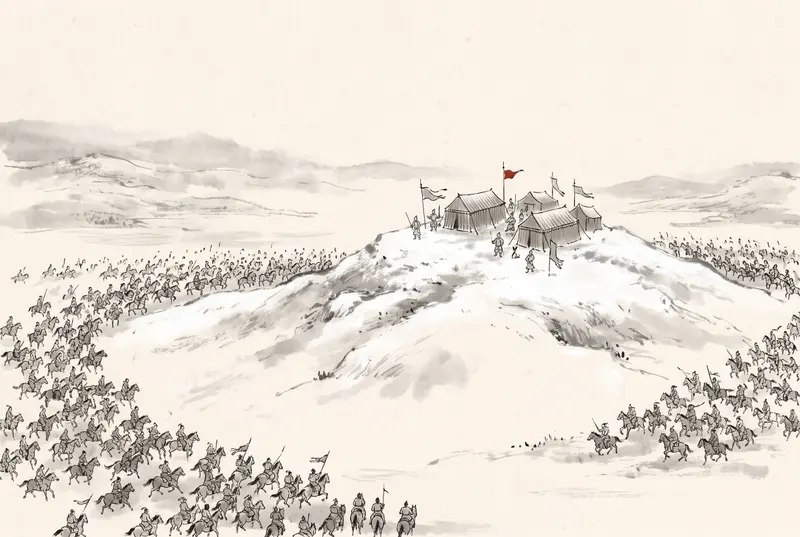
In the seventh year of Han, Xin, King of Han, rebelled, and Emperor Gao went himself to attack him. When he reached Jinyang and heard that Xin meant to join the Xiongnu in attacking Han, he was furious, and sent envoys to the Xiongnu. The Xiongnu hid their strong men and fat cattle and horses, and showed only the old, the weak and the scrawny animals. Ten envoys went in turn, and all of them said that the Xiongnu could be attacked. The emperor sent Liu Jing as envoy to the Xiongnu again. He came back and reported: "When two states are about to fight, each ought to boast and show off its strengths. But when I went, I saw only the thin and starving, the old and the weak. They must be showing us their weakness on purpose, with surprise troops lying in wait to win the advantage. In my foolish opinion, the Xiongnu must not be attacked." By then the Han army had already crossed Mount Gouzhu, and more than two hundred thousand men were on the march. The emperor was angry and cursed Liu Jing: "You captive of Qi! You won your office with your tongue, and now you talk nonsense to dishearten my army!" He had Liu Jing put in fetters at Guangwu. Then he went on to Pingcheng. The Xiongnu did indeed bring out surprise troops and surrounded Emperor Gao at Baideng, and only after seven days was he able to break free. When Emperor Gao reached Guangwu, he pardoned Liu Jing and said: "Because I did not take your advice, I was trapped at Pingcheng. I have already beheaded all ten of the envoys who said the Xiongnu could be attacked." He gave Liu Jing a fief of two thousand households as a marquis within the pass, with the title Marquis Jianxin.
Notes (JA)
- 韓王信: 韓の王族の韓信。淮陰侯韓信とは別人。匈奴に降った(110-xiongnu の章)。
- 平城・白登: 今の山西省大同市の近く。前200年、劉邦は冒頓単于の軍に七日間包囲され、陳平の策で逃れた(056-chen-ping の章)。
- 齊虜: 斉の捕虜。斉は漢に敗れた国だったので、ののしりの言葉になった。
Notes (EN)
- Xin, King of Han (韓王信): a royal of the old state of Han, not the great general Han Xin; he went over to the Xiongnu (chapter 110).
- Pingcheng and Baideng: near Datong in Shanxi; in 200 BCE Liu Bang was trapped there for seven days and escaped by Chen Ping's plan (chapter 056).
- Captive of Qi (齊虜): an insult, since Qi had been conquered by Han.
Word notes
- scrawny/ˈskrɔni/adjective
very thin and weak-looking
In the text: “the scrawny animals”
Similar words: skinny — very thin · bony — thin with bones showing
- fetters/ˈfɛtərz/noun
chains put on a prisoner's feet
In the text: “put in fetters at Guangwu”
Similar words: shackles — metal rings for prisoners · chains — linked metal
Passage 4
Original
高帝罷平城歸,韓王信亡入胡。當是時,冒頓為單于,兵彊,控弦三十萬,數苦北邊。上患之,問劉敬。劉敬曰:「天下初定,士卒罷於兵,未可以武服也。冒頓殺父代立,妻群母,以力為威,未可以仁義說也。獨可以計久遠子孫為臣耳,然恐陛下不能為。」上曰:「誠可,何為不能!顧為柰何?」劉敬對曰:「陛下誠能以適長公主妻之,厚奉遺之,彼知漢適女送厚,蠻夷必慕以為閼氏,生子必為太子。代單于。何者?貪漢重幣。陛下以歲時漢所餘彼所鮮數問遺,因使辯士風諭以禮節。冒頓在,固為子婿;死,則外孫為單于。豈嘗聞外孫敢與大父抗禮者哉?兵可無戰以漸臣也。若陛下不能遣長公主,而令宗室及後宮詐稱公主,彼亦知,不肯貴近,無益也。」高帝曰:「善。」欲遣長公主。呂后日夜泣,曰:「妾唯太子、一女,柰何棄之匈奴!」上竟不能遣長公主,而取家人子名為長公主,妻單于。使劉敬往結和親約。
Kundoku (Japanese reading)
高帝平城を罷めて帰る。韓王信亡げて胡に入る。是の時に当たり、冒頓単于と為り、兵彊く、弦を控くもの三十万、数々北辺を苦しむ。上之を患い、劉敬に問う。劉敬曰く、「天下初めて定まり、士卒兵に罷る。未だ武を以て服すべからざるなり。冒頓は父を殺して代わり立ち、群母を妻とし、力を以て威と為す。未だ仁義を以て説くべからざるなり。独り以て久遠を計りて子孫を臣と為すべきのみ。然れども恐らくは陛下為す能わざらん」と。上曰く、「誠に可ならば、何為れぞ能わざらん。顧うに為すこと奈何」と。劉敬対えて曰く、「陛下誠に能く適長公主を以て之に妻わせ、厚く奉じて之に遺らば、彼漢の適女送の厚きを知り、蛮夷必ず慕いて以て閼氏と為し、子を生まば必ず太子と為し、単于に代わらしめん。何となれば、漢の重幣を貪ればなり。陛下歳時に漢の余る所彼の鮮き所を以て数々問遺し、因りて辯士をして礼節を以て風諭せしめよ。冒頓在らば、固より子婿たり。死せば、則ち外孫単于と為る。豈に嘗て外孫の敢えて大父と礼を抗する者を聞かんや。兵戦うこと無くして漸を以て臣とすべきなり。若し陛下長公主を遣る能わずして、宗室及び後宮をして詐りて公主と称せしめば、彼も亦た知りて、肯えて貴近せず。益無きなり」と。高帝曰く、「善し」と。長公主を遣らんと欲す。呂后日夜泣きて曰く、「妾唯だ太子と一女とのみ。奈何ぞ之を匈奴に棄つる」と。上竟に長公主を遣る能わず、而して家人子を取りて名づけて長公主と為し、単于に妻わす。劉敬をして往きて和親の約を結ばしむ。
Japanese
高帝は平城から帰った。韓王信は逃げて匈奴に入った。このころ冒頓が単于となって兵が強く、弓を引く兵三十万をもち、たびたび北の辺境を苦しめていた。帝はこれを心配して劉敬にたずねた。劉敬は言った。「天下は定まったばかりで、兵士は戦いに疲れています。まだ武力で従わせることはできません。冒頓は父を殺して位を奪い、父の妻たちを自分の妻にし、力で威を示す者です。仁義で説くこともできません。ただ、長い先を見こして、その子孫を臣下にする手だけがあります。しかし、陛下にはおできにならないでしょう」。帝は「本当にそれでよいなら、どうしてできないことがあろう。どうすればよいのだ」と言った。劉敬は答えた。「陛下が本当に皇后のお生みになった長公主を単于に嫁がせ、手厚い贈り物を添えれば、匈奴は漢の正妻の娘で、贈り物も手厚いと知って、蛮夷のことですから必ず慕って閼氏(単于の后)とし、生まれた子は必ず太子として、次の単于にするでしょう。漢のたくさんの財物がほしいからです。陛下は毎年、漢に余っていて匈奴に乏しい物を何度も贈り、弁の立つ者に礼儀をそれとなく教えさせるのです。冒頓が生きているあいだは陛下の娘婿、死ねば陛下の外孫が単于になります。外孫が祖父と対等の礼をとったという話を聞いたことがありましょうか。戦わずに、だんだんと臣下にすることができます。もし陛下が長公主を送ることができず、一族や後宮の娘を公主といつわって送れば、匈奴もそれと見抜いて、大事にはしないでしょう。それでは効き目がありません」。高帝は「よし」と言って、長公主を送ろうとした。しかし呂后は昼も夜も泣いて言った。「わたしには太子と娘一人しかいないのです。どうして娘を匈奴に捨てられましょう」。帝は結局、長公主を送ることができず、庶民の娘を選んで長公主と名づけ、単于に嫁がせた。そして劉敬に行かせて和親の約束を結ばせた。
English
Emperor Gao came home from Pingcheng, and Xin, King of Han, fled to the Hu. At that time Modu was Chanyu; his army was strong, with three hundred thousand archers, and he kept harrying the northern frontier. The emperor was worried and asked Liu Jing. Liu Jing said: "The realm has only just been settled, and the soldiers are worn out with war. They cannot be subdued by force yet. Modu killed his own father to take his place and made his father's wives his own; he rules by force. He cannot be won over with humanity and justice. The only way is to plan far ahead and make his descendants your subjects. But I fear Your Majesty would not be able to do it." The emperor said: "If it will really work, why should I not be able to? Tell me how." Liu Jing answered: "If Your Majesty would truly give your eldest daughter by the empress to him as a wife, with rich gifts, he would know that Han had sent its true daughter with a generous dowry. Being a barbarian, he would surely value her and make her his queen, and any son she bore would surely be made heir and become the next Chanyu. Why? Because he covets the rich goods of Han. Each season Your Majesty would send him what Han has in plenty and they lack, and send clever speakers to teach them courtesy little by little. While Modu lives, he is your son-in-law; when he dies, your grandson will be Chanyu. Who ever heard of a grandson treating his grandfather as an equal? Without a battle, they can gradually be made your subjects. But if Your Majesty cannot send your eldest daughter, and has a girl of the imperial clan or the palace pretend to be a princess, they will know, and will not honour her or keep her close. It will do no good." Emperor Gao said: "Good," and meant to send his eldest daughter. But Empress Lü wept day and night: "I have only the crown prince and one daughter. How can you throw her away to the Xiongnu?" In the end the emperor could not send his eldest daughter. He took a girl of common family, called her his eldest daughter, and married her to the Chanyu, and sent Liu Jing to make the treaty of peace and marriage.
Notes (JA)
- 冒頓: 匈奴の単于。鳴鏑で父を射殺して位についた(110-xiongnu の章)。
- 閼氏: 単于の后。
- 和親: 漢の公主(またはその名目の女性)を単于に嫁がせ、毎年贈り物をして和平を保つ政策。武帝の時代まで続いた。
- 長公主: 皇帝の娘のうち最も上の者。ここでは呂后の娘の魯元公主(095-fan-kuai の章)。
Notes (EN)
- Modu (冒頓): the Chanyu who killed his father with whistling arrows (chapter 110).
- Queen (閼氏): the Chanyu's consort.
- The peace and marriage policy (和親) lasted until Emperor Wu.
- The eldest daughter was Princess Luyuan, whom Xiahou Ying had once saved (chapter 095).
Word notes
- harry/ˈhæri/verb
to attack again and again
In the text: “he kept harrying the northern frontier”
Similar words: raid — attack suddenly · harass — trouble repeatedly
- covet/ˈkʌvɪt/verb
to want something that belongs to someone else
In the text: “he covets the rich goods of Han”
Similar words: crave — want badly · desire — wish for
Passage 5
Original
叔孫通者,薛人也。秦時以文學徵,待詔博士。數歲,陳勝起山東,使者以聞,二世召博士諸儒生問曰:「楚戍卒攻蘄入陳,於公如何?」博士諸生三十餘人前曰:「人臣無將,將即反,罪死無赦。願陛下急發兵擊之。」二世怒,作色。叔孫通前曰:「諸生言皆非也。夫天下合為一家,毀郡縣城,鑠其兵,示天下不復用。且明主在其上,法令具於下,使人人奉職,四方輻輳,安敢有反者!此特群盜鼠竊狗盜耳,何足置之齒牙閒。郡守尉今捕論,何足憂。」二世喜曰:「善。」盡問諸生,諸生或言反,或言盜。於是二世令御史案諸生言反者下吏,非所宜言。諸言盜者皆罷之。乃賜叔孫通帛二十匹,衣一襲,拜為博士。叔孫通已出宮,反舍,諸生曰:「先生何言之諛也?」通曰:「公不知也,我幾不脫於虎口!」乃亡去,之薛,薛已降楚矣。
Kundoku (Japanese reading)
叔孫通は、薛の人なり。秦の時文学を以て徴され、詔を博士に待つ。数歳、陳勝山東に起つ。使者以て聞す。二世博士諸儒生を召して問いて曰く、「楚の戍卒蘄を攻めて陳に入る。公に於いて如何」と。博士諸生三十余人前みて曰く、「人臣には将無し。将すれば即ち反なり。罪死して赦す無し。願わくは陛下急ぎ兵を発して之を撃て」と。二世怒りて、色を作す。叔孫通前みて曰く、「諸生の言は皆非なり。夫れ天下合して一家と為り、郡県の城を毀ち、其の兵を鑠かし、天下に復た用いざるを示す。且つ明主其の上に在り、法令下に具わり、人人をして職を奉ぜしめ、四方輻輳す。安んぞ敢えて反する者有らんや。此れ特だ群盗の鼠窃狗盗のみ。何ぞ之を歯牙の間に置くに足らん。郡守尉今捕えて論ず。何ぞ憂うるに足らん」と。二世喜びて曰く、「善し」と。尽く諸生に問う。諸生或いは反と言い、或いは盗と言う。是に於いて二世御史をして諸生の反と言う者を案じて吏に下さしむ。言うべき所に非ざればなり。諸々の盗と言う者は皆之を罷む。乃ち叔孫通に帛二十匹、衣一襲を賜い、拝して博士と為す。叔孫通已に宮を出でて、舎に反る。諸生曰く、「先生何ぞ言の諛えるや」と。通曰く、「公は知らざるなり。我幾ど虎口を脱せざらんとす」と。乃ち亡げ去り、薛に之く。薛已に楚に降れり。
Japanese
叔孫通は薛の人である。秦の時代、学問によって召し出され、博士の候補として詔を待っていた。数年後、陳勝が山東で兵を挙げた。使者がそれを報告すると、二世皇帝は博士や儒者たちを呼んでたずねた。「楚の守備兵が蘄を攻めて陳に入ったという。そなたたちはどう思うか」。博士や儒者三十人あまりが進み出て言った。「臣下たる者は兵を率いてはなりません。兵を率いれば謀反です。死罪で、許してはなりません。どうか陛下、急いで兵を出して討ってください」。二世は怒って顔色を変えた。叔孫通が進み出て言った。「皆の言うことはまちがっています。天下は一つの家となり、郡県の城壁は取り壊され、武器は溶かされて、二度と使わないことが天下に示されました。そのうえ聡明な君主が上におられ、法令は下に行きわたり、人々は皆職務に励み、四方から車の輪の矢が軸に集まるように都に集まっています。どうして謀反などする者がいましょう。これはただの盗賊、ねずみやこそ泥のたぐいです。口にのぼせるほどのこともありません。郡の守や尉がいまに捕らえて罰するでしょう。何も心配はいりません」。二世は喜んで「よし」と言い、儒者たち全員にたずねた。儒者たちは、謀反だと言う者もいれば、盗賊だと言う者もいた。そこで二世は御史に命じて、謀反だと言った者を取り調べて役人に引きわたさせた。言うべきでないことを言ったというのである。盗賊だと言った者は皆、無罪で帰された。そして叔孫通には絹二十匹と衣服一そろいを与え、博士に任じた。叔孫通が宮殿を出て宿舎に帰ると、儒者たちは言った。「先生はなんとこびへつらったことを言うのですか」。叔孫通は言った。「あなたがたは分かっていない。わたしはもう少しで虎の口から逃れられないところだったのだ」。そして逃げ出し、故郷の薛へ向かった。薛はすでに楚に降っていた。
English
Shusun Tong was a man of Xue. Under Qin he was summoned for his learning and waited for appointment among the court scholars. Some years later Chen Sheng rose east of the mountains. When envoys reported it, the Second Emperor called his court scholars and Confucians and asked them: "Garrison soldiers of Chu have attacked Qi and entered Chen. What do you make of it?" More than thirty of the scholars came forward and said: "A subject must never lead troops; to lead troops is rebellion, a crime punishable by death without pardon. We beg Your Majesty to send troops at once to attack them." The Second Emperor was angry, and his face changed colour. Shusun Tong came forward and said: "What they all say is wrong. The whole realm has become one family; the walls of the commanderies and counties have been pulled down and their weapons melted, to show the realm that they will never be used again. Moreover, an enlightened ruler is above and the laws are complete below; everyone keeps to his duty, and the four quarters come together like spokes to a hub. Who would dare to rebel? These are nothing but a gang of robbers, petty thieves who steal like rats and dogs. They are not worth mentioning. The governors and commandants will soon catch them and deal with them. What is there to worry about?" The Second Emperor was pleased and said: "Good." He asked all the scholars. Some said it was rebellion, some said it was robbery. Then the Second Emperor had his inspectors take those who had said rebellion and hand them over to the officials, for saying what should not be said. Those who had said robbery were all let go. He gave Shusun Tong twenty bolts of silk and a suit of clothes, and made him a court scholar. When Shusun Tong had left the palace and gone back to his lodgings, the scholars said: "Sir, how could you flatter him like that?" Shusun Tong said: "You don't understand. I very nearly did not escape from the tiger's mouth." Then he ran away and went to Xue, which had already gone over to Chu.
Notes (JA)
- 人臣無將: 臣下は兵を率いてはならない。率いれば謀反である、という考え。
- 輻輳: 車の輪の矢(輻)が中心の軸に集まるように、四方から集まること。
- 鼠竊狗盗: ねずみのようにこそこそ盗み、犬のようにしのびこむ盗人。取るに足りない泥棒のたとえ。
- 虎口: 虎の口。きわめて危険な所。叔孫通は真実を言えば殺されると見抜いていた。
Notes (EN)
- Like spokes to a hub (輻輳): everyone converging on the centre.
- Petty thieves who steal like rats and dogs (鼠竊狗盜): now a phrase for small-time crooks.
- The tiger's mouth (虎口): Shusun Tong knew the truth would have cost him his life.
- He went on to serve Xiang Liang, King Huai and Xiang Yu before surrendering to Liu Bang (left out here).
Idioms from this passage: Rats stealing and dogs thieving 鼠窃狗盗
Word notes
- flatter/ˈflætər/verb
to praise someone too much to please them
In the text: “how could you flatter him like that”
Similar words: butter up — praise to win favour · fawn on — praise too eagerly
- petty/ˈpɛti/adjective
small and unimportant
In the text: “petty thieves”
Similar words: minor — small · trivial — unimportant
Passage 6
Original
漢五年,已并天下,諸侯共尊漢王為皇帝於定陶,叔孫通就其儀號。高帝悉去秦苛儀法,為簡易。群臣飲酒爭功,醉或妄呼,拔劍擊柱,高帝患之。叔孫通知上益厭之也,說上曰:「夫儒者難與進取,可與守成。臣願徵魯諸生,與臣弟子共起朝儀。」高帝曰:「得無難乎?」叔孫通曰:「五帝異樂,三王不同禮。禮者,因時世人情為之節文者也。故夏、殷、周之禮所因損益可知者,謂不相復也。臣願頗采古禮與秦儀雜就之。」上曰:「可試為之,令易知,度吾所能行為之。」於是叔孫通使徵魯諸生三十餘人。魯有兩生不肯行,曰:「公所事者且十主,皆面諛以得親貴。今天下初定,死者未葬,傷者未起,又欲起禮樂。禮樂所由起,積德百年而後可興也。吾不忍為公所為。公所為不合古,吾不行。公往矣,無汙我!」叔孫通笑曰:「若真鄙儒也,不知時變。」
Kundoku (Japanese reading)
漢の五年、已に天下を并せ、諸侯共に漢王を定陶に尊びて皇帝と為す。叔孫通其の儀号に就く。高帝悉く秦の苛儀法を去り、簡易と為す。群臣酒を飲みて功を争い、酔いて或いは妄りに呼び、剣を抜きて柱を撃つ。高帝之を患う。叔孫通上の益々之を厭うを知るや、上に説きて曰く、「夫れ儒者は与に進取し難きも、与に守成すべし。臣願わくは魯の諸生を徴し、臣の弟子と共に朝儀を起こさん」と。高帝曰く、「難き無きを得んや」と。叔孫通曰く、「五帝は楽を異にし、三王は礼を同じくせず。礼とは、時世人情に因りて之が節文を為す者なり。故に夏・殷・周の礼の因りて損益する所知るべき者は、相復せざるを謂うなり。臣願わくは頗る古礼と秦の儀とを采りて之を雑え就さん」と。上曰く、「試みに之を為すべし。知り易からしめ、吾の能く行う所を度りて之を為せ」と。是に於いて叔孫通使いをして魯の諸生三十余人を徴せしむ。魯に両生有りて肯えて行かず、曰く、「公の事うる所の者且に十主ならんとす。皆面諛して以て親貴を得たり。今天下初めて定まり、死者未だ葬らず、傷者未だ起たざるに、又礼楽を起こさんと欲す。礼楽の由りて起こる所は、徳を積むこと百年にして後に興るべきなり。吾公の為す所を為すに忍びず。公の為す所は古に合わず。吾行かず。公往け、我を汚すこと無かれ」と。叔孫通笑いて曰く、「若は真の鄙儒なり。時変を知らず」と。
Japanese
漢の五年、天下を統一すると、諸侯はともに定陶で漢王を皇帝に推した。叔孫通は即位の儀式と称号を整えた。高帝は秦のわずらわしい儀礼をすべてやめ、簡単にした。すると群臣は酒を飲んで手柄を争い、酔って大声でわめいたり、剣を抜いて柱を打ったりした。高帝はこれに困っていた。叔孫通は、帝がますますこれを嫌がっているのを知って、説いた。「儒者は天下を攻め取るのには役に立ちませんが、すでに得たものを守るのには役立ちます。どうか魯の儒者たちを呼び寄せ、わたしの弟子とともに朝廷の儀礼を作らせてください」。高帝は「難しくはないか」と言った。叔孫通は言った。「五帝はそれぞれ違う音楽を用い、夏・殷・周の三王はそれぞれ違う礼を用いました。礼とは、時代と人の心に合わせて、ほどよい形を定めるものです。夏・殷・周の礼が受け継ぎつつ増やしたり減らしたりしたことが分かるのは、同じことを繰り返さなかったということです。古い礼と秦の儀礼を取り混ぜて作りたいと思います」。帝は言った。「試しに作ってみよ。分かりやすく、わしにもできる程度にせよ」。そこで叔孫通は使いを出して、魯の儒者三十人あまりを呼び寄せた。ところが魯の二人の儒者は行こうとせず、言った。「あなたは十人近い主君に仕え、皆面と向かってこびへつらって親しまれ、出世してきた。いま天下は定まったばかりで、死者はまだ葬られず、傷ついた者はまだ起き上がれない。それなのに礼楽を起こそうとしている。礼楽は、徳を百年積んではじめて興すことができるものだ。わたしたちは、あなたのすることに加わる気になれない。あなたのすることは古の道に合わない。わたしたちは行かない。あなたは行くがよい。わたしたちを汚さないでくれ」。叔孫通は笑って言った。「お前たちは本当に田舎の儒者だ。時代の変化が分かっていない」。
English
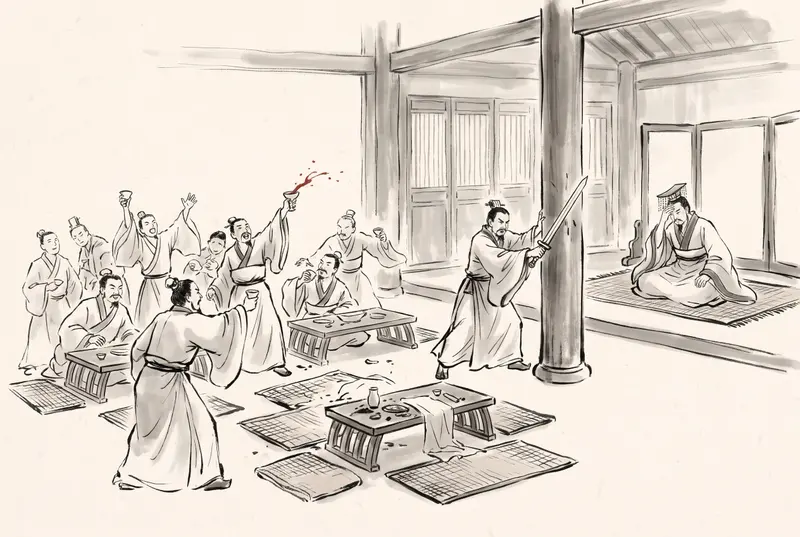
In the fifth year of Han, when the realm had been united, the lords together made the king of Han emperor at Dingtao, and Shusun Tong arranged the ceremony and the titles. Emperor Gao did away with all the harsh rituals and laws of Qin and made everything simple. But his ministers drank and quarrelled over their merits; some got drunk and shouted wildly, or drew their swords and hacked at the pillars. Emperor Gao was troubled by it. When Shusun Tong saw that the emperor was growing more and more weary of it, he said to him: "Confucians are not much use for winning things, but they can help you keep what you have won. I would like to summon the scholars of Lu, and with my own disciples create the rites of the court." Emperor Gao said: "Won't it be hard?" Shusun Tong said: "The Five Emperors each had different music, and the Three Kings did not share the same rites. Rites are the forms set to suit the times and the feelings of men. That we know how the rites of Xia, Shang and Zhou each kept some things and changed others means they did not simply repeat one another. I would like to combine the ancient rites with the ceremonies of Qin." The emperor said: "You may try. Make them easy to understand, and judge what I am able to perform." So Shusun Tong sent for more than thirty scholars from Lu. But two scholars of Lu would not come. They said: "You have served nearly ten masters, and won favour and rank with all of them by flattering them to their faces. Now the realm has only just been settled; the dead are not yet buried and the wounded not yet on their feet, and you want to create rites and music. Rites and music can only arise after a hundred years of accumulated virtue. We cannot bear to do what you do. What you do is not in accord with antiquity. We will not go. Go yourself, and do not soil us." Shusun Tong laughed and said: "You really are country bumpkin Confucians. You don't understand how the times have changed."
Notes (JA)
- 進取・守成: 攻め取ることと、得たものを守ること。「創業は易く守成は難し」の言葉もここに通じる。
- 朝儀: 朝廷の儀式の作法。
- 鄙儒: 田舎の、融通のきかない儒者。
- 魯の二生の言葉は、時勢に合わせて主君を変えてきた叔孫通への痛烈な批判でもある。
Notes (EN)
- Winning and keeping (進取・守成): a contrast later echoed in the saying that founding an empire is easier than keeping it.
- Country bumpkin Confucians (鄙儒): pedants who cannot adapt.
- The two scholars' words are also a sharp judgement on a man who had changed masters so often.
Word notes
- antiquity/ænˈtɪkwəti/noun
ancient times
In the text: “not in accord with antiquity”
Similar words: ancient times — the distant past · olden days — long ago
- bumpkin/ˈbʌmpkɪn/noun
an awkward, simple person from the countryside
In the text: “country bumpkin Confucians”
Similar words: yokel — simple country person · rustic — country dweller
Passage 7
Original
遂與所徵三十人西,及上左右為學者與其弟子百餘人為綿蕞野外。習之月餘,叔孫通曰:「上可試觀。」上既觀,使行禮,曰:「吾能為此。」乃令群臣習肄,會十月。漢七年,長樂宮成,諸侯群臣皆朝十月。儀:先平明,謁者治禮,引以次入殿門,廷中陳車騎步卒衛宮,設兵張旗志。傳言「趨」。殿下郎中俠陛,陛數百人。功臣列侯諸將軍軍吏以次陳西方,東鄉;文官丞相以下陳東方,西鄉。大行設九賓,臚傳。於是皇帝輦出房,百官執職傳警,引諸侯王以下至吏六百石以次奉賀。自諸侯王以下莫不振恐肅敬。至禮畢,復置法酒。諸侍坐殿上皆伏抑首,以尊卑次起上壽。觴九行,謁者言「罷酒」。御史執法舉不如儀者輒引去。竟朝置酒,無敢讙譁失禮者。於是高帝曰:「吾乃今日知為皇帝之貴也。」乃拜叔孫通為太常,賜金五百斤。
Kundoku (Japanese reading)
遂に徴す所の三十人と西し、及び上の左右の学を為す者と其の弟子百余人とに、綿蕞を野外に為す。之を習うこと月余、叔孫通曰く、「上試みに観るべし」と。上既に観て、礼を行わしめて曰く、「吾能く此れを為さん」と。乃ち群臣をして習肄せしめ、十月に会す。漢の七年、長楽宮成り、諸侯群臣皆十月に朝す。儀。平明に先だちて、謁者礼を治め、引きて次を以て殿門に入る。廷中に車騎歩卒の宮を衛るを陳ね、兵を設け旗志を張る。伝えて言う「趨れ」と。殿下の郎中陛を俠み、陛ごとに数百人。功臣列侯諸将軍軍吏次を以て西方に陳なり、東郷す。文官丞相以下東方に陳なり、西郷す。大行九賓を設け、臚伝す。是に於いて皇帝輦にて房を出で、百官職を執りて警を伝え、諸侯王以下吏六百石に至るまで引きて次を以て賀を奉ず。諸侯王より以下振恐粛敬せざる莫し。礼畢わるに至り、復た法酒を置く。諸々の殿上に侍坐する者は皆伏して首を抑え、尊卑の次を以て起ちて寿を上る。觴九たび行き、謁者「酒を罷めよ」と言う。御史法を執りて儀の如くならざる者を挙げて輒ち引き去る。朝を竟えて酒を置くも、敢えて讙譁して礼を失う者無し。是に於いて高帝曰く、「吾乃ち今日皇帝の貴きを知るなり」と。乃ち叔孫通を拝して太常と為し、金五百斤を賜う。
Japanese
叔孫通は呼び寄せた三十人とともに西の都へ行き、帝の側近の学者や自分の弟子たち百人あまりとともに、野外に縄を張り、茅を束ねて立てて、席次の目印にした。一か月あまり練習すると、叔孫通は「陛下、試しにご覧ください」と言った。帝はそれを見て、自分でも礼を行ってみて、「これならわしにもできる」と言った。そこで群臣に練習させ、十月の朝賀に臨んだ。漢の七年、長楽宮が完成し、諸侯や群臣は皆、十月の朝賀にやって来た。その儀式はこうである。夜が明ける前に、謁者が礼をつかさどり、人々を順に宮殿の門に導き入れた。庭には宮殿を守る車騎や歩兵が並び、武器を立て、旗を張った。「小走りに進め」と号令が伝えられた。殿の下では郎中たちが階段をはさんで並び、一つの階段に数百人がいた。功臣・列侯・将軍・軍の役人は順に西側に並んで東を向き、丞相以下の文官は東側に並んで西を向いた。大行(儀礼の長)は九段階の接待役を置き、上から下へ言葉を伝えた。そこで皇帝が手押し車で奥の部屋から出てくると、百官は旗を持って先払いの声を伝え、諸侯王から俸禄六百石の役人までが順に導かれて祝賀を述べた。諸侯王以下、恐れおののき、つつしみ敬わない者はなかった。礼が終わると、儀礼にのっとった酒宴が開かれた。殿上に座る者は皆ひれ伏して頭を下げ、身分の順に立ち上がって皇帝の長寿を祝った。杯が九回めぐると、謁者が「酒宴を終える」と告げた。御史が法を手に、作法どおりでない者を見つけると、すぐに引き出した。朝賀から酒宴が終わるまで、騒いで礼を失う者は一人もいなかった。そこで高帝は言った。「今日はじめて、皇帝が貴いものだと分かった」。そして叔孫通を太常(儀礼の長官)に任じ、黄金五百斤を与えた。
English
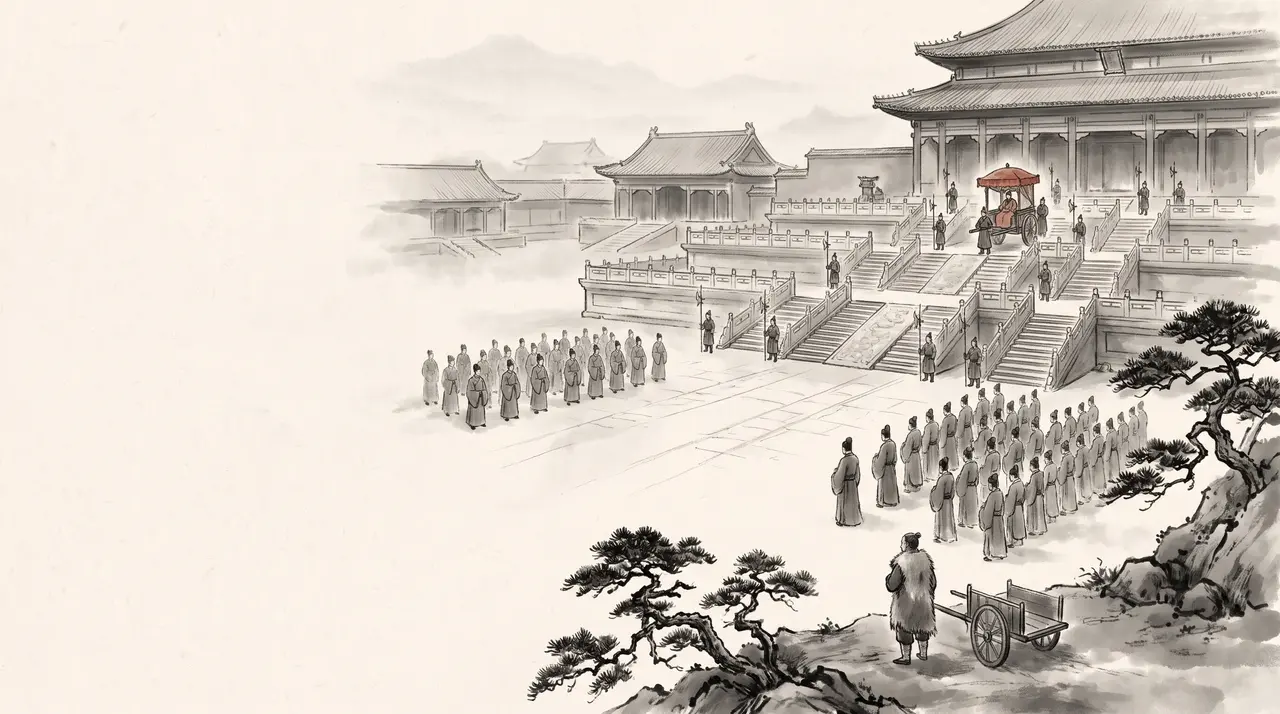
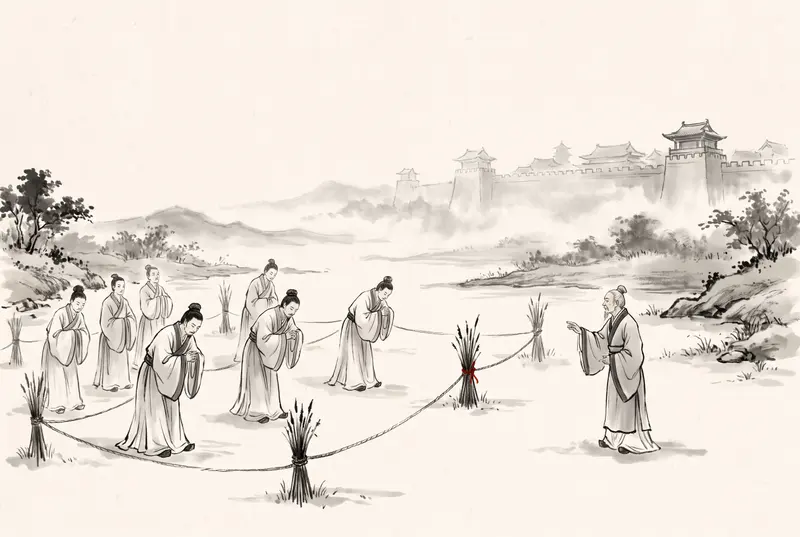
So he went west with the thirty men he had summoned, and with the emperor's own scholars and his disciples, more than a hundred in all, he marked out a practice ground in the open fields with ropes and bundles of rushes. After practising for over a month, Shusun Tong said: "Your Majesty may come and see." The emperor watched, then had them perform the rites, and said: "I can do this." So he had the ministers practise, and they gathered for the tenth month. In the seventh year of Han, the Changle Palace was finished, and the lords and ministers all came to court in the tenth month. This was the ceremony. Before dawn the ushers took charge of the rites and led everyone in order through the palace gates. In the courtyard, chariots, horsemen and foot soldiers stood guarding the palace, with weapons set out and banners raised. The word was passed: "Hasten!" Below the hall the palace gentlemen lined the steps on both sides, several hundred to each flight. The meritorious ministers, marquises, generals and army officers stood in order on the west side, facing east; the civil officials from the chancellor down stood on the east side, facing west. The master of ceremonies set out the nine grades of attendants, who passed the words along from rank to rank. Then the emperor came out of his chamber in a hand carriage, the hundred officials held up their banners and passed on the call to clear the way, and the kings, lords and all officials down to the six-hundred-dan rank were led forward in order to offer their congratulations. From the kings down, there was no one who did not tremble with awe and reverence. When the rites were over, the ceremonial wine was served. All who sat in attendance in the hall bowed low with their heads down, and rose in order of rank to toast the emperor's long life. When the cups had gone round nine times, the ushers announced: "The drinking is over." Inspectors stood by with the rules and at once led away anyone who did not follow the ceremony. From the start of the court to the end of the wine, no one dared to shout or forget his manners. Then Emperor Gao said: "Today at last I know how noble it is to be emperor." He made Shusun Tong master of ceremonies and gave him five hundred catties of gold.
Notes (JA)
- 綿蕞: 縄を張り、茅を束ねて立てて、儀式の位置の目印としたもの。
- 長樂宮: 漢の長安の宮殿。のちに太后の住まいとなった。
- 趨: 小走りに進むこと。身分の高い人の前での作法。
- 吾乃今日知為皇帝之貴也: 儀礼によって、はじめて皇帝の権威が目に見える形になったことを示す名言。
Notes (EN)
- Ropes and rushes (綿蕞): markers for the positions in the rehearsal.
- The Changle Palace (長樂宮): later the residence of the empresses dowager.
- "Today at last I know how noble it is to be emperor" (吾乃今日知為皇帝之貴也): ritual had made the emperor's majesty visible.
Idioms from this passage: Today at last I know how noble it is to be emperor 吾乃ち今日皇帝の貴きを知る
Word notes
- practise/ˈpræktɪs/verb
to do something again and again to get better at it
In the text: “After practising for over a month”
Similar words: rehearse — prepare by repeating · drill — train by repeating
British spelling: practise as a verb (US: practice).
- reverence/ˈrɛvərəns/noun
deep respect
In the text: “tremble with awe and reverence”
Similar words: awe — respect mixed with fear · veneration — great respect
Passage 8
Original
叔孫通因進曰:「諸弟子儒生隨臣久矣,與臣共為儀,願陛下官之。」高帝悉以為郎。叔孫通出,皆以五百斤金賜諸生。諸生乃皆喜曰:「叔孫生誠聖人也,知當世之要務。」
Kundoku (Japanese reading)
叔孫通因りて進みて曰く、「諸々の弟子儒生臣に随うこと久し。臣と共に儀を為す。願わくは陛下之を官とせよ」と。高帝悉く以て郎と為す。叔孫通出で、皆五百斤の金を以て諸生に賜う。諸生乃ち皆喜びて曰く、「叔孫生は誠に聖人なり。当世の要務を知る」と。
Japanese
叔孫通はその機会に進み出て言った。「弟子の儒者たちは、長いあいだわたしに従い、一緒に儀式を作りました。どうか陛下、彼らに官職をお与えください」。高帝は彼らを皆郎官にした。叔孫通は宮殿を出ると、賜った黄金五百斤をすべて弟子たちに分け与えた。弟子たちは皆喜んで言った。「叔孫先生はまことに聖人だ。いまの世に必要なことを知っておられる」。
English
Shusun Tong took the chance to come forward and say: "My disciples, the scholars, have followed me for a long time, and they made the ceremony with me. I beg Your Majesty to give them office." Emperor Gao made them all palace gentlemen. When Shusun Tong came out, he gave all five hundred catties of gold to the scholars. Then they were all delighted, and said: "Master Shusun is truly a sage. He knows what the times require."
Notes (JA)
- 叔孫通は、漢に降ったころは弟子を推薦せず、戦に役立つ盗賊あがりの者ばかりを推して弟子たちに恨まれていた(ここでは省く)。このとき、その約束を果たした。
- 聖人: 弟子たちは、恩恵を受けてはじめて師を「聖人」とたたえた。司馬遷の筆には皮肉もこめられている。
Notes (EN)
- When he first joined Han he had recommended fighters rather than his disciples, who grumbled; now he kept his promise to them.
- "Truly a sage": there is irony in praise that came only with the gold.
Word notes
- disciple/dɪˈsaɪpəl/noun
a follower and student of a teacher
In the text: “My disciples, the scholars”
Similar words: follower — one who follows · pupil — student
- sage/seɪdʒ/noun
a very wise person
In the text: “Master Shusun is truly a sage”
Similar words: wise man — person of wisdom · savant — learned person
Passage 9
Original
太史公曰:語曰「千金之裘,非一狐之腋也;臺榭之榱,非一木之枝也;三代之際,非一士之智也。」信哉!夫高祖起微細,定海內,謀計用兵,可謂盡之矣。然而劉敬脫輓輅一說,建萬世之安,智豈可專邪!叔孫通希世度務,制禮進退,與時變化,卒為漢家儒宗。「大直若詘,道固委蛇」,蓋謂是乎?
Kundoku (Japanese reading)
太史公曰く、語に曰く、「千金の裘は、一狐の腋に非ざるなり。台榭の榱は、一木の枝に非ざるなり。三代の際は、一士の智に非ざるなり」と。信なるかな。夫れ高祖は微細より起こり、海内を定む。謀計用兵、之を尽くすと謂うべし。然れども劉敬輓輅を脱して一たび説き、万世の安きを建つ。智豈に専らにすべけんや。叔孫通は世を希い務めを度り、礼を制して進退し、時と変化し、卒に漢家の儒宗と為る。「大直は詘するが若く、道は固より委蛇たり」とは、蓋し是を謂うか。
Japanese
太史公は言う。ことわざに「千金の毛皮の衣は、一匹の狐のわきの下の毛だけでできているのではない。高殿のたるきは、一本の木の枝でできているのではない。夏・殷・周の三代の盛世は、一人の士の知恵でできたのではない」という。まことにそのとおりだ。高祖は身分の低いところから身を起こして天下を平定し、はかりごとと用兵では手を尽くしたと言えよう。しかし劉敬が車の横木をはずしてひとたび説いただけで、万世の安泰が築かれた。知恵を一人で独占できるものではない。叔孫通は世の流れを見はからい、何が必要かを見きわめ、礼を作って進んだり退いたりし、時代とともに変わって、ついに漢の儒者の第一人者となった。「本当にまっすぐなものは曲がっているように見え、道はもともとうねうねと曲がりくねっているものだ」とは、このことを言うのだろうか。
English
The Grand Historian says: The saying goes: "A fur coat worth a thousand gold is not made from the armpit fur of one fox. The rafters of a great hall do not come from the branches of one tree. The glory of the Three Dynasties was not the wisdom of one man." How true! Gaozu rose from humble beginnings and brought peace to all within the seas; in planning and in war he did everything that could be done. Yet Liu Jing, slipping off his cart harness to speak just once, founded peace for ten thousand generations. Wisdom cannot belong to one man alone. Shusun Tong read the age and weighed what it needed; he made the rites, advanced and withdrew, changed with the times, and in the end became the leading Confucian of the house of Han. "The greatest straightness seems bent, and the Way is ever winding": was this not what that meant?
Notes (JA)
- 千金之裘,非一狐之腋: 高価な毛皮の衣は、多くの狐のわきの下の白い毛を集めて作る。大きな事業は多くの人の力で成るというたとえ。
- 儒宗: 儒者の第一人者。
- 大直若詘: 『老子』の「大直は屈するが若し」による。
- 委蛇: うねうねと曲がるさま。叔孫通の世渡りを、道にかなったものと見るか皮肉と見るか、読み方が分かれる。
Notes (EN)
- A coat from the armpit fur of many foxes (千金之裘,非一狐之腋): great works need many hands.
- The leading Confucian (儒宗).
- "The greatest straightness seems bent" (大直若詘): from the Laozi.
- Whether this is praise or irony for Shusun Tong's flexibility is left to the reader.
Idioms from this passage: A coat worth a thousand gold is not one fox's fur 千金の裘は一狐の腋に非ず
Word notes
- rafter/ˈræftər/noun
one of the sloping beams that hold up a roof
In the text: “The rafters of a great hall”
Similar words: beam — long piece of wood · joist — supporting timber
- winding/ˈwaɪndɪŋ/adjective
having many bends
In the text: “the Way is ever winding”
Similar words: twisting — turning often · meandering — curving slowly