Biographies · Vol. 102
The Biographies of Zhang Shizhi and Feng Tang 張釋之馮唐列傳
"The Law Belongs to the Whole Realm" 法者天下公共
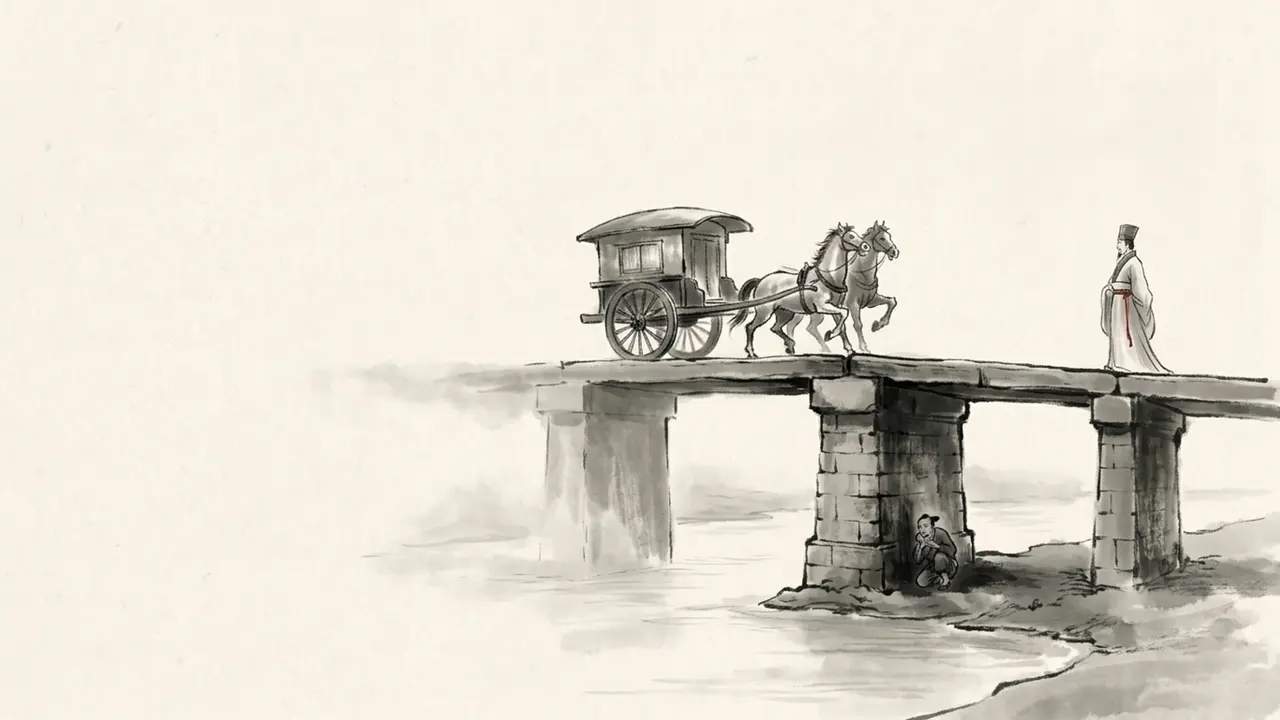
The stories of two men who spoke their minds to Emperor Wen of the Han. Zhang Shizhi went ten years without promotion and was about to give up when Yuan Ang spotted his worth. When Emperor Wen wanted to promote a glib junior clerk who had answered all his questions, Zhang Shizhi warned him that great men like Zhou Bo were slow of speech, and that Qin had fallen by trusting clever officials. As commandant of justice, he fined a man who had frightened the emperor's horses, and when the emperor raged he replied: "The law is something the Son of Heaven shares with the whole realm. If it is made heavier than it is, the people will not trust it." For a thief who stole a jade ring from Gaozu's temple he asked only the death the law laid down, and talked the emperor out of wiping out the man's whole family. Old Master Wang made him kneel before the whole court to tie his garters, and so made his name greater still. The other man, Feng Tang, was an aged palace attendant who told Emperor Wen to his face: "Even if Your Majesty had Lian Po and Li Mu, you could not use them." Then he explained that a general on the frontier must be left free to act, and saved Wei Shang, the governor of Yunzhong, who had been punished for miscounting the heads of the enemy by six.
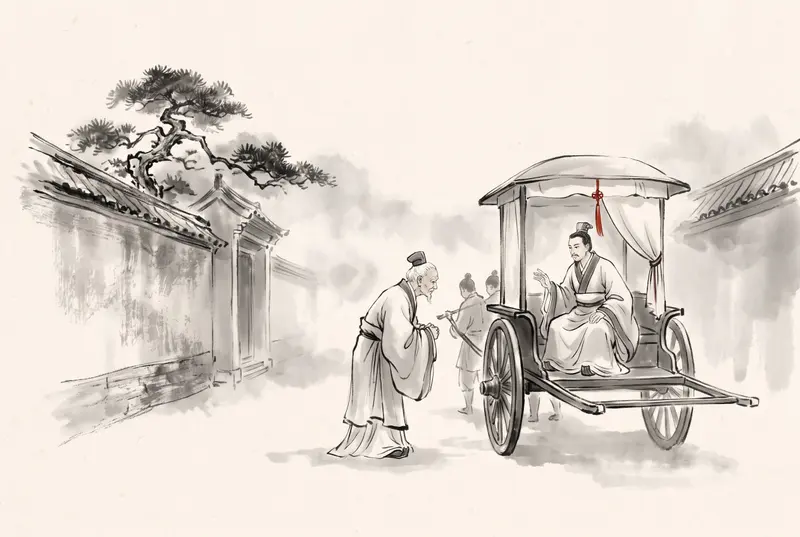
This page has the scene ""The Law Belongs to the Whole Realm"" from this volume, not the whole volume.
Audio
The audio is synthetic speech.
Video
Passage 1
Original
張廷尉釋之者,堵陽人也,字季。有兄仲同居。以訾爲騎郎,事孝文帝,十歳不得調,無所知名。釋之曰:「久宦減仲之產,不遂。」欲自免歸。中郎將袁盎知其賢,惜其去,乃請徙釋之補謁者。釋之既朝畢,因前言便宜事。文帝曰:「卑之,毋甚高論,令今可施行也。」於是釋之言秦漢之閒事,秦所以失而漢所以興者久之。文帝稱善,乃拜釋之爲謁者仆射。
Kundoku (Japanese reading)
張廷尉釈之は、堵陽の人なり。字は季。兄仲有りて居を同じくす。訾を以て騎郎と為り、孝文帝に事う。十歳調せられず、名を知らるる所無し。釈之曰く、「久しく宦して仲の産を減ず。遂げず」と。自ら免じて帰らんと欲す。中郎将袁盎其の賢を知り、其の去るを惜しみ、乃ち請いて釈之を徙して謁者に補す。釈之既に朝し畢わり、因りて前みて便宜の事を言う。文帝曰く、「之を卑くせよ。甚だしくは高論すること毋かれ。今施行すべからしめよ」と。是に於いて釈之、秦漢の間の事、秦の失いし所以と漢の興りし所以の者を言うこと久し。文帝善しと称し、乃ち釈之を拝して謁者僕射と為す。
Japanese
廷尉の張釈之は、堵陽の人で、字を季という。兄の仲といっしょに暮らしていた。財産を納めて騎郎(騎兵の近衛)となり、孝文帝に仕えたが、十年たっても昇進せず、名を知られることもなかった。張釈之は「長く役人をして、兄の財産を減らすばかりだ。うまくいかない」と言って、辞めて家に帰ろうとした。中郎将の袁盎は張釈之が賢いことを知っていて、去るのを惜しみ、願い出て謁者(取り次ぎ役)に移させた。張釈之は朝見が終わると、進み出て、いま役に立つ政策について述べた。文帝は「もっと身近な話にせよ。あまり高尚な議論はするな。いますぐ行えるようなことを言え」と言った。そこで張釈之は、秦から漢にかけてのこと、秦が天下を失ったわけと漢が興ったわけを、長いあいだ語った。文帝はよいと言って、張釈之を謁者僕射(謁者の長)に任じた。
English
Zhang Shizhi, the commandant of justice, was a man of Duyang, with the courtesy name Ji. He lived with his elder brother Zhong. By paying for it he became a mounted gentleman of the guard and served Emperor Wen, but in ten years he was never promoted and no one had heard of him. Zhang Shizhi said: "I have been in office a long time, and all I have done is eat into my brother's wealth. It is no good." He wanted to resign and go home. But Yuan Ang, a general of the palace guard, knew that he was a man of worth and was sorry to lose him, so he asked for Zhang Shizhi to be moved to the post of usher. When the court audience was over, Zhang Shizhi came forward to speak of things that ought to be done. Emperor Wen said: "Bring it down to earth. No lofty theories. Tell me what can be done now." So Zhang Shizhi spoke for a long time about the years between Qin and Han: why Qin had lost the realm, and why Han had risen. Emperor Wen praised him and made him chief of the ushers.
Notes (JA)
- 以訾為騎郎: 財産を納めて郎官となること。漢の初めは、一定の財産のある者が郎になれた。
- 袁盎: 文帝・景帝の時代の直言の臣(101-yuan-ang-chao-cuo の章)。
- 卑之,毋甚高論: 「もっと低く、あまり高尚な議論はするな」。実際に役立つ話を求めた文帝の言葉。
Notes (EN)
- By paying for it (以訾): in the early Han a man of property could buy his way into the palace guard.
- Yuan Ang (袁盎): an outspoken minister of Emperors Wen and Jing (chapter 101).
- "Bring it down to earth" (卑之,毋甚高論): Emperor Wen wanted practical advice.
Word notes
- promote/prəˈmoʊt/verb
to give someone a higher position at work
In the text: “he was never promoted”
Similar words: raise — move to a higher level · advance — move forward in rank
- lofty/ˈlɔfti/adjective
very high in ideas, but not practical
In the text: “No lofty theories”
Similar words: grand — large and impressive · high-flown — too grand to be useful
Passage 2
Original
釋之從行,登虎圈。上問上林尉諸禽獸簿,十餘問,尉左右視,盡不能對。虎圈嗇夫從旁代尉對上所問禽獸簿甚悉,欲以觀其能口對響應無窮者。文帝曰:「吏不當若是邪?尉無賴!」乃詔釋之拜嗇夫爲上林令。釋之久之前曰:「陛下以絳侯周勃何如人也?」上曰:「長者也。」又復問:「東陽侯張相如何如人也?」上復曰:「長者。」釋之曰:「夫絳侯、東陽侯稱爲長者,此兩人言事曾不能出口,豈斅此嗇夫諜諜利口捷給哉!且秦以任刀筆之吏,吏爭以亟疾苛察相高,然其敝徒文具耳,無惻隱之實。以故不聞其過,陵遲而至於二世,天下土崩。今陛下以嗇夫口辯而超遷之,臣恐天下隨風靡靡,爭爲口辯而無其實。且下之化上疾於景響,舉錯不可不審也。」文帝曰:「善。」乃止不拜嗇夫。
Kundoku (Japanese reading)
釈之従い行き、虎圏に登る。上、上林尉に諸々の禽獣の簿を問うこと十余問、尉左右を視て、尽く対うる能わず。虎圏の嗇夫、旁らより尉に代わりて上の問う所の禽獣の簿を対うること甚だ悉し。以て其の能く口対して響応すること窮まり無きを観しめんと欲す。文帝曰く、「吏は当に是くの若くならざるべけんや。尉は無頼なり」と。乃ち釈之に詔して嗇夫を拝して上林の令と為さしむ。釈之之を久しくして前みて曰く、「陛下絳侯周勃を以て何如なる人と為すや」と。上曰く、「長者なり」と。又復た問う、「東陽侯張相如は何如なる人ぞ」と。上復た曰く、「長者なり」と。釈之曰く、「夫れ絳侯・東陽侯は長者と称せらるるも、此の両人は事を言うに曾て口を出だす能わず。豈に此の嗇夫の諜諜として利口捷給なるに斅わんや。且つ秦は刀筆の吏に任ずるを以て、吏争いて亟疾苛察を以て相高くす。然れども其の敝は徒だ文具わるのみにして、惻隠の実無し。故を以て其の過ちを聞かず、陵遅して二世に至り、天下土崩す。今陛下嗇夫の口辯なるを以て之を超遷せば、臣恐る、天下風に随いて靡靡として、争いて口辯を為して其の実無からんことを。且つ下の上に化するは景響よりも疾し。挙錯は審らかにせざるべからざるなり」と。文帝曰く、「善し」と。乃ち止めて嗇夫を拝せず。
Japanese
張釈之が文帝のお供をして、上林苑の虎の檻の見晴らし台に登ったときのこと。文帝は上林苑の尉(長官)に、飼っている鳥や獣の帳簿について十いくつも質問したが、尉は左右をきょろきょろ見るばかりで、何一つ答えられなかった。すると虎の檻の番人の嗇夫が、そばから尉に代わって、皇帝の聞いた帳簿のことをくわしく答えた。どんな質問にもすらすら答えられるところを見せようとしたのである。文帝は「役人とはこうでなくてはならないではないか。尉は役立たずだ」と言い、張釈之に命じて、嗇夫を上林苑の令(長官)に任じさせようとした。張釈之はしばらく黙っていたが、進み出て言った。「陛下は、絳侯周勃をどのような人だとお思いですか」。文帝は「長者(重厚な人物)だ」と言った。またたずねた。「東陽侯張相如はどのような人ですか」。文帝はまた「長者だ」と言った。張釈之は言った。「絳侯と東陽侯は長者とたたえられていますが、この二人は事を述べるとき、言葉がなかなか口から出てきませんでした。この嗇夫のように、べらべらと口がうまくて受け答えが早いのを、どうしてまねさせるのですか。秦は筆と小刀の役人(文書の役人)にまかせたので、役人たちはすばやく、細かく、きびしく取りしまることを競いました。しかしその弊害は、文書の形が整うばかりで、人を思いやる中身がないことでした。そのため秦の君主は自分の過ちを聞くことができず、だんだん衰えて二世皇帝に至り、天下は土がくずれるように崩れたのです。いま陛下が嗇夫の口のうまさを見て、位を飛び越して出世させれば、天下の者は風になびくように、皆争って口先ばかりになり、中身がなくなるのではないかと心配です。そもそも、下の者が上にならうのは、影が形に、響きが声に従うよりも速いのです。人の取り立てには、慎重でなければなりません」。文帝は「よし」と言い、嗇夫の任命を取りやめた。
English
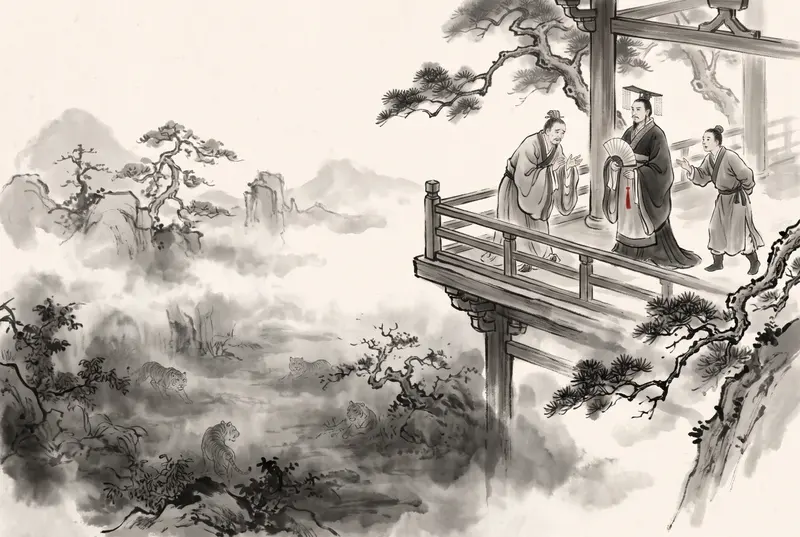
Zhang Shizhi went with the emperor to climb up to the tiger pens. The emperor asked the commandant of the Shanglin Park more than ten questions about the records of the birds and beasts, but the commandant only looked this way and that, and could not answer a single one. Then the keeper of the tiger pens, standing nearby, answered the emperor's questions about the records in great detail in the commandant's place, hoping to show how he could answer any question at once, without end. Emperor Wen said: "Is this not how an official ought to be? The commandant is useless!" And he ordered Zhang Shizhi to make the keeper director of the Shanglin Park. Zhang Shizhi waited a while, then came forward and said: "What sort of man does Your Majesty think Zhou Bo, the Marquis of Jiang, was?" The emperor said: "A worthy elder." He asked again: "And what sort of man was Zhang Xiangru, the Marquis of Dongyang?" Again the emperor said: "A worthy elder." Zhang Shizhi said: "The Marquis of Jiang and the Marquis of Dongyang are both called worthy elders, yet when these two spoke about affairs, they could hardly get the words out. Should they have copied this keeper, with his chatter and his quick, clever tongue? Qin gave power to clerks of the brush and the knife, and the clerks competed with one another in speed and harshness and hair-splitting. But the harm of it was that there were only fine documents, with no real pity behind them. So the rulers of Qin never heard of their own mistakes. Qin went steadily downhill until the Second Emperor, and then the realm fell apart like crumbling earth. Now if Your Majesty promotes this keeper over everyone's head because of his ready tongue, I fear the whole realm will bend before the wind, and everyone will compete in glib talk with nothing behind it. Besides, those below copy those above faster than a shadow follows a body or an echo a sound. Every promotion and dismissal must be carefully weighed." Emperor Wen said: "Good," and gave up the idea of appointing the keeper.
Notes (JA)
- 虎圈: 上林苑の虎を飼う囲い。見物のための高台があった。
- 嗇夫: 小役人。ここでは虎の囲いの番人。
- 刀筆之吏: 竹簡に筆で書き、小刀で削って直す文書役人。法律を細かく使う役人を指す。
- 景響: 影と響き。形や声にすぐ従うもの。
Notes (EN)
- The tiger pens (虎圈): in the Shanglin hunting park, with a platform for watching the animals.
- Clerks of the brush and the knife (刀筆之吏): writing was on bamboo, and mistakes were scraped off with a knife; the phrase means officials who live by documents and rules.
- Faster than a shadow or an echo (景響): the way the people copy their rulers.
Word notes
- glib/ɡlɪb/adjective
speaking easily and quickly, but without real thought
In the text: “everyone will compete in glib talk”
Similar words: smooth-talking — persuasive but not sincere · slick — too clever with words
- chatter/ˈtʃætər/noun
quick talk about unimportant things
In the text: “with his chatter and his quick, clever tongue”
Similar words: prattle — silly talk · babble — talk that makes no sense
Passage 3
Original
頃之,释之為廷尉。上行,出中渭橋,有一人從橋下走出,乘輿馬驚。於是使騎捕,屬之廷尉。釋之治問。曰:「縣人來,聞蹕,匿橋下。久之,以爲行已過,即出,見乘輿車騎即走耳。」廷尉奏當,一人犯蹕,當罰金。文帝怒曰:「此人親驚吾馬,吾馬賴柔和,令他馬,固不敗傷我乎?而廷尉乃當之罰金!」釋之曰:「法者,天子所與天下公共也。今法如此而更重之,是法不信於民也。且方其時,上使立誅之則已。今既下廷尉,廷尉,天下之平也,一傾而天下用法皆爲輕重,民安所錯其手足?唯陛下察之。」良久,上曰:「廷尉當是也。」
Kundoku (Japanese reading)
頃之、释之廷尉と為る。上行きて、中渭橋を出づ。一人有り、橋の下より走り出で、乗輿の馬驚く。是に於いて騎をして捕えしめ、之を廷尉に属す。釈之治問す。曰く、「県人来たり、蹕を聞き、橋の下に匿る。久しくして、以為えらく行已に過ぎたりと。即ち出で、乗輿の車騎を見て即ち走るのみ」と。廷尉奏当すらく、一人蹕を犯す、当に罰金すべしと。文帝怒りて曰く、「此の人親ら吾が馬を驚かす。吾が馬頼いに柔和なり。他馬ならしめば、固より我を敗傷せざらんや。而るに廷尉乃ち之を罰金に当つ」と。釈之曰く、「法は天子の天下と公共する所なり。今法此くの如くにして更に之を重くせば、是れ法の民に信ぜられざるなり。且つ其の時に方たりて、上立ちどころに之を誅せしめば則ち已む。今既に廷尉に下す。廷尉は、天下の平なり。一たび傾かば天下の法を用うる者皆為に軽重あらん。民安くにか其の手足を錯かん。唯だ陛下之を察せよ」と。良久しくして、上曰く、「廷尉の当是なり」と。
Japanese
(その後、張釈之は出世を重ね、)やがて廷尉(司法長官)となった。あるとき文帝が出かけて中渭橋を渡ろうとしたとき、一人の男が橋の下から走り出てきて、皇帝の車の馬が驚いた。そこで騎兵に男を捕らえさせ、廷尉に引きわたした。張釈之が取り調べると、男は言った。「県の者です。通りかかると先払いの声が聞こえたので、橋の下に隠れました。しばらくして、もう行列は通り過ぎただろうと思って出てきたら、皇帝の車と騎兵が見えたので、あわてて逃げただけです」。廷尉は「一人が行列の通行を犯した。罰金に当たる」と上奏した。文帝は怒って言った。「この男はわたしの馬を驚かせたのだ。幸いわたしの馬はおとなしかったが、ほかの馬だったら、わたしはけがをしていたかもしれないではないか。それなのに廷尉は罰金ですませるというのか」。張釈之は言った。「法は、天子が天下の人々と共に守るものです。いま法がこう定めているのに、それより重くすれば、民は法を信じなくなります。それに、あのときその場で陛下がお斬らせになったのなら、それまでです。しかし、いったん廷尉に下されたのです。廷尉は天下の公平の要です。それが一度傾けば、天下で法を使う者は皆、それにならって罪を軽くしたり重くしたりするでしょう。そうなれば、民はどこに手足を置いて暮らせばよいのでしょうか。どうか陛下、よくお考えください」。文帝はしばらく黙っていたが、やがて「廷尉の判決が正しい」と言った。
English
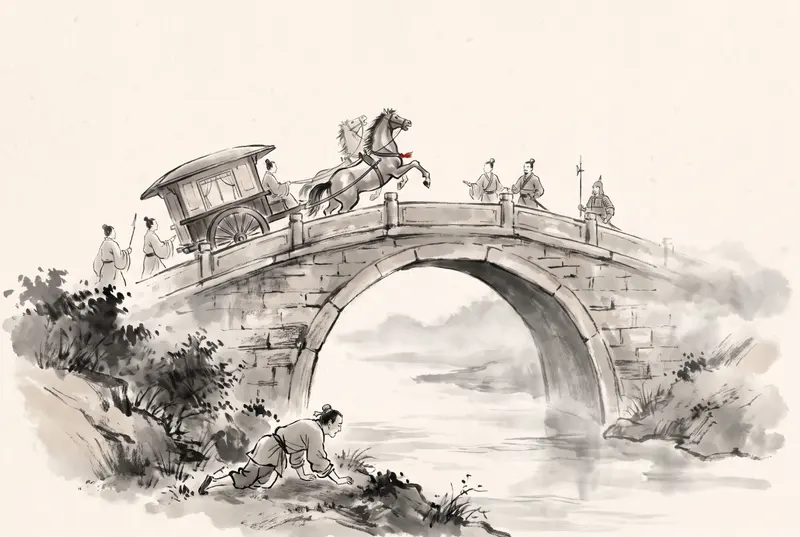
Some time later, Zhang Shizhi became commandant of justice. Once, when the emperor went out and was crossing the Middle Wei Bridge, a man ran out from under the bridge, and the horses of the imperial carriage took fright. The emperor had his horsemen seize the man and hand him over to the commandant of justice. Zhang Shizhi questioned him. The man said: "I am from the county. When I heard the call to clear the road, I hid under the bridge. After a long while I thought the procession must have passed, so I came out; and when I saw the emperor's carriage and horsemen, I just ran." The commandant reported his sentence: one man had broken the order to clear the road, and should be fined. Emperor Wen said angrily: "This man frightened my own horses. Luckily my horses are gentle. If they had been other horses, I might have been hurt! And the commandant of justice sentences him to a fine?" Zhang Shizhi said: "The law is something the Son of Heaven shares with the whole realm. The law says this; if it is now made heavier, the people will not trust the law. Had Your Majesty had him put to death on the spot at the time, that would have been the end of it. But now he has been handed over to the commandant of justice, and the commandant of justice is the balance of the realm. If it tips just once, everyone in the realm who uses the law will make punishments lighter or heavier as he pleases, and where then will the people put their hands and feet? I beg Your Majesty to consider it." After a long while the emperor said: "The commandant of justice is right."
Notes (JA)
- 蹕: 天子の行列の先払い。通行止めにすること。
- 法者天子所與天下公共也: 「法は天子が天下の人と共に守るもの」。皇帝も法の上に立たないという考えを示した名言。
- 民安所錯其手足: 民はどこに手足を置けばよいのか。法がぶれると、民は何を基準に暮らせばよいか分からなくなる。
- 释: 原文のまま(簡体字)。
Notes (EN)
- The call to clear the road (蹕): the order that cleared the way for the emperor's procession.
- "The law is something the Son of Heaven shares with the whole realm" (法者天子所與天下公共也): a famous statement that even the emperor stands under the law.
- Where will the people put their hands and feet? If the law wavers, no one knows how to live.
Idioms from this passage: The law is something the Son of Heaven shares with the whole realm 法は天子の天下と公共する所なり
Word notes
- take fright/teɪk fraɪt/phrase
to suddenly become afraid
In the text: “the horses of the imperial carriage took fright”
Similar words: panic — suddenly feel great fear · be startled — be suddenly surprised
- balance/ˈbæləns/noun
a pair of scales for weighing; fairness
In the text: “the balance of the realm”
Similar words: scales — a device for weighing · fairness — treating everyone equally
Passage 4
Original
其後有人盜高廟坐前玉環,捕得,文帝怒,下廷尉治。釋之案律盜宗廟服御物者爲奏,奏當棄市。上大怒曰:「人之無道,乃盜先帝廟器,吾屬廷尉者,欲致之族,而君以法奏之,非吾所以共承宗廟意也。」釋之免冠頓首謝曰:「法如是足也。且罪等,然以逆順爲差。今盜宗廟器而族之,有如萬分之一,假令愚民取長陵一抔土,陛下何以加其法乎?」久之,文帝與太后言之,乃許廷尉當。是時,中尉條侯周亞夫與梁相山都侯王恬開見釋之持議平,乃結爲親友。張廷尉由此天下稱之。
Kundoku (Japanese reading)
其の後人の高廟の坐前の玉環を盗む有り。捕え得たり。文帝怒り、廷尉に下して治めしむ。釈之律の宗廟の服御の物を盗む者を案じて奏を為し、奏して棄市に当つ。上大いに怒りて曰く、「人の無道なる、乃ち先帝の廟器を盗む。吾の廷尉に属する者は、之を族に致さんと欲すればなり。而るに君法を以て之を奏す。吾の宗廟を共承する所以の意に非ざるなり」と。釈之冠を免ぎ頓首して謝して曰く、「法は是くの如くにして足れり。且つ罪等しきも、然れども逆順を以て差と為す。今宗廟の器を盗みて之を族せば、万分の一も有るが如き、仮令愚民長陵の一抔の土を取らば、陛下何を以て其の法を加えんや」と。久しくして、文帝太后と之を言い、乃ち廷尉の当を許す。是の時、中尉条侯周亜夫と梁の相山都侯王恬開と、釈之の議を持すること平らかなるを見、乃ち結びて親友と為る。張廷尉此に由りて天下之を称す。
Japanese
その後、高祖の廟の神座の前にある玉の輪を盗んだ者がいて、捕らえられた。文帝は怒り、廷尉に下して裁かせた。張釈之は、宗廟の衣服や器物を盗んだ者についての律に照らして上奏し、市場での死刑に当たるとした。文帝は大いに怒って言った。「人の道にそむいて、先帝の廟の器を盗んだのだ。わたしが廷尉にまかせたのは、一族皆殺しにしたかったからだ。それなのに、あなたは法どおりに上奏した。それでは、わたしが宗廟をうやうやしく受け継ぐ心にかなわない」。張釈之は冠をぬいで頭を地につけてわびてから言った。「法ではこれで十分です。それに、同じ罪でも、事の重さによって差をつけるものです。いま宗廟の器を盗んだだけで一族皆殺しにしたら、万に一つ、愚かな民が長陵(高祖の陵)の土をひとすくい盗むようなことがあったとき、陛下はそれ以上どんな刑を加えられるのですか」。しばらくして、文帝は太后に相談して、廷尉の判決を認めた。このとき、中尉の条侯周亜夫と梁の宰相の山都侯王恬開は、張釈之が公平な意見を貫いたのを見て、親しい友となった。こうして張廷尉の名は天下にたたえられた。
English
Later someone stole a jade ring from before the spirit seat in the temple of Gaozu, and was caught. Emperor Wen was furious and handed him over to the commandant of justice. Zhang Shizhi looked up the statute on those who steal the robes and vessels of the ancestral temples, and reported that the man should be executed in the market place. The emperor was furious and said: "The man is a monster; he stole the vessels from the late emperor's temple! I handed him over to the commandant of justice because I want his whole family put to death. Instead you report him under the law. That is not how I mean to honour the ancestral temples." Zhang Shizhi took off his cap, bowed his head to the ground and said: "Under the law, this is enough. Besides, even among crimes of the same kind there are degrees of gravity. If the theft of a temple vessel is now punished by death for the whole family, then if one day, one chance in ten thousand, some foolish commoner were to take a handful of earth from the Changling tomb, what punishment would Your Majesty have left to give him?" After a long while Emperor Wen talked it over with the empress dowager, and then he approved the commandant's sentence. At that time Zhou Yafu, Marquis of Tiao, the commandant of the capital, and Wang Tiankai, Marquis of Shandu, chancellor of Liang, saw how fair Zhang Shizhi was in his judgements, and became his close friends. From then on Commandant Zhang was praised throughout the realm.
Notes (JA)
- 高廟: 高祖劉邦をまつる廟。
- 棄市: 市場で処刑し、死体を人々にさらす刑。
- 長陵一抔土: 高祖の陵の土をひとすくい。陵をあばく大罪の遠回しな言い方。
- 周亞夫: 周勃の子。細柳の陣で知られる将軍(057-zhou-bo の章)。
Notes (EN)
- The temple of Gaozu (高廟): the shrine of the founding emperor.
- A handful of earth from the Changling tomb (長陵一抔土): a veiled way of speaking of robbing the founder's grave.
- Zhou Yafu (周亞夫): son of Zhou Bo, the general of the camp at Xiliu (chapter 057).
Word notes
- statute/ˈstætʃut/noun
a law written down by a government
In the text: “looked up the statute”
Similar words: law — a rule made by a government · act — a law passed by a government
- monster/ˈmɑnstər/noun
a very cruel or wicked person
In the text: “The man is a monster”
Similar words: brute — a cruel, violent person · fiend — a wicked person
Passage 5
Original
後文帝崩,景帝立,釋之恐,稱病。欲免去,懼大誅至;欲見謝,則未知何如。用王生計,卒見謝,景帝不過也。王生者,善爲黃老言,處士也。嘗召居廷中,三公九卿盡會立,王生老人,曰「吾韤解」,顧謂張廷尉:「爲我結韤!」釋之跪而結之。既已,人或謂王生曰:「獨柰何廷辱張廷尉,使跪結韤?」王生曰:「吾老且賤,自度終無益於張廷尉。張廷尉方今天下名臣,吾故聊辱廷尉,使跪結韤,欲以重之。」諸公聞之,賢王生而重張廷尉。
Kundoku (Japanese reading)
後に文帝崩じ、景帝立つ。釈之恐れ、病と称す。免じて去らんと欲すれば、大誅の至らんことを懼る。見えて謝せんと欲すれば、則ち未だ何如なるかを知らず。王生の計を用い、卒に見えて謝す。景帝過めず。王生は、善く黄老の言を為す。処士なり。嘗て召されて廷中に居り、三公九卿尽く会して立つ。王生は老人なり。曰く「吾が韈解けたり」と。顧みて張廷尉に謂う、「我が為に韈を結べ」と。釈之跪きて之を結ぶ。既に已わる。人或いは王生に謂いて曰く、「独り奈何ぞ廷に張廷尉を辱め、跪きて韈を結ばしむるや」と。王生曰く、「吾は老いて且つ賤し。自ら度るに終に張廷尉に益無し。張廷尉は方今天下の名臣なり。吾故に聊か廷尉を辱め、跪きて韈を結ばしめ、以て之を重くせんと欲す」と。諸公之を聞き、王生を賢として張廷尉を重んず。
Japanese
のちに文帝が亡くなり、景帝が即位した。張釈之は恐れて病と称した。(皇太子だった景帝を、かつて宮門で車を降りなかったとして止め、罪を問うたことがあったからである。)辞めて去れば、大きな罰が下るのではないかと恐れ、会ってわびようとしても、どうなるか分からない。張釈之は王生の計略に従って、ついに景帝に会ってわびたが、景帝はとがめなかった。王生は黄老の学に通じた、仕官しない隠者だった。あるとき朝廷に召されて、三公九卿の大臣たちがずらりと並んで立っている中にいた。王生は老人だったが、「わしの靴下のひもがほどけた」と言い、張廷尉の方をふり返って「わしのために靴下のひもを結んでくれ」と言った。張釈之はひざまずいて結んでやった。終わったあと、ある人が王生に言った。「どうしてまた朝廷で張廷尉を辱め、ひざまずかせて靴下のひもを結ばせたのですか」。王生は言った。「わしは年寄りで身分も低い。考えてみても、わしが張廷尉の役に立てることは何もない。張廷尉はいま天下の名臣だ。だから少しばかり廷尉に恥をかかせ、ひざまずいてひもを結ばせて、その名をいっそう重くしてやろうと思ったのだ」。大臣たちはこれを聞いて、王生を賢者だと思い、張廷尉をいっそう重んじた。
English
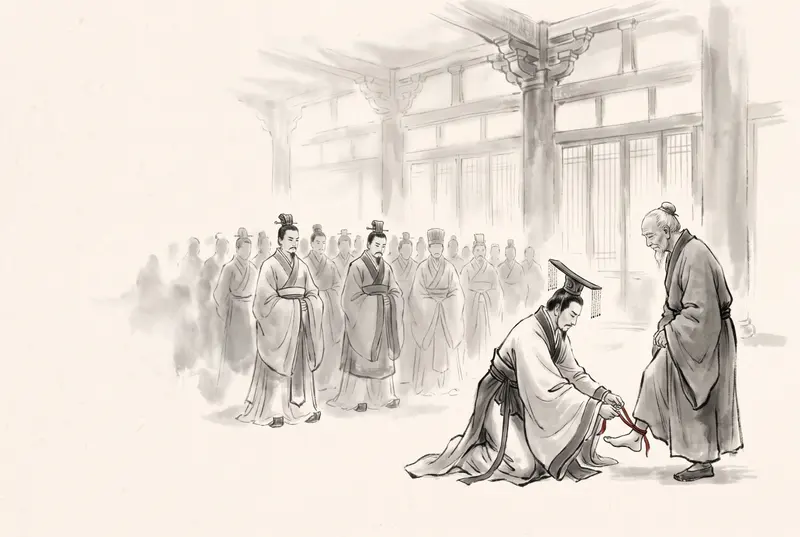
Later Emperor Wen died and Emperor Jing came to the throne. Zhang Shizhi was afraid and said he was ill. If he resigned and left, he feared a great punishment would follow; if he went to apologise, he did not know what would happen. In the end he followed a plan of Master Wang's, went to see the emperor and apologised, and Emperor Jing did not punish him. Master Wang was learned in the teachings of the Yellow Emperor and Laozi; he was a scholar who held no office. Once he was summoned to court, where the three dukes and the nine ministers were all standing together. Master Wang was an old man. "My garters have come undone," he said, and turning to Commandant Zhang, he said: "Tie my garters for me!" Zhang Shizhi knelt and tied them. Afterwards someone said to Master Wang: "Why did you shame Commandant Zhang like that in front of the whole court, making him kneel to tie your garters?" Master Wang said: "I am old and of low rank. I can see that I can never do anything for Commandant Zhang. Commandant Zhang is the most famous minister in the realm today. So I shamed him a little and made him kneel to tie my garters, to make him more highly respected." When the lords heard of it, they thought Master Wang a wise man, and respected Commandant Zhang all the more.
Notes (JA)
- 張釈之が恐れたのは、文帝のころ、皇太子(のちの景帝)と梁王が司馬門で車を降りなかったのをとがめ、不敬として弾劾したことがあったため(この章では省いた節)。
- 韈: 足袋や靴下のようなもの。ここではそれを結ぶひも。
- 處士: 才能がありながら仕官しない人。
- 張釈之がへりくだってひもを結んだことで、その度量の大きさが知られた。
Notes (EN)
- Zhang Shizhi was afraid because, under Emperor Wen, he had once charged the crown prince, the future Emperor Jing, with disrespect for not getting down from his carriage at a palace gate (a passage left out here).
- Garters (韈): the ties of his stockings.
- By kneeling humbly before the whole court, Zhang Shizhi showed his greatness of heart.
Word notes
- garter/ˈɡɑrtər/noun
a band that holds up a stocking
In the text: “My garters have come undone”
Similar words: band — a strip of material · strap — a narrow piece of cloth or leather
- kneel/nil/verb
to go down on your knees
In the text: “Zhang Shizhi knelt and tied them”
Similar words: bow down — lower the body · genuflect — bend one knee (formal)
Passage 6
Original
馮唐者,其大父趙人。父徙代。漢興徙安陵。唐以孝著,爲中郎署長,事文帝。文帝輦過,問唐曰:「父老何自爲郎?家安在?」唐具以實對。文帝曰:「吾居代時,吾尚食監高袪數爲我言趙將李齊之賢,戰於鉅鹿下。今吾每飯,意未嘗不在鉅鹿也。父知之乎?」唐對曰:「尚不如廉頗、李牧之爲將也。」上曰:「何以?」唐曰:「臣大父在趙時,爲官(卒)[率]將,善李牧。臣父故爲代相,善趙將李齊,知其爲人也。」上既聞廉頗、李牧爲人,良説,而搏髀曰:「嗟乎!吾獨不得廉頗、李牧時爲吾將,吾豈憂匈奴哉!」唐曰:「主臣!陛下雖得廉頗、李牧,弗能用也。」上怒,起入禁中。良久,召唐讓曰:「公柰何眾辱我,獨無閒處乎?」唐謝曰:「鄙人不知忌諱。」
Kundoku (Japanese reading)
馮唐は、其の大父は趙の人なり。父代に徙る。漢興りて安陵に徙る。唐孝を以て著われ、中郎署の長と為り、文帝に事う。文帝輦にて過ぎ、唐に問いて曰く、「父老何自りして郎と為る。家安くにか在る」と。唐具に実を以て対う。文帝曰く、「吾代に居りし時、吾が尚食監高袪数々我が為に趙の将李斉の賢にして、鉅鹿の下に戦いしことを言う。今吾毎に飯するに、意未だ嘗て鉅鹿に在らずんばあらず。父之を知るか」と。唐対えて曰く、「尚お廉頗・李牧の将為るに如かざるなり」と。上曰く、「何を以てか」と。唐曰く、「臣の大父趙に在りし時、官(卒)[率]将と為り、李牧と善し。臣の父故と代の相と為り、趙の将李斉と善し。其の人と為りを知るなり」と。上既に廉頗・李牧の人と為りを聞き、良だ説び、而して髀を搏ちて曰く、「嗟乎。吾独り廉頗・李牧を得て時に吾が将と為さず。吾豈に匈奴を憂えんや」と。唐曰く、「主臣。陛下廉頗・李牧を得と雖も、用うる能わざるなり」と。上怒り、起ちて禁中に入る。良久しくして、唐を召して譲めて曰く、「公奈何ぞ衆にて我を辱しむる。独り間処無からんや」と。唐謝して曰く、「鄙人忌諱を知らず」と。
Japanese
馮唐は、祖父が趙の人で、父は代に移り住み、漢が興ってから安陵に移った。馮唐は孝行で知られ、中郎署の長(宮中の近衛の取りまとめ役)として文帝に仕えていた。あるとき文帝が手押し車で通りかかって、馮唐にたずねた。「ご老人はどういうわけで郎官になったのか。家はどこか」。馮唐はありのままに答えた。文帝は言った。「わたしが代にいたころ、料理番の長の高袪が、趙の将軍李斉はすぐれた人物で、鉅鹿の城下で戦ったと、何度も話してくれた。いまでもわたしは食事のたびに、思いが鉅鹿へ飛ぶのだ。ご老人は李斉を知っているか」。馮唐は答えた。「李斉は、廉頗や李牧の将軍ぶりには及びません」。文帝が「なぜか」と聞くと、馮唐は言った。「わたしの祖父は趙にいたとき、部隊の長をしていて、李牧と親しくしていました。わたしの父はかつて代の宰相で、趙の将軍李斉と親しくしていました。それで、二人の人柄を知っているのです」。文帝は廉頗と李牧の人柄を聞くと、たいへん喜び、ももをたたいて言った。「ああ、わたしにだけ廉頗や李牧のような将軍がいないとは。いれば、匈奴など心配することはないのに」。馮唐は言った。「おそれながら、陛下は廉頗や李牧を得られても、使いこなすことはできません」。文帝は怒って立ち上がり、奥へ入ってしまった。しばらくしてから馮唐を呼んで責めた。「あなたはどうして皆の前でわたしに恥をかかせたのか。ほかに二人きりで話す場所がないとでも言うのか」。馮唐はわびて言った。「田舎者で、遠慮すべきことを知らないのです」。
English
Feng Tang's grandfather was a man of Zhao. His father moved to Dai, and when the Han arose the family moved to Anling. Feng Tang was known for his devotion to his parents, and became head of a bureau of palace gentlemen, serving Emperor Wen. Once Emperor Wen passed by in his hand carriage and asked Feng Tang: "Old sir, how did you come to be a palace gentleman? Where is your home?" Feng Tang told him everything truthfully. Emperor Wen said: "When I was in Dai, my steward Gao Qu often used to tell me how fine a man Li Qi, the Zhao general, was, and how he fought below the walls of Julu. Even now, every time I eat, my thoughts go to Julu. Did you know of him, old sir?" Feng Tang answered: "He was not as good a general as Lian Po or Li Mu." The emperor said: "Why do you say so?" Feng Tang said: "When my grandfather was in Zhao, he was an officer in command of troops, and a friend of Li Mu. My father was once chancellor of Dai, and a friend of the Zhao general Li Qi. So I know what kind of men they were." When the emperor had heard what kind of men Lian Po and Li Mu were, he was delighted, slapped his thigh and said: "Ah! If only I had men like Lian Po and Li Mu as my generals, why would I need to worry about the Xiongnu?" Feng Tang said: "Forgive me, but even if Your Majesty had Lian Po and Li Mu, you would not be able to use them." The emperor was angry, got up and went into his private apartments. After a long while he called Feng Tang back and scolded him: "Why did you shame me in front of everyone? Was there no place where we could talk alone?" Feng Tang apologised: "I am only a country fellow, and I do not know what should not be said."
Notes (JA)
- 鉅鹿: 秦末に項羽が秦軍を破った地。李斉はそのころの趙の将軍。
- 廉頗・李牧: 戦国時代の趙の名将(081-wanbi、081-zhao-kuo の章)。文帝は、匈奴に備える名将をほしがっていた。
- 主臣: 「おそれながら」というような、恐縮を表すことば。
- (卒)[率]: 校勘の印。「卒」を「率」に改めて読む。
Notes (EN)
- Julu (鉅鹿): the battlefield of the last years of Qin; Li Qi was a general of Zhao at that time.
- Lian Po and Li Mu: the great generals of Zhao in the Warring States (chapters 081).
- Forgive me (主臣): a phrase of apology before saying something bold.
Word notes
- devotion/dɪˈvoʊʃən/noun
great love and loyalty
In the text: “known for his devotion to his parents”
Similar words: loyalty — faithful support · dedication — giving time and effort
- slap/slæp/verb
to hit with an open hand
In the text: “slapped his thigh”
Similar words: smack — hit with the hand · pat — touch lightly with the hand
Passage 7
Original
當是之時,匈奴新大入朝那,殺北地都尉卬。上以胡寇爲意,乃卒復問唐曰:「公何以知吾不能用廉頗、李牧也?」唐對曰:「臣聞上古王者之遣將也,跪而推轂,曰閫以內者,寡人制之;閫以外者,將軍制之。軍功爵賞皆決於外,歸而奏之。此非虛言也。臣大父言,李牧爲趙將居邊,軍市之租皆自用饗士,賞賜決於外,不從中擾也。委任而責成功,故李牧乃得盡其智能,遣選車千三百乘,彀騎萬三千,百金之士十萬,是以北逐單于,破東胡,滅澹林,西抑彊秦,南支韓、魏。當是之時,趙幾霸。其後會趙王遷立,其母倡也。王遷立,乃用郭開讒,卒誅李牧,令顏聚代之。是以兵破士北,爲秦所禽滅。
Kundoku (Japanese reading)
是の時に当たり、匈奴新たに大いに朝那に入り、北地の都尉卬を殺す。上胡寇を以て意と為し、乃ち卒に復た唐に問いて曰く、「公何を以て吾の廉頗・李牧を用うる能わざるを知るや」と。唐対えて曰く、「臣聞く、上古の王者の将を遣わすや、跪きて轂を推し、曰く、閫より以内は、寡人之を制し、閫より以外は、将軍之を制すと。軍功爵賞は皆外に決し、帰りて之を奏す。此れ虚言に非ざるなり。臣の大父言う、李牧趙の将と為りて辺に居るや、軍市の租は皆自ら用いて士を饗し、賞賜は外に決し、中より擾されず。委任して成功を責む。故に李牧乃ち其の智能を尽くすを得、選車千三百乗、彀騎万三千、百金の士十万を遣わす。是を以て北のかた単于を逐い、東胡を破り、澹林を滅ぼし、西のかた彊秦を抑え、南のかた韓・魏を支う。是の時に当たり、趙幾ど霸たり。其の後趙王遷立つに会う。其の母は倡なり。王遷立ち、乃ち郭開の讒を用い、卒に李牧を誅し、顔聚をして之に代わらしむ。是を以て兵破れ士北げ、秦の禽滅する所と為る。
Japanese
ちょうどそのころ、匈奴が朝那に大挙して攻めこみ、北地の都尉の孫卬を殺した。文帝は匈奴の侵入を気にかけていたので、ついにまた馮唐にたずねた。「あなたは、わたしが廉頗や李牧を使いこなせないと、どうして分かるのか」。馮唐は答えた。「聞くところでは、大昔の王は将軍を送り出すとき、ひざまずいて将軍の車の轂を押してやり、『城門の内側のことはわたしが決める。城門の外のことは将軍が決めよ』と言いました。戦の手柄による爵位やほうびは、すべて外で将軍が決め、帰ってから報告したのです。これはうそではありません。わたしの祖父によれば、李牧が趙の将軍として辺境にいたとき、軍の市場の税は全部自分で使って兵士にふるまい、ほうびも外で決めて、朝廷から口出しされることはありませんでした。趙王は李牧にまかせて、結果だけを求めたのです。だから李牧は知恵と力を出し尽くすことができ、えりすぐった兵車千三百台、弓騎兵一万三千、百金のほうびに値する勇士十万を繰り出しました。そうして北では単于を追い払い、東胡を破り、澹林を滅ぼし、西では強い秦を抑え、南では韓と魏を支えました。このころ、趙はほとんど覇者になりかけていました。ところがその後、趙王遷が位につきました。その母は歌い女でした。王遷は即位すると、郭開の中傷を聞き入れて、ついに李牧を殺し、顔聚を代わりの将軍にしました。それで趙の軍は破れて兵は逃げ、秦に捕らえられ、滅ぼされたのです。
English
Just then the Xiongnu had made a great raid into Chaona and killed Ang, the chief commandant of the Northern Commandery. The emperor was worried about the barbarian raids, so in the end he asked Feng Tang again: "How do you know that I could not use Lian Po and Li Mu?" Feng Tang answered: "I have heard that when the kings of old sent out a general, they knelt and pushed the hub of his chariot wheel, saying: 'Inside the gate, I shall decide. Outside the gate, the general shall decide.' Merits, ranks and rewards in the army were all decided in the field, and reported when the army came home. These are not empty words. My grandfather told me that when Li Mu was general of Zhao on the frontier, he used all the taxes from the army markets to feast his soldiers himself; rewards were decided in the field, and the court never meddled. The king trusted him and only asked for results. That is why Li Mu could use all his wisdom and ability. He sent out thirteen hundred picked chariots, thirteen thousand mounted archers, and a hundred thousand men each worth a hundred pieces of gold. With them he drove the Chanyu back in the north, broke the Eastern Hu, destroyed the Danlin, held back mighty Qin in the west, and propped up Han and Wei in the south. In those days Zhao was almost the overlord of the realm. But then Qian became king of Zhao. His mother was a singing girl. When King Qian came to the throne, he listened to the slanders of Guo Kai, put Li Mu to death in the end, and gave his command to Yan Ju. So the army was broken, the soldiers fled, and Zhao was captured and destroyed by Qin.
Notes (JA)
- 跪而推轂: ひざまずいて車輪の轂を押す。王が将軍に全権を任せる儀式。
- 閫: 門の敷居。ここでは都の城門。「閫外の任」は、将軍に任された外の仕事。
- 軍市之租: 軍の陣中に開かれた市場の税。
- 郭開: 趙王遷の寵臣。秦から賄賂を受けて李牧を中傷したとされる(081-zhao-kuo の章)。
Notes (EN)
- Pushed the hub of his chariot wheel (跪而推轂): the rite by which a king gave a general full command.
- Inside the gate, outside the gate (閫): the king rules at home, the general in the field.
- Guo Kai (郭開): the favourite who, bribed by Qin, slandered Li Mu (chapter 081).
Word notes
- raid/reɪd/noun
a sudden attack
In the text: “the Xiongnu had made a great raid”
Similar words: attack — an act of violence · incursion — a sudden invasion
- meddle/ˈmɛdəl/verb
to get involved in something that is not your business
In the text: “the court never meddled”
Similar words: interfere — get involved without being asked · intrude — come in where not wanted
Passage 8
Original
今臣竊聞魏尚爲雲中守,其軍市租盡以饗士卒,[出]私養錢,五日一椎牛,饗賓客軍吏舍人,是以匈奴遠避,不近雲中之塞。虜曾一入,尚率車騎擊之,所殺其眾。夫士卒盡家人子,起田中從軍,安知尺籍伍符。終日力戰,斬首捕虜,上功莫府,一言不相應,文吏以法繩之。其賞不行而吏奉法必用。臣愚,以爲陛下法太明,賞太輕,罰太重。且雲中守魏尚坐上功首虜差六級,陛下下之吏,削其爵,罰作之。由此言之,陛下雖得廉頗、李牧,弗能用也。臣誠愚,觸忌諱,死罪死罪!」文帝説。是日令馮唐持節赦魏尚,復以爲雲中守,而拜唐爲車騎都尉,主中尉及郡國車士。
Kundoku (Japanese reading)
今臣竊かに聞く、魏尚雲中の守と為り、其の軍市の租尽く以て士卒を饗し、[出]私養の銭もて、五日に一たび牛を椎ち、賓客・軍吏・舎人を饗す。是を以て匈奴遠く避け、雲中の塞に近づかず。虜曾て一たび入るや、尚車騎を率いて之を撃ち、殺す所甚だ衆し。夫れ士卒は尽く家人の子にして、田中より起ちて軍に従う。安くんぞ尺籍伍符を知らんや。終日力戦し、首を斬り虜を捕え、功を莫府に上るも、一言相応ぜずんば、文吏法を以て之を縄す。其の賞行われずして吏の奉法は必ず用いらる。臣愚、以為えらく陛下の法太だ明らかにして、賞太だ軽く、罰太だ重しと。且つ雲中の守魏尚、上功の首虜六級を差うに坐し、陛下之を吏に下し、其の爵を削り、罰して之を作す。此に由りて之を言えば、陛下廉頗・李牧を得と雖も、用うる能わざるなり。臣誠に愚にして、忌諱に触る。死罪、死罪」と。文帝説ぶ。是の日馮唐をして節を持して魏尚を赦し、復た以て雲中の守と為さしめ、而して唐を拝して車騎都尉と為し、中尉及び郡国の車士を主らしむ。
Japanese
「いまひそかに聞くところでは、魏尚は雲中の太守となって、軍の市場の税をすべて兵士にふるまい、自分の俸禄まで出して、五日に一度は牛を殺して客や軍の役人、家来たちをもてなしていました。それで匈奴は遠くへ避けて、雲中の砦に近づきませんでした。一度だけ匈奴が攻めこんできたとき、魏尚は戦車と騎兵を率いて迎え撃ち、多くの敵を殺しました。そもそも兵士たちは皆、ふつうの家の子で、田畑から出てきて軍に加わった者たちです。戦功を記す帳簿や軍の規則などを、どうして知っているでしょう。一日じゅう力を尽くして戦い、首を斬り、捕虜を捕らえて、将軍の幕府に手柄を報告しても、書類が一言でも合わなければ、文書役人が法をたてにとがめます。ほうびは与えられないのに、役人の法の適用だけは必ず行われるのです。わたしは愚かですが、陛下の法はあまりに細かく、ほうびはあまりに軽く、罰はあまりに重いと思います。しかも雲中太守の魏尚は、報告した首の数が六つ違っていたというだけで、陛下は役人に下して裁かせ、爵位を削って労役の刑にされました。このことから言えば、陛下は廉頗や李牧を得られても、使いこなすことはできません。わたしはまことに愚かで、言ってはならないことを申しました。死罪に値します、死罪に値します」。文帝は喜んだ。その日のうちに馮唐に節を持たせて魏尚を許し、ふたたび雲中の太守とさせ、馮唐を車騎都尉に任じて、中尉の兵と郡や国の戦車兵を取りまとめさせた。
English
"Now I have heard privately that when Wei Shang was governor of Yunzhong, he used all the taxes from the army markets to feast his soldiers. He even paid from his own salary to slaughter an ox every five days and feast his guests, his officers and his retainers. So the Xiongnu kept far away and did not come near the forts of Yunzhong. Once the raiders did come in, and Wei Shang led his chariots and horsemen against them and killed a great many. The soldiers are all sons of ordinary families, who have come from the fields to join the army. What do they know of muster rolls and army regulations? They fight hard all day long, cut off heads and take prisoners, and report their deeds to headquarters; and if a single word does not match, the clerks bring the law down on them. The rewards are never given, but the clerks never fail to apply the law. In my foolish opinion, Your Majesty's laws are too exacting, your rewards too light, and your punishments too heavy. Besides, Wei Shang, the governor of Yunzhong, was found guilty because the heads and prisoners he reported were off by six, and Your Majesty handed him over to the clerks, stripped him of his rank and sentenced him to hard labour. From this, I say that even if Your Majesty had Lian Po and Li Mu, you would not be able to use them. I am truly foolish, and I have said what should not be said. I deserve death, I deserve death." Emperor Wen was pleased. That same day he sent Feng Tang with his staff of office to pardon Wei Shang and make him governor of Yunzhong again, and he made Feng Tang chief commandant of chariots and cavalry, in charge of the troops of the capital and the chariot soldiers of the commanderies and kingdoms.
Notes (JA)
- 雲中: 今の内モンゴル自治区のトクト県のあたり。匈奴に備える最前線の郡。
- 尺籍伍符: 兵士の功績を記す帳簿と、五人組の軍規。
- 差六級: 報告した首の数が六つ違っていたこと。
- [出]: 校勘で補った字。
- この話から、のちに唐の王勃は「馮唐老い易く、李広封ぜられ難し」と詠んだ(109-li-guang の章も参照)。
Notes (EN)
- Yunzhong (雲中): a frontier commandery in Inner Mongolia, facing the Xiongnu.
- Muster rolls and army regulations (尺籍伍符): the paperwork that recorded each soldier's deeds.
- Off by six (差六級): six heads too many or too few in his report.
- The Tang poet Wang Bo later wrote: "Feng Tang grew old too soon; Li Guang was never made a marquis" (see chapter 109).
Word notes
- exacting/ɪɡˈzæktɪŋ/adjective
demanding great care and effort
In the text: “laws are too exacting”
Similar words: strict — firm about rules · demanding — needing much effort
- hard labour/hɑrd ˈleɪbər/noun
heavy physical work as a punishment
In the text: “sentenced him to hard labour”
Similar words: forced labour — work as a punishment · penal servitude — prison with hard work (formal)
British spelling: labour (US: labor).
Passage 9
Original
太史公曰:張季之言長者,守法不阿意;馮公之論將率,有味哉!有味哉!語曰「不知其人,視其友」。二君之所稱誦,可著廊廟。書曰「不偏不黨,王道蕩蕩;不黨不偏,王道便便」。張季、馮公近之矣。
Kundoku (Japanese reading)
太史公曰く、張季の長者を言うは、法を守りて意に阿らず。馮公の将率を論ずるは、味有るかな、味有るかな。語に曰く「其の人を知らずんば、其の友を視よ」と。二君の称誦する所は、廊廟に著すべし。書に曰く「偏ならず党ならず、王道蕩蕩たり。党ならず偏ならず、王道便便たり」と。張季・馮公は之に近し。
Japanese
太史公は言う。張季(張釈之)が長者について語ったのは、法を守って皇帝の心にこびなかったからである。馮公(馮唐)が将軍について論じたのは、味わい深いことだ、まことに味わい深い。ことわざに「その人が分からなければ、その友を見よ」という。二人がほめたたえた人物は、朝廷に掲げて手本にしてよいほどだ。『書経』に「かたよらず、党派をつくらず、王の道は広々としている。党派をつくらず、かたよらず、王の道は平らかである」とある。張季と馮公は、それに近い。
English
The Grand Historian says: When Zhang Ji spoke of worthy elders, he kept to the law and did not bend to his master's wishes. When Master Feng discussed generals, how much there was to savour in his words! How much to savour! The saying goes: "If you do not know a man, look at his friends." The men these two praised deserve to be honoured in the halls of state. The Book of Documents says: "Without bias, without faction, the way of the king is broad and wide. Without faction, without bias, the way of the king is level and plain." Zhang Ji and Master Feng came close to it.
Notes (JA)
- 張季: 張釈之。字が季。
- 有味哉: 味わい深いことだ。司馬遷が二度くり返して感心している。
- 書曰: 『尚書』洪範篇のことば。
- 廊廟: 朝廷。
Notes (EN)
- Zhang Ji (張季): Zhang Shizhi, by his courtesy name.
- How much to savour (有味哉): Sima Qian says it twice.
- The quotation is from the "Great Plan" chapter of the Book of Documents.
Word notes
- savour/ˈseɪvər/verb
to enjoy something slowly and fully
In the text: “how much there was to savour in his words”
Similar words: relish — enjoy greatly · appreciate — value
British spelling: savour (US: savor).
- faction/ˈfækʃən/noun
a small group within a larger one, working for its own aims
In the text: “without faction”
Similar words: clique — a closed group · party — a group with shared aims