Biographies · Vol. 75
Biography of Lord Mengchang 孟嘗君列傳
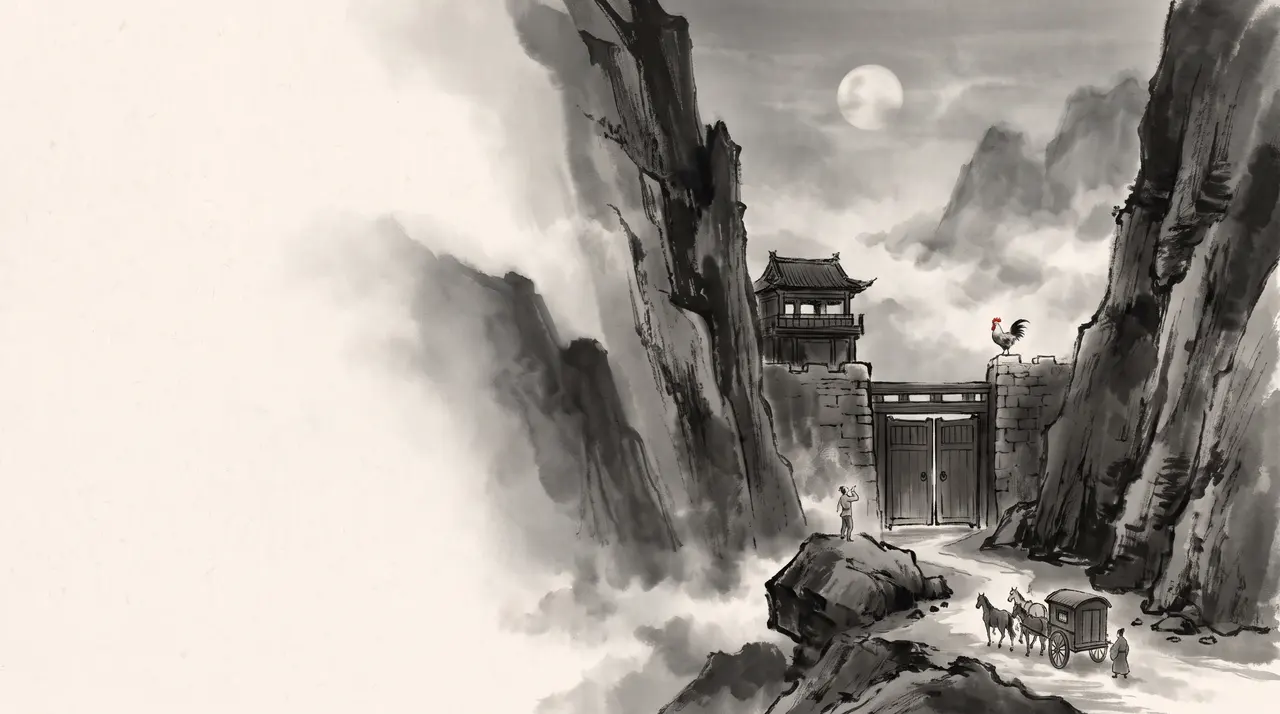
Lord Mengchang: The Cock-Crow and the Dog-Thief 鷄鳴狗盜
Tian Wen, later Lord Mengchang, is born on the fifth day of the fifth month, a date said to bring harm to parents, and his father nearly abandons him. But the boy silences his father with a clever question and in time becomes his heir. Lord Mengchang keeps thousands of retainers, high and low alike. When King Zhao of Qin holds him prisoner, he escapes through the Hangu Pass thanks to two men the other guests despised: a thief who steals like a dog and a man who crows like a cock. His retainer Feng Huan, who sings complaints about his treatment, wins the hearts of the people of Xue by burning their debt contracts, and when Lord Mengchang falls from power, Feng Huan reminds him that people crowd the market only in the morning.
This page has the scene "Lord Mengchang: The Cock-Crow and the Dog-Thief" from this volume, not the whole volume.
Audio
The audio is synthetic speech.
Video
Passage 1
Original
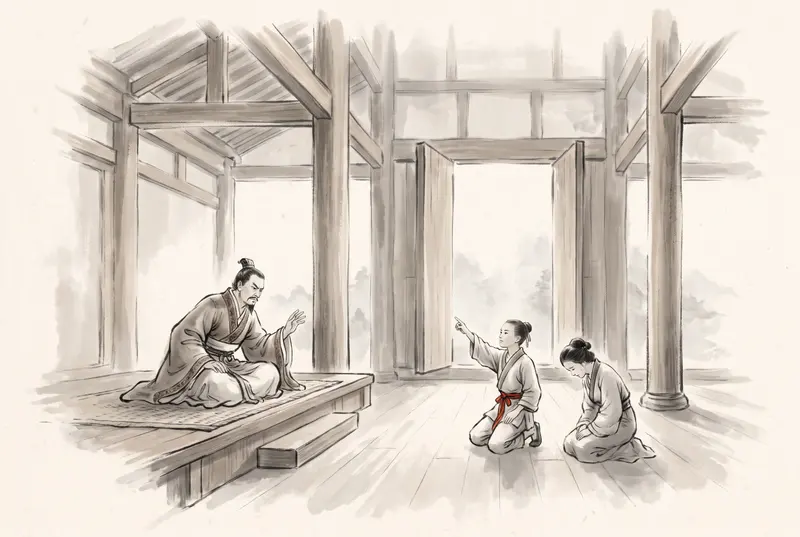
初,田嬰有子四十餘人。其賤妾有子名文,文以五月五日生。嬰告其母曰:「勿舉也。」其母竊舉生之。及長,其母因兄弟而見其子文於田嬰。田嬰怒其母曰:「吾令若去此子,而敢生之,何也?」文頓首,因曰:「君所以不舉五月子者,何故?」嬰曰:「五月子者,長與戸齊,將不利其父母。」文曰:「人生受命於天乎?將受命於戸邪?」嬰默然。文曰:「必受命於天,君何憂焉。必受命於戸,則可髙其戸耳,誰能至者!」嬰曰:「子休矣。」
Kundoku (Japanese reading)
初め、田嬰に子四十余人有り。其の賤妾に子有り、名は文。文は五月五日を以て生まる。嬰其の母に告げて曰く、「挙ぐる勿かれ」と。其の母窃かに挙げて之を生かす。長ずるに及びて、其の母兄弟に因りて其の子文を田嬰に見えしむ。田嬰其の母を怒りて曰く、「吾若をして此の子を去らしむるに、敢えて之を生かすは、何ぞや」と。文頓首し、因りて曰く、「君の五月の子を挙げざる所以の者は、何の故ぞ」と。嬰曰く、「五月の子は、長じて戸と斉しく、将に其の父母に利あらざらんとす」と。文曰く、「人の生は命を天に受くるか、将た命を戸に受くるか」と。嬰黙然たり。文曰く、「必ず命を天に受けば、君何ぞ憂えん。必ず命を戸に受けば、則ち其の戸を高くすべきのみ。誰か能く至る者ぞ」と。嬰曰く、「子休めよ」と。
Japanese
田嬰には四十人あまりの子がいた。身分の低い側女が産んだ子に、文という子がいた。文は五月五日に生まれた。田嬰は母親に「育てるな」と言ったが、母親はこっそり育てた。文が大きくなると、母親は文の兄弟を通じて、文を田嬰に会わせた。田嬰は母親に腹を立てて言った。「わたしはこの子を捨てろと言ったのに、勝手に育てたのはどういうわけだ」。文は頭を地につけて言った。「父上が五月生まれの子を育てないのは、なぜですか」。田嬰は言った。「五月生まれの子は、背が戸口と同じ高さになると、父母に災いをもたらすのだ」。文は言った。「人の命は天から授かるのでしょうか。それとも戸口から授かるのでしょうか」。田嬰は黙ってしまった。文は言った。「天から授かるのなら、父上が心配なさることはありません。戸口から授かるのなら、戸口を高くすればいいだけです。そうすれば、だれもその高さに届きません」。田嬰は言った。「もうよい、黙っておれ」。
English
Tian Ying had more than forty sons. One of his low-ranking concubines had a son named Wen, who was born on the fifth day of the fifth month. Ying told the mother, "Do not raise him." But the mother raised him in secret. When the boy was grown, she had his brothers introduce him to Tian Ying. Tian Ying was angry with her and said, "I told you to get rid of this child. How dare you raise him?" Wen knocked his head on the ground and said, "Why is it that you do not raise children born in the fifth month?" Ying said, "A child born in the fifth month, once he grows as tall as the door, will bring harm to his father and mother." Wen said, "Does a man receive his fate from Heaven, or from the door?" Ying was silent. Wen said, "If he receives it from Heaven, what do you have to worry about? If he receives it from the door, you need only make the door taller. Then who could ever reach it?" "That will do," said Ying.
Notes (JA)
- この節の前(省略): 孟嘗君の父の田嬰は、斉の威王の末子で、斉の宰相を務め、薛に領地を与えられた。
- 田嬰: 斉の王族。孟嘗君の父。
- 賤妾: 身分の低い側女。
- 五月五日: 五月、とくに五日に生まれた子は親に災いをもたらすという言い伝えがあった。
- 舉: 子を育てる。
- 長與戸齊: 背が戸口と同じ高さになる。
- 子休矣: もうやめておけ、黙れ。
Notes (EN)
- Before this (left out here): Lord Mengchang's father, Tian Ying, was the youngest son of King Wei of Qi. He served as chief minister of Qi and was given the fief of Xue.
- Tian Ying: a member of the royal house of Qi, Lord Mengchang's father.
- 賤妾: a low-ranking concubine.
- The fifth day of the fifth month: children born in the fifth month, especially on the fifth, were believed to bring harm to their parents.
- 舉: to raise a child.
- 長與戸齊: to grow as tall as the door.
- 子休矣: "That will do," "Enough."
Word notes
- concubine/ˈkɑŋkjəˌbaɪn/noun
a woman who lives with a man as a lower-ranking wife
In the text: “low-ranking concubines”
Similar words: mistress — a woman a married man has a relationship with · consort — a wife or partner of a ruler
- raise/reɪz/verb
to care for a child until it grows up
In the text: “Do not raise him”
Similar words: bring up — raise a child · rear — formal; raise
- that will do/ˈðæt wɪl ˌduː/phrase
used to tell someone to stop
In the text: “That will do”
Similar words: enough — stop now · that's enough — everyday phrase
Passage 2
Original
久之,文承閒問其父嬰曰:「子之子爲何?」曰:「爲孫。」「孫之孫爲何?」曰:「爲玄孫。」「玄孫之孫爲何?」曰:「不能知也。」文曰:「君用事相齊,至今三王矣,齊不加廣而君私家富累萬金,門下不見一賢者。文聞將門必有將,相門必有相。今君後宮蹈綺縠而士不得(短)[裋]褐,仆妾餘粱肉而士不厭糟糠。今君又尚厚積餘藏,欲以遺所不知何人,而忘公家之事日損,文竊怪之。」於是嬰乃禮文,使主家待賓客。賓客日進,名聲聞於諸侯。諸侯皆使人請薛公田嬰以文爲太子,嬰許之。嬰卒,謚爲靖郭君。而文果代立於薛,是爲孟嘗君。
Kundoku (Japanese reading)
之を久しくして、文間に承けて其の父嬰に問いて曰く、「子の子を何と為す」と。曰く、「孫と為す」と。「孫の孫を何と為す」と。曰く、「玄孫と為す」と。「玄孫の孫を何と為す」と。曰く、「知る能わざるなり」と。文曰く、「君事を用いて斉に相たること、今に至るまで三王なり。斉は広さを加えずして、君の私家は富むこと万金を累ぬ。門下に一賢者を見ず。文聞く、将門には必ず将有り、相門には必ず相有り、と。今君の後宮は綺縠を蹈むも、士は裋褐を得ず。僕妾は粱肉を余すも、士は糟糠に厭かず。今君又尚お厚く積みて余蔵し、以て知らざる所の何人に遺らんと欲して、公家の事の日に損なわるるを忘る。文窃かに之を怪しむ」と。是に於いて嬰乃ち文を礼し、家を主りて賓客を待たしむ。賓客日に進み、名声諸侯に聞こゆ。諸侯皆人をして薛公田嬰に文を以て太子と為さんことを請わしむ。嬰之を許す。嬰卒し、謚して靖郭君と為す。而して文果たして代わりて薛に立つ。是を孟嘗君と為す。
Japanese
しばらくして、文はすきを見て父の田嬰にたずねた。「子の子は何と呼びますか」。「孫だ」。「孫の孫は何と呼びますか」。「玄孫だ」。「玄孫の孫は何と呼びますか」。「わからない」。文は言った。「父上が斉で政治をとり宰相となられてから、今までに三代の王に仕えてこられました。それなのに、斉の領土は少しも広がらず、父上の家だけが何万金もの富をためこんでいます。門下には一人の賢者も見あたりません。『将軍の家からは必ず将軍が、宰相の家からは必ず宰相が出る』と聞いています。いま父上の奥御殿の女たちは美しい絹を踏んで歩いているのに、士は粗末な短い着物さえ手に入りません。召使いたちは上等の米や肉を食べ残しているのに、士は酒かすや米ぬかさえ十分に食べられません。そのうえ父上は、まだ財産をためこんで、だれだかわからない人に残そうとし、国の仕事が日に日に損なわれていくのを忘れておられます。わたしは、それが不思議でなりません」。そこで田嬰は文を重んじるようになり、家の取りしきりと客のもてなしを任せた。客は日ごとに増え、文の名声は諸侯の間にまで聞こえた。諸侯はみな使いを出して、薛公の田嬰に、文を跡継ぎにするよう願った。田嬰はこれを承知した。田嬰が死ぬと、靖郭君とおくり名された。そして文は果たして父に代わって薛の主となった。これが孟嘗君である。
English
Some time later, Wen found a moment to ask his father, "What is a son's son called?" "A grandson." "And a grandson's grandson?" "A great-great-grandson." "And a great-great-grandson's grandson?" "I cannot say." Wen said, "You have managed the affairs of Qi as chief minister under three kings. Qi has not grown any larger, yet your own house has piled up a fortune of ten thousand gold, and not one worthy man is to be seen among your followers. I have heard that a general's house always produces a general, and a minister's house a minister. Now the women of your inner palace tread on fine silks, while scholars cannot get a coarse short coat; your servants leave good millet and meat uneaten, while scholars cannot fill up on dregs and husks. And still you go on hoarding wealth to leave to who knows whom, forgetting that the affairs of the state grow worse by the day. I find it strange." After that Ying treated Wen with respect and put him in charge of the household and of receiving guests. Guests came in greater numbers every day, and Wen's fame spread among the lords. The lords all sent envoys asking Tian Ying, Lord of Xue, to make Wen his heir, and Ying agreed. When Ying died, he was given the title Lord Jingguo, and Wen did indeed succeed him at Xue. This was Lord Mengchang.
Notes (JA)
- 承閒: すきを見て、機会をとらえて。
- 玄孫: やしゃご。孫の孫。
- 三王: 斉の威王・宣王・湣王の三代。
- 將門必有將,相門必有相: 将軍の家には必ず将軍が、宰相の家には必ず宰相が出る。
- 綺縠: 美しい絹織物。
- (短)[裋]褐: 「( )」は校訂者が不要とした字、「[ ]」は補った字の印。「裋褐」は庶民の粗末な短い着物。
- 粱肉: 上等の米と肉。
- 糟糠: 酒かすと米ぬか。粗末な食べ物。
- 薛: 今の山東省滕州市のあたり。田嬰の領地。
- 謚: おくり名。死後に贈る名。
- 孟嘗君: 田文(?〜前279年ごろ)。戦国四君(孟嘗君・平原君・信陵君・春申君)の一人。
Notes (EN)
- 承閒: to seize a moment.
- 玄孫: a great-great-grandson, a grandson's grandson.
- Three kings: Kings Wei, Xuan and Min of Qi.
- 將門必有將,相門必有相: "A general's house produces generals; a minister's house produces ministers."
- 綺縠: fine silks.
- (短)[裋]褐: the round brackets mark a character the editors drop, the square brackets one they supply. 裋褐 is a coarse short coat worn by common people.
- 粱肉: good millet and meat.
- 糟糠: dregs and husks, the poorest food.
- Xue: near present-day Tengzhou in Shandong, Tian Ying's fief.
- 謚: a posthumous title.
- Lord Mengchang: Tian Wen (d. c. 279 BCE), one of the "Four Lords" of the Warring States.
Word notes
- hoard/hɔrd/verb
to collect and hide large amounts of something
In the text: “hoarding wealth”
Similar words: stockpile — collect a large supply · amass — gather a lot of
Do not confuse with horde, a large crowd.
- dregs/drɛɡz/noun
the bits left at the bottom of a drink; the worst part
In the text: “dregs and husks”
Similar words: leftovers — what is left · sediment — matter that sinks to the bottom
Passage 3
Original
孟嘗君在薛,招致諸侯賓客及亡人有罪者,皆歸孟嘗君。孟嘗君舍業厚遇之,以故傾天下之士。食客數千人,無貴賤一與文等。孟嘗君待客坐語,而屛風後常有侍史,主記君所與客語,問親戚居處。客去,孟嘗君已使使存問,獻遺其親戚。孟嘗君曾待客夜食,有一人蔽火光。客怒,以飯不等,輟食辭去。孟嘗君起,自持其飯比之。客慚,自剄。士以此多歸孟嘗君。孟嘗君客無所擇,皆善遇之。人人各自以爲孟嘗君親己。
Kundoku (Japanese reading)
孟嘗君薛に在りて、諸侯の賓客及び亡人の罪有る者を招致す。皆孟嘗君に帰す。孟嘗君業を舎てて厚く之を遇す。故を以て天下の士を傾く。食客数千人、貴賤無く一に文と等し。孟嘗君客を待ちて坐語するに、屏風の後ろに常に侍史有り、君の客と語る所を記し、親戚の居処を問うを主る。客去れば、孟嘗君已に使いをして存問し、其の親戚に献遺せしむ。孟嘗君曾て客を待ちて夜食す。一人の火光を蔽う有り。客怒り、飯等しからずと以い、食を輟めて辞し去らんとす。孟嘗君起ち、自ら其の飯を持ちて之に比す。客慚じて、自剄す。士此を以て多く孟嘗君に帰す。孟嘗君の客は択ぶ所無く、皆善く之を遇す。人人各おの自ら以為えらく孟嘗君己に親しむと。
Japanese
孟嘗君は薛にいて、諸侯の国々の客や、罪を犯して逃げてきた者まで招き寄せたので、みな孟嘗君のもとに集まった。孟嘗君は自分の財産をなげうって、手厚くもてなした。そのため、天下の士がこぞって孟嘗君になびいた。食客は数千人もいたが、身分の上下にかかわらず、みな孟嘗君自身と同じ待遇を受けた。孟嘗君が客と座って話をするときは、いつも屏風の後ろに書記が控えていて、孟嘗君と客との話を書きとめ、客の親類の住まいをたずねて記録した。客が帰るころには、孟嘗君はもう使いを出して、その親類を見舞い、贈り物を届けさせていた。あるとき孟嘗君が客をもてなして夜の食事をしていると、ある者の体が灯りをさえぎって暗くなった。客の一人が、自分の食事だけ粗末なものを出されたと思って腹を立て、箸を置いて帰ろうとした。孟嘗君は立ち上がり、自分の食事を持ってきて比べて見せた。客は恥じ入って、自ら首をはねた。士たちはこれを聞いて、ますます孟嘗君のもとに集まった。孟嘗君は客を選り好みせず、だれでも手厚くもてなした。だから、一人一人が、孟嘗君は自分と特に親しくしてくれていると思っていた。
English
At Xue, Lord Mengchang invited guests from all the states, and even fugitives guilty of crimes, and they all flocked to him. He gave up his own wealth to treat them generously, and so the gentlemen of the whole realm were drawn to him. He kept several thousand retainers, and high or low, all were treated as he himself was. Whenever he sat talking with a guest, there was always a clerk behind a screen who wrote down what they said and noted where the guest's relatives lived. By the time the guest left, Lord Mengchang had already sent a messenger to call on those relatives and bring them gifts. Once, when Lord Mengchang was dining with his guests at night, someone blocked the light. One guest, thinking that his food must be worse than the others', grew angry, put down his chopsticks and got up to leave. Lord Mengchang rose, brought his own food and set it beside the man's. The guest was so ashamed that he cut his own throat. Because of this, even more gentlemen came to Lord Mengchang. He never picked and chose among his guests, but treated them all well, and every one of them believed that Lord Mengchang was especially close to him.
Notes (JA)
- 亡人有罪者: 罪を犯して逃げてきた者。
- 舍業: 家の財産を投げ出す。
- 傾天下之士: 天下の士を自分になびかせる。
- 食客: 主人の家に住み、養われる客。いざというときに主人のために働く。
- 侍史: 書記。
- 存問: 見舞う、安否をたずねる。
- 蔽火光: 灯りをさえぎる。
- 飯不等: 食事が同じでない、差別されている。
Notes (EN)
- 亡人有罪者: fugitives guilty of crimes.
- 舍業: to give up one's family wealth.
- 傾天下之士: to draw the gentlemen of the realm to oneself.
- 食客 ("eating guests"): retainers who lived on a patron and served him when needed.
- 侍史: a clerk.
- 存問: to call on, to ask after.
- 蔽火光: to block the light.
- 飯不等: the food was not the same, i.e., he was being slighted.
Word notes
- fugitive/ˈfjuːdʒɪtɪv/noun
a person who is running away, especially from the law
In the text: “fugitives guilty of crimes”
Similar words: runaway — someone who has escaped · outlaw — a criminal hiding from the law
- retainer/rɪˈteɪnər/noun
a person who lives in a great house and serves its lord
In the text: “several thousand retainers”
Similar words: follower — one who follows a leader · dependent — one who relies on another for support
- block/blɑk/verb
to stop something from passing through
In the text: “someone blocked the light”
Similar words: obstruct — formal; block · shut out — keep out
- ashamed/əˈʃeɪmd/adjective
feeling bad about something you did
In the text: “so ashamed”
Similar words: embarrassed — uncomfortable in front of others · mortified — very ashamed
Passage 4
Original
秦昭王聞其賢,乃先使涇陽君爲質於齊,以求見孟嘗君。孟嘗君將入秦,賓客莫欲其行,諫,不聽。蘇代謂曰:「今旦代從外來,見木禺人與土禺人相與語。木禺人曰:『天雨,子將敗矣。』土禺人曰:『我生於土,敗則歸土。今天雨,流子而行,未知所止息也。』今秦,虎狼之國也,而君欲往,如有不得還,君得無爲土禺人所笑乎?」孟嘗君乃止。
Kundoku (Japanese reading)
秦の昭王其の賢なるを聞き、乃ち先ず涇陽君をして斉に質と為らしめ、以て孟嘗君に見えんことを求む。孟嘗君将に秦に入らんとす。賓客其の行くを欲する莫く、諫むるも、聴かず。蘇代謂いて曰く、「今旦代外より来たり、木禺人と土禺人と相与に語るを見る。木禺人曰く、『天雨ふらば、子将に敗れんとす』と。土禺人曰く、『我は土に生まる。敗るれば則ち土に帰す。今天雨ふらば、子を流して行かしめ、未だ止息する所を知らず』と。今秦は虎狼の国なり。而るに君往かんと欲す。如し還るを得ざること有らば、君土禺人の笑う所と為る無きを得んや」と。孟嘗君乃ち止む。
Japanese
秦の昭王は孟嘗君が賢いと聞いて、まず自分の弟の涇陽君を斉に人質として送り、孟嘗君に会いたいと求めた。孟嘗君が秦へ行こうとすると、客たちはだれも行かせたくなかったので、いさめたが、孟嘗君は聞き入れなかった。蘇代が言った。「今朝わたしが外から来ると、木の人形と土の人形が話をしていました。木の人形が言いました。『雨が降ったら、おまえはくずれてしまうね』。土の人形は言いました。『わたしは土から生まれたのだから、くずれても土に帰るだけだ。でも雨が降ったら、おまえは流されて、どこまで行って止まるかもわからない』。いま秦は虎や狼のような国です。それなのにあなたは行こうとしている。もし帰って来られなくなったら、あなたは土の人形に笑われることになりませんか」。孟嘗君はそこで思いとどまった。
English
King Zhao of Qin heard how able he was. He first sent Lord Jingyang to Qi as a hostage and asked to meet Lord Mengchang. Lord Mengchang was about to go to Qin, but none of his guests wanted him to go. They protested, but he would not listen. Su Dai said to him, "This morning, as I was coming here, I saw a wooden puppet and a clay puppet talking to each other. The wooden puppet said, 'When it rains, you will fall to pieces.' The clay puppet said, 'I was born of the earth; if I fall to pieces, I simply go back to the earth. But when it rains, you will be washed away, and who knows where you will come to rest?' Now Qin is a state of tigers and wolves, and you want to go there. If you cannot get back, will you not be laughed at by the clay puppet?" So Lord Mengchang did not go.
Notes (JA)
- 秦昭王: 秦の昭襄王(在位 前306〜前251年)。
- 涇陽君: 昭王の弟。
- 質: 人質。相手を安心させるため、身内を相手の国に預けた。
- 蘇代: 遊説家。合従策で知られる蘇秦の弟とされる。
- 木禺人・土禺人: 木の人形と土の人形。「禺」は「偶」と同じ。
- 虎狼之國: 虎や狼のように乱暴で信用できない国。秦をさしてよく言われた。
Notes (EN)
- King Zhao of Qin: King Zhaoxiang (r. 306–251 BCE).
- Lord Jingyang: King Zhao's younger brother.
- Hostage (質): a relative left in another state as a pledge of good faith.
- Su Dai: a wandering persuader, said to be the brother of the famous strategist Su Qin.
- Wooden and clay puppets (木禺人・土禺人): 禺 is the same as 偶, a figure or doll.
- A state of tigers and wolves (虎狼之國): a common description of Qin, violent and untrustworthy.
Word notes
- puppet/ˈpʌpɪt/noun
a doll moved by hand or strings
In the text: “a wooden puppet”
Similar words: doll — a toy figure of a person · figure — a small model of a person
A puppet is also a person controlled by someone else.
- clay/kleɪ/noun
soft, sticky earth that becomes hard when baked
In the text: “a clay puppet”
Similar words: earth — soil · mud — wet earth
Passage 5
Original
齊湣王二十五年,復卒使孟嘗君入秦,昭王即以孟嘗君爲秦相。人或説秦昭王曰:「孟嘗君賢,而又齊族也,今相秦,必先齊而後秦,秦其危矣。」於是秦昭王乃止。囚孟嘗君,謀欲殺之。孟嘗君使人抵昭王幸姬求解。幸姬曰:「妾願得君狐白裘。」此時孟嘗君有一狐白裘,直千金,天下無雙,入秦獻之昭王,更無他裘。
Kundoku (Japanese reading)
斉の湣王の二十五年、復た卒に孟嘗君をして秦に入らしむ。昭王即ち孟嘗君を以て秦の相と為す。人或いは秦の昭王に説きて曰く、「孟嘗君は賢にして、又斉の族なり。今秦に相たらば、必ず斉を先にして秦を後にせん。秦其れ危うからん」と。是に於いて秦の昭王乃ち止む。孟嘗君を囚え、謀りて之を殺さんと欲す。孟嘗君人をして昭王の幸姫に抵りて解かんことを求めしむ。幸姫曰く、「妾願わくは君の狐白裘を得ん」と。此の時孟嘗君に一狐白裘有り。直千金、天下に双無し。秦に入りて之を昭王に献じ、更に他の裘無し。
Japanese
斉の湣王の二十五年、湣王はとうとう孟嘗君を秦へ行かせた。昭王はすぐに孟嘗君を秦の宰相にした。ある人が秦の昭王に説いた。「孟嘗君は賢い人ですが、斉の王族です。秦の宰相になっても、必ず斉のことを先に考え、秦のことは後回しにするでしょう。秦にとって危ういことです」。そこで秦の昭王は宰相にするのをやめ、孟嘗君を閉じこめて、殺そうとはかった。孟嘗君は人をやって昭王のお気に入りの姫を訪ねさせ、とりなしてもらえるよう頼んだ。姫は言った。「わたしは、あの方の狐白裘がほしいの」。そのとき孟嘗君は狐白裘を一着だけ持っていた。千金の値打ちのある、天下に二つとない品だったが、秦に来たときに昭王に献上してしまい、ほかに裘はなかった。
English
In the twenty-fifth year of King Min of Qi, the king finally sent Lord Mengchang to Qin, and King Zhao at once made him chief minister of Qin. But someone said to King Zhao, "Lord Mengchang is able, but he is a member of the royal house of Qi. As chief minister of Qin, he is sure to put Qi first and Qin second. Qin will be in danger." So King Zhao of Qin changed his mind. He had Lord Mengchang locked up and plotted to kill him. Lord Mengchang sent a man to King Zhao's favorite concubine to beg her to get him released. The concubine said, "I would like your lord's white fox-fur coat." Lord Mengchang did have one white fox-fur coat, worth a thousand pieces of gold and without equal in the world. But he had given it to King Zhao when he came to Qin, and he had no other.
Notes (JA)
- 齊湣王二十五年: 前299年とされる(年代には諸説ある)。
- 齊族: 斉の王族の一人。
- 先齊而後秦: 斉を先にし、秦を後にする。
- 幸姬: 王のお気に入りの側室。
- 狐白裘: 狐のわきの下の白い毛だけを集めて作った皮衣。たいへん高価なもの。
Notes (EN)
- The twenty-fifth year of King Min of Qi: traditionally 299 BCE (the dates are debated).
- 齊族: a member of the royal house of Qi.
- 先齊而後秦: putting Qi first and Qin second.
- 幸姬: a king's favorite concubine.
- White fox-fur coat (狐白裘): a coat made only from the white fur under foxes' forelegs, extremely costly.
Word notes
- plot/plɑt/verb
to plan secretly to do something wrong
In the text: “plotted to kill him”
Similar words: scheme — make secret plans · conspire — plan with others in secret
- release/rɪˈliːs/verb
to set free
In the text: “get him released”
Similar words: free — let go · let go — stop holding
Passage 6
Original
孟嘗君患之,遍問客,莫能對。最下坐有能爲狗盜者,曰:「臣能得狐白裘。」乃夜爲狗,以入秦宮臧中,取所獻狐白裘至,以獻秦王幸姬。幸姬爲言昭王,昭王釋孟嘗君。
Kundoku (Japanese reading)
孟嘗君之を患え、遍く客に問うも、能く対うる莫し。最も下坐に能く狗盗を為す者有り。曰く、「臣能く狐白裘を得ん」と。乃ち夜狗と為りて、以て秦宮の臧中に入り、献ずる所の狐白裘を取りて至り、以て秦王の幸姫に献ず。幸姫為に昭王に言う。昭王孟嘗君を釈す。
Japanese
孟嘗君は困りはてて、客たちに一人残らずたずねてまわったが、だれも答えられなかった。いちばん末席に、犬のまねをして盗みをする特技をもつ男がいた。その男が言った。「わたしなら、狐白裘を手に入れてみせます」。そして夜、犬のふりをして秦の宮殿の蔵に忍びこみ、献上した狐白裘を盗み出してきた。それを秦王のお気に入りの姫に贈ると、姫は孟嘗君のために昭王にとりなした。昭王は孟嘗君を釈放した。
English
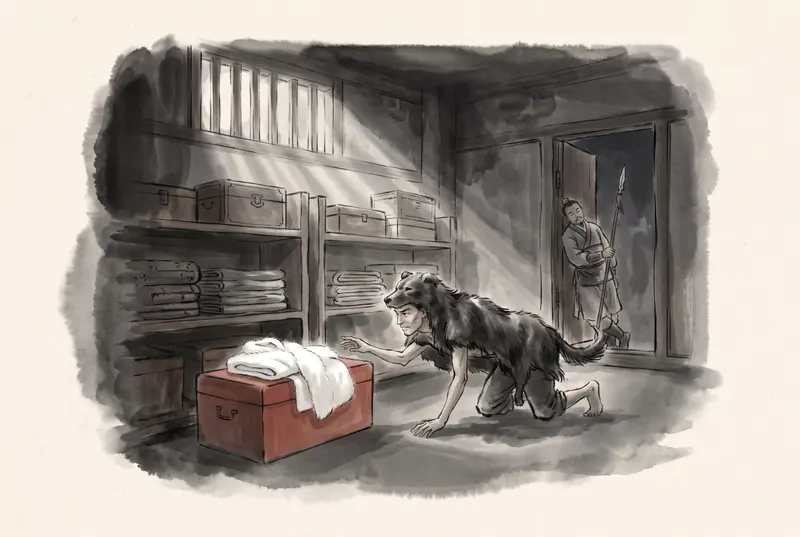
Lord Mengchang was at a loss. He asked every one of his guests, but no one had an answer. Then a man who sat in the lowest seat, and whose skill was stealing in the guise of a dog, said, "I can get the white fox-fur coat." That night he crept like a dog into the storehouse of the Qin palace, took the coat that had been presented, brought it back, and it was given to the King of Qin's favorite. She spoke to King Zhao on Lord Mengchang's behalf, and King Zhao set him free.
Notes (JA)
- 下坐: 末席。身分の低い客の席。
- 狗盜: 犬のまねをして忍びこむ盗人。
- 臧: 「蔵」と同じ。蔵。
Notes (EN)
- 下坐: the lowest seat, for the humblest guests.
- 狗盜 ("dog thief"): a burglar who sneaks in like a dog.
- 臧: the same as 藏, a storehouse.
Idioms from this passage: Crowing like a cock, stealing like a dog 鶏鳴狗盗
Word notes
- guise/ɡaɪz/noun
a false appearance
In the text: “in the guise of a dog”
Similar words: disguise — clothes or looks that hide who you are · costume — clothes worn to look like someone else
- storehouse/ˈstɔrˌhaʊs/noun
a building where things are kept
In the text: “into the storehouse”
Similar words: warehouse — a large building for goods · treasury — a place where treasure is kept
Passage 7
Original
孟嘗君得出,即馳去,更封傳,變名姓以出關。夜半至函谷關。秦昭王後悔出孟嘗君,求之已去,即使人馳傳逐之。孟嘗君至關,關法鷄鳴而出客,孟嘗君恐追至,客之居下坐者有能爲鷄鳴,而鷄齊鳴,遂發傳出。出如食頃,秦追果至關,已後孟嘗君出,乃還。始孟嘗君列此二人於賓客,賓客盡羞之,及孟嘗君有秦難,卒此二人拔之。自是之後,客皆服。
Kundoku (Japanese reading)
孟嘗君出づるを得て、即ち馳せ去り、封伝を更め、名姓を変えて以て関を出でんとす。夜半に函谷関に至る。秦の昭王後に孟嘗君を出だせしを悔い、之を求むるに已に去る。即ち人をして伝に馳せて之を逐わしむ。孟嘗君関に至る。関の法は鶏鳴きて客を出だす。孟嘗君追いの至らんことを恐る。客の下坐に居る者に能く鶏鳴を為す者有り。而して鶏斉しく鳴く。遂に伝を発して出づ。出でて食頃の如くにして、秦の追い果たして関に至る。已に孟嘗君の出づるに後れ、乃ち還る。始め孟嘗君此の二人を賓客に列ぬるや、賓客尽く之を羞ず。孟嘗君秦の難有るに及びて、卒に此の二人之を抜く。是より後、客皆服す。
Japanese
孟嘗君は牢を出ると、すぐに車を走らせて逃げ、通行手形を書き換え、名前を変えて関所を出ようとした。夜中に函谷関に着いた。秦の昭王は、あとになって孟嘗君を放したことを後悔し、探させたが、もう去ったあとだった。すぐに早馬を走らせて追わせた。孟嘗君は関所に着いたが、関所のきまりでは、一番鶏が鳴いてから旅人を通すことになっていた。孟嘗君は追っ手が来るのではないかと恐れた。すると末席の客の中に、鶏の鳴きまねが得意な男がいた。その男が鳴きまねをすると、まわりの鶏がいっせいに鳴き出した。そこで通行手形を見せて関所を出た。出てから食事をするほどの時間がたったころ、秦の追っ手が果たして関所にやって来たが、孟嘗君はもう出たあとだったので、引き返していった。はじめ孟嘗君がこの二人を客の仲間に加えたとき、ほかの客たちはみな、いっしょにされるのを恥ずかしがった。ところが孟嘗君が秦で災難にあったとき、結局この二人が孟嘗君を救い出した。それからは、客たちもみな二人に一目置くようになった。
English
Once free, Lord Mengchang rode off at once, altered his travel pass and changed his name to get through the pass. At midnight he reached the Hangu Pass. King Zhao of Qin later regretted letting Lord Mengchang go and sent for him, but he was already gone, so the king sent riders by post-horse to catch him. Lord Mengchang reached the pass, but by the law of the pass, travelers were let through only when the cock crowed. Lord Mengchang was afraid that his pursuers would catch up. Among his guests in the lowest seats was a man who could crow like a cock. When he crowed, all the cocks around began to crow, and so they showed their pass and went out. About as long as it takes to eat a meal after he had gone, the Qin pursuers did indeed reach the pass, but they were too late, so they turned back. When Lord Mengchang first took these two men among his guests, all the others were ashamed to be ranked with them. But when Lord Mengchang was in trouble in Qin, it was these two who saved him. After that all his guests respected them.
Notes (JA)
- 封傳: 封印した通行手形。
- 函谷關: 秦の東の関所。今の河南省霊宝市のあたり。
- 馳傳: 宿場ごとに馬を乗りかえて急ぐ。
- 鷄鳴而出客: 一番鶏が鳴いてから旅人を通す。
- 食頃: 食事をするほどのわずかな時間。
- 鷄鳴狗盜: 鶏の鳴きまねと犬のまねの盗み。つまらない特技の持ち主、またはそんな特技も役に立つことのたとえ。清少納言の歌「夜をこめて鳥のそら音ははかるとも よに逢坂の関はゆるさじ」(『百人一首』)は、この話をふまえている。
Notes (EN)
- 封傳: a sealed travel pass.
- The Hangu Pass: the eastern gateway of Qin, near present-day Lingbao in Henan.
- 馳傳: riding post-horses, changing at each station.
- 鷄鳴而出客: travelers were let through when the cock crowed.
- 食頃: the time it takes to eat a meal, a short while.
- "Cock-crowing and dog-stealing" (鷄鳴狗盜): petty skills, or the lesson that even petty skills can be useful. Sei Shōnagon's famous Japanese poem about a false cock-crow at the Ōsaka barrier alludes to this story.
Idioms from this passage: Crowing like a cock, stealing like a dog 鶏鳴狗盗
Word notes
- post-horse/ˈpoʊst ˌhɔrs/noun
a fast horse kept at stations along a road to carry messages
In the text: “riders by post-horse”
Similar words: relay — teams that take over in turn · courier — a fast messenger
- crow/kroʊ/verb
to make the loud cry of a rooster
In the text: “crow like a cock”
Similar words: call — make a loud cry · cock-a-doodle-doo — the sound in English
A crow is also a large black bird.
- rank/ræŋk/verb
to put in a group or position
In the text: “ashamed to be ranked with them”
Similar words: class — put in a group · place — put in a position
Passage 8
Original
初,馮驩聞孟嘗君好客,躡蹻而見之。孟嘗君曰;「先生遠辱,何以教文也?」馮驩曰:「聞君好士,以貧身歸於君。」孟嘗君置傳舍十日,孟嘗君問傳舍長曰:「客何所爲?」答曰:「馮先生甚貧,猶有一劍耳,又蒯緱。彈其劍而歌曰『長鋏歸來乎,食無魚』。」孟嘗君遷之幸舍,食有魚矣。五日,又問傳舍長。答曰:「客復彈劍而歌曰『長鋏歸來乎,出無輿』。」孟嘗君遷之代舍,出入乘輿車矣。五日,孟嘗君復問傳舍長。舍長答曰:「先生又嘗彈劍而歌曰『長鋏歸來乎,無以爲家』。」孟嘗君不悅。
Kundoku (Japanese reading)
初め、馮驩孟嘗君の客を好むを聞き、蹻を躡みて之に見ゆ。孟嘗君曰く、「先生遠く辱くす。何を以て文に教えんとするや」と。馮驩曰く、「君の士を好むを聞き、貧身を以て君に帰す」と。孟嘗君伝舎に置くこと十日。孟嘗君伝舎の長に問いて曰く、「客何をか為す」と。答えて曰く、「馮先生甚だ貧しく、猶お一剣有るのみ。又蒯緱なり。其の剣を弾じて歌いて曰く『長鋏帰来らんか、食に魚無し』と」と。孟嘗君之を幸舎に遷す。食に魚有り。五日、又伝舎の長に問う。答えて曰く、「客復た剣を弾じて歌いて曰く『長鋏帰来らんか、出づるに輿無し』と」と。孟嘗君之を代舎に遷す。出入に輿車に乗る。五日、孟嘗君復た伝舎の長に問う。舎長答えて曰く、「先生又嘗て剣を弾じて歌いて曰く『長鋏帰来らんか、以て家を為す無し』と」と。孟嘗君悦ばず。
Japanese
以前、馮驩は孟嘗君が客を好むと聞いて、わらじばきでやって来て会った。孟嘗君は言った。「先生、遠いところをよく来てくださいました。わたしに何を教えてくださるのですか」。馮驩は言った。「あなたが士を好まれると聞いて、貧しい身を寄せに来ただけです」。孟嘗君は馮驩を下等の宿舎に置いた。十日たって、孟嘗君は宿舎の長にたずねた。「あの客は何をしている」。長は答えた。「馮先生はたいへん貧しく、剣を一本持っているだけです。それも柄に草の縄を巻いた粗末なものです。その剣をたたいて、『長い剣よ、帰ろうか。食事に魚が出ないから』と歌っています」。孟嘗君は馮驩を中等の宿舎に移した。食事に魚が出るようになった。五日たって、また宿舎の長にたずねると、長は答えた。「あの客はまた剣をたたいて、『長い剣よ、帰ろうか。出かけるのに車がないから』と歌っています」。孟嘗君は馮驩を上等の宿舎に移した。出入りに車に乗れるようになった。五日たって、孟嘗君はまた宿舎の長にたずねた。長は答えた。「先生はまた剣をたたいて、『長い剣よ、帰ろうか。家族を養うこともできないから』と歌っています」。孟嘗君はいい顔をしなかった。
English
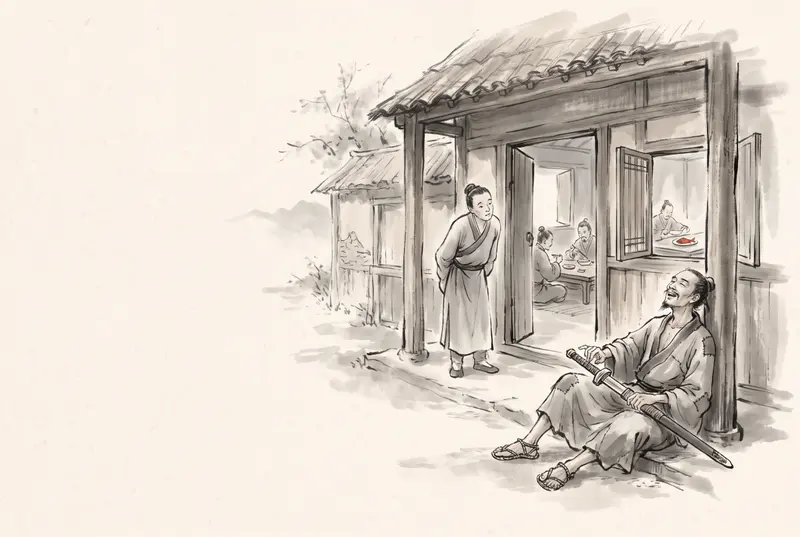
Earlier, Feng Huan had heard that Lord Mengchang loved guests, and came to see him in straw sandals. Lord Mengchang said, "You have come a long way, sir. What do you have to teach me?" Feng Huan said, "I heard that you love gentlemen, so I have come to you, poor as I am." Lord Mengchang put him in the lodge for ordinary guests. After ten days he asked the head of the lodge, "What is our guest doing?" The man answered, "Master Feng is very poor. All he has is a sword, and its hilt is wrapped in grass cord. He taps his sword and sings, 'Long sword, let's go home; there is no fish to eat.'" Lord Mengchang moved him to the better lodge, where there was fish to eat. Five days later he asked the head of the lodge again. The man answered, "Our guest taps his sword again and sings, 'Long sword, let's go home; there is no carriage to go out in.'" Lord Mengchang moved him to the best lodge, where he could ride in a carriage when he went in and out. Five days later Lord Mengchang asked the head of the lodge again. The man answered, "The master taps his sword again and sings, 'Long sword, let's go home; there is nothing to keep a family on.'" Lord Mengchang was not pleased.
Notes (JA)
- 馮驩: 孟嘗君の食客。『戦国策』では馮諼。
- 躡蹻: わらじをはく。貧しい身なり。
- 傳舍・幸舍・代舍: 客の宿舎の等級。伝舎が下、幸舎が中、代舎が上とされる。
- 蒯緱: 剣の柄に草の縄を巻いてある。粗末な剣。
- 彈劍: 剣をたたいて拍子をとる。
- 長鋏歸來乎: 長い剣よ、帰ろうか。「鋏」は剣(の柄)。待遇に不満を言う歌として知られる。
Notes (EN)
- Feng Huan: one of Lord Mengchang's retainers, called Feng Xuan in the Intrigues of the Warring States.
- 躡蹻: wearing straw sandals, a sign of poverty.
- The three lodges (傳舍・幸舍・代舍): lodgings for guests, from the plainest to the best.
- 蒯緱: a hilt wrapped in grass cord, a poor man's sword.
- 彈劍: tapping one's sword to keep time while singing.
- "Long sword, let's go home" (長鋏歸來乎): a famous song of complaint about one's treatment.
Idioms from this passage: Long sword, shall we go home? 長鋏帰らんか
Word notes
- sandal/ˈsændəl/noun
a light open shoe
In the text: “straw sandals”
Similar words: slipper — a soft indoor shoe · flip-flop — a rubber sandal
- hilt/hɪlt/noun
the handle of a sword
In the text: “its hilt is wrapped in grass cord”
Similar words: handle — the part you hold · grip — the part held in the hand
Passage 9
Original
居朞年,馮驩無所言。孟嘗君時相齊,封萬戸於薛。其食客三千人。邑入不足以奉客,使人出錢於薛。歳餘不入,貸錢者多不能與其息,客奉將不給。孟嘗君憂之,問左右:「何人可使收債於薛者?」傳舍長曰:「代舍客馮公形容狀貌甚辯,長者,無他伎能,宜可令收債。」孟嘗君乃進馮驩而請之曰:「賓客不知文不肖,幸臨文者三千餘人,邑入不足以奉賓客,故出息錢於薛。薛歳不入,民頗不與其息。今客食恐不給,願先生責之。」馮驩曰;「諾。」辭行,至薛,召取孟嘗君錢者皆會,得息錢十萬。乃多釀酒,買肥牛,召諸取錢者,能與息者皆來,不能與息者亦來,皆持取錢之券書合之。齊爲會,日殺牛置酒。酒酣,乃持券如前合之,能與息者,與爲期;貧不能與息者,取其券而燒之。曰:「孟嘗君所以貸錢者,爲民之無者以爲本業也;所以求息者,爲無以奉客也。今富給者以要期,貧窮者燔券書以捐之。諸君彊飲食。有君如此,豈可負哉!」坐者皆起,再拜。
Kundoku (Japanese reading)
居ること朞年、馮驩言う所無し。孟嘗君時に斉に相たり、万戸を薛に封ぜらる。其の食客三千人。邑の入り以て客に奉ずるに足らず。人をして銭を薛に出ださしむ。歳余りにして入らず。銭を貸る者多く其の息を与うる能わず。客の奉将に給せざらんとす。孟嘗君之を憂え、左右に問う、「何人か薛に債を収めしむべき者ぞ」と。伝舎の長曰く、「代舎の客馮公は形容状貌甚だ辯にして、長者なり。他の伎能無し。宜しく債を収めしむべし」と。孟嘗君乃ち馮驩を進めて之に請いて曰く、「賓客文の不肖を知らず、幸いに文に臨む者三千余人。邑の入り以て賓客に奉ずるに足らず。故に息銭を薛に出だす。薛は歳ごとに入らず、民頗る其の息を与えず。今客の食給せざらんことを恐る。願わくは先生之を責めよ」と。馮驩曰く、「諾」と。辞して行き、薛に至り、孟嘗君の銭を取りし者を召して皆会せしめ、息銭十万を得たり。乃ち多く酒を醸し、肥牛を買い、諸の銭を取りし者を召す。能く息を与うる者も皆来たり、息を与うる能わざる者も亦た来たる。皆銭を取りしの券書を持ちて之を合わす。斉しく会を為し、日に牛を殺し酒を置く。酒酣にして、乃ち券を持ちて前の如く之を合わせ、能く息を与うる者は、与に期を為し、貧しくして息を与うる能わざる者は、其の券を取りて之を焼く。曰く、「孟嘗君の銭を貸す所以の者は、民の無き者の為に以て本業を為さしめんとなり。息を求むる所以の者は、以て客に奉ずる無きが為なり。今富給する者は以て期を要し、貧窮する者は券書を燔きて以て之を捐つ。諸君彊いて飲食せよ。君有ること此くの如し。豈に負くべけんや」と。坐する者皆起ちて、再拝す。
Japanese
一年たったが、馮驩は何も言わなかった。孟嘗君はそのころ斉の宰相で、薛に一万戸の領地を与えられていた。食客は三千人もいて、領地からの収入だけでは客を養いきれなかったので、人をやって薛で金を貸し付けさせていた。ところが一年あまりたっても返ってこなかった。金を借りた者の多くが利息を払えず、客を養う費用が足りなくなりそうだった。孟嘗君は心配して、側近にたずねた。「薛で貸した金を取り立てるのに、だれをやったらよいだろう」。宿舎の長が言った。「上等の宿舎にいる馮先生は、見たところ弁が立ち、人柄も落ち着いています。ほかに取り柄はありませんが、取り立てに行かせるのがよいでしょう」。そこで孟嘗君は馮驩を呼んで頼んだ。「わたしのような者のところに、ありがたいことに三千人あまりの客が来てくれていますが、領地の収入では客を養いきれないので、薛で利息つきの金を貸しています。ところが薛からは毎年返ってこず、民の多くが利息を払いません。このままでは客の食事もまかなえなくなりそうです。どうか先生、取り立ててきてください」。馮驩は「承知しました」と言った。いとまごいをして薛に着くと、孟嘗君から金を借りた者をみな集めて、利息十万銭を手に入れた。そこで酒をたくさん造り、よく肥えた牛を買って、金を借りた者をみな呼び集めた。利息を払える者も、払えない者も、みなやって来た。みな借金の証文を持ってこさせて、手元の割符と突き合わせた。そろって宴会を開き、毎日牛を殺して酒をふるまった。酒がまわったころ、また証文を出させて前のように突き合わせ、利息を払える者とは返す期日を約束し、貧しくて払えない者からは証文を取り上げて焼いてしまった。そして言った。「孟嘗君が金を貸したのは、持たない民に元手を与えて、本業にはげませるためだった。利息をとったのは、客を養う費用がないからだ。いま、豊かな者とは返す期日を決め、貧しい者には証文を焼いて借金を帳消しにする。みなさん、さあ遠慮なく飲んで食べてください。こんな殿様がいるのに、どうして裏切ったりできようか」。座っていた者はみな立ち上がって、二度おじぎをした。
English
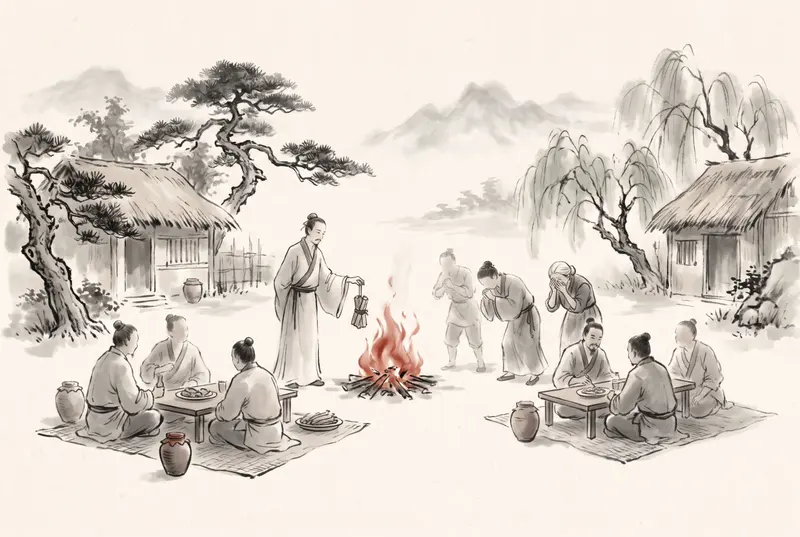
A year went by, and Feng Huan said nothing. Lord Mengchang was then chief minister of Qi, with a fief of ten thousand households at Xue. He had three thousand retainers, and the revenue from his fief was not enough to keep them, so he had men lend out money at interest in Xue. More than a year passed without any return. Many of the borrowers could not pay the interest, and there was danger that the guests' upkeep would run short. Worried, Lord Mengchang asked those around him, "Whom can I send to collect the debts in Xue?" The head of the lodges said, "Master Feng of the best lodge looks and sounds very eloquent, and he is a steady man. He has no other skills, but he would do for collecting debts." So Lord Mengchang called Feng Huan in and asked him, "Not knowing how unworthy I am, more than three thousand guests have been kind enough to come to me. The revenue from my fief is not enough to keep them, so I have lent money at interest in Xue. But Xue pays nothing year after year, and many of the people do not pay their interest. I am afraid I will soon be unable to feed my guests. I beg you, sir, to collect what is owed." "Very well," said Feng Huan. He took his leave and went to Xue. He summoned everyone who had borrowed money from Lord Mengchang and collected a hundred thousand in interest. Then he brewed a great deal of wine, bought fat oxen and called together all the borrowers, those who could pay the interest and those who could not. He had them all bring their loan contracts to match against his tallies. He held a feast for them all, slaughtering oxen and setting out wine every day. When the wine was flowing, he matched the contracts as before. With those who could pay, he set a date for payment; from those too poor to pay, he took the contracts and burned them. Then he said, "Lord Mengchang lent this money so that people who had nothing could take up the basic occupations. He asked for interest because he had nothing else to keep his guests on. Now those who are well off have set a date, and the poor have had their contracts burned and their debts forgiven. Gentlemen, please eat and drink your fill. With a lord like this, how could we ever betray him?" Everyone present rose and bowed twice.
Notes (JA)
- 朞年: まる一年。
- 封萬戸於薛: 薛に一万戸の領地を与えられる。
- 出錢: 利息をつけて金を貸す。
- 息: 利息。
- 形容狀貌甚辯: 見たところ弁が立つ(読みには諸説ある)。
- 長者: 落ち着いた、人柄のよい人。
- 券書: 借金の証文。割符になっていて、二つを合わせて確かめた。
- 燔券書: 証文を焼いて借金を帳消しにする。
- 本業: 農業など、民の本来の仕事。
- 再拜: 二度おじぎをする。深い感謝の礼。
- このあと(省略): 孟嘗君は証文を焼いたと聞いて怒ったが、馮驩は「取り立てられない借金の証文を焼いて、薛の民の心をあなたに向けさせたのです」と説明し、孟嘗君は手を打ってわびた。
Notes (EN)
- 朞年: a full year.
- 封萬戸於薛: a fief of ten thousand households at Xue.
- 出錢: to lend money at interest.
- 息: interest.
- 形容狀貌甚辯: he looks and sounds eloquent (the reading is debated).
- 長者: a steady, decent man.
- 券書: loan contracts, made as tallies so that the two halves could be matched.
- 燔券書: burning the contracts to cancel the debts.
- The basic occupations (本業): farming and other work that supports the people.
- 再拜: bowing twice, a sign of deep gratitude.
- After this (left out here): Lord Mengchang was angry to hear that the contracts had been burned, but Feng Huan explained that by burning debts that could never be collected, he had won the hearts of the people of Xue for his lord, and Lord Mengchang clapped his hands and apologized.
Word notes
- interest/ˈɪntrəst/noun
extra money paid back for borrowing money
In the text: “lend out money at interest”
Similar words: charge — money asked for a service · return — profit from money
- upkeep/ˈʌpˌkiːp/noun
the cost of feeding and caring for people or things
In the text: “the guests' upkeep”
Similar words: maintenance — keeping in good condition · support — money to live on
- contract/ˈkɑntrækt/noun
a written legal agreement
In the text: “their contracts burned”
Similar words: agreement — a promise between people · bond — a written promise to pay
- forgive/fərˈɡɪv/verb
to say that someone does not have to pay a debt
In the text: “their debts forgiven”
Similar words: cancel — end · write off — accept that a debt will not be paid
Passage 10
Original
自齊王毀廢孟嘗君,諸客皆去。後召而復之,馮驩迎之。未到,孟嘗君太息嘆曰:「文常好客,遇客無所敢失,食客三千有餘人,先生所知也。客見文一日廢,皆背文而去,莫顧文者。今賴先生得復其位,客亦有何面目復見文乎?如復見文者,必唾其面而大辱之。」馮驩結轡下拜。孟嘗君下車接之,曰:「先生爲客謝乎?」馮驩曰:「非爲客謝也,爲君之言失。夫物有必至,事有固然,君知之乎?」孟嘗君曰:「愚不知所謂也。」曰:「生者必有死,物之必至也;富貴多士,貧賤寡友,事之固然也。君獨不見夫(朝)趣市[朝]者乎?明旦,側肩爭門而入;日暮之後,過市朝者掉臂而不顧。非好朝而惡暮,所期物忘其中。今君失位,賓客皆去,不足以怨士而徒絶賓客之路。願君遇客如故。」孟嘗君再拜曰:「敬從命矣。聞先生之言,敢不奉教焉。」
Kundoku (Japanese reading)
斉王の孟嘗君を毀廃してより、諸客皆去る。後に召して之を復す。馮驩之を迎う。未だ到らざるに、孟嘗君太息して嘆じて曰く、「文常に客を好み、客を遇するに敢えて失う所無し。食客三千有余人、先生の知る所なり。客文の一日廃せらるるを見て、皆文に背きて去り、文を顧みる者莫し。今先生に頼りて其の位に復するを得たり。客も亦た何の面目有りてか復た文に見えん。如し復た文に見ゆる者あらば、必ず其の面に唾して大いに之を辱めん」と。馮驩轡を結びて下りて拝す。孟嘗君車を下りて之を接えて曰く、「先生客の為に謝するか」と。馮驩曰く、「客の為に謝するに非ず。君の言の失の為なり。夫れ物に必ず至る有り、事に固より然る有り。君之を知るか」と。孟嘗君曰く、「愚にして謂う所を知らざるなり」と。曰く、「生ある者は必ず死有り、物の必ず至るなり。富貴なれば士多く、貧賤なれば友寡し、事の固より然るなり。君独り夫の市朝に趣く者を見ずや。明旦には、肩を側てて門を争いて入る。日暮るるの後には、市朝を過ぐる者臂を掉いて顧みず。朝を好みて暮れを悪むに非ず。期する所の物其の中に亡ければなり。今君位を失い、賓客皆去る。以て士を怨みて徒らに賓客の路を絶つに足らず。願わくは君客を遇すること故の如くせよ」と。孟嘗君再拝して曰く、「敬んで命に従わん。先生の言を聞く。敢えて教えを奉ぜざらんや」と。
Japanese
斉王が孟嘗君の悪口を信じて宰相の位を取り上げると、客たちはみな去っていった。のちに王は孟嘗君を呼び戻して、もとの位に戻した。馮驩が孟嘗君を出迎えた。まだ都に着く前に、孟嘗君は深いため息をついて言った。「わたしはいつも客を好み、客をもてなすのに決して手落ちのないようにしてきた。食客が三千人あまりいたことは、先生もご存じのとおりだ。ところが客たちは、わたしがひとたび位を追われたのを見ると、みなわたしを見捨てて去り、だれ一人わたしをかえりみなかった。いま先生のおかげで位に戻ることができたが、客たちはどの面さげてわたしに会いに来るというのか。もしまた会いに来る者がいたら、必ずその顔につばを吐きかけて、大恥をかかせてやる」。馮驩は手綱を結んで車を下り、おじぎをした。孟嘗君も車を下りて迎え、言った。「先生は客たちのためにわびておられるのですか」。馮驩は言った。「客のためにわびているのではありません。あなたの言葉が間違っているからです。物事には必ずそうなる道理があり、世の中にはもともとそういうものだということがあります。ご存じですか」。孟嘗君は言った。「わたしは愚かで、おっしゃることがわかりません」。馮驩は言った。「生きている者には必ず死があります。これが必ずそうなる道理です。富んで身分が高ければ士が多く集まり、貧しく身分が低ければ友は少ない。これがもともとそういうものだということです。あなたは市場に向かう人々をご覧になったことがありませんか。朝には肩をすぼめて押し合いながら門に入っていきますが、日が暮れたあとは、市場のそばを通る者は腕を振って、見向きもしません。朝が好きで夕方が嫌いなのではありません。求める品物が、もうそこにないからです。いまあなたが位を失ったので、客はみな去りました。それで士を恨み、客の来る道をむやみに断ってしまうのはよくありません。どうか、これまでどおり客をもてなしてください」。孟嘗君は二度おじぎをして言った。「つつしんでおっしゃるとおりにします。先生のお言葉を聞いた以上、その教えに従わないわけにはいきません」。
English
When the King of Qi slandered Lord Mengchang and dismissed him, all his guests left. Later the king called him back and restored him. Feng Huan went out to meet him. Before they arrived, Lord Mengchang sighed deeply and said, "I have always loved guests and never dared to fail them in any way. I had more than three thousand retainers, as you know, sir. When they saw me dismissed for a single day, they all turned their backs on me and left, and not one of them looked back. Now, thanks to you, I have my position again. How can those guests have the face to come back to me? If any of them does, I will spit in his face and humiliate him." Feng Huan tied up the reins, got down and bowed. Lord Mengchang got down from his carriage to meet him and said, "Are you apologizing for the guests, sir?" Feng Huan said, "I am not apologizing for the guests. I am apologizing for what you said, which is wrong. There are things that must come, and things that are simply so. Do you know them?" Lord Mengchang said, "I am too foolish to know what you mean." Feng Huan said, "Whatever lives must die: that is a thing that must come. The rich and noble have many followers, and the poor and lowly few friends: that is simply how things are. Have you never watched people going to market? In the morning they push through the gate shoulder to shoulder; after sunset, those who pass the market swing their arms and do not even look. It is not that they like the morning and hate the evening. It is that what they want is no longer there. Now you lost your position, and your guests all left. That is no reason to resent them and cut off the road by which guests come to you. I beg you to treat your guests as you did before." Lord Mengchang bowed twice and said, "I will respectfully do as you say. Having heard your words, how could I not follow your teaching?"
Notes (JA)
- この節の前(省略): 斉王が秦や楚の中傷を信じて孟嘗君を退けると、馮驩は秦に行って「孟嘗君を迎えれば秦は天下の雄になる」と秦王に説き、すぐに斉に戻って「秦が孟嘗君を迎えに来ます。先に呼び戻すべきです」と斉王に説いた。斉王は孟嘗君を宰相に戻し、領地も増やした。
- 毀廢: 悪口を信じて退ける。
- 結轡: 手綱を結ぶ。車を止めて下りること。
- 物有必至,事有固然: 物事には必ずそうなることがあり、世の中にはもともとそういうことがある。
- 富貴多士,貧賤寡友: 富んで身分が高ければ士が多く集まり、貧しく身分が低ければ友は少ない。
- (朝)趣市[朝]: 「( )」は校訂者が不要とした字、「[ ]」は補った字の印。「趣市朝」は市場へ向かうこと。
- 側肩: 肩をすぼめる、押し合う。
- 掉臂: 腕を振って歩く。見向きもしないこと。
- 所期物忘其中: 求める品物がもうその中にない。「忘」は「亡」と同じ。
Notes (EN)
- Before this (left out here): when the King of Qi believed the slanders of Qin and Chu and dismissed Lord Mengchang, Feng Huan went to Qin and told its king that taking Lord Mengchang would make Qin the leader of the realm. Then he hurried back to Qi and told the King of Qi that Qin was coming for Lord Mengchang and he had better call him back first. The king restored Lord Mengchang as chief minister and enlarged his fief.
- 毀廢: to dismiss someone on the strength of slander.
- 結轡: to tie up the reins, to stop and get down.
- 物有必至,事有固然: "There are things that must come, and things that are simply so."
- 富貴多士,貧賤寡友: "The rich and noble have many followers; the poor and lowly have few friends."
- (朝)趣市[朝]: the round brackets mark a character the editors drop, the square brackets one they supply; 趣市朝 means going to market.
- 側肩: shoulder to shoulder, pushing.
- 掉臂: swinging one's arms, walking past without a glance.
- 所期物忘其中: what they want is no longer there; 忘 is the same as 亡, gone.
Word notes
- humiliate/hjuːˈmɪliˌeɪt/verb
to make someone feel ashamed in front of others
In the text: “humiliate him”
Similar words: shame — make ashamed · disgrace — make lose respect
- reins/reɪnz/noun
the long straps used to control a horse
In the text: “tied up the reins”
Similar words: bridle — the straps on a horse's head · harness — the straps that join a horse to a cart
- shoulder to shoulder/ˈʃoʊldər tə ˈʃoʊldər/phrase
standing very close together in a crowd
In the text: “shoulder to shoulder”
Similar words: side by side — next to each other · packed — very crowded
- resent/rɪˈzɛnt/verb
to feel angry about something unfair
In the text: “no reason to resent them”
Similar words: begrudge — feel bitter about · hold against — keep blaming someone for
Passage 11
Original
太史公曰:吾嘗過薛,其俗閭里率多暴桀子弟,與鄒、魯殊。問其故,曰:「孟嘗君招致天下任俠,姦人入薛中蓋六萬餘家矣。」世之傳孟嘗君好客自喜,名不虚矣。
Kundoku (Japanese reading)
太史公曰く、吾嘗て薛を過ぐ。其の俗、閭里率ね暴桀の子弟多く、鄒・魯と殊なる。其の故を問う。曰く、「孟嘗君天下の任侠を招致し、姦人の薛中に入る者蓋し六万余家なり」と。世の孟嘗君の客を好みて自ら喜ぶを伝うるは、名虚しからず。
Japanese
太史公(司馬遷)は言う。わたしはかつて薛を通ったことがある。その土地の気風は、村々に乱暴で荒っぽい若者が多く、隣の鄒や魯とはまったく違っていた。そのわけをたずねると、人々は言った。「孟嘗君が天下の侠客を招き寄せたので、悪い連中が六万軒あまりも薛に入ってきたのです」。世間で、孟嘗君は客を好むことを自慢にしていたと伝えられているのは、評判どおりだったのだ。
English
The Grand Historian says: I once passed through Xue. The people there were different from those of Zou and Lu nearby; the villages were full of violent, unruly young men. When I asked why, I was told, "Lord Mengchang invited the knights-errant of the whole realm, and more than sixty thousand families of rogues came into Xue." What the world says of Lord Mengchang, that he loved guests and was proud of it, is no empty reputation.
Notes (JA)
- 閭里: 村里。
- 暴桀: 乱暴で荒っぽい。
- 鄒魯: 薛の近くの国。孟子と孔子の故郷で、礼儀正しい土地柄とされた。
- 任俠: 侠客。義理を重んじ、腕力で人を助ける者。
- 好客自喜: 客を好み、それを自分で誇りにしている。
- 名不虛: 評判は嘘ではない。ほめるだけでなく、皮肉もこめられているとも読める。
Notes (EN)
- 閭里: villages.
- 暴桀: violent and unruly.
- Zou and Lu: states near Xue, the homes of Mencius and Confucius, known for good manners.
- 任俠: knights-errant, men who used force to help others and lived by their own code of honor.
- 好客自喜: loving guests and taking pride in it.
- 名不虛 ("no empty reputation"): perhaps praise, perhaps irony.
Word notes
- knight-errant/ˌnaɪt ˈɛrənt/noun
a man who travels around using his sword to help people, by his own code of honor
In the text: “the knights-errant”
Similar words: swordsman — a fighter with a sword · adventurer — one who seeks adventure
The plural is knights-errant.
- rogue/roʊɡ/noun
a dishonest or badly behaved man
In the text: “families of rogues”
Similar words: scoundrel — a dishonest person · rascal — a playful or dishonest person