Biographies · Vol. 95
The Biographies of Fan Kuai, Li Shang, Xiahou Ying and Guan Ying 樊酈滕灌列傳
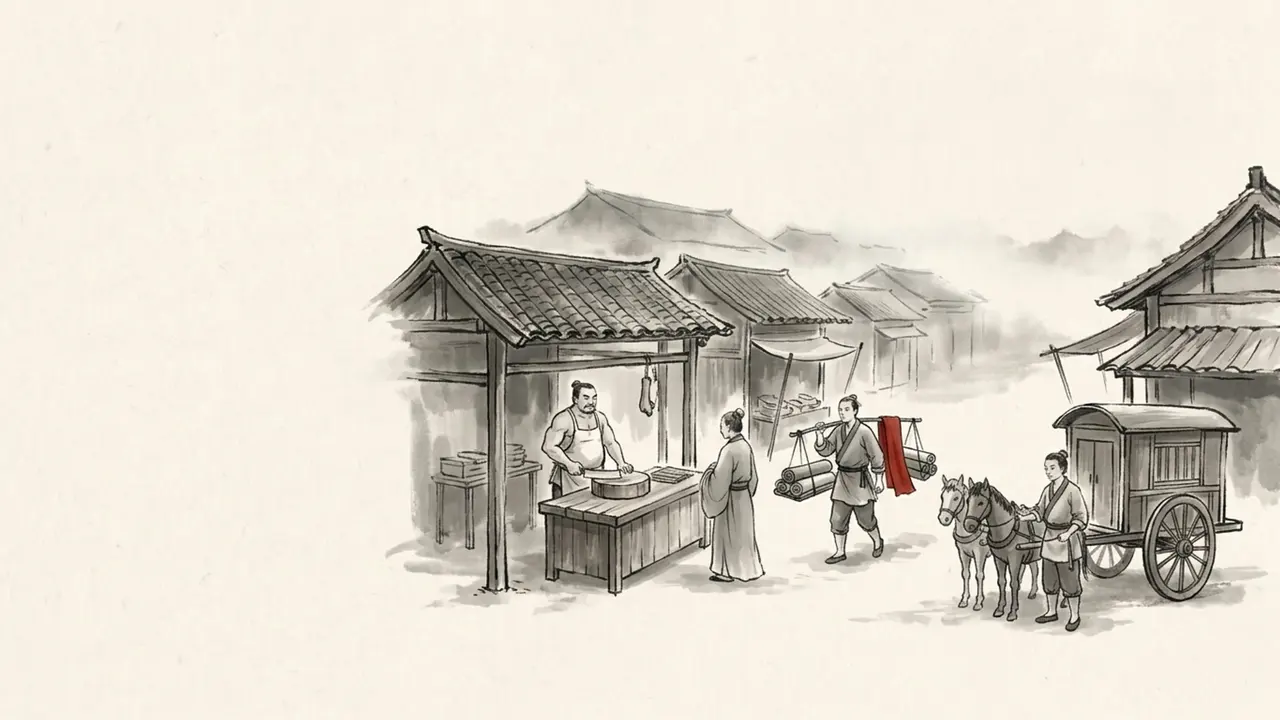
The Dog Butcher and the Silk Seller 屠狗賣繒
The stories of four men from Liu Bang's home country who became great ministers of the Han. Fan Kuai was a dog butcher in Pei. At the feast at Hongmen, when he heard that Liu Bang was in danger, he forced his way past the guards with his shield, drank the great cup of wine and ate the raw pork shoulder that Xiang Yu gave him, and saved his master. When Liu Bang, old and ill, shut himself away with only a eunuch for company, Fan Kuai burst through the door and wept: "Have you forgotten Zhao Gao?" But because he had married Empress Lü's sister, he was suspected of siding with her clan, and was nearly beheaded. Li Ji, the son of Li Shang, tricked his close friend Lü Lu into giving up the Northern Army, and was said to have sold his friend. Xiahou Ying was a driver at the Pei county stables. When the young Liu Bang injured him in play, Xiahou Ying spent more than a year in prison and took hundreds of lashes rather than give his friend away. In the rout at Pengcheng, when Liu Bang, fleeing for his life, kept kicking his two children out of the carriage to lighten it, Xiahou Ying picked them up every time; the boy became Emperor Hui. Guan Ying had been a silk seller; he led the cavalry that chased Xiang Yu to Dongcheng, where his men cut the hegemon down. Sima Qian marvels that men who once killed dogs and sold silk left names that would last for ever.
This page has the scene "The Dog Butcher and the Silk Seller" from this volume, not the whole volume.
Audio
The audio is synthetic speech.
Video
Passage 1
Original
舞陽侯樊噲者,沛人也。以屠狗為事,與高祖俱隱。
Kundoku (Japanese reading)
舞陽侯樊噲は、沛の人なり。狗を屠るを以て事と為し、高祖と倶に隠る。
Japanese
舞陽侯樊噲は沛の人である。犬を殺して売るのを生業とし、高祖(劉邦)とともに山野に身を隠していた。
English
Fan Kuai, Marquis of Wuyang, was a man of Pei. He made his living killing dogs for meat, and went into hiding with Gaozu.
Notes (JA)
- 屠狗: 犬を殺して肉を売ること。当時、犬の肉は一般的な食べ物だった。
- 與高祖俱隱: 劉邦が囚人を逃がして芒・碭の山沢に隠れたとき、樊噲も行動をともにした。
- このあと樊噲は、劉邦の挙兵からいつも先陣をきって戦った(ここでは省く)。
Notes (EN)
- Killing dogs (屠狗): dog meat was a common food in that age.
- Went into hiding with Gaozu: when Liu Bang let his convicts go and hid in the marshes of Mang and Dang.
- Fan Kuai then fought in the front line of all Liu Bang's early battles; that record is left out.
Word notes
- make a living/meɪk ə ˈlɪvɪŋ/phrase
to earn the money you need to live
In the text: “He made his living killing dogs for meat”
Similar words: earn a living — get money by working · get by — manage to live
- go into hiding/ɡoʊ ˈɪntu ˈhaɪdɪŋ/phrase
to go to a secret place so that you will not be found
In the text: “went into hiding with Gaozu”
Similar words: hide out — stay hidden · lie low — keep out of sight
Passage 2
Original
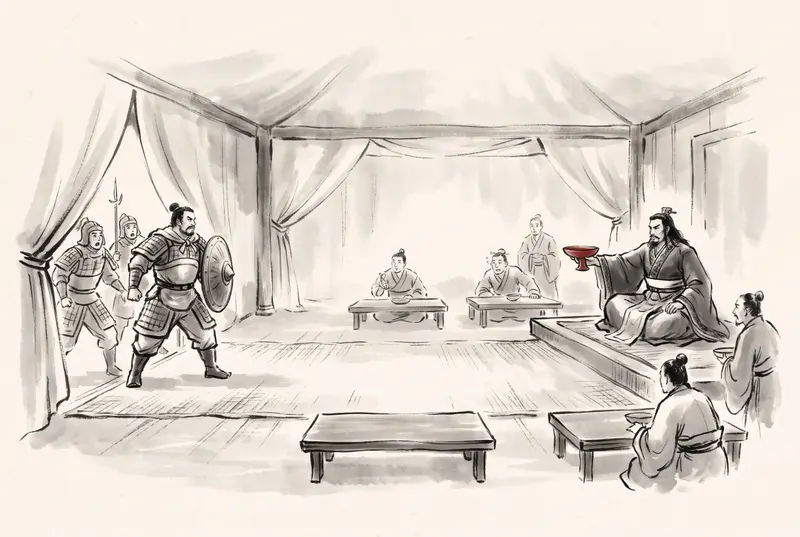
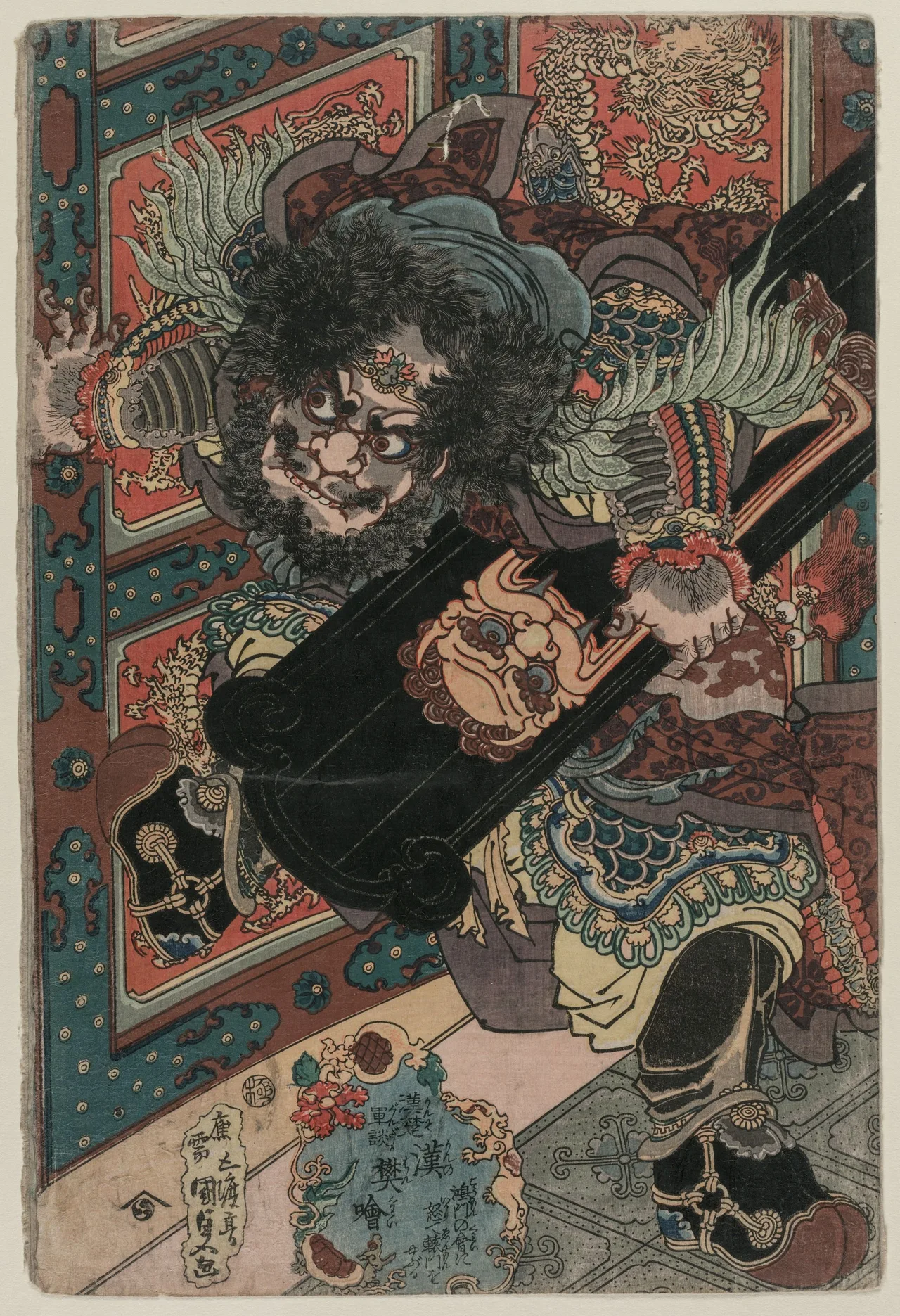
項羽在戲下,欲攻沛公。沛公從百餘騎因項伯面見項羽,謝無有閉關事。項羽既饗軍士,中酒,亞父謀欲殺沛公,令項莊拔劍舞坐中,欲擊沛公,項伯常(肩)[屏]蔽之。時獨沛公與張良得入坐,樊噌在營外,聞事急,乃持鐵盾入到營。營衛止噲,噲直撞入,立帳下。項羽目之,問為誰。張良曰:「沛公參乘樊噲。」項羽曰:「壯士。」賜之卮酒彘肩。噲既飲酒,拔劍切肉食,盡之。項羽曰:「能復飲乎?」噲曰:「臣死且不辭,豈特卮酒乎!且沛公先入定咸陽,暴師霸上,以待大王。大王今日至,聽小人之言,與沛公有隙,臣恐天下解,心疑大王也。」項羽默然。沛公如廁,麾樊噲去。既出,沛公留車騎,獨騎一馬,與樊噲等四人步從,從閒道山下歸走霸上軍,而使張良謝項羽。項羽亦因遂已,無誅沛公之心矣。是日微樊噲奔入營譙讓項羽,沛公事幾殆。
Kundoku (Japanese reading)
項羽戯下に在り、沛公を攻めんと欲す。沛公百余騎を従え、項伯に因りて項羽に面見し、関を閉ずるの事有る無きを謝す。項羽既に軍士を饗し、中酒にして、亜父謀りて沛公を殺さんと欲し、項荘をして剣を抜きて坐中に舞わしめ、沛公を撃たんと欲す。項伯常に(肩)[屏]蔽す。時に独り沛公と張良とのみ入りて坐するを得、樊噲営外に在り。事急なりと聞き、乃ち鉄盾を持して入りて営に到る。営衛噲を止む。噲直ちに撞きて入り、帳下に立つ。項羽之を目して、誰と為すと問う。張良曰く、「沛公の参乗樊噲なり」と。項羽曰く、「壮士なり」と。之に卮酒・彘肩を賜う。噲既に酒を飲み、剣を抜きて肉を切りて食らい、之を尽くす。項羽曰く、「能く復た飲むか」と。噲曰く、「臣死すら且つ辞せず、豈に特に卮酒のみならんや。且つ沛公先に入りて咸陽を定め、師を霸上に暴して、以て大王を待つ。大王今日至り、小人の言を聴き、沛公と隙有り。臣恐る、天下解け、心に大王を疑わんことを」と。項羽默然たり。沛公廁に如き、樊噲を麾きて去る。既に出で、沛公車騎を留め、独り一馬に騎り、樊噲等四人と歩従し、間道より山下に帰走して霸上の軍に帰り、而して張良をして項羽に謝せしむ。項羽も亦た因りて遂に已み、沛公を誅するの心無し。是の日樊噲の奔りて営に入り項羽を譙譲するに微かりせば、沛公の事幾ど殆うからん。
Japanese
項羽は戯の陣にいて、沛公(劉邦)を攻めようとしていた。沛公は百騎あまりを連れ、項伯の取りなしで項羽に会い、関を閉ざして項羽を締め出すつもりはなかったとわびた。項羽は兵士たちに酒をふるまい、宴もたけなわになると、亜父(范増)は沛公を殺そうとはかり、項荘に剣を抜いて座中で舞わせ、そのすきに沛公を討たせようとした。項伯はいつも身をもって沛公をかばった。このとき幕舎に入って座れたのは沛公と張良だけで、樊噲は陣営の外にいた。事態が危ないと聞くと、樊噲は鉄の盾を持って陣営に入ろうとした。陣営の衛兵が止めたが、樊噲はまっすぐ突き飛ばして入り、幕のもとに立った。項羽は樊噲をにらみつけて、何者かとたずねた。張良が「沛公の車の護衛、樊噲です」と言うと、項羽は「勇士だ」と言って、大杯の酒と豚の肩肉を与えた。樊噲は酒を飲みほし、剣を抜いて肉を切って食べ、すっかり平らげた。項羽が「もっと飲めるか」と聞くと、樊噲は言った。「わたしは死ぬことさえいといません。大杯の酒くらい何でしょう。そもそも沛公は先に関中に入って咸陽を平定し、霸上で野営して大王を待っておられました。大王は今日来られて、つまらぬ者の言葉を聞き、沛公とのあいだにみぞを作っておられます。天下がばらばらになり、人々が心の中で大王を疑うのではないかと心配です」。項羽は黙ってしまった。沛公は便所に立つと、樊噲に手招きして外へ出た。出ると、沛公は車と騎兵を残し、ただ一人馬に乗り、樊噲ら四人が徒歩で従って、間道を通って山のふもとから霸上の軍へ逃げ帰り、張良にあとで項羽へわびを言わせた。項羽もそれでやめて、沛公を殺そうという気はなくなった。この日、もし樊噲が陣営に駆けこんで項羽を責めなかったら、沛公はあやうく殺されるところだった。
English
Xiang Yu was at Xi, and meant to attack the Lord of Pei. The Lord of Pei, with a hundred or so horsemen, came through Xiang Bo to see Xiang Yu face to face, and apologised, saying that he had never meant to shut the pass against him. When Xiang Yu had feasted his officers and the wine had gone round, the Second Father plotted to kill the Lord of Pei, and had Xiang Zhuang draw his sword and dance among the guests, so as to strike at him. Xiang Bo kept shielding him. At that time only the Lord of Pei and Zhang Liang had been allowed in to sit at the feast; Fan Kuai was outside the camp. When he heard that things had come to a crisis, he seized an iron shield and made for the camp. The guards tried to stop him, but Fan Kuai charged straight through and stood beneath the curtain. Xiang Yu glared at him and asked who he was. Zhang Liang said: "This is Fan Kuai, the Lord of Pei's carriage guard." Xiang Yu said: "A bold fellow!" and gave him a great cup of wine and a pork shoulder. Fan Kuai drank the wine, drew his sword, cut up the meat and ate it all. Xiang Yu said: "Can you drink another?" Fan Kuai said: "I would not refuse even death. Why should I refuse a cup of wine? Besides, the Lord of Pei entered first and took Xianyang, then camped out at Bashang to wait for Your Majesty. Now Your Majesty has come today, listened to the words of petty men, and quarrelled with the Lord of Pei. I fear the realm will fall apart, and in their hearts men will doubt Your Majesty." Xiang Yu said nothing. The Lord of Pei went out to the privy and beckoned Fan Kuai to go with him. Outside, the Lord of Pei left his carriages and horsemen, rode off alone on one horse with Fan Kuai and three others following on foot, and went back by a side road below the hills to his army at Bashang, leaving Zhang Liang to make his apologies to Xiang Yu. Xiang Yu let the matter drop, and no longer had any thought of killing the Lord of Pei. If Fan Kuai had not rushed into the camp that day and rebuked Xiang Yu, the Lord of Pei would very nearly have been lost.
Notes (JA)
- 鴻門の会: 前206年。同じ場面は項羽本紀にもくわしい(007-hongmen の章)。
- 亞父: 項羽が父に次ぐ人として敬った范増。
- (肩)[屏]蔽: 校勘の印。「肩」を「屏」に改めて読む。屏蔽は、かばって隠すこと。
- 樊噌: 原文の誤字。樊噲のこと。
Notes (EN)
- The feast at Hongmen in 206 BCE, also told in the Basic Annals of Xiang Yu (chapter 007, Hongmen).
- The Second Father (亞父): Fan Zeng, Xiang Yu's adviser.
- The brackets correct "shoulder" to "screen": Xiang Bo shielded Liu Bang with his body.
Word notes
- charge/tʃɑrdʒ/verb
to rush forward to attack
In the text: “Fan Kuai charged straight through”
Similar words: rush — move very fast · storm — attack suddenly
- glare/ɡlɛr/verb
to look at someone angrily for a long time
In the text: “Xiang Yu glared at him”
Similar words: scowl — look angrily · stare — look hard
Passage 3
Original
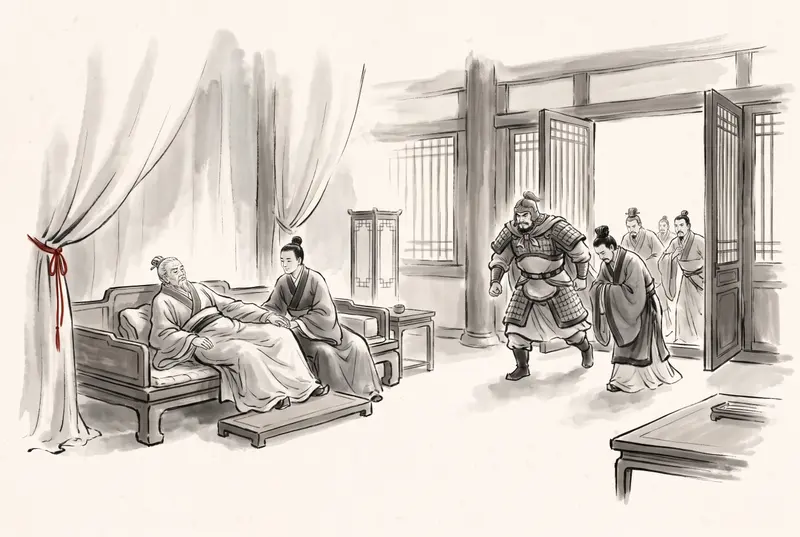
先黥布反時,高祖嘗病甚,惡見人,臥禁中,詔戶者無得入群臣。群臣絳、灌等莫敢入。十餘日,噲乃排闥直入,大臣隨之。上獨枕一宦者臥。噲等見上流涕曰:「始陛下與臣等起豐沛,定天下,何其壯也!今天下已定,又何憊也!且陛下病甚,大臣震恐,不見臣等計事,顧獨與一宦者絕乎?且陛下獨不見趙高之事乎?」高帝笑而起。
Kundoku (Japanese reading)
先に黥布の反せし時、高祖嘗て病甚だしく、人を見るを悪み、禁中に臥し、戸者に詔して群臣を入るるを得る無からしむ。群臣絳・灌等敢えて入る莫し。十余日、噲乃ち闥を排して直ちに入り、大臣之に随う。上独り一宦者を枕にして臥す。噲等上を見て流涕して曰く、「始め陛下臣等と豊沛より起こり、天下を定む。何ぞ其の壮なるや。今天下已に定まり、又何ぞ憊れたるや。且つ陛下の病甚だしく、大臣震恐す。臣等を見て事を計らず、顧って独り一宦者と絶たんか。且つ陛下独り趙高の事を見ずや」と。高帝笑いて起つ。
Japanese
これより前、黥布が反乱を起こしたころ、高祖は重い病気で人に会うのをいやがり、宮中の奥で寝たまま、門番に命じて群臣をだれも入れさせなかった。絳侯周勃や灌嬰ら群臣は、だれも入ろうとしなかった。十日あまりたって、樊噲は小門を押し開けてまっすぐ入っていき、大臣たちもそれに続いた。皇帝はただ一人の宦官をまくらにして寝ていた。樊噲たちは皇帝を見ると、涙を流して言った。「はじめ陛下は、わたしどもと豊や沛で兵を挙げ、天下を定められました。なんと雄々しかったことでしょう。いま天下は定まったのに、なんとお疲れになったことでしょう。陛下のご病気は重く、大臣たちはおびえています。それなのに、わたしどもに会って相談もせず、ただ一人の宦官とだけ過ごされるおつもりですか。陛下は、趙高のことをご存じないのですか」。高帝は笑って起き上がった。
English
Earlier, at the time of Qing Bu's rebellion, Gaozu was once very ill. He did not want to see anyone, and lay in his private apartments, ordering the doorkeepers to let none of the ministers in. None of the ministers, not even Zhou Bo or Guan Ying, dared to go in. After ten days or more, Fan Kuai pushed open the door and walked straight in, and the great ministers followed him. The emperor was lying alone, with his head on a eunuch's lap. When Fan Kuai and the others saw the emperor, they wept and said: "When Your Majesty first rose with us from Feng and Pei and brought peace to the realm, how bold you were! Now that the realm is settled, how weary you are! Your Majesty is very ill, and the ministers are trembling with fear. Yet instead of seeing us and making plans, will you shut yourself away alone with one eunuch? Has Your Majesty not seen what happened with Zhao Gao?" Emperor Gao laughed and got up.
Notes (JA)
- 排闥直入: 宮中の小門を押し開けて、まっすぐ入ること。遠慮せずに押し入るたとえになった。
- 絳・灌: 絳侯周勃と灌嬰。
- 趙高之事: 秦の宦官趙高が始皇帝の死後に実権を握り、秦を滅ぼしたこと。
Notes (EN)
- Pushed open the door (排闥直入): now a phrase for barging in uninvited.
- Zhou Bo and Guan Ying (絳・灌): the Marquis of Jiang and Guan Ying, the fourth man of this chapter.
- Zhao Gao: the eunuch who seized power after the First Emperor's death and brought Qin down.
Idioms from this passage: Pushing open the door and walking straight in 排闥直入
Word notes
- weary/ˈwɪri/adjective
very tired
In the text: “how weary you are”
Similar words: exhausted — completely tired · worn out — very tired
- tremble/ˈtrɛmbəl/verb
to shake because you are afraid
In the text: “the ministers are trembling with fear”
Similar words: shake — move quickly up and down · quiver — shake slightly
Passage 4
Original
其後盧綰反,高帝使噲以相國擊燕。是時高帝病甚,人有惡噲黨於呂氏,即上一日宮車晏駕,則噲欲以兵盡誅滅戚氏、趙王如意之屬。高帝聞之大怒,乃使陳平載絳侯代將,而即軍中斬噲。陳平畏呂后,執噲詣長安。至則高祖已崩,呂后釋噲,使復爵邑。
Kundoku (Japanese reading)
其の後盧綰反す。高帝噲をして相国を以て燕を撃たしむ。是の時高帝の病甚だし。人の噲を呂氏に党すと悪む者有り。即し上一日宮車晏駕せば、則ち噲は兵を以て尽く戚氏・趙王如意の属を誅滅せんと欲すと。高帝之を聞きて大いに怒り、乃ち陳平をして絳侯を載せて将に代わらしめ、而して即ち軍中に噲を斬らしむ。陳平呂后を畏れ、噲を執えて長安に詣る。至れば則ち高祖已に崩じ、呂后噲を釈し、爵邑を復せしむ。
Japanese
その後、燕王盧綰が背いた。高帝は樊噲に相国として燕を討たせた。このころ高帝の病は重かった。ある者が、樊噲は呂氏の仲間で、皇帝にもしものことがあれば、兵を使って戚夫人と趙王如意の一族を皆殺しにするつもりだ、と中傷した。高帝はこれを聞いて大いに怒り、陳平に絳侯周勃を車に乗せて行かせ、樊噲に代わって将軍にさせ、その場で軍中で樊噲を斬らせようとした。しかし陳平は呂后を恐れて、樊噲を捕らえて長安へ連れて行った。着いたときには高祖はすでに亡くなっていた。呂后は樊噲を許し、爵位と領地をもとどおりにさせた。
English
Later Lu Wan rebelled, and Emperor Gao sent Fan Kuai as chancellor of state to attack Yan. At that time Emperor Gao was very ill. Someone who hated Fan Kuai said he was in league with the Lü clan, and that if one day the emperor should die, Fan Kuai meant to use his troops to wipe out Lady Qi, Ruyi the King of Zhao and all their people. When Emperor Gao heard this he was furious. He sent Chen Ping with Zhou Bo, Marquis of Jiang, in his carriage to take over the command, with orders to behead Fan Kuai on the spot in his camp. But Chen Ping was afraid of Empress Lü, so he arrested Fan Kuai and took him to Chang'an. By the time they arrived, Gaozu was already dead. Empress Lü set Fan Kuai free and gave him back his rank and fief.
Notes (JA)
- 盧綰: 劉邦と同じ日に生まれた幼なじみで、燕王となったが背いて匈奴へ逃げた。
- 宮車晏駕: 天子の車が遅く出る、という言い方で、天子の死を遠回しにいう。
- 樊噲の妻は呂后の妹の呂須。そのため呂氏の一味と見られた。
- このいきさつは陳丞相世家にもくわしい(056-chen-ping の章)。
Notes (EN)
- Lu Wan (盧綰): Liu Bang's boyhood friend, born on the same day, made King of Yan; he fled to the Xiongnu.
- Should die (宮車晏駕): literally "if the palace carriage goes out late", a polite way of speaking of the emperor's death.
- Fan Kuai's wife was Lü Xu, Empress Lü's sister. The same story is told in the life of Chen Ping (chapter 056).
Word notes
- in league with/ɪn liɡ wɪð/phrase
working secretly together with
In the text: “he was in league with the Lü clan”
Similar words: allied with — joined with · hand in glove with — working closely with
- behead/bɪˈhɛd/verb
to kill someone by cutting off the head
In the text: “with orders to behead Fan Kuai on the spot”
Similar words: decapitate — cut off the head · execute — kill as a punishment
Passage 5
Original
商事孝惠、高后時,商病,不治。其子寄,字況,與呂祿善。及高后崩,大臣欲誅諸呂,呂祿為將軍,軍於北軍,太尉勃不得入北軍,於是乃使人劫酈商,令其子況紿呂祿,呂祿信之,故與出游,而太尉勃乃得入據北軍,遂誅諸呂。是歲商卒,謚為景侯。子寄代侯。天下稱酈況賣交也。
Kundoku (Japanese reading)
商孝恵・高后に事うる時、商病みて、治めず。其の子寄、字は況、呂禄と善し。高后崩ずるに及び、大臣諸呂を誅せんと欲す。呂禄将軍と為り、北軍に軍す。太尉勃北軍に入るを得ず。是に於いて乃ち人をして酈商を劫かし、其の子況をして呂禄を紿かしむ。呂禄之を信ず。故に与に出游す。而して太尉勃乃ち入りて北軍に拠るを得、遂に諸呂を誅す。是の歳商卒す。謚して景侯と為す。子寄侯に代わる。天下酈況の交わりを売るを称するなり。
Japanese
(高陽の人酈商は、劉邦に従って各地で戦い、右丞相となった。)酈商は孝恵帝と呂后に仕えていたころ病気になり、職務をとれなくなった。その子の酈寄は字を況といい、呂禄と親しかった。呂后が亡くなると、大臣たちは呂氏一族を討とうとした。しかし呂禄は将軍として北軍に陣取っていて、太尉の周勃は北軍に入れなかった。そこで大臣たちは人をやって酈商を脅し、その子の酈況に呂禄をだまさせた。呂禄は酈況を信じて、いっしょに遊びに出かけた。そのすきに太尉の周勃は北軍に入って握り、ついに呂氏一族を討った。この年、酈商は亡くなり、景侯と諡され、子の酈寄が侯を継いだ。世間の人は、酈況は友を売ったと言った。
English
When Li Shang was serving Emperor Hui and Empress Lü, he fell ill and could not carry out his duties. His son Ji, whose courtesy name was Kuang, was a good friend of Lü Lu. When Empress Lü died, the great ministers wanted to destroy the Lü clan. But Lü Lu was general in command of the Northern Army, and the grand commandant Zhou Bo could not get into the Northern Army. So they sent men to seize Li Shang as a hostage, and made his son Kuang trick Lü Lu. Lü Lu trusted him and went out on an outing with him, and so the grand commandant Zhou Bo was able to get into the Northern Army and take control of it. In the end the Lü were wiped out. That year Li Shang died, with the posthumous name Marquis Jing, and his son Ji succeeded to his marquisate. People everywhere said that Li Kuang had sold his friend.
Notes (JA)
- 酈商: 酈食其の弟。高陽の人で、劉邦の将軍となった(ここでは戦歴を省く)。
- 北軍: 長安を守る二つの軍の一つ。これを握った者が都を制した(009-empress-lu、057-zhou-bo の章)。
- 賣交: 友を売ること。のちの人は、国のためにはやむを得なかったと弁護する者もいた。
Notes (EN)
- Li Shang (酈商): younger brother of Li Yiji, and one of Liu Bang's generals.
- The Northern Army (北軍): one of the two armies guarding Chang'an; whoever held it held the capital (chapters 009 and 057).
- Sold his friend (賣交): later writers argued over whether betraying a friend to save the state was forgivable.
Word notes
- hostage/ˈhɑstɪdʒ/noun
a person held to force someone else to do something
In the text: “to seize Li Shang as a hostage”
Similar words: captive — a prisoner · pawn — a person used by others
- trick/trɪk/verb
to deceive someone
In the text: “made his son Kuang trick Lü Lu”
Similar words: deceive — make someone believe something false · fool — make someone look foolish
Passage 6
Original
汝陰侯夏侯嬰,沛人也。為沛廄司御。每送使客還,過沛泗上亭,與高祖語,未嘗不移日也。嬰已而試補縣吏,與高祖相愛。高祖戲而傷嬰,人有告高祖。高祖時為亭長,重坐傷人,告故不傷嬰,嬰證之。後獄覆,嬰坐高祖系歲餘,掠笞數百,終以是脫高祖。
Kundoku (Japanese reading)
汝陰侯夏侯嬰は、沛の人なり。沛の廐の司御たり。使客を送りて還る毎に、沛の泗上の亭を過ぎ、高祖と語り、未だ嘗て日を移さずんばあらず。嬰已にして試みられて県吏に補せられ、高祖と相愛す。高祖戯れて嬰を傷つく。人の高祖を告ぐる有り。高祖時に亭長たり。人を傷つくるに重く坐す。嬰を傷つけざると告ぐ。嬰之を証す。後に獄覆り、嬰高祖に坐して繫がるること歳余、掠笞せらるること数百、終に是を以て高祖を脱す。
Japanese
汝陰侯夏侯嬰は沛の人で、沛の県の厩で車の御者をしていた。使者や客を送って帰るたびに、沛の泗水亭に立ち寄って、高祖と話しこみ、いつも日が傾くまで語り合った。夏侯嬰はやがて試験を受けて県の役人となり、高祖とは大の仲よしだった。あるとき高祖がふざけて夏侯嬰にけがをさせた。ある人がそのことを訴え出た。高祖は当時、亭長(宿場の長)で、役人が人を傷つければ重い罪になる。高祖は「嬰を傷つけてはいない」と申し立て、夏侯嬰もそれを証言した。のちに裁判がやり直されると、夏侯嬰は高祖をかばった罪で一年あまり牢につながれ、何百回もむちで打たれたが、最後まで口を割らず、おかげで高祖は罪を免れた。
English
Xiahou Ying, Marquis of Ruyin, was a man of Pei. He was a driver at the county stables in Pei. Every time he came back from seeing off an envoy or a guest, he would stop at the Sishang post station in Pei and talk with Gaozu, and they never parted until the sun had moved across the sky. Later Xiahou Ying passed a test and became a county clerk, and he and Gaozu were very fond of each other. Once Gaozu, playing about, hurt Xiahou Ying, and someone reported it. Gaozu was then head of the post station, and an official who injured someone was severely punished. Gaozu said that he had not hurt Ying, and Ying backed him up. Later the case was reopened, and Ying was held in prison for more than a year for Gaozu's sake and given hundreds of lashes, but in the end that was how Gaozu escaped.
Notes (JA)
- 司御: 車を御する役。夏侯嬰はのちに劉邦の太僕(皇帝の車馬の長)となり、生涯その車を御した。
- 泗上亭: 沛の泗水のほとりの宿場。劉邦はここの亭長だった。
- 獄覆: 判決が見直されること。夏侯嬰は偽証の罪に問われたが、劉邦をかばい通した。
- 夏侯嬰は滕県の令をつとめたので、「滕公」とも呼ばれる。
Notes (EN)
- Driver (司御): Xiahou Ying later became Liu Bang's master of carriages and drove for him all his life.
- Sishang post station (泗上亭): the station of which Liu Bang was head.
- He was also called the Lord of Teng (滕公), after a county he governed.
Word notes
- lash/læʃ/noun
a hit with a whip
In the text: “given hundreds of lashes”
Similar words: stroke — a single hit · whipping — a beating with a whip
- back up/bæk ʌp/phrasal verb
to support what someone says
In the text: “Ying backed him up”
Similar words: support — help by agreeing · vouch for — say someone is honest
Passage 7
Original
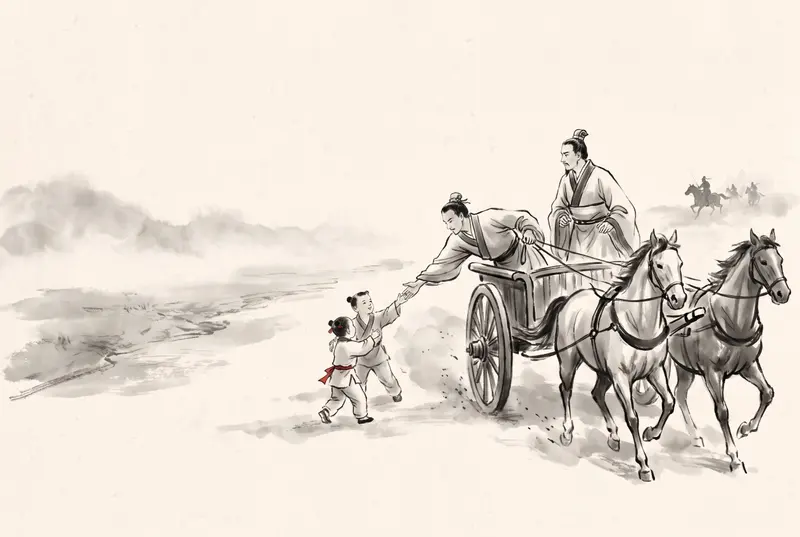
還定三秦,從擊項籍。至彭城,項羽大破漢軍。漢王敗,不利,馳去。見孝惠、魯元,載之。漢王急,馬罷,虜在後,常蹶兩兒欲棄之,嬰常收,竟載之,徐行面雍樹乃馳。漢王怒,行欲斬嬰者十餘,卒得脫,而致孝惠、魯元於豐。
Kundoku (Japanese reading)
還りて三秦を定め、従いて項籍を撃つ。彭城に至り、項羽大いに漢軍を破る。漢王敗れ、利あらず、馳せ去る。孝恵・魯元を見、之を載す。漢王急にして、馬罷れ、虜後に在り。常に両児を蹶りて之を棄てんと欲す。嬰常に収め、竟に之を載す。徐行し雍樹に面して乃ち馳す。漢王怒り、行く行く嬰を斬らんと欲する者十余たびなるも、卒に脱するを得、而して孝恵・魯元を豊に致す。
Japanese
夏侯嬰は漢王に従って関中に引き返して三秦を平定し、さらに項羽を討った。彭城まで来たとき、項羽が漢軍を大いに破った。漢王は敗れて、車で必死に逃げた。途中で息子(のちの孝恵帝)と娘(魯元公主)を見つけて車に乗せた。漢王はあせり、馬は疲れはて、敵はすぐ後ろに迫っていた。漢王は何度も二人の子を蹴落として捨てようとした。そのたびに夏侯嬰が拾い上げて、最後まで乗せ続けた。(子どもたちが落ちないよう)ゆっくり進み、二人を自分の首にしがみつかせてから、ようやく馬を走らせた。漢王は怒り、逃げながら十回あまりも夏侯嬰を斬ろうとしたが、ついに逃げきって、孝恵と魯元を豊まで送り届けた。
English
He went back with Liu Bang to conquer the three states of Qin, and followed him to attack Xiang Ji. At Pengcheng, Xiang Yu utterly defeated the army of Han. The king of Han was beaten and galloped away. He saw his son, the future Emperor Hui, and his daughter, the future Princess Luyuan, and took them into the carriage. The king of Han was desperate: the horses were worn out and the enemy was close behind. Again and again he kicked the two children out of the carriage, meaning to leave them behind. Each time Xiahou Ying picked them up, and in the end he kept them in the carriage. He went slowly, with the children clinging to his neck, and only then drove hard. The king of Han was furious, and more than ten times on the way he wanted to cut Xiahou Ying down. But at last they escaped, and Xiahou Ying brought the future Emperor Hui and Princess Luyuan safely to Feng.
Notes (JA)
- 三秦: 項羽が関中を三つに分けて秦の降将に与えた雍・塞・翟の三国。
- 孝惠・魯元: 劉邦と呂后の子。孝恵帝と、その姉の魯元公主。
- 面雍樹: 子どもたちを抱きかかえ、首にしがみつかせること(「雍」は抱く、「樹」は首と読む説がある)。読み方には諸説ある。
- 劉邦が子を捨てようとした話は、項羽本紀にも見える。
Notes (EN)
- The three states of Qin (三秦): the kingdoms into which Xiang Yu split the old land of Qin.
- The future Emperor Hui and Princess Luyuan: Liu Bang's children by Empress Lü.
- With the children clinging to his neck (面雍樹): one reading of an obscure phrase; there are several others.
Word notes
- desperate/ˈdɛspərət/adjective
so worried that you will do anything
In the text: “The king of Han was desperate”
Similar words: frantic — wild with fear · panicked — very afraid
- cling/klɪŋ/verb
to hold on tightly
In the text: “with the children clinging to his neck”
Similar words: hold on — keep holding · grip — hold tightly
Passage 8
Original
嬰自上初起沛,常為太僕,竟高祖崩。以太僕事孝惠。孝惠帝及高后德嬰之脫孝惠、魯元於下邑之閒也,乃賜嬰縣北第第一,曰「近我」,以尊異之。
Kundoku (Japanese reading)
嬰、上の初めて沛に起こりしより、常に太僕と為り、高祖の崩ずるを竟う。太僕を以て孝恵に事う。孝恵帝及び高后、嬰の孝恵・魯元を下邑の間に脱せしを徳とし、乃ち嬰に県の北の第の第一を賜い、「近我」と曰い、以て之を尊異す。
Japanese
夏侯嬰は、高祖が沛で兵を挙げたときからずっと太僕(皇帝の車馬の長)をつとめ、高祖が亡くなるまで続けた。その後も太僕として孝恵帝に仕えた。孝恵帝と呂后は、夏侯嬰が下邑のあたりで孝恵と魯元を救ってくれた恩を忘れず、宮殿の北の第一等の屋敷を与えて「近我(わたしのそばに)」と名づけ、特別に重んじた。
English
From the day the emperor first rose at Pei, Xiahou Ying was always his master of carriages, until Gaozu died; and he served Emperor Hui as master of carriages too. Emperor Hui and Empress Lü were grateful to him for saving the future Emperor Hui and Princess Luyuan near Xiayi, so they gave him the finest mansion north of the palace, and called it "Close to Me", to honour him above all others.
Notes (JA)
- 太僕: 皇帝の車馬をつかさどる大臣。九卿の一つ。
- 近我: 「わたしの近くに」。恵帝と呂后の感謝を示す屋敷の名。
- 夏侯嬰はのちに呂后の死後、少帝を廃して文帝を迎える役も果たした(ここでは省く)。
Notes (EN)
- Master of carriages (太僕): one of the nine great ministers.
- "Close to Me" (近我): the name the grateful emperor and empress gave his house.
- After Empress Lü's death Xiahou Ying helped remove the boy emperor and bring in Emperor Wen; that part is left out.
Word notes
- grateful/ˈɡreɪtfəl/adjective
feeling thankful
In the text: “were grateful to him”
Similar words: thankful — pleased and thankful · indebted — owing thanks
Passage 9
Original
潁陰侯灌嬰者,睢陽販繒者也。高祖之為沛公,略地至雍丘下,章邯敗殺項梁,而沛公還軍於碭,嬰初以中涓從擊破東郡尉於成武及秦軍於扛裏,疾鬬,賜爵七大夫。
Kundoku (Japanese reading)
潁陰侯灌嬰は、睢陽の繒を販る者なり。高祖の沛公たるや、地を略して雍丘の下に至る。章邯項梁を敗殺し、而して沛公還りて碭に軍す。嬰初め中涓を以て従い、東郡の尉を成武に、及び秦の軍を扛里に撃破す。疾く闘い、爵七大夫を賜う。
Japanese
潁陰侯灌嬰は、睢陽で絹を売る商人だった。高祖が沛公として各地を攻めて雍丘のあたりまで来たとき、章邯が項梁を破って殺したので、沛公は引き返して碭に陣を張った。灌嬰はこのとき中涓(側近)として沛公に従い、東郡の尉の軍を成武で、秦の軍を扛里で打ち破った。力の限り戦ったので、七大夫の爵位を与えられた。
English
Guan Ying, Marquis of Yingyin, had been a silk seller in Suiyang. When Gaozu, as Lord of Pei, was conquering land and came near Yongqiu, Zhang Han defeated and killed Xiang Liang, and the Lord of Pei went back to camp at Dang. Guan Ying first joined him then as a personal attendant, and helped defeat the commandant of the Eastern Commandery at Chengwu and an army of Qin at Gangli. He fought fiercely, and was given the rank of Seventh Grandee.
Notes (JA)
- 販繒: 絹織物を売り歩くこと。
- 中涓: 主君の身の回りに仕える側近。
- 灌嬰はのちに騎兵の将として名をあげ、韓信とともに斉を攻め、垓下の戦いのあと項羽を追撃した。
Notes (EN)
- Silk seller (販繒): a peddler of silk cloth.
- Personal attendant (中涓): one of a leader's inner circle.
- Guan Ying became Han's great cavalry commander, fighting with Han Xin in Qi and leading the pursuit after Gaixia.
Passage 10
Original
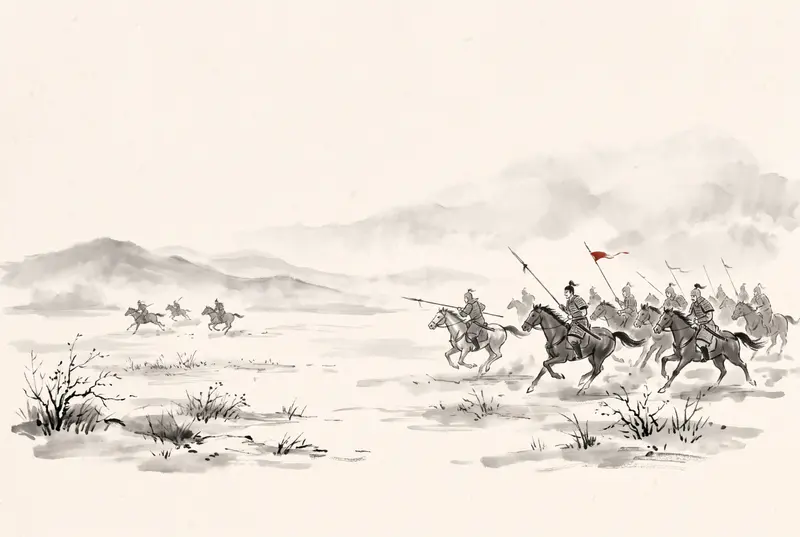
項籍敗垓下去也,嬰以御史大夫受詔將車騎別追項籍至東城,破之。所將卒五人共斬項籍,皆賜爵列侯。降左右司馬各一人,卒萬二千人,盡得其軍將吏。
Kundoku (Japanese reading)
項籍の垓下に敗れて去るや、嬰御史大夫を以て詔を受け、車騎を将いて別に項籍を追いて東城に至り、之を破る。将いる所の卒五人共に項籍を斬り、皆爵列侯を賜う。左右の司馬各々一人、卒万二千人を降し、尽く其の軍の将吏を得たり。
Japanese
項籍(項羽)が垓下で敗れて逃げると、灌嬰は御史大夫として詔を受け、車と騎兵を率いて別動隊として項籍を東城まで追い、これを破った。灌嬰の部下の兵五人がいっしょに項籍を斬り、五人とも列侯の爵位を与えられた。左右の司馬それぞれ一人と兵一万二千人を降伏させ、項籍の軍の将校をことごとく捕らえた。
English
When Xiang Ji was beaten at Gaixia and fled, Guan Ying, as grand secretary, was ordered to lead a separate force of chariots and cavalry to pursue him. He chased Xiang Ji to Dongcheng and broke him there. Five soldiers under his command together cut Xiang Ji down, and all five were made marquises. He took the surrender of the marshals of the left and right and twelve thousand men, and captured every officer of Xiang Ji's army.
Notes (JA)
- 東城: 今の安徽省定遠県のあたり。項羽はこのあと烏江で自ら首をはねた(007-gaixia の章)。
- 卒五人: 項羽の遺体を奪い合った楊喜ら五人。項羽本紀によれば、遺体を五つに分けて手柄とした。
- 御史大夫: 副宰相にあたる大臣。
Notes (EN)
- Dongcheng (東城): in Dingyuan, Anhui; Xiang Yu died soon after at the Wu River (chapter 007, Gaixia).
- Five soldiers: Yang Xi and four others, who fought over Xiang Yu's body and each took a piece of it.
- Grand secretary (御史大夫): the deputy to the chancellor.
Word notes
- pursue/pərˈsu/verb
to follow someone to catch them
In the text: “to pursue him”
Similar words: chase — run after · hunt down — search for and catch
Passage 11
Original
太史公曰:吾適豐沛,問其遺老,觀故蕭、曹、樊噲、滕公之家,及其素,異哉所聞!方其鼓刀屠狗賣繒之時,豈自知附驥之尾,垂名漢廷,德流子孫哉?余與他廣通,為言高祖功臣之興時若此云。
Kundoku (Japanese reading)
太史公曰く、吾豊沛に適き、其の遺老に問い、故の蕭・曹・樊噲・滕公の家を観、及び其の素を聞くに、異なるかな聞く所。其の刀を鼓し狗を屠り繒を売るの時に方たりて、豈に自ら驥の尾に附き、名を漢廷に垂れ、徳子孫に流れんことを知らんや。余他広と通ず。為に高祖の功臣の興りし時を言うこと此くの若しと云う。
Japanese
太史公は言う。わたしは豊と沛へ行き、土地の年寄りたちに話を聞き、昔の蕭何・曹参・樊噲・滕公(夏侯嬰)の家を見て、彼らのもとの暮らしを聞いたが、聞いた話は驚くべきものだった。包丁を鳴らして犬をさばき、絹を売っていたころ、自分が駿馬の尾にとりついて(劉邦について)、漢の朝廷に名を残し、その恵みが子孫にまで及ぶとは、どうして思っただろう。わたしは樊噲の孫の樊他広と親しく、高祖の功臣たちが身を起こしたころのことを、このように話してもらったのである。
English
The Grand Historian says: I went to Feng and Pei, asked the old people there, and saw the old homes of Xiao He, Cao Can, Fan Kuai and the Lord of Teng, and heard how they had lived before. What strange things I heard! When they were rattling their knives to butcher dogs and selling silk, how could they have known that they would hang on to the tail of a great steed, leave their names at the court of Han, and pass their blessings down to their sons and grandsons? I was a friend of Fan Tuoguang, and he told me these things about the days when Gaozu's ministers first rose.
Notes (JA)
- 鼓刀: 包丁を打ち鳴らすこと。肉屋のしぐさ。
- 附驥之尾: 名馬の尾にとりつけば、ハエも千里を行く。すぐれた人について名をあげることのたとえ。
- 他廣: 樊他広。樊噲の孫。司馬遷は功臣の子孫から直接話を聞いて書いた。
Notes (EN)
- Rattling their knives (鼓刀): the gesture of a butcher.
- Hang on to the tail of a great steed (附驥之尾): a fly on a fine horse's tail can travel a thousand li; to rise by following a great man.
- Fan Tuoguang (他廣): Fan Kuai's grandson, one of Sima Qian's living sources.
Idioms from this passage: Clinging to the tail of a fine horse 驥尾に付す
Word notes
- butcher/ˈbʊtʃər/verb
to kill animals and cut them up for meat
In the text: “to butcher dogs and selling silk”
Similar words: slaughter — kill for food · carve up — cut into pieces
- steed/stid/noun
a horse, especially a fine one (literary)
In the text: “the tail of a great steed”
Similar words: horse — a large animal for riding · charger — a war horse