Hereditary Houses · Vol. 57
The Hereditary House of Zhou Bo, Marquis of Jiang 絳侯周勃世家
Zhou Bo and Zhou Yafu: The Camp at Xiliu 周勃與周亞夫
Two generations of one family: Zhou Bo, one of the founders of Han, and his son Zhou Yafu. Zhou Bo was a plain man who had made his living weaving mats and playing the pipes at funerals, and Gaozu judged that he could be trusted with great affairs. He destroyed the Lü clan and put Emperor Wen on the throne, yet later he was thrown into prison on suspicion of rebellion and said: "I have led an army of a million men, but I never knew how mighty a jailer is." His son Yafu was told by a physiognomist that nine years after reaching the heights he would starve to death. Encamped at Xiliu, he made even Emperor Wen, who came to encourage the troops, obey the rules of the camp, and the emperor said: "This is a true general." He put down the Rebellion of the Seven States and became chancellor, but his unbending nature cost him Emperor Jing's favour. Served a piece of meat with no chopsticks, he let his displeasure show; at last, accused of plotting rebellion, he refused to eat, coughed blood and died.
This page has the scene "Zhou Bo and Zhou Yafu: The Camp at Xiliu" from this volume, not the whole volume.
Audio
The audio is synthetic speech.
Video
Passage 1
Original
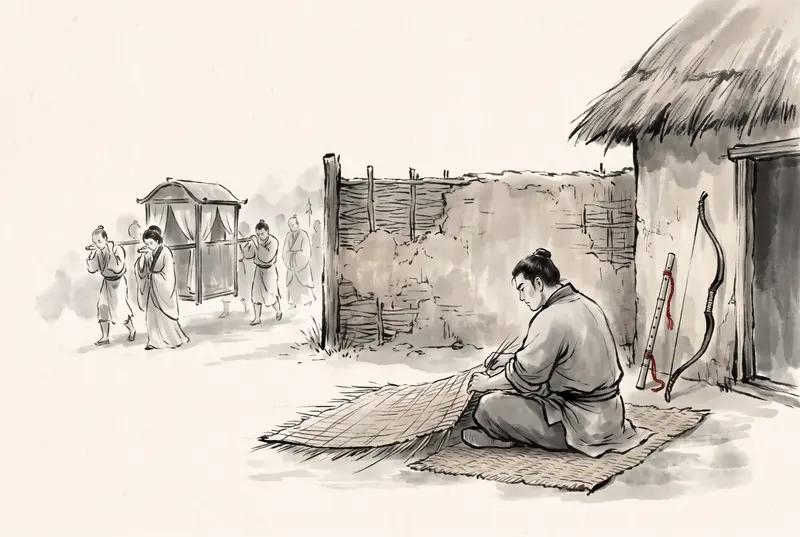
絳侯周勃者,沛人也。其先卷人,徙沛。勃以織薄曲為生,常為人吹簫給喪事,材官引彊。勃為人木彊敦厚,高帝以為可屬大事。勃不好文學,每召諸生說士,東鄉坐而責之:「趣為我語。」其椎少文如此。
Kundoku (Japanese reading)
絳侯周勃なる者は、沛の人なり。其の先は巻の人、沛に徙る。勃は薄曲を織るを以て生と為し、常に人の為に簫を吹きて喪事に給し、材官にして彊を引く。 勃人と為り木彊敦厚にして、高帝以為えらく大事を属すべしと。勃文学を好まず。諸生説士を召す毎に、東郷して坐して之を責む、「趣かに我が為に語れ」と。其の椎にして文少なきこと此くの如し。
Japanese
絳侯周勃は沛の人である。祖先は巻の人で、沛に移り住んだ。周勃は、蚕を飼うためのむしろを編んで暮らしを立て、よく人に頼まれて葬式で笛を吹き、また強い弓を引く兵士でもあった。 周勃は人柄が無骨で飾り気がなく、まじめで誠実だったので、高帝は大事を任せられると考えていた。周勃は学問を好まなかった。学者や弁舌の士を呼ぶたびに、自分は上座の東向きに座って、「早く要点を言え」とせきたてた。それほど素朴で、教養には欠けていた。
English
Zhou Bo, Marquis of Jiang, was a man of Pei. His forebears came from Juan and moved to Pei. He made his living weaving the reed mats used for rearing silkworms, often played the pipes at funerals to earn a little, and served as a strong-armed archer who could draw the heavy crossbow. Zhou Bo was blunt, solid and honest, and Gaozu thought he could be trusted with great affairs. He had no love of learning. Whenever he called in scholars or persuaders, he would sit in the place of honour facing east and order them: "Hurry up and tell me what you have to say." That was how plain and unpolished he was.
Notes (JA)
- 薄曲: 蚕を飼うときに使う、あしで編んだむしろ。
- 吹簫給喪事: 葬式で笛を吹いて手間賃を得る。貧しい暮らしのしるし。
- 材官引彊: 力のある兵士で、強い弩を引く役。
- 木彊敦厚: 木のように無骨で、まじめで人情に厚い。
- 東鄉坐: 東を向いて座る。主人の座る上座。
Notes (EN)
- Played the pipes at funerals (吹簫給喪事): a humble way to earn money.
- Blunt, solid and honest (木彊敦厚): stiff as wood, but steady and true.
- Facing east (東鄉坐): the seat of honour, taken by the host.
Word notes
- blunt/blʌnt/adjective
saying what you think directly, without polite manners
In the text: “blunt, solid and honest”
Similar words: frank — open and direct · outspoken — speaking freely
- unpolished/ʌnˈpɑlɪʃt/adjective
without fine manners or education
In the text: “how plain and unpolished he was”
Similar words: rough — not refined · unrefined — lacking polish
Passage 2
Original
文帝既立,以勃為右丞相,賜金五千斤,食邑萬戶。居月餘,人或說勃曰:「君既誅諸呂,立代王,威震天下,而君受厚賞,處尊位,以寵,久之即禍及身矣。」勃懼,亦自危,乃謝請歸相印。上許之。歲餘,丞相平卒,上復以勃為丞相。十餘月,上曰:「前日吾詔列侯就國,或未能行,丞相吾所重,其率先之。」乃免相就國。
Kundoku (Japanese reading)
文帝既に立ち、勃を以て右丞相と為し、金五千斤を賜い、食邑万戸とす。居ること月余、人或いは勃に説きて曰く、「君既に諸呂を誅し、代王を立て、威天下を震わす。而して君厚賞を受け、尊位に処り、以て寵せらる。之を久しくせば即ち禍身に及ばん」と。勃懼れ、亦自ら危ぶみ、乃ち謝して相印を帰さんことを請う。上之を許す。歳余にして、丞相平卒す。上復た勃を以て丞相と為す。十余月、上曰く、「前日吾列侯に詔して国に就かしむるも、或いは未だ行く能わず。丞相は吾が重んずる所なり。其れ之に率先せよ」と。乃ち相を免じて国に就く。
Japanese
文帝が即位すると、周勃を右丞相とし、金五千斤と一万戸の領地を与えた。ひと月あまりして、ある人が周勃に説いた。「あなたは呂氏を誅し、代王を帝に立て、その威光は天下をふるわせています。そのうえ手厚い褒美を受け、高い位につき、帝の寵愛を受けている。このままでは、いずれわざわいがあなたの身に及びますぞ」。周勃は恐れ、自分でも危ういと思い、わびて宰相の印を返したいと願い出た。帝はこれを許した。一年あまりして丞相の陳平が死ぬと、帝は再び周勃を丞相にした。十か月あまりたって、帝は言った。「先日、列侯たちに領地へ帰るよう詔を出したが、まだ行かない者もいる。丞相はわしが重んじる人だ。どうか率先して手本を示してくれ」。こうして周勃は宰相をやめさせられ、領地へ帰った。
English
When Emperor Wen had taken the throne, he made Zhou Bo Chancellor of the Right, granted him five thousand catties of gold and a fief of ten thousand households. After a month or so someone said to Zhou Bo: "You have destroyed the Lü and set the King of Dai on the throne, and your might shakes the realm. Now you have received rich rewards, hold the highest rank and enjoy the emperor's favour. If this goes on, disaster will fall on you." Zhou Bo was frightened, and feeling himself in danger, he apologised and asked to give back the chancellor's seal. The emperor allowed it. A year or so later Chancellor Chen Ping died, and the emperor made Zhou Bo chancellor again. After ten months or more the emperor said: "The other day I ordered the marquises to go to their fiefs, but some have still not gone. You, chancellor, are the man I most respect. Please set them an example." So he was relieved of the chancellorship and went to his fief.
Notes (JA)
- 代王: のちの文帝劉恒。高祖の子で、代の王だった。周勃と陳平が呂氏を誅したあと迎えて帝とした。
- 威震天下: 功が大きすぎると、かえって君主に恐れられる。范蠡や韓信の話と同じ教え。
- 列侯就國: 列侯を都から領地へ帰らせる政策。都に有力者が集まるのを防いだ。
- 率先之: 手本を示せという口実で、文帝は周勃を都から遠ざけた。
Notes (EN)
- The King of Dai (代王): the future Emperor Wen, a son of Gaozu, brought to the throne by Zhou Bo and Chen Ping after the fall of the Lü.
- Your might shakes the realm: a minister whose merit is too great becomes a danger to himself, as Fan Li and Han Xin learned.
- Set them an example: a polite way of sending Zhou Bo away from the capital.
Word notes
- fief/fif/noun
land given by a ruler to a noble, who lives on its taxes
In the text: “a fief of ten thousand households”
Similar words: domain — land ruled by a lord · estate — a large area of land
- set an example/sɛt ən ɪɡˈzæmpəl/phrase
to behave in a way others should copy
In the text: “Please set them an example.”
Similar words: lead the way — go first for others · show the way — be a model
Passage 3
Original
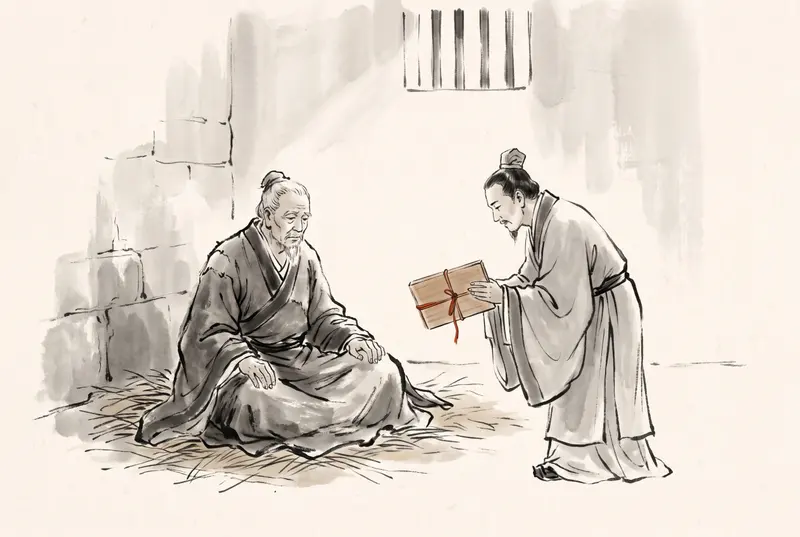
歲餘,每河東守尉行縣至絳,絳侯勃自畏恐誅,常被甲,令家人持兵以見之。其後人有上書告勃欲反,下廷尉。廷尉下其事長安,逮捕勃治之。勃恐,不知置辭。吏稍侵辱之。勃以千金與獄吏,獄吏乃書牘背示之,曰「以公主為證」。公主者,孝文帝女也,勃太子勝之尚之,故獄吏教引為證。勃之益封受賜,盡以予薄昭。及系急,薄昭為言薄太后,太后亦以為無反事。文帝朝,太后以冒絮提文帝,曰:「絳侯綰皇帝璽,將兵於北軍,不以此時反,今居一小縣,顧欲反邪!」文帝既見絳侯獄辭,乃謝曰:「吏[事]方驗而出之。」於是使使持節赦絳侯,復爵邑。絳侯既出,曰:「吾嘗將百萬軍,然安知獄吏之貴乎!」
Kundoku (Japanese reading)
歳余、河東の守尉県を行りて絳に至る毎に、絳侯勃自ら畏れて誅せられんことを恐れ、常に甲を被り、家人をして兵を持たしめて以て之に見ゆ。其の後人上書して勃反せんと欲すと告ぐる有り。廷尉に下す。廷尉其の事を長安に下し、勃を逮捕して之を治む。勃恐れ、辞を置く所を知らず。吏稍く之を侵辱す。勃千金を以て獄吏に与う。獄吏乃ち牘の背に書して之に示して曰く、「公主を以て証と為せ」と。公主なる者は、孝文帝の女なり。勃の太子勝之之を尚る。故に獄吏教えて引きて証と為さしむ。勃の益封受賜は、尽く以て薄昭に予う。系がるること急なるに及び、薄昭為に薄太后に言う。太后も亦以為えらく反事無しと。文帝朝す。太后冒絮を以て文帝に提げて曰く、「絳侯皇帝の璽を綰ね、兵を北軍に将いしとき、此の時を以て反せず。今一小県に居りて、顧って反せんと欲せんや」と。文帝既に絳侯の獄辞を見て、乃ち謝して曰く、「吏の事方に験して之を出ださんとす」と。是に於いて使いをして節を持して絳侯を赦さしめ、爵邑を復す。絳侯既に出でて曰く、「吾嘗て百万の軍に将たり。然れども安んぞ獄吏の貴きを知らんや」と。
Japanese
一年あまりのあいだ、河東の太守や都尉が県をまわって絳にやって来るたびに、絳侯周勃は誅されるのではないかとおびえ、いつも鎧を着て、家の者に武器を持たせて会っていた。その後、周勃が謀反を企てていると書面で訴えた者があり、事件は廷尉(司法長官)に回された。廷尉は長安で取り調べることにし、周勃を逮捕して裁いた。周勃は恐ろしさのあまり、どう申し開きをすればよいかわからなかった。役人たちはしだいに彼を侮辱するようになった。周勃が獄吏に千金を贈ると、獄吏は木の札の裏に「公主を証人にしなさい」と書いて見せた。公主とは文帝の娘で、周勃の長男の勝之がその夫だった。それで獄吏は、公主を証人に立てるよう教えたのである。また周勃は、加増された領地や賜り物をすべて薄昭に贈っていた。取り調べが厳しくなると、薄昭は周勃のために姉の薄太后に話した。太后も、謀反などありえないと考えた。文帝が太后のもとへあいさつに来ると、太后は頭巾を文帝に投げつけて言った。「絳侯は皇帝の印をあずかり、北軍の兵を率いていたあのとき、謀反を起こさなかった。それがいま小さな県にいて、かえって謀反を起こそうとするものですか」。文帝は絳侯の供述書を見たうえで、わびて言った。「役人がちょうど調べを終えて、釈放するところでした」。そこで使者に割り符を持たせて絳侯を赦し、爵位と領地をもとに戻した。獄を出た絳侯は言った。「わしは百万の軍を率いたこともある。だが、獄吏がこれほど偉いとは知らなかった」。
English
For a year or so, whenever the governor or commandant of Hedong toured the counties and came to Jiang, Zhou Bo, Marquis of Jiang, was so afraid of being put to death that he always wore armour and had his household carry weapons when he received them. Later someone sent up a letter accusing him of plotting rebellion. The case went to the Commandant of Justice, who sent it on to Chang'an, and Zhou Bo was arrested and put on trial. He was so frightened that he did not know how to answer, and little by little the clerks began to treat him with contempt. He gave a thousand pieces of gold to the jailer, and the jailer wrote on the back of a writing tablet and showed it to him: "Call the princess as your witness." The princess was Emperor Wen's daughter, married to Zhou Bo's eldest son, Shengzhi; that was why the jailer told him to call her. Zhou Bo had also given all his added fiefs and gifts to Bo Zhao. When the case grew serious, Bo Zhao spoke for him to his sister, the Empress Dowager Bo, and she too believed there had been no rebellion. When Emperor Wen came to pay his respects, she threw her headcloth at him and said: "When the Marquis of Jiang held the imperial seal and commanded the Northern Army, he did not rebel then. Would he rebel now, living in one little county?" Emperor Wen, having seen the record of the marquis's answers, apologised and said: "The clerks have just finished checking and were about to let him go." He sent an envoy with a tally to pardon the Marquis of Jiang and restored his rank and fief. When the marquis came out, he said: "I have led an army of a million men, but I never knew how mighty a jailer is."
Notes (JA)
- 廷尉: 司法をつかさどる長官。
- 牘: 文字を書く木の札。
- 薄昭: 文帝の母薄太后の弟。周勃は前もって彼に財産を贈り、つながりを作っていた。
- 冒絮: 頭にかぶる布、頭巾。
- 安知獄吏之貴乎: 「獄吏がこれほど偉いとは知らなかった」。権力者も獄に入れば小役人に頭が上がらないことを嘆いた言葉。
Notes (EN)
- Commandant of Justice (廷尉): the chief judicial officer of the empire.
- Bo Zhao (薄昭): brother of Emperor Wen's mother, the Empress Dowager Bo; Zhou Bo had wisely made him a friend.
- "I never knew how mighty a jailer is" (安知獄吏之貴乎): even a great general in prison is at the mercy of petty clerks.
Idioms from this passage: I never knew how mighty a jailer is 安んぞ獄吏の貴きを知らんや
Word notes
- contempt/kənˈtɛmpt/noun
the feeling that someone is worthless
In the text: “treat him with contempt”
Similar words: scorn — strong lack of respect · disdain — looking down on someone
- pardon/ˈpɑrdən/verb
to officially forgive someone for a crime
In the text: “to pardon the Marquis of Jiang”
Similar words: forgive — stop blaming · release — set free
Passage 4
Original
條侯亞夫自未侯為河內守時,許負相之,曰:「君後三歲而侯。侯八歲為將相,持國秉,貴重矣,於人臣無兩。其後九歲而君餓死。」亞夫笑曰:「臣之兄已代父侯矣,有如卒,子當代,亞夫何說侯乎?然既已貴如負言,又何說餓死?指示我。」許負指其口曰:「有從理入口,此餓死法也。」居三歲,其兄絳侯勝之有罪,孝文帝擇絳侯子賢者,皆推亞夫,乃封亞夫為條侯,續絳侯後。
Kundoku (Japanese reading)
条侯亜夫未だ侯たらずして河内の守たりし時より、許負之を相して曰く、「君後三歳にして侯たらん。侯たること八歳にして将相と為り、国秉を持し、貴重にして、人臣に於いて両び無からん。其の後九歳にして君餓死せん」と。亜夫笑いて曰く、「臣の兄已に父に代わりて侯たり。如し卒すること有らば、子当に代わるべし。亜夫何ぞ侯たるを説かんや。然れども既已に貴きこと負の言の如くならば、又何ぞ餓死を説かんや。我に指示せよ」と。許負其の口を指して曰く、「従理有りて口に入る。此れ餓死の法なり」と。居ること三歳、其の兄絳侯勝之罪有り。孝文帝絳侯の子の賢なる者を択ぶに、皆亜夫を推す。乃ち亜夫を封じて条侯と為し、絳侯の後を続がしむ。
Japanese
条侯周亜夫は、まだ侯になる前、河内の太守だったころ、人相見の許負に人相を見てもらった。許負は言った。「あなたは三年後に侯になります。侯になって八年後には将軍・宰相となって国の実権を握り、身分の高さは臣下の中で並ぶ者がないでしょう。ですが、その九年後に、あなたは飢え死にします」。亜夫は笑って言った。「兄がもう父の跡を継いで侯になっている。兄が死んでも、その子が跡を継ぐはずだ。どうして私が侯になれよう。それに、もしお前の言うとおりそんなに偉くなるなら、どうして飢え死になどするのだ。わけを示してみよ」。許負はその口もとを指さして言った。「縦の筋が口に入りこんでいます。これは飢え死にする相です」。三年後、兄の絳侯勝之が罪を犯した。文帝が絳侯周勃の子の中から賢い者を選ぼうとすると、皆が亜夫を推した。こうして亜夫は条侯に封じられ、絳侯の家を継いだ。
English
Before Zhou Yafu became a marquis, while he was governor of Henei, the physiognomist Xu Fu read his face and said: "In three years you will be a marquis. Eight years after that you will be general and chancellor, holding the reins of the state, so honoured that no subject will be your equal. Nine years after that, you will starve to death." Yafu laughed. "My elder brother has already succeeded our father as marquis. If he dies, his son should succeed him. How can you say I will be a marquis? And if I do become as great as you say, how can I starve to death? Show me." Xu Fu pointed to his mouth: "A vertical line runs into your mouth. That is the mark of a man who starves to death." Three years later his brother Shengzhi, Marquis of Jiang, committed a crime. When Emperor Wen looked for the worthiest of Zhou Bo's sons, everyone named Yafu, and he was made Marquis of Tiao to carry on the house of the Marquis of Jiang.
Notes (JA)
- 許負: 漢初の有名な女性の人相見。
- 國秉: 国の実権。
- 從理入口: 鼻のわきから口へ下りる縦のしわが、口の中へ入りこんでいる相。
- この予言は、章の終わりで本当になる。
Notes (EN)
- Xu Fu (許負): a famous woman physiognomist of early Han.
- A vertical line runs into your mouth (從理入口): a crease from beside the nose running into the corner of the mouth.
- The prophecy comes true at the end of the chapter.
Word notes
- physiognomist/ˌfɪziˈɑnəmɪst/noun
a person who claims to read character and fate from the face
In the text: “the physiognomist Xu Fu”
Similar words: face reader — one who reads faces · fortune-teller — one who predicts the future
- succeed/səkˈsid/verb
to take the place of someone in a position or title
In the text: “succeeded our father as marquis”
Similar words: follow — come after · inherit — receive from a parent
Passage 5
Original
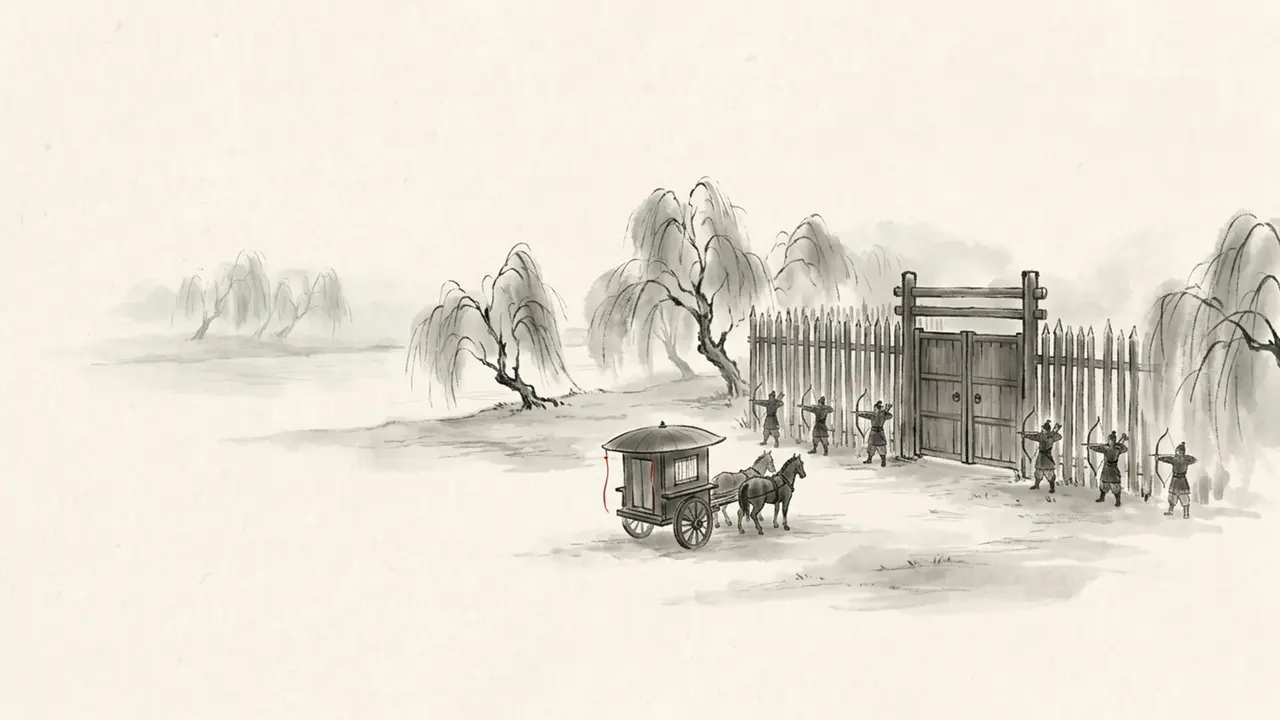
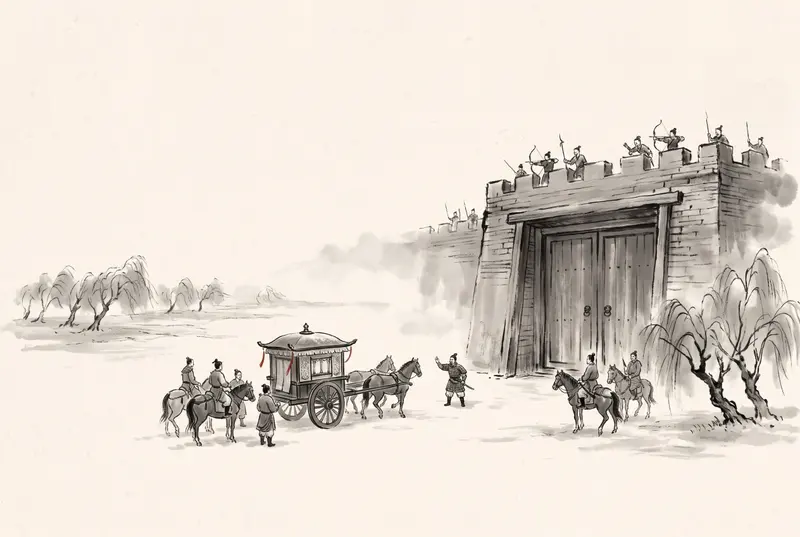
文帝之後六年,匈奴大入邊。乃以宗正劉禮為將軍,軍霸上;祝茲侯徐厲為將軍,軍棘門;以河內守亞夫為將軍,軍細柳:以備胡。上自勞軍。至霸上及棘門軍,直馳入,將以下騎送迎。已而之細柳軍,軍士吏被甲,銳兵刃,彀弓弩,持滿。天子先驅至,不得入。先驅曰:「天子且至!」軍門都尉曰:「將軍令曰『軍中聞將軍令,不聞天子之詔』。」居無何,上至,又不得入。於是上乃使使持節詔將軍:「吾欲入勞軍。」亞夫乃傳言開壁門。壁門士吏謂從屬車騎曰:「將軍約,軍中不得驅馳。」於是天子乃按轡徐行。至營,將軍亞夫持兵揖曰:「介胄之士不拜,請以軍禮見。」天子為動,改容式車。使人稱謝:「皇帝敬勞將軍。」成禮而去。既出軍門,群臣皆驚。文帝曰:「嗟乎,此真將軍矣!曩者霸上、棘門軍,若兒戲耳,其將固可襲而虜也。至於亞夫,可得而犯邪!」稱善者久之。月餘,三軍皆罷。乃拜亞夫為中尉。
Kundoku (Japanese reading)
文帝の後六年、匈奴大いに辺に入る。乃ち宗正劉礼を以て将軍と為し、霸上に軍せしめ、祝茲侯徐厲を将軍と為し、棘門に軍せしめ、河内の守亜夫を以て将軍と為し、細柳に軍せしめ、以て胡に備う。上自ら軍を労う。霸上及び棘門の軍に至れば、直ちに馳せて入り、将以下騎して送迎す。已にして細柳の軍に之く。軍の士吏甲を被り、兵刃を鋭くし、弓弩を彀して持満す。天子の先駆至るも、入るを得ず。先駆曰く、「天子且に至らんとす」と。軍門の都尉曰く、「将軍の令に曰く、『軍中は将軍の令を聞き、天子の詔を聞かず』と」と。居ること何も無くして、上至るも、又入るを得ず。是に於いて上乃ち使いをして節を持して将軍に詔せしむ、「吾入りて軍を労わんと欲す」と。亜夫乃ち言を伝えて壁門を開かしむ。壁門の士吏従属の車騎に謂いて曰く、「将軍約す、軍中駆馳するを得ずと」と。是に於いて天子乃ち轡を按じて徐行す。営に至る。将軍亜夫兵を持して揖して曰く、「介冑の士は拝せず。請う軍礼を以て見えん」と。天子為に動き、容を改めて車に式す。人をして称謝せしめて、「皇帝敬みて将軍を労う」と。礼を成して去る。既に軍門を出づるや、群臣皆驚く。文帝曰く、「嗟乎、此れ真の将軍なり。曩者の霸上・棘門の軍は、児戯の若きのみ。其の将固より襲いて虜とすべし。亜夫に至りては、得て犯すべけんや」と。善しと称する者之を久しうす。月余にして、三軍皆罷む。乃ち亜夫を拝して中尉と為す。
Japanese
文帝の後元六年、匈奴が大挙して国境に攻め入った。そこで宗正の劉礼を将軍として霸上に、祝茲侯の徐厲を将軍として棘門に、河内太守の亜夫を将軍として細柳に陣を張らせ、匈奴に備えた。帝はみずから軍を慰問した。霸上と棘門の陣では、帝の車はそのまま馬を走らせて中へ入り、将軍以下が馬に乗って送り迎えした。そのあと細柳の陣へ行った。兵士も将校も鎧を着て、刃を研ぎ澄まし、弓や弩を引きしぼって構えていた。天子の先払いが着いたが、中へ入れなかった。先払いが「天子がまもなくお着きになる」と言うと、軍門を守る都尉は言った。「将軍の命令で、『軍中では将軍の命令を聞き、天子の詔は聞かない』ことになっております」。まもなく帝が着いたが、やはり入れなかった。そこで帝は使者に割り符を持たせて将軍に詔を伝えさせた。「わしは中に入って軍を慰問したい」。亜夫はそこでようやく、陣の門を開けるよう命令を伝えさせた。門の兵士は帝のお供の車や騎兵に言った。「将軍の定めにより、陣中で馬を走らせてはなりません」。そこで天子は手綱を引きしめてゆっくり進んだ。本営に着くと、将軍亜夫は武器を手にしたまま両手を組んで礼をして言った。「鎧かぶとをつけた者はひざまずいて拝礼いたしません。軍の礼でお目にかかります」。天子は心を動かされ、顔つきを改め、車の横木に手をかけて敬意を表し、人をやって「皇帝はつつしんで将軍を慰労する」と伝えさせた。儀礼を終えて立ち去った。陣門を出ると、家臣たちはみな驚いていた。文帝は言った。「ああ、これこそ本当の将軍だ。さきほどの霸上と棘門の陣は、子どもの遊びのようなものだ。あの将軍たちなら、不意を突けばたやすく捕らえられよう。だが亜夫には、手出しなどできるものか」。帝は長いあいだ、亜夫をほめ続けた。ひと月あまりして三つの軍はみな引き上げ、亜夫は中尉に任じられた。
English
In the sixth year of Emperor Wen's later reign, the Xiongnu poured across the border in force. Liu Li, the Director of the Imperial Clan, was made a general and camped at Bashang; Xu Li, the Marquis of Zhuzi, was made a general and camped at Jimen; and Yafu, governor of Henei, was made a general and camped at Xiliu, all to guard against the nomads. The emperor went in person to encourage the troops. At Bashang and Jimen his carriage galloped straight into the camps, and the generals and their officers rode out to welcome him and see him off. Then he went to the camp at Xiliu. There the officers and men wore armour, their blades were sharp and their bows and crossbows were drawn and ready. The emperor's outriders arrived and could not get in. "The Son of Heaven is coming!" they said. The commandant at the camp gate answered: "The general's orders are: 'In the army we obey the general's commands, not the emperor's edicts.'" Before long the emperor arrived, and he too could not get in. So he sent an envoy bearing a tally with an edict to the general: "I wish to come in and encourage the troops." Only then did Yafu pass the word to open the gate of the stockade. The officers at the gate said to the riders and carriages of the emperor's train: "By the general's rule, no one may gallop inside the camp." So the Son of Heaven held in his reins and went forward at a walk. When he reached the headquarters, General Yafu, weapon in hand, bowed with joined hands and said: "A soldier in armour does not kneel. Permit me to greet you with the courtesy of the army." The emperor was moved. His expression changed, he leaned forward on the rail of his carriage in respect, and he sent word: "The emperor respectfully thanks the general." When the ceremony was over he left. Outside the camp gate his ministers were all astonished. Emperor Wen said: "Ah, that is a true general! The camps at Bashang and Jimen were child's play; their generals could easily have been surprised and taken prisoner. But Yafu, who could ever take him off guard?" For a long time he praised him. A month or so later the three armies were disbanded, and Yafu was made Commandant of the Capital.
Notes (JA)
- 細柳: 長安の西北、渭水のほとりの地。「細柳営」は規律の厳しい軍の代名詞となった。
- 彀弓弩,持滿: 弓や弩を引きしぼって構える。
- 軍中聞將軍令,不聞天子之詔: 陣中では将軍の命令だけに従う、という軍規。
- 介冑之士不拜: 鎧かぶとの者はひざまずかない、という軍の礼。
- 式車: 車の前の横木(軾)に手をかけて身をかがめ、敬意を表す。
- 兒戲: 子どもの遊び。いいかげんなことのたとえ。
Notes (EN)
- Xiliu (細柳): west of Chang'an by the Wei River; "the camp at Xiliu" became a byword for a well-disciplined army.
- "A soldier in armour does not kneel" (介冑之士不拜): the courtesy of the army, a standing bow instead of kneeling.
- Leaned forward on the rail (式車): bowing over the front rail of the carriage, a sign of respect.
- Child's play (兒戲): from this passage, a common phrase for anything done carelessly.
Idioms from this passage: Child's play 児戯
Word notes
- outrider/ˈaʊtˌraɪdər/noun
a rider who goes ahead of an important person's carriage
In the text: “The emperor's outriders arrived”
Similar words: escort — a guard who travels with someone · herald — one who announces an arrival
- stockade/stɑˈkeɪd/noun
a wall of strong wooden posts around a camp
In the text: “the gate of the stockade”
Similar words: palisade — a fence of stakes · fort — a defended place
Passage 6
Original
孝文且崩時,誡太子曰:「即有緩急,周亞夫真可任將兵。」文帝崩,拜亞夫為車騎將軍。孝景三年,吳楚反。亞夫以中尉為太尉,東擊吳楚。因自請上曰:「楚兵剽輕,難與爭鋒。願以梁委之,絕其糧道,乃可制。」上許之。
Kundoku (Japanese reading)
孝文且に崩ぜんとする時、太子を誡めて曰く、「即し緩急有らば、周亜夫真に兵を将いるに任ずべし」と。文帝崩ず。亜夫を拝して車騎将軍と為す。 孝景の三年、呉・楚反す。亜夫中尉を以て太尉と為り、東のかた呉・楚を撃つ。因りて自ら上に請いて曰く、「楚兵は剽軽にして、与に鋒を争い難し。願わくは梁を以て之に委ね、其の糧道を絶たば、乃ち制すべし」と。上之を許す。
Japanese
文帝は亡くなる間際、太子をいましめて言った。「もし万一のことがあれば、周亜夫こそ兵を任せられる男だ」。文帝が亡くなると、亜夫は車騎将軍に任じられた。 景帝の三年、呉と楚が反乱を起こした(呉楚七国の乱)。亜夫は中尉から太尉となり、東へ向かって呉・楚を討った。出陣にあたり、亜夫は自ら帝に願い出た。「楚の兵はすばしこく勇猛で、正面から戦うのは難しいでしょう。どうか梁の国を敵の前にさらしておき、そのあいだに敵の兵糧の道を断たせてください。そうすれば押さえこめます」。帝はこれを許した。
English
When Emperor Wen was dying, he warned the crown prince: "If ever there is an emergency, Zhou Yafu is the man to trust with the army." After Emperor Wen died, Yafu was made General of Chariots and Cavalry. In the third year of Emperor Jing, Wu and Chu rebelled. Yafu, then Commandant of the Capital, was made Grand Commandant and went east to fight them. Before he left he asked the emperor: "The soldiers of Chu are swift and fierce; it will be hard to meet them head on. Let me leave Liang to face them while I cut their supply lines. Then they can be brought under control." The emperor agreed.
Notes (JA)
- 緩急: 差し迫った事態。万一のとき。
- 吳楚反: 前154年、呉王劉濞ら七つの国の王が起こした反乱(呉楚七国の乱)。晁錯の削藩策が引き金となった(巻101)。
- 剽輕: すばやく荒々しい。
- 以梁委之: 梁王(景帝の弟)の国を敵の攻撃にまかせる。亜夫は梁の救援要請を最後まで退け、のちに梁王の恨みを買う。
Notes (EN)
- Wu and Chu rebelled: the Rebellion of the Seven States in 154 BCE, set off by Chao Cuo's plan to cut down the kingdoms (see vol. 101).
- Leave Liang to face them (以梁委之): Yafu refused Liang's calls for help to the end, and the King of Liang, the emperor's brother, never forgave him.
Word notes
- emergency/ɪˈmɜrdʒənsi/noun
a sudden, dangerous situation that needs quick action
In the text: “If ever there is an emergency”
Similar words: crisis — a time of great danger · peril — serious danger
- supply line/səˈplaɪ laɪn/noun
the route by which an army gets food and weapons
In the text: “cut their supply lines”
Similar words: line of supply — the same idea · lifeline — a vital route
Passage 7
Original
歸,復置太尉官。五歲,遷為丞相,景帝甚重之。景帝廢栗太子,丞相固爭之,不得。景帝由此疏之。而梁孝王每朝,常與太后言條侯之短。竇太后曰:「皇后兄王信可侯也。」景帝讓曰:「始南皮、章武侯先帝不侯,及臣即位乃侯之。信未得封也。」竇太后曰:「人主各以時行耳。自竇長君在時,竟不得侯,死後乃[封]其子彭祖顧得侯。吾甚恨之。帝趣侯信也!」景帝曰:「請得與丞相議之。」丞相議之,亞夫曰:「高皇帝約『非劉氏不得王,非有功不得侯。不如約,天下共擊之』。今信雖皇后兄,無功,侯之,非約也。」景帝默然而止。
Kundoku (Japanese reading)
帰りて、復た太尉の官を置く。五歳にして、遷りて丞相と為る。景帝甚だ之を重んず。景帝栗太子を廃す。丞相固く之を争うも、得ず。景帝此れ由り之を疏んず。而して梁の孝王朝する毎に、常に太后と条侯の短を言う。 竇太后曰く、「皇后の兄王信侯とすべきなり」と。景帝譲りて曰く、「始め南皮・章武侯は先帝侯とせず。臣の即位するに及びて乃ち之を侯とす。信は未だ封を得べからざるなり」と。竇太后曰く、「人主は各々時を以て行うのみ。竇長君の在りし時より、竟に侯たるを得ず。死して後乃ち其の子彭祖を封じて顧って侯たるを得しむ。吾甚だ之を恨む。帝趣かに信を侯とせよ」と。景帝曰く、「請う丞相と之を議するを得ん」と。丞相之を議す。亜夫曰く、「高皇帝約す、『劉氏に非ずんば王たるを得ず、功有るに非ずんば侯たるを得ず。約の如くせずんば、天下共に之を撃て』と。今信は皇后の兄なりと雖も、功無し。之を侯とするは、約に非ざるなり」と。景帝黙然として止む。
Japanese
乱を平定して帰ると、再び太尉の官が置かれた。五年後、亜夫は丞相となり、景帝は彼をたいそう重んじた。ところが景帝が栗太子を廃したとき、丞相は強く反対したが、聞き入れられなかった。景帝はこのことから亜夫を遠ざけるようになった。また梁の孝王は朝廷に来るたびに、母の竇太后に条侯の悪口を言った。 竇太后が言った。「皇后の兄の王信を侯にしてやりなさい」。景帝は辞退して言った。「はじめ、南皮侯と章武侯(太后の甥と弟)を、先帝は侯になさいませんでした。私が即位してから侯にしたのです。王信はまだ封じるわけにはいきません」。竇太后は言った。「君主はそれぞれ、その時その時で決めればよいのです。私の兄の竇長君は、生きているあいだとうとう侯になれず、死んでからその子の彭祖がかえって侯になった。私はそれがとても残念なのです。帝よ、早く王信を侯にしなさい」。景帝は「丞相と相談させてください」と言った。丞相が話し合いに加わると、亜夫は言った。「高皇帝は『劉氏でなければ王になれず、手柄がなければ侯になれない。この約束を守らない者は、天下こぞって討て』と誓われました。王信は皇后の兄とはいえ、手柄がありません。侯にすれば約束にそむきます」。景帝は黙りこみ、話は立ち消えになった。
English
When he came back, the office of Grand Commandant was set up again for him. Five years later he was made chancellor, and Emperor Jing valued him highly. But when Emperor Jing set aside the crown prince Li, the chancellor argued hard against it and failed, and from then on the emperor kept him at a distance. And whenever King Xiao of Liang came to court, he spoke to the empress dowager about the faults of the Marquis of Tiao. The Empress Dowager Dou said: "The empress's brother, Wang Xin, ought to be made a marquis." Emperor Jing declined: "My father did not make marquises of the Marquises of Nanpi and Zhangwu; it was only after I took the throne that I did. Xin cannot be enfeoffed yet." The empress dowager said: "Each ruler acts as his own times require. My brother, Dou the Elder, never became a marquis in his lifetime; only after he died was his son Pengzu made one instead. That grieves me deeply. Make Xin a marquis at once." Emperor Jing said: "Let me discuss it with the chancellor." When the chancellor was consulted, Yafu said: "Gaozu made a pact: 'None but the Liu may be kings, and none without merit may be marquises. If anyone breaks this pact, let the whole realm attack him.' Xin may be the empress's brother, but he has no merit. To make him a marquis would break the pact." Emperor Jing said nothing, and the matter was dropped.
Notes (JA)
- 栗太子: 景帝の長子劉栄。母の栗姫が景帝にうとまれ、太子を廃された。のちの武帝が代わって太子となる。
- 梁孝王: 景帝の弟で、竇太后に愛された。呉楚の乱で救援を拒んだ亜夫を恨んでいた。
- 南皮・章武侯: 竇太后の甥竇彭祖と弟竇広国。
- 高皇帝約: 巻9で王陵が持ち出した「白馬の盟」と同じ約束。亜夫は太后の願いに対しても約束を盾に退けた。
Notes (EN)
- Crown prince Li (栗太子): Liu Rong, Emperor Jing's eldest son; when his mother lost favour he was set aside, and the future Emperor Wu took his place.
- King Xiao of Liang (梁孝王): the emperor's brother and the empress dowager's favourite son, who never forgave Yafu for leaving him to the rebels.
- Gaozu's pact: the same oath Wang Ling invoked against Empress Lü (vol. 9); Yafu held to it even against the empress dowager's wish.
Word notes
- merit/ˈmɛrɪt/noun
good service or achievement that deserves reward
In the text: “none without merit may be marquises”
Similar words: achievement — something done well · service — work done for others
- decline/dɪˈklaɪn/verb
to say no politely
In the text: “Emperor Jing declined”
Similar words: refuse — say no · turn down — not accept
Passage 8
Original
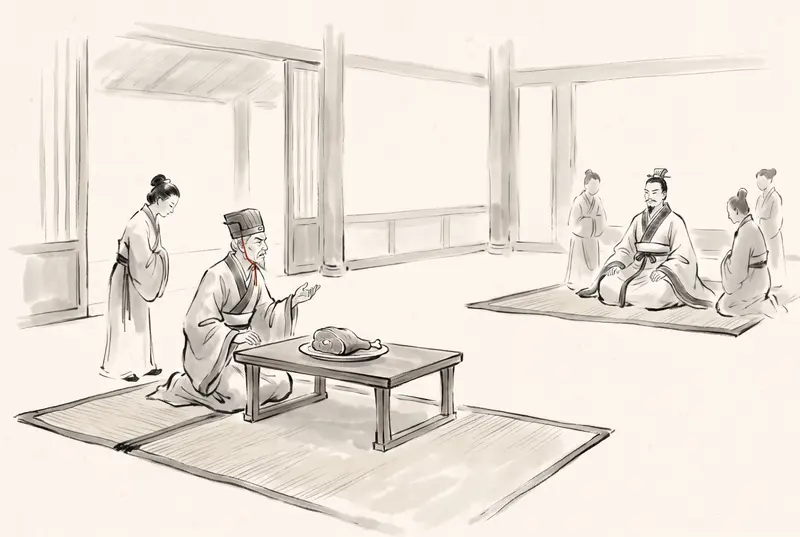
頃之,景帝居禁中,召條侯,賜食。獨置大胾,無切肉,又不置櫡。條侯心不平,顧謂尚席取櫡。景帝視而笑曰:「此不足君所乎?」條侯免冠謝。上起,條侯因趨出。景帝以目送之,曰:「此怏怏者非少主臣也!」
Kundoku (Japanese reading)
之を頃くして、景帝禁中に居り、条侯を召して、食を賜う。独り大胾を置き、切肉無く、又櫡を置かず。条侯心平らかならず。顧みて尚席に謂いて櫡を取らしむ。景帝視て笑いて曰く、「此れ君の所に足らざるか」と。条侯冠を免ぎて謝す。上起つ。条侯因りて趨りて出づ。景帝目を以て之を送りて曰く、「此の怏怏たる者は少主の臣に非ざるなり」と。
Japanese
しばらくして、景帝は宮中に条侯を呼び、食事をふるまった。大きな肉のかたまりだけを置き、切った肉もなく、箸も置かなかった。条侯は不満に思い、振り返って食卓係に箸を持ってこさせようとした。景帝はそれを見て笑った。「これでは足りないとでもいうのか」。条侯は冠を脱いでわびた。帝が席を立つと、条侯はそのまま小走りに退出した。景帝はそのうしろ姿を目で追って言った。「あのように不満をかかえた男は、幼い君主の臣下にはなれまい」。
English
Some time later Emperor Jing, in the inner palace, summoned the Marquis of Tiao and gave him a meal. He set before him only a large lump of meat, not cut up, and no chopsticks. The marquis was annoyed and turned to the attendant in charge of the table to ask for chopsticks. Emperor Jing watched and laughed: "Is this not enough for you?" The marquis took off his cap and apologised. The emperor rose, and the marquis hurried out. Emperor Jing followed him with his eyes and said: "A man so full of resentment will never serve a young ruler."
Notes (JA)
- 胾: 大きく切った肉のかたまり。
- 櫡: 箸。
- 尚席: 宮中で食卓を整える係。
- 怏怏: 不満で心が晴れないさま。
- 非少主臣也: 景帝は自分の死後、幼い太子(武帝)を亜夫が支えられるかを試した。亜夫は試されていることに気づかなかった。
Notes (EN)
- No chopsticks: Emperor Jing was testing whether Yafu would bow to humiliation.
- Full of resentment (怏怏): sullen and dissatisfied.
- "Will never serve a young ruler" (非少主臣也): the emperor was thinking of his young heir, the future Emperor Wu, and judged that Yafu could not be trusted to serve him.
Word notes
- resentment/rɪˈzɛntmənt/noun
a bitter feeling of being treated unfairly
In the text: “A man so full of resentment”
Similar words: bitterness — angry disappointment · grudge — a lasting ill feeling
- apologise/əˈpɑləˌdʒaɪz/verb
to say you are sorry
In the text: “took off his cap and apologised”
Similar words: beg pardon — ask forgiveness · make amends — try to put right
British spelling; US: apologize.
Passage 9
Original
居無何,條侯子為父買工官尚方甲楯五百被可以葬者。取庸苦之,不予錢。庸知其盜買縣官器,怒而上變告子,事連汙條侯。書既聞上,上下吏。吏簿責條侯,條侯不對。景帝罵之曰:「吾不用也。」召詣廷尉。廷尉責曰:「君侯欲反邪?」亞夫曰:「臣所買器,乃葬器也,何謂反邪?」吏曰:「君侯縱不反地上,即欲反地下耳。」吏侵之益急。初,吏捕條侯,條侯欲自殺,夫人止之,以故不得死,遂入廷尉。因不食五日,嘔血而死。國除。條侯果餓死。死後,景帝乃封王信為蓋侯。
Kundoku (Japanese reading)
居ること何も無くして、条侯の子父の為に工官尚方の甲楯五百被の以て葬るべき者を買う。庸を取りて之を苦しめ、銭を予えず。庸其の県官の器を盗み買えるを知り、怒りて上変して子を告ぐ。事連なりて条侯を汙す。書既に上に聞こゆ。上吏に下す。吏簿もて条侯を責む。条侯対えず。景帝之を罵りて曰く、「吾用いざるなり」と。召して廷尉に詣らしむ。廷尉責めて曰く、「君侯反せんと欲するか」と。亜夫曰く、「臣の買う所の器は、乃ち葬器なり。何をか反と謂うや」と。吏曰く、「君侯縦い地上に反せずとも、即ち地下に反せんと欲するのみ」と。吏之を侵すこと益々急なり。初め、吏条侯を捕うるとき、条侯自殺せんと欲す。夫人之を止む。故を以て死するを得ず、遂に廷尉に入る。因りて食わざること五日、血を嘔きて死す。国除かる。 条侯果たして餓死す。死して後、景帝乃ち王信を封じて蓋侯と為す。
Japanese
まもなく、条侯の子が父の葬儀のために、宮中の工房で作られた鎧と盾五百組を、副葬品として買い求めた。運ばせるために人夫を雇ってこき使い、賃金を払わなかった。人夫は、それが役所の武器をこっそり買ったものだと知っていたので、怒って子の謀反を訴え出た。事件は条侯にまで及んだ。訴えが帝の耳に入ると、帝は役人に調べさせた。役人が記録を突きつけて問いただしても、条侯は答えなかった。景帝は「あの男はもう用いぬ」とののしり、廷尉のもとへ送った。廷尉は責めた。「君侯は謀反を起こすつもりだったのか」。亜夫は言った。「私が買った品は、葬式の品です。何が謀反だというのか」。役人は言った。「君侯は地上で謀反しなくても、あの世で謀反を起こすおつもりなのでしょう」。役人の責めはますます厳しくなった。はじめ役人が条侯を捕らえに来たとき、条侯は自殺しようとしたが、夫人に止められて死ねず、廷尉の獄に入った。そこで五日間何も食べず、血を吐いて死んだ。領地は取り上げられた。 条侯は、はたして飢え死にしたのである。その死後、景帝は王信を蓋侯に封じた。
English
Not long after, the Marquis of Tiao's son bought, for his father's funeral, five hundred suits of armour and shields made in the palace workshops, to be buried with him. He hired labourers and worked them hard, but did not pay them. The labourers knew that he had secretly bought government weapons, and in anger they accused the son of treason. The affair spread and stained the Marquis of Tiao. When the charge reached the emperor, he handed it to the clerks. They questioned the marquis from their records, and he would not answer. Emperor Jing cursed him: "I will have no more use for him," and had him sent to the Commandant of Justice. The commandant demanded: "Did you mean to rebel, my lord?" Yafu said: "What I bought were things for a burial. How is that rebellion?" The clerk said: "Even if you would not rebel above the ground, my lord, you meant to rebel below it." They pressed him harder and harder. When the clerks first came to arrest him, the marquis had tried to kill himself, but his wife stopped him; so he could not die, and went into the prison. There he ate nothing for five days, coughed up blood and died. His fief was abolished. So the Marquis of Tiao did starve to death. After he died, Emperor Jing made Wang Xin Marquis of Gai.
Notes (JA)
- 工官尚方: 宮中の器物を作る工房。そこで作られた武具を私人が持つことは禁じられていた。
- 上變: 謀反などの非常事態を朝廷に訴え出る。
- 欲反地下耳: 「あの世で謀反するつもりか」。罪を作り上げるための、こじつけの言葉。
- 條侯果餓死: 許負の予言どおりになった。
- 王信は、亜夫が退けた皇后の兄。亜夫が死ぬと、すぐに侯となった。
Notes (EN)
- Palace workshops (工官尚方): weapons made there were reserved for the state, and private ownership was a crime.
- "You meant to rebel below the ground" (欲反地下耳): a twisted charge invented to condemn him.
- Did starve to death (果餓死): Xu Fu's prophecy is fulfilled.
- Wang Xin, whom Yafu had blocked, was made a marquis as soon as Yafu was dead.
Word notes
- labourer/ˈleɪbərər/noun
a person paid to do hard physical work
In the text: “He hired labourers”
Similar words: worker — a person who works · hand — a hired helper
British spelling; US: laborer.
- abolish/əˈbɑlɪʃ/verb
to end something officially
In the text: “His fief was abolished.”
Similar words: end — bring to a stop · do away with — get rid of
Passage 10
Original
太史公曰:絳侯周勃始為布衣時,鄙樸人也,才能不過凡庸。及從高祖定天下,在將相位,諸呂欲作亂,勃匡國家難,復之乎正。雖伊尹、周公,何以加哉!亞夫之用兵,持威重,執堅刃,穰苴曷有加焉!足己而不學,守節不遜,終以窮困。悲夫!
Kundoku (Japanese reading)
太史公曰く、絳侯周勃始め布衣たりし時は、鄙樸の人なり。才能凡庸に過ぎず。高祖に従いて天下を定め、将相の位に在るに及び、諸呂乱を作さんと欲するとき、勃国家の難を匡し、之を正に復す。伊尹・周公と雖も、何を以てか加えんや。亜夫の兵を用いる、威重を持し、堅刃を執る。穰苴も曷ぞ加うる有らんや。己に足りて学ばず、節を守りて遜らず、終に以て窮困す。悲しいかな。
Japanese
太史公は言う。絳侯周勃は、はじめ無位無官だったころは田舎びた素朴な人で、才能もごく平凡だった。だが高祖に従って天下を平定し、将軍・宰相の位につくと、呂氏が反乱を起こそうとしたとき、国家の危機を正して、もとの正しい姿に戻した。伊尹や周公でさえ、これ以上のことはできなかったろう。亜夫の用兵は、威厳と重みを保ち、守りが堅く鋭かった。名将の司馬穰苴でさえ、これにまさることはなかったろう。しかし自分に満足して学ぼうとせず、節を守ってへりくだることがなかったので、ついには行きづまった。悲しいことだ。
English
The Grand Historian says: When Zhou Bo, Marquis of Jiang, was still a commoner, he was a rough, simple man of no more than ordinary ability. But after he followed Gaozu in winning the realm and rose to general and chancellor, when the Lü were about to rise in revolt, he set right the crisis of the state and brought it back to the true path. Even Yi Yin or the Duke of Zhou could have done no more. Zhou Yafu, in war, kept his authority and his gravity and held to a hard, sharp edge; even Sima Rangju could not have surpassed him. But he was satisfied with himself and did not learn; he kept to his principles and would not bend; and in the end he was brought to ruin. How sad!
Notes (JA)
- 布衣: 庶民の着る麻の衣。無位無官の身。
- 伊尹・周公: 殷の湯王を助けた伊尹と、周の成王を助けた周公旦。幼い君主を支えた名臣の代表。
- 穰苴: 春秋時代の斉の名将、司馬穰苴。軍規の厳しさで知られる(巻64)。
- 足己而不學,守節不遜: 司馬遷は、亜夫の失敗を性格の固さに見ている。
Notes (EN)
- Yi Yin and the Duke of Zhou (伊尹・周公): the model ministers who upheld the founding of Shang and of Zhou.
- Sima Rangju (穰苴): a general of Qi famous for strict discipline (vol. 64).
- Satisfied with himself and would not bend: Sima Qian sees Yafu's downfall in his own rigidity.
Word notes
- commoner/ˈkɑmənər/noun
an ordinary person, not a noble or official
In the text: “was still a commoner”
Similar words: ordinary person — one without rank · plebeian — one of the common people
- ruin/ˈruɪn/noun
complete loss of position, wealth or life
In the text: “he was brought to ruin”
Similar words: downfall — a fall from power · destruction — being destroyed