Hereditary Houses · Vol. 49
The Hereditary Houses of the Imperial In-Laws 外戚世家
The Empress and Her Lost Brother 姊去我西時
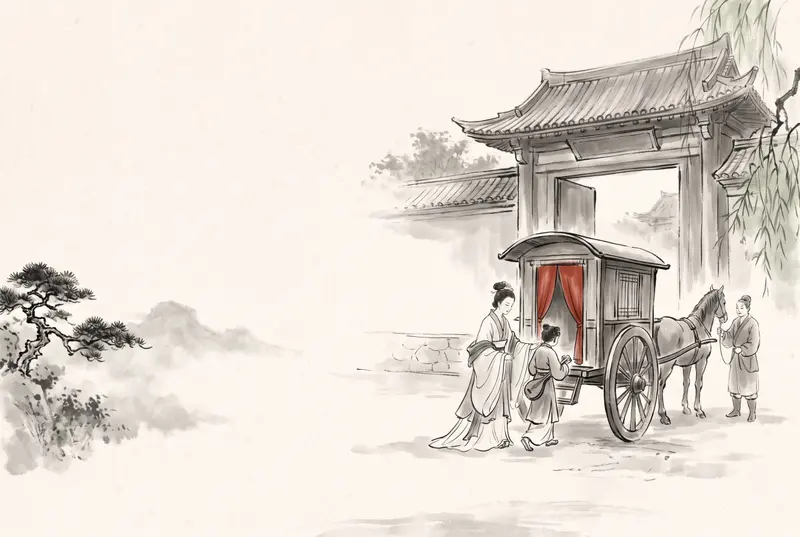
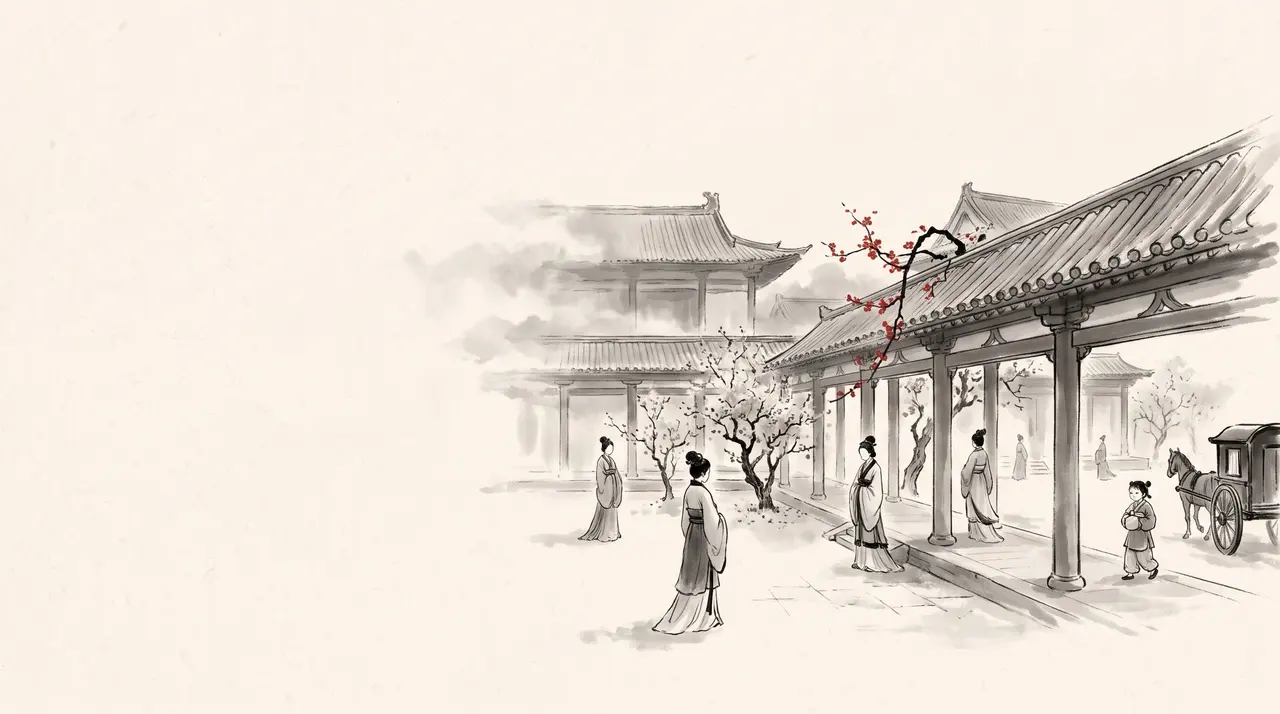
The story of the empresses and empresses dowager of the Han and their families, the imperial in-laws. Sima Qian says that the rise and fall of dynasties owes much to their queens, but that marriage and children are matters of fate beyond human power. Lady Bo, once in the harem of Wei Bao, was told by the physiognomist Xu Fu that she would bear a Son of Heaven. When Wei Bao fell, she entered Liu Bang's harem but was ignored, until he heard her friends laughing at an old promise, took pity on her and called her to him; the son she bore became Emperor Wen. Lady Dou asked to be sent to Zhao, near her home, but a eunuch's mistake sent her to Dai, where the king, the future Emperor Wen, loved her and made her empress. Her younger brother Dou Guangguo, sold by kidnappers as a small child, was the only survivor when a bank collapsed at a charcoal camp, and came forward when he heard his sister had become empress. "When my sister left, she washed my hair and fed me," he said, and the empress held him and wept. Empress Dowager Wang had been married before, until her mother took her back and sent her into the crown prince's palace. Lady Li, mother of Emperor Jing's heir, was so jealous that she lost the emperor's favour, and Lady Wang's son, the future Emperor Wu, became heir. Wei Zifu, a singing girl, caught Emperor Wu's eye and became empress.
This page has the scene "The Empress and Her Lost Brother" from this volume, not the whole volume.
Audio
The audio is synthetic speech.
Video
Passage 1
Original
自古受命帝王及繼體守文之君,非獨內德茂也,蓋亦有外戚之助焉。夏之興也以涂山,而桀之放也以末喜。殷之興也以有娀,紂之殺也嬖妲己。周之興也以姜原及大任,而幽王之禽也淫於褒姒。故易基乾坤,詩始關雎,書美釐降,春秋譏不親迎。夫婦之際,人道之大倫也。禮之用,唯婚姻為兢兢。夫樂調而四時和,陰陽之變,萬物之統也。可不慎與?人能弘道,無如命何。甚哉,妃匹之愛,君不能得之於臣,父不能得之於子,況卑下乎!既驩合矣,或不能成子姓;能成子姓矣,或不能要其終:豈非命也哉?孔子罕稱命,蓋難言之也。非通幽明之變,惡能識乎性命哉?
Kundoku (Japanese reading)
古より命を受けし帝王及び体を継ぎて文を守る君は、独り内徳の茂んなるのみに非ず、蓋し亦た外戚の助け有り。夏の興るや塗山を以てし、而して桀の放たるるや末喜を以てす。殷の興るや有娀を以てし、紂の殺さるるや妲己を嬖すればなり。周の興るや姜原及び大任を以てし、而して幽王の禽にせらるるや褒姒に淫すればなり。故に易は乾坤に基づき、詩は関雎に始まり、書は釐降を美め、春秋は親迎せざるを譏る。夫婦の際は、人道の大倫なり。礼の用、唯だ婚姻を兢兢と為す。夫れ楽調いて四時和す。陰陽の変は、万物の統なり。慎まざるべけんや。人能く道を弘むるも、命を如何ともする無し。甚だしいかな、妃匹の愛、君も之を臣に得る能わず、父も之を子に得る能わず。況や卑下をや。既に驩合するも、或いは子姓を成す能わず。能く子姓を成すも、或いは其の終わりを要むる能わず。豈に命に非ずや。孔子命を称すること罕なるは、蓋し之を言い難ければなり。幽明の変に通ずるに非ずんば、悪んぞ能く性命を識らんや。
Japanese
昔から、天命を受けて王朝を開いた帝王も、位を継いで先代の法を守った君主も、ただ自分の徳が盛んだっただけではなく、外戚(后妃の一族)の助けもあった。夏が興ったのは塗山氏の娘のおかげであり、桀が追放されたのは末喜のせいだった。殷が興ったのは有娀氏の娘のおかげであり、紂が殺されたのは妲己を寵愛したからだった。周が興ったのは姜原と大任のおかげであり、幽王が捕らえられたのは褒姒におぼれたからだった。だから『易』は乾(天・男)と坤(地・女)を基とし、『詩』は夫婦をうたう「関雎」から始まり、『書』は堯が娘を舜に嫁がせたことをたたえ、『春秋』は自ら花嫁を迎えに行かなかった君主をそしる。夫婦の関係は、人の道のいちばん大切な筋目である。礼の中でも、婚礼は最もつつしまねばならない。音楽が調えば四季がなごむように、陰と陽の移り変わりは万物のもとである。慎まないでいられようか。人は道を広めることはできても、命(天の定め)はどうすることもできない。男女の愛というものは、まことに不思議なものだ。君主も臣下に命じて得ることはできず、父も子に命じて得させることはできない。まして身分の低い者ならなおさらだ。うまく結ばれても子に恵まれないことがあり、子に恵まれても最後まで添いとげられないことがある。これこそ命ではないか。孔子があまり命について語らなかったのは、言いにくいことだったからだろう。目に見えない世界と見える世界の移り変わりに通じた人でなければ、どうして人の性と命を知ることができようか。
English
Since ancient times, the emperors and kings who received Heaven's mandate, and the rulers who inherited the throne and kept the laws of their forebears, did not rely only on their own virtue; they also had the help of their in-laws. The Xia rose through the woman of Tushan, and Jie was driven out because of Moxi. The Shang rose through the woman of Yousong, and Zhou was killed because he doted on Daji. The Zhou rose through Jiang Yuan and Tai Ren, and King You was captured because he was besotted with Bao Si. That is why the Changes are founded on Qian and Kun, the Odes begin with "The Ospreys Cry", the Documents praise Yao for giving his daughters in marriage, and the Spring and Autumn Annals blame a ruler who did not go himself to fetch his bride. The bond between husband and wife is the greatest of human relations. Of all the uses of ritual, marriage is the one that calls for the greatest care. When music is in tune, the four seasons are in harmony; the changes of yin and yang are what hold all things together. Can one fail to take care? Men can spread the Way, but they can do nothing about fate. How powerful is the love between man and woman! A ruler cannot get it from his subjects by command, nor a father from his son, let alone those below them. Some couples come together happily yet have no children; some have children yet cannot keep their love to the end. Is that not fate? Confucius seldom spoke of fate, no doubt because it is hard to put into words. Who but one who understands the changes of the hidden and the visible can know nature and fate?
Notes (JA)
- 外戚: 后妃の一族。漢では呂氏・薄氏・竇氏・王氏・衛氏などが大きな力をもった(107-dou-ying の章)。
- 末喜・妲己・褒姒: 夏・殷・周の最後の王を滅ぼしたとされる后妃(002-xia・003-yin・004-zhou の章)。
- 關雎: 『詩経』の最初の詩。君子と淑女の結びつきをうたう。
- 命: 天の定め。司馬遷は、后妃の運命が人の力を超えたものだと繰り返し述べる。
Notes (EN)
- The imperial in-laws (外戚): the families of empresses, among them the Lü, Bo, Dou, Wang and Wei (chapter 107).
- Moxi, Daji and Bao Si: queens blamed for the fall of the last kings of Xia, Shang and Zhou (chapters 002–004).
- "The Ospreys Cry" (關雎): the first poem of the Odes, on the union of a gentleman and a lady.
- Fate (命): a theme Sima Qian returns to throughout this chapter.
Word notes
- in-law/ˈɪn ˌlɔ/noun
a relative by marriage
In the text: “the help of their in-laws”
Similar words: relative by marriage — family through a spouse · kin — family
- besotted/bɪˈsɑtɪd/adjective
loving someone so much that you act foolishly
In the text: “he was besotted with Bao Si”
Similar words: infatuated — blindly in love · smitten — strongly attracted
Passage 2
Original
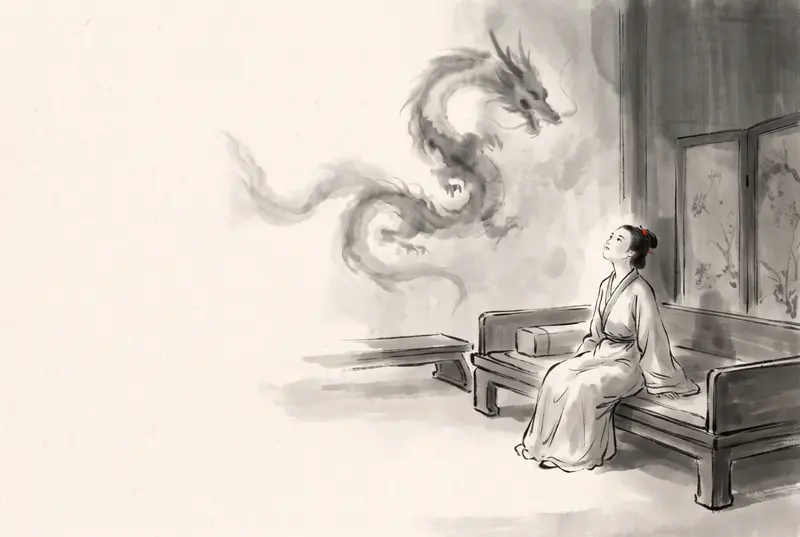
及諸侯畔秦,魏豹立為魏王,而魏媼內其女於魏宮。媼之許負所相,相薄姬,云當生天子。是時項羽方與漢王相距滎陽,天下未有所定。豹初與漢擊楚,及聞許負言,心獨喜,因背漢而畔,中立,更與楚連和。漢使曹參等擊虜魏王豹,以其國為郡,而薄姬輸織室。豹已死,漢王入織室,見薄姬有色,詔內後宮,歲餘不得幸。始姬少時,與管夫人、趙子兒相愛,約曰:「先貴無相忘。」已而管夫人、趙子兒先幸漢王。漢王坐河南宮成皋臺,此兩美人相與笑薄姬初時約。漢王聞之,問其故,兩人具以實告漢王。漢王心慘然,憐薄姬,是日召而幸之。薄姬曰:「昨暮夜妾夢蒼龍據吾腹。」高帝曰:「此貴徵也,吾為女遂成之。」一幸生男,是為代王。其後薄姬希見高祖。高祖崩,諸御幸姬戚夫人之屬,呂太后怒,皆幽之,不得出宮。而薄姬以希見故,得出,從子之代,為代王太后。太后弟薄昭從如代。
Kundoku (Japanese reading)
諸侯秦に畔くに及び、魏豹立ちて魏王と為る。而して魏媼其の女を魏の宮に内る。媼の許負に相せしむる所、薄姫を相して、当に天子を生むべしと云う。是の時項羽方に漢王と滎陽に相距ぎ、天下未だ定まる所有らず。豹初め漢と楚を撃つ。許負の言を聞くに及び、心に独り喜び、因りて漢に背きて畔き、中立し、更めて楚と連和す。漢曹参等をして魏王豹を撃ち虜にせしめ、其の国を以て郡と為し、而して薄姫を織室に輸す。豹已に死し、漢王織室に入り、薄姫の色有るを見、詔して後宮に内る。歳余にして幸せらるるを得ず。始め姫少き時、管夫人・趙子児と相愛し、約して曰く、「先に貴くならば相忘るること無かれ」と。已にして管夫人・趙子児先に漢王に幸せらる。漢王河南宮の成皋台に坐す。此の両美人相与に薄姫の初時の約を笑う。漢王之を聞き、其の故を問う。両人具に実を以て漢王に告ぐ。漢王心惨然として、薄姫を憐れみ、是の日召して之を幸す。薄姫曰く、「昨暮夜妾蒼竜吾が腹に拠るを夢む」と。高帝曰く、「此れ貴き徴なり。吾女の為に遂に之を成さん」と。一たび幸せられて男を生む。是れを代王と為す。其の後薄姫高祖に見ゆること希なり。高祖崩じ、諸々の御幸の姫戚夫人の属、呂太后怒りて、皆之を幽し、宮を出づるを得ず。而して薄姫は見ゆること希なるを以ての故に、出づるを得、子に従いて代に之き、代王太后と為る。太后の弟薄昭従いて代に如く。
Japanese
(薄姫の母の魏媼は、もとの魏の王族の娘だった。)諸侯が秦に背くと、魏豹が立って魏王となり、魏媼は娘を魏の後宮に入れた。魏媼が人相見の許負に薄姫を見させると、許負は「天子を生むでしょう」と言った。このとき項羽は漢王と滎陽で向かい合っていて、天下はまだ定まっていなかった。魏豹ははじめ漢とともに楚を攻めていたが、許負の言葉を聞くとひそかに喜び、漢に背いて中立し、改めて楚と手を結んだ。漢は曹参らに魏王豹を攻めさせて捕らえ、魏を郡とし、薄姫は機織りの作業場に送られた。魏豹が死んだのち、漢王が作業場に入ってきて、薄姫が美しいのを見て後宮に入れたが、一年あまり召されることがなかった。薄姫は若いころ、管夫人・趙子児と仲がよく、「先に出世した者は、ほかの二人を忘れないこと」と約束していた。やがて管夫人と趙子児が先に漢王に寵愛された。漢王が河南宮の成皋台に座っていたとき、この二人の美人は、薄姫との昔の約束のことを笑い合っていた。漢王がそれを聞いてわけをたずねると、二人は本当のことを話した。漢王は心を痛めて薄姫を哀れみ、その日のうちに召し寄せた。薄姫は言った。「ゆうべ、青い竜がわたしのおなかの上にいる夢を見ました」。高帝は言った。「それは貴い身分になるしるしだ。わしがそなたのためにかなえてやろう」。一度召されただけで男の子を生んだ。これが代王である。その後、薄姫が高祖に会うことはめったになかった。高祖が亡くなると、呂太后は高祖に寵愛された戚夫人らに怒って、皆宮中に閉じこめた。しかし薄姫は高祖に会うことがまれだったので、宮中を出ることを許され、子に従って代へ行き、代王の太后となった。弟の薄昭も代について行った。
English
When the lords rose against Qin, Wei Bao became King of Wei, and Wei Ao sent her daughter into his harem. Wei Ao had the physiognomist Xu Fu read Lady Bo's face, and Xu Fu said she would give birth to a Son of Heaven. At that time Xiang Yu and the king of Han were facing each other at Xingyang, and nothing in the realm was yet settled. Wei Bao had at first joined Han in attacking Chu. When he heard what Xu Fu had said, he was secretly delighted. He turned against Han, stood neutral, and made peace with Chu instead. Han sent Cao Can and others to attack Wei Bao and take him prisoner, made his kingdom a commandery, and sent Lady Bo to the weaving workshops. After Wei Bao was dead, the king of Han came into the workshops, saw that Lady Bo was beautiful, and ordered her taken into his harem. But for more than a year she was never called to him. When she was young, Lady Bo had been close friends with Lady Guan and Zhao Zi'er, and they had promised each other: "Whoever rises first must not forget the others." Then Lady Guan and Zhao Zi'er became the king's favourites first. Once, when the king of Han was sitting on the Chenggao terrace of the Henan palace, the two beauties were laughing together about the promise they had made to Lady Bo. The king heard them and asked why, and they told him the whole truth. The king was saddened, took pity on Lady Bo, and called her to him that very day. Lady Bo said: "Last night I dreamed that a green dragon lay upon my belly." Emperor Gao said: "That is a sign of high rank. I will make it come true for you." From that one night she bore a son, who became King of Dai. After that she seldom saw Gaozu. When Gaozu died, Empress Dowager Lü in her anger shut away all his favourites, Lady Qi and the rest, and none could leave the palace. But because Lady Bo had seldom seen him, she was allowed to leave, and went with her son to Dai as queen mother. Her brother Bo Zhao went with her to Dai.
Notes (JA)
- 許負: 漢のはじめの有名な女の人相見。周亜夫の餓死も予言した(057-zhou-bo の章)。
- 魏豹: 魏王。許負の言葉を聞いて漢に背いたとされる(090-peng-yue の章)。
- 織室: 宮中の機織りの作業場。罪人の家族の女が働かされた。
- 蒼龍: 青い竜。天子の子を宿すしるしとされた。
- 寵愛が薄かったことが、かえって呂后の迫害から薄姫と文帝を救った。
Notes (EN)
- Xu Fu (許負): the famous woman physiognomist of the early Han, who also foretold Zhou Yafu's starvation (chapter 057).
- Wei Bao (魏豹): said to have turned against Han because of her prophecy (chapter 090).
- The weaving workshops (織室): where women of condemned families were set to work.
- Being little favoured saved Lady Bo and her son from Empress Lü.
Word notes
- physiognomist/ˌfɪziˈɑɡnəmɪst/noun
a person who claims to tell character or fate from faces
In the text: “the physiognomist Xu Fu”
Similar words: face-reader — one who reads faces · fortune-teller — one who foretells
- neutral/ˈnutrəl/adjective
not supporting either side
In the text: “stood neutral”
Similar words: impartial — not taking sides · non-aligned — outside any alliance
Passage 3
Original
竇太后,趙之清河觀津人也。呂太后時,竇姬以良家子入宮侍太后。太后出宮人以賜諸王,各五人,竇姬與在行中。竇姬家在清河,欲如趙近家,請其主遣宦者吏:「必置我籍趙之伍中。」宦者忘之,誤置其籍代伍中。籍奏,詔可,當行。竇姬涕泣,怨其宦者,不欲往,相彊,乃肯行。至代,代王獨幸竇姬,生女嫖,後生兩男。而代王王后生四男。先代王未入立為帝而王后卒。及代王立為帝,而王后所生四男更病死。孝文帝立數月,公卿請立太子,而竇姬長男最長,立為太子。立竇姬為皇后,女嫖為長公主。其明年,立少子武為代王,已而又徙梁,是為梁孝王。
Kundoku (Japanese reading)
竇太后は、趙の清河観津の人なり。呂太后の時、竇姫良家の子を以て宮に入りて太后に侍す。太后宮人を出だして以て諸王に賜うこと、各々五人。竇姫行中に与る。竇姫の家清河に在り。趙の家に近きに如かんと欲し、其の主遣の宦者の吏に請う、「必ず我が籍を趙の伍中に置け」と。宦者之を忘れ、誤りて其の籍を代の伍中に置く。籍奏せられ、詔して可とし、当に行くべし。竇姫涕泣し、其の宦者を怨み、往くを欲せず。相彊いて、乃ち肯えて行く。代に至り、代王独り竇姫を幸し、女嫖を生み、後に両男を生む。而して代王の王后四男を生む。代王の未だ入りて立ちて帝と為らざるに先だちて王后卒す。代王立ちて帝と為るに及び、王后の生む所の四男更々病死す。孝文帝立ちて数月、公卿太子を立てんことを請う。而して竇姫の長男最も長ず。立てて太子と為す。竇姫を立てて皇后と為し、女嫖を長公主と為す。其の明年、少子武を立てて代王と為し、已にして又梁に徙す。是れを梁の孝王と為す。
Japanese
竇太后は趙の清河郡観津の人である。呂太后の時代、竇姫は良家の娘として宮中に入り、太后に仕えた。太后は宮中の女たちを諸王に五人ずつ下げ渡すことになり、竇姫もその中に入った。竇姫の家は清河にあったので、家に近い趙へ行きたいと思い、送り出しを担当する宦官に頼んだ。「必ずわたしの名を趙へ行く組に入れてください」。ところが宦官はそれを忘れて、まちがえて竇姫の名を代へ行く組に入れてしまった。名簿は上奏されて許可が下り、行かなければならなくなった。竇姫は泣いて宦官を恨み、行きたがらなかったが、むりに言われて、ようやく出発した。代に着くと、代王は竇姫だけを寵愛し、竇姫は娘の嫖を生み、その後二人の男の子を生んだ。代王の王后は四人の男の子を生んでいたが、代王が都に入って皇帝となる前に王后は亡くなり、代王が皇帝になると、王后の生んだ四人の男の子も次々と病死した。孝文帝が即位して数か月、大臣たちが太子を立てるよう願い出ると、竇姫の長男がいちばん年上だったので、太子に立てられた。竇姫は皇后となり、娘の嫖は長公主となった。その翌年、末の子の武を代王とし、のちに梁に移した。これが梁孝王である。
English
Empress Dowager Dou was a woman of Guanjin in Qinghe, in Zhao. In the time of Empress Dowager Lü, Lady Dou entered the palace as the daughter of a good family to wait on the empress dowager. The empress dowager sent palace women out to the kings, five to each, and Lady Dou was among them. Her home was in Qinghe, and wanting to go to Zhao, near her family, she begged the eunuch in charge of sending them: "Be sure to put my name in the group for Zhao." The eunuch forgot, and by mistake put her name in the group for Dai. The list was presented, the edict approved it, and she had to go. Lady Dou wept and blamed the eunuch, and did not want to go; only when they forced her did she agree. When she reached Dai, the King of Dai favoured her alone. She bore him a daughter, Piao, and later two sons. The king's queen had borne him four sons, but she died before he went to the capital to become emperor, and after he became emperor, her four sons fell ill and died one after another. A few months after Emperor Wen came to the throne, the ministers asked him to name an heir. Lady Dou's eldest son was now the oldest, so he was made crown prince. Lady Dou was made empress, and her daughter Piao the eldest princess. The next year her youngest son, Wu, was made King of Dai, and later moved to Liang; he was King Xiao of Liang.
Notes (JA)
- 良家子: 医者・商人・工人などではない、ふつうの家の娘。宮中に入る資格があった。
- 宦者忘之: 宦官のうっかりした手ちがいが、竇姫を皇后に、その子を景帝にした。司馬遷のいう「命」の例である。
- 長公主嫖: 館陶公主。のちに娘を武帝の皇后(陳皇后)にした(108-han-anguo の章)。
- 梁孝王: 母の竇太后に最も愛された子(107-dou-ying・108-han-anguo の章)。
Notes (EN)
- A good family (良家子): not physicians, merchants or craftsmen; such daughters could enter the palace.
- The eunuch's slip made Lady Dou an empress and her son an emperor: "fate" in Sima Qian's sense.
- Princess Piao: the Grand Princess of chapter 108, whose daughter became Emperor Wu's first empress.
- King Xiao of Liang: Empress Dowager Dou's best-loved son (chapters 107 and 108).
Word notes
- eunuch/ˈjunək/noun
a castrated man who served in a palace
In the text: “the eunuch in charge of sending them”
Similar words: palace servant — attendant in the palace · chamberlain — officer of a palace
- favour/ˈfeɪvər/verb
to like and treat one person better than others
In the text: “the King of Dai favoured her alone”
Similar words: prefer — like more · single out — choose one
British spelling: favour (US: favor).
Passage 4
Original
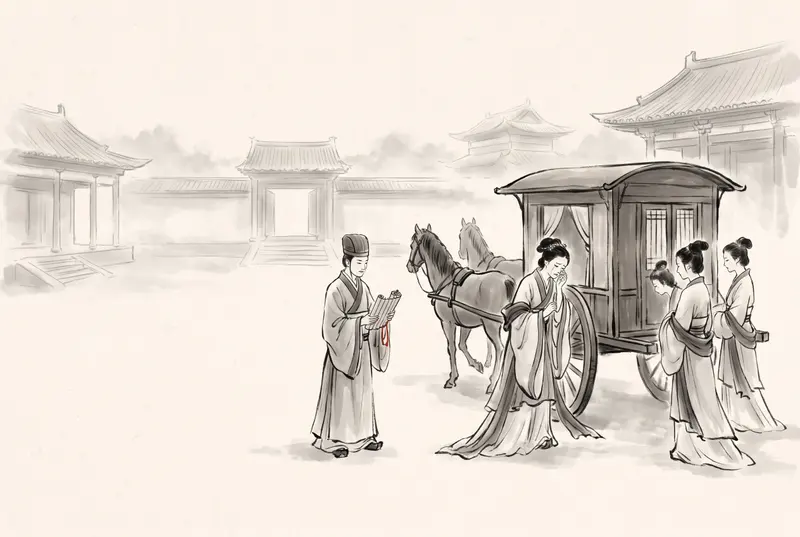
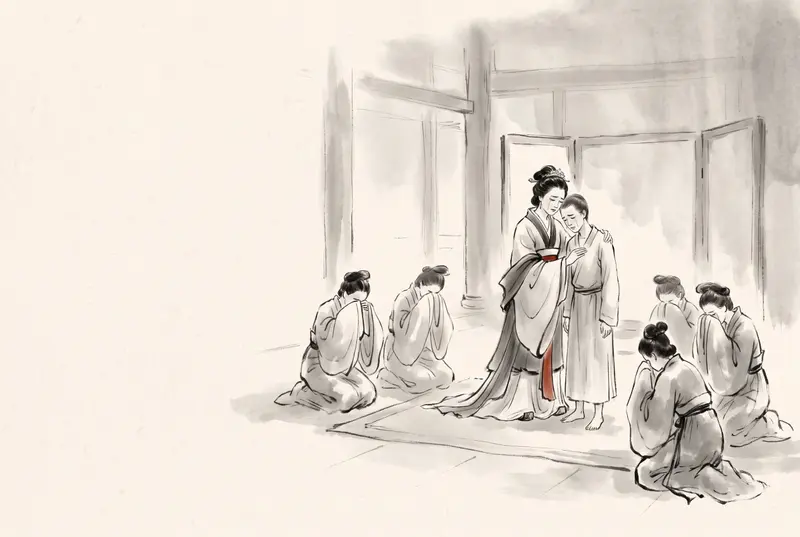
竇皇后兄竇長君,弟曰竇廣國,字少君。少君年四五歲時,家貧,為人所略賣,其家不知其處。傳十餘家,至宜陽,為其主入山作炭,(寒)[暮]臥岸下百餘人,岸崩,盡壓殺臥者,少君獨得脫,不死。自卜數日當為侯,從其家之長安。聞竇皇后新立,家在觀津,姓竇氏。廣國去時雖小,識其縣名及姓,又常與其姊採桑墮,用為符信,上書自陳。竇皇后言之於文帝,召見,問之,具言其故,果是。又復問他何以為驗?對曰:「姊去我西時,與我決於傳舍中,丐沐沐我,請食飯我,乃去。」於是竇后持之而泣,泣涕交橫下。侍御左右皆伏地泣,助皇后悲哀。乃厚賜田宅金錢,封公昆弟,家於長安。
Kundoku (Japanese reading)
竇皇后の兄は竇長君、弟は竇広国と曰い、字は少君。少君年四五歳の時、家貧しく、人の略売する所と為り、其の家其の処を知らず。伝わること十余家、宜陽に至り、其の主の為に山に入りて炭を作る。暮に岸下に臥す者百余人、岸崩れ、尽く臥す者を圧殺す。少君独り脱るるを得て、死せず。自ら卜するに数日にして当に侯と為るべし。其の家に従いて長安に之く。竇皇后新たに立ち、家観津に在りて、姓は竇氏なるを聞く。広国去る時小さしと雖も、其の県名及び姓を識り、又常て其の姊と桑を採りて墮つ。用て符信と為し、書を上りて自ら陳ぶ。竇皇后之を文帝に言い、召し見て、之を問う。具に其の故を言う。果たして是なり。又復た他に何を以てか験と為すと問う。対えて曰く、「姊我を去りて西する時、我と伝舎の中に決す。沐を丐いて我に沐し、食を請いて我に飯せしめ、乃ち去る」と。是に於いて竇后之を持して泣き、泣涕交々横に下る。侍御の左右皆地に伏して泣き、皇后を助けて悲哀す。乃ち厚く田宅金銭を賜い、公の昆弟を封じ、長安に家せしむ。
Japanese
竇皇后の兄は竇長君、弟は竇広国といい、字を少君といった。少君が四、五歳のとき、家が貧しかったので、人さらいにさらわれて売られ、家族はその行方が分からなくなった。少君は十あまりの家を転々と売られ、宜陽まで来て、主人のために山に入って炭を焼いていた。ある夕方、崖の下で百人あまりが寝ていたところ、崖が崩れて寝ていた者は皆押しつぶされて死んだが、少君だけは逃れて助かった。自分で占ってみると、数日のうちに侯になると出た。主人の家に従って長安へ行くと、竇皇后が新しく立ち、その家は観津にあって竇という姓だと聞いた。広国は家を離れたときは幼かったが、県の名と自分の姓を覚えていた。また、姉と桑の葉を摘んでいて木から落ちたことがあったので、それを証拠として上書し、名乗り出た。竇皇后が文帝に話すと、文帝は広国を呼んでたずねた。広国はくわしくいきさつを話し、果たしてそのとおりだった。ほかにも何か証拠があるかとたずねると、広国は答えた。「姉がわたしを残して西へ行くとき、宿場でわたしと別れました。お湯をもらってわたしの髪を洗い、ご飯をもらってわたしに食べさせてから、出かけていきました」。竇皇后は弟を抱いて泣き、涙がとめどなく流れた。そばに仕える者たちも皆ひれ伏して泣き、皇后とともに悲しんだ。そこで手厚く田畑や屋敷や金銭を与え、竇皇后の兄弟を領地につけ、長安に住まわせた。
English
Empress Dou's elder brother was Dou Zhangjun, and her younger brother was Dou Guangguo, whose courtesy name was Shaojun. When Shaojun was four or five years old, his family was poor, and he was kidnapped and sold; his family did not know where he had gone. He passed through more than ten households until he came to Yiyang, where he went into the mountains to make charcoal for his master. One evening more than a hundred men were sleeping under a bank when it collapsed and crushed them all; only Shaojun escaped alive. He divined for himself and found that within a few days he would become a marquis. He went with his master's household to Chang'an, and there he heard that a new empress had been named, whose family came from Guanjin and was named Dou. Though Guangguo had been small when he was taken, he remembered the name of his county and his surname, and also that he had once fallen from a tree while picking mulberry leaves with his sister. He used this as proof, and wrote to the throne to make himself known. Empress Dou told Emperor Wen, who called him in and questioned him. He told the whole story, and it was true. They asked him what other proof he had. He answered: "When my sister left me to go west, she said goodbye to me at the post station. She begged for water and washed my hair, begged for food and fed me, and then she went." At this Empress Dou held him and wept, her tears streaming down. All the attendants around her fell to the ground and wept with her in her grief. Then he was given rich gifts of land, houses and money; the empress's brothers were given fiefs and settled in Chang'an.
Notes (JA)
- 略賣: 人をさらって売ること。漢の時代には、貧しい家の子が奴隷として売り買いされることがあった。
- 作炭: 炭焼き。重労働だった。
- 丐沐沐我: お湯をもらって、わたしの髪を洗ってくれた。姉と弟のささやかな別れの記憶が、何よりの証拠となった。
- 竇広国はのちに章武侯となり、謙虚な人柄で知られた。
Notes (EN)
- Kidnapped and sold (略賣): children of poor families could be sold into servitude.
- She washed my hair: a small memory of parting that proved who he was.
- Dou Guangguo later became Marquis of Zhangwu and was known for his modesty.
Word notes
- kidnap/ˈkɪdˌnæp/verb
to take someone away by force
In the text: “he was kidnapped and sold”
Similar words: abduct — take away by force · snatch — grab and take
- attendant/əˈtɛndənt/noun
a person who serves someone important
In the text: “All the attendants around her”
Similar words: servant — one who serves · aide — helper
Passage 5
Original
王太后,槐裏人,母曰臧兒。臧兒者,故燕王臧荼孫也。臧兒嫁為槐裏王仲妻,生男曰信,與兩女。而仲死,臧兒更嫁長陵田氏,生男蚡、勝。臧兒長女嫁為金王孫婦,生一女矣,而臧兒卜筮之,曰兩女皆當貴。因欲奇兩女,乃奪金氏。金氏怒,不肯予決,乃內之太子宮。太子幸愛之,生三女一男。男方在身時,王美人夢日入其懷。以告太子,太子曰:「此貴徵也。」未生而孝文帝崩,孝景帝即位,王夫人生男。
Kundoku (Japanese reading)
王太后は、槐里の人なり。母は臧児と曰う。臧児は、故の燕王臧荼の孫なり。臧児嫁して槐里の王仲の妻と為り、男を生みて信と曰い、両女と与にす。而して仲死し、臧児更めて長陵の田氏に嫁し、男蚡・勝を生む。臧児の長女嫁して金王孫の婦と為り、一女を生めり。而して臧児之を卜筮するに、曰く両女皆当に貴かるべしと。因りて両女を奇とせんと欲し、乃ち金氏より奪う。金氏怒り、肯えて決を予えず。乃ち之を太子の宮に内る。太子幸して之を愛し、三女一男を生む。男方に身に在る時、王美人日其の懐に入るを夢む。以て太子に告ぐ。太子曰く、「此れ貴き徴なり」と。未だ生まれずして孝文帝崩じ、孝景帝即位し、王夫人男を生む。
Japanese
王太后は槐里の人で、母を臧児といった。臧児は、もとの燕王臧荼の孫である。臧児は槐里の王仲に嫁いで、男の子の信と二人の娘を生んだ。王仲が死ぬと、臧児は長陵の田氏に嫁ぎ直して、田蚡と田勝を生んだ。臧児の上の娘は金王孫に嫁いで、娘を一人生んでいた。ところが臧児が占わせると、二人の娘はどちらも貴い身分になると出た。そこで二人の娘に思いがけない幸運をつかませようと、上の娘を金氏から取り戻した。金氏は怒って離縁を承知しなかったが、臧児は娘を太子の宮に入れてしまった。太子(のちの景帝)は娘を寵愛し、娘は三人の女の子と一人の男の子を生んだ。男の子を身ごもっていたとき、王美人は太陽がふところに入る夢を見て、太子に話した。太子は言った。「それは貴い身分になるしるしだ」。男の子が生まれる前に孝文帝が亡くなり、孝景帝が即位してから、王夫人は男の子を生んだ。
English
Empress Dowager Wang was from Huaili. Her mother was called Zang'er, a granddaughter of Zang Tu, the former King of Yan. Zang'er married Wang Zhong of Huaili and bore him a son, Xin, and two daughters. When Wang Zhong died, Zang'er married again, into the Tian family of Changling, and bore two sons, Fen and Sheng. Zang'er's elder daughter had married Jin Wangsun and borne him a daughter. But when Zang'er had her fortune told, the reading said that both her daughters would rise to high rank. Hoping to make them extraordinary, she took her elder daughter back from the Jin family. The Jin family were angry and would not agree to a divorce, but she sent her daughter into the crown prince's palace all the same. The crown prince loved her, and she bore him three daughters and a son. When she was carrying the boy, Lady Wang dreamed that the sun entered her bosom. She told the crown prince, who said: "That is a sign of high rank." Before the child was born, Emperor Wen died and Emperor Jing came to the throne; then Lady Wang bore a son.
Notes (JA)
- 臧荼: 漢のはじめの燕王。劉邦に背いて滅ぼされた。
- 田蚡: 臧児が田氏に嫁いで生んだ子。王太后の父違いの弟で、のちに武帝の丞相(107-dou-ying の章)。
- 金王孫の娘: 武帝は即位後、民間にいた異父姉を自ら迎えに行った(褚少孫の補筆にある話で、ここでは省く)。
- 夢日入懷: 太陽がふところに入る夢。天子を生むしるしとされた。この子がのちの武帝である。
Notes (EN)
- Zang Tu (臧荼): the early Han King of Yan, destroyed after rebelling against Liu Bang.
- Tian Fen (田蚡): her half-brother, later Emperor Wu's chancellor (chapter 107).
- The Jin daughter: Emperor Wu later went himself to fetch this half-sister from among the common people (a story added by Chu Shaosun, left out here).
- The sun in her bosom: a sign that she would bear a Son of Heaven, the future Emperor Wu.
Word notes
- fortune/ˈfɔrtʃən/noun
what will happen to a person in the future
In the text: “had her fortune told”
Similar words: destiny — fate · lot — one's fate
- divorce/dɪˈvɔrs/noun
the legal ending of a marriage
In the text: “would not agree to a divorce”
Similar words: separation — parting · dissolution — ending of a marriage
Passage 6
Original
景帝長男榮,其母栗姬。栗姬,齊人也。立榮為太子。長公主嫖有女,欲予為妃。栗姬妒,而景帝諸美人皆因長公主見景帝,得貴幸,皆過栗姬,栗姬日怨怒,謝長公主,不許。長公主欲予王夫人,王夫人許之。長公主怒,而日讒栗姬短於景帝曰:「栗姬與諸貴夫人幸姬會,常使侍者祝唾其背,挾邪媚道。」景帝以故望之。景帝嘗體不安,心不樂,屬諸子為王者於栗姬,曰:「百歲後,善視之。」栗姬怒,不肯應,言不遜。景帝恚,心嗛之而未發也。長公主日譽王夫人男之美,景帝亦賢之,又有曩者所夢日符,計未有所定。王夫人知帝望栗姬,因怒未解,陰使人趣大臣立栗姬為皇后。大行奏事畢,曰:「『子以母貴,母以子貴』,今太子母無號,宜立為皇后。」景帝怒曰:「是而所宜言邪!」遂案誅大行,而廢太子為臨江王。栗姬愈恚恨,不得見,以憂死。卒立王夫人為皇后,其男為太子,封皇后兄信為蓋侯。
Kundoku (Japanese reading)
景帝の長男栄、其の母は栗姫。栗姫は、斉の人なり。栄を立てて太子と為す。長公主嫖に女有り、予えて妃と為さんと欲す。栗姫妒む。而して景帝の諸美人皆長公主に因りて景帝に見え、貴幸を得、皆栗姫に過ぐ。栗姫日に怨怒し、長公主に謝して、許さず。長公主王夫人に予えんと欲す。王夫人之を許す。長公主怒り、而して日に栗姫の短を景帝に讒りて曰く、「栗姫諸々の貴夫人幸姫と会するに、常に侍者をして其の背に祝唾せしめ、邪媚の道を挟む」と。景帝故を以て之を望む。景帝嘗て体安からず、心楽しまず、諸子の王為る者を栗姫に属して、曰く、「百歳の後、善く之を視よ」と。栗姫怒り、肯えて応ぜず、言遜らず。景帝恚り、心に之を嗛むも未だ発せざるなり。長公主日に王夫人の男の美を誉む。景帝も亦た之を賢とし、又曩者の夢みし所の日の符有り。計未だ定まる所有らず。王夫人帝の栗姫を望むを知り、因りて怒り未だ解けざるに、陰かに人をして大臣を趣して栗姫を立てて皇后と為さしむ。大行事を奏し畢わりて、曰く、「『子は母を以て貴く、母は子を以て貴し』。今太子の母号無し。宜しく立てて皇后と為すべし」と。景帝怒りて曰く、「是れ而の宜しく言うべき所か」と。遂に案じて大行を誅し、而して太子を廃して臨江王と為す。栗姫愈々恚恨し、見ゆるを得ず、憂いを以て死す。卒に王夫人を立てて皇后と為し、其の男を太子と為し、皇后の兄信を封じて蓋侯と為す。
Japanese
景帝の長男は栄で、母は栗姫といった。栗姫は斉の人である。栄は太子に立てられた。長公主の嫖には娘がいて、太子の妃にしたいと思っていた。ところが栗姫は嫉妬深かった。景帝の美人たちは皆、長公主の口ききで景帝に会って寵愛を受け、皆栗姫よりも重く扱われていたので、栗姫は毎日のように恨み怒り、長公主の申し出を断った。そこで長公主は娘を王夫人の子に嫁がせようとし、王夫人は承知した。長公主は怒って、毎日のように景帝に栗姫の悪口を言った。「栗姫は貴夫人や寵姫たちと会うたびに、いつも侍女にその背中に向かってまじないをかけてつばを吐かせ、怪しげなまじないで人をのろっています」。景帝はそのため栗姫を恨むようになった。あるとき景帝は体の具合が悪く、気がふさいでいたので、王になっている子どもたちのことを栗姫に頼んで言った。「わしが死んだあと、この子たちをよく見てやってくれ」。栗姫は怒って返事をしようとせず、無礼な口をきいた。景帝は腹を立て、心の中で恨んだが、まだ表には出さなかった。長公主は毎日のように王夫人の子のすばらしさをほめた。景帝もその子をすぐれていると思い、そのうえ以前に見た太陽の夢のしるしもあったが、まだ決めかねていた。王夫人は、帝が栗姫を恨み、その怒りがまだ解けていないことを知って、ひそかに人を使って大臣をそそのかし、栗姫を皇后に立てるよう願い出させた。大行(儀礼の長官)は政務の報告を終えると言った。「『子は母によって貴く、母は子によって貴い』と申します。いま太子の母上には称号がありません。皇后にお立てになるべきです」。景帝は怒って言った。「それがお前の言うべきことか」。そして取り調べて大行を処刑し、太子を廃して臨江王とした。栗姫はますます恨み怒ったが、景帝に会うこともできず、憂いのうちに死んだ。とうとう王夫人が皇后に立てられ、その子が太子となり、皇后の兄の王信は蓋侯に封じられた。
English
Emperor Jing's eldest son was Rong, and his mother was Lady Li, a woman of Qi. Rong was made crown prince. The eldest princess, Piao, had a daughter whom she wanted to give him as his consort. But Lady Li was jealous: all the emperor's beauties had come to him through the eldest princess and won his favour, and all of them were treated better than Lady Li. She grew more resentful and angry every day, and turned the princess down. So the princess offered her daughter to Lady Wang's son instead, and Lady Wang accepted. The princess was angry, and every day she told the emperor of Lady Li's faults: "Whenever Lady Li meets the noble ladies and favourites, she has her maids curse them and spit at their backs, and uses wicked charms." So the emperor came to resent Lady Li. Once, when Emperor Jing was unwell and in low spirits, he entrusted to Lady Li those of his sons who had been made kings, saying: "When I am gone, look after them well." Lady Li was angry, refused to answer, and spoke rudely. The emperor was furious and bore her a grudge in his heart, though he did not show it yet. Every day the eldest princess praised the fine qualities of Lady Wang's son, and the emperor too thought highly of him, and there was also the sign of the sun in her dream; but he had not yet made up his mind. Lady Wang knew that the emperor resented Lady Li and that his anger had not cooled, so she secretly had someone urge the ministers to have Lady Li made empress. When the master of ceremonies had finished reporting on state business, he said: "They say, 'A son is honoured through his mother, and a mother through her son.' The crown prince's mother has no title. She should be made empress." The emperor said angrily: "Is that any business of yours?" He had the master of ceremonies tried and executed, and deposed the crown prince, making him King of Linjiang. Lady Li grew ever more bitter; she could not see the emperor, and died of grief. In the end Lady Wang was made empress, her son became crown prince, and the empress's brother Wang Xin was made Marquis of Gai.
Notes (JA)
- 栗姫: 景帝の寵姫で太子栄の母。長公主の縁談を断ったことが、母子の運命を変えた。
- 祝唾: まじないの言葉を唱えてつばを吐くこと。人をのろう呪術とされた。
- 大行: 外交や儀礼をつかさどる長官。王夫人の計略に乗せられて処刑された。
- 臨江王: 廃太子の栄。のちに罪を問われて自殺した(108-han-anguo の章)。王夫人の子が武帝となる。
Notes (EN)
- Lady Li (栗姬): mother of the heir Rong; her refusal of the princess's match changed both their fates.
- Curses and spitting (祝唾): a form of sorcery against rivals.
- The master of ceremonies (大行): tricked by Lady Wang's plot into his own death.
- The King of Linjiang: the deposed Rong, who later killed himself (chapter 108); Lady Wang's son became Emperor Wu.
Idioms from this passage: A son is honoured through his mother, and a mother through her son 子は母を以て貴く、母は子を以て貴し
Word notes
- jealous/ˈdʒɛləs/adjective
unhappy because someone else is loved more
In the text: “Lady Li was jealous”
Similar words: envious — wanting what others have · resentful — bitter
- grudge/ɡrʌdʒ/noun
a lasting feeling of anger about a past wrong
In the text: “bore her a grudge in his heart”
Similar words: resentment — bitterness · ill will — unfriendly feeling
Passage 7
Original
衛皇后字子夫,生微矣。蓋其家號曰衛氏,出平陽侯邑。子夫為平陽主謳者。武帝初即位,數歲無子。平陽主求諸良家子女十餘人,飾置家。武帝祓霸上還,因過平陽主。主見所侍美人。上弗說。既飲,謳者進,上望見,獨說衛子夫。是日,武帝起更衣,子夫侍尚衣軒中,得幸。上還坐,驩甚。賜平陽主金千斤。主因奏子夫奉送入宮。子夫上車,平陽主拊其背曰:「行矣,彊飯,勉之!即貴,無相忘。」入宮歲餘,竟不復幸。武帝擇宮人不中用者,斥出歸之。衛子夫得見,涕泣請出。上憐之,復幸,遂有身,尊寵日隆。召其兄衛長君弟青為侍中。而子夫後大幸,有寵,凡生三女一男。男名據。
Kundoku (Japanese reading)
衛皇后字は子夫、生まるること微なり。蓋し其の家号して衛氏と曰い、平陽侯の邑より出づ。子夫平陽主の謳者為り。武帝初めて即位し、数歳子無し。平陽主諸々の良家の子女十余人を求め、飾りて家に置く。武帝霸上に祓いて還り、因りて平陽主に過ぎる。主侍る所の美人を見えしむ。上説ばず。既に飲み、謳者進む。上望み見て、独り衛子夫を説ぶ。是の日、武帝起ちて衣を更う。子夫尚衣の軒中に侍し、幸せらるるを得たり。上還りて坐し、驩ぶこと甚だし。平陽主に金千斤を賜う。主因りて子夫を奉送して宮に入れんことを奏す。子夫車に上る。平陽主其の背を拊ちて曰く、「行け。彊いて飯せよ、之を勉めよ。即し貴くならば、相忘るること無かれ」と。宮に入ること歳余、竟に復た幸せられず。武帝宮人の用に中らざる者を択び、斥け出だして之を帰す。衛子夫見ゆるを得、涕泣して出でんことを請う。上之を憐れみ、復た幸し、遂に身むこと有り、尊寵日に隆し。其の兄衛長君・弟青を召して侍中と為す。而して子夫後に大いに幸せられ、寵有り、凡そ三女一男を生む。男の名は拠。
Japanese
衛皇后は字を子夫といい、身分の低い生まれだった。その家は衛氏と名のり、平陽侯の領地の出だった。子夫は平陽公主の家の歌い手だった。武帝は即位して数年たっても子がなかった。平陽公主は良家の娘を十人あまり探してきて、着飾らせて屋敷に置いていた。武帝は霸上でお祓いをした帰りに、平陽公主の屋敷に立ち寄った。公主はそばに仕えさせていた美人たちを武帝に会わせたが、武帝は気に入らなかった。酒宴になって歌い手たちが進み出ると、武帝は遠くから見て、衛子夫だけを気に入った。その日、武帝が着替えに立つと、子夫は衣装部屋に付き従い、そこで寵愛を受けた。武帝は席に戻ると、たいへんな上機嫌で、平陽公主に黄金千斤を与えた。公主はそこで、子夫を宮中に送りたいと申し出た。子夫が車に乗るとき、平陽公主はその背中を軽くたたいて言った。「さあお行き。しっかりご飯を食べて、がんばるのですよ。偉くなっても、わたしを忘れないでね」。ところが宮中に入って一年あまり、子夫は二度と召されなかった。武帝が役に立たない宮女を選んで宮中から出し、家に帰すことになったとき、衛子夫は武帝に会うことができ、泣いて宮中を出させてほしいと願った。武帝は子夫を哀れんで、また召し寄せ、子夫は身ごもり、日ごとに重んじられ寵愛されるようになった。武帝は子夫の兄の衛長君と弟の衛青を呼んで侍中にした。子夫はその後ますます寵愛され、三人の娘と一人の息子を生んだ。息子の名は拠といった。
English
Empress Wei, whose courtesy name was Zifu, was of humble birth. Her family took the name Wei, and came from the estates of the Marquis of Pingyang. Zifu was a singer in the household of the Princess of Pingyang. For several years after he came to the throne, Emperor Wu had no son. The Princess of Pingyang found more than ten daughters of good families, dressed them up and kept them in her house. On his way back from a purification rite at Bashang, the emperor called on the princess. She showed him the beauties who waited on her, but he did not care for them. When they had drunk and the singers came forward, the emperor saw them from where he sat, and liked only Wei Zifu. That day, when the emperor rose to change his clothes, Zifu attended him in the dressing room, and there she won his favour. When he came back to his seat he was in high spirits, and gave the princess a thousand catties of gold. The princess took the chance to ask that Zifu be sent to the palace. As Zifu climbed into the carriage, the princess patted her on the back and said: "Off you go. Eat well and do your best. If you rise high, do not forget me." But after she entered the palace, for more than a year she was never called to him again. When the emperor chose the palace women who were of no use and sent them home, Wei Zifu was able to see him, and in tears asked to be sent away. The emperor took pity on her and called her to him again. She became pregnant, and her honour and favour grew day by day. The emperor called her elder brother Wei Zhangjun and her younger brother Wei Qing to court as palace attendants. Later Zifu was greatly favoured, and bore him three daughters and a son. The son was named Ju.
Notes (JA)
- 平陽主: 武帝の姉の平陽公主。のちに子夫の弟の衛青と結婚した。
- 謳者: 歌い手。身分の低い者だった。
- 衛青: 子夫の弟。のちに大将軍として匈奴を破った(111-wei-huo の章)。
- 拠: 衛太子。のちに巫蠱の乱で武帝に背いたとされ、自殺した。
- 「命」の物語として、身分の低い歌い手が皇后となった衛子夫で、この節を終える。
Notes (EN)
- The Princess of Pingyang (平陽主): Emperor Wu's elder sister, who later married Zifu's brother Wei Qing.
- A singer (謳者): a woman of low status.
- Wei Qing (衛青): her brother, later the great general against the Xiongnu (chapter 111).
- Ju (據): Crown Prince Wei, who later died after the witchcraft affair of 91 BCE.
Word notes
- humble/ˈhʌmbəl/adjective
of low rank or social position
In the text: “was of humble birth”
Similar words: lowly — low in rank · modest — simple
- purification/ˌpjʊrəfəˈkeɪʃən/noun
a ceremony to make something clean or holy
In the text: “a purification rite at Bashang”
Similar words: cleansing — making clean · rite — ceremony