Annals · Vol. 11
The Basic Annals of Emperor Jing 孝景本紀
Too Fast, Too Soon 錯為之不以漸也
The chronicle of Emperor Jing, son of Emperor Wen, who reigned from 157 to 141 BCE. Because the three sons of Emperor Wen's first queen all died young, the son of Empress Dowager Dou came to the throne. He halved the land tax and made a marriage peace with the Xiongnu. In his third year seven kingdoms led by Wu and Chu rose against Chao Cuo's policy of cutting their lands; the emperor had Chao Cuo executed and sent Dou Ying and Zhou Yafu to crush them. Later he deposed his heir, Lady Li's son, as King of Linjiang, and made Lady Wang's son Liu Che, the future Emperor Wu, crown prince; the King of Linjiang was summoned and died in the Commandant's office. The annals record comets, eclipses, earthquakes and hailstorms and the renaming of offices in a plain, dry voice. The Grand Historian judges that Chao Cuo moved too fast and so set off the revolt, and that the kingdoms were weakened and the realm made safe only later, by Zhufu Yan's plan.
This page has the scene "Too Fast, Too Soon" from this volume, not the whole volume.
Audio
The audio is synthetic speech.
Video
Passage 1
Original
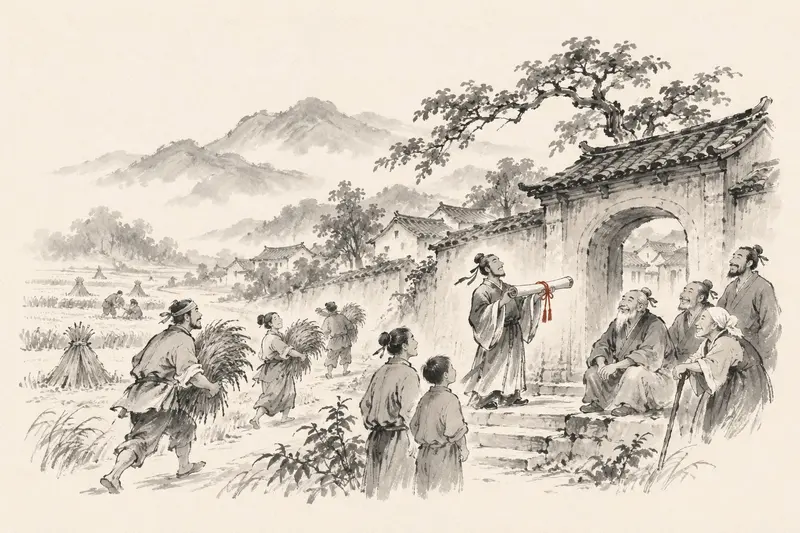
孝景皇帝者,孝文之中子也。母竇太后。孝文在代時,前后有三男,及竇太后得幸,前后死,及三子更死,故孝景得立。元年四月乙卯,赦天下。乙巳,賜民爵一級。五月,除田半租,為孝文立太宗廟。令群臣無朝賀。匈奴入代,與約和親。
Kundoku (Japanese reading)
孝景皇帝は、孝文の中子なり。母は竇太后。孝文代に在りし時、前の后に三男有り。竇太后の幸を得るに及び、前の后死し、及び三子更々死す。故に孝景立つを得たり。元年四月乙卯、天下に赦す。乙巳、民に爵一級を賜う。五月、田の半租を除き、孝文の為に太宗の廟を立つ。群臣をして朝賀すること無からしむ。匈奴代に入り、与に約して和親す。
Japanese
孝景皇帝は文帝の子の一人で、母は竇太后である。文帝が代王だったころ、前の后に三人の男の子がいたが、竇太后が寵愛されるようになると、前の后が亡くなり、三人の子も次々に亡くなった。そのため景帝が位につくことになった。元年(前156年)四月乙卯の日、天下に大赦を行った。乙巳の日、民に爵位を一級ずつ与えた。五月、田の税の半分を免じ、文帝のために太宗の廟を建てた。家臣たちには、お祝いの朝見をしないよう命じた。匈奴が代に攻め入ったが、約束を結んで和親した。
English
Emperor Jing was one of the middle sons of Emperor Wen; his mother was Empress Dowager Dou. When Emperor Wen was in Dai, his first queen bore him three sons. After the future Empress Dowager Dou won his favour, the first queen died and the three sons died one after another, so Emperor Jing came to the throne. In the fourth month of his first year, on the day yimao, there was a general amnesty; on the day yisi each commoner was given one degree of rank. In the fifth month half the land tax was remitted, and the Temple of the Grand Ancestor was set up for Emperor Wen. The ministers were told not to come to court to offer congratulations. The Xiongnu broke into Dai, and an agreement of peace by marriage was made with them.
Notes (JA)
- 竇太后: 景帝の母。黄老の学を好み、景帝・武帝の時代に大きな力を持った(049-waiqi の章)。
- 田の半租を除く: 田の税を三十分の一にしたことをいう。
- 和親: 漢の皇女を単于に嫁がせ、贈り物をして和を結ぶこと(110-xiongnu の章)。
Notes (EN)
- Empress Dowager Dou: Emperor Jing's mother, a devotee of the Yellow Emperor and Laozi, powerful under both Jing and Wu (chapter 049).
- Remitting half the land tax: the tax was lowered to one part in thirty.
- Peace by marriage (和親): sending a Han princess and gifts to the chanyu (chapter 110).
Word notes
- amnesty/ˈæmnəsti/noun
an official pardon for many people
In the text: “there was a general amnesty”
Similar words: pardon — official forgiveness · reprieve — a delay or cancel of punishment
- remit/rɪˈmɪt/verb
to cancel a tax or debt
In the text: “half the land tax was remitted”
Similar words: cancel — call off · waive — choose not to demand
Passage 2
Original
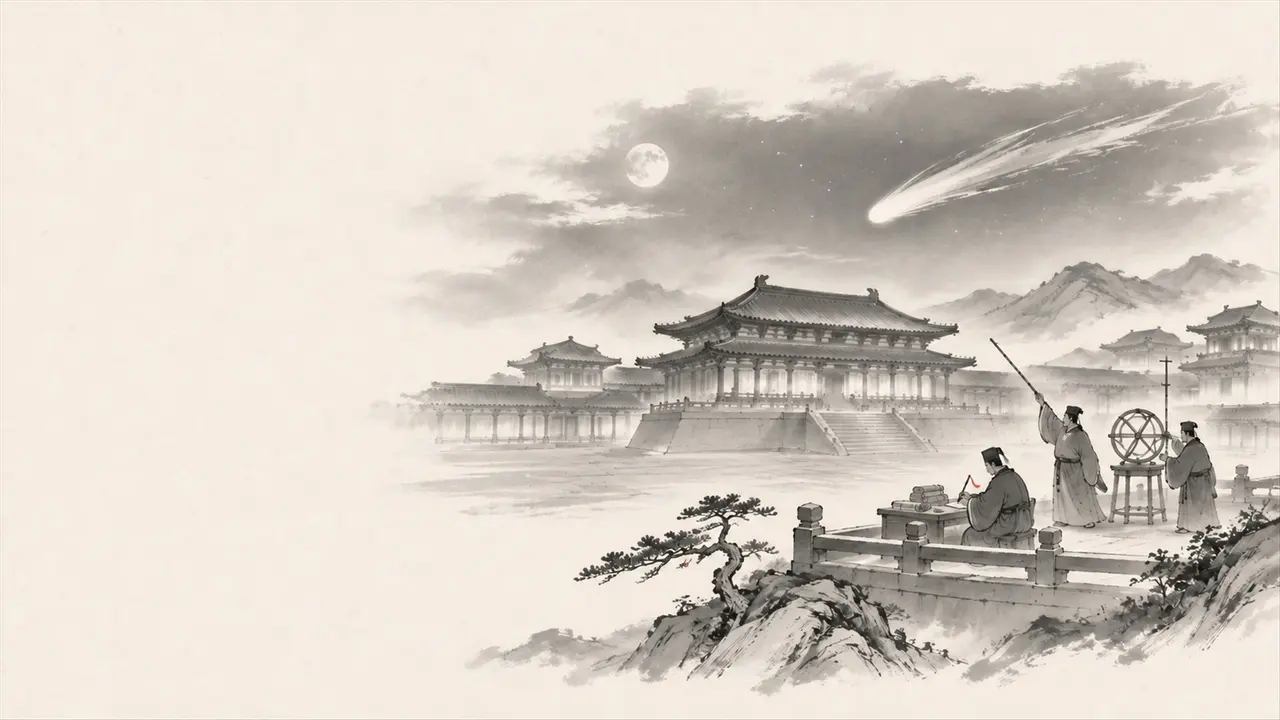
二年春,封故相國蕭何孫系為武陵侯。男子二十而得傅。四月壬午,孝文太后崩。廣川、長沙王皆之國。丞相申屠嘉卒。八月,以御史大夫開封陶青為丞相。彗星出東北。秋,衡山雨雹,大者五寸,深者二尺。熒惑逆行,守北辰。月出北辰閒。歲星逆行天廷中。置南陵及內史、祋祤為縣。
Kundoku (Japanese reading)
二年春、故の相国蕭何の孫系を封じて武陵侯と為す。男子二十にして傅を得。四月壬午、孝文太后崩ず。広川・長沙王皆国に之く。丞相申屠嘉卒す。八月、御史大夫開封の陶青を以て丞相と為す。彗星東北に出づ。秋、衡山に雹ふり、大なる者五寸、深き者二尺。熒惑逆行し、北辰を守る。月北辰の間に出づ。歳星天廷の中に逆行す。南陵及び内史の祋祤を置きて県と為す。
Japanese
二年の春、もとの相国蕭何の孫の蕭係を武陵侯に封じた。男子は二十歳で兵役の名簿に載せることにした。四月壬午の日、文帝の母の薄太后が亡くなった。広川王・長沙王は皆それぞれの国へ行った。丞相の申屠嘉が亡くなった。八月、御史大夫で開封侯の陶青を丞相とした。彗星が東北に現れた。秋、衡山に雹が降り、大きいものは五寸、深く積もった所は二尺にもなった。火星が逆行して北極星のあたりにとどまった。月が北極星のあたりに出た。木星が天廷の星座の中を逆行した。南陵と、内史の祋祤を県とした。
English
In the spring of the second year, Xiao Xi, grandson of the former chancellor of state Xiao He, was made Marquis of Wuling. Men were to be entered on the rolls for service at twenty. On the day renwu of the fourth month the Empress Dowager of Emperor Wen died. The Kings of Guangchuan and Changsha both went to their kingdoms. The chancellor Shentu Jia died. In the eighth month Tao Qing of Kaifeng, the Grandee Secretary, became chancellor. A comet appeared in the northeast. In the autumn there was hail in Hengshan, the largest stones five inches across, lying two feet deep in places. Mars went backward and lingered by the Pole Star. The moon appeared near the Pole Star. Jupiter went backward through the Court of Heaven. Nanling and Duiyu in the Capital Region were made counties.
Notes (JA)
- 孝文太后: 文帝の母、薄太后。
- 申屠嘉: 晁錯と対立した剛直な丞相(096-zhang-cang の章)。
- 熒惑・歳星: 火星と木星。その動きは天子や国の吉凶のしるしと考えられた。
Notes (EN)
- The Empress Dowager of Emperor Wen: Empress Dowager Bo, Emperor Wen's mother.
- Shentu Jia: the unbending chancellor who clashed with Chao Cuo (chapter 096).
- Mars and Jupiter: their movements were read as signs for the ruler and the state.
Word notes
- comet/ˈkɒmɪt/noun
an object in space with a bright tail
In the text: “A comet appeared in the northeast”
Similar words: shooting star — a meteor; loosely · meteor — a rock burning in the sky
- hail/heɪl/noun
small balls of ice that fall like rain
In the text: “there was hail in Hengshan”
Similar words: sleet — half-frozen rain · hailstone — one ball of hail
Passage 3
Original
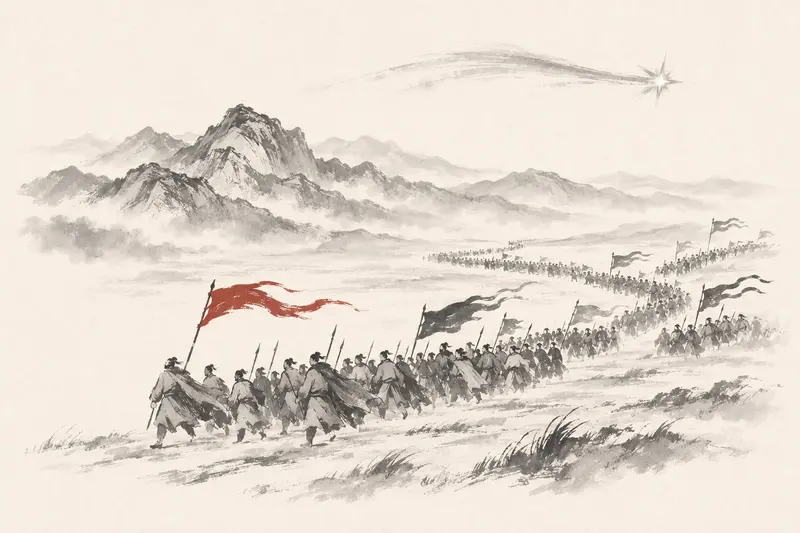
三年正月乙巳,赦天下。長星出西方。天火燔雒陽東宮大殿城室。吳王濞、楚王戊、趙王遂、膠西王卬、濟南王辟光、菑川王賢、膠東王雄渠反,發兵西鄉。天子為誅晁錯,遣袁盎諭告,不止,遂西圍梁。上乃遣大將軍竇嬰、太尉周亞夫將兵誅之。六月乙亥。赦亡軍及楚元王子藝等與謀反者。封大將軍竇嬰為魏其侯。立楚元王子平陸侯禮為楚王。立皇子端為膠西王,子勝為中山王。徙濟北王志為菑川王,淮陽王餘為魯王,汝南王非為江都王。齊王將廬、燕王嘉皆薨。
Kundoku (Japanese reading)
三年正月乙巳、天下に赦す。長星西方に出づ。天火雒陽の東宮の大殿城室を燔く。呉王濞・楚王戊・趙王遂・膠西王卬・済南王辟光・菑川王賢・膠東王雄渠反し、兵を発して西に郷う。天子為に晁錯を誅し、袁盎を遣わして諭告せしむるも、止まらず、遂に西して梁を囲む。上乃ち大将軍竇嬰・太尉周亜夫を遣わして兵を将いて之を誅せしむ。六月乙亥、亡軍及び楚の元王の子藝等の与に謀反せし者を赦す。大将軍竇嬰を封じて魏其侯と為す。楚の元王の子平陸侯礼を立てて楚王と為す。皇子端を立てて膠西王と為し、子勝を中山王と為す。済北王志を徙して菑川王と為し、淮陽王余を魯王と為し、汝南王非を江都王と為す。斉王将廬・燕王嘉皆薨ず。
Japanese
三年(前154年)正月乙巳の日、天下に大赦を行った。長い尾の星が西に現れた。天からの火が洛陽の東宮の大殿と城の建物を焼いた。呉王劉濞・楚王劉戊・趙王劉遂・膠西王劉卬・済南王劉辟光・菑川王劉賢・膠東王劉雄渠が反乱を起こし、兵を挙げて西へ向かった。天子は彼らのために晁錯を斬り、袁盎を送って説き伏せようとしたが、反乱軍は止まらず、そのまま西へ進んで梁を囲んだ。そこで天子は大将軍竇嬰と太尉周亜夫に兵を率いさせて討たせた。六月乙亥の日、逃げた兵と、楚の元王の子の劉藝ら謀反に加わった者を許した。大将軍竇嬰を魏其侯に封じた。楚の元王の子で平陸侯の劉礼を楚王に立てた。皇子の劉端を膠西王に、劉勝を中山王に立てた。済北王劉志を菑川王に、淮陽王劉余を魯王に、汝南王劉非を江都王に移した。斉王劉将廬と燕王劉嘉は、ともに亡くなった。
English
On the day yisi of the first month of the third year there was a general amnesty. A long-tailed star appeared in the west. Fire from Heaven burned the great hall and the city buildings of the Eastern Palace at Luoyang. Bi, King of Wu; Wu, King of Chu; Sui, King of Zhao; Ang, King of Jiaoxi; Piguang, King of Jinan; Xian, King of Zichuan; and Xiongqu, King of Jiaodong rebelled and marched west. For their sake the Son of Heaven put Chao Cuo to death and sent Yuan Ang to reason with them, but they would not stop, and went on west to besiege Liang. Then the emperor sent the Grand General Dou Ying and the Grand Commandant Zhou Yafu with troops to destroy them. On the day yihai of the sixth month, deserters and those who had joined the plot, such as Yi, son of King Yuan of Chu, were pardoned. The Grand General Dou Ying was made Marquis of Weiqi. Li, Marquis of Pinglu and son of King Yuan of Chu, was made King of Chu. The emperor's son Duan was made King of Jiaoxi and his son Sheng King of Zhongshan. Zhi, King of Jibei, was moved to be King of Zichuan; Yu, King of Huaiyang, to be King of Lu; and Fei, King of Runan, to be King of Jiangdu. Jianglu, King of Qi, and Jia, King of Yan, both died.
Notes (JA)
- 呉楚七国の乱: 晁錯が諸侯の領地を削ろうとしたことに反発して起きた(106-liu-pi、101-yuan-ang-chao-cuo の章)。
- 竇嬰: 竇太后のおいで、のちに魏其侯(107-dou-ying の章)。
- 劉勝・劉余・劉非: いずれも景帝の子(059-wuzong の章)。
Notes (EN)
- The Revolt of the Seven States: set off by Chao Cuo's plan to cut the kings' lands (chapters 106 and 101).
- Dou Ying: nephew of Empress Dowager Dou, later Marquis of Weiqi (chapter 107).
- Sheng, Yu and Fei: sons of Emperor Jing (chapter 059).
Word notes
- besiege/bɪˈsiːdʒ/verb
to surround a city with an army
In the text: “went on west to besiege Liang”
Similar words: surround — be all around · blockade — cut off supplies
- deserter/dɪˈzɜːrtər/noun
a soldier who runs away from the army
In the text: “deserters and those who had joined the plot”
Similar words: runaway — one who has fled · defector — one who changes sides
Passage 4
Original
四年夏,立太子。立皇子徹為膠東王。六月甲戌,赦天下。後九月,更以(弋)[易]陽為陽陵。復置津關,用傳出入。冬,以趙國為邯鄲郡。五年三月,作陽陵、渭橋。五月,募徙陽陵,予錢二十萬。江都大暴風從西方來,壞城十二丈。丁卯,封長公主子蟜為隆慮侯。徙廣川王為趙王。六年春,封中尉(趙)綰為建陵侯,江都丞相嘉為建平侯,隴西太守渾邪為平曲侯,趙丞相嘉為江陵侯,故將軍布為鄃侯。梁楚二王皆薨。後九月,伐馳道樹,殖蘭池。
Kundoku (Japanese reading)
四年夏、太子を立つ。皇子徹を立てて膠東王と為す。六月甲戌、天下に赦す。後九月、更めて易陽を以て陽陵と為す。復た津関を置き、伝を用いて出入せしむ。冬、趙国を以て邯鄲郡と為す。五年三月、陽陵・渭橋を作る。五月、募りて陽陵に徙らしめ、銭二十万を予う。江都に大暴風西方より来たり、城を壊すこと十二丈。丁卯、長公主の子蟜を封じて隆慮侯と為す。広川王を徙して趙王と為す。六年春、中尉綰を封じて建陵侯と為し、江都の丞相嘉を建平侯と為し、隴西太守渾邪を平曲侯と為し、趙の丞相嘉を江陵侯と為し、故の将軍布を鄃侯と為す。梁楚の二王皆薨ず。後九月、馳道の樹を伐り、蘭池に殖う。
Japanese
四年の夏、太子を立てた。皇子の劉徹を膠東王に立てた。六月甲戌の日、天下に大赦を行った。閏九月、易陽の名を改めて陽陵とした。また渡し場と関所を置きなおし、通行証を使って出入りさせた。冬、趙国を邯鄲郡とした。五年三月、陽陵(景帝の陵)と渭水の橋を造った。五月、陽陵に移り住む者を募り、銭二十万を与えた。江都では大風が西から吹き、城壁を十二丈こわした。丁卯の日、長公主の子の陳蟜を隆慮侯に封じた。広川王を趙王に移した。六年の春、中尉の衛綰を建陵侯に、江都の丞相の嘉を建平侯に、隴西太守の渾邪を平曲侯に、趙の丞相の嘉を江陵侯に、もとの将軍の欒布を鄃侯に封じた。梁王と楚王の二人がともに亡くなった。閏九月、皇帝専用の道(馳道)の並木を切り、蘭池に植えた。
English
In the summer of the fourth year a crown prince was set up. The emperor's son Che was made King of Jiaodong. On the day jiaxu of the sixth month there was a general amnesty. In the intercalary ninth month Yiyang was renamed Yangling. Fords and passes were set up again, with travel permits needed to go through. In winter the kingdom of Zhao was made the commandery of Handan. In the third month of the fifth year work began on Yangling and the bridge over the Wei. In the fifth month people were invited to move to Yangling and given two hundred thousand cash each. At Jiangdu a great storm wind came from the west and tore down twelve zhang of the city wall. On the day dingmao Jiao, son of the Elder Princess, was made Marquis of Longlü. The King of Guangchuan was moved to be King of Zhao. In the spring of the sixth year Wan, the Commandant of the Capital, was made Marquis of Jianling; Jia, chancellor of Jiangdu, Marquis of Jianping; Hunye, governor of Longxi, Marquis of Pingqu; Jia, chancellor of Zhao, Marquis of Jiangling; and the former general Bu Marquis of Shu. The Kings of Liang and Chu both died. In the intercalary ninth month the trees along the imperial highways were cut down and replanted at Lanchi.
Notes (JA)
- 太子を立つ: 栗姫の子劉栄を太子とした。
- 原文の「(弋)[易]陽」は、底本が「弋」を「易」に改めたもの。第6年の「(趙)綰」の「趙」は余分な字とされ、中尉の衛綰を指す。
- 長公主: 景帝の姉の館陶公主。その娘はのちに武帝の皇后(陳皇后)となる。
- 故の将軍布: 欒布(100-ji-bu の章)。
Notes (EN)
- A crown prince: Liu Rong, son of Lady Li.
- The text's "(弋)[易]陽" shows 弋 corrected to 易; in the sixth year "(趙)綰" is marked as an extra character, and the man is the Commandant Wei Wan.
- The Elder Princess: Emperor Jing's sister, Princess Guantao, whose daughter later became Emperor Wu's Empress Chen.
- The former general Bu: Luan Bu (chapter 100).
Word notes
- intercalary/ɪnˈtɜːrkəlɛri/adjective
added to a calendar to keep it in step with the seasons
In the text: “In the intercalary ninth month”
Similar words: leap — as in a leap year · extra — added on
- permit/ˈpɜːrmɪt/noun
an official paper that allows you to do something
In the text: “with travel permits needed to go through”
Similar words: pass — a paper to enter · licence — official permission
Passage 5
Original
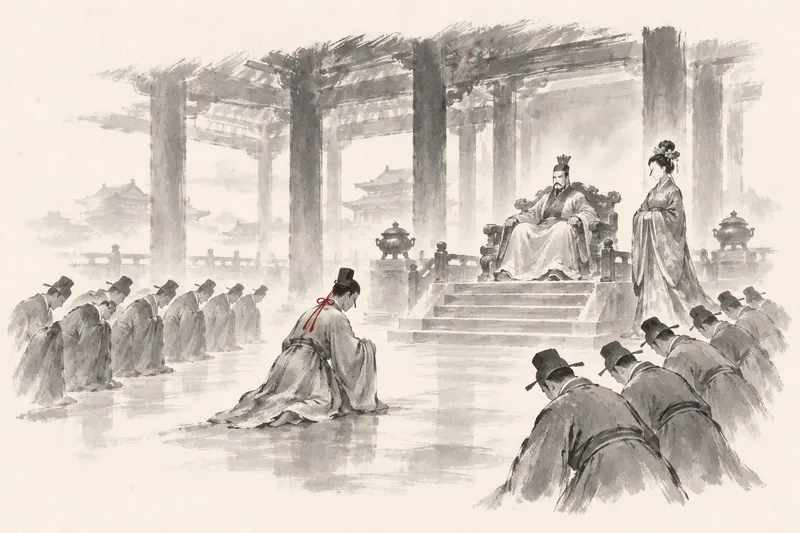
七年冬,廢栗太子為臨江王。(一)十(二)[一]月晦,日有食之。春,免徒隸作陽陵者。丞相青免。二月乙巳,以太尉條侯周亞夫為丞相。四月乙巳,立膠東王太后為皇后。丁巳,立膠東王為太子。名徹。
Kundoku (Japanese reading)
七年冬、栗太子を廃して臨江王と為す。十一月晦、日之を食する有り。春、徒隷の陽陵を作る者を免ず。丞相青免ぜらる。二月乙巳、太尉条侯周亜夫を以て丞相と為す。四月乙巳、膠東王の太后を立てて皇后と為す。丁巳、膠東王を立てて太子と為す。名は徹。
Japanese
七年(前150年)の冬、栗太子を廃して臨江王とした。十一月の末日に日食があった。春、陽陵の工事をしていた囚人たちを放免した。丞相の陶青が免職された。二月乙巳の日、太尉で条侯の周亜夫を丞相とした。四月乙巳の日、膠東王の母(王夫人)を皇后に立てた。丁巳の日、膠東王を太子に立てた。名は劉徹である。
English
In the winter of the seventh year the Li crown prince was deposed and made King of Linjiang. On the last day of the eleventh month there was an eclipse of the sun. In spring the convict labourers working on Yangling were released. The chancellor Tao Qing was dismissed. On the day yisi of the second month Zhou Yafu, Marquis of Tiao and Grand Commandant, became chancellor. On the day yisi of the fourth month the mother of the King of Jiaodong was made empress. On the day dingsi the King of Jiaodong was made crown prince. His name was Che.
Notes (JA)
- 栗太子: 栗姫の子の劉栄。母の栗姫が景帝の姉の長公主の怒りを買ったことが、廃される原因になったとされる(049-waiqi の章)。
- 原文の「(一)十(二)[一]月」は、底本が「十二月」を「十一月」と改めたもの。
- 徹: のちの武帝。十六歳で即位する(第10節)。
Notes (EN)
- The Li crown prince: Liu Rong, son of Lady Li, whose falling-out with the Elder Princess is said to have cost him his place (chapter 049).
- The text's "(一)十(二)[一]月" shows the editors reading "eleventh month" for "twelfth month".
- Che: the future Emperor Wu, who took the throne at sixteen (passage 10).
Word notes
- depose/dɪˈpoʊz/verb
to remove from a high position
In the text: “the Li crown prince was deposed”
Similar words: oust — push out · remove — take away
- eclipse/ɪˈklɪps/noun
a time when the sun or moon is hidden by a shadow
In the text: “there was an eclipse of the sun”
Similar words: darkening — becoming dark · occultation — one body hiding another; technical
Passage 6
Original
中元年,封故御史大夫周苛孫平為繩侯,故御史大夫周昌(子)[孫]左車為安陽侯,四月乙巳,赦天下,賜爵一級。除禁錮。地動。衡山、原都雨雹,大者尺八寸。中二年二月,匈奴入燕,遂不和親。三月,召臨江王來。即死中尉府中。夏,立皇子越為廣川王,子寄為膠東王。封四侯。九月甲戌,日食。
Kundoku (Japanese reading)
中元年、故の御史大夫周苛の孫平を封じて縄侯と為し、故の御史大夫周昌の孫左車を安陽侯と為す。四月乙巳、天下に赦し、爵一級を賜う。禁錮を除く。地動く。衡山・原都に雹ふり、大なる者尺八寸。中二年二月、匈奴燕に入り、遂に和親せず。三月、臨江王を召して来たらしむ。即ち中尉府の中に死す。夏、皇子越を立てて広川王と為し、子寄を膠東王と為す。四侯を封ず。九月甲戌、日食す。
Japanese
中元年(前149年)、もとの御史大夫周苛の孫の周平を縄侯に、もとの御史大夫周昌の孫の周左車を安陽侯に封じた。四月乙巳の日、天下に大赦を行い、爵位を一級ずつ与えた。役人になれないよう禁じる罰(禁錮)を取り除いた。地震があった。衡山と原都に雹が降り、大きいものは一尺八寸もあった。中二年二月、匈奴が燕に攻め入り、そのまま和親は破れた。三月、臨江王を都に呼び出した。臨江王は中尉の役所の中で死んだ。夏、皇子の劉越を広川王に、劉寄を膠東王に立てた。四人を侯に封じた。九月甲戌の日、日食があった。
English
In the first year of the middle period, Ping, grandson of the former Grandee Secretary Zhou Ke, was made Marquis of Sheng, and Zuoche, grandson of the former Grandee Secretary Zhou Chang, Marquis of Anyang. On the day yisi of the fourth month there was a general amnesty and one degree of rank was given. The ban from office was lifted. There was an earthquake. Hail fell in Hengshan and Yuandu, the largest stones a foot and eight inches across. In the second month of the second year of the middle period the Xiongnu broke into Yan, and the peace by marriage came to an end. In the third month the King of Linjiang was summoned to the capital. He died there and then in the Commandant's office. In summer the emperor's son Yue was made King of Guangchuan and his son Ji King of Jiaodong. Four men were made marquises. On the day jiaxu of the ninth month there was an eclipse of the sun.
Notes (JA)
- 原文の「周昌(子)[孫]左車」は、底本が「子」を「孫」に改めたもの。
- 臨江王の死: 廃太子の劉栄は都に呼ばれ、中尉郅都の取り調べを恐れて自殺した。本紀は「中尉府の中に死す」とだけ書く(059-wuzong の章)。
- 中元年: 景帝は在位中に二度年を数えなおしたので、前・中・後の元年がある。
Notes (EN)
- The text's "周昌(子)[孫]左車" shows "son" corrected to "grandson".
- The death of the King of Linjiang: the deposed heir Liu Rong, summoned for questioning by the Commandant Zhi Du, killed himself; the annals say only that he died in the Commandant's office (chapter 059).
- The middle period: Emperor Jing restarted the count of years twice, so his reign has first, middle and later periods.
Word notes
- summon/ˈsʌmən/verb
to order someone to come
In the text: “the King of Linjiang was summoned to the capital”
Similar words: call — ask to come · send for — ask someone to come
- earthquake/ˈɜːrθkweɪk/noun
a sudden shaking of the ground
In the text: “There was an earthquake”
Similar words: tremor — a small shaking · quake — short for earthquake
Passage 7
Original
中三年冬,罷諸侯御史中丞。春,匈奴王二人率其徒來降,皆封為列侯。中四年三月,置德陽宮。大蝗。秋,赦徒作陽陵者。中五年夏,立皇子舜為常山王。封十侯。六月丁巳,赦天下,賜爵一級。天下大潦。更命諸侯丞相曰相。秋,地動。
Kundoku (Japanese reading)
中三年冬、諸侯の御史中丞を罷む。春、匈奴の王二人其の徒を率いて来たり降る。皆封じて列侯と為す。中四年三月、徳陽宮を置く。大いに蝗あり。秋、徒の陽陵を作る者を赦す。中五年夏、皇子舜を立てて常山王と為す。十侯を封ず。六月丁巳、天下に赦し、爵一級を賜う。天下大いに潦す。更めて諸侯の丞相を命じて相と曰う。秋、地動く。
Japanese
中三年の冬、諸侯の国に置いていた御史中丞をやめた。春、匈奴の王二人が手下を率いて降ってきたので、二人とも列侯に封じた。中四年三月、徳陽宮を建てた。いなごの大害があった。秋、陽陵の工事をしていた囚人を許した。中五年の夏、皇子の劉舜を常山王に立てた。十人を侯に封じた。六月丁巳の日、天下に大赦を行い、爵位を一級ずつ与えた。天下に大雨が降った。諸侯の国の「丞相」の名を改めて「相」とした。秋、地震があった。
English
In the winter of the third year of the middle period the Assistant Grandee Secretaries in the kingdoms were abolished. In spring two Xiongnu kings came with their followers and surrendered; both were made marquises. In the third month of the fourth year of the middle period the Deyang Palace was built. There was a great plague of locusts. In autumn the convicts working on Yangling were pardoned. In the summer of the fifth year of the middle period the emperor's son Shun was made King of Changshan. Ten men were made marquises. On the day dingsi of the sixth month there was a general amnesty and one degree of rank was given. There were great floods across the realm. The chancellors of the kingdoms were renamed simply "ministers". In autumn there was an earthquake.
Notes (JA)
- 諸侯の丞相を相と曰う: 七国の乱のあと、諸侯王の国の官を朝廷より低くして、王の力を弱めた。
- 匈奴の王二人: 匈奴から降った王たちで、のちに周亜夫は「主に背いた者を侯にすべきでない」と反対した(057-zhou-bo の章)。
Notes (EN)
- Renaming the kingdoms' chancellors: after the revolt the kings' officials were ranked below the court's, to weaken the kings.
- Two Xiongnu kings: Zhou Yafu objected that men who betrayed their own lord should not be made marquises (chapter 057).
Word notes
- plague/pleɪɡ/noun
a large number of harmful animals or insects
In the text: “a great plague of locusts”
Similar words: swarm — a big moving group · infestation — too many pests
- flood/flʌd/noun
a large amount of water covering land
In the text: “There were great floods across the realm”
Similar words: deluge — a heavy flood · inundation — a flooding; formal
Passage 8
Original
中六年二月己卯,行幸雍,郊見五帝。三月,雨雹。四月,梁孝王、城陽共王、汝南王皆薨。立梁孝王子明為濟川王,子彭離為濟東王,子定為山陽王,子不識為濟陰王。梁分為五。封四侯。更命廷尉為大理,將作少府為將作大匠,主爵中尉為都尉,長信詹事為長信少府,將行為大長秋,大行為行人,奉常為太常,典客為大行,治粟內史為大農。以大內為二千石,置左右內官,屬大內。七月辛亥,日食。八月,匈奴入上郡。
Kundoku (Japanese reading)
中六年二月己卯、行きて雍に幸し、郊して五帝に見ゆ。三月、雹ふる。四月、梁の孝王・城陽の共王・汝南王皆薨ず。梁の孝王の子明を立てて済川王と為し、子彭離を済東王と為し、子定を山陽王と為し、子不識を済陰王と為す。梁分かれて五と為る。四侯を封ず。更めて廷尉を命じて大理と為し、将作少府を将作大匠と為し、主爵中尉を都尉と為し、長信詹事を長信少府と為し、将行を大長秋と為し、大行を行人と為し、奉常を太常と為し、典客を大行と為し、治粟内史を大農と為す。大内を以て二千石と為し、左右の内官を置き、大内に属せしむ。七月辛亥、日食す。八月、匈奴上郡に入る。
Japanese
中六年(前144年)二月己卯の日、雍へ行幸し、郊外で五帝を祭った。三月、雹が降った。四月、梁の孝王・城陽の共王・汝南王がそろって亡くなった。梁の孝王の子の劉明を済川王に、劉彭離を済東王に、劉定を山陽王に、劉不識を済陰王に立てた。梁は五つの国に分けられた。四人を侯に封じた。官の名を改め、廷尉を大理に、将作少府を将作大匠に、主爵中尉を都尉に、長信詹事を長信少府に、将行を大長秋に、大行を行人に、奉常を太常に、典客を大行に、治粟内史を大農とした。大内(宮中の蔵)の長を二千石の官とし、左右の内官を置いて大内に属させた。七月辛亥の日、日食があった。八月、匈奴が上郡に攻め入った。
English
On the day jimao of the second month of the sixth year of the middle period, the emperor went to Yong and sacrificed to the Five Emperors in the suburbs. In the third month there was hail. In the fourth month King Xiao of Liang, King Gong of Chengyang and the King of Runan all died. King Xiao of Liang's son Ming was made King of Jichuan, his son Pengli King of Jidong, his son Ding King of Shanyang and his son Bushi King of Jiyin; Liang was divided into five. Four men were made marquises. Offices were renamed: the Commandant of Justice became the Grand Judge; the Privy Treasurer of Works became the Grand Master of Works; the Commandant of Ranks became Commandant; the Steward of the Changxin Palace became its Privy Treasurer; the Escort became the Grand Prolonger of Autumn; the Grand Usher became the Messenger; the Master of Ceremonies became the Grand Master of Ceremonies; the Director of Guests became the Grand Usher; and the Inner Secretary for Grain became the Grand Minister of Agriculture. The Grand Treasury was made an office of two thousand piculs, with Inner Officers of the Left and Right under it. On the day xinhai of the seventh month there was an eclipse of the sun. In the eighth month the Xiongnu broke into Shang commandery.
Notes (JA)
- 梁の孝王: 景帝の弟。跡継ぎになる望みを断たれ、病で亡くなった(058-liang-xiao の章)。
- 梁を五つに分けたのは、大きすぎる国の力をそぐためでもあった。
- 大長秋: 皇后の宮殿の長。宦官がつとめた。
Notes (EN)
- King Xiao of Liang: Emperor Jing's brother, who died of illness after his hope of succession was dashed (chapter 058).
- Splitting Liang into five also broke up a kingdom grown too strong.
- Grand Prolonger of Autumn (大長秋): head of the empress's household, a post held by a eunuch.
Word notes
- sacrifice/ˈsækrɪfaɪs/verb
to make an offering to gods or spirits
In the text: “sacrificed to the Five Emperors”
Similar words: offer — give to the gods · worship — show respect to a god
- rename/riːˈneɪm/verb
to give a new name to something
In the text: “Offices were renamed”
Similar words: retitle — give a new title · redesignate — name again; formal
Passage 9
Original
後元年冬,更命中大夫令為衛尉。三月丁酉,赦天下,賜爵一級,中二千石、諸侯相爵右庶長。四月,大酺。五月丙戌,地動,其蚤食時復動。上庸地動二十二日,壞城垣。七月乙巳,日食。丞相劉舍免。八月壬辰,以御史大夫綰為丞相,封建陵侯。後二年正月,地一日三動。郅將軍擊匈奴。酺五日。令內史郡不得食馬粟,沒入縣官。令徒隸衣七緵布。止馬舂。為歲不登,禁天下食不造歲。省列侯遣之國。三月,匈奴入雁門。十月,租長陵田。大旱。衡山國、河東、雲中郡民疫。
Kundoku (Japanese reading)
後元年冬、更めて中大夫令を命じて衛尉と為す。三月丁酉、天下に赦し、爵一級を賜い、中二千石・諸侯の相に爵右庶長を賜う。四月、大いに酺す。五月丙戌、地動く。其の蚤食の時復た動く。上庸の地動くこと二十二日、城垣を壊す。七月乙巳、日食す。丞相劉舎免ぜらる。八月壬辰、御史大夫綰を以て丞相と為し、建陵侯に封ず。後二年正月、地一日に三たび動く。郅将軍匈奴を撃つ。酺すること五日。内史・郡をして馬に粟を食わしむるを得ず、県官に没入せしむ。徒隷をして七緵の布を衣しむ。馬舂を止む。歳の登らざるが為に、天下に歳を造らざるを食うを禁ず。列侯を省きて之を国に遣わす。三月、匈奴雁門に入る。十月、長陵の田を租す。大いに旱す。衡山国・河東・雲中郡の民疫す。
Japanese
後元年(前143年)の冬、中大夫令の名を改めて衛尉とした。三月丁酉の日、天下に大赦を行って爵位を一級ずつ与え、中二千石の官と諸侯の相には右庶長の爵を与えた。四月、天下に大いに酒盛りを許した。五月丙戌の日、地震があり、朝食のころにまた揺れた。上庸では地震が二十二日続き、城壁がくずれた。七月乙巳の日、日食があった。丞相の劉舎が免職された。八月壬辰の日、御史大夫の衛綰を丞相とし、建陵侯に封じた。後二年正月、一日に三度地震があった。郅将軍が匈奴を攻めた。五日間の酒盛りを許した。内史と郡の役所に、馬に穀物を食べさせることを禁じ、それを国の役所に納めさせた。囚人には目の粗い七緵の布を着せた。馬を使った米つきをやめさせた。作物が実らなかったので、天下に、その年に取れていないものを食べることを禁じた。列侯の数を減らし、それぞれの国へ行かせた。三月、匈奴が雁門に攻め入った。十月、長陵の田に税をかけた。ひどい日照りがあった。衡山国・河東・雲中郡の民の間で疫病がはやった。
English
In the winter of the first year of the later period, the Prefect of the Palace Grandees was renamed Commandant of the Guards. On the day dingyou of the third month there was a general amnesty and one degree of rank was given; officials of full two thousand piculs and the ministers of the kingdoms were given the rank of Chief of the Right. In the fourth month there was a great public feast. On the day bingxu of the fifth month there was an earthquake, and again at breakfast time. At Shangyong the earth shook for twenty-two days and the city walls fell. On the day yisi of the seventh month there was an eclipse of the sun. The chancellor Liu She was dismissed. On the day renchen of the eighth month Wan, the Grandee Secretary, became chancellor and was made Marquis of Jianling. In the first month of the second year of the later period, the earth shook three times in one day. General Zhi attacked the Xiongnu. A five-day feast was allowed. The Capital Region and the commanderies were forbidden to feed grain to horses, which was to be handed over to the government. Convict labourers were to wear coarse cloth of seven strands. Horse-driven rice mills were stopped. Because the harvest had failed, the realm was forbidden to eat what that year had not produced. The number of marquises at court was cut and they were sent to their fiefs. In the third month the Xiongnu broke into Yanmen. In the tenth month the fields of Changling were taxed. There was a great drought. The people of the kingdom of Hengshan, of Hedong and of Yunzhong commandery were struck by plague.
Notes (JA)
- 酺: 国が特別に許した、民がそろって酒を飲む祝い。
- 綰: 衛綰。景帝の太子時代からの家臣で、まじめで慎み深いことで知られた。
- 郅将軍: 郅都とされる。「蒼鷹」と呼ばれた厳しい役人で、雁門の太守として匈奴に恐れられた(122-kuli の章)。
- 七緵の布: 糸の数が少ない、目の粗い布。
Notes (EN)
- Public feast (酺): a special permission for the people to drink together in celebration.
- Wan: Wei Wan, Emperor Jing's servant since his days as crown prince, known for being careful and modest.
- General Zhi: thought to be Zhi Du, the harsh official called "the Grey Hawk", feared by the Xiongnu as governor of Yanmen (chapter 122).
- Cloth of seven strands (七緵布): a coarse, loosely woven cloth.
Word notes
- drought/draʊt/noun
a long time with too little rain
In the text: “There was a great drought”
Similar words: dry spell — a short time without rain · aridity — dryness of land
- coarse/kɔːrs/adjective
rough and thick
In the text: “coarse cloth of seven strands”
Similar words: rough — not smooth · crude — simple and rough
Passage 10
Original
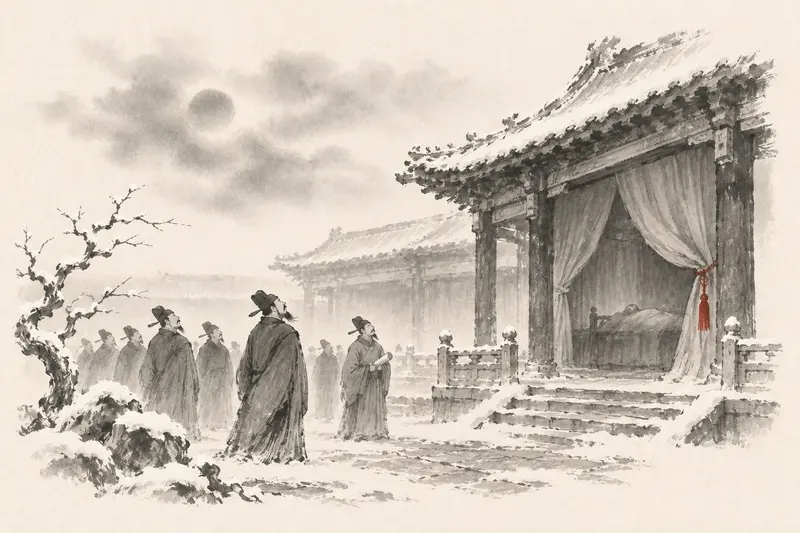
後三年十月,日月皆(食)赤五日。十二月晦,雷。日如紫。五星逆行守太微。月貫天廷中。正月甲寅,皇太子冠。甲子,孝景皇帝崩。遺詔賜諸侯王以下至民為父後爵一級,天下戶百錢。出宮人歸其家,復無所與。太子即位,是為孝武皇帝。三月,封皇太后弟蚡為武安侯,弟勝為周陽侯。置陽陵。
Kundoku (Japanese reading)
後三年十月、日月皆赤きこと五日。十二月晦、雷あり。日紫の如し。五星逆行して太微を守る。月天廷の中を貫く。正月甲寅、皇太子冠す。甲子、孝景皇帝崩ず。遺詔して諸侯王以下民の父の後為る者に至るまで爵一級を賜い、天下の戸に百銭を賜う。宮人を出だして其の家に帰らしめ、復して与かる所無からしむ。太子即位す。是を孝武皇帝と為す。三月、皇太后の弟蚡を封じて武安侯と為し、弟勝を周陽侯と為す。陽陵を置く。
Japanese
後三年(前141年)の十月、太陽と月がそろって五日間赤く見えた。十二月の末日に雷が鳴った。太陽が紫色のように見えた。五つの惑星が逆行して太微の星座のあたりにとどまった。月が天廷の星座の中をつらぬいて通った。正月甲寅の日、皇太子が元服した。甲子の日、孝景皇帝が亡くなった。遺詔によって、諸侯王から、父の跡継ぎである民に至るまで、爵位を一級ずつ与え、天下の家ごとに百銭を与えた。宮中の女たちを宮殿から出して家に帰らせ、税や労役を一生免除した。太子が即位した。これが孝武皇帝である。三月、皇太后の弟の田蚡を武安侯に、田勝を周陽侯に封じた。陽陵の県を置いた。
English
In the tenth month of the third year of the later period, the sun and moon were both red for five days. On the last day of the twelfth month there was thunder. The sun looked purple. The five planets went backward and lingered by the Supreme Subtlety. The moon passed right through the Court of Heaven. On the day jiayin of the first month the crown prince was capped as a man. On the day jiazi Emperor Jing died. His last decree gave one degree of rank to everyone from the kings down to commoners who were their fathers' heirs, and a hundred cash to every household in the realm. The palace women were sent home to their families and freed from all taxes and labour. The crown prince came to the throne: this was Emperor Wu. In the third month the empress dowager's younger brother Fen was made Marquis of Wu'an and her younger brother Sheng Marquis of Zhouyang. Yangling was made a county.
Notes (JA)
- 原文の「(食)」は、底本が余分な字とするもの。
- 冠す: 男子が成人して冠をつける儀式。劉徹はこのとき十六歳だった。
- 蚡: 田蚡。武帝の母王太后の弟(107-dou-ying の章)。
- 天変が続いたあとに景帝が亡くなるように書かれているのは、天の異変を政治と結びつける当時の考えを表している。
Notes (EN)
- The text's "(食)" is marked by the editors as an extra character.
- Capped as a man: the coming-of-age rite; Liu Che was sixteen.
- Fen: Tian Fen, brother of Emperor Wu's mother, Empress Dowager Wang (chapter 107).
- Placing the portents just before the emperor's death reflects the belief that Heaven's signs were bound up with government.
Word notes
- planet/ˈplænɪt/noun
a large body that moves around the sun
In the text: “The five planets went backward”
Similar words: wandering star — the old name for a planet · world — a planet; literary
- household/ˈhaʊshoʊld/noun
all the people living in one home
In the text: “a hundred cash to every household”
Similar words: family — parents and children · home — where people live
Passage 11
Original
太史公曰:漢興,孝文施大德,天下懷安,至孝景,不復憂異姓,而晁錯刻削諸侯,遂使七國俱起,合從而西鄉,以諸侯太盛,而錯為之不以漸也。及主父偃言之,而諸侯以弱,卒以安。安危之機,豈不以謀哉?
Kundoku (Japanese reading)
太史公曰く、漢興り、孝文大徳を施し、天下懐き安んず。孝景に至り、復た異姓を憂えず。而して晁錯諸侯を刻削し、遂に七国をして倶に起こり、合従して西に郷わしむ。諸侯の太だ盛んなるを以てなり。而して錯之を為すに漸を以てせざるなり。主父偃之を言うに及び、而して諸侯以て弱まり、卒に以て安んず。安危の機、豈に謀を以てせざらんや。
Japanese
太史公は言う。漢が興ってから、文帝は大きな徳を施し、天下はなついて安らかになった。景帝の時代になると、劉氏でない王を心配することはもうなくなった。ところが晁錯が諸侯の領地をきびしく削ったために、七つの国がそろって立ち上がり、同盟して西へ攻め上った。それは諸侯の力が強すぎたからでもあるが、晁錯が少しずつ進めなかったからでもある。のちに主父偃が策を進言して、諸侯は弱まり、ついに国は安定した。安らかになるか危うくなるかの分かれ目は、はかりごとによるのではないだろうか。
English
The Grand Historian says: After Han arose, Emperor Wen spread great virtue, and the realm grew loyal and at peace. By Emperor Jing's time there was no longer any need to fear kings of other clans. But Chao Cuo cut down the lands of the kings so harshly that seven states rose together, allied and marched west. The kings had grown too strong, and Chao Cuo did not go about it gradually. When Zhufu Yan later made his proposal, the kings were weakened and the realm was safe at last. Does not the turning point between safety and danger depend on planning?
Notes (JA)
- 主父偃の策: 諸侯王が領地を子弟に分けて侯に立てられるようにした「推恩」の令(112-pingjin の章)。
- 漸: 少しずつ進めること。
Notes (EN)
- Zhufu Yan's proposal: the decree of "extended grace", letting kings divide their lands among their sons (chapter 112).
- Gradually (漸): step by step.
Word notes
- gradually/ˈɡrædʒuəli/adverb
slowly, a little at a time
In the text: “did not go about it gradually”
Similar words: step by step — one stage at a time · slowly — not quickly
- proposal/prəˈpoʊzəl/noun
a plan or idea put forward for others to consider
In the text: “When Zhufu Yan later made his proposal”
Similar words: suggestion — an idea offered · plan — a way to do something