Hereditary Houses · Vol. 40
The Hereditary House of Chu 楚世家
King Zhuang's Silent Bird, and the Fall of King Ling 莊王與靈王
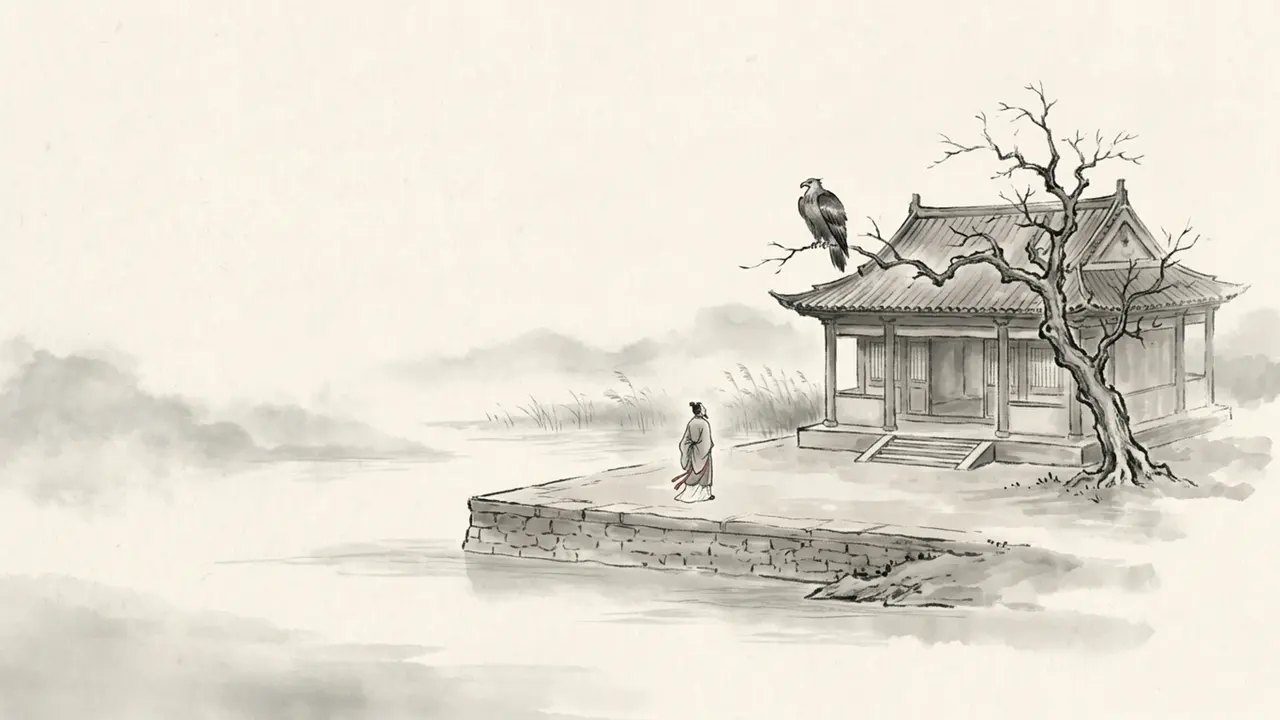
The story of two kings of Chu, the great southern power. For three years after taking the throne, King Zhuang issued no orders and gave himself up to pleasure, decreeing death for anyone who dared to remonstrate. When Wu Ju put a riddle to him about a bird that had neither flown nor sung for three years, he answered: "When it flies it will soar to the sky; when it sings it will startle the world," and soon he took up the government and became hegemon. He marched near the Zhou capital and asked about the size and weight of the royal cauldrons, and was told that their worth lay in virtue, not in the cauldrons. He also showed his greatness of heart, sparing the ruler of Zheng when he surrendered and lifting the siege of Song when its people were reduced to exchanging their children for food. A few generations later, King Ling killed his nephew to seize the throne, lorded it over the lords and even asked Zhou for its cauldrons, until a revolt broke out at home while he was away at war. Hearing of his son's death, he said: "I have killed many men's sons myself." Abandoned by his followers, he wandered the mountains and starved to death.
This page has the scene "King Zhuang's Silent Bird, and the Fall of King Ling" from this volume, not the whole volume.
Audio
The audio is synthetic speech.
Video
Passage 1
Original
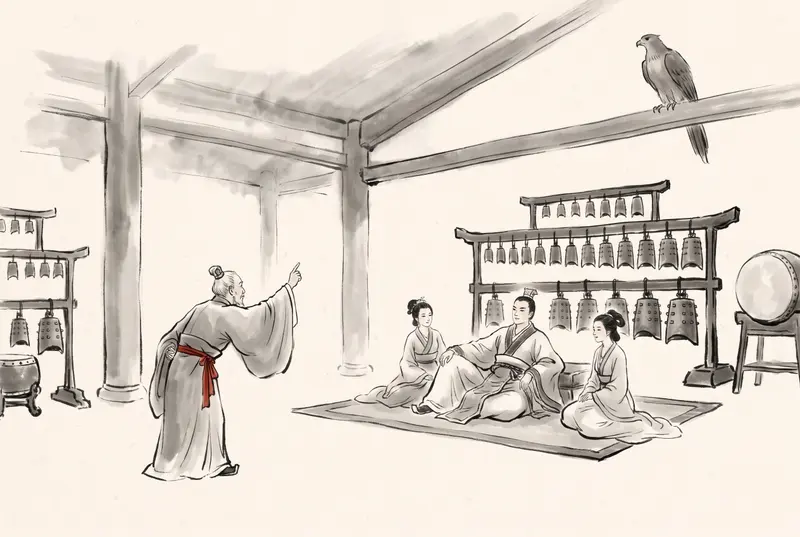
莊王卽位三年,不出號令,日夜爲樂,令國中曰:「有敢諫者死無赦!」伍舉入諫。莊王左抱鄭姬,右抱越女,坐鐘鼓之閒。伍舉曰:「願有進隱。」曰:「有鳥在於阜,三年不蜚不鳴,是何鳥也?」莊王曰:「三年不蜚,蜚將沖天;三年不鳴,鳴將驚人。舉退矣,吾知之矣。」居數月,淫益甚。大夫蘇從乃入諫。王曰:「若不聞令乎?」對曰:「殺身以明君,臣之願也。」於是乃罷淫樂,聽政,所誅者數百人,所進者數百人,任伍舉、蘇從以政,國人大説。是歳滅庸。六年,伐宋,獲五百乘。
Kundoku (Japanese reading)
荘王即位して三年、号令を出ださず、日夜楽を為し、国中に令して曰く、「敢えて諫むる者有らば死して赦す無し」と。伍挙入りて諫む。荘王左に鄭姬を抱き、右に越女を抱き、鐘鼓の閒に坐す。伍挙曰く、「願わくは隠を進むる有らん」と。曰く、「鳥有り阜に在り。三年蜚ばず鳴かず。是れ何の鳥ぞや」と。荘王曰く、「三年蜚ばざるも、蜚ばば将に天を沖かんとす。三年鳴かざるも、鳴かば将に人を驚かさんとす。挙退け。吾之を知れり」と。居ること数月、淫益々甚だし。大夫蘇従乃ち入りて諫む。王曰く、「若令を聞かざるか」と。対えて曰く、「身を殺して以て君を明らかにするは、臣の願いなり」と。是に於いて乃ち淫楽を罷め、政を聴き、誅する所の者数百人、進むる所の者数百人、伍挙・蘇従に任ずるに政を以てす。国人大いに説ぶ。是の歳庸を滅ぼす。六年、宋を伐ち、五百乗を獲たり。
Japanese
荘王は即位して三年のあいだ、何の命令も出さず、昼も夜も遊び楽しみ、国中に「いさめる者があれば死刑にし、決して許さない」と布告した。伍挙が宮中に入っていさめようとした。荘王は左手に鄭の姫を、右手に越の女を抱いて、鐘や太鼓のあいだに座っていた。伍挙は言った。「なぞかけを一つ申し上げたいのですが」。そして言った。「丘の上に鳥がいます。三年のあいだ飛びもせず、鳴きもしません。これは何という鳥でしょう」。荘王は言った。「三年飛ばなくても、ひとたび飛べば天まで舞い上がる。三年鳴かなくても、ひとたび鳴けば人を驚かせる。挙よ、下がれ。わしにはわかっている」。ところが数か月たっても、遊びはますますひどくなった。そこで大夫の蘇従が入っていさめた。王は言った。「おまえは布告を聞いていないのか」。蘇従は答えた。「わが身を殺してでも君主を明君にすることこそ、臣下の願いです」。そこで荘王は遊びをやめて政治にとりかかり、数百人を処罰し、数百人を取り立て、伍挙と蘇従に政治を任せた。国の人々は大いに喜んだ。この年、庸の国を滅ぼした。六年目には宋を討ち、戦車五百台を手に入れた。
English
For three years after he took the throne, King Zhuang issued no orders. Day and night he amused himself, and he proclaimed throughout the state: "Anyone who dares to remonstrate will die without pardon." Wu Ju went in to remonstrate. King Zhuang was sitting among bells and drums with a girl of Zheng in his left arm and a girl of Yue in his right. Wu Ju said: "I would like to offer you a riddle. There is a bird on the hill. For three years it has neither flown nor sung. What bird is it?" King Zhuang said: "It has not flown for three years, but when it flies it will soar to the sky. It has not sung for three years, but when it sings it will startle the world. Go away, Ju; I understand." But months went by and his excesses only grew worse. Then the grandee Su Cong went in to remonstrate. "Have you not heard my decree?" said the king. Su Cong answered: "To give my life to make my lord wise is my wish." At that the king put an end to his pleasures and took up the government. He punished several hundred men and promoted several hundred, and gave the government to Wu Ju and Su Cong. The people of the state were overjoyed. That year he destroyed Yong, and in his sixth year he attacked Song and captured five hundred chariots.
Notes (JA)
- 進隱: なぞかけをする。直接いさめると死刑なので、たとえで語った。
- 三年不蜚不鳴: 「三年飛ばず鳴かず」。今は「鳴かず飛ばず(ぱっとしない)」の意で使われるが、もとは大きな飛躍に備えて時を待つことをいった。
- 蜚將沖天,鳴將驚人: 「一鳴驚人(ひとたび鳴けば人を驚かす)」の出典。
- 同じなぞかけの話は、淳于髡と斉の威王の話としても伝わる(巻126)。
Notes (EN)
- A riddle (隱): direct criticism meant death, so Wu Ju spoke in a figure.
- "When it flies it will soar to the sky; when it sings it will startle the world": the source of the saying "one cry that startles the world" (一鳴驚人).
- The same riddle is told of Chunyu Kun and King Wei of Qi (vol. 126).
Idioms from this passage: Neither flying nor singing 鳴かず飛ばず
Word notes
- remonstrate/ˈrɛmənˌstreɪt/verb
to protest or argue against what someone is doing
In the text: “Anyone who dares to remonstrate”
Similar words: object — say one is against · protest — complain strongly
- riddle/ˈrɪdəl/noun
a puzzling question with a clever answer
In the text: “I would like to offer you a riddle”
Similar words: puzzle — a problem to solve · enigma — a mystery
Passage 2
Original
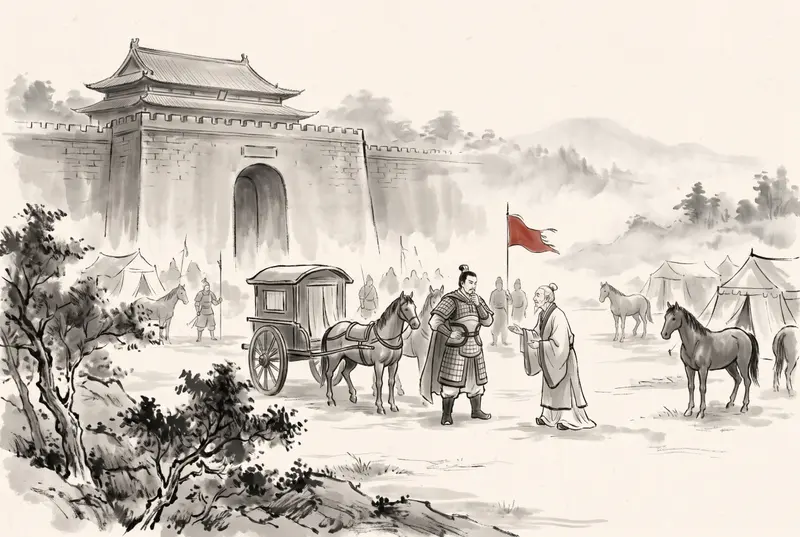
八年,伐陸渾戎,遂至洛,觀兵於周郊。周定王使王孫滿勞楚王。楚王問鼎小大輕重,對曰:「在德不在鼎。」莊王曰:「子無阻九鼎!楚國折鉤之喙,足以爲九鼎。」王孫滿曰:「嗚呼!君王其忘之乎?昔虞夏之盛,遠方皆至,貢金九牧,鑄鼎象物,百物而爲之備,使民知神姦。桀有亂德,鼎遷於殷,載祀六百。殷紂暴虐,鼎遷於周。德之休明,雖小必重;其姦回昏亂,雖大必輕。昔成王定鼎于郟鄏,卜世三十,卜年七百,天所命也。周德雖衰,天命未改。鼎之輕重,未可問也。」楚王乃歸。
Kundoku (Japanese reading)
八年、陸渾の戎を伐ち、遂に洛に至り、兵を周の郊に観す。周の定王王孫満をして楚王を労わしむ。楚王鼎の小大軽重を問う。対えて曰く、「徳に在りて鼎に在らず」と。荘王曰く、「子九鼎を阻む無かれ。楚国の折鉤の喙、以て九鼎を為るに足る」と。王孫満曰く、「嗚呼、君王其れ之を忘れたるか。昔虞夏の盛んなる、遠方皆至り、金を九牧に貢がしめ、鼎を鋳て物を象り、百物而して之が備えを為し、民をして神姦を知らしむ。桀乱徳有り、鼎殷に遷り、祀を載すること六百。殷の紂暴虐にして、鼎周に遷る。徳の休明なるは、小なりと雖も必ず重く、其の姦回昏乱なるは、大なりと雖も必ず軽し。昔成王鼎を郟鄏に定め、世を卜すること三十、年を卜すること七百、天の命ずる所なり。周の徳衰えたりと雖も、天命未だ改まらず。鼎の軽重は、未だ問うべからざるなり」と。楚王乃ち帰る。
Japanese
八年目、荘王は陸渾の戎を討ち、そのまま洛水のほとりまで進んで、周の都の郊外で兵を閲兵して見せつけた。周の定王は王孫満をやって楚王をねぎらわせた。楚王は、周の九つの鼎の大きさや重さを尋ねた。王孫満は答えた。「天下の主となれるかどうかは徳にかかっていて、鼎にかかっているのではありません」。荘王は言った。「九鼎があるからといって、いばるな。楚の国では、戈の先の折れた切れはしを集めるだけで、九鼎を作るに足りるのだ」。王孫満は言った。「ああ、王はお忘れですか。昔、舜や夏の盛んだったころ、遠方の国々もみな従い、九州の長に銅を献上させて、鼎を鋳て、そこにさまざまな物の姿を写し、あらゆるものへの備えとして、民に神と悪霊を見分けられるようにしたのです。夏の桀が徳を乱すと、鼎は殷に移り、六百年続きました。殷の紂が暴虐だったので、鼎は周に移りました。徳が明らかで正しければ、鼎は小さくても必ず重く、邪悪で乱れていれば、大きくても必ず軽いのです。昔、周の成王が鼎を郟鄏に据えたとき、占いで王朝は三十代、七百年続くと出ました。これは天の命じたことです。周の徳は衰えたとはいえ、天命はまだ改まっておりません。鼎の重さを尋ねるのは、まだ早いのです」。楚王はそこで引き上げた。
English
In his eighth year King Zhuang attacked the Rong of Luhun, came on as far as the Luo River and paraded his troops on the outskirts of the Zhou capital. King Ding of Zhou sent Wangsun Man to welcome the King of Chu. The King of Chu asked how large and how heavy the royal cauldrons were. Wangsun Man answered: "It lies in virtue, not in the cauldrons." King Zhuang said: "Do not boast of your Nine Cauldrons. The broken tips of the spears of Chu alone would be enough to make nine cauldrons." Wangsun Man said: "Alas! Has Your Majesty forgotten? Long ago, when Shun and Xia flourished and distant lands all came to court, the governors of the nine provinces were made to send metal as tribute, and the cauldrons were cast with images of all things, so that the people could be prepared for everything and tell the spirits from the demons. When Jie brought disorder to virtue, the cauldrons passed to Yin, which kept its sacrifices for six hundred years. When Zhou of Yin was cruel, the cauldrons passed to Zhou. When virtue is bright and good, the cauldrons are heavy however small; when it is wicked and confused, they are light however large. When King Cheng set the cauldrons at Jiaru, the divination said thirty generations, seven hundred years: it was Heaven's command. Though the virtue of Zhou has declined, the mandate of Heaven has not yet changed. The weight of the cauldrons is not yet a thing to ask about." So the King of Chu went home.
Notes (JA)
- 問鼎小大輕重: 天子の位の象徴である九鼎の大きさと重さを尋ねる。天下を奪う野心を示す。「鼎の軽重を問う」の出典。
- 在德不在鼎: 天下の主となるかどうかは徳による、鼎の有無ではない。
- 折鉤之喙: 折れた戈の先。楚の兵の多さを誇った言葉。
- 神姦: 神と、人に害をなす悪霊。
- 郟鄏: 周の東の都、洛邑(今の洛陽)。
Notes (EN)
- Asked how large and heavy the cauldrons were (問鼎小大輕重): the Nine Cauldrons stood for the right to rule the realm, so the question revealed his ambition. "To ask the weight of the cauldrons" became a saying for challenging those in power.
- "It lies in virtue, not in the cauldrons" (在德不在鼎).
- Jiaru (郟鄏): the eastern capital of Zhou, near modern Luoyang.
Idioms from this passage: To ask the weight of the cauldrons 鼎の軽重を問う
Word notes
- parade/pəˈreɪd/verb
to show off troops by marching them
In the text: “paraded his troops”
Similar words: display — show · march — walk in step
- boast/boʊst/verb
to talk too proudly about what one has
In the text: “Do not boast of your Nine Cauldrons”
Similar words: brag — show off in words · crow — boast loudly
Passage 3
Original
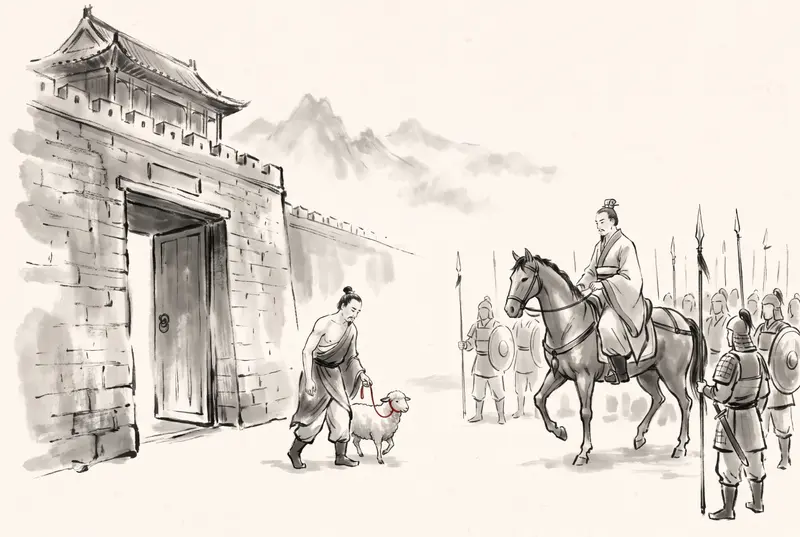
十七年春,楚莊王圍鄭,三月克之。入自皇門,鄭伯肉袒牽羊以逆,曰:「孤不天,不能事君,君用懷怒,以及敝邑,孤之罪也。敢不惟命是聽!賓之南海,若以臣妾賜諸侯,亦惟命是聽。若君不忘厲、宣、桓、武,不絶其社稷,使改事君,孤之願也,非所敢望也。敢布腹心。」楚群臣曰:「王勿許。」莊王曰:「其君能下人,必能信用其民,庸可絶乎!」莊王自手旗,左右麾軍,引兵去三十里而舍,遂許之平。潘尪入盟,子良出質。夏六月,晉救鄭,與楚戰,大敗晉師河上,遂至衡雍而歸。二十年,圍宋,以殺楚使也。圍宋五月,城中食盡,易子而食,析骨而炊。宋華元出告以情。莊王曰:「君子哉!」遂罷兵去。二十三年,莊王卒,子共王審立。
Kundoku (Japanese reading)
十七年春、楚の荘王鄭を囲み、三月にして之に克つ。皇門より入る。鄭伯肉袒して羊を牽きて以て逆えて曰く、「孤天ならず、君に事うる能わず。君用て怒りを懐きて、以て敝邑に及ぶ。孤の罪なり。敢えて惟れ命を是れ聴かざらんや。之を南海に賓し、若しくは臣妾を以て諸侯に賜うも、亦惟れ命を是れ聴かん。若し君厲・宣・桓・武を忘れず、其の社稷を絶たず、改めて君に事えしめば、孤の願いなり。敢えて望む所に非ざるなり。敢えて腹心を布く」と。楚の群臣曰く、「王許す勿かれ」と。荘王曰く、「其の君能く人に下る。必ず能く其の民を信用せん。庸ぞ絶つべけんや」と。荘王自ら旗を手にし、左右に軍を麾き、兵を引きて去ること三十里にして舎り、遂に之に平を許す。潘尪入りて盟い、子良出でて質たり。夏六月、晋鄭を救い、楚と戦う。大いに晋の師を河上に敗り、遂に衡雍に至りて帰る。 二十年、宋を囲む。楚の使いを殺せるを以てなり。宋を囲むこと五月、城中食尽き、子を易えて食らい、骨を析きて炊ぐ。宋の華元出でて告ぐるに情を以てす。荘王曰く、「君子なるかな」と。遂に兵を罷めて去る。二十三年、荘王卒し、子共王審立つ。
Japanese
十七年の春、楚の荘王は鄭を包囲し、三か月で攻め落とした。荘王が皇門から入城すると、鄭伯は肌脱ぎになり、羊を引いて出迎えて言った。「私は天の助けを得られず、あなたさまにお仕えすることができず、あなたさまを怒らせて、この国にまで攻めて来させてしまいました。私の罪です。どうしてご命令に従わないことがありましょう。私を南の海の果てへ追いやるのも、臣下や召使いとして諸侯に与えるのも、ご命令のままです。もしあなたさまが、厲王・宣王・桓公・武公(鄭の先祖)のことを忘れず、国を絶やさずに、改めてあなたさまにお仕えさせてくださるなら、それが私の願いです。とても望めることではありませんが、あえて胸の内を申し上げます」。楚の家臣たちは「王よ、お許しになってはなりません」と言った。荘王は言った。「この君主は人にへりくだることができる。きっと民を信じて用いることもできよう。どうして滅ぼせようか」。荘王は自ら旗を手にとって左右の軍を指揮し、兵を三十里引き下げて陣を張り、ついに鄭と和睦した。鄭の潘尪が楚の陣に来て盟いを結び、公子の子良が人質として楚へ行った。夏六月、晋が鄭を救いに来て楚と戦ったが、荘王は黄河のほとりで晋軍を大いに破り、衡雍まで進んでから引き上げた。 二十年、楚は宋を包囲した。宋が楚の使者を殺したからである。包囲が五か月に及ぶと、城中の食べ物は尽き、人々はわが子を取り替えて食べ、人の骨を割って薪にするほどだった。宋の華元が城を出て、ありのままの窮状を告げた。荘王は「なんと誠実な人か」と言い、兵を引いて去った。二十三年、荘王は亡くなり、子の共王審が即位した。
English
In the spring of his seventeenth year, King Zhuang of Chu besieged Zheng and took it after three months. When he entered by the Huang Gate, the Earl of Zheng came out to meet him with his shoulder bared, leading a sheep, and said: "Heaven did not favour me, and I failed to serve you, so that your anger fell on my poor city. The fault is mine. How could I not obey your commands? Banish me to the southern sea, or give my people to the lords as servants and slaves: I will obey. But if you will not forget Kings Li and Xuan and Dukes Huan and Wu, my ancestors, and will not cut off our altars, but let me serve you anew, that is my wish, though I dare not hope for it. I make bold to open my heart to you." The ministers of Chu said: "Do not grant it, Your Majesty." King Zhuang said: "A ruler who can humble himself before others must be able to win the trust of his people. How can I destroy him?" He took the banner in his own hand, waved the armies to left and right, drew his forces back thirty li and camped there, and granted Zheng peace. Pan Wang came to swear the covenant, and Ziliang went out as a hostage. In the summer, in the sixth month, Jin came to rescue Zheng and fought Chu; King Zhuang routed the Jin army on the Yellow River, advanced as far as Hengyong, and went home. In his twentieth year he besieged Song, because Song had killed an envoy of Chu. After five months of siege the city had no food left; people exchanged their children to eat them and split bones for firewood. Hua Yuan of Song came out and told him the truth of their plight. King Zhuang said: "This is a gentleman!" He called off the siege and left. In his twenty-third year King Zhuang died, and his son Shen, King Gong, took the throne.
Notes (JA)
- 肉袒牽羊: 肌脱ぎになって羊を引く。降伏して臣従することを示す礼。
- 厲・宣・桓・武: 鄭の祖先とつながる周の厲王・宣王と、鄭の桓公・武公。
- 去三十里而舍: 三十里退いて陣を張る。敵に情けをかけたことを示す。
- 易子而食,析骨而炊: 子を取り替えて食べ、骨を割って薪にする。包囲された城の極限状態をいう言葉。
- 荘王は春秋五覇の一人に数えられる。
Notes (EN)
- His shoulder bared, leading a sheep (肉袒牽羊): the ritual of surrender.
- Drew his forces back thirty li: a gesture of mercy to a defeated foe.
- Exchanged their children to eat them (易子而食): the stock phrase for the last extremity of a besieged city.
- King Zhuang is counted among the Five Hegemons of the Spring and Autumn period.
Word notes
- besiege/bɪˈsidʒ/verb
to surround a city with an army to capture it
In the text: “besieged Zheng”
Similar words: encircle — surround · blockade — cut off
- plight/plaɪt/noun
a difficult or dangerous situation
In the text: “the truth of their plight”
Similar words: predicament — a hard situation · hardship — suffering
Passage 4
Original
康王寵弟公子圍、子比、子皙、棄疾。郟敖三年,以其季父康王弟公子圍爲令尹,主兵事。四年,圍使鄭,道聞王疾而還。十二月己酉,圍入問王疾,絞而弒之,遂殺其子莫及平夏。使使赴於鄭。伍舉問曰:「誰爲後?」對曰:「寡大夫圍。」伍舉更曰:「共王之子圍爲長。」子比奔晉,而圍立,是爲靈王。
Kundoku (Japanese reading)
康王弟公子囲・子比・子皙・棄疾を寵す。郟敖の三年、其の季父康王の弟公子囲を以て令尹と為し、兵事を主らしむ。四年、囲鄭に使いし、道に王の疾を聞きて還る。十二月己酉、囲入りて王の疾を問い、絞めて之を弑し、遂に其の子莫及び平夏を殺す。使いをして鄭に赴げしむ。伍挙問いて曰く、「誰か後たる」と。対えて曰く、「寡大夫囲なり」と。伍挙更めて曰く、「共王の子囲を長と為す」と。子比晋に奔る。而して囲立つ。是れを霊王と為す。
Japanese
(荘王の孫の)康王は、弟の公子囲・子比・子皙・棄疾をかわいがった。康王の子の郟敖の三年、郟敖は叔父の公子囲を令尹(宰相)として、軍事をつかさどらせた。四年、公子囲は鄭へ使いに出たが、途中で王が病気だと聞いて引き返した。十二月己酉の日、公子囲は宮中に入って王を見舞い、首を絞めて殺し、さらに王の子の莫と平夏も殺した。そして鄭へ使者を出して王の死を知らせた。(鄭にいた)伍挙が「跡継ぎは誰か」と尋ねると、使者は「わが国の大夫の囲です」と答えた。伍挙は言い直させた。「共王の子の囲が、一番年長である、と言いなさい」。子比は晋へ逃げ、公子囲が位についた。これが霊王である。
English
King Kang favoured his younger brothers, Princes Wei, Bi, Xi and Qiji. In the third year of Jia'ao, King Kang's son, the king made his uncle, King Kang's brother Prince Wei, chief minister and put him in charge of the army. In the fourth year Wei was sent on a mission to Zheng, but on the road he heard that the king was ill and turned back. On the day jiyou in the twelfth month he went in to ask after the king's health, strangled him, and killed the king's sons Mo and Pingxia as well. He sent an envoy to announce the death to Zheng. Wu Ju asked: "Who is the successor?" The envoy said: "Our grandee Wei." Wu Ju corrected him: "Say: 'Wei, son of King Gong, is the eldest.'" Prince Bi fled to Jin, and Wei took the throne. He was King Ling.
Notes (JA)
- 令尹: 楚の宰相。
- 郟敖: 康王の子。在位四年で叔父に殺されたため、王の称号がない。
- 共王之子圍爲長: 伍挙は、王位を奪った囲を「共王の子で最年長」と言い換えさせ、即位を正当なものに見せかけた。
- 伍挙: 荘王をいさめた人物。伍子胥の祖父にあたる(巻66)。
Notes (EN)
- Chief minister (令尹): the highest office in Chu.
- "Wei, son of King Gong, is the eldest": Wu Ju had the usurpation dressed up as a lawful succession.
- Wu Ju (伍舉): the man who put the riddle to King Zhuang, and grandfather of Wu Zixu (vol. 66).
Word notes
- strangle/ˈstræŋɡəl/verb
to kill by squeezing the throat
In the text: “strangled him”
Similar words: throttle — choke · choke — stop breathing
- successor/səkˈsɛsər/noun
the person who comes after another in a post
In the text: “Who is the successor?”
Similar words: heir — one who inherits · replacement — one who takes the place
Passage 5
Original
十一年,伐徐以恐呉。靈王次於乾豀以待之。王曰:「齊、晉、魯、衞,其封皆受寶器,我獨不。今吾使使周求鼎以爲分,其予我乎?」析父對曰:「其予君王哉!昔我先王熊繹辟在荊山,蓽露藍蔞以處草莽,跋渉山林以事天子,唯是桃弧棘矢以共王事。齊,王舅也;晉及魯、衞,王母弟也:楚是以無分而彼皆有。周今與四國服事君王,將惟命是從,豈敢愛鼎?」靈王曰:「昔我皇祖伯父昆吾舊許是宅,今鄭人貪其田,不我予,今我求之,其予我乎?」對曰:「周不愛鼎,鄭安敢愛田?」靈王曰:「昔諸侯遠我而畏晉,今吾大城陳、蔡、不羹,賦皆千乘,諸侯畏我乎?」對曰:「畏哉!」靈王喜曰:「析父善言古事焉。」
Kundoku (Japanese reading)
十一年、徐を伐ちて以て呉を恐れしむ。霊王乾谿に次りて以て之を待つ。王曰く、「斉・晋・魯・衛は、其の封皆宝器を受く。我独り否ず。今吾使いをして周に使いして鼎を求めて以て分と為さしめば、其れ我に予えんか」と。析父対えて曰く、「其れ君王に予えんかな。昔我が先王熊繹は荊山に辟在し、蓽露藍蔞して以て草莽に処り、山林を跋渉して以て天子に事え、唯だ是の桃弧棘矢以て王事に共す。斉は王の舅なり。晋及び魯・衛は、王の母弟なり。楚是を以て分無くして彼皆有り。周今四国と君王に服事す。将に惟れ命を是れ従わんとす。豈に敢えて鼎を愛しまんや」と。霊王曰く、「昔我が皇祖の伯父昆吾は旧許に是れ宅す。今鄭人其の田を貪りて、我に予えず。今我之を求めば、其れ我に予えんか」と。対えて曰く、「周鼎を愛しまず。鄭安んぞ敢えて田を愛しまんや」と。霊王曰く、「昔諸侯我を遠ざけて晋を畏る。今吾大いに陳・蔡・不羹に城き、賦皆千乗なり。諸侯我を畏れんか」と。対えて曰く、「畏れんかな」と。霊王喜びて曰く、「析父善く古事を言う」と。
Japanese
十一年、霊王は徐を討って呉をおびやかし、乾谿にとどまって呉を待ちかまえた。王は言った。「斉・晋・魯・衛は、封じられたときにみな周から宝器を授かった。わが楚だけがもらっていない。いま周へ使者をやって、分け前として鼎を求めたら、くれるだろうか」。析父は答えた。「王にさしあげるでしょうとも。昔、わが先王の熊繹は荊山の奥に住み、柴の車とぼろの衣で草むらに暮らし、山や林を越えて天子に仕え、ただ桃の木の弓といばらの矢を献上して王のお役に立っておりました。斉は周王の母方の叔父、晋や魯・衛は周王の同母の弟の国です。それで楚には分け前がなく、あの国々にはあったのです。いま周は四か国とともに王にお仕えしており、ご命令に従うでしょう。どうして鼎を惜しむことがありましょう」。霊王「昔、わが祖先の伯父にあたる昆吾は、旧許の地に住んでいた。いま鄭の人々がその土地をむさぼって、わしに渡さない。いまわしが求めたら、くれるだろうか」。析父「周が鼎を惜しまないのに、鄭がどうして土地を惜しみましょう」。霊王「昔、諸侯はわしを遠ざけて晋を恐れていた。いまわしは陳・蔡・不羹に大きな城を築き、どこも戦車千台を出せる。諸侯はわしを恐れるだろうか」。析父「恐れるでしょうとも」。霊王は喜んで言った。「析父は昔のことをうまく話してくれる」。
English
In his eleventh year King Ling attacked Xu to frighten Wu, and waited at Ganxi for Wu to come. The king said: "When Qi, Jin, Lu and Wey were enfeoffed, they all received precious vessels; we alone did not. If I now send an envoy to Zhou to ask for its cauldrons as our share, will it give them to me?" Xi Fu answered: "It will give them to Your Majesty indeed! Long ago our first king, Xiong Yi, lived out of the way at Mount Jing, in brushwood carts and ragged clothes among the weeds; he crossed mountains and forests to serve the Son of Heaven, and all he could offer the king's service was bows of peach wood and arrows of thorn. Qi was the king's uncle on his mother's side, and Jin, Lu and Wey were the king's own brothers; that is why Chu got no share and they did. Now Zhou and those four states all serve Your Majesty and will obey your commands. How could they dare to grudge you the cauldrons?" King Ling said: "Long ago my ancestor's uncle, Kunwu, lived in old Xu. Now the people of Zheng covet that land and will not give it to me. If I ask for it now, will they give it?" Xi Fu answered: "If Zhou does not grudge its cauldrons, how could Zheng dare grudge its land?" King Ling said: "Once the lords kept away from me and feared Jin. Now I have built great walls at Chen, Cai and Buling, and each can field a thousand chariots. Will the lords fear me?" "They will fear you indeed!" King Ling said happily: "Xi Fu tells of ancient things so well."
Notes (JA)
- 乾谿: 楚の東の地。霊王はここで遊びふけり、帰らなかった。
- 熊繹: 周の成王に封じられた楚の始祖。
- 蓽露藍蔞: 柴で作った車とぼろの衣。貧しく苦しい暮らし。
- 桃弧棘矢: 桃の木の弓といばらの矢。魔よけの品。楚の貢ぎ物はそれほどささやかだった。
- 析父の答えは、王に調子を合わせているだけで、のちに他の家臣から責められる。
Notes (EN)
- Ganxi (乾谿): where King Ling lingered, enjoying himself, and would not go home.
- Bows of peach wood and arrows of thorn (桃弧棘矢): charms against evil, the only humble tribute early Chu could offer.
- Xi Fu is simply telling the king what he wants to hear.
Word notes
- ragged/ˈræɡɪd/adjective
old and torn
In the text: “ragged clothes”
Similar words: tattered — torn · threadbare — worn thin
- grudge/ɡrʌdʒ/verb
to be unwilling to give something
In the text: “dare to grudge you the cauldrons”
Similar words: begrudge — give unwillingly · withhold — keep back
Passage 6
Original
十二年春,楚靈王樂乾豀,不能去也。國人苦役。初,靈王會兵於申,僇越大夫常壽過,殺蔡大夫觀起。起子從亡在呉,乃勸呉王伐楚,爲閒越大夫常壽過而作亂,爲呉閒。使矯公子棄疾命召公子比於晉,至蔡,與呉、越兵欲襲蔡。令公子比見棄疾,與盟於鄧。遂入殺靈王太子祿,立子比爲王,公子子皙爲令尹,棄疾爲司馬。先除王宮,觀從從師于乾豀,令楚衆曰:「國有王矣。先歸,復爵邑田室。後者遷之。」楚衆皆潰,去靈王而歸。
Kundoku (Japanese reading)
十二年春、楚の霊王乾谿を楽しみ、去る能わず。国人役に苦しむ。初め、霊王兵を申に会し、越の大夫常寿過を僇め、蔡の大夫観起を殺す。起の子従亡げて呉に在り。乃ち呉王に勧めて楚を伐たしめ、越の大夫常寿過を閒して乱を作さしめ、呉の閒と為る。使いをして公子棄疾の命と矯りて公子比を晋より召さしめ、蔡に至り、呉・越の兵と蔡を襲わんと欲す。公子比をして棄疾に見えしめ、与に鄧に盟う。遂に入りて霊王の太子禄を殺し、子比を立てて王と為し、公子子皙を令尹と為し、棄疾を司馬と為す。先ず王宮を除き、観従師に乾谿に従い、楚の衆に令して曰く、「国に王有り。先に帰る者は、爵邑田室を復せん。後るる者は之を遷さん」と。楚の衆皆潰え、霊王を去りて帰る。
Japanese
十二年の春、楚の霊王は乾谿での楽しみにふけって、帰ろうとしなかった。国の人々は労役に苦しんでいた。これより前、霊王は申で諸侯の兵を集めたとき、越の大夫常寿過をはずかしめ、蔡の大夫観起を殺していた。観起の子の観従は逃げて呉にいた。観従は呉王に楚を攻めるようすすめ、また越の大夫常寿過をそそのかして反乱を起こさせ、呉の間者となった。観従は公子棄疾の命令だといつわって、晋にいた公子比を呼び寄せ、蔡まで来させて、呉・越の兵とともに蔡を襲わせようとした。そして公子比を棄疾に会わせ、鄧でいっしょに盟いを結ばせた。こうして彼らは都に入って霊王の太子禄を殺し、子比を王に、公子子皙を令尹に、棄疾を司馬(軍事長官)にした。まず王宮を押さえると、観従は乾谿の霊王の軍のもとへ行き、楚の兵士たちに告げた。「国にはもう新しい王がいる。先に帰った者には爵位も領地も田畑も家も返してやる。遅れた者は追放する」。楚の兵士たちはみな崩れ去り、霊王を見捨てて国へ帰った。
English
In the spring of his twelfth year King Ling was enjoying himself so much at Ganxi that he could not bring himself to leave, while the people at home suffered under forced labour. Earlier, when the king had gathered the armies at Shen, he had humiliated Chang Shouguo, a grandee of Yue, and killed Guan Qi, a grandee of Cai. Guan Qi's son, Guan Cong, had fled to Wu. He persuaded the King of Wu to attack Chu, stirred up the Yue grandee Chang Shouguo to rebel, and worked as an agent for Wu. Pretending to act on the orders of Prince Qiji, he summoned Prince Bi from Jin to Cai, meaning to attack Cai with the armies of Wu and Yue. He had Prince Bi meet Qiji, and they swore an alliance at Deng. Then they entered the capital, killed King Ling's crown prince, Lu, made Prince Bi king, Prince Xi chief minister and Qiji Marshal. Having first secured the royal palace, Guan Cong went to the army at Ganxi and announced to the men of Chu: "The state has a king. Those who go home first will have their ranks, fiefs, fields and houses restored. Those who come late will be banished." The army of Chu melted away; the men all left King Ling and went home.
Notes (JA)
- 申: 楚の北方の町。霊王はここで諸侯を集めて会盟した。
- 閒: 間者、スパイ。
- 矯: 命令をいつわる。
- 司馬: 軍事の長官。
- 先歸,復爵邑田室: 先に帰れば身分と財産を返す。兵の心をつかむ呼びかけで、霊王の軍は一気に崩れた。
Notes (EN)
- Agent (閒): a spy.
- Those who go home first will have their ranks restored: the appeal that dissolved King Ling's army overnight.
Word notes
- humiliate/hjuˈmɪliˌeɪt/verb
to make someone feel ashamed and foolish
In the text: “he had humiliated Chang Shouguo”
Similar words: shame — disgrace · degrade — lower in dignity
- melt away/mɛlt əˈweɪ/phrasal verb
to disappear gradually
In the text: “The army of Chu melted away”
Similar words: dissolve — break up · scatter — go in all directions
Passage 7
Original
靈王聞太子祿之死也,自投車下,而曰:「人之愛子亦如是乎?」侍者曰:「甚是。」王曰:「余殺人之子多矣,能無及此乎?」右尹曰:「請待於郊以聽國人。」王曰:「衆怒不可犯。」曰:「且入大縣而乞師於諸侯。」王曰:「皆叛矣。」又曰:「且奔諸侯以聽大國之慮。」王曰:「大福不再,祗取辱耳。」於是王乘舟將欲入鄢。右尹度王不用其計,懼倶死,亦去王亡。
Kundoku (Japanese reading)
霊王太子禄の死を聞くや、自ら車下に投じて曰く、「人の子を愛すること亦是くの如きか」と。侍者曰く、「甚だ是れなり」と。王曰く、「余人の子を殺すこと多し。能く此に及ぶ無からんや」と。右尹曰く、「請う郊に待ちて以て国人に聴かん」と。王曰く、「衆怒は犯すべからず」と。曰く、「且く大県に入りて師を諸侯に乞わん」と。王曰く、「皆叛けり」と。又曰く、「且く諸侯に奔りて以て大国の慮を聴かん」と。王曰く、「大福は再びせず。祗だ辱めを取るのみ」と。是に於いて王舟に乗りて将に鄢に入らんと欲す。右尹王の其の計を用いざるを度り、倶に死せんことを懼れ、亦王を去りて亡ぐ。
Japanese
霊王は太子禄が殺されたと聞くと、車から身を投げ出して言った。「人がわが子をかわいく思う気持ちも、これほどのものなのか」。侍従が言った。「そのとおりでございます」。王は言った。「わしは人の子を数多く殺してきた。こうなるのも当然ではないか」。右尹(副宰相)が言った。「都の郊外で待って、国の人々の考えを聞いてはいかがでしょう」。王「大勢の怒りに逆らうことはできぬ」。右尹「では、しばらく大きな県に入って、諸侯に援軍を頼んでは」。王「みなそむいてしまった」。右尹「では、ひとまず諸侯のもとへ逃れて、大国の考えに従っては」。王「大きな幸運は二度とは来ない。恥をかくだけだ」。そこで王は舟に乗って鄢へ入ろうとした。右尹は、王が自分の策を用いないと見て、いっしょに死ぬのを恐れ、王を見捨てて逃げた。
English
When King Ling heard that the crown prince Lu was dead, he threw himself down from his carriage and said: "Do other men love their sons as much as this?" "Just as much," said an attendant. The king said: "I have killed many men's sons. How could this not happen to me?" The Deputy Chief Minister said: "Let us wait outside the capital and see what the people want." "The anger of the crowd cannot be defied," said the king. "Then go into one of the great counties and ask the lords for troops." "They have all rebelled." "Then flee to one of the lords and take the advice of a great state." "Great good fortune does not come twice. I would only be inviting disgrace." So the king took a boat, meaning to go to Yan. The Deputy Chief Minister, seeing that the king would not follow his advice and afraid of dying with him, abandoned the king and fled too.
Notes (JA)
- 人之愛子亦如是乎: 「人もわが子をこれほど愛するのか」。自分の悲しみを通して、初めて他人の悲しみに思い至った言葉。
- 右尹: 令尹を補佐する官。
- 衆怒不可犯: 大勢の怒りには逆らえない。
- 大福不再: 大きな幸運は二度とない。
Notes (EN)
- "Do other men love their sons as much as this?": only through his own grief does he understand the grief he caused.
- "The anger of the crowd cannot be defied" (衆怒不可犯).
- "Great good fortune does not come twice" (大福不再).
Word notes
- defy/dɪˈfaɪ/verb
to openly resist
In the text: “cannot be defied”
Similar words: resist — fight against · oppose — be against
- disgrace/dɪsˈɡreɪs/noun
loss of respect and honour
In the text: “I would only be inviting disgrace”
Similar words: shame — dishonour · humiliation — being made ashamed
Passage 8
Original
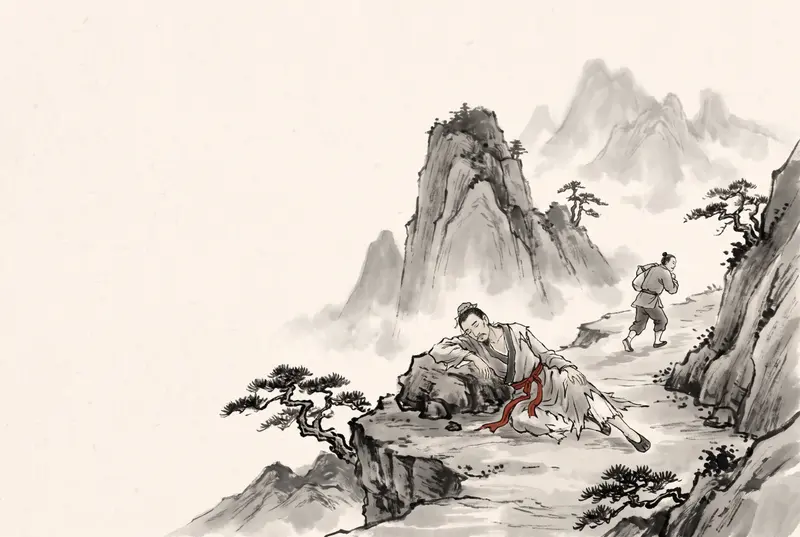
靈王於是獨傍偟山中,野人莫敢入王。王行遇其故鋗人,謂曰:「爲我求食,我已不食三日矣。」鋗人曰:「新王下法,有敢閒王從王者,罪及三族,且又無所得食。」王因枕其股而臥。鋗人又以土自代,逃去。王覺而弗見,遂饑弗能起。芋尹申無宇之子申亥曰:「吾父再犯王命,王弗誅,恩孰大焉!」乃求王,遇王饑於釐澤,奉之以歸。夏五月癸丑,王死申亥家,申亥以二女從死,并葬之。
Kundoku (Japanese reading)
霊王是に於いて独り山中に傍偟す。野人敢えて王を入るる莫し。王行きて其の故の鋗人に遇い、謂いて曰く、「我が為に食を求めよ。我已に食わざること三日なり」と。鋗人曰く、「新王法を下す。敢えて王に閒して王に従う者有らば、罪三族に及ぶと。且つ又食を得る所無し」と。王因りて其の股に枕して臥す。鋗人又土を以て自ら代えて、逃げ去る。王覚めて見えず、遂に饑えて起つ能わず。芋尹申無宇の子申亥曰く、「吾が父再び王命を犯すも、王誅せず。恩孰れか焉より大ならん」と。乃ち王を求め、王の釐沢に饑うるに遇い、之を奉じて以て帰る。夏五月癸丑、王申亥の家に死す。申亥二女を以て従死せしめ、并せて之を葬る。
Japanese
霊王はこうしてただ一人、山の中をさまよった。村人たちは誰も王を家に入れようとしなかった。王は道でかつての宮中の下働きの男に出会い、言った。「何か食べ物を探してきてくれ。もう三日も食べていないのだ」。男は言った。「新しい王が法を出されました。王をかくまったり王に従ったりする者があれば、罪は親・妻・子の三族にまで及ぶ、と。それに、食べ物を手に入れるあてもございません」。王はそこで男のももを枕にして横になった。男は土を王の頭の下に差し入れて自分の代わりにし、逃げて行った。王は目を覚ますと男の姿がなく、飢えて起き上がることもできなかった。芋尹(官名)の申無宇の子の申亥は言った。「父は二度も王のご命令にそむいたが、王は父を罰されなかった。これほど大きな恩はない」。そこで申亥は王を探し、釐沢で飢えている王を見つけて、家に連れ帰った。夏五月癸丑の日、王は申亥の家で亡くなった。申亥は二人の娘を殉死させ、王とともに葬った。
English
So King Ling wandered alone in the mountains, and none of the country people dared take him in. On the way he met a man who had once worked in his palace, and said to him: "Find me something to eat. I have not eaten for three days." The man said: "The new king has made a law: anyone who shelters you or follows you will be punished with his whole family to the third degree. Besides, there is nowhere to get food." The king lay down with his head on the man's thigh. The man slipped a clod of earth under the king's head in place of himself and ran away. When the king woke and found him gone, he was too weak with hunger to get up. Shen Hai, son of Shen Wuyu, the Officer of Yu, said: "My father twice defied the king's orders, and the king did not punish him. What kindness could be greater?" So he went to look for the king, found him starving at the Li marshes, and took him home. On the day guichou in the fifth month, summer, the king died in Shen Hai's house. Shen Hai had his two daughters follow the king in death and buried them with him.
Notes (JA)
- 傍偟: さまよい歩く。
- 野人: 田舎の人、村人。
- 鋗人: 宮中で器などを扱う下働きの者とされる。
- 罪及三族: 罪が親族三代(または父母・妻・子)にまで及ぶ。
- 以土自代: 土を枕代わりに置いて、そっと抜け出した。かつて諸侯を従えた王の、あまりに寂しい最期。
- 從死: 主人の死に従って死ぬ、殉死。
Notes (EN)
- Punished with his whole family (罪及三族): collective punishment reaching three generations.
- Slipped a clod of earth under his head: the lonely end of a king who had once lorded it over the lords.
- Follow the king in death (從死): the old custom of human sacrifice at a ruler's burial.
Word notes
- wander/ˈwɑndər/verb
to walk around without a clear direction
In the text: “wandered alone in the mountains”
Similar words: roam — travel aimlessly · drift — move without purpose
- shelter/ˈʃɛltər/verb
to protect someone by giving them a place to stay
In the text: “anyone who shelters you”
Similar words: harbour — hide and protect · take in — give a home to
Passage 9
Original
太史公曰:楚靈王方會諸侯於申,誅齊慶封,作章華臺,求周九鼎之時,志小天下;及餓死于申亥之家,爲天下笑。操行之不得,悲夫!勢之於人也,可不愼與?棄疾以亂立,嬖淫秦女,甚乎哉,幾再亡國!
Kundoku (Japanese reading)
太史公曰く、楚の霊王方に諸侯を申に会し、斉の慶封を誅し、章華台を作り、周の九鼎を求むるの時、志天下を小とす。申亥の家に餓死するに及び、天下の笑いと為る。操行の得ざる、悲しいかな。勢の人に於けるや、慎まざるべけんや。棄疾乱を以て立ち、秦女に嬖淫す。甚だしいかな、幾ど再び国を亡ぼさんとす。
Japanese
太史公は言う。楚の霊王が申で諸侯を集め、斉の慶封を誅し、章華台を築き、周の九鼎を求めたころ、その志は天下を小さく見るほどだった。だが申亥の家で飢え死にして、天下の笑いものとなった。身の行いがよろしくなかったのは、悲しいことだ。権勢というものは、人にとって慎まなければならないものではないか。棄疾(平王)は乱に乗じて位につき、秦から迎えた(息子の妃となるはずの)女におぼれた。ひどいことだ。もう少しで、また国を滅ぼすところだった。
English
The Grand Historian says: When King Ling of Chu gathered the lords at Shen, put Qing Feng of Qi to death, built the Zhanghua Terrace and asked for the Nine Cauldrons of Zhou, his ambition made the whole realm seem small. Yet he starved to death in Shen Hai's house and became the laughing-stock of the realm. How sad that his conduct fell so short! Should one not be careful with power? Qiji came to the throne through disorder and lost himself in the woman from Qin. How extreme! He all but destroyed the state a second time.
Notes (JA)
- 慶封: 斉の大夫。君主を殺して楚に逃げていたが、霊王に捕らえられて殺された。
- 章華臺: 霊王が築いた壮大な高殿。
- 勢之於人也,可不慎與: 権勢を手にした者こそ、身を慎まねばならない。
- 秦女: 平王は、太子建の妃として秦から迎えた女を自分の妻にした。これが伍子胥の一族の悲劇につながる(巻66)。
Notes (EN)
- Qing Feng (慶封): a grandee of Qi who had murdered his ruler and fled to Chu, where King Ling had him executed.
- The woman from Qin: King Ping took for himself the bride brought from Qin for his crown prince, which led to the tragedy of Wu Zixu's family (vol. 66).
Word notes
- ambition/æmˈbɪʃən/noun
a strong wish for power or success
In the text: “his ambition made the whole realm seem small”
Similar words: aspiration — a great hope · drive — determination
- laughing-stock/ˈlæfɪŋˌstɑk/noun
a person everyone laughs at
In the text: “became the laughing-stock of the realm”
Similar words: figure of fun — one laughed at · joke — one not taken seriously