列伝 · 巻 91
黥布列伝 黥布列傳
入れ墨の王、黥布 當刑而王
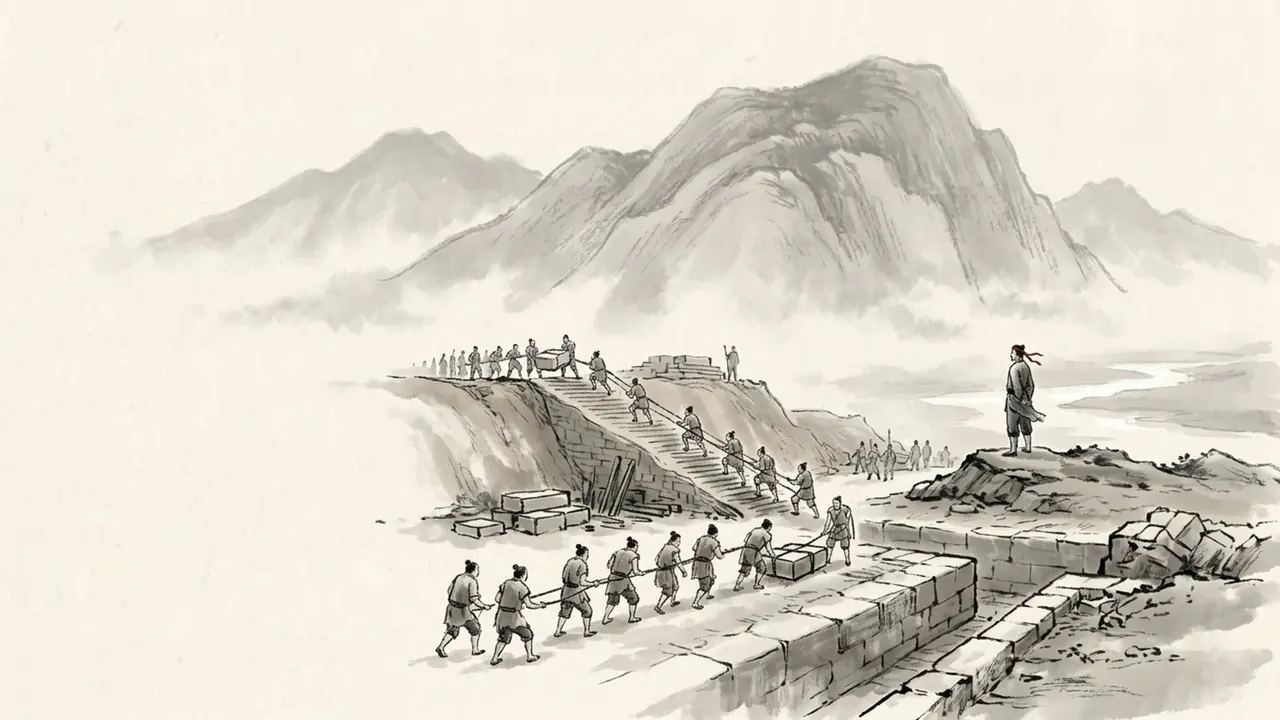
顔に入れ墨の刑を受けた囚人から王になった男、英布(黥布)の物語。若いころ人相見に「刑を受けてから王になる」と言われた英布は、罪を犯して顔に入れ墨をされると、「これで当たったな」と笑った。驪山の始皇帝陵の工事に送られると、囚人の頭たちと手を結んで長江へ逃れ、盗賊の頭となる。陳勝の乱に乗じて兵を挙げ、項羽の先鋒として秦軍を破り、二十万の秦兵の生き埋めにも手を下して、九江王に封じられた。しかし項羽の出兵の命令に病と称して応じず、劉邦の使者隨何に説かれて漢に寝返る。劉邦に足を洗いながら会われて自害しようとするほど怒ったが、宿舎の待遇が王と同じなのを見て大喜びした。天下が定まると淮南王となるが、韓信が殺され、塩漬けにされた彭越の肉が諸侯に配られると、恐れて兵を集める。寵姫をめぐる部下の密告がきっかけとなって反乱を起こし、劉邦に「なぜ背いた」と問われて「帝になりたいだけだ」と答えたが、敗れて殺された。
この巻のうち「入れ墨の王、黥布」の場面を載せています。巻の全文ではありません。
音声
音声は合成音声です。
動画
節 1
原文
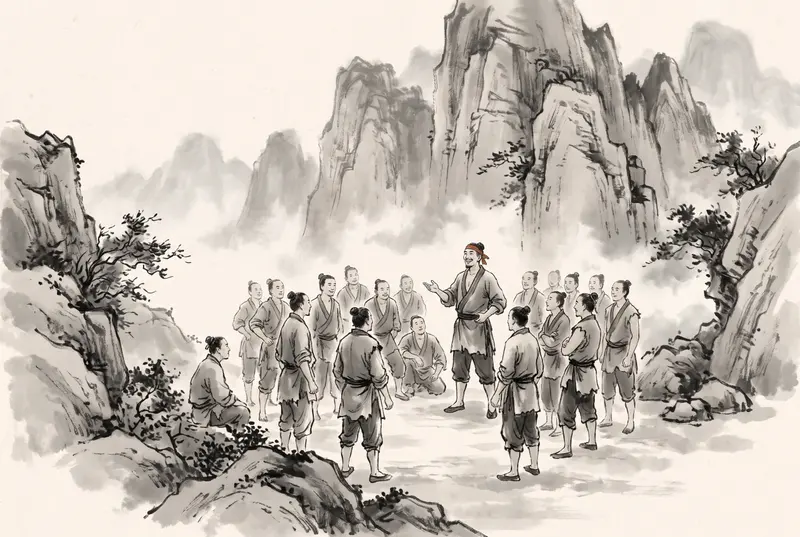
黥布者,六人也,姓英氏。秦時為布衣。少年,有客相之曰:「當刑而王。」及壯,坐法黥。布欣然笑曰;「人相我當刑而王,幾是乎?」人有聞者,共俳笑之。布已論輸麗山,麗山之徒數十萬人,布皆與其徒長豪桀交通,乃率其曹偶,亡之江中為群盜。
書き下し文
黥布は、六の人なり。姓は英氏。秦の時布衣たり。少年のとき、客有りて之を相して曰く、「当に刑せられて王たるべし」と。壮なるに及び、法に坐して黥せらる。布欣然として笑いて曰く、「人我を相して当に刑せられて王たるべしと。幾ど是れか」と。人の聞く者有り、共に俳笑す。布已に論ぜられて麗山に輸さる。麗山の徒数十万人、布皆其の徒長豪桀と交通し、乃ち其の曹偶を率いて、之を江中に亡れて群盗と為る。
現代語訳
黥布は六の人で、姓は英氏である。秦の時代には無位無官の庶民だった。若いころ、ある旅の客が英布の人相を見て、「刑罰を受けてから王になるだろう」と言った。大人になると、法にふれて黥(顔に入れ墨をする刑)を受けた。英布はにこにこして笑い、「人相見は、わたしが刑を受けてから王になると言った。いよいよそれらしくなってきたぞ」と言った。それを聞いた者たちは、皆おかしがって笑った。英布は判決を受けて、驪山(始皇帝陵の工事場)へ送られた。驪山には囚人が数十万人いたが、英布はその頭や乱暴者たちと残らず付き合い、仲間を引き連れて長江のほとりへ逃れ、盗賊の群れとなった。
英訳
Qing Bu was a man of Liu, and his family name was Ying. Under the Qin he was a commoner. When he was young, a stranger read his face and said: "He will be punished, and then he will be a king." When he was grown, he was found guilty of a crime and sentenced to have his face tattooed. Bu laughed happily and said: "A man read my face and said I would be punished and then become a king. This must be it!" Those who heard him all laughed at him. Once sentenced, Bu was sent to labour at Mount Li. There were several hundred thousand convicts at Mount Li, and Bu made friends with all their leaders and toughest men. Then he led a band of his fellows away to the Yangzi, where they became bandits.
解説(日)
- 黥: 顔に入れ墨をする刑。英布はこの刑から「黥布」と呼ばれた。
- 六: 今の安徽省六安市。
- 麗山: 驪山。始皇帝の陵墓が造られていた所(006-qin-shihuang の章)。
- 曹偶: 仲間、同輩。
解説(英)
- Tattooing (黥): a punishment marking the face; from it Ying Bu got the name Qing Bu.
- Liu (六): in present-day Lu'an, Anhui.
- Mount Li (麗山): where the First Emperor's tomb was being built (chapter 006).
英語の語注
- commoner/ˈkɑmənər/noun
an ordinary person without noble rank
本文では: “Under the Qin he was a commoner”
似た語と違い: ordinary person — someone without title · plebeian — a common person (formal)
- bandit/ˈbændɪt/noun
a member of a gang that robs people
本文では: “where they became bandits”
似た語と違い: robber — a person who steals · outlaw — a criminal living outside the law
節 2
原文
項籍之引兵西至新安,又使布等夜擊阬章邯秦卒二十餘萬人。至關,不得入,又使布等先從閒道破關下軍,遂得入,至咸陽。布常為軍鋒。項王封諸將,立布為九江王,都六。漢元年四月,諸侯皆罷戲下,各就國。項氏立懷王為義帝,徙都長沙,乃陰令九江王布等行擊之。其八月,布使將擊義帝,追殺之郴縣。漢二年,齊王田榮畔楚,項王往擊齊,徵兵九江,九江王布稱病不往,遣將將數千人行。漢之敗楚彭城,布又稱病不佐楚。項王由此怨布,數使使者誚讓召布,布愈恐,不敢往。項王方北憂齊、趙,西患漢,所與者獨九江王,又多布材,欲親用之,以故未擊。
書き下し文
項籍の兵を引きて西のかた新安に至るや、又布等をして夜撃ちて章邯の秦卒二十余万人を阬にせしむ。関に至り、入るを得ず。又布等をして先に間道より関下の軍を破らしめ、遂に入るを得て、咸陽に至る。布常に軍鋒たり。項王諸将を封じ、布を立てて九江王と為し、六に都せしむ。漢の元年四月、諸侯皆戯下を罷め、各々国に就く。項氏、懐王を立てて義帝と為し、都を長沙に徙し、乃ち陰かに九江王布等をして行きて之を撃たしむ。其の八月、布将をして義帝を撃たしめ、追いて之を郴県に殺す。漢の二年、斉王田栄楚に畔く。項王往きて斉を撃ち、兵を九江に徴す。九江王布病と称して往かず、将をして数千人を将いて行かしむ。漢の楚を彭城に敗るや、布又病と称して楚を佐けず。項王此に由りて布を怨み、数々使者をして誚譲して布を召さしむ。布愈々恐れ、敢えて往かず。項王方に北のかた斉・趙を憂え、西のかた漢を患う。与する所の者は独り九江王のみ。又布の材を多として、親しく之を用いんと欲す。故を以て未だ撃たず。
現代語訳
(英布は項梁・項羽に従い、いつも軍の先頭に立って手柄を立てた。)項羽が兵を率いて西の新安まで来ると、英布らに命じて、夜、降伏した章邯の秦兵二十万あまりを襲わせ、穴に埋めて殺させた。函谷関まで来ると中に入れなかったので、また英布らに、先に間道から関の下の軍を破らせ、ついに関中に入って咸陽に至った。英布はいつも軍の先鋒だった。項王(項羽)は諸将に領地を与え、英布を九江王に立てて、六を都とさせた。漢の元年(前206年)四月、諸侯は皆、項羽の本陣での集まりを終えて、それぞれ自分の国へ帰った。項羽は楚の懐王を義帝に立てて、都を長沙に移させ、ひそかに九江王英布らに命じて義帝を討たせた。その八月、英布は部将に義帝を襲わせ、郴県まで追って殺した。漢の二年、斉王田栄が楚に背いた。項王は斉を討ちに行き、九江に兵を出すよう求めたが、九江王英布は病と称して自分は行かず、部将に数千人を率いて行かせただけだった。漢が彭城で楚を破ったときも、英布はまた病と称して楚を助けなかった。項王はこれで英布を恨み、何度も使者を送って責め、呼びつけたが、英布はますます恐れて行こうとしなかった。項王は北では斉と趙に手を焼き、西では漢に悩まされていて、味方は九江王だけだった。それに英布の才能を高く買っていて、そば近くで使いたいと思っていた。だからまだ英布を討たずにいた。
英訳
When Xiang Ji led his army west to Xin'an, he sent Bu and others to attack by night the soldiers of Qin who had surrendered with Zhang Han, more than two hundred thousand of them, and bury them in pits. When they reached the pass they could not get in, so again he sent Bu and others ahead by a side road to break the army below the pass. So at last they got through and reached Xianyang. Bu was always at the spearhead of the army. When King Xiang gave fiefs to his generals, he made Bu King of Jiujiang, with his capital at Liu. In the fourth month of the first year of Han, the lords all left Xiang Yu's headquarters and went to their own states. Xiang Yu made King Huai the Righteous Emperor, moved his capital to Changsha, and secretly sent Bu, King of Jiujiang, and others to attack him. In the eighth month Bu sent a general to attack the Righteous Emperor, who was chased to Chen county and killed. In the second year of Han, Tian Rong, King of Qi, rebelled against Chu. King Xiang went to attack Qi and called for troops from Jiujiang. Bu, King of Jiujiang, said he was ill and did not go; he sent a general with a few thousand men instead. When Han defeated Chu at Pengcheng, Bu again said he was ill and did not help Chu. From then on King Xiang bore a grudge against Bu, and kept sending envoys to rebuke him and summon him. Bu grew more and more frightened and did not dare go. But King Xiang was worried about Qi and Zhao to the north and troubled by Han to the west, and his only ally was the King of Jiujiang. Besides, he thought highly of Bu's talents and wanted to keep him close and use him. So he did not attack him yet.
解説(日)
- 新安: 今の河南省新安県。項羽はここで、降伏した秦兵二十万あまりを生き埋めにした(007-julu の章)。
- 義帝: 楚の懐王。項羽が名目だけの天子とし、のちに殺させた。劉邦はこれを項羽を討つ大義名分にした。
- 戲下: 項羽の本陣。諸侯はここで領地の割りふりを受けた。
解説(英)
- Xin'an (新安): in Henan, where some two hundred thousand surrendered Qin soldiers were buried alive (chapter 007, Julu).
- The Righteous Emperor (義帝): King Huai of Chu, a figurehead whose murder Liu Bang later used as a reason for war on Xiang Yu.
- Xiang Yu's headquarters (戲下): where the lords received their fiefs after the fall of Qin.
英語の語注
- spearhead/ˈspɪrˌhɛd/noun
the front part of an attacking army
本文では: “Bu was always at the spearhead of the army”
似た語と違い: vanguard — the front of an army · front line — the place nearest the enemy
- rebuke/rɪˈbjuk/verb
to speak angrily to someone who has done wrong
本文では: “kept sending envoys to rebuke him”
似た語と違い: reproach — express disapproval · scold — speak angrily to
節 3
原文
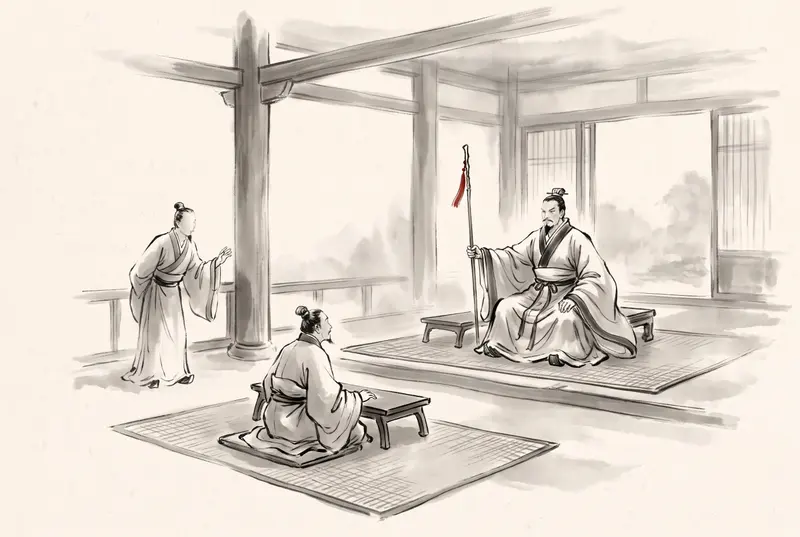
漢三年,漢王擊楚,大戰彭城,不利,出梁地,至虞,謂左右曰:「如彼等者,無足與計天下事。」謁者隨何進曰:「不審陛下所謂。」漢王曰:「孰能為我使淮南,令之發兵倍楚,留項王於齊數月,我之取天下可以百全。」隨何曰:「臣請使之。」乃與二十人俱,使淮南。至,因太宰主之,三日不得見。隨何因說太宰曰:「王之不見何,必以楚為彊,以漢為弱,此臣之所以為使。使何得見,言之而是邪,是大王所欲聞也;言之而非邪,使何等二十人伏斧質淮南市,以明王倍漢而與楚也。」太宰乃言之王,王見之。
書き下し文
漢の三年、漢王楚を撃ち、大いに彭城に戦い、利あらず。梁の地を出でて、虞に至り、左右に謂いて曰く、「彼等の如き者は、与に天下の事を計るに足る無し」と。謁者隨何進みて曰く、「陛下の謂う所を審らかにせず」と。漢王曰く、「孰か能く我が為に淮南に使いし、之をして兵を発して楚に倍かしめ、項王を斉に留むること数月ならしめん。我の天下を取ること以て百全なるべし」と。隨何曰く、「臣請う、之に使いせん」と。乃ち二十人と倶に、淮南に使いす。至りて、太宰に因りて之を主とせしむるも、三日見ゆるを得ず。隨何因りて太宰に説きて曰く、「王の何に見えざるは、必ず楚を以て彊と為し、漢を以て弱と為せばなり。此れ臣の使いと為る所以なり。何をして見ゆるを得しめよ。之を言いて是ならんか、是れ大王の聞かんと欲する所なり。之を言いて非ならんか、何等二十人をして斧質に淮南の市に伏せしめ、以て王の漢に倍きて楚に与するを明らかにせん」と。太宰乃ち之を王に言う。王之に見ゆ。
現代語訳
漢の三年(前205年。実際には二年)、漢王(劉邦)は楚を攻めて彭城で大いに戦ったが、敗れた。梁の地を抜けて虞まで来ると、側近たちに言った。「お前たちのような者とは、天下のことを相談できない」。謁者(取り次ぎ役)の隨何が進み出て、「おっしゃることがよく分かりません」と言うと、漢王は言った。「だれか、わたしのために淮南へ使いに行き、英布に兵を挙げて楚に背かせ、項王を数か月斉に足止めさせる者はいないか。そうすれば、わたしが天下を取るのは万に一つの失敗もない」。隨何は「わたしに行かせてください」と言い、二十人を連れて淮南へ向かった。着くと、太宰(料理番の長)に世話をしてもらったが、三日たっても英布に会えなかった。そこで隨何は太宰に説いた。「王がわたしに会ってくださらないのは、きっと楚を強く、漢を弱いと思っておられるからでしょう。だからこそ、わたしは使いに来たのです。会わせてください。わたしの言うことが正しければ、王の聞きたいことのはずです。間違っていれば、わたしたち二十人を淮南の市場で斬り殺して、王が漢に背いて楚に味方していることを明らかにすればよいのです」。太宰がこのことを王に伝えると、王は隨何に会った。
英訳
In the third year of Han, the king of Han attacked Chu and fought a great battle at Pengcheng, and lost. He escaped through the land of Liang to Yu, and said to the men around him: "Men like you are no use for planning the affairs of the realm." Sui He, an usher, came forward and said: "I do not understand what Your Majesty means." The king of Han said: "Who can go to Huainan for me, persuade Ying Bu to raise his troops and turn against Chu, and keep King Xiang held up in Qi for a few months? Then I would be sure to take the realm." Sui He said: "Let me go." So with twenty men he went as envoy to Huainan. When he arrived, he was put in the care of the king's chief steward, but for three days he could not see the king. So Sui He said to the steward: "The king will not see me because he must think that Chu is strong and Han is weak. That is exactly why I have come. Let me see him. If what I say is right, it is what the king wants to hear. If what I say is wrong, let me and my twenty men be laid on the block in the market place of Huainan, to show that the king has turned against Han and sided with Chu." The steward told the king, and the king saw him.
解説(日)
- 漢三年: 彭城の戦いは実際には漢の二年(前205年)。史記のなかで年が食い違っている。
- 淮南: 英布の九江国。淮水の南にあったので、こう呼ぶ。
- 斧質: 処刑に使うおのと台。
- このあと隨何は、楚の不義と漢の有利を長々と説き、英布はひそかに漢につくことを約束する(ここでは省く)。
解説(英)
- The third year: the battle of Pengcheng was actually in the second year of Han (205 BCE).
- Huainan (淮南): Ying Bu's kingdom of Jiujiang, south of the Huai River.
- Laid on the block (伏斧質): executed with the axe.
- Sui He then makes a long speech on Chu's injustice and Han's advantages, left out here; Ying Bu secretly agrees.
英語の語注
- usher/ˈʌʃər/noun
an official who brings visitors in to see a ruler
本文では: “Sui He, an usher, came forward”
似た語と違い: attendant — a servant who waits on someone · herald — an official messenger
- steward/ˈstuərd/noun
a person who manages a household for someone
本文では: “the king's chief steward”
似た語と違い: manager — a person in charge · butler — the head servant of a house
節 4
原文
淮南王曰:「請奉命。」陰許畔楚與漢,未敢泄也。楚使者在,方急責英布發兵,舍傳舍。隨何直入,坐楚使者上坐,曰:「九江王已歸漢,楚何以得發兵?」布愕然。楚使者起。何因說布曰:「事已搆,可遂殺楚使者,無使歸,而疾走漢并力。」布曰:「如使者教,因起兵而擊之耳。」於是殺使者,因起兵而攻楚。楚使項聲、龍且攻淮南,項王留而攻下邑。數月,龍且擊淮南,破布軍。布欲引兵走漢,恐楚王殺之,故閒行與何俱歸漢。
書き下し文
淮南王曰く、「請う、命を奉ぜん」と。陰かに楚に畔きて漢に与することを許すも、未だ敢えて泄らさず。楚の使者在り、方に急に英布に兵を発せんことを責め、伝舎に舎る。隨何直ちに入り、楚の使者の上坐に坐して曰く、「九江王已に漢に帰せり。楚何を以て兵を発せしむるを得んや」と。布愕然たり。楚の使者起つ。何因りて布に説きて曰く、「事已に搆う。遂に楚の使者を殺し、帰らしむる無くして、疾く漢に走りて力を并すべし」と。布曰く、「使者の教えの如く、因りて兵を起こして之を撃たんのみ」と。是に於いて使者を殺し、因りて兵を起こして楚を攻む。楚、項声・龍且をして淮南を攻めしめ、項王留まりて下邑を攻む。数月、龍且淮南を撃ち、布の軍を破る。布兵を引きて漢に走らんと欲するも、楚王の之を殺さんことを恐れ、故に間行して何と倶に漢に帰す。
現代語訳
(隨何の長い説得を聞いて、)淮南王は「仰せに従いましょう」と言い、ひそかに楚に背いて漢につくことを約束したが、まだ表には出さなかった。ちょうど楚の使者が来ていて、英布に早く兵を出すよう厳しく求め、宿舎に泊まっていた。隨何はいきなり入っていき、楚の使者より上の席に座って言った。「九江王はもう漢についた。楚がどうして兵を出させることができようか」。英布はあっけにとられ、楚の使者は席を立った。隨何はそこで英布に説いた。「事はもう起こってしまいました。いっそ楚の使者を殺して帰らせず、急いで漢と力を合わせなさい」。英布は「使者どのの言うとおり、兵を起こして楚を討つだけだ」と言った。こうして楚の使者を殺し、兵を挙げて楚を攻めた。楚は項声と龍且に淮南を攻めさせ、項王自身は下邑を攻めるためにとどまった。数か月後、龍且は淮南を攻めて英布の軍を破った。英布は兵を率いて漢へ逃れようとしたが、楚王に殺されるのを恐れて、こっそり裏道を通り、隨何とともに漢へ身を寄せた。
英訳
The king of Huainan said: "I will do as you say." He secretly agreed to turn against Chu and side with Han, but he did not yet dare let it be known. An envoy from Chu was there, urgently pressing Ying Bu to send troops, and was staying at the guest house. Sui He walked straight in, sat down in the seat above the Chu envoy, and said: "The King of Jiujiang has already gone over to Han. How can Chu make him send troops?" Bu was dumbfounded, and the Chu envoy got up. Then Sui He said to Bu: "The thing is done. You had better kill the Chu envoy so that he cannot go back, and hurry to join forces with Han." Bu said: "As you say, envoy. I shall raise my troops and attack Chu, that is all." So he killed the envoy, raised his troops and attacked Chu. Chu sent Xiang Sheng and Long Ju to attack Huainan, while King Xiang stayed to attack Xiayi. After a few months Long Ju attacked Huainan and broke Bu's army. Bu wanted to lead his troops to Han, but he feared that the king of Chu would kill him on the way, so he went by back roads with Sui He and came over to Han.
解説(日)
- 傳舍: 使者などが泊まる公の宿舎。
- 隨何は楚の使者の前で英布の寝返りを明かし、英布が後もどりできないようにした。
- 龍且: 項羽の将。のちに韓信に濰水で敗れて死ぬ。
解説(英)
- The guest house (傳舍): official lodgings for envoys.
- By speaking out in front of the Chu envoy, Sui He left Ying Bu no way back.
- Long Ju (龍且): Xiang Yu's general, later killed by Han Xin at the Wei River.
英語の語注
- dumbfounded/ˈdʌmˌfaʊndɪd/adjective
so surprised that you cannot speak
本文では: “Bu was dumbfounded”
似た語と違い: astonished — very surprised · speechless — unable to speak
- back road/bæk roʊd/noun
a small road away from the main routes
本文では: “he went by back roads with Sui He”
似た語と違い: byway — a small side road · side road — a minor road
節 5
原文
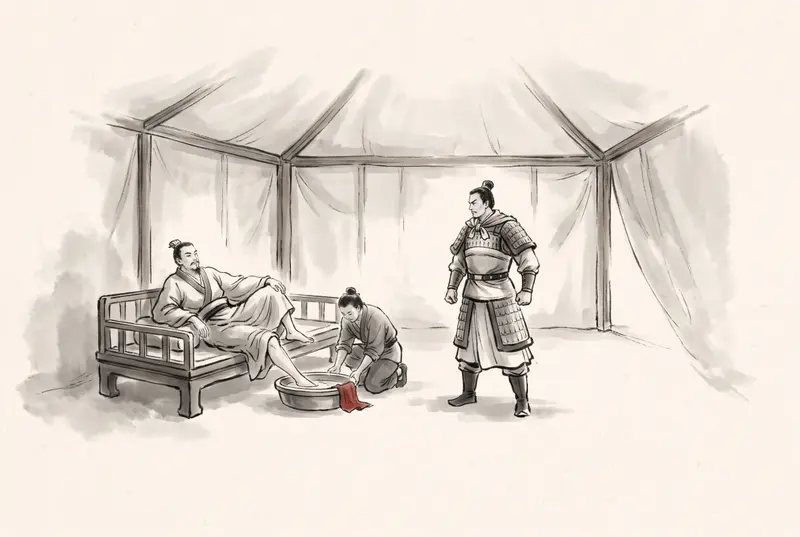
淮南王至,上方踞床洗,召布入見,布(甚)大怒,悔來,欲自殺。出就舍,帳御飲食從官如漢王居,布又大喜過望。於是乃使人入九江。楚已使項伯收九江兵,盡殺布妻子。布使者頗得故人幸臣,將眾數千人歸漢。漢益分布兵而與俱北,收兵至成皋。四年七月,立布為淮南王,與擊項籍。
書き下し文
淮南王至る。上方に床に踞して洗い、布を召して入りて見えしむ。布(甚)大いに怒り、来たるを悔い、自殺せんと欲す。出でて舎に就くに、帳御・飲食・従官、漢王の居の如し。布又大いに喜びて望みに過ぐ。是に於いて乃ち人をして九江に入らしむ。楚已に項伯をして九江の兵を収めしめ、尽く布の妻子を殺す。布の使者頗る故人・幸臣を得て、衆数千人を将いて漢に帰す。漢益々布に兵を分かちて与に倶に北し、兵を収めて成皋に至る。四年七月、布を立てて淮南王と為し、与に項籍を撃つ。
現代語訳
淮南王英布がやって来ると、漢王はちょうど寝台に足を投げ出して座り、足を洗わせていたが、そのまま英布を呼び入れて会った。英布はひどく腹を立て、来たことを後悔して、自殺しようとまで思った。ところが退出して宿舎に行くと、とばりや調度、飲食や付き人まで、漢王の住まいと同じだった。英布は今度は望んだ以上だと大喜びした。そこで人を九江へやった。楚はすでに項伯に九江の兵を取りまとめさせ、英布の妻子をことごとく殺していた。英布の使者は昔なじみや寵臣たちをかなり見つけ出し、数千人を率いて漢へ帰ってきた。漢はさらに英布に兵を分け与え、ともに北へ向かい、兵を集めながら成皋まで来た。漢の四年七月、英布を淮南王に立て、ともに項籍(項羽)を攻めた。
英訳
When the King of Huainan arrived, the emperor was sitting sprawled on a couch having his feet washed, and he called Bu in to see him like that. Bu was furious and sorry he had come, and wanted to kill himself. But when he went out to his lodgings, he found that the curtains, the furnishings, the food and drink and the attendants were just like those in the king of Han's own quarters. Then Bu was delighted beyond all his hopes. He sent men into Jiujiang. Chu had already sent Xiang Bo to take over the troops of Jiujiang, and Bu's wife and children had all been killed. But Bu's men found many of his old friends and favourite officers, and brought several thousand men back to Han. Han gave Bu more troops, and together they went north, gathering soldiers as far as Chenggao. In the seventh month of the fourth year, Bu was made King of Huainan, and joined in the attack on Xiang Ji.
解説(日)
- 踞牀洗: 寝台に足を投げ出して座り、足を洗わせていた。客に対して無礼な態度。劉邦は酈食其に会ったときも同じだった(097-li-yiji-lu-jia の章)。
- (甚): 校勘で削る字。
- 劉邦は、まず無礼で英布の気位をくじき、次に手厚いもてなしで心をつかんだとも読める。
解説(英)
- Sprawled on a couch having his feet washed (踞牀洗): an insult to a guest; Liu Bang received Li Yiji in the same way (chapter 097).
- One reading is that Liu Bang first humbled Ying Bu's pride, then won him with generosity.
- Xiang Bo (項伯): Xiang Yu's uncle, who had saved Liu Bang at Hongmen.
英語の語注
- sprawl/sprɔl/verb
to sit or lie with arms and legs spread out carelessly
本文では: “sitting sprawled on a couch”
似た語と違い: lounge — sit lazily · loll — lie in a lazy way
- furious/ˈfjʊriəs/adjective
extremely angry
本文では: “Bu was furious and sorry he had come”
似た語と違い: enraged — very angry · livid — extremely angry (informal)
節 6
原文
十一年,高后誅淮陰侯,布因心恐。夏,漢誅梁王彭越,醢之,盛其醢遍賜諸侯。至淮南,淮南王方獵,見醢,因大恐,陰令人部聚兵,候伺旁郡警急。布所幸姬疾,請就醫,醫家與中大夫賁赫對門,姬數如醫家,賁赫自以為侍中,乃厚餽遺,從姬飲醫家。姬侍王,從容語次,譽赫長者也。王怒曰:「汝安從知之?」具說狀。王疑其與亂。赫恐,稱病。王愈怒,欲捕赫。赫言變事,乘傳詣長安。布使人追,不及。赫至,上變,言布謀反有端,可先未發誅也。上讀其書,語蕭相國。相國曰:「布不宜有此,恐仇怨妄誣之。請擊赫,使人微驗淮南王。」淮南王布見赫以罪亡,上變,固已疑其言國陰事;漢使又來,頗有所驗,遂族赫家,發兵反。反書聞,上乃赦賁赫,以為將軍。
書き下し文
十一年、高后淮陰侯を誅す。布因りて心に恐る。夏、漢梁王彭越を誅し、之を醢にし、其の醢を盛りて遍く諸侯に賜う。淮南に至る。淮南王方に猟す。醢を見て、因りて大いに恐れ、陰かに人をして兵を部聚せしめ、旁郡の警急を候伺せしむ。布の幸する所の姫疾み、医に就かんことを請う。医家は中大夫賁赫と門を対す。姫数々医家に如く。賁赫自ら以為えらく侍中なりと。乃ち厚く餽遺し、姫に従いて医家に飲む。姫王に侍し、従容として語の次、赫を誉めて長者なりとす。王怒りて曰く、「汝安くより之を知る」と。具に状を説く。王其の与に乱るるを疑う。赫恐れ、病と称す。王愈々怒り、赫を捕えんと欲す。赫変事を言わんとし、伝に乗りて長安に詣る。布人をして追わしむるも、及ばず。赫至りて変を上り、布の謀反に端有り、未だ発せざるに先んじて誅すべしと言う。上其の書を読み、蕭相国に語る。相国曰く、「布宜しく此れ有るべからず。恐らくは仇怨妄りに之を誣うるならん。請う、赫を撃ち、人をして微かに淮南王を験せしめん」と。淮南王布、赫の罪を以て亡げ、変を上るを見て、固より已に其の国の陰事を言わんことを疑う。漢の使い又来たり、頗る験する所有り。遂に赫の家を族し、兵を発して反す。反書聞こゆ。上乃ち賁赫を赦し、以て将軍と為す。
現代語訳
高祖の十一年(前196年)、呂后が淮陰侯韓信を殺した。英布はこれを知って心の中で恐れた。その夏、漢は梁王彭越を殺して塩漬けの肉にし、それを器に盛って諸侯に配った。それが淮南に届いたとき、淮南王はちょうど狩りをしていた。塩漬けの肉を見て大いに恐れ、ひそかに人をやって兵を集めさせ、近くの郡で何か急な動きがないかをうかがわせた。英布の寵愛する姫が病気になり、医者にかかりたいと願い出た。医者の家は、中大夫の賁赫の家と門が向かい合っていた。姫が何度も医者の家へ通うので、賁赫は自分も王のそば近くに仕える身だからと、手厚い贈り物をし、姫と医者の家で酒を飲んだ。姫は王のそばに仕えているとき、何気ない話のついでに、賁赫はりっぱな人だとほめた。王は怒って「お前はどうしてそんなことを知っている」と言い、姫はいちぶしじゅうを話した。王は二人が密通しているのではないかと疑った。賁赫は恐れて病と称したが、王はますます怒って賁赫を捕らえようとした。賁赫は謀反を訴え出ようと、駅伝の車で長安へ走った。英布は人に追わせたが、追いつけなかった。賁赫は長安に着くと、英布に謀反のきざしがあるので、事を起こす前に先に討つべきだと上書した。皇帝はその書を読んで、相国の蕭何に話した。蕭何は言った。「英布がそんなことをするはずがありません。恨みからでたらめに言っているのでしょう。賁赫を捕らえておいて、人をやって淮南王をひそかに調べさせてください」。淮南王英布は、賁赫が罪を犯して逃げ、謀反を訴えたと知って、自分の国の秘密を話したにちがいないと疑っていた。そこへ漢の使者まで来て、あれこれ証拠をつかんでいった。そこで英布はついに賁赫の一族を皆殺しにし、兵を挙げて反乱を起こした。反乱の知らせが届くと、皇帝は賁赫を許して将軍にした。
英訳
In the eleventh year, Empress Lü put the Marquis of Huaiyin to death, and Bu was afraid in his heart. That summer, Han executed Peng Yue, the King of Liang, had his body made into pickled meat, and sent it round in dishes to all the lords. When it reached Huainan, the king was out hunting. When he saw the pickled meat he was terrified, and secretly had men gather troops and keep watch for any alarm in the neighbouring commanderies. A favourite concubine of Bu's fell ill and asked to go to a doctor. The doctor's house stood opposite the gate of Ben He, a palace grandee. The concubine went to the doctor's house several times, and Ben He, thinking that as a member of the household he could do so, gave her rich gifts and drank with her at the doctor's. When the concubine was waiting on the king, she mentioned in passing that Ben He was a fine gentleman. The king said angrily: "How do you know that?" She told him everything, and the king suspected that the two of them were having an affair. Ben He took fright and said he was ill. The king grew angrier still and wanted to arrest him. Ben He decided to report a plot, and rode post to Chang'an. Bu sent men after him, but they could not catch him. When Ben He arrived, he reported that Bu was showing signs of rebellion, and should be dealt with before he could act. The emperor read the letter and told Chancellor Xiao He. The chancellor said: "Bu would never do such a thing. I fear it is a false charge made out of spite. Let Ben He be held, and let someone secretly look into the King of Huainan." But Bu, the King of Huainan, knew that Ben He had fled after a crime and reported a plot, and he had no doubt that he had told the secrets of his kingdom. Then the Han envoys came too, and found a good deal of proof. So at last Bu wiped out Ben He's whole family, raised his troops and rebelled. When news of the rebellion arrived, the emperor pardoned Ben He and made him a general.
解説(日)
- 醢: 人の肉を塩漬けにする極刑。彭越の肉を諸侯に配ったのは、謀反への見せしめだった。
- 韓信・彭越・英布: 漢の建国の三大功臣で、いずれも王に封じられ、相次いで滅ぼされた。
- 上變: 謀反などの重大な事件を訴え出ること。
解説(英)
- Pickled meat (醢): the punishment of having one's flesh salted; sending it round was a warning to the other kings.
- Han Xin, Peng Yue and Ying Bu: the three great kings among Liu Bang's allies, destroyed one after another.
- Reported a plot (上變): denounced a treason to the throne.
英語の語注
- concubine/ˈkɑŋkjəˌbaɪn/noun
a woman who lives with a man as a lesser wife
本文では: “A favourite concubine of Bu's fell ill”
似た語と違い: mistress — a man's lover · consort — a partner of a ruler
- spite/spaɪt/noun
the wish to hurt or upset someone
本文では: “a false charge made out of spite”
似た語と違い: malice — the wish to do harm · ill will — bad feeling towards someone
節 7
原文
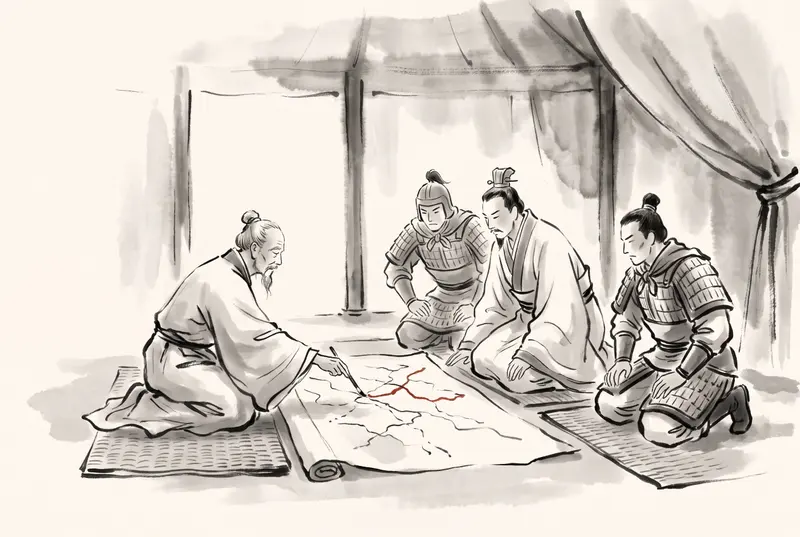
上乃召見問薛公。薛公對曰:「布反不足怪也。使布出於上計,山東非漢之有也;出於中計,勝敗之數未可知也;出於下計,陛下安枕而臥矣。」上曰:「何謂上計?」令尹對曰:「東取吳,西取楚,并齊取魯,傳檄燕、趙,固守其所,山東非漢之有也。」「何謂中計?」「東取吳,西取楚,并韓取魏,據敖庾之粟,塞成皋之口,勝敗之數未可知也。」「何謂下計?」「東取吳,西取下蔡,歸重於越,身歸長沙,陛下安枕而臥,漢無事矣。」上曰:「是計將安出?」令尹對曰:「出下計。」上曰:「何謂廢上中計而出下計?」令尹曰:「布故麗山之徒也,自致萬乘之主,此皆為身,不顧後為百姓萬世慮者也,故曰出下計。」上曰:「善。」封薛公千戶。乃立皇子長為淮南王。上遂發兵自將東擊布。
書き下し文
上乃ち召し見えて薛公に問う。薛公対えて曰く、「布の反するは怪しむに足らざるなり。布をして上計に出でしめば、山東は漢の有に非ざらん。中計に出でしめば、勝敗の数未だ知るべからず。下計に出でしめば、陛下は枕を安んじて臥せん」と。上曰く、「何をか上計と謂う」と。令尹対えて曰く、「東のかた呉を取り、西のかた楚を取り、斉を并せて魯を取り、檄を燕・趙に伝え、其の所を固守せば、山東は漢の有に非ざらん」と。「何をか中計と謂う」と。「東のかた呉を取り、西のかた楚を取り、韓を并せて魏を取り、敖庾の粟に拠り、成皋の口を塞がば、勝敗の数未だ知るべからず」と。「何をか下計と謂う」と。「東のかた呉を取り、西のかた下蔡を取り、重きを越に帰し、身は長沙に帰らば、陛下は枕を安んじて臥し、漢は事無からん」と。上曰く、「是の計将た安くにか出でん」と。令尹対えて曰く、「下計に出でん」と。上曰く、「何をか上中の計を廃して下計に出づと謂う」と。令尹曰く、「布は故の麗山の徒なり。自ら万乗の主を致す。此れ皆身の為にして、後の為に百姓万世の慮を為すを顧みざる者なり。故に下計に出づと曰う」と。上曰く、「善し」と。薛公を千戸に封ず。乃ち皇子長を立てて淮南王と為す。上遂に兵を発し、自ら将として東のかた布を撃つ。
現代語訳
(諸将は「兵を出して、小僧を穴埋めにすればよいだけです」と言ったが、夏侯嬰は、以前楚の令尹だった薛公という客の意見を聞くよう皇帝にすすめた。)そこで皇帝は薛公を呼んでたずねた。薛公は答えた。「英布が背いたのは、ふしぎではありません。英布が上策をとれば、山東(函谷関より東)は漢のものではなくなります。中策をとれば、勝ち負けは分かりません。下策をとれば、陛下は枕を高くしてお休みになれます」。皇帝が「上策とは何か」と聞くと、薛公は答えた。「東は呉を取り、西は楚を取り、斉を併せて魯を取り、燕と趙に檄文を回して、それぞれの地を固く守れば、山東は漢のものではなくなります」。「中策とは」。「東は呉を取り、西は楚を取り、韓を併せて魏を取り、敖倉の穀物を押さえ、成皋の入り口をふさげば、勝ち負けは分かりません」。「下策とは」。「東は呉を取り、西は下蔡を取り、大切な物を越に移し、自分は長沙に退けば、陛下は枕を高くしてお休みになれ、漢は無事です」。皇帝が「英布はどの策をとるだろうか」と聞くと、薛公は「下策をとるでしょう」と答えた。「なぜ上策や中策を捨てて、下策をとると言うのか」と聞くと、薛公は言った。「英布はもと驪山の囚人で、自分の力で一万台の兵車をもつ王にまでなりました。これは皆、自分の身のためで、後の世や民のために、万世の先まで考えようとする男ではありません。だから下策をとると申すのです」。皇帝は「よし」と言い、薛公に千戸の領地を与えた。そして皇子の劉長を淮南王に立て、自ら兵を率いて東の英布を討った。
英訳
So the emperor called in Master Xue and asked him. Master Xue answered: "There is nothing strange in Bu's rebellion. If Bu follows the best plan, everything east of the mountains will be lost to Han. If he follows the middle plan, no one can tell who will win. If he follows the worst plan, Your Majesty can lie down and sleep in peace." The emperor said: "What is the best plan?" The former chief minister answered: "To take Wu in the east and Chu in the west, swallow up Qi and take Lu, send a call to arms to Yan and Zhao, and hold firm where he is. Then everything east of the mountains will be lost to Han." "And the middle plan?" "To take Wu in the east and Chu in the west, swallow up Han and take Wei, seize the grain of the Ao granary and block the mouth of Chenggao. Then no one can tell who will win." "And the worst plan?" "To take Wu in the east and Xiacai in the west, send his treasures to Yue, and go himself to Changsha. Then Your Majesty can lie down and sleep in peace, and Han will have nothing to fear." The emperor said: "Which plan will he choose?" The former chief minister answered: "The worst." The emperor said: "Why do you say he will throw away the best and the middle plans and choose the worst?" The former chief minister said: "Bu was once a convict at Mount Li. He made himself the master of ten thousand chariots by his own efforts. Everything he does is for himself; he gives no thought to what comes after, or to the people for ten thousand generations. That is why I say he will choose the worst plan." The emperor said: "Good." He gave Master Xue a fief of a thousand households, made his son Chang King of Huainan, and then raised his army and set out east to attack Bu himself.
解説(日)
- 薛公: 以前楚の令尹(宰相)だった人物で、夏侯嬰(滕公)の客。
- 山東: 崤山(または函谷関)より東の地方。
- 敖庾: 敖倉。滎陽の近くにあった秦以来の大きな穀物倉。
- 安枕而臥: 枕を安らかにして寝る。心配がないこと。「枕を高くして寝る」に近い。
解説(英)
- Master Xue (薛公): once chief minister of Chu, a guest of Xiahou Ying.
- East of the mountains (山東): the lands east of the Xiao mountains and the Hangu Pass.
- The Ao granary (敖庾): the great grain store near Xingyang.
- Sleep in peace (安枕而臥): to have nothing to worry about.
この節から生まれた言葉: 枕を安んじて臥す
英語の語注
- granary/ˈɡreɪnəri/noun
a building where grain is stored
本文では: “seize the grain of the Ao granary”
似た語と違い: storehouse — a building for storing goods · barn — a farm building for crops
- convict/ˈkɑnvɪkt/noun
a person found guilty of a crime and punished
本文では: “Bu was once a convict at Mount Li”
似た語と違い: prisoner — a person held in prison · felon — a person guilty of a serious crime
節 8
原文
遂西,與上兵遇蘄西會甀。布兵精甚,上乃壁庸城,望布軍置陳如項籍軍,上惡之。與布相望見,遙謂布曰:「何苦而反?」布曰:「欲為帝耳。」上怒罵之,遂大戰。布軍敗走,渡淮,數止戰,不利,與百餘人走江南。布故與番君婚,以故長沙哀王使人紿布,偽與亡,誘走越,故信而隨之番陽。番陽人殺布茲鄉民田舍,遂滅黥布。
書き下し文
遂に西し、上の兵と蘄西の会甀に遇う。布の兵甚だ精なり。上乃ち庸城に壁し、布の軍の陳を置くこと項籍の軍の如きを望み、上之を悪む。布と相望見し、遥かに布に謂いて曰く、「何ぞ苦しみて反するや」と。布曰く、「帝たらんと欲するのみ」と。上怒りて之を罵り、遂に大いに戦う。布の軍敗走し、淮を渡り、数々止まりて戦うも、利あらず、百余人と江南に走る。布故と番君と婚す。故を以て長沙の哀王人をして布を紿かしめ、偽りて与に亡げ、誘いて越に走らしむ。故に信じて之に随いて番陽に之く。番陽の人、布を茲郷の民の田舎に殺し、遂に黥布を滅ぼす。
現代語訳
(英布は荊と楚を破ると、)西へ進み、蘄の西の会甀で皇帝の軍と出会った。英布の兵はたいへん精強だった。皇帝は庸城に陣を構えて、英布の軍が項羽の軍そっくりに陣を張っているのを見渡し、いやな気がした。英布と遠く向かい合うと、皇帝は英布に呼びかけた。「何が不満で背いたのか」。英布は「帝になりたいだけだ」と答えた。皇帝は怒ってののしり、大戦となった。英布の軍は敗れて逃げ、淮水を渡り、何度も踏みとどまって戦ったが勝てず、百人あまりと長江の南へ逃れた。英布はかつて番君(呉芮)の娘を妻にしていた。そのため、番君の孫の長沙の哀王は人をやって英布をだまし、いっしょに逃げるふりをして、越へ逃げようと誘った。英布はそれを信じてついて行き、番陽へ向かった。番陽の人が、茲郷の農家で英布を殺した。こうして黥布は滅んだ。
英訳
So Bu went west, and met the emperor's army at Kuaizhui, west of Qi county. Bu's troops were very fine. The emperor built a fortified camp at Yongcheng. Looking out, he saw that Bu had drawn up his army just as Xiang Ji used to, and he did not like it. When they came within sight of each other, the emperor called out to Bu from afar: "What drove you to rebel?" Bu said: "I want to be emperor, that is all." The emperor cursed him in a rage, and they fought a great battle. Bu's army was beaten and fled across the Huai. Several times it stopped to fight, without success, and Bu fled south of the Yangzi with a hundred or so men. Bu had once married the daughter of the Lord of Po. Because of this, King Ai of Changsha sent men to trick Bu, pretending to flee with him and luring him to run away to Yue. Bu believed them and followed them to Poyang. There the men of Poyang killed him in a farmhouse in Zixiang, and that was the end of Qing Bu.
解説(日)
- 會甀: 今の安徽省宿州市のあたり。
- 欲為帝耳: 「帝になりたいだけだ」。劉邦の「なぜ」に、英布は言いわけをせず野心をそのまま答えた。
- 番君: 呉芮。秦末に番陽(鄱陽)の県令から長沙王となった。英布の妻の父。
- 劉邦はこの戦いで流れ矢にあたり、その傷がもとで翌年亡くなる。
解説(英)
- Kuaizhui (會甀): near Suzhou in northern Anhui.
- "I want to be emperor, that is all" (欲為帝耳): Ying Bu gives no excuse, only his ambition.
- The Lord of Po (番君): Wu Rui, later King of Changsha, Ying Bu's father-in-law.
- Liu Bang was wounded by an arrow in this campaign, and died of it the next year.
この節から生まれた言葉: 帝たらんと欲するのみ
英語の語注
- curse/kɜrs/verb
to say very angry, rude words to someone
本文では: “The emperor cursed him in a rage”
似た語と違い: swear at — use bad language at · revile — criticise angrily (formal)
- lure/lʊr/verb
to persuade someone to go somewhere by trickery
本文では: “luring him to run away to Yue”
似た語と違い: entice — attract with a promise · decoy — lead into a trap
節 9
原文
太史公曰:英布者,其先豈春秋所見楚滅英、六,皋陶之後哉?身被刑法,何其拔興之暴也!項氏之所阬殺人以千萬數,而布常為首虐。功冠諸侯,用此得王,亦不免於身為世大僇。禍之興自愛姬殖,妒媢生患,竟以滅國!
書き下し文
太史公曰く、英布は、其の先は豈に春秋に見ゆる所の楚の英・六を滅ぼせる、皋陶の後ならんか。身は刑法を被るに、何ぞ其の抜興の暴なるや。項氏の阬殺する所の人は千万を以て数え、而して布常に首虐たり。功は諸侯に冠たり。此を用て王たるを得たるも、亦た身は世の大僇と為るを免れず。禍の興るは愛姫より殖し、妒媢患を生じ、竟に以て国を滅ぼす。
現代語訳
太史公は言う。英布の先祖は、『春秋』に見える、楚に滅ぼされた英や六の国の君主で、古の聖臣皋陶の子孫だったのだろうか。刑罰を受けた身でありながら、なんと急に身を起こしたことか。項羽が穴埋めにして殺した人は数えきれないが、英布はいつもその残虐な仕事の先頭に立っていた。功績は諸侯のなかで第一で、それによって王となれたが、やはり身は世の大きな恥さらしとなるのを免れなかった。災いは愛する姫から起こり、嫉妬が憂いを生んで、ついに国を滅ぼした。
英訳
The Grand Historian says: Could Ying Bu's forefathers have been the lords of Ying and Liu, the states destroyed by Chu that are mentioned in the Spring and Autumn Annals, the descendants of Gao Yao? He bore the mark of punishment, yet how suddenly he rose! The men whom the Xiang buried alive could be counted in thousands upon thousands, and Bu was always the first in those cruelties. His deeds were the greatest among the lords, and by them he became a king; yet he too could not escape becoming one of the great disgraces of his age. His ruin grew from a favourite concubine. Jealousy gave birth to disaster, and in the end it destroyed his kingdom.
解説(日)
- 皋陶: 舜に仕えた伝説の裁判官。英・六の国はその子孫とされる。刑罰の祖の子孫が刑を受けた、という皮肉もある。
- 首虐: 残虐な行いの先頭に立つこと。新安での秦兵の生き埋めなど。
- 大僇: 大きな恥辱、世の笑いもの。
解説(英)
- Gao Yao (皋陶): the legendary judge of the sage Shun, said to be the ancestor of Ying and Liu; there is irony in his descendant bearing a judicial punishment.
- The first in those cruelties (首虐): such as the burial of the Qin soldiers at Xin'an.
- A great disgrace (大僇): one held up to shame by the world.
英語の語注
- cruelty/ˈkruəlti/noun
behaviour that causes pain or suffering
本文では: “Bu was always the first in those cruelties”
似た語と違い: brutality — savage behaviour · atrocity — a very cruel act
- jealousy/ˈdʒɛləsi/noun
an unhappy feeling of wanting what someone else has
本文では: “Jealousy gave birth to disaster”
似た語と違い: envy — wanting what others have · resentment — bitter feeling