列伝 · 巻 90
魏豹彭越列伝 魏豹彭越列傳
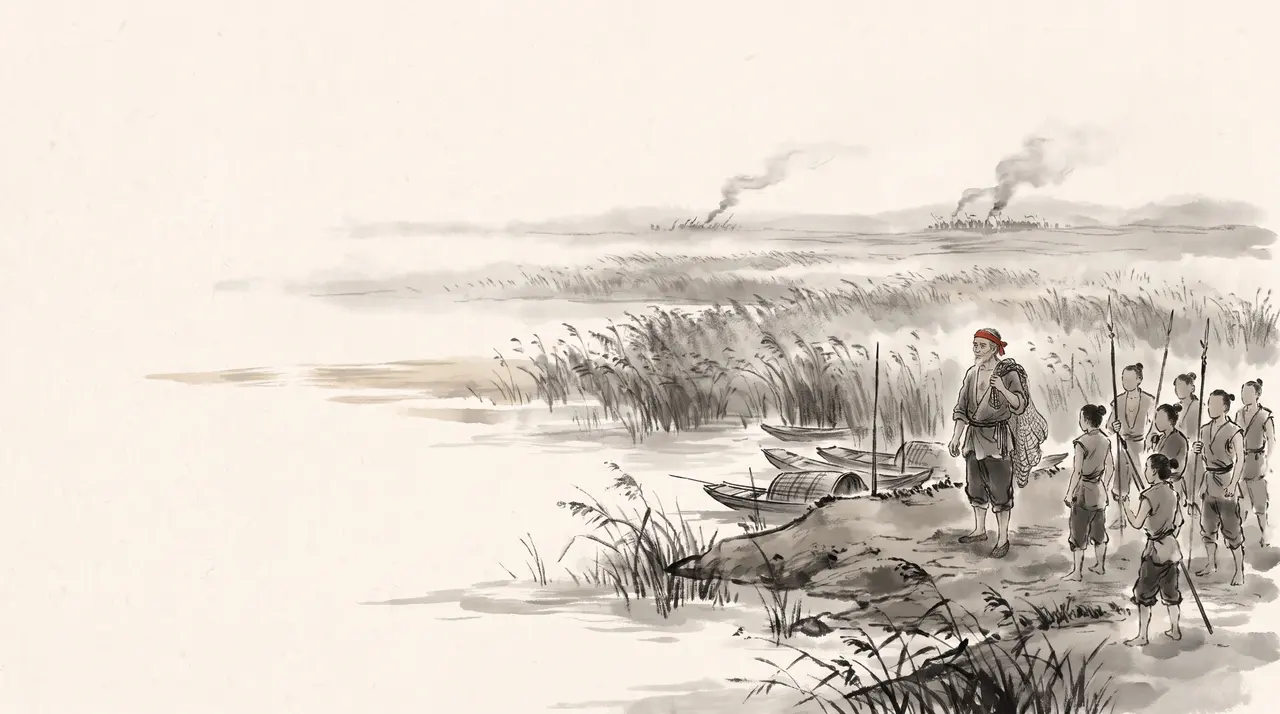
秦の末から漢のはじめにかけて、魏の地で王となった二人の物語。魏の公子だった魏咎は、陳勝の乱のときに魏王に立てられたが、秦の章邯に囲まれ、民の命を守るために降伏を約束して自ら焼け死んだ。弟の魏豹は項羽に従って西魏王となり、のちに漢に降ったが、劉邦が人を奴隷のようにののしるのを嫌って背き、「人の一生は白い馬がすき間を走り過ぎるように短い」と言った。韓信に捕らえられ、滎陽の守備についたが、味方に殺された。もう一人の彭越は鉅野の沼の漁師で盗賊だった。若者たちに頭に担がれると、集合に遅れた者を一人斬って規律を示した。楚と漢の争いでは、梁の地を自在に動き回って楚の補給を断ち、張良のすすめで領地を約束されると、垓下の戦いに加わって項羽を破り、梁王となった。しかし陳豨の乱のとき病と称して出陣せず、謀反を疑われて捕らえられる。いったん許されて蜀へ流される途中、呂后に無実を訴えたが、呂后は「後の災いを残すことになる」と高祖に説き、彭越は一族とともに滅ぼされた。
音声
音声は合成音声です。
動画
節 1
原文
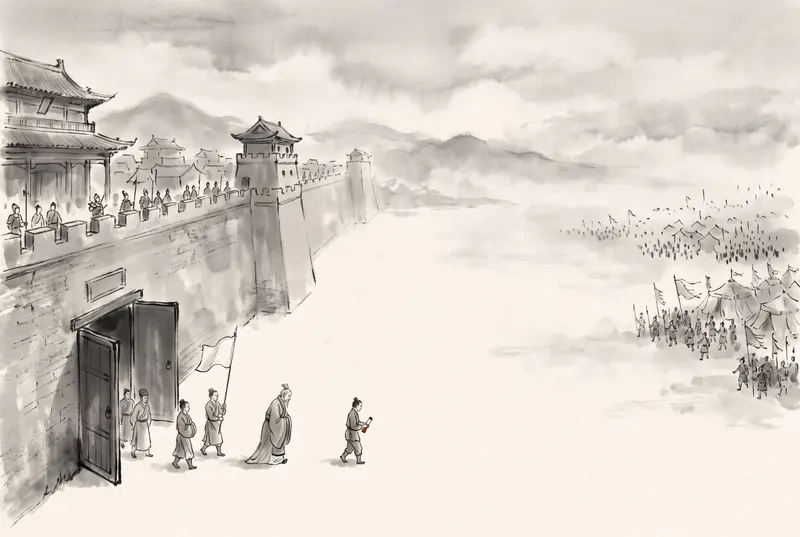
魏豹者,故魏諸公子也。其兄魏咎,故魏時封為寧陵君。秦滅魏,遷咎為家人。陳勝之起王也,咎往從之。陳王使魏人周市徇魏地,魏地已下,欲相與立周市為魏王。周市曰:「天下昏亂,忠臣乃見。今天下共畔秦,其義必立魏王後乃可。」齊、趙使車各五十乘,立周市為魏王。市辭不受,迎魏咎於陳。五反,陳王乃遣立咎為魏王。章邯已破陳王,乃進兵擊魏王於臨濟。魏王乃使周市出請救於齊、楚。齊、楚遣項它、田巴將兵隨市救魏。章邯遂擊破殺周市等軍,圍臨濟。咎為其民約降。約定,咎自燒殺。
書き下し文
魏豹は、故の魏の諸公子なり。其の兄魏咎は、故の魏の時に封ぜられて寧陵君と為る。秦魏を滅ぼし、咎を遷して家人と為す。陳勝の起ちて王たるや、咎往きて之に従う。陳王、魏人周市をして魏の地を徇えしむ。魏の地已に下り、相与に周市を立てて魏王と為さんと欲す。周市曰く、「天下昏乱すれば、忠臣乃ち見わる。今天下共に秦に畔く。其の義必ず魏王の後を立てて乃ち可なり」と。斉・趙車各々五十乗を使わし、周市を立てて魏王と為さんとす。市辞して受けず、魏咎を陳に迎う。五たび反りて、陳王乃ち遣わして咎を立てて魏王と為す。章邯已に陳王を破り、乃ち兵を進めて魏王を臨済に撃つ。魏王乃ち周市をして出でて救いを斉・楚に請わしむ。斉・楚、項它・田巴をして兵を将いて市に随いて魏を救わしむ。章邯遂に周市等の軍を撃破して殺し、臨済を囲む。咎其の民の為に約して降る。約定まり、咎自ら焼きて殺す。
現代語訳
魏豹は、昔の魏の王家の公子の一人である。兄の魏咎は、魏の国があったころ寧陵君に封じられていた。秦が魏を滅ぼすと、魏咎は身分を奪われて庶民にされた。陳勝が兵を挙げて王になると、魏咎はそのもとに行った。陳王は魏の人周市に魏の地を平定させた。魏の地が平定されると、人々は周市を魏王に立てようとした。周市は言った。「天下が乱れると、忠臣が現れるものだ。いま天下はこぞって秦に背いている。義からいって、魏王の子孫を立てるべきだ」。斉と趙もそれぞれ車五十台をよこして、周市を魏王に立てようとしたが、周市は辞退して受けず、陳にいた魏咎を迎えようとした。使いが五度往復して、陳王はようやく魏咎を送り出し、魏王に立てた。章邯は陳王を破ると、兵を進めて臨済の魏王を攻めた。魏王は周市を斉と楚へ送って救いを求めた。斉と楚は項它と田巴に兵を率いさせ、周市とともに魏を救いに行かせた。しかし章邯は周市らの軍を破って周市を殺し、臨済を囲んだ。魏咎は民の命を助けることを条件に降伏の約束を結び、約束が成ると、自ら火の中に身を投じて死んだ。
英訳
Wei Bao was one of the princes of the old house of Wei. His elder brother Wei Jiu had been given the title Lord of Ningling in the days of the old state of Wei. When Qin destroyed Wei, Jiu was moved away and made a commoner. When Chen Sheng rose and became king, Jiu went to join him. King Chen sent Zhou Shi, a man of Wei, to win over the land of Wei. When the land of Wei had been taken, the people wanted to make Zhou Shi King of Wei. Zhou Shi said: "When the realm is in chaos, the loyal servant shows himself. Now the whole realm has risen against Qin, and duty requires that a descendant of the kings of Wei be made king." Qi and Zhao each sent fifty chariots to make Zhou Shi King of Wei, but Shi refused, and sent to Chen for Wei Jiu. Only after five journeys to and fro did King Chen send Jiu off and make him King of Wei. When Zhang Han had crushed King Chen, he advanced and attacked the King of Wei at Linji. The King of Wei sent Zhou Shi out to ask Qi and Chu for help. Qi and Chu sent Xiang Tuo and Tian Ba with troops to go back with Zhou Shi and save Wei. But Zhang Han broke the armies of Zhou Shi and the others, killed Zhou Shi, and besieged Linji. Jiu made terms of surrender for the sake of his people. When the terms were settled, he burned himself to death.
解説(日)
- 家人: 身分のない庶民。
- 周市: 陳勝の部将。王位を辞退して魏の王族を立てた、忠臣の例として名高い。
- 臨濟: 魏の都(今の河南省封丘県のあたり)。斉王田儋もここで戦死した(094-tian-heng の章)。
- 自燒殺: 自ら焼け死ぬこと。民の命を救う降伏の約束と引き換えに、自分は死を選んだ。
解説(英)
- Commoner (家人): a man without rank.
- Zhou Shi (周市): remembered for refusing a throne to restore the royal line of Wei.
- Linji (臨濟): the Wei capital, where King Tian Dan of Qi also died (chapter 094).
- He burned himself to death after making terms to spare his people.
英語の語注
- commoner/ˈkɑmənər/noun
a person who is not a noble
本文では: “made a commoner”
似た語と違い: ordinary person — not of noble rank · plebeian — one of the common people
- descendant/dɪˈsɛndənt/noun
a person born into a later generation of a family
本文では: “a descendant of the kings of Wei”
似た語と違い: heir — one who inherits · offspring — children and their children
節 2
原文
魏豹亡走楚。楚懷王予魏豹數千人,復徇魏地。項羽已破秦,降章邯。豹下魏二十餘城,立豹為魏王。豹引精兵從項羽入關。漢元年,項羽封諸侯,欲有梁地,乃徙魏王豹於河東,都平陽,為西魏王。
書き下し文
魏豹亡げて楚に走る。楚の懐王、魏豹に数千人を予え、復た魏の地を徇えしむ。項羽已に秦を破り、章邯を降す。豹魏の二十余城を下し、豹を立てて魏王と為す。豹精兵を引きて項羽に従いて関に入る。漢の元年、項羽諸侯を封じ、梁の地を有たんと欲し、乃ち魏王豹を河東に徙し、平陽に都せしめ、西魏王と為す。
現代語訳
魏豹は逃げて楚に身を寄せた。楚の懐王は魏豹に数千人の兵を与え、もう一度魏の地を攻め取らせた。項羽が秦軍を破って章邯を降伏させたころ、魏豹は魏の二十あまりの城を落とし、魏王に立てられた。魏豹は精兵を率いて項羽に従い、関中に入った。漢の元年、項羽は諸侯に領地を分けるとき、梁の地を自分のものにしようとして、魏王豹を黄河の東に移し、平陽を都として西魏王とした。
英訳
Wei Bao fled to Chu. King Huai of Chu gave Wei Bao several thousand men and sent him back to win over the land of Wei. By the time Xiang Yu had broken Qin and taken the surrender of Zhang Han, Bao had taken more than twenty cities of Wei, and he was made King of Wei. Bao led his best troops into the pass with Xiang Yu. In the first year of Han, when Xiang Yu gave out the fiefs to the lords, he wanted the land of Liang for himself, so he moved Bao, King of Wei, to Hedong, with his capital at Pingyang, and made him King of Western Wei.
解説(日)
- 梁: 魏の都大梁を中心とする地(今の河南省開封市のあたり)。項羽はここを自分の領地にした。
- 河東: 黄河の東、今の山西省南部。
- 平陽: 今の山西省臨汾市のあたり。
解説(英)
- Liang (梁): the land around Daliang (Kaifeng), which Xiang Yu kept for himself.
- Hedong (河東): east of the Yellow River, in southern Shanxi.
英語の語注
- fief/fif/noun
land given by a ruler to a lord
本文では: “gave out the fiefs to the lords”
似た語と違い: domain — territory · estate — land held
節 3
原文
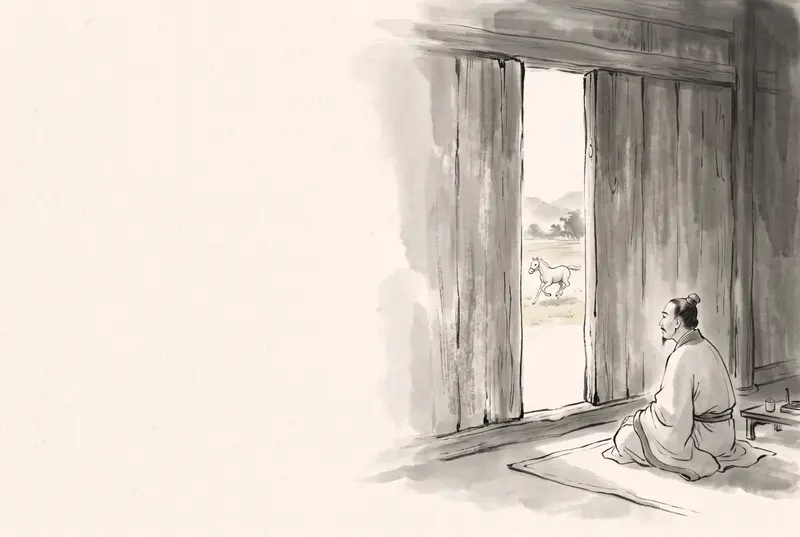
漢王還定三秦,渡臨晉,魏王豹以國屬焉,遂從擊楚於彭城。漢敗,還至滎陽,豹請歸視親病,至國,即絕河津畔漢。漢王聞魏豹反,方東憂楚,未及擊,謂酈生曰:「緩頰往說魏豹,能下之,吾以萬戶封若。」酈生說豹。豹謝曰:「人生一世閒,如白駒過隙耳。今漢王慢而侮人,罵詈諸侯群臣如罵奴耳,非有上下禮節也,吾不忍復見也。」於是漢王遣韓信擊虜豹於河東,傳詣滎陽,以豹國為郡。漢王令豹守滎陽。楚圍之急,周苛遂殺魏豹。
書き下し文
漢王還りて三秦を定め、臨晋を渡る。魏王豹国を以て焉に属し、遂に従いて楚を彭城に撃つ。漢敗れ、還りて滎陽に至る。豹帰りて親の病を視んことを請い、国に至りて、即ち河津を絶ちて漢に畔く。漢王魏豹の反するを聞くも、方に東のかた楚を憂え、未だ撃つに及ばず。酈生に謂いて曰く、「頬を緩めて往きて魏豹に説け。能く之を下さば、吾万戸を以て若を封ぜん」と。酈生豹に説く。豹謝して曰く、「人生一世の間、白駒の隙を過ぐるが如きのみ。今漢王慢にして人を侮り、諸侯群臣を罵詈すること奴を罵るが如きのみ。上下の礼節有るに非ざるなり。吾復た見ゆるに忍びざるなり」と。是に於いて漢王韓信を遣わし、撃ちて豹を河東に虜にし、伝えて滎陽に詣らしめ、豹の国を以て郡と為す。漢王豹をして滎陽を守らしむ。楚之を囲むこと急なり。周苛遂に魏豹を殺す。
現代語訳
漢王(劉邦)が関中に引き返して三秦を平定し、臨晋から黄河を渡ると、魏王豹は国ごと漢につき、漢王に従って彭城で楚を攻めた。漢が敗れて滎陽まで引き返すと、魏豹は「親の病気を見舞いたい」と言って国に帰り、帰るなり黄河の渡し場を断ち切って漢に背いた。漢王は魏豹の反乱を聞いたが、ちょうど東の楚のことで手いっぱいで、攻める余裕がなかった。そこで酈生(酈食其)に言った。「穏やかな言葉で魏豹を説きふせてこい。降らせることができたら、お前に一万戸の領地をやろう」。酈生は魏豹を説いたが、魏豹は断って言った。「人の一生は、白い馬が戸のすき間を走り過ぎるのを見るように短いものだ。いまの漢王は傲慢で人を侮り、諸侯や家臣たちを奴隷のようにののしる。上下の礼儀などあったものではない。もう二度と会う気にはなれない」。そこで漢王は韓信を送って河東で魏豹を攻めて捕らえ、駅伝の車で滎陽へ送り、魏の国を漢の郡とした。漢王は魏豹に滎陽を守らせた。楚の包囲が激しくなると、周苛はついに魏豹を殺した。
英訳
When the king of Han came back to conquer the three Qin and crossed the river at Linjin, Bao, King of Wei, put his kingdom under Han, and went with him to attack Chu at Pengcheng. Han was defeated and fell back to Xingyang. Bao asked leave to go home to see a parent who was ill, and as soon as he reached his kingdom he cut the river crossings and turned against Han. The king of Han heard that Wei Bao had rebelled, but he was busy with Chu in the east and could not attack him yet. He said to Master Li: "Go and talk Wei Bao round with soft words. If you can bring him over, I will give you a fief of ten thousand households." Master Li went to persuade Bao. Bao declined, saying: "A man's life in this world is like a white colt glimpsed galloping past a crack in the wall. The king of Han is arrogant and insulting. He curses the lords and his ministers as if he were cursing slaves; there is no courtesy between high and low. I cannot bear to see him again." Then the king of Han sent Han Xin, who attacked Bao in Hedong and captured him, sent him by post carriage to Xingyang, and made his kingdom a commandery. The king of Han set Bao to guard Xingyang. When Chu pressed the siege hard, Zhou Ke killed Wei Bao.
解説(日)
- 緩頰: 頬をゆるめる。穏やかな言葉で説得すること。
- 白駒過隙: 白い馬が戸のすき間を走り過ぎるのを見るように、人生や時間が短くあっという間に過ぎること。『荘子』にも見える言葉で、「白駒の隙を過ぐるが如し」という。
- 周苛: 周昌の従兄。滎陽を守り、「反覆の国の王とは一緒に守れない」と魏豹を殺した。のちに項羽に煮殺された(096-zhang-cang の章)。
解説(英)
- Soft words (緩頰): literally "relaxing the cheeks".
- A white colt past a crack (白駒過隙): how swiftly life passes; the phrase also appears in the Zhuangzi.
- Zhou Ke (周苛): Zhou Chang's cousin, who distrusted a king who had already turned once; he was later boiled by Xiang Yu (chapter 096).
この節から生まれた言葉: 白駒の隙を過ぐるが如し
英語の語注
- glimpse/ɡlɪmps/verb
to see something for a very short time
本文では: “a white colt glimpsed galloping past a crack”
似た語と違い: catch sight of — see briefly · spot — notice quickly
- arrogant/ˈærəɡənt/adjective
too proud and rude to others
本文では: “The king of Han is arrogant and insulting”
似た語と違い: haughty — proud and scornful · overbearing — bossy
節 4
原文
彭越者,昌邑人也,字仲。常漁鉅野澤中,為群盜。陳勝、項梁之起,少年或謂越曰:「諸豪桀相立畔秦,仲可以來,亦效之。」彭越曰:「兩龍方鬬,且待之。」
書き下し文
彭越は、昌邑の人なり。字は仲。常に鉅野の沢中に漁し、群盗と為る。陳勝・項梁の起つや、少年或いは越に謂いて曰く、「諸々の豪桀相立ちて秦に畔く。仲以て来たり、亦た之に効うべし」と。彭越曰く、「両龍方に闘う。且く之を待て」と。
現代語訳
彭越は昌邑の人で、字を仲という。いつも鉅野の沼で魚をとり、盗賊の仲間に入っていた。陳勝や項梁が兵を挙げると、若者のなかには彭越にこう言う者がいた。「豪傑たちが次々と立って秦に背いています。仲さんも出てきて、彼らにならってはどうですか」。彭越は言った。「いま二匹の竜が戦っているところだ。しばらく待とう」。
英訳
Peng Yue was a man of Changyi, with the courtesy name Zhong. He used to fish in the Juye marshes, and was one of a band of robbers. When Chen Sheng and Xiang Liang rose, some of the young men said to Peng Yue: "All the bold men are rising one after another against Qin. Why don't you come forward too, Zhong, and follow their lead?" Peng Yue said: "Two dragons are fighting. Let us wait a while."
解説(日)
- 鉅野澤: 今の山東省巨野県の北にあった大きな沼。のちに『水滸伝』の梁山泊の舞台となる地。
- 兩龍方鬭: 二匹の竜が戦っている。秦と反乱軍の争いの行方を見きわめようとした。
解説(英)
- The Juye marshes (鉅野澤): in western Shandong, later the setting of the outlaws of the Water Margin.
- Two dragons are fighting (兩龍方鬭): he waited to see which way the struggle would go.
英語の語注
- marsh/mɑrʃ/noun
low wet land
本文では: “the Juye marshes”
似た語と違い: swamp — wet land with trees · wetland — land covered with water
節 5
原文
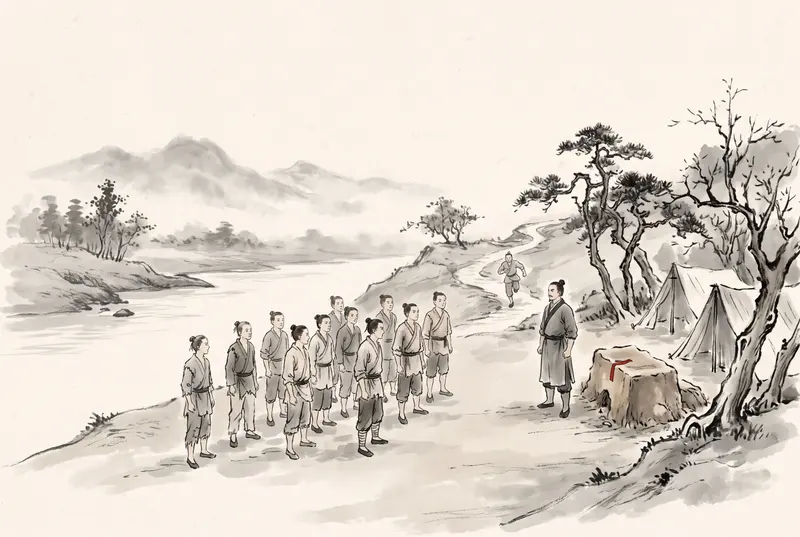
居歲餘,澤閒少年相聚百餘人,往從彭越,曰:「請仲為長。」越謝曰:「臣不願與諸君。」少年彊請,乃許。與期旦日日出會,後期者斬。旦日日出,十餘人后,後者至日中。於是越謝曰:「臣老,諸君彊以為長。今期而多後,不可盡誅,誅最後者一人。」令校長斬之。皆笑曰:「何至是?請後不敢。」於是越乃引一人斬之,設壇祭,乃令徒屬。徒屬皆大驚,畏越,莫敢仰視。乃行略地,收諸侯散卒,得千餘人。
書き下し文
居ること歳余にして、沢間の少年相聚まること百余人、往きて彭越に従いて曰く、「請う、仲を長と為さん」と。越謝して曰く、「臣諸君と与にするを願わず」と。少年彊いて請う。乃ち許す。与に期すらく、旦日日出に会し、期に後るる者は斬らんと。旦日日出、十余人後る。後るる者は日中に至る。是に於いて越謝して曰く、「臣老いたり。諸君彊いて以て長と為す。今期して後るる多し。尽く誅すべからず。最も後るる者一人を誅せん」と。校長をして之を斬らしむ。皆笑いて曰く、「何ぞ是に至らん。請う、後れて敢えてせざらん」と。是に於いて越乃ち一人を引きて之を斬り、壇を設けて祭り、乃ち徒属に令す。徒属皆大いに驚き、越を畏れ、敢えて仰ぎ視る莫し。乃ち行きて地を略し、諸侯の散卒を収め、千余人を得たり。
現代語訳
一年あまりたって、沼の若者たちが百人あまり集まり、彭越のところへ行って言った。「仲さんを頭にしたい」。彭越は「わたしはお前たちと組むつもりはない」と断ったが、若者たちが無理に頼むので、ついに引き受けた。そして「明朝、日の出に集まれ。遅れた者は斬る」と約束した。翌朝の日の出には十人あまりが遅れ、いちばん遅れた者は昼になってやって来た。そこで彭越は言った。「わたしは年寄りなのに、お前たちが無理に頭にした。いま約束したのに遅れた者が多い。全員を殺すわけにはいかないから、いちばん遅れた一人を殺そう」。そして隊長に斬らせようとした。皆笑って「そこまでしなくても。今後は遅れませんから」と言った。しかし彭越は一人を引き出して斬り、祭壇を設けて祭り、そのうえで部下たちに号令した。部下たちは皆たいへん驚き、彭越を恐れて、顔を上げて見ることもできなかった。こうして彭越は各地を攻め、諸侯の散らばった兵を集めて、千人あまりを得た。
英訳
After a year or so, more than a hundred young men from the marshes gathered and went to Peng Yue, saying: "Please be our leader, Zhong." Peng Yue declined: "I do not want to join you." But the young men insisted, and at last he agreed. He set a time with them: they would meet at sunrise the next day, and anyone who came late would be beheaded. At sunrise the next day more than ten were late, and the last did not arrive until noon. Then Peng Yue said: "I am old, and you forced me to be your leader. Now many of you were late for the time we set. I cannot put you all to death, so I will put to death the one who came last." He told the officer to behead him. They all laughed: "Why go that far? We won't dare be late again." But Peng Yue pulled one man out and beheaded him, set up an altar and made a sacrifice, and then gave orders to his followers. His followers were all astonished; they feared Peng Yue so much that none of them dared to look up at him. Then he set out to conquer land and gathered the scattered soldiers of the lords, until he had more than a thousand men.
解説(日)
- 期: 集まる時刻の約束。
- 校長: 部隊の長。
- 軍律を守らせるために、約束どおり一人を斬って全体を引きしめた。孫武が呉王の寵姫を斬った話(065-sunzi の章)に似ている。
解説(英)
- The time they set (期): the hour of the muster.
- Like Sunzi beheading the king's favourites at the drill (chapter 065), he made one example to teach discipline to all.
英語の語注
- insist/ɪnˈsɪst/verb
to say firmly that something must happen
本文では: “the young men insisted”
似た語と違い: press — urge strongly · demand — ask firmly
- behead/bɪˈhɛd/verb
to cut off someone's head as punishment
本文では: “anyone who came late would be beheaded”
似た語と違い: decapitate — cut off the head · execute — put to death
節 6
原文
沛公之從碭北擊昌邑,彭越助之。昌邑未下,沛公引兵西。彭越亦將其眾居鉅野中,收魏散卒。項籍入關,王諸侯,還歸,彭越眾萬餘人毋所屬。漢元年秋,齊王田榮畔項王,乃使人賜彭越將軍印,使下濟陰以擊楚。楚命蕭公角將兵擊越,越大破楚軍。漢王二年春,與魏王豹及諸侯東擊楚,彭越將其兵三萬餘人歸漢於外黃。漢王曰:「彭將軍收魏地得十餘城,欲急立魏後。今西魏王豹亦魏王咎從弟也,真魏後。」乃拜彭越為魏相國,擅將其兵,略定梁地。
書き下し文
沛公の碭より北して昌邑を撃つや、彭越之を助く。昌邑未だ下らず、沛公兵を引きて西す。彭越も亦た其の衆を将いて鉅野の中に居り、魏の散卒を収む。項籍関に入り、諸侯を王とし、還り帰る。彭越の衆万余人属する所毋し。漢の元年秋、斉王田栄項王に畔き、乃ち人をして彭越に将軍の印を賜わしめ、済陰を下して以て楚を撃たしむ。楚、蕭公角をして兵を将いて越を撃たしむ。越大いに楚の軍を破る。漢王の二年春、魏王豹及び諸侯と東のかた楚を撃つ。彭越其の兵三万余人を将いて漢に外黄に帰す。漢王曰く、「彭将軍魏の地を収めて十余城を得、急ぎ魏の後を立てんと欲す。今西魏王豹も亦た魏王咎の従弟なり。真の魏の後なり」と。乃ち彭越を拝して魏の相国と為し、其の兵を擅将して、梁の地を略定せしむ。
現代語訳
沛公(劉邦)が碭から北へ進んで昌邑を攻めたとき、彭越はそれを助けた。昌邑は落ちず、沛公は兵を率いて西へ去った。彭越も手下を率いて鉅野の沼にとどまり、魏の散らばった兵を集めた。項籍(項羽)は関中に入って諸侯を王に立てると、国へ帰っていった。彭越の一万人あまりの軍は、どこにも属していなかった。漢の元年の秋、斉王田栄は項王に背き、使者を送って彭越に将軍の印を与え、済陰を攻め取って楚を討たせた。楚は蕭公角に兵を率いさせて彭越を攻めたが、彭越は楚の軍を大いに破った。漢王の二年の春、漢王は魏王豹や諸侯とともに東へ進んで楚を攻めた。彭越は三万人あまりの兵を率い、外黄で漢についた。漢王は言った。「彭将軍は魏の地を取って十あまりの城を得、急いで魏の王家の子孫を立てようとしている。いま西魏王豹も魏王咎のいとこで、本当の魏の子孫だ」。そこで彭越を魏の相国に任じ、兵を思いどおりに率いて梁の地を平定させた。
英訳
When the Lord of Pei went north from Dang to attack Changyi, Peng Yue helped him. Changyi did not fall, and the Lord of Pei led his army west. Peng Yue stayed in the Juye marshes with his followers, gathering the scattered soldiers of Wei. Xiang Ji entered the pass, made the lords kings and went home again. Peng Yue's force of more than ten thousand men belonged to no one. In the autumn of the first year of Han, Tian Rong, King of Qi, rebelled against King Xiang, and sent a man to give Peng Yue a general's seal and have him take Jiyin and attack Chu. Chu sent Jiao, the Lord of Xiao, with troops to attack Peng Yue, and Peng Yue utterly defeated the army of Chu. In the spring of the second year, the king of Han attacked Chu in the east together with Bao, King of Wei, and the other lords. Peng Yue brought his army of more than thirty thousand men over to Han at Waihuang. The king of Han said: "General Peng has won more than ten cities in the land of Wei, and is eager to set up a descendant of the kings of Wei. Bao, King of Western Wei, is a cousin of Jiu, King of Wei, a true descendant of Wei." So he made Peng Yue chancellor of Wei, in sole command of his own army, and set him to conquer the land of Liang.
解説(日)
- 昌邑: 彭越の故郷(今の山東省金郷県のあたり)。
- 外黃: 今の河南省民権県のあたり。
- 魏相國: 魏の宰相。魏王は魏豹とし、実際の兵権は彭越に与えた。
解説(英)
- Changyi (昌邑): Peng Yue's home town in southwestern Shandong.
- Chancellor of Wei (魏相國): Wei Bao kept the title of king, but Peng Yue held the army.
英語の語注
- scattered/ˈskætərd/adjective
spread over a wide area, not together
本文では: “the scattered soldiers of Wei”
似た語と違い: dispersed — spread out · straggling — separated from the group
- eager/ˈiɡər/adjective
wanting very much to do something
本文では: “is eager to set up a descendant”
似た語と違い: keen — very willing · anxious — wanting strongly
節 7
原文
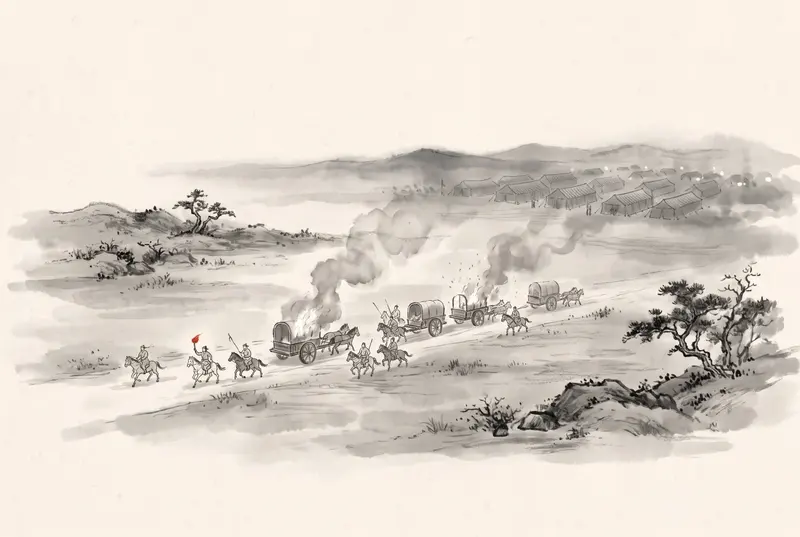
漢王之敗彭城解而西也,彭越皆復亡其所下城,獨將其兵北居河上。漢王三年,彭越常往來為漢游兵,擊楚,絕其後糧於梁地。漢四年冬,項王與漢王相距滎陽,彭越攻下睢陽、外黃十七城。項王聞之,乃使曹咎守成皋,自東收彭越所下城邑,皆復為楚。越將其兵北走穀城。漢五年秋,項王之南走陽夏,彭越復下昌邑旁二十餘城,得穀十餘萬斛,以給漢王食。
書き下し文
漢王の彭城に敗れて解けて西するや、彭越皆復た其の下す所の城を亡い、独り其の兵を将いて北のかた河上に居る。漢王の三年、彭越常に往来して漢の游兵と為り、楚を撃ち、其の後の糧を梁の地に絶つ。漢の四年冬、項王漢王と滎陽に相距ぐ。彭越睢陽・外黄の十七城を攻め下す。項王之を聞き、乃ち曹咎をして成皋を守らしめ、自ら東のかた彭越の下す所の城邑を収め、皆復た楚と為す。越其の兵を将いて北のかた穀城に走る。漢の五年秋、項王の南のかた陽夏に走るや、彭越復た昌邑の旁の二十余城を下し、穀十余万斛を得て、以て漢王の食に給す。
現代語訳
漢王が彭城で敗れて西へ逃げると、彭越も落とした城をすべて失い、自分の兵だけを率いて北の黄河のほとりにとどまった。漢王の三年、彭越はいつも行き来して漢の遊撃隊となり、楚を攻め、梁の地で楚の後方の食糧を断った。漢の四年の冬、項王と漢王が滎陽でにらみ合っていると、彭越は睢陽・外黄など十七の城を攻め落とした。項王はこれを聞くと、曹咎に成皋を守らせ、自ら東へ向かって彭越が落とした城や町を取りもどし、すべて楚のものにした。彭越は兵を率いて北の穀城へ逃げた。漢の五年の秋、項王が南の陽夏へ逃げると、彭越はまた昌邑のあたりの二十あまりの城を落とし、穀物十万石あまりを手に入れて、漢王の軍の食糧にあてた。
英訳
When the king of Han was defeated at Pengcheng and his forces broke up and fled west, Peng Yue lost all the cities he had taken, and stayed north by the Yellow River with only his own army. In the third year of Han, Peng Yue was always on the move as a roving force for Han, attacking Chu and cutting its supplies behind its lines in the land of Liang. In the winter of the fourth year of Han, when King Xiang and the king of Han faced each other at Xingyang, Peng Yue attacked and took seventeen cities, including Suiyang and Waihuang. When King Xiang heard of it, he left Cao Jiu to hold Chenggao and went east himself to take back the cities and towns Peng Yue had captured, and made them all Chu's again. Peng Yue led his army north to Gucheng. In the autumn of the fifth year of Han, when King Xiang fled south to Yangxia, Peng Yue again took more than twenty cities around Changyi and captured more than a hundred thousand measures of grain, which he gave to feed the king of Han's army.
解説(日)
- 游兵: 一か所にとどまらず、動き回って敵を攻める遊撃部隊。
- 絕其後糧: 楚の後方の食糧の補給路を断つ。彭越のこの働きが、項羽を消耗させた。
- 斛: 穀物をはかる単位。一斛は約二十リットル。
解説(英)
- A roving force (游兵): guerrilla raids that wore Xiang Yu down.
- Cutting its supplies (絕其後糧): Peng Yue's raids on Chu's supply lines were vital to Han's victory.
英語の語注
- roving/ˈroʊvɪŋ/adjective
moving from place to place
本文では: “a roving force for Han”
似た語と違い: wandering — moving about · mobile — able to move quickly
- supplies/səˈplaɪz/noun
food and other things an army needs
本文では: “cutting its supplies behind its lines”
似た語と違い: provisions — food stores · rations — food for soldiers
節 8
原文
漢王敗,使使召彭越并力擊楚。越曰:「魏地初定,尚畏楚,未可去。」漢王追楚,為項籍所敗碧陵。乃謂留侯曰:「諸侯兵不從,為之柰何?」留侯曰:「齊王信之立,非君王之意,信亦不自堅。彭越本定梁地,功多,始君王以魏豹故,拜彭越為魏相國。今豹死毋後,且越亦欲王,而君王不蚤定。與此兩國約:即勝楚,睢陽以北至穀城,皆以王彭相國;從陳以東傅海,與齊王信。齊王信家在楚,此其意欲復得故邑。君王能出捐此地許二人,二人今可致;即不能,事未可知也。」於是漢王乃發使使彭越,如留侯策。使者至,彭越乃悉引兵會垓下,遂破楚。(五年)項籍已死。春,立彭越為梁王,都定陶。六年,朝陳。九年,十年,皆來朝長安。
書き下し文
漢王敗れ、使いをして彭越を召して力を并せて楚を撃たしめんとす。越曰く、「魏の地初めて定まり、尚お楚を畏る。未だ去るべからず」と。漢王楚を追い、項籍の為に碧陵に敗らる。乃ち留侯に謂いて曰く、「諸侯の兵従わず。之を為すこと奈何」と。留侯曰く、「斉王信の立つは、君王の意に非ず。信も亦た自ら堅からず。彭越は本梁の地を定め、功多し。始め君王魏豹の故を以て、彭越を拝して魏の相国と為す。今豹死して後毋く、且つ越も亦た王たらんと欲す。而るに君王蚤く定めず。此の両国と約せよ。即し楚に勝たば、睢陽より以北穀城に至るまで、皆以て彭相国を王とし、陳より以東海に傅うまで、斉王信に与えん。斉王信の家は楚に在り。此れ其の意復た故の邑を得んと欲す。君王能く此の地を出捐して二人に許さば、二人今致すべし。即し能わずんば、事未だ知るべからざるなり」と。是に於いて漢王乃ち使いを発して彭越に使いせしむること、留侯の策の如くす。使者至り、彭越乃ち悉く兵を引きて垓下に会し、遂に楚を破る。(五年)項籍已に死す。春、彭越を立てて梁王と為し、定陶に都せしむ。六年、陳に朝す。九年、十年、皆来たりて長安に朝す。
現代語訳
漢王は(楚との戦いで)敗れると、使いを送って彭越を呼び、力を合わせて楚を討とうとした。彭越は「魏の地は平定したばかりで、まだ楚を恐れています。いまは離れられません」と断った。漢王は楚を追ったが、固陵で項籍に破られた。そこで留侯(張良)に言った。「諸侯の兵がついて来ない。どうしたらよいか」。張良は言った。「斉王韓信が王に立ったのは、殿の本意ではなく、韓信自身も安心していません。彭越はもともと梁の地を平定して手柄が多いのに、殿ははじめ魏豹がいたので、彭越を魏の相国にしただけでした。いま魏豹は死んで跡継ぎもなく、彭越も王になりたがっているのに、殿は早く決めてやらなかった。この二人と約束なさいませ。楚に勝ったら、睢陽より北、穀城までをすべて彭相国の王国とし、陳より東、海までを斉王韓信に与えると。韓信の家は楚にありますから、故郷を取りもどしたいと思っています。殿がこの土地を投げ出して二人に約束なさるなら、二人はいますぐやって来るでしょう。それができなければ、事の成り行きは分かりません」。そこで漢王は使いを出して、張良の策のとおりに彭越に伝えた。使者が着くと、彭越は兵をすべて率いて垓下に集まり、ついに楚を破った。項籍が死ぬと、春に彭越は梁王に立てられ、定陶を都とした。六年には陳で、九年と十年には長安で高祖に朝見した。
英訳
When the king of Han was defeated, he sent envoys to call Peng Yue to join forces with him against Chu. Peng Yue said: "The land of Wei has only just been settled, and it still fears Chu. I cannot leave yet." The king of Han pursued Chu and was beaten by Xiang Ji at Guling. Then he said to the Marquis of Liu: "The lords' armies will not follow me. What shall I do?" The Marquis of Liu said: "Han Xin was made King of Qi against your wishes, and he does not feel secure himself. Peng Yue conquered the land of Liang to begin with and has done a great deal, but at first, because of Wei Bao, you only made him chancellor of Wei. Now Bao is dead without an heir, and Peng Yue wants to be a king too, but you have not settled it in time. Make a pact with these two. Promise that if Chu is defeated, everything north of Suiyang as far as Gucheng will be Chancellor Peng's kingdom, and everything east of Chen to the sea will go to Han Xin, King of Qi. Han Xin's family home is in Chu, and he wants to win back his old town. If you can give up this land and promise it to the two of them, they will come at once. If you cannot, there is no telling what will happen." So the king of Han sent envoys to Peng Yue just as the Marquis of Liu had advised. When the envoys arrived, Peng Yue brought his whole army to join the battle at Gaixia, and Chu was destroyed. When Xiang Ji was dead, in the spring, Peng Yue was made King of Liang, with his capital at Dingtao. In the sixth year he came to court at Chen, and in the ninth and tenth years he came to court in Chang'an.
解説(日)
- 留侯: 張良(055-zhang-liang の章)。
- 碧陵: 原文のまま。固陵(今の河南省太康県のあたり)の誤りとされる。垓下の戦いの直前、劉邦が項羽に敗れた地。
- (五年): 校勘で削る字。
- 定陶: 今の山東省定陶県。項梁が戦死した地でもある。
解説(英)
- The Marquis of Liu (留侯): Zhang Liang (chapter 055).
- Guling (固陵): where Xiang Yu beat Liu Bang just before Gaixia.
- Dingtao (定陶): Peng Yue's capital, where Xiang Liang had fallen.
英語の語注
- secure/sɪˈkjʊr/adjective
feeling safe and confident
本文では: “he does not feel secure himself”
似た語と違い: safe — free from danger · settled — firmly in place
- pact/pækt/noun
a formal agreement between people or groups
本文では: “Make a pact with these two”
似た語と違い: deal — agreement · alliance — joining together
節 9
原文
十年秋,陳豨反代地,高帝自往擊,至邯鄲,徵兵梁王。梁王稱病,使將將兵詣邯鄲。高帝怒,使人讓梁王。梁王恐,欲自往謝。其將扈輒曰:「王始不往,見讓而往,往則為禽矣。不如遂發兵反。」梁王不聽,稱病。梁王怒其太仆,欲斬之。太仆亡走漢,告梁王與扈輒謀反。於是上使使掩梁王,梁王不覺,捕梁王,囚之雒陽。有司治反形己具,請論如法。上赦以為庶人,傳處蜀青衣。西至鄭,逢呂后從長安來,欲之雒陽,道見彭王。彭王為呂后泣涕,自言無罪,願處故昌邑。呂后許諾,與俱東至雒陽。呂后白上曰:「彭王壯士,今徙之蜀,此自遺患,不如遂誅之。妾謹與俱來。」於是呂后乃令其舍人告彭越復謀反。廷尉王恬開奏請族之。上乃可,遂夷越宗族,國除。
書き下し文
十年秋、陳豨代の地に反す。高帝自ら往きて撃ち、邯鄲に至り、兵を梁王に徴す。梁王病と称し、将をして兵を将いて邯鄲に詣らしむ。高帝怒り、人をして梁王を譲めしむ。梁王恐れ、自ら往きて謝せんと欲す。其の将扈輒曰く、「王始め往かず、譲められて往かば、往けば則ち禽と為らん。遂に兵を発して反するに如かず」と。梁王聴かず、病と称す。梁王其の太僕を怒り、之を斬らんと欲す。太僕亡げて漢に走り、梁王と扈輒と反を謀ると告ぐ。是に於いて上使いをして梁王を掩わしむ。梁王覚らず、梁王を捕え、之を雒陽に囚う。有司治めて反形己に具わり、論ずること法の如くせんことを請う。上赦して以て庶人と為し、伝えて蜀の青衣に処らしむ。西のかた鄭に至り、呂后の長安より来たりて雒陽に之かんと欲するに逢う。道に彭王を見る。彭王呂后の為に泣涕し、自ら罪無きを言い、願わくは故の昌邑に処らんと。呂后許諾し、与に倶に東して雒陽に至る。呂后上に白して曰く、「彭王は壮士なり。今之を蜀に徙すは、此れ自ら患いを遺すなり。遂に之を誅するに如かず。妾謹みて与に倶に来たる」と。是に於いて呂后乃ち其の舎人をして彭越の復た反を謀ると告げしむ。廷尉王恬開、奏して之を族せんことを請う。上乃ち可とし、遂に越の宗族を夷し、国除かる。
現代語訳
高祖の十年の秋、陳豨が代の地で反乱を起こした。高帝は自ら討伐に向かい、邯鄲まで来て、梁王に兵を出すよう命じた。梁王(彭越)は病と称して、部将に兵を率いて邯鄲へ行かせた。高帝は怒って使者を送り、梁王を責めた。梁王は恐れて、自分で行ってわびようとした。部将の扈輒は言った。「王ははじめ行かず、責められてから行けば、行ったとたんに捕らえられます。いっそ兵を挙げて背いたほうがよいでしょう」。梁王は聞き入れず、病と称し続けた。そのうち梁王は太僕(車馬の長)に腹を立て、斬ろうとした。太僕は漢へ逃げ、梁王が扈輒と謀反をたくらんでいると訴えた。そこで高祖は使者に梁王を不意打ちさせた。梁王は気づかずに捕らえられ、洛陽に投獄された。役人が取り調べ、謀反のかたちはすでに整っているとして、法どおりに処罰するよう願い出た。高祖は彭越を許して庶民とし、蜀の青衣に流すことにした。西へ向かう途中、鄭まで来たとき、長安から洛陽へ行こうとしていた呂后に出会った。彭越は呂后の前で泣いて無実を訴え、故郷の昌邑に住ませてほしいと願った。呂后は承知して、彭越を連れて東の洛陽へもどった。そして呂后は高祖に申し上げた。「彭王は勇士です。いま蜀へ流すのは、自分から後の災いを残すようなものです。いっそ殺してしまったほうがよいでしょう。わたしが連れてまいりました」。そして呂后は家来に、彭越がまた謀反をたくらんでいると訴えさせた。廷尉の王恬開は、一族皆殺しにするよう上奏し、高祖はそれを許した。こうして彭越の一族は滅ぼされ、梁の国はなくなった。
英訳
In the autumn of the tenth year Chen Xi rebelled in the land of Dai. Emperor Gao went himself to attack him, came to Handan, and called on the King of Liang for troops. The King of Liang said he was ill and sent a general with troops to Handan. Emperor Gao was angry and sent a man to rebuke the King of Liang. The King of Liang was afraid and wanted to go himself to apologise. His general Hu Zhe said: "You did not go at first. If you go now that you have been rebuked, you will be taken prisoner as soon as you arrive. It would be better to raise your army and rebel." The King of Liang would not listen, and kept saying he was ill. Then the King of Liang grew angry with his master of carriages and wanted to behead him. The master of carriages fled to Han and reported that the King of Liang and Hu Zhe were plotting rebellion. So the emperor sent men to take the King of Liang by surprise. The King of Liang suspected nothing; he was seized and imprisoned at Luoyang. The officials examined the case and found that the signs of rebellion were complete, and asked that he be sentenced according to the law. The emperor pardoned him, made him a commoner and sent him by post carriage into exile at Qingyi in Shu. Going west, he reached Zheng and met Empress Lü, who was coming from Chang'an on her way to Luoyang. When she saw King Peng on the road, he wept before her, said he was innocent, and begged to be allowed to live in his old home at Changyi. Empress Lü promised, and took him back east with her to Luoyang. Then Empress Lü told the emperor: "King Peng is a man of courage. To move him to Shu is to leave yourself a danger for later. It would be better to put him to death. I have brought him back with me." Then Empress Lü had one of her retainers report that Peng Yue was plotting rebellion again. Wang Tiankai, the commandant of justice, asked that his whole clan be put to death. The emperor agreed. Peng Yue's clan was wiped out and his kingdom abolished.
解説(日)
- 陳豨: 代の相国。前197年に反乱を起こした。韓信もこれと通じたとして殺された(092-han-xin-end の章)。
- 青衣: 蜀の県(今の四川省雅安市のあたり)。
- 王恬開: 張釈之の章にも出る廷尉(102-zhang-shizhi の章)。
- 彭越の肉は塩漬けにされて諸侯に配られ、それを見た黥布は反乱を決意した(091-qing-bu の章)。
解説(英)
- Chen Xi (陳豨): rebelled in Dai in 197 BCE; Han Xin was killed for supposedly conspiring with him (chapter 092).
- Qingyi (青衣): a county in Shu, in western Sichuan.
- Peng Yue's flesh was pickled and sent round to the lords, and the sight drove Qing Bu to revolt (chapter 091).
英語の語注
- apologise/əˈpɑləˌdʒaɪz/verb
to say you are sorry
本文では: “wanted to go himself to apologise”
似た語と違い: say sorry — express regret · beg pardon — ask forgiveness
British spelling: apologise (US: apologize).
- exile/ˈɛɡˌzaɪl/noun
being sent away from your home as punishment
本文では: “into exile at Qingyi in Shu”
似た語と違い: banishment — being sent away · expulsion — being forced out
節 10
原文
太史公曰:魏豹、彭越雖故賤,然已席卷千里,南面稱孤,喋血乘勝日有聞矣。懷畔逆之意,及敗,不死而虜囚,身被刑戮,何哉?中材已上且羞其行,況王者乎!彼無異故,智略絕人,獨患無身耳。得攝尺寸之柄,其雲蒸龍變,欲有所會其度,以故幽囚而不辭云。
書き下し文
太史公曰く、魏豹・彭越、故と賤しと雖も、然れども已に千里を席巻し、南面して孤と称し、血を喋みて勝ちに乗じ、日々に聞こゆる有り。畔逆の意を懐き、敗るるに及びて、死せずして虜囚となり、身刑戮を被るは、何ぞや。中材已上すら且つ其の行いを羞ず。況や王者をや。彼に異故無し。智略人に絶し、独り身無きを患うるのみ。尺寸の柄を摂るを得ば、其の雲蒸龍変、其の度に会する所有らんと欲す。故を以て幽囚せられて辞せずと云う。
現代語訳
太史公は言う。魏豹と彭越は、もとは身分が低かったが、千里の地を席巻し、南を向いて王を名のり、血を踏んで勝ちに乗じ、その名は日ごとに聞こえた。それなのに謀反の心を抱き、敗れても死なずに捕らえられ、刑罰を受けたのはなぜだろうか。並の才能の人でさえ、そういう行いは恥じる。まして王であった者がなぜ。ほかでもない、二人は知恵と策略が人並みはずれていたので、ただ身を失うことだけを心配したのだ。わずかでも権力を握ることができれば、雲がわき竜が姿を変えるように、時機に合わせて大きく飛躍しようと思っていた。だから牢につながれても、死を選ばなかったのだという。
英訳
The Grand Historian says: Though Wei Bao and Peng Yue were humble at first, they swept across a thousand li, faced south and called themselves kings, and riding on victory over bloodied ground, their names were heard more every day. Yet they harboured thoughts of rebellion, and when they failed, instead of dying they were taken prisoner and suffered punishment and death. Why? Even men of middling talent would be ashamed to act so, let alone kings. There was no other reason: their wisdom and cunning far surpassed other men's, and their one fear was to lose their lives. If they could only get hold of the smallest handle of power, they hoped, like clouds rising and dragons changing shape, to seize their moment. That is why they did not refuse even prison.
解説(日)
- 席卷: むしろを巻くように、片はしから領地を取ること。
- 喋血: 血を踏む。激しい戦いのたとえ。
- 雲蒸龍變: 雲がわき上がり、竜が姿を変えて天に昇るように、時機を得て大きく飛躍すること。
- 司馬遷は、宮刑を受けても死なずに『史記』を書き上げた自分の姿を、二人に重ねているとも読める(130-taishigong の章)。
解説(英)
- Swept across (席卷): rolled up land like a mat.
- Clouds rising and dragons changing (雲蒸龍變): rising to greatness when the moment comes.
- Some read in this Sima Qian's own choice to live on after punishment to finish his history (chapter 130).
英語の語注
- harbour/ˈhɑrbər/verb
to keep a thought or feeling in your mind
本文では: “they harboured thoughts of rebellion”
似た語と違い: nurse — keep alive · cherish — hold dear
British spelling: harbour (US: harbor).
- surpass/sərˈpæs/verb
to be better or greater than
本文では: “far surpassed other men's”
似た語と違い: exceed — go beyond · outdo — do better than