世家 · 巻 37
衛康叔世家 衞康叔世家
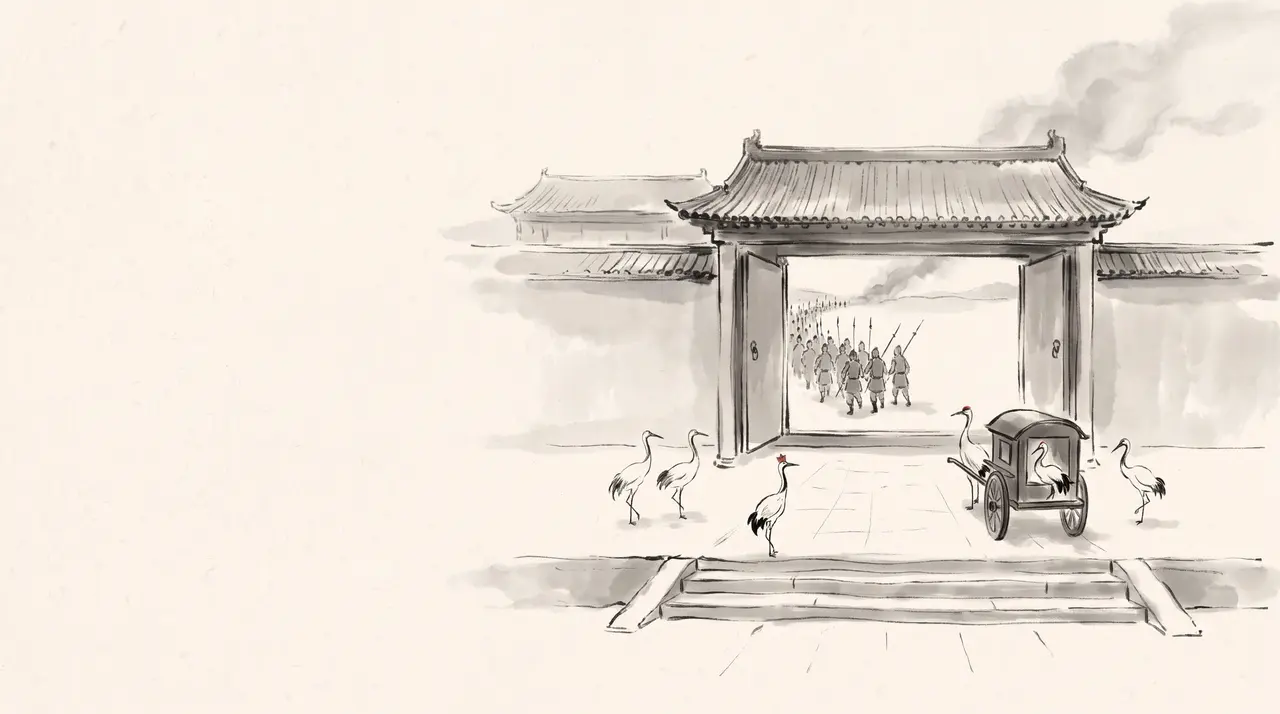
「殿は鶴がお好き。鶴に戦わせればよい」 君好鶴,鶴可令擊翟
周の武王の弟康叔に始まる衛の国の物語。殷が滅んだあと、康叔は殷の遺民を治める衛の君となり、周公から「紂が滅んだのは酒におぼれたからだ」と戒められた。春秋時代、桓公の弟州吁は兄を殺して位を奪ったが、老臣の石碏は自分の子が州吁に加担していたのもかまわず、計略で州吁を討たせた。宣公は太子伋の妻となる女性を奪って自分の妻にし、生まれた子たちとともに伋をうとんで殺そうとした。伋の異母弟の寿は、兄の身代わりになって先に殺され、伋も「殺すべきはわたしだ」と名乗り出て死んだ。懿公は鶴を好み、鶴を大夫の車に乗せるほどだったので、北狄が攻めてくると兵は「鶴に戦わせればよい」と言って戦わず、衛は一度滅びかけた。斉の桓公の助けで国を再建した文公は、税を軽くし、自ら民とともに苦労した。のちに父子が位を争う蒯聵の乱が起こり、孔子の弟子子路は「君子は死すとも冠を脱がず」と言って冠のひもを結び直して死んだ。
この巻のうち「「殿は鶴がお好き。鶴に戦わせればよい」」の場面を載せています。巻の全文ではありません。
音声
音声は合成音声です。
動画
節 1
原文
衞康叔名封,周武王同母少弟也。其次尚有冉季,冉季最少。武王已克殷紂,復以殷餘民封紂子武庚祿父,比諸侯,以奉其先祀勿絶。爲武庚未集,恐其有賊心,武王乃令其弟管叔、蔡叔傅相武庚祿父,以和其民。武王旣崩,成王少。周公旦代成王治,當國。管叔、蔡叔疑周公,乃與武庚祿父作亂,欲攻成周。周公旦以成王命興師伐殷,殺武庚祿父、管叔,放蔡叔,以武庚殷餘民封康叔爲衞君,居河、淇閒故商墟。周公旦懼康叔齒少,乃申告康叔曰:「必求殷之賢人君子長者,問其先殷所以興,所以亡,而務愛民。」告以紂所以亡者以淫於酒,酒之失,婦人是用,故紂之亂自此始。爲梓材,示君子可法則。故謂之《康誥》、《酒誥》、《梓材》以命之。康叔之國,旣以此命,能和集其民,民大説。
書き下し文
衛の康叔は名は封、周の武王の同母の少弟なり。其の次に尚お冉季有り。冉季最も少し。武王已に殷の紂に克ち、復た殷の余民を以て紂の子武庚禄父を封じ、諸侯に比し、以て其の先祀を奉じて絶つ勿からしむ。武庚の未だ集わざるが為に、其の賊心有らんことを恐れ、武王乃ち其の弟管叔・蔡叔をして武庚禄父に傅相せしめ、以て其の民を和す。武王既に崩じ、成王少し。周公旦成王に代わりて治め、国に当たる。管叔・蔡叔周公を疑い、乃ち武庚禄父と乱を作し、成周を攻めんと欲す。周公旦成王の命を以て師を興して殷を伐ち、武庚禄父・管叔を殺し、蔡叔を放ち、武庚の殷の余民を以て康叔を封じて衛の君と為し、河・淇の間の故の商の墟に居らしむ。周公旦康叔の歯の少きを懼れ、乃ち申ねて康叔に告げて曰く、「必ず殷の賢人君子長者を求め、其の先の殷の興りし所以、亡びし所以を問い、而して民を愛するを務めよ」と。告ぐるに紂の亡びし所以の者は酒に淫したるを以てし、酒の失、婦人是れ用う、故に紂の乱此れより始まると。梓材を為り、君子の法則とすべきを示す。故に之を『康誥』・『酒誥』・『梓材』と謂いて以て之に命ず。康叔の国、既に此の命を以て、能く其の民を和集し、民大いに説ぶ。
現代語訳
衛の康叔は、名を封といい、周の武王の同じ母から生まれた末に近い弟である。その下にまだ冉季がいて、冉季がいちばん若かった。武王は殷の紂を打ち破ると、殷の残った民を紂の子の武庚禄父に与えて諸侯と同じように封じ、先祖の祭りを絶やさないようにさせた。武庚がまだ周になじんでおらず、謀反の心をもつのではないかと恐れて、武王は弟の管叔と蔡叔に武庚の補佐をさせ、民を和らげさせた。武王が亡くなると、成王はまだ幼かったので、周公旦が成王に代わって国を治めた。管叔と蔡叔は周公を疑い、武庚とともに乱を起こして、成周を攻めようとした。周公旦は成王の命令で兵を挙げて殷を討ち、武庚と管叔を殺し、蔡叔を追放した。そして武庚が治めていた殷の民を康叔に与えて衛の君とし、黄河と淇水のあいだの、かつての殷の都の跡に住まわせた。周公旦は康叔が若いのを心配して、くり返し康叔に言い聞かせた。「必ず殷の賢人や君子や長老を探し出して、殷が興ったわけと滅んだわけをたずね、民をいつくしむことに努めよ」。また、紂が滅んだのは酒におぼれたからで、酒の害から女の言うことを用いるようになり、紂の乱れはそこから始まったと教えた。さらに「梓材」を作って、君子が手本とすべきことを示した。これらを『康誥』『酒誥』『梓材』と呼び、康叔への命令とした。康叔は国に着くと、この命令に従って民をよくまとめたので、民は大いに喜んだ。
英訳
Kangshu of Wei, whose name was Feng, was a younger brother of King Wu of Zhou by the same mother. Below him there was also Ranji, the youngest. When King Wu had conquered King Zhou of Yin, he gave the remaining people of Yin to Zhou's son Wugeng Lufu as a fief, ranking him with the lords, so that the sacrifices to his ancestors would not be cut off. Because Wugeng had not yet settled down, and King Wu feared he might plan treason, he had his brothers Guan Shu and Cai Shu act as Wugeng's advisers and keep the people at peace. When King Wu died, King Cheng was young, and the Duke of Zhou ruled the state in his place. Guan Shu and Cai Shu suspected the Duke of Zhou, and rose in revolt with Wugeng, planning to attack Chengzhou. By King Cheng's command the Duke of Zhou raised an army and attacked Yin. He killed Wugeng and Guan Shu and banished Cai Shu, and gave Wugeng's people of Yin to Kangshu, making him ruler of Wei, with his seat on the old ruins of Shang between the Yellow River and the Qi. The Duke of Zhou was worried because Kangshu was young, and told him again and again: "You must seek out the wise men, gentlemen and elders of Yin, ask them why Yin rose and why it fell, and devote yourself to loving the people." He told him that King Zhou had fallen because he drowned himself in wine; the evil of wine was that it made him listen to women, and that was where Zhou's disorder began. He wrote "The Timber" to show what a gentleman should take as his model. And so these were called the "Announcement to Kang", the "Announcement about Wine" and "The Timber", and given to him as his charge. When Kangshu reached his state, he followed this charge, brought his people together in harmony, and the people were delighted.
解説(日)
- 康叔: 周の文王の子で、武王・周公旦の弟。衛の初代の君主。
- 武庚・管叔・蔡叔の乱: 周公旦が平定した「三監の乱」(033-duke-zhou の章)。
- 商墟: 殷の都の跡。今の河南省の朝歌のあたり。
- 『康誥』『酒誥』『梓材』: 『書経』に残る、康叔に与えた戒めの文。
解説(英)
- Kangshu (康叔): a son of King Wen and brother of King Wu and the Duke of Zhou, first ruler of Wei.
- The revolt of Wugeng, Guan Shu and Cai Shu: put down by the Duke of Zhou (chapter 033).
- The three charges survive as chapters of the Book of Documents.
英語の語注
- treason/ˈtrizən/noun
the crime of betraying one's ruler or country
本文では: “might plan treason”
似た語と違い: betrayal — disloyalty · sedition — stirring up rebellion
- devote/dɪˈvoʊt/verb
to give all your time or energy to something
本文では: “devote yourself to loving the people”
似た語と違い: dedicate — give fully · commit — give oneself to
節 2
原文
莊公五年,取齊女爲夫人,好而無子。又取陳女爲夫人,生子,蚤死。陳女女弟亦幸於莊公,而生子完。完母死,莊公令夫人齊女子之,立爲太子。莊公有寵妾,生子州吁。十八年,州吁長,好兵,莊公使將。石碏諫莊公曰:「庶子好兵,使將,亂自此起。」不聽。二十三年,莊公卒,太子完立,是爲桓公。桓公二年,弟州吁驕奢,桓公絀之,州吁出奔。十三年,鄭伯弟段攻其兄,不勝,亡,而州吁求與之友。十六年,州吁收聚衞亡人以襲殺桓公,州吁自立爲衞君。爲鄭伯弟段欲伐鄭,請宋、陳、蔡與倶,三國皆許州吁。州吁新立,好兵,弒桓公,衞人皆不愛。石碏乃因桓公母家於陳,詳爲善州吁。至鄭郊,石碏與陳侯共謀,使右宰丑進食,因殺州吁于濮,而迎桓公弟晉於邢而立之,是爲宣公。
書き下し文
荘公五年、斉の女を取りて夫人と為す。好けれども子無し。又陳の女を取りて夫人と為し、子を生むも、蚤く死す。陳の女の女弟も亦た荘公に幸せられ、而して子完を生む。完の母死し、荘公夫人斉の女をして之を子とせしめ、立てて太子と為す。荘公に寵妾有り、子州吁を生む。十八年、州吁長じ、兵を好む。荘公将たらしむ。石碏荘公を諫めて曰く、「庶子兵を好む。将たらしめば、乱此れより起こらん」と。聴かず。二十三年、荘公卒し、太子完立つ。是れを桓公と為す。桓公二年、弟州吁驕奢なり。桓公之を絀く。州吁出奔す。十三年、鄭伯の弟段其の兄を攻め、勝たずして亡ぐ。而して州吁求めて之と友とす。十六年、州吁衛の亡人を収聚して以て桓公を襲殺し、州吁自立して衛の君と為る。鄭伯の弟段の為に鄭を伐たんと欲し、宋・陳・蔡に与に倶にせんことを請う。三国皆州吁に許す。州吁新たに立ち、兵を好み、桓公を弑す。衛人皆愛せず。石碏乃ち桓公の母家の陳に於けるに因り、詳りて州吁に善くす。鄭の郊に至り、石碏陳侯と共に謀り、右宰丑をして食を進めしめ、因りて州吁を濮に殺し、而して桓公の弟晋を邢に迎えて之を立つ。是れを宣公と為す。
現代語訳
荘公の五年、斉の娘を夫人に迎えた。美しかったが子がなかった。また陳の娘を夫人に迎えて子が生まれたが、早く死んだ。その陳の娘の妹も荘公に寵愛されて、子の完を生んだ。完の母が死ぬと、荘公は斉の夫人に完を自分の子として育てさせ、太子に立てた。荘公には寵愛する側室がいて、子の州吁を生んだ。十八年、州吁は成長すると戦いを好み、荘公は州吁を将軍にした。老臣の石碏は荘公をいさめた。「側室の子が戦いを好むのに将軍にすれば、乱はここから起こります」。荘公は聞かなかった。二十三年、荘公が亡くなり、太子の完が立った。これが桓公である。桓公の二年、弟の州吁がおごってぜいたくをしたので、桓公は退けた。州吁は国外に逃げた。十三年、鄭伯の弟の段が兄を攻めて敗れ、逃げてきたので、州吁は段と親しくなった。十六年、州吁は衛から逃げてきた者たちを集めて桓公を襲って殺し、自ら衛の君となった。そして鄭伯の弟の段のために鄭を討とうとして、宋・陳・蔡に加勢を頼み、三国とも承知した。州吁は即位したばかりで戦いを好み、兄の桓公を殺したので、衛の人々は皆州吁を好まなかった。そこで石碏は、桓公の母の実家が陳にあることを利用し、表向きは州吁と仲よくしてみせた。鄭の郊外まで来たとき、石碏は陳侯と共謀して、右宰の丑に食事を差し出させ、そのすきに州吁を濮で殺させた。そして桓公の弟の晋を邢から迎えて君に立てた。これが宣公である。
英訳
In the fifth year of his reign, Duke Zhuang married a woman of Qi. She was beautiful but had no son. He also married a woman of Chen, who bore a son, but he died young. Her younger sister was also loved by Duke Zhuang, and bore him a son, Wan. When Wan's mother died, Duke Zhuang had his wife from Qi raise Wan as her own son, and made him his heir. Duke Zhuang also had a favourite concubine, who bore him a son, Zhouxu. In the eighteenth year, when Zhouxu had grown up, he loved war, and Duke Zhuang made him a general. Shi Que warned Duke Zhuang: "If you make a concubine's son who loves war a general, this is where disorder will begin." The duke would not listen. In the twenty-third year Duke Zhuang died and the heir Wan came to the throne. He was Duke Huan. In the second year of Duke Huan, his brother Zhouxu grew arrogant and extravagant. Duke Huan dismissed him, and Zhouxu fled abroad. In the thirteenth year, Duan, brother of the Earl of Zheng, attacked his elder brother, was beaten and fled, and Zhouxu sought his friendship. In the sixteenth year Zhouxu gathered exiles from Wei, attacked and killed Duke Huan, and made himself ruler of Wei. For the sake of Duan, he wanted to attack Zheng, and asked Song, Chen and Cai to join him; all three agreed. Zhouxu had only just taken the throne, loved war, and had murdered Duke Huan, and the people of Wei did not love him. So Shi Que, relying on the fact that Duke Huan's mother's family was in Chen, pretended to be on good terms with Zhouxu. When they reached the outskirts of Zheng, Shi Que plotted with the Marquis of Chen. They had Chou, the steward of the right, serve Zhouxu a meal, and killed him at Pu. Then they brought Duke Huan's brother Jin back from Xing and made him ruler. He was Duke Xuan.
解説(日)
- 石碏: 衛の老臣。『春秋左氏伝』では、自分の子の石厚が州吁に加担していたため、子も殺させた。「大義親を滅す」という言葉はこの話から生まれた。
- 鄭伯の弟段: 鄭の荘公の弟、共叔段(042-zheng の章)。
- 州吁: 春秋時代で最初に君主を殺して位を奪った例の一つとされる。
解説(英)
- Shi Que (石碏): in the Zuo Commentary he also had his own son, who had joined Zhouxu, put to death; hence the saying "for a great cause, one destroys even one's own kin".
- Duan, brother of the Earl of Zheng: Gongshu Duan, the rebel brother of Duke Zhuang of Zheng (chapter 042).
英語の語注
- concubine/ˈkɑŋkjəˌbaɪn/noun
a woman who lives with a ruler as a lesser wife
本文では: “a concubine's son”
似た語と違い: consort — companion of a ruler · mistress — lover of a married man
- exile/ˈɛɡˌzaɪl/noun
a person forced to live away from home
本文では: “gathered exiles from Wei”
似た語と違い: refugee — one who has fled · outcast — one driven out
節 3
原文
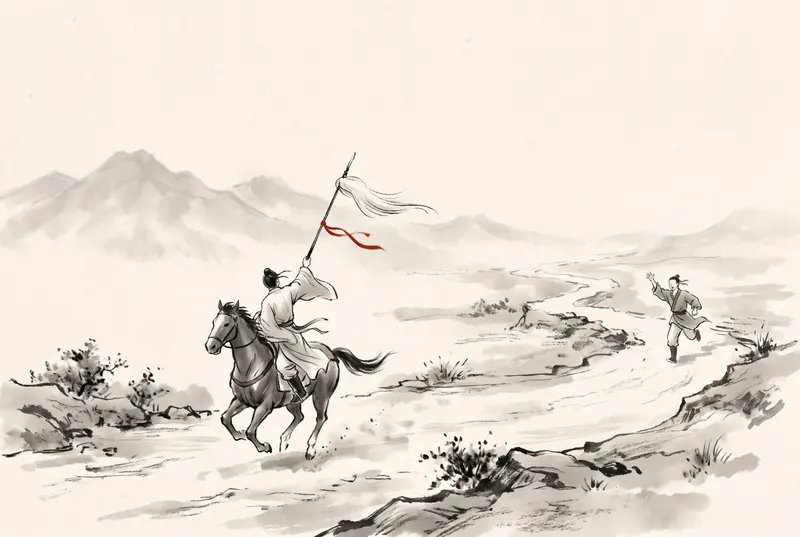
十八年,初,宣公愛夫人夷姜,夷姜生子伋,以爲太子,而令右公子傅之。右公子爲太子取齊女,未入室,而宣公見所欲爲太子婦者好,説而自取之,更爲太子取他女。宣公得齊女,生子壽、子朔,令左公子傅之。太子伋母死,宣公正夫人與朔共讒惡太子伋。宣公自以其奪太子妻也,心惡太子,欲廢之。及聞其惡,大怒,乃使太子伋於齊而令盜遮界上殺之,與太子白旄,而告界盜見持白旄者殺之。且行,子朔之兄壽,太子異母弟也,知朔之惡太子而君欲殺之,乃謂太子曰:「界盜見太子白旄,卽殺太子,太子可毋行。」太子曰:「逆父命求生,不可。」遂行。壽見太子不止,乃盜其白旄而先馳至界。界盜見其驗,卽殺之。壽已死,而太子伋又至,謂盜曰:「所當殺乃我也。」盜并殺太子伋,以報宣公。宣公乃以子朔爲太子。十九年,宣公卒,太子朔立,是爲惠公。
書き下し文
十八年、初め、宣公夫人夷姜を愛す。夷姜子伋を生み、以て太子と為し、而して右公子をして之に傅たらしむ。右公子太子の為に斉の女を取る。未だ室に入らざるに、而して宣公太子の婦と為さんと欲する所の者の好きを見、説びて自ら之を取り、更めて太子の為に他の女を取る。宣公斉の女を得て、子寿・子朔を生み、左公子をして之に傅たらしむ。太子伋の母死す。宣公の正夫人朔と共に太子伋を讒悪す。宣公自ら其の太子の妻を奪いたるを以て、心に太子を悪み、之を廃せんと欲す。其の悪を聞くに及び、大いに怒り、乃ち太子伋をして斉に使いせしめ、而して盗をして界上に遮りて之を殺さしめんとす。太子に白旄を与え、而して界の盗に告ぐ、白旄を持つ者を見ば之を殺せと。且に行かんとす。子朔の兄寿は、太子の異母弟なり。朔の太子を悪み、而して君の之を殺さんと欲するを知り、乃ち太子に謂いて曰く、「界の盗太子の白旄を見ば、即ち太子を殺さん。太子行くこと毋かるべし」と。太子曰く、「父の命に逆らいて生を求むるは、不可なり」と。遂に行く。寿太子の止まらざるを見、乃ち其の白旄を盗みて先に馳せて界に至る。界の盗其の験を見、即ち之を殺す。寿已に死し、而して太子伋又至り、盗に謂いて曰く、「当に殺すべき所は乃ち我なり」と。盗并びに太子伋を殺し、以て宣公に報ず。宣公乃ち子朔を以て太子と為す。十九年、宣公卒し、太子朔立つ。是れを恵公と為す。
現代語訳
十八年。これより前、宣公は夫人の夷姜を愛し、夷姜が生んだ子の伋を太子にして、右公子を守り役にした。右公子は太子のために斉の娘を妻に迎えようとしたが、まだ嫁入りしないうちに、宣公は太子の妻になるはずの娘が美しいのを見て気に入り、自分の妻にしてしまい、太子には別の娘を迎えた。宣公は斉の娘とのあいだに寿と朔の二人の子をもうけ、左公子を守り役にした。太子伋の母が死ぬと、宣公の正夫人(斉の娘)は朔とともに太子伋の悪口を言った。宣公は、自分が太子の妻を奪ったことから、心の中で太子をうとましく思い、廃そうと考えていた。そこへ太子の悪口を聞いて大いに怒り、太子伋を斉への使いに出して、国境で盗賊に待ち伏せさせて殺そうとした。太子に白い旄(使者のしるしの旗)を持たせ、国境の盗賊には「白い旄を持つ者を見たら殺せ」と命じておいた。太子が出発しようとすると、朔の兄で、太子の異母弟にあたる寿は、朔が太子を憎み、父が太子を殺そうとしていることを知っていたので、太子に言った。「国境の盗賊は、太子の白い旄を見たらすぐに太子を殺します。行ってはなりません」。太子は言った。「父の命令にそむいて生きのびようとするのは、いけないことだ」。そして出発した。寿は太子が思いとどまらないのを見て、白い旄を盗み出し、先に馬を走らせて国境に着いた。国境の盗賊はそのしるしを見て、すぐに寿を殺した。寿が殺されたところへ太子伋がやって来て、盗賊に言った。「殺すべきはわたしだ」。盗賊は太子伋も殺して、宣公に報告した。宣公は朔を太子にした。十九年、宣公が亡くなり、太子朔が立った。これが恵公である。
英訳
In the eighteenth year. Before this, Duke Xuan had loved his wife Yi Jiang. She bore him a son, Ji, whom he made his heir, with the Prince of the Right as his tutor. The Prince of the Right arranged a bride from Qi for the heir, but before she had entered his house, Duke Xuan saw how beautiful the woman meant to be his son's wife was, took a liking to her and married her himself, and found the heir another bride. The woman from Qi bore Duke Xuan two sons, Shou and Shuo, with the Prince of the Left as their tutor. When Ji's mother died, Duke Xuan's chief wife and Shuo together slandered the heir. Because he had stolen his heir's wife, Duke Xuan already disliked him in his heart and wanted to set him aside. When he heard these slanders, he was furious. He sent Ji on a mission to Qi and arranged for bandits to waylay him at the border and kill him. He gave the heir a white yak-tail banner, and told the bandits at the border to kill whoever they saw carrying it. As Ji was about to set off, Shou, Shuo's elder brother and Ji's half-brother, who knew that Shuo hated the heir and that their father meant to kill him, said to him: "When the bandits at the border see your white banner, they will kill you. Do not go." The heir said: "To disobey my father's command to save my own life would be wrong." And he set off. When Shou saw that he would not stop, he stole the white banner and galloped ahead to the border. The bandits saw the sign and killed him at once. When Shou was dead, the heir Ji arrived and said to the bandits: "It is I you were meant to kill." The bandits killed Ji too and reported to Duke Xuan. So Duke Xuan made Shuo his heir. In the nineteenth year Duke Xuan died and Shuo came to the throne. He was Duke Hui.
解説(日)
- 白旄: 牛の尾の毛で飾った白い旗。使者のしるし。
- 伋と寿: 二人の兄弟が互いに身代わりになって死んだ話は、『詩経』の「二子乗舟」の歌のもとになったとされる。
- 宣公が息子の妻となる女性を奪った話は、晋の献公と驪姬の話とともに、父子の不和の代表例とされる。
解説(英)
- A white yak-tail banner (白旄): the sign of an envoy.
- Ji and Shou: their story is linked with the Odes poem "Two Sons in a Boat".
- Duke Xuan's theft of his son's bride is a classic case of a father turning against his heir.
英語の語注
- slander/ˈslændər/verb
to say false things that harm someone
本文では: “together slandered the heir”
似た語と違い: defame — harm a good name · smear — spread lies about
- waylay/ˈweɪˌleɪ/verb
to wait for someone and attack them
本文では: “arranged for bandits to waylay him”
似た語と違い: ambush — attack from hiding · intercept — stop on the way
節 4
原文
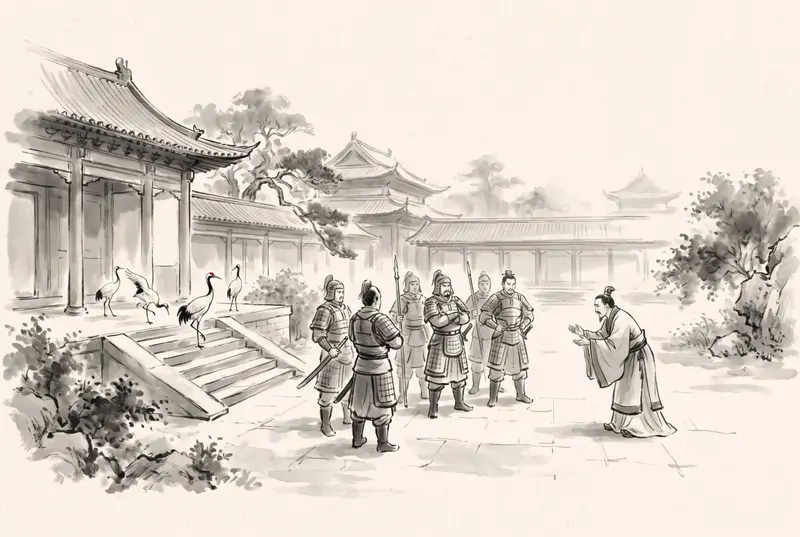
懿公卽位,好鶴,淫樂奢侈。九年,翟伐衞,衞懿公欲發兵,兵或畔。大臣言曰:「君好鶴,鶴可令撃翟。」翟於是遂入,殺懿公。懿公之立也,百姓大臣皆不服。自懿公父惠公朔之讒殺太子伋代立至於懿公,常欲敗之,卒滅惠公之後而更立黔牟之弟昭伯頑之子申爲君,是爲戴公。戴公申元年卒。齊桓公以衞數亂,乃率諸侯伐翟,爲衞築楚丘,立戴公弟燬爲衞君,是爲文公。文公以亂故奔齊,齊人入之。文公初立,輕賦平罪,身自勞,與百姓同苦,以收衞民。
書き下し文
懿公即位し、鶴を好み、淫楽奢侈なり。九年、翟衛を伐つ。衛の懿公兵を発せんと欲するも、兵或いは畔く。大臣言いて曰く、「君鶴を好む。鶴をして翟を撃たしむべし」と。翟是に於いて遂に入り、懿公を殺す。懿公の立つや、百姓大臣皆服せず。懿公の父恵公朔の太子伋を讒殺して代わり立ちしより懿公に至るまで、常に之を敗らんと欲し、卒に恵公の後を滅ぼして更めて黔牟の弟昭伯頑の子申を立てて君と為す。是れを戴公と為す。戴公申元年に卒す。斉の桓公衛の数々乱るるを以て、乃ち諸侯を率いて翟を伐ち、衛の為に楚丘を築き、戴公の弟燬を立てて衛の君と為す。是れを文公と為す。文公乱を以ての故に斉に奔る。斉人之を入る。文公初めて立ち、賦を軽くし罪を平らかにし、身自ら労し、百姓と苦を同じくして、以て衛の民を収む。
現代語訳
懿公は即位すると鶴を好み、遊びにふけってぜいたくをした。九年、北狄の翟が衛に攻めこんだ。懿公は兵を出そうとしたが、兵の中には背く者もいた。大臣たちは言った。「殿は鶴がお好きなのですから、鶴に翟を討たせればよいでしょう」。翟はそのまま攻め入り、懿公を殺した。懿公が即位したとき、民も大臣も皆心服していなかった。懿公の父の恵公朔が太子伋をおとしいれて殺し、代わって位についてから懿公に至るまで、人々はいつもその家を倒そうと思っていた。そしてとうとう恵公の子孫を滅ぼし、黔牟の弟の昭伯頑の子の申を君に立てた。これが戴公である。戴公申は即位した年に亡くなった。斉の桓公は、衛がたびたび乱れるので、諸侯を率いて翟を討ち、衛のために楚丘に城を築き、戴公の弟の燬を衛の君に立てた。これが文公である。文公は乱を避けて斉に逃れていたのを、斉の人々が衛に送り届けたのだった。文公は即位すると、税を軽くし、刑罰を公平にし、自ら働いて民と苦しみをともにし、衛の民の心をつかんだ。
英訳
When Duke Yi came to the throne, he loved cranes and gave himself up to pleasure and extravagance. In the ninth year the Di attacked Wei. Duke Yi of Wei wanted to send out his troops, but some of them rebelled. The great ministers said: "You love cranes, my lord. Let the cranes fight the Di." So the Di broke in and killed Duke Yi. When Duke Yi came to the throne, neither the people nor the ministers had accepted him. Ever since his father, Duke Hui, had had the heir Ji slandered and killed and taken his place, they had always wanted to bring that line down. In the end they wiped out Duke Hui's descendants and made Shen, son of Zhaobo Wan, brother of Qianmou, ruler instead. He was Duke Dai. Duke Dai died in the first year of his reign. Because Wei had fallen into disorder so many times, Duke Huan of Qi led the lords to attack the Di, built Chuqiu for Wei, and made Duke Dai's younger brother Hui ruler of Wei. He was Duke Wen. Duke Wen had fled to Qi to escape the disorder, and the men of Qi brought him home. When Duke Wen first came to the throne, he lightened taxes, made punishments fair, worked hard himself and shared the hardships of the people, and so won over the people of Wei.
解説(日)
- 懿公好鶴: 『春秋左氏伝』では、懿公は鶴を大夫の乗る車に乗せていた。兵士たちは「鶴には禄も位もある、鶴に戦わせよ」と言ったという。
- 翟: 北方の異民族、狄。前660年、衛の都の朝歌を攻め落とした。
- 楚丘: 斉の桓公が衛のために新しく築いた都。覇者としての桓公の働きを示す例とされる。
解説(英)
- Duke Yi's cranes: in the Zuo Commentary he gave them carriages of rank, and his soldiers said the cranes, with their salaries and titles, should do the fighting.
- The Di (翟): northern peoples who took the Wei capital, Zhaoge, in 660 BCE.
- Chuqiu (楚丘): the new capital built for Wei by Duke Huan of Qi, a model act of a hegemon.
英語の語注
- extravagance/ɪkˈstrævəɡəns/noun
spending too much on luxuries
本文では: “pleasure and extravagance”
似た語と違い: excess — too much · lavishness — costly display
- hardship/ˈhɑrdˌʃɪp/noun
a difficult and unpleasant condition
本文では: “shared the hardships of the people”
似た語と違い: suffering — pain · adversity — difficult times
節 5
原文
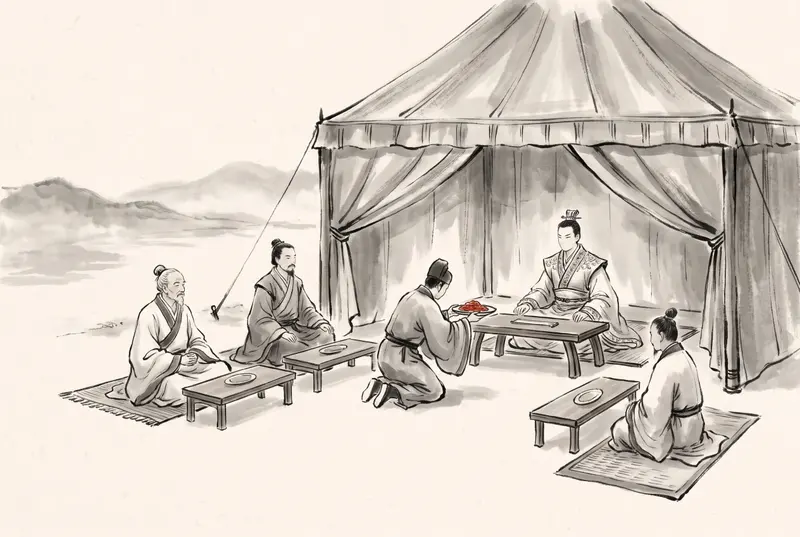
獻公十三年,公令師曹教宮妾鼓琴,妾不善,曹笞之。妾以幸惡曹於公,公亦笞曹三百。十八年,獻公戒孫文子、甯惠子食,皆往。日旰不召,而去射鴻於囿。二子從之,公不釋射服與之言。二子怒,如宿。孫文子子數侍公飲,使師曹歌巧言之卒章。師曹又怒公之嘗笞三百,乃歌之,欲以怒孫文子,報衞獻公。文子語蘧伯玉,伯玉曰:「臣不知也。」遂攻出獻公。獻公奔齊,齊置衞獻公於聚邑。孫文子、甯惠子共立定公弟秋爲衞君,是爲殤公。
書き下し文
献公十三年、公師曹をして宮妾に琴を鼓するを教えしむ。妾善くせず。曹之を笞つ。妾幸を以て曹を公に悪む。公も亦た曹を笞つこと三百。十八年、献公孫文子・甯恵子を戒めて食せしむ。皆往く。日旰るるも召さず、而して去りて鴻を囿に射る。二子之に従う。公射服を釈かずして之と言う。二子怒り、宿に如く。孫文子の子数々公に侍して飲む。師曹をして巧言の卒章を歌わしむ。師曹又公の嘗て笞つこと三百なるを怒り、乃ち之を歌い、以て孫文子を怒らせ、衛の献公に報いんと欲す。文子蘧伯玉に語る。伯玉曰く、「臣知らざるなり」と。遂に攻めて献公を出だす。献公斉に奔る。斉衛の献公を聚邑に置く。孫文子・甯恵子共に定公の弟秋を立てて衛の君と為す。是れを殤公と為す。
現代語訳
献公の十三年、献公は楽師の曹に、宮中の女に琴を弾くことを教えさせた。女はうまく弾けなかったので、曹は女をむちで打った。女は寵愛されていたので、曹のことを献公に悪く言い、献公も曹を三百回むちで打った。十八年、献公は孫文子と甯恵子に食事に来るよう言いつけ、二人は出かけていった。ところが日が暮れても呼ばれず、献公は苑で鴻(おおとり)を射に行ってしまった。二人が後を追っていくと、献公は狩りの服を脱ぎもせずに話をした。二人は怒って、宿の地へ帰った。孫文子の子は、たびたび献公の酒の席に仕えていた。献公は楽師の曹に「巧言」の詩の最後の章を歌わせた。曹は、かつて三百回むちで打たれたことを恨んでいたので、わざとその歌を歌って孫文子を怒らせ、献公に仕返しをしようとした。孫文子がこのことを蘧伯玉に話すと、伯玉は「わたしは何も知りません」と言った。孫文子はとうとう献公を攻めて国外に追い出した。献公は斉に逃れ、斉は献公を聚邑に住まわせた。孫文子と甯恵子は、定公の弟の秋を衛の君に立てた。これが殤公である。
英訳
In the thirteenth year of Duke Xian, the duke had the music master Cao teach a palace woman to play the zither. She played badly, and Cao beat her. Because she was the duke's favourite, she spoke ill of Cao to the duke, and the duke had Cao beaten three hundred times. In the eighteenth year Duke Xian told Sun Wenzi and Ning Huizi to come and dine with him, and both went. But the day grew late and they were not called in; the duke had gone off to shoot swans in his park. The two men followed him there, and the duke spoke to them without even taking off his hunting cap. The two men were angry and went off to Su. Sun Wenzi's son often drank with the duke. The duke had the music master Cao sing the last verse of the song "Clever Words". Cao, still angry at the three hundred lashes the duke had given him, sang it on purpose to anger Sun Wenzi and take his revenge on Duke Xian of Wei. Sun Wenzi spoke of it to Qu Boyu, who said: "I know nothing of it." So Sun Wenzi attacked the duke and drove him out. Duke Xian fled to Qi, and Qi lodged him at Juyi. Sun Wenzi and Ning Huizi made Qiu, a younger brother of Duke Ding, ruler of Wei. He was Duke Shang.
解説(日)
- 師曹: 宮中の楽師。むち打ちの恨みを、歌を使って晴らした。
- 巧言: 『詩経』小雅の詩。最後の章は、川のほとりに住む者が乱を起こすことを皮肉る内容で、孫文子への当てつけに聞こえた。
- 射服: 狩りのときにかぶる皮の冠。客を迎えるのに脱がないのは、ひどい無礼だった。
- 蘧伯玉: 衛の賢い大夫。孔子も尊敬した人物で、政争には加わらなかった。
解説(英)
- Music master Cao (師曹): he took his revenge for a beating with a song.
- "Clever Words" (巧言): a poem of the Odes whose last verse seemed to hint that Sun Wenzi was a troublemaker.
- Not taking off his hunting cap: a gross insult to a guest.
- Qu Boyu (蘧伯玉): a wise minister of Wei admired by Confucius, who kept out of the feud.
英語の語注
- favourite/ˈfeɪvərɪt/noun
a person a ruler likes and rewards more than others
本文では: “she was the duke's favourite”
似た語と違い: darling — one much loved · pet — specially liked person
British spelling: favourite (US: favorite).
- revenge/rɪˈvɛndʒ/noun
harm done to someone in return for harm
本文では: “take his revenge”
似た語と違い: vengeance — punishment in return · retaliation — striking back
節 6
原文
十二年,初,孔圉文子取太子蒯聵之姊,生悝。孔氏之豎渾良夫美好,孔文子卒,良夫通於悝母。太子在宿,悝母使良夫於太子。太子與良夫言曰:「茍能入我國,報子以乘軒,免子三死,毋所與。」與之盟,許以悝母爲妻。閏月,良夫與太子入,舍孔氏之外圃。昏,二人蒙衣而乘,宦者羅御,如孔氏。孔氏之老欒甯問之,稱姻妾以告。遂入,適伯姬氏。旣食,悝母杖戈而先,太子與五人介,輿猳從之。伯姬劫悝於廁,彊盟之,遂劫以登臺。欒甯將飲酒,炙未熟,聞亂,使告仲由。召護駕乘車,行爵食炙,奉出公輒奔魯。
書き下し文
十二年、初め、孔圉文子太子蒯聵の姊を取り、悝を生む。孔氏の豎渾良夫美好なり。孔文子卒し、良夫悝の母に通ず。太子宿に在り。悝の母良夫を太子に使いせしむ。太子良夫と言いて曰く、「苟くも能く我を国に入れば、子に報ゆるに乗軒を以てし、子の三死を免じ、与かる所毋からしめん」と。之と盟い、許すに悝の母を以て妻と為さしむ。閏月、良夫太子と入り、孔氏の外圃に舎る。昏に、二人衣を蒙りて乗り、宦者羅御して、孔氏に如く。孔氏の老欒甯之を問う。姻妾と称して以て告ぐ。遂に入りて、伯姬氏に適く。既に食して、悝の母戈を杖つきて先んじ、太子五人と介し、豭を輿きて之に従う。伯姬悝を廁に劫かし、彊いて之に盟わしめ、遂に劫かして以て台に登る。欒甯将に酒を飲まんとす。炙未だ熟せず。乱を聞き、仲由に告げしむ。護駕の乗車を召し、爵を行い炙を食らい、出公輒を奉じて魯に奔る。
現代語訳
(霊公の太子蒯聵は、霊公の夫人南子を殺そうとして失敗し、国外に逃げていた。霊公の死後、蒯聵の子の輒が位につき、出公となった。)出公の十二年。これより前、孔圉(孔文子)は太子蒯聵の姉を妻にして、悝を生んだ。孔氏の召使いの渾良夫は美男子で、孔文子が亡くなると、悝の母と密通した。太子は宿の地にいた。悝の母は良夫を太子のもとへ使いに出した。太子は良夫に言った。「もしわたしを国に入れてくれたら、褒美に大夫の車に乗れるようにし、死罪を三度まで許し、どんな罪にも問わないことにしよう」。そして良夫と誓いを結び、悝の母を良夫の妻にすることを許した。閏月、良夫は太子とともに都に入り、孔氏の屋敷の外の畑に身を潜めた。夕暮れに、二人は女の衣をかぶって車に乗り、宦官の羅が御者となって孔氏の屋敷に行った。孔氏の家老の欒甯がたずねると、姻戚の侍女だと名乗った。こうして屋敷に入り、伯姫(悝の母)のもとへ行った。食事を終えると、悝の母が戈を手に先に立ち、太子が五人の武装した者とともに、いけにえの豚を担がせて後に続いた。伯姫は悝を厠に追いつめ、むりやり誓いを立てさせ、そのまま悝を脅して高台に上らせた。欒甯は酒を飲もうとしていたところで、肉もまだ焼けていなかったが、乱を聞いて仲由(子路)に知らせた。そして車を呼び寄せ、杯をあけ、焼き肉を食べてから、出公輒を奉じて魯へ逃げた。
英訳
In the twelfth year of Duke Chu. Before this, Kong Yu, Kong Wenzi, had married the sister of the exiled heir Kuaikui, and she bore him Kui. A servant of the Kong family, Hun Liangfu, was handsome, and after Kong Wenzi died he became the lover of Kui's mother. The heir was at Su, and Kui's mother sent Liangfu to him. The heir said to Liangfu: "If you can bring me back into the state, I will reward you with the right to ride in a minister's carriage, and pardon you three times for crimes punishable by death; you will answer for nothing." He swore an oath with him, and promised him Kui's mother as his wife. In the intercalary month Liangfu and the heir entered the capital and hid in the outer garden of the Kong house. At dusk the two of them, wrapped in women's clothes, rode in a carriage driven by the eunuch Luo to the Kong house. When Luan Ning, the Kong family steward, asked who they were, they said they were maids of a related family. So they went in, to the lady Bo Ji. When they had eaten, Kui's mother went first, holding a halberd, and the heir followed with five men in armour, with a boar carried behind them for the oath. Bo Ji cornered Kui in the privy and forced him to swear the oath, then took him by force up onto a terrace. Luan Ning was about to have a drink, and his roast meat was not yet cooked, when he heard of the coup. He sent word to Zhong You, called for a carriage, drank his cup and ate his meat, and fled to Lu with Duke Chu, Zhe.
解説(日)
- 蒯聵: 霊公の太子。霊公の夫人南子を殺そうとして失敗し、亡命していた。父の霊公の死後、自分の子の出公輒と位を争った。
- 乘軒: 大夫の乗る車。召使いの身分の者には、この上ない出世だった。
- 豭: いけにえの雄豚。誓いのときに血をすすり合うために使った。
- 仲由: 子路。孔子の弟子で、このとき孔悝の家臣として仕えていた(067-disciples の章)。
解説(英)
- Kuaikui (蒯聵): Duke Ling's heir, exiled after a failed attempt on his stepmother Nanzi; he now fought his own son, Duke Chu, for the throne.
- A minister's carriage (乘軒): an extraordinary reward for a servant.
- A boar (豭): to be sacrificed for the blood of the oath.
- Zhong You (仲由): Zilu, Confucius's disciple, then serving the Kong family (chapter 067).
英語の語注
- halberd/ˈhælbərd/noun
a long weapon with a blade and spike on a pole
本文では: “holding a halberd”
似た語と違い: pike — long spear · polearm — weapon on a pole
- intercalary/ɪnˈtɜrkəˌlɛri/adjective
added to the calendar to keep it in line with the seasons
本文では: “In the intercalary month”
似た語と違い: leap — as in leap year · inserted — put in between
節 7
原文
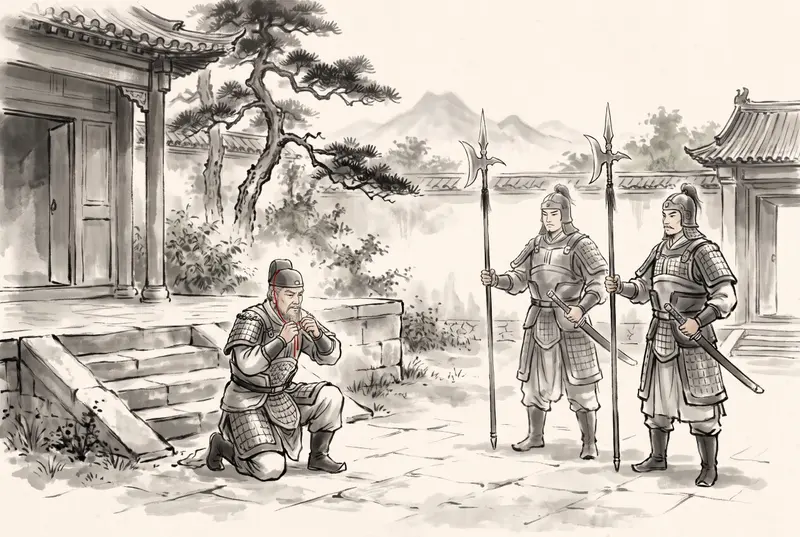
仲由將入,遇子羔將出,曰:「門已閉矣。」子路曰:「吾姑至矣。」子羔曰:「不及,莫踐其難。」子路曰:「食焉不辟其難。」子羔遂出。子路入,及門,公孫敢闔門,曰:「毋入爲也!」子路曰:「是公孫也?求利而逃其難。由不然,利其祿,必救其患。」有使者出,子路乃得入。曰:「太子焉用孔悝?雖殺之,必或繼之。」且曰:「太子無勇。若燔臺,必舍孔叔。」太子聞之,懼,下石乞、盂黶敵子路,以戈撃之,割纓。子路曰:「君子死,冠不免。」結纓而死。孔子聞衞亂,曰:「嗟乎!柴也其來乎?由也其死矣。」孔悝竟立太子蒯聵,是爲莊公。
書き下し文
仲由将に入らんとし、子羔の将に出でんとするに遇う。曰く、「門已に閉ざせり」と。子路曰く、「吾姑く至らん」と。子羔曰く、「及ばず。其の難を践むこと莫かれ」と。子路曰く、「焉に食めば其の難を辟けず」と。子羔遂に出づ。子路入りて、門に及ぶ。公孫敢門を闔ざして、曰く、「入りて為すこと毋かれ」と。子路曰く、「是れ公孫か。利を求めて其の難を逃る。由は然らず。其の禄を利とせば、必ず其の患いを救う」と。使者の出づる有り。子路乃ち入るを得たり。曰く、「太子焉んぞ孔悝を用いん。之を殺すと雖も、必ず或いは之を継がん」と。且つ曰く、「太子は勇無し。若し台を燔かば、必ず孔叔を舎かん」と。太子之を聞きて、懼れ、石乞・盂黶を下して子路に敵せしめ、戈を以て之を撃ち、纓を割く。子路曰く、「君子は死すとも、冠は免がず」と。纓を結びて死す。孔子衛の乱を聞き、曰く、「嗟乎、柴や其れ来たらんか。由や其れ死せん」と。孔悝竟に太子蒯聵を立つ。是れを荘公と為す。
現代語訳
仲由(子路)が城内に入ろうとすると、ちょうど出てくる子羔に会った。子羔は「門はもう閉まっています」と言った。子路は「とにかく行ってみる」と言った。子羔は「もう間に合いません。危ない目にあってはいけません」と言った。子路は「その家の禄を食んでいる者は、その家の難を避けたりはしない」と言った。子羔はそのまま出ていった。子路は城内に入り、孔氏の門まで来た。公孫敢が門を閉ざして言った。「入っても何もできませんぞ」。子路は言った。「あなたは公孫どのか。利益を求めておいて、難儀からは逃げるのか。わたしは違う。その禄を受けているからには、必ずその災いから救うのだ」。ちょうど使者が出てきたので、子路は中に入ることができた。子路は言った。「太子はどうして孔悝を使う必要があろう。孔悝を殺したところで、必ず誰かがあとを継いで太子に立ち向かう」。さらに言った。「太子には勇気がない。台に火をつければ、必ず孔叔(孔悝)を放すだろう」。太子はこれを聞いて恐れ、石乞と盂黶を下へ行かせて子路と戦わせた。二人は戈で子路を打ち、冠のひもを断ち切った。子路は言った。「君子は死んでも冠は脱がないものだ」。そして冠のひもを結び直して死んだ。孔子は衛の乱を聞いて言った。「ああ、柴(子羔)は帰ってくるだろう。由(子路)は死ぬだろう」。孔悝はとうとう太子蒯聵を君に立てた。これが荘公である。
英訳
As Zhong You was about to go in, he met Zigao coming out. Zigao said: "The gate is already shut." Zilu said: "I will go there anyway." Zigao said: "You are too late. Do not walk into danger." Zilu said: "He who eats a man's food does not run from his troubles." Zigao went on out. Zilu went in and came to the gate. Gongsun Gan shut it and said: "Do not come in. There is nothing you can do." Zilu said: "So it is Gongsun. You seek your profit and run from the danger. I am not like that. If I have profited from his salary, I must save him from his trouble." Just then a messenger came out, and Zilu was able to get in. He said: "What use has the heir for Kong Kui? Even if he kills him, someone will surely take his place." And he said: "The heir has no courage. If we set fire to the terrace, he will surely let Kong Kui go." When the heir heard this, he was afraid, and sent Shi Qi and Yu Yan down to fight Zilu. They struck him with their halberds and cut the strings of his cap. Zilu said: "A gentleman may die, but he does not take off his cap." He tied the strings again, and died. When Confucius heard of the disorder in Wei, he said: "Ah! Chai will come back. You will die." In the end Kong Kui made the heir Kuaikui ruler. He was Duke Zhuang.
解説(日)
- 子羔: 名は柴。孔子の弟子で、子路の推薦で衛に仕えていた。
- 食焉不辟其難: その家の禄を受けている者は、その家の災難から逃げない。
- 君子死,冠不免: 君子は死に臨んでも身なりを正す。子路の最期として、孔子世家や仲尼弟子列伝にも記される(067-disciples の章)。
- 孔子は子路の死を深く悲しんだ。翌年、孔子も亡くなる(047-confucius の章)。
解説(英)
- Zigao (子羔): Gao Chai, another disciple of Confucius, who had found office in Wei through Zilu.
- "A gentleman may die, but he does not take off his cap" (君子死,冠不免): Zilu's end is also told in chapters 047 and 067.
- Confucius grieved deeply for Zilu, and died the following year.
この節から生まれた言葉: 君子は死すとも冠を免がず
英語の語注
- profit/ˈprɑfɪt/verb
to gain an advantage from something
本文では: “If I have profited from his salary”
似た語と違い: benefit — gain · gain — get something good
- courage/ˈkɜrɪdʒ/noun
the ability to face danger without fear
本文では: “The heir has no courage”
似た語と違い: bravery — boldness · nerve — daring
節 8
原文
太史公曰:余讀世家言,至於宣公之太子以婦見誅,弟壽爭死以相讓,此與晉太子申生不敢明驪姬之過同,倶惡傷父之志。然卒死亡,何其悲也!或父子相殺,兄弟相滅,亦獨何哉?
書き下し文
太史公曰く、余世家の言を読み、宣公の太子婦を以て誅せられ、弟寿死を争いて以て相譲るに至る。此れ晋の太子申生の敢えて驪姬の過ちを明らかにせざると同じく、倶に父の志を傷つくるを悪む。然れども卒に死亡す。何ぞ其れ悲しきや。或いは父子相殺し、兄弟相滅す。亦た独り何ぞや。
現代語訳
太史公は言う。わたしは世家の記録を読んで、宣公の太子が妻のことがもとで殺され、弟の寿が死を争って兄に譲ろうとしたところまで来た。これは晋の太子申生が、驪姫の過ちを明らかにしようとしなかったのと同じで、どちらも父の心を傷つけることを嫌ったのである。それなのに、とうとう死んでしまった。なんと悲しいことか。あるいは父と子が殺し合い、兄弟が滅ぼし合う。いったいどうしたことだろうか。
英訳
The Grand Historian says: Reading the records of this house, I came to the heir of Duke Xuan, put to death because of a woman, and his brother Shou, who fought to die in his place. This is like Shensheng, the heir of Jin, who would not expose the wrongs of Lady Li; both of them hated to wound their fathers' hearts. Yet in the end they died. How sad it is! Sometimes fathers and sons kill each other, and brothers destroy each other. Why should this be?
解説(日)
- 申生: 晋の献公の太子。父の寵姫の驪姫に陥れられたが、父を悲しませまいと弁明せずに自殺した(039-chong-er の章)。
- 父子相殺し、兄弟相滅す: 衛では、宣公と伋、蒯聵と出公輒など、父子・兄弟の争いがくり返された。
解説(英)
- Shensheng (申生): the heir of Jin who killed himself rather than accuse Lady Li and grieve his father (chapter 039).
- Fathers and sons, brothers: Wei saw Duke Xuan against Ji, and Kuaikui against his own son.
英語の語注
- expose/ɪkˈspoʊz/verb
to make something bad known to everyone
本文では: “would not expose the wrongs of Lady Li”
似た語と違い: reveal — make known · unmask — show the truth about
- wound/wund/verb
to hurt someone's feelings
本文では: “hated to wound their fathers' hearts”
似た語と違い: hurt — cause pain · injure — harm