本紀 · 巻 8
高祖本紀 高祖本紀
関中に入る(約法三章) 約法三章
秦の都を目指す沛公(劉邦)は、武関を破って関中に入り、秦王子嬰の降伏を受ける。財宝に手をつけずに軍を引き、「法は三章のみ」と約束して、秦の人々の心をつかむ。「約法三章」という言葉のもとになった場面で、鴻門の会の直前のできごと。
この巻のうち「関中に入る(約法三章)」の場面を載せています。巻の全文ではありません。
音声
音声は合成音声です。
動画
節 1
原文
初,項羽與宋義北救趙,及項羽殺宋義,代為上將軍,諸將黥布皆屬,破秦將王離軍,降章邯,諸侯皆附。
書き下し文
初め、項羽は宋義と北のかた趙を救う。項羽の宋義を殺すに及び、代わりて上将軍と為る。諸将黥布ら皆属し、秦将王離の軍を破り、章邯を降し、諸侯皆附く。
現代語訳
これより前、項羽は宋義とともに北へ向かい、趙を救いに行った。やがて項羽は宋義を殺し、代わって上将軍となった。黥布をはじめ諸将はみな項羽の配下に入り、項羽は秦の将軍王離の軍を破り、章邯を降伏させた。諸侯はみな項羽に付き従った。
英訳
Earlier, Xiang Yu had gone north with Song Yi to rescue Zhao. Then Xiang Yu killed Song Yi and took his place as supreme general. Qing Bu and the other generals all came under him. He crushed the army of the Qin general Wang Li and took the surrender of Zhang Han, and the lords all joined him.
解説(日)
- 初: 時間をさかのぼって語るときの書き出し。ここでは、北へ向かった項羽の動きを先にまとめている。
- 宋義: 楚の上将軍。趙の救援に踏み切らなかったため、項羽に斬られた。
- 黥布: 英布とも。項羽の配下の勇将。鴻門の会の「当陽君」。
- 王離・章邯: ともに秦の名将。項羽は鉅鹿の戦いで秦の主力を破り、章邯は降伏した。
- 対比: 北で秦の大軍と戦う項羽と、西から関中を目指す沛公。どちらが先に関中に入るかが、後の争いの火種になる。
解説(英)
- 初 ("earlier"): an opening that steps back in time. Here it sums up what Xiang Yu had done in the north.
- Song Yi: supreme general of Chu. He held back from rescuing Zhao, and Xiang Yu cut him down.
- Qing Bu: also called Ying Bu, one of Xiang Yu's fiercest generals (the "Lord of Dangyang" at Hongmen).
- Wang Li and Zhang Han: two great Qin generals. Xiang Yu broke the main Qin army at Julu, and Zhang Han surrendered.
- The contrast: Xiang Yu fights the great Qin army in the north while the Lord of Pei heads west for the land within the passes. Who gets there first will spark the conflict to come.
英語の語注
- rescue/ˈrɛskjuː/verb
to save someone from danger
本文では: “to rescue Zhao”
似た語と違い: save — the everyday word · relieve — free a besieged place
- crush/krʌʃ/verb
to defeat completely
本文では: “He crushed the army of the Qin general”
似た語と違い: defeat — win against; neutral · overwhelm — defeat with much greater force
節 2
原文
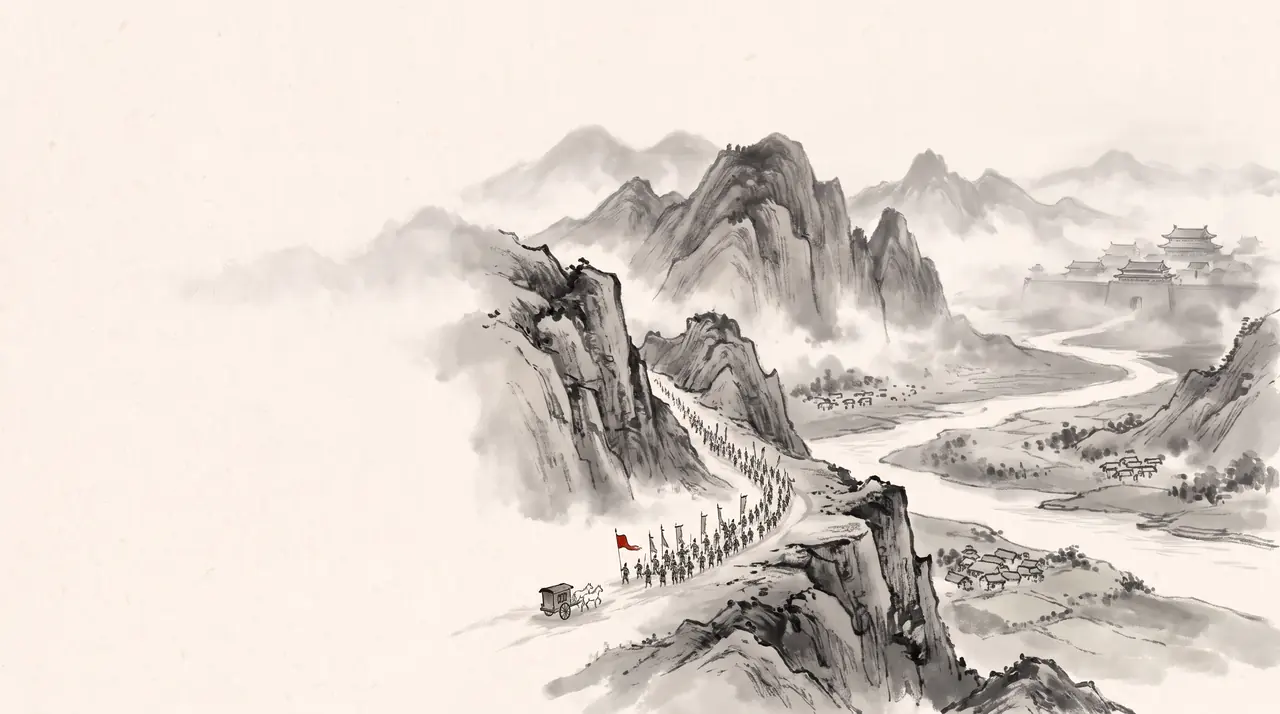
及趙高已殺二世,使人來,欲約分王關中。沛公以為詐,乃用張良計,使酈生、陸賈往說秦將,啗以利,因襲攻武關,破之。又與秦軍戰於藍田南,益張疑兵旗幟,諸所過毋得掠鹵,秦人喜,秦軍解,因大破之。又戰其北,大破之。乘勝,遂破之。
書き下し文
趙高の已に二世を殺すに及び、人をして来たらしめ、約して関中に分王せんと欲す。沛公以て詐りと為し、乃ち張良の計を用い、酈生・陸賈をして往きて秦将に説かしめ、啗わすに利を以てし、因りて武関を襲攻して、之を破る。又た秦軍と藍田の南に戦い、益ます疑兵の旗幟を張り、諸もろの過ぐる所、掠鹵するを得る毋からしむ。秦人喜び、秦軍解け、因りて大いに之を破る。又た其の北に戦い、大いに之を破る。勝ちに乗じて、遂に之を破る。
現代語訳
趙高が二世皇帝を殺してしまうと、沛公のもとに使者をよこし、関中を分けてそれぞれ王になろうと持ちかけてきた。沛公はこれを偽りだと考え、張良の計略を用いて、酈食其と陸賈を秦の将軍のもとへ説きに行かせ、利益で釣ったうえで、武関を不意に攻めて破った。さらに藍田の南で秦軍と戦い、見せかけの兵の旗をいっそう多く立て、通る先々で略奪を一切禁じた。秦の人々は喜び、秦軍はばらばらになったので、大いにこれを破った。さらにその北でも戦って大勝し、勝ちに乗じて、ついに秦軍を打ち破った。
英訳
When Zhao Gao had killed the Second Emperor, he sent envoys proposing that they divide the land within the passes and each rule as king. The Lord of Pei judged this a trick. Using Zhang Liang's plan, he sent Li Yiji and Lu Jia to win over the Qin generals with promises of gain, and then took the Wu Pass by surprise. He fought the Qin army south of Lantian, raising ever more banners for troops that did not exist, and forbade any plundering wherever his men passed. The people of Qin were glad, the Qin army fell apart, and he defeated it soundly. He fought again to the north and won a great victory, and pressing on, he finally broke the Qin forces.
解説(日)
- 趙高: 秦の宦官出身の権力者。二世皇帝(胡亥)を自殺に追いこんだ。
- 酈生・陸賈: 酈食其と陸賈。ともに弁舌で知られた沛公の臣。
- 武関: 関中の南東にある関所。項羽が通った東の函谷関とは別の入り口で、沛公はこちらから入った。
- 疑兵: 敵を惑わすための、見せかけの兵。旗を多く立てて大軍に見せる。
- 藍田: 咸陽の南東の地。
- 毋得掠鹵: 略奪の禁止。鴻門の会で沛公が「秋豪も敢えて近づくる所有らず」と言う伏線になっている。
解説(英)
- Zhao Gao: a former eunuch who held the real power in Qin. He drove the Second Emperor (Huhai) to suicide.
- Li Yiji and Lu Jia: two of the Lord of Pei's men, both famous as persuaders.
- The Wu Pass: a pass southeast of the land within the passes. It is a different gateway from the Hangu Pass in the east, which Xiang Yu later used.
- 疑兵: dummy troops. Many banners made a small force look like a great army.
- Lantian: a place southeast of Xianyang.
- 毋得掠鹵 (no plundering): this prepares the Lord of Pei's claim at Hongmen that he "did not touch so much as a hair".
英語の語注
- envoy/ˈɛnvɔɪ/noun
a person sent by a ruler to deliver a message or make an agreement
本文では: “he sent envoys proposing”
似た語と違い: messenger — someone who carries a message · ambassador — a modern official who represents a country
- trick/trɪk/noun
a clever plan to deceive someone
本文では: “The Lord of Pei judged this a trick.”
似た語と違い: trap — a plan to catch someone · ruse — formal; a clever deception
- by surprise/baɪ sərˈpraɪz/phrase
suddenly, when the enemy does not expect it
本文では: “took the Wu Pass by surprise”
似た語と違い: unexpectedly — when no one expects it · without warning — with no sign beforehand
- plunder/ˈplʌndər/verb
to steal goods by force, especially in war
本文では: “forbade any plundering”
似た語と違い: loot — steal during war or riots · rob — steal from a person or place
- forbid/fərˈbɪd/verb
to order that something must not be done (past tense: forbade)
本文では: “forbade any plundering”
似た語と違い: ban — officially forbid · prohibit — formal; forbid by law
節 3
原文
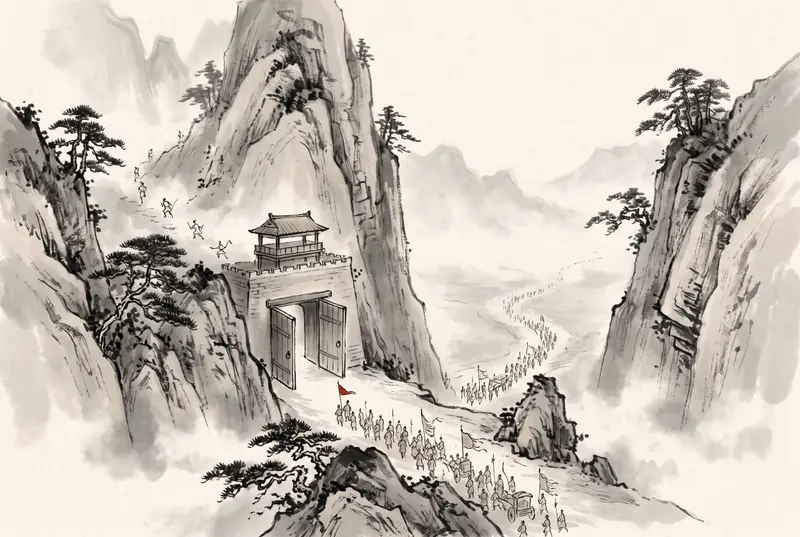
漢元年十月,沛公兵遂先諸侯至霸上。秦王子嬰素車白馬,系頸以組,封皇帝璽符節,降軹道旁。諸將或言誅秦王。沛公曰:「始懷王遣我,固以能寬容;且人已服降,又殺之,不祥。」乃以秦王屬吏,遂西入咸陽。
書き下し文
漢の元年十月、沛公の兵遂に諸侯に先んじて覇上に至る。秦王子嬰、素車白馬、頸に係くるに組を以てし、皇帝の璽・符・節を封じて、軹道の旁らに降る。諸将或いは秦王を誅せんと言う。沛公曰く、「始め懐王我を遣わししは、固より能く寛容なるを以てなり。且つ人已に服し降るに、又た之を殺すは、不祥なり」と。乃ち秦王を以て吏に属し、遂に西のかた咸陽に入る。
現代語訳
漢の元年十月、沛公の軍はついに諸侯に先んじて覇上に着いた。秦王の子嬰は、飾りのない車を白馬に引かせ、首に組紐をかけ、皇帝の印璽と割り符・使者のしるしを封じて差し出し、軹道のかたわらで降伏した。将軍たちの中には、秦王を殺すべきだと言う者もいた。沛公は言った。「そもそも懐王が私を派遣したのは、私が寛大だからだ。それに、すでに降伏した人をさらに殺すのは不吉である。」そこで秦王を役人に預け、西へ進んで咸陽に入った。
英訳
In the tenth month of the first year of Han, the Lord of Pei's army reached Bashang ahead of all the other lords. Ziying, King of Qin, came in a plain carriage drawn by white horses, a silk cord around his neck, bringing the emperor's seals, tallies and insignia sealed up, and surrendered beside the Zhi road. Some of the generals said the King of Qin should be killed. The Lord of Pei said, "King Huai sent me in the first place because I could be lenient. Besides, to kill a man who has already surrendered would bring bad luck." So he handed the King of Qin over to his officers and went on west into Xianyang.
解説(日)
- 漢元年十月: 漢の暦で数えた年月。当時は十月が年の初めだった。伝統的には前206年とされる(西暦に直すと前207年の末にあたる)。
- 素車白馬、系頸以組: 飾りのない車と白馬、首にかけた紐。降伏し、死をも受け入れる姿を示す。
- 璽符節: 皇帝の印と、割り符・使者のしるし。権力のしるしを差し出すことは、秦の滅亡を意味する。
- 軹道: 咸陽の東の地名。
- 不祥: 不吉。降伏した者を殺さない寛大さが、沛公の評判を高めた。のちに項羽は子嬰を殺している。
解説(英)
- 漢元年十月: the tenth month of the first year of Han. At the time the year began in the tenth month. It is traditionally dated to 206 BCE (by the Western calendar, the end of 207 BCE).
- A plain carriage, white horses, a cord around the neck: the signs of surrender, of a man ready to accept death.
- 璽符節: the emperor's seals, tallies and insignia, the symbols of power. Handing them over meant the end of Qin.
- The Zhi road: a place east of Xianyang.
- 不祥 ("bad luck"): his leniency toward a man who had surrendered raised his reputation. Xiang Yu later killed Ziying.
英語の語注
- insignia/ɪnˈsɪɡniə/noun
objects or badges that show someone's rank or authority
本文では: “seals, tallies and insignia”
似た語と違い: badge — a small sign worn to show rank · emblem — a symbol of a group or state
- lenient/ˈliːniənt/adjective
not strict; willing to forgive or punish lightly
本文では: “because I could be lenient”
似た語と違い: merciful — showing kindness to someone in your power · gentle — kind and mild
節 4
原文
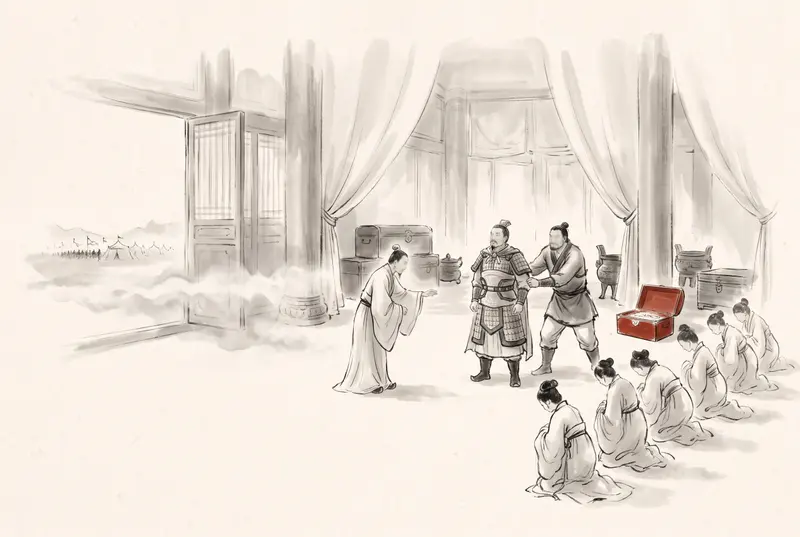
欲止宮休舍,樊噲、張良諫,乃封秦重寶財物府庫,還軍霸上。
書き下し文
宮に止まりて休舎せんと欲するも、樊噲・張良諫む。乃ち秦の重宝・財物・府庫を封じ、軍を覇上に還す。
現代語訳
沛公は宮殿にとどまって休もうとしたが、樊噲と張良がいさめた。そこで秦の宝物・財物・倉庫を封印し、軍を覇上に引き返させた。
英訳
He wanted to stay and rest in the palace, but Fan Kuai and Zhang Liang talked him out of it. So he sealed up the treasures, riches and storehouses of Qin and took his army back to Bashang.
解説(日)
- 樊噲・張良の諫め: 宮殿の財宝や美女に心を奪われるな、という忠告。くわしくは『史記』の留侯世家などに見える。
- 府庫を封ず: 鴻門の会で、沛公も樊噲も「府庫を封じて将軍(項羽)を待った」と言うのは、このことを指す。
解説(英)
- The advice of Fan Kuai and Zhang Liang: not to be seduced by the palace's treasures and women. More detail appears elsewhere in the Shiji (the House of the Marquis of Liu).
- Sealing the storehouses: at Hongmen, both the Lord of Pei and Fan Kuai say he "sealed the storehouses and waited for the general". This is what they mean.
英語の語注
- storehouse/ˈstɔrˌhaʊs/noun
a building where goods or treasure are kept
本文では: “sealed up the treasures, riches and storehouses of Qin”
似た語と違い: warehouse — a large building for goods · granary — a building for storing grain
- talk someone out of/ˌtɔk ˌsʌmwʌn ˈaʊt əv/phrasal verb
to persuade someone not to do something
本文では: “talked him out of it”
似た語と違い: dissuade — formal; persuade not to · discourage — make someone less willing
節 5
原文
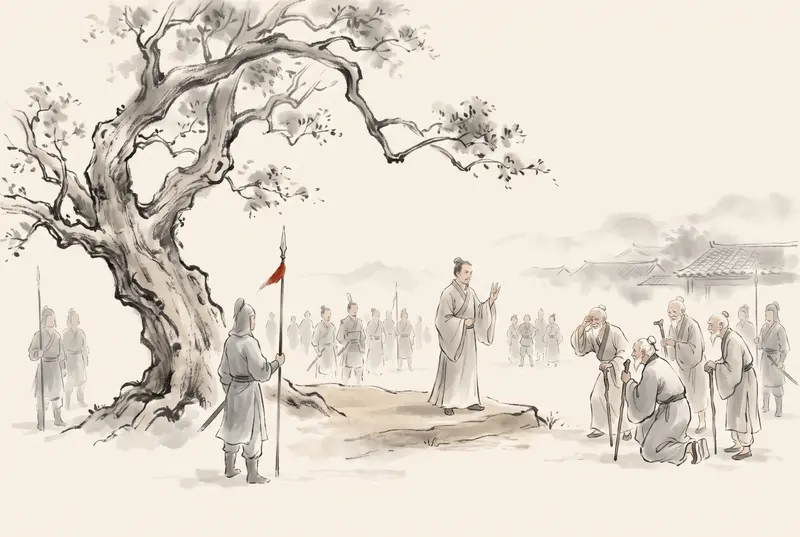
召諸縣父老豪桀曰:「父老苦秦苛法久矣,誹謗者族,偶語者棄市。吾與諸侯約,先入關者王之,吾當王關中。與父老約,法三章耳:殺人者死,傷人及盜抵罪。餘悉除去秦法。諸吏人皆案堵如故。凡吾所以來,為父老除害,非有所侵暴,無恐!且吾所以還軍霸上,待諸侯至而定約束耳。」
書き下し文
諸県の父老・豪桀を召して曰く、「父老、秦の苛法に苦しむこと久し。誹謗する者は族せられ、偶語する者は棄市せらる。吾、諸侯と約す、先に関に入る者は之に王たらん、と。吾当に関中に王たるべし。父老と約す、法は三章のみ。人を殺す者は死し、人を傷つけ及び盗むは罪に抵る。余は悉く秦の法を除き去らん。諸もろの吏人は皆案堵すること故の如くせよ。凡そ吾の来たる所以は、父老の為に害を除かんとなり。侵暴する所有るに非ず。恐るること無かれ。且つ吾の軍を覇上に還す所以は、諸侯の至るを待ちて約束を定めんとするのみ」と。
現代語訳
沛公は各県の長老や有力者を呼び集めて言った。「皆さんは長いあいだ秦の厳しい法に苦しんでこられた。政治をそしる者は一族皆殺しにされ、二人で話し合っただけで市場で処刑された。私は諸侯と、最初に関中に入った者がその地の王になると約束した。だから私が関中の王になるはずだ。皆さんとは、法を三か条だけにすると約束しよう。人を殺した者は死刑、人を傷つけた者と盗んだ者は、それに応じて罰する。そのほかの秦の法は、すべて取り除く。役人も民も、みな今までどおり安心して暮らしてよい。そもそも私が来たのは、皆さんのために害を取り除くためであって、乱暴を働くためではない。恐れることはない。それに、私が軍を覇上に引き返させたのは、諸侯が来るのを待って、取り決めを定めるためにすぎない。」
英訳
He called together the elders and leading men of the counties and said, "Elders, you have long suffered under the harsh laws of Qin. Those who criticized the government had their whole clans wiped out; those who merely talked together were executed in the marketplace. I made a pact with the lords that whoever first entered the passes would be king here, so I am to be king of the land within the passes. With you, elders, I make a pact of just three laws: whoever kills shall die; whoever wounds another or steals shall be punished accordingly. All the other laws of Qin are abolished. Officials and people alike may go on living in peace as before. I have come to rid you of harm, not to do you violence, so have no fear. And I have taken my army back to Bashang only to wait for the lords to arrive and settle our agreements."
解説(日)
- 法三章: のちに成語「約法三章」となる。簡単な取り決めを交わすことのたとえとして、今も使われる。
- 族: 一族ごと処刑すること。
- 偶語: 二人で語り合うこと。秦は、政治を論じることをきびしく取り締まった。
- 棄市: 市場で死刑にし、死体をさらす刑。
- 抵罪: 罪の重さに応じて罰する。
- 案堵: 安堵と同じ。落ち着いて暮らす。
- 先入関者王之: 懐王と諸将の約束。鴻門の会で樊噲がこれを持ち出す。
解説(英)
- 法三章 ("three laws"): this became the set phrase 約法三章, still used for a simple agreement on a few basic rules.
- 族: executing a whole clan.
- 偶語: two people talking together. Qin strictly banned discussion of the government.
- 棄市: execution in the marketplace, with the body left on display.
- 抵罪: to be punished in proportion to the crime.
- 案堵: the same as 安堵, to live in peace.
- 先入關者王之 ("whoever enters the passes first shall be king"): the pact of King Huai and the generals. Fan Kuai raises it at Hongmen.
この節から生まれた言葉: 法三章
英語の語注
- criticize/ˈkrɪtəˌsaɪz/verb
to say what is wrong or bad about someone or something
本文では: “Those who criticized the government”
似た語と違い: blame — say someone is responsible for something bad · attack — criticize strongly
- abolish/əˈbɑlɪʃ/verb
to officially end a law or system
本文では: “All the other laws of Qin are abolished.”
似た語と違い: end — the general word · cancel — stop something planned or in force
- accordingly/əˈkɔrdɪŋli/adverb
in a way that fits the situation
本文では: “shall be punished accordingly”
似た語と違い: suitably — in a fitting way · appropriately — in a way that is right for the case
Accordingly also means "therefore".
- violence/ˈvaɪələns/noun
the use of physical force to hurt people
本文では: “not to do you violence”
似た語と違い: harm — damage or injury of any kind · force — physical power used against someone
節 6
原文
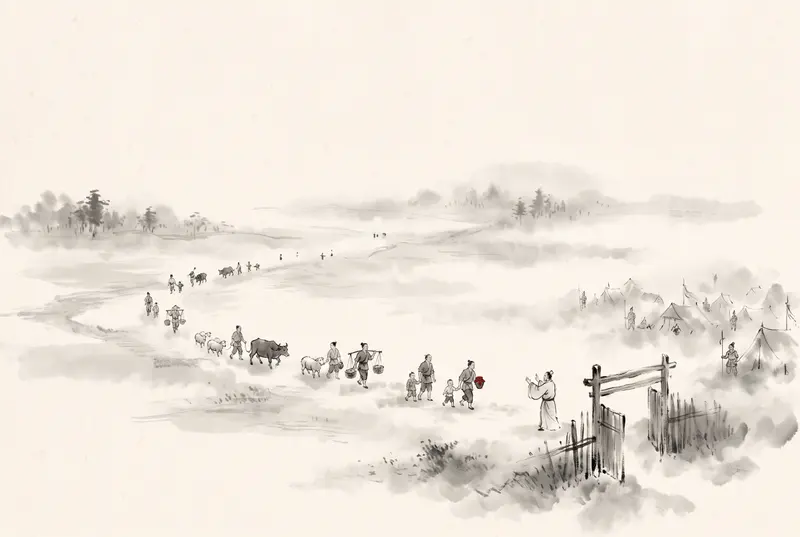
乃使人與秦吏行縣鄉邑,告諭之。秦人大喜,爭持牛羊酒食獻饗軍士。沛公又讓不受,曰:「倉粟多,非乏,不欲費人。」人又益喜,唯恐沛公不為秦王。
書き下し文
乃ち人をして秦の吏と県・郷・邑を行りて、之に告諭せしむ。秦人大いに喜び、争いて牛羊・酒食を持ちて軍士に献饗す。沛公又た譲りて受けずして曰く、「倉粟多く、乏しきに非ず。人を費やすを欲せず」と。人又た益ます喜び、唯だ沛公の秦王と為らざらんことを恐る。
現代語訳
そして部下を秦の役人とともに県や郷や村々へ回らせ、このことを知らせた。秦の人々は大喜びし、争って牛や羊、酒や食べ物を持ってきて、兵士たちをもてなそうとした。沛公はそれも辞退して受け取らず、「倉には穀物がたくさんあり、不足してはいない。人々に負担をかけたくない」と言った。人々はますます喜び、ただ沛公が秦の王にならないことだけを心配した。
英訳
Then he sent his men around the counties, districts and villages with Qin officials to make this known. The people of Qin were overjoyed and vied to bring oxen, sheep, wine and food to feast the soldiers. The Lord of Pei declined these too, saying, "The granaries are full. We lack nothing, and I do not want to burden the people." The people were all the happier, and their only fear was that the Lord of Pei might not become their king.
解説(日)
- 県・郷・邑: 県は郡の下の行政区画、郷・邑はさらに小さな村々。
- 民心をつかむ: この人気は、鴻門の会で范増が「其の志小に在らず」と警戒する理由にもなる。
- この後: 沛公は函谷関を閉ざして諸侯を入れないよう進言され、項羽の怒りを買う。続きは巻7「鴻門の会」へ。
解説(英)
- 縣・鄉・邑: counties, and the smaller districts and villages within them.
- Winning hearts: this popularity is also why Fan Zeng warns at Hongmen that the Lord of Pei's "ambitions are not small".
- What came next: the Lord of Pei is advised to close the Hangu Pass against the other lords, and this angers Xiang Yu. The story continues in "The Feast at Hongmen" (volume 7).
英語の語注
- vie/vaɪ/verb
to compete eagerly with others (past tense: vied)
本文では: “vied to bring oxen”
似た語と違い: compete — try to do better than others · race — hurry to be first
- decline/dɪˈklaɪn/verb
to refuse politely
本文では: “The Lord of Pei declined these too”
似た語と違い: refuse — say no; can be rude · turn down — informal; refuse an offer
Decline also means "to become less or worse".