列伝 · 巻 109
李将軍列伝 李將軍列傳
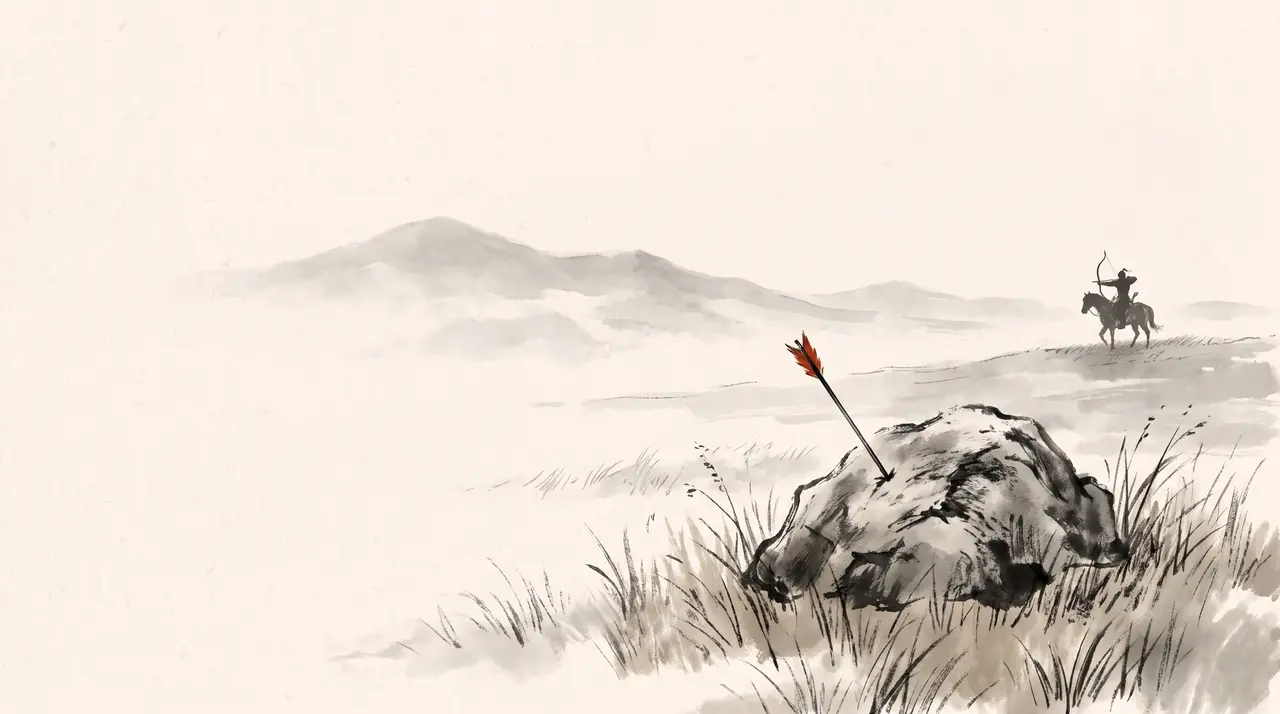
弓の名手の家に生まれた李広は、文帝から景帝、武帝の時代まで、北の国境で匈奴と七十回あまり戦った。わずか百騎で数千騎の前に馬を下りて敵を退け、捕虜になれば敵の馬を奪って逃げ、匈奴に「漢の飛将軍」と恐れられた。草むらの石を虎と思って射ると、矢は石に深く突き立ったという。恩賞は部下に分け、兵が飲むまで自分は水を飲まなかった。しかし功は認められず、自分より劣る者が次々に侯となるなか、ついに諸侯に封じられない。最後の遠征では道に迷い、取り調べを拒んで自ら命を絶った。その死を、見知らぬ人々までが悼んだ。孫の李陵が匈奴に降った事件は、司馬遷自身の運命も変えることになる。
音声
音声は合成音声です。
動画
節 1
原文
李將軍廣者,隴西成紀人也。其先曰李信,秦時爲將,逐得燕太子丹者也。故槐里,徙成紀。廣家世世受射。孝文帝十四年,匈奴大入蕭關,而廣以良家子從軍擊胡,用善騎射,殺首虜多,爲漢中郎。廣從弟李蔡亦爲郎,皆爲武騎常侍,秩八百石。嘗從行,有所衝陷折關及格猛獸,而文帝曰:「惜乎,子不遇時!如令子當高帝時,萬戸侯豈足道哉!」
書き下し文
李将軍広なる者は、隴西成紀の人なり。其の先を李信と曰う。秦の時将と為り、燕の太子丹を逐い得たる者なり。故は槐里、成紀に徙る。広の家は世世射を受く。孝文帝十四年、匈奴大いに蕭関に入る。而して広良家の子を以て軍に従いて胡を撃ち、騎射を善くするを用て、首虜を殺すこと多く、漢の中郎と為る。広の従弟李蔡も亦郎と為り、皆武騎常侍と為る。秩八百石。嘗て行に従い、衝陥折関し猛獣を格つこと有り。而して文帝曰く、「惜しいかな、子時に遇わず。如し子をして高帝の時に当たらしめば、万戸侯豈に道うに足らんや」と。
現代語訳
李広将軍は、隴西郡成紀の人である。先祖は李信といい、秦の時代に将軍となって、燕の太子丹を追いつめて捕らえた人である。もとは槐里に住み、のちに成紀に移った。李広の家は代々弓術を伝えていた。文帝の十四年、匈奴が大挙して蕭関に侵入した。李広は良家の子弟として従軍して胡を討ち、騎射の腕によって多くの敵を倒し、漢の中郎となった。いとこの李蔡も郎となり、二人とも武騎常侍となって、俸禄は八百石であった。あるとき皇帝の供をして、敵陣を突き破り、関を破り、猛獣と格闘することがあった。文帝は言った。「惜しいことだ。そなたは時に恵まれなかった。もし高祖の時代に生まれていたら、一万戸の侯くらい、言うまでもなかったろうに」。
英訳
General Li Guang was a man of Chengji in Longxi. His ancestor Li Xin was a general of Qin, the man who hunted down Crown Prince Dan of Yan. The family had come from Huaili and moved to Chengji, and for generations they had handed down the art of archery. In the fourteenth year of Emperor Wen, the Xiongnu poured in through Xiao Pass. Li Guang joined the army as a son of a good family to fight them. His skill at shooting from the saddle brought down many of the enemy, and he was made a palace gentleman. His cousin Li Cai also became a gentleman, and both served as mounted guards to the emperor, with a salary of eight hundred bushels. Once, on a journey with the emperor, he broke through enemy lines, forced a pass and fought wild beasts with his hands. Emperor Wen said: "What a pity! You were born at the wrong time. Had you lived in the days of Gaozu, a marquisate of ten thousand households would have been nothing to you."
解説(日)
- 隴西: 今の甘粛省東南部。漢の西北の辺境。
- 李信: 秦の将軍。荊軻の事件のあと、燕の太子丹を追った(巻86)。
- 孝文帝十四年: 前166年。
- 良家子: 医者、商人、職人などでない、まともな家の子弟。騎兵に選ばれた。
- 秩: 官の俸禄の等級。
- 萬戶侯: 一万戸の領地を持つ侯。
解説(英)
- Longxi: the southeast of present-day Gansu, on the northwest frontier of Han.
- Li Xin: the Qin general who chased Prince Dan after Jing Ke's attempt on the First Emperor.
- Fourteenth year of Emperor Wen: 166 BCE.
- Son of a good family (良家子): from a respectable family, not physicians, merchants or artisans. Such men were chosen for the cavalry.
- Bushels (石): salaries were measured in grain.
英語の語注
- archery/ˈɑrtʃəri/noun
the skill of shooting with a bow and arrows
本文では: “the art of archery”
似た語と違い: bowmanship — skill with a bow · marksmanship — skill in hitting a target
- marquisate/ˈmɑrkwəzət/noun
the rank or land of a marquis
本文では: “a marquisate of ten thousand households”
似た語と違い: fief — land held from a ruler · title — a noble rank
節 2
原文
及孝景初立,廣爲隴西都尉,徙爲騎郎將。呉楚軍時,廣爲驍騎都尉,從太尉亞夫擊呉楚軍,取旗,顯功名昌邑下。以梁王授廣將軍印,還,賞不行。徙爲上谷太守,匈奴日以合戰。典屬國公孫昆邪爲上泣曰:「李廣才氣,天下無雙,自負其能,數與虜敵戰,恐亡之。」於是乃徙爲上郡太守。後廣轉爲邊郡太守,徙上郡。嘗爲隴西、北地、鴈門、代郡、雲中太守,皆以力戰爲名。
書き下し文
孝景初めて立つに及び、広隴西の都尉と為り、徙りて騎郎将と為る。呉楚の軍の時、広驍騎都尉と為り、太尉亜夫に従いて呉楚の軍を撃ち、旗を取りて、功名を昌邑の下に顕す。梁王の広に将軍の印を授くるを以て、還るも、賞行われず。徙りて上谷の太守と為り、匈奴日に以て合戦す。典属国公孫昆邪上の為に泣きて曰く、「李広の才気、天下に双び無し。自ら其の能を負み、数しば虜敵と戦う。之を亡わんことを恐る」と。是に於いて乃ち徙して上郡の太守と為す。後に広転じて辺郡の太守と為り、上郡に徙る。嘗て隴西・北地・鴈門・代郡・雲中の太守と為り、皆力戦を以て名を為す。
現代語訳
景帝が即位すると、李広は隴西郡の都尉となり、移って騎郎将となった。呉楚七国の乱のとき、李広は驍騎都尉として太尉の周亜夫に従って呉楚の軍を討ち、敵の旗を奪い、昌邑の城下で名をあげた。ところが梁王から勝手に将軍の印を受けたため、帰還しても恩賞は与えられなかった。上谷郡の太守に移ると、匈奴と毎日のように戦った。典属国の公孫昆邪は、景帝の前で泣いて言った。「李広の才気は天下に並ぶ者がありません。しかし自分の腕を頼みとして、たびたび敵と戦っています。彼を失うことが心配です」。そこで上郡の太守に移された。その後も国境の郡の太守を歴任し、隴西、北地、雁門、代、雲中の太守を務め、どこでも力戦によって名を知られた。
英訳
When Emperor Jing came to the throne, Li Guang became commandant of Longxi and then a general of the mounted guards. During the revolt of Wu and Chu he served as a commandant of cavalry under the Grand Commandant Zhou Yafu, captured an enemy standard and won fame beneath the walls of Changyi. But because he had accepted a general's seal from the King of Liang, he got no reward when he returned. He was moved to be governor of Shanggu, where he fought the Xiongnu day after day. Gongsun Hunye, the Director of Dependent States, wept before the emperor and said: "Li Guang's talent has no equal in the empire. But he trusts in his own ability and keeps fighting the enemy, and I fear we will lose him." So he was moved to be governor of Shang Commandery. He went on to govern frontier commanderies one after another: Longxi, Beidi, Yanmen, Dai and Yunzhong. In all of them he was known for hard fighting.
解説(日)
- 吳楚: 前154年の呉楚七国の乱。
- 亞夫: 周亜夫。周勃の子で、乱を平定した。
- 賞行わず: 諸侯王の梁王から印を受けたことが、朝廷にはばかられた。
- 典屬國: 服属した異民族を扱う官。
- 太守: 郡の長官。
解説(英)
- Revolt of Wu and Chu: the Rebellion of the Seven States, 154 BCE.
- Zhou Yafu: son of Zhou Bo, who put down the revolt.
- No reward: taking a seal from a regional king offended the central court.
- Governor (太守): the head of a commandery.
英語の語注
- standard/ˈstændərd/noun
a flag carried by an army
本文では: “captured an enemy standard”
似た語と違い: banner — a large flag · ensign — a military flag
- frontier/frʌnˈtɪr/noun
the edge of a country
本文では: “frontier commanderies”
似た語と違い: border — the line between countries · borderland — the land near a border
節 3
原文
匈奴大入上郡,天子使中貴人從廣勒習兵擊匈奴。中貴人將騎數十縱,見匈奴三人,與戰。三人還射,傷中貴人,殺其騎且盡。中貴人走廣。廣曰:「是必射雕者也。」廣乃遂從百騎往馳三人。三人亡馬歩行,行數十里。廣令其騎張左右翼,而廣身自射彼三人者,殺其二人,生得一人,果匈奴射雕者也。已縛之上馬,望匈奴有數千騎,見廣,以爲誘騎,皆驚,上山陳。廣之百騎皆大恐,欲馳還走。廣曰:「吾去大軍數十里,今如此以百騎走,匈奴追射我立盡。今我留,匈奴必以我爲大軍[之]誘(之),必不敢擊我。」
書き下し文
匈奴大いに上郡に入る。天子中貴人をして広に従いて兵を勒習して匈奴を撃たしむ。中貴人騎数十を将いて縦にし、匈奴三人を見て、与に戦う。三人還り射て、中貴人を傷つけ、其の騎を殺すこと且に尽きんとす。中貴人広に走る。広曰く、「是れ必ず雕を射る者なり」と。広乃ち遂に百騎を従えて往きて三人を馳す。三人馬を亡いて歩行し、行くこと数十里。広其の騎をして左右の翼を張らしめ、而して広身づから自ら彼の三人を射て、其の二人を殺し、一人を生け得たり。果たして匈奴の雕を射る者なり。已に之を縛して馬に上す。匈奴の数千騎を望むに、広を見て、以て誘騎と為し、皆驚き、山に上りて陳す。広の百騎皆大いに恐れ、馳せ還りて走らんと欲す。広曰く、「吾大軍を去ること数十里。今此くの如く百騎を以て走らば、匈奴追いて我を射て立ちどころに尽きん。今我留まらば、匈奴必ず我を以て大軍の誘と為し、必ず敢えて我を撃たざらん」と。
現代語訳
匈奴が大挙して上郡に侵入した。景帝は宦官の一人を李広のもとにつけ、兵の訓練をさせて匈奴を討たせた。この宦官は数十騎を率いて出歩くうち、匈奴の三人を見つけて戦った。三人は振り返って矢を放ち、宦官を傷つけ、騎兵をほとんど射殺した。宦官は李広のもとへ逃げ帰った。李広は言った。「それはきっと鷲を射る名手だ」。李広は百騎を率いて三人を追った。三人は馬を失い、歩いて数十里を進んでいた。李広は騎兵に左右に広がらせ、自ら三人を射て、二人を殺し、一人を生け捕りにした。果たして匈奴の鷲射ちであった。捕虜を縛って馬に乗せたとき、遠くに匈奴の数千騎が見えた。敵は李広を見ておとりの騎兵だと思い、驚いて山に登って陣を敷いた。李広の百騎はみなひどく恐れ、馬を走らせて逃げ帰ろうとした。李広は言った。「我々は本隊から数十里も離れている。いま百騎で逃げれば、匈奴は追いかけて矢を放ち、たちまち全滅だ。ここに留まれば、匈奴は我々を本隊のおとりだと思い、きっと攻めてこない」。
英訳
The Xiongnu invaded Shang Commandery in force. The emperor sent one of his favored eunuchs to Li Guang to train with the troops and fight them. The eunuch rode out with a few dozen horsemen, came upon three Xiongnu, and attacked. The three turned and shot back, wounding the eunuch and killing nearly all his men. The eunuch fled to Li Guang, who said: "Those must be eagle hunters." He took a hundred riders and raced after the three. They had lost their horses and had gone on foot for many miles. Li Guang spread his horsemen out on both sides and shot at the three himself, killing two and taking one alive. They were indeed Xiongnu eagle hunters. He had just tied the prisoner onto a horse when he saw several thousand Xiongnu horsemen in the distance. They saw him, took his men for a decoy, and in alarm climbed a hill and formed up. Li Guang's hundred riders were terrified and wanted to gallop for home. Li Guang said: "We are many miles from the main army. If a hundred of us run now, the Xiongnu will chase us and shoot us down at once. If we stay, they will surely think we are a decoy for a larger force, and they will not dare attack."
解説(日)
- 中貴人: 皇帝に近く仕える宦官。
- 射雕者: 空を飛ぶ鷲(雕)を射ることのできる弓の名手。
- 陳: 「陣」と同じ。
- [之](之): 校訂の印。「大軍の誘」と読む。
解説(英)
- Favored eunuch (中貴人): a eunuch close to the emperor.
- Eagle hunters (射雕者): archers good enough to bring down an eagle in flight.
- The marks [之](之) in the original are an editor's correction.
英語の語注
- eunuch/ˈjunək/noun
a castrated man who served at a palace
本文では: “favored eunuchs”
似た語と違い: court servant — a palace attendant · chamberlain — an officer of a royal household
- decoy/ˈdikɔɪ/noun
someone or something used to lure others into a trap
本文では: “a decoy for a larger force”
似た語と違い: lure — something that attracts · bait — something used to trap
節 4
原文
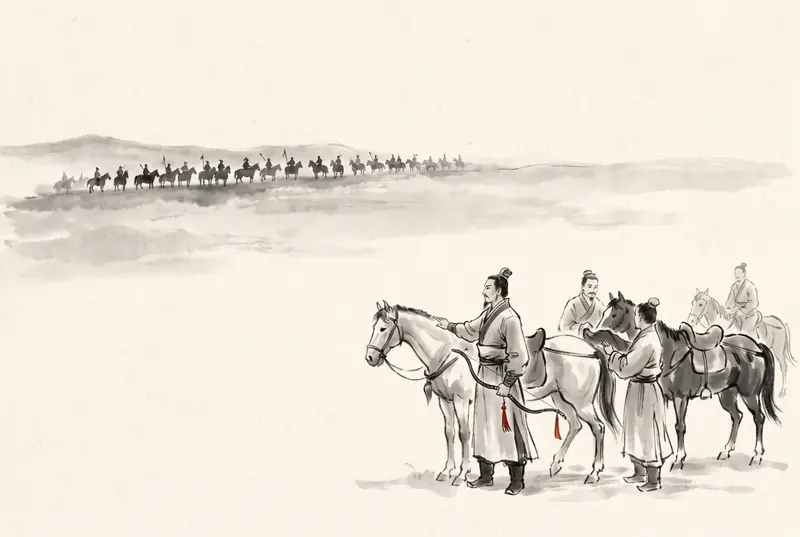
廣令諸騎曰:「前!」前未到匈奴陳二里所,止,令曰:「皆下馬解鞍!」其騎曰:「虜多且近,即有急,柰何?」廣曰:「彼虜以我爲走,今皆解鞍以示不走,用堅其意。」於是胡騎遂不敢擊。有白馬將出護其兵,李廣上馬與十餘騎奔射殺胡白馬將,而復還至其騎中,解鞍,令士皆縱馬臥。是時會暮,胡兵終怪之,不敢擊。夜半時,胡兵亦以爲漢有伏軍於旁欲夜取之,胡皆引兵而去。平旦,李廣乃歸其大軍。大軍不知廣所之,故弗從。
書き下し文
広諸騎に令して曰く、「前め」と。前みて未だ匈奴の陳に到らざること二里所にして、止まり、令して曰く、「皆馬より下りて鞍を解け」と。其の騎曰く、「虜多く且つ近し。即し急有らば、柰何せん」と。広曰く、「彼の虜我を以て走ると為す。今皆鞍を解きて以て走らざるを示し、用て其の意を堅くせん」と。是に於いて胡騎遂に敢えて撃たず。白馬の将有り、出でて其の兵を護る。李広馬に上り十余騎と奔りて胡の白馬の将を射殺し、而して復た還りて其の騎の中に至り、鞍を解き、士をして皆馬を縦ちて臥せしむ。是の時会暮れ、胡兵終に之を怪しみ、敢えて撃たず。夜半の時、胡兵も亦以て漢に伏軍の旁らに有りて夜之を取らんと欲すと為し、胡皆兵を引きて去る。平旦、李広乃ち其の大軍に帰る。大軍広の之く所を知らず、故に従わず。
現代語訳
李広は騎兵たちに命じた。「進め」。匈奴の陣まであと二里ほどのところまで進むと、止まって命じた。「全員、馬を下りて鞍を外せ」。騎兵たちは言った。「敵は多いうえに、こんなに近いのです。もし急に襲われたら、どうするのですか」。李広は言った。「敵は我々が逃げると思っている。いま鞍を外して逃げないところを見せれば、おとりだという考えをますます固めるだろう」。こうして匈奴の騎兵は攻めてこなかった。白馬に乗った将が陣から出て兵を監督していた。李広は馬に飛び乗ると十数騎とともに駆け出し、その白馬の将を射殺して、また仲間のもとへ戻り、鞍を外し、兵に馬を放して横にならせた。折しも日が暮れ、匈奴の兵は最後まで不審に思って攻めなかった。夜半になると、匈奴は漢の伏兵が近くにいて夜襲をかけるつもりだろうと考え、全軍を引いて去った。夜明けに、李広は本隊へ帰った。本隊は李広の行方を知らなかったので、救援には来なかったのである。
英訳
Li Guang ordered his men: "Forward!" They advanced to within two li of the Xiongnu line. There he halted them and ordered: "Everyone dismount and take off your saddles!" His men said: "There are so many of them, and so close. If they attack, what will we do?" Li Guang said: "They expect us to run. If we all take off our saddles, it will show that we do not mean to run, and they will be all the more sure of what they think." And indeed the Xiongnu horsemen did not dare attack. A general on a white horse rode out to steady his troops. Li Guang leapt on his horse, charged with a dozen riders, shot the white-horse general dead, and came back to his men. He took off his saddle again and told the soldiers to turn their horses loose and lie down. By then it was getting dark. The Xiongnu still found it all very strange and did not dare to strike. At midnight, thinking that Han troops must be hidden nearby to fall on them in the dark, they withdrew their whole force. At dawn Li Guang returned to the main army, which had not known where he had gone and so had not come after him.
解説(日)
- 二里所: 二里ほど。漢代の一里は約415m。
- 解鞍: 鞍を外す。逃げる気がないと示す大胆な策。
- 平旦: 夜明け。
解説(英)
- Li: a Han li was about 415 meters.
- Taking off the saddles was a bold bluff: a rider cannot flee without one.
英語の語注
- dismount/dɪsˈmaʊnt/verb
to get off a horse
本文では: “Everyone dismount”
似た語と違い: alight — get down · get off — leave a horse or vehicle
- saddle/ˈsædəl/noun
a leather seat on a horse
本文では: “take off your saddles”
似た語と違い: seat — a place to sit · tack — equipment for a horse
節 5
原文
居久之,孝景崩,武帝立,左右以爲廣名將也,於是廣以上郡太守爲未央衞尉,而程不識亦爲長樂衞尉。程不識故與李廣俱以邊太守將軍屯。及出擊胡,而廣行無部伍行陳,就善水草屯,舍止,人人自便,不擊刀鬬以自衞,莫府省約文書籍事,然亦遠斥候,未嘗遇害。程不識正部曲行伍營陳,擊刀鬬,士吏治軍簿至明,軍不得休息,然亦未嘗遇害。不識曰:「李廣軍極簡易,然虜卒犯之,無以禁也;而其士卒亦佚樂,咸樂爲之死。我軍雖煩擾,然虜亦不得犯我。」是時漢邊郡李廣、程不識皆爲名將,然匈奴畏李廣之略,士卒亦多樂從李廣而苦程不識。程不識孝景時以數直諫爲太中大夫。爲人廉,謹於文法。
書き下し文
居ること久しくして、孝景崩じ、武帝立つ。左右以て広を名将と為す。是に於いて広上郡の太守を以て未央の衛尉と為り、而して程不識も亦長楽の衛尉と為る。程不識故より李広と倶に辺の太守を以て軍を将いて屯す。出でて胡を撃つに及び、広の行は部伍行陳無く、善き水草に就きて屯し、舎止するに、人人自ら便にし、刀斗を撃ちて以て自ら衛らず、莫府は文書籍事を省約す。然れども亦遠く斥候し、未だ嘗て害に遇わず。程不識は部曲行伍営陳を正し、刀斗を撃ち、士吏軍簿を治めて明に至り、軍休息するを得ず。然れども亦未だ嘗て害に遇わず。不識曰く、「李広の軍は極めて簡易なり。然れども虜卒かに之を犯さば、以て禁ずる無し。而して其の士卒も亦佚楽し、咸楽しみて之が為に死す。我が軍は煩擾なりと雖も、然れども虜も亦我を犯すを得ず」と。是の時漢の辺郡の李広・程不識は皆名将たり。然れども匈奴は李広の略を畏れ、士卒も亦多く李広に従うを楽しみて程不識を苦しむ。程不識は孝景の時数しば直諫するを以て太中大夫と為る。人と為り廉にして、文法に謹む。
現代語訳
しばらくして景帝が亡くなり、武帝が即位した。側近たちが李広は名将だと言うので、李広は上郡太守から未央宮の衛尉に移され、程不識も長楽宮の衛尉となった。程不識はもともと李広と同じく国境の太守として軍を率いていた人である。匈奴を討ちに出るとき、李広の軍には隊列も陣形もなく、水や草のよい場所に宿営し、各自が好きなように休み、夜警の鉦も打たず、本営の書類仕事も省いた。それでも斥候を遠くまで出していたので、害にあったことはなかった。一方、程不識は部隊の編成と陣形をきちんと整え、鉦を打って警戒し、役人は夜明けまで軍の帳簿を整理して、軍は休む暇がなかった。それでも害にあったことはなかった。程不識は言った。「李広の軍はきわめて簡素だ。もし敵が急に襲えば防ぎようがない。しかし兵は気楽で、みな喜んで彼のために死ぬ。我が軍は煩わしいが、敵も手出しができない」。当時、漢の国境では李広と程不識がともに名将であったが、匈奴は李広の戦略を恐れ、兵士も多くは李広に従うことを喜び、程不識のもとを苦にした。程不識は景帝の時代に、たびたび率直に諫めて太中大夫となった。人柄は清廉で、法律を厳格に守った。
英訳
In time Emperor Jing died and Emperor Wu took the throne. His advisers told him Li Guang was a famous general, so he was brought from Shang Commandery to command the guards of the Weiyang Palace, while Cheng Buzhi became commander at the Changle Palace. Cheng Buzhi had also been a frontier governor and general, like Li Guang. When they marched against the Xiongnu, Li Guang's army kept no ranks or formations. It camped wherever water and grass were good, and when it halted each man did as he pleased. No one beat the night watch, and the headquarters kept paperwork to a minimum. But he sent scouts far ahead, and he never came to harm. Cheng Buzhi kept his units, ranks and camps in strict order, had the watch beaten through the night, and made his officers work on the army's records until dawn, so that his men never got any rest. He too never came to harm. Cheng Buzhi said: "Li Guang's army is very loose. If the enemy struck suddenly, nothing could stop them. But his men are at ease and happy to die for him. My army is kept busy and harried, but the enemy cannot touch it." At that time Li Guang and Cheng Buzhi were both famous generals on the frontier, but the Xiongnu feared Li Guang's tactics, and most soldiers were glad to follow him and hated serving under Cheng Buzhi. Cheng Buzhi had been made a palace counselor under Emperor Jing for his frank advice. He was an honest man and strict about the law.
解説(日)
- 未央・長樂: 長安の二大宮殿。
- 衛尉: 宮殿の警備をつかさどる高官。
- 刀鬬: 「刁斗」のこと。昼は炊事、夜は打ち鳴らして警戒に使う銅の器。
- 莫府: 「幕府」と同じ。将軍の本営。
- 斥候: 敵の様子を探る偵察兵。
解説(英)
- Weiyang and Changle: the two great palaces of Chang'an.
- Night watch (刀鬬, also 刁斗): a bronze pot used for cooking by day and beaten as an alarm by night.
- Headquarters (莫府): the general's tent; the same word as the Japanese bakufu.
英語の語注
- formation/fɔrˈmeɪʃən/noun
the way soldiers are arranged
本文では: “kept no ranks or formations”
似た語と違い: array — an ordered arrangement · line — soldiers side by side
- scout/skaʊt/noun
a soldier sent ahead to get information
本文では: “he sent scouts far ahead”
似た語と違い: spy — a secret watcher · lookout — a person who keeps watch
節 6
原文
後漢以馬邑城誘單于,使大軍伏馬邑旁谷,而廣爲驍騎將軍,領屬護軍將軍。是時單于覺之,去,漢軍皆無功。其後四歳,廣以衞尉爲將軍,出鴈門擊匈奴。匈奴兵多,破敗廣軍,生得廣。單于素聞廣賢,令曰:「得李廣必生致之。」胡騎得廣,廣時傷病,置廣兩馬閒,絡而盛臥廣。行十餘里,廣佯死,睨其旁有一胡兒騎善馬,廣暫騰而上胡兒馬,因推墮兒,取其弓,鞭馬南馳數十里,復得其餘軍,因引而入塞。匈奴捕者騎數百追之,廣行取胡兒弓,射殺追騎,以故得脫。於是至漢,漢下廣吏。吏當廣所失亡多,爲虜所生得,當斬,贖爲庶人。
書き下し文
後に漢馬邑城を以て単于を誘い、大軍をして馬邑の旁らの谷に伏せしむ。而して広驍騎将軍と為り、護軍将軍に領属す。是の時単于之を覚りて去り、漢の軍皆功無し。其の後四歳、広衛尉を以て将軍と為り、鴈門を出でて匈奴を撃つ。匈奴の兵多く、広の軍を破敗し、広を生け得たり。単于素より広の賢を聞き、令して曰く、「李広を得ば必ず生きて之を致せ」と。胡騎広を得たり。広時に傷つき病む。広を両馬の間に置き、絡いて広を盛り臥せしむ。行くこと十余里、広佯り死し、其の旁らに一胡児の善馬に騎るもの有るを睨み、広暫かに騰りて胡児の馬に上り、因りて児を推し堕とし、其の弓を取り、馬に鞭うちて南に馳すること数十里、復た其の余軍を得て、因りて引きて塞に入る。匈奴の捕うる者の騎数百之を追う。広行きながら胡児の弓を取り、追騎を射殺し、故を以て脱するを得たり。是に於いて漢に至る。漢広を吏に下す。吏広の失亡する所多く、虜の為に生け得られたるを当て、当に斬るべきも、贖いて庶人と為る。
現代語訳
のちに漢は馬邑の町をえさにして単于をおびき寄せ、大軍を馬邑のそばの谷に伏せた。李広は驍騎将軍として護軍将軍の指揮下に入った。しかし単于は計略に気づいて引き返し、漢軍は何の手柄も立てられなかった。その四年後、李広は衛尉のまま将軍となって雁門を出て匈奴を討った。匈奴の兵は多く、李広の軍を打ち破り、李広を生け捕りにした。単于はかねて李広の賢さを聞いていて、「李広を捕らえたら、必ず生かして連れてこい」と命じていた。匈奴の騎兵が李広を捕らえたとき、李広は傷を負って弱っていたので、二頭の馬の間に網を張って寝かせて運んだ。十里あまり行くと、李広は死んだふりをしながら、横にいる匈奴の若者が良い馬に乗っているのを横目で見た。突然飛び上がってその馬に乗り移り、若者を突き落として弓を奪い、馬にむちを当てて南へ数十里を走り、敗残の兵と合流して、長城の内へ退いた。匈奴の追っ手数百騎が追ってきたが、李広は走りながら奪った弓で追っ手を射殺し、逃げのびた。こうして漢に帰ると、漢は李広を裁判にかけた。役人は、多くの兵を失い、敵に生け捕りにされた罪は斬罪にあたると判決した。李広は贖い金を払って庶民となった。
英訳
Later the Han tried to lure the Chanyu with the city of Mayi, hiding a great army in the valleys nearby. Li Guang served as General of Valiant Cavalry under the army's overall commander. But the Chanyu saw through the plan and turned back, and the Han forces won nothing. Four years later, Li Guang led an army out through Yanmen against the Xiongnu. The Xiongnu had the greater numbers. They crushed his army and took him alive. The Chanyu had long heard of his ability and had ordered: "If you capture Li Guang, bring him to me alive." The horsemen who took him found him wounded and sick, so they slung a net between two horses and laid him in it. After they had gone a little more than ten li, Li Guang, pretending to be dead, glanced sideways and saw a young Xiongnu on a fine horse beside him. In a sudden leap he was up on the young man's horse. He pushed him off, seized his bow, whipped the horse and galloped south for many miles, until he found what was left of his army and led it back inside the frontier. Several hundred Xiongnu riders came after him, but he shot them down with the captured bow as he rode, and so he got away. When he reached Han, he was handed over to the law. The officials ruled that because he had lost so many men and had been taken alive, he should be beheaded. He paid a ransom instead and became a commoner.
解説(日)
- 馬邑: 今の山西省朔州市。前133年の「馬邑の役」。
- 單于: 匈奴の君主の称号。
- 塞: 長城などの国境の守り。
- 贖: 金や爵位を納めて刑を免れること。
解説(英)
- Mayi: in present-day Shuozhou, Shanxi. The failed ambush took place in 133 BCE.
- Chanyu (單于): the title of the Xiongnu ruler.
- Ransom (贖): one could escape a sentence by paying money or giving up rank.
英語の語注
- pretend/prɪˈtɛnd/verb
to act as if something is true
本文では: “pretending to be dead”
似た語と違い: feign — act falsely · fake — make something false
- gallop/ˈɡæləp/verb
to ride a horse at top speed
本文では: “galloped south”
似た語と違い: charge — rush forward · race — go very fast
節 7
原文
頃之,家居數歳。廣家與故潁陰侯孫屏野居藍田南山中射獵。嘗夜從一騎出,從人田間飲。還至霸陵亭,霸陵尉醉,呵止廣。廣騎曰:「故李將軍。」尉曰:「今將軍尚不得夜行,何乃故也!」止廣宿亭下。居無何,匈奴入殺遼西太守,敗韓將軍,後韓將軍徙右北平。於是天子乃召拜廣爲右北平太守。廣即請霸陵尉與俱,至軍而斬之。
書き下し文
頃之、家居すること数歳。広の家、故の潁陰侯の孫の屏と藍田の南山の中に野居して射猟す。嘗て夜一騎を従えて出で、人に従いて田間に飲む。還りて霸陵亭に至る。霸陵の尉酔いて、広を呵止す。広の騎曰く、「故の李将軍なり」と。尉曰く、「今の将軍すら尚お夜行するを得ず。何ぞ乃ち故をや」と。広を止めて亭下に宿せしむ。居ること何も無くして、匈奴入りて遼西の太守を殺し、韓将軍を敗る。後に韓将軍右北平に徙る。是に於いて天子乃ち召して広を拝して右北平の太守と為す。広即ち霸陵の尉を請いて与に倶にし、軍に至りて之を斬る。
現代語訳
それから数年、李広は家に引きこもっていた。李広の一家は、もとの潁陰侯の孫である灌彊と藍田の南山の中に住み、狩りをして暮らした。あるとき夜に騎馬の従者一人を連れて出かけ、人と田舎で酒を飲んだ。帰り道、霸陵の宿場まで来ると、酔った霸陵の尉が李広を怒鳴って止めた。従者が「前の李将軍であるぞ」と言うと、尉は言った。「今の将軍でさえ夜は通れないのだ。前の将軍などなおさらだ」。そして李広を宿場に留めて泊まらせた。まもなく匈奴が侵入して遼西の太守を殺し、韓将軍を破った。韓将軍は右北平に移された。そこで武帝は李広を召し出し、右北平の太守に任じた。李広はすぐに霸陵の尉を自分の軍に同行させるよう願い出て、軍に着くと彼を斬った。
英訳
For several years after that he lived at home. His household lived in the wilds of the Southern Mountains at Lantian with a grandson of the late Marquis of Yingyin, and passed the time hunting. One night he rode out with a single attendant and went drinking in the countryside. On the way back, at the post station of Baling, the drunken watch officer of Baling shouted at him to stop. Li Guang's attendant said: "This is the former General Li." The officer said: "Even a serving general is not allowed out at night, let alone a former one!" And he made Li Guang spend the night at the post station. Not long after, the Xiongnu broke in, killed the governor of Liaoxi and defeated General Han, who was then moved to Youbeiping. The emperor summoned Li Guang and made him governor of Youbeiping. Li Guang at once asked that the watch officer of Baling go with him. When they reached the army, he had the man beheaded.
解説(日)
- 潁陰侯孫: 灌嬰の孫の灌彊。「屏野居」は世を避けて田野に住むこと。
- 藍田の南山: 長安の南の秦嶺山脈。
- 霸陵: 文帝の陵。長安の東。
- 尉: 宿場や町の治安を守る役人。漢では夜間の通行が禁じられていた。
- 右北平: 今の河北省東北部の郡。
- 私怨で部下を斬ったことは、李広の欠点としてよく挙げられる。
解説(英)
- Marquis of Yingyin: Guan Ying, whose grandson was Guan Qiang.
- Baling: the tomb of Emperor Wen, east of Chang'an.
- Watch officer (尉): he enforced the night curfew.
- Youbeiping: a commandery in what is now northeastern Hebei.
- This killing out of personal spite is often cited as Li Guang's great flaw.
英語の語注
- behead/bɪˈhɛd/verb
to cut off someone's head
本文では: “he had the man beheaded”
似た語と違い: execute — kill as a punishment · decapitate — cut off the head
節 8
原文
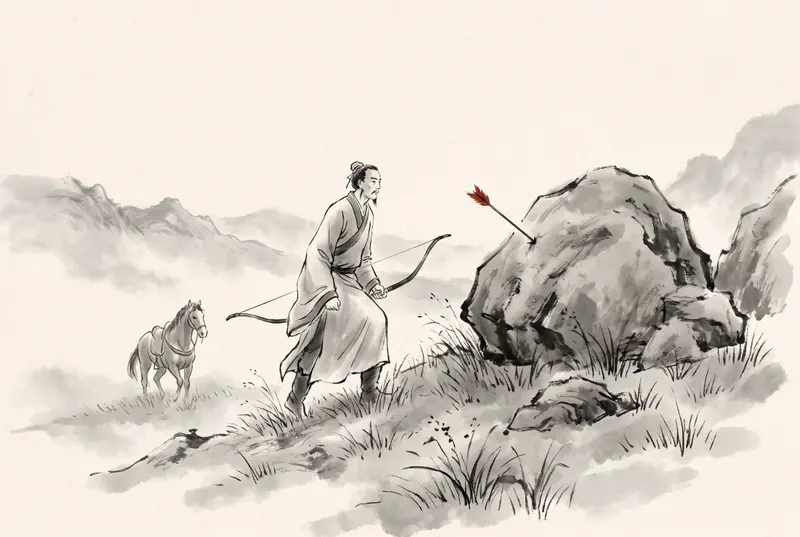
廣居右北平,匈奴聞之,號曰「漢之飛將軍」,避之數歳,不敢入右北平。廣出獵,見草中石,以爲虎而射之,中石沒鏃,視之石也。因復更射之,終不能復入石矣。廣所居郡聞有虎,嘗自射之。及居右北平射虎,虎騰傷廣,廣亦竟射殺之。
書き下し文
広右北平に居る。匈奴之を聞き、号して「漢の飛将軍」と曰い、之を避くること数歳、敢えて右北平に入らず。広猟に出で、草中の石を見て、以て虎と為して之を射る。石に中りて鏃を没す。之を視れば石なり。因りて復た更に之を射るも、終に復た石に入る能わず。広の居る所の郡に虎有りと聞けば、嘗て自ら之を射る。右北平に居りて虎を射るに及び、虎騰りて広を傷つくるも、広亦竟に之を射殺す。
現代語訳
李広が右北平にいると聞くと、匈奴は彼を「漢の飛将軍」と呼び、数年の間、避けて右北平に入ろうとしなかった。李広が狩りに出たとき、草むらの中の石を虎だと思って射た。矢は石に当たり、やじりまで深く突き刺さった。近づいて見ると石であった。そこでもう一度射てみたが、二度と石に刺さることはなかった。李広は赴任した郡に虎が出ると聞くと、いつも自分で射に行った。右北平で虎を射たときには、虎が飛びかかって李広を傷つけたが、李広はついにこれを射殺した。
英訳
While Li Guang was at Youbeiping, the Xiongnu heard of it and called him "the Flying General of Han." For several years they kept away and dared not enter Youbeiping. Once, out hunting, Li Guang saw a rock in the grass, took it for a tiger, and shot at it. The arrow struck the rock and sank in up to the head. He went to look and found it was a stone. He shot at it again, but could never again make an arrow enter the rock. Whenever he heard there were tigers in a commandery where he served, he went out and shot them himself. At Youbeiping a tiger he was shooting sprang at him and wounded him, but in the end he shot it dead.
解説(日)
- 飛將軍: 動きがすばやく神出鬼没の将軍。
- 沒鏃: 矢じりが見えなくなるまで刺さる。
- 「念力岩をも通す」「石に立つ矢」の話として知られる。
解説(英)
- Flying General (飛將軍): a commander so fast he seems to appear from nowhere.
- In Japan this story is behind the saying "A single will can pierce a rock."
この節から生まれた言葉: 石に立つ矢
英語の語注
- tiger/ˈtaɪɡər/noun
a large striped wild cat
本文では: “took it for a tiger”
似た語と違い: big cat — a large wild cat · predator — an animal that hunts
節 9
原文
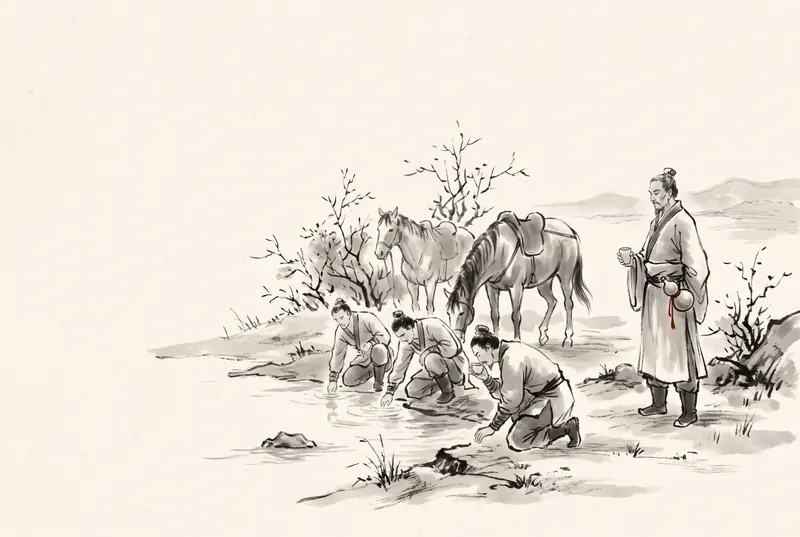
廣廉,得賞賜輒分其麾下,飲食與士共之。終廣之身,爲二千石四十餘年,家無餘財,終不言家產事。廣爲人長,猨臂,其善射亦天性也,雖其子孫他人學者,莫能及廣。廣訥口少言,與人居則畫地爲軍陳,射闊狹以飲。專以射爲戲,竟死。廣之將兵,乏絶之處,見水,士卒不盡飲,廣不近水,士卒不盡食,廣不嘗食。寬緩不苛,士以此愛樂爲用。其射,見敵急,非在數十歩之內,度不中不發,發即應弦而倒。用此,其將兵數困辱,其射猛獸亦爲所傷云。
書き下し文
広廉にして、賞賜を得れば輒ち其の麾下に分かち、飲食は士と之を共にす。広の身を終うるまで、二千石たること四十余年、家に余財無く、終に家産の事を言わず。広人と為り長く、猨臂にして、其の射を善くするも亦天性なり。其の子孫他人の学ぶ者と雖も、広に及ぶ莫し。広訥口にして言少なく、人と居れば則ち地に画きて軍陳を為し、闊狭を射て以て飲む。専ら射を以て戯れと為し、竟に死す。広の兵を将いるや、乏絶の処にて水を見るに、士卒尽くは飲まざれば、広水に近づかず。士卒尽くは食らわざれば、広食を嘗めず。寛緩にして苛ならず、士此を以て愛楽して用を為す。其の射は、敵の急なるを見るも、数十歩の内に在るに非ざれば、度りて中らずんば発せず。発すれば即ち弦に応じて倒る。此を用て、其の兵を将いるに数しば困辱せられ、其の猛獣を射るにも亦傷つけらると云う。
現代語訳
李広は清廉で、恩賞をもらうとすぐ部下に分け与え、飲食は兵士とともにした。生涯のうち、二千石の高官であったのは四十年あまりにおよぶが、家に余分な財産はなく、最後まで家の財産のことを口にしなかった。李広は背が高く、猿のように長い腕をしていて、弓の才能は生まれつきのものだった。子孫やほかの人がいくら学んでも、李広には及ばなかった。口下手で無口で、人と一緒にいると、地面に陣形を描いて、的までの距離を競って矢を射て、負けた者に酒を飲ませた。もっぱら弓を遊びとして、死ぬまでそうであった。兵を率いて水も食糧も尽きたとき、水を見つけても、兵士がみな飲み終えるまでは水に近づかず、兵士がみな食べ終えるまでは食事に手をつけなかった。おおらかで厳しくしなかったので、兵士たちは彼を慕って喜んで働いた。射るときは、敵が迫っていても、数十歩以内でなければ、当たらないと見れば放たない。放てば弦の音とともに敵は倒れた。このために、兵を率いてはたびたび窮地に陥り、猛獣を射ては傷を負うこともあったという。
英訳
Li Guang was an honest man. Whenever he received a reward he shared it with his men, and he ate and drank with his soldiers. In all his life, for more than forty years as an official of two thousand bushels, his family had no wealth to spare, and he never spoke of household money. He was tall, with long arms like an ape's, and his gift for archery was born in him: none of his sons or grandsons or anyone else who studied with him could match him. He was slow of speech and said little. In company he would draw battle formations on the ground and shoot at targets for drinks, wide or narrow. Archery was his one pastime until the day he died. When he led his troops through places with no supplies and they found water, he would not go near it until all his men had drunk. He would not touch food until all his men had eaten. He was easygoing and never harsh, and so his men loved him and were glad to serve. As for his shooting, even with the enemy pressing in, he would not let fly unless they were within a few dozen paces and he was sure to hit. When he did shoot, the target fell at the sound of the bowstring. For this reason he often found himself in danger when leading his troops, and it is said that wild beasts sometimes wounded him when he hunted.
解説(日)
- 麾下: 指揮下の部下。
- 二千石: 郡の太守などの高官。
- 猨臂: 猿のように長い腕。弓の名手の体つきとされる。
- 訥口: 口下手。
解説(英)
- Two thousand bushels (二千石): the rank of a commandery governor.
- Arms like an ape's (猨臂): long arms, thought to be the build of a great archer.
英語の語注
- gift/ɡɪft/noun
a natural ability
本文では: “his gift for archery”
似た語と違い: talent — a natural skill · flair — a natural ability
節 10
原文
居頃之,石建卒,於是上召廣代建爲郎中令。元朔六年,廣復爲後將軍,從大將軍軍出定襄,擊匈奴。諸將多中首虜率以功爲侯者,而廣軍無功。後二歳,廣以郎中令將四千騎出右北平,博望侯張騫將萬騎與廣俱,異道。行可數百里,匈奴左賢王將四萬騎圍廣,廣軍士皆恐,廣乃使其子敢往馳之。敢獨與數十騎馳,直貫胡騎,出其左右而還,告廣曰:「胡虜易與耳。」軍士乃安。廣爲圜陳外向,胡急擊之,矢下如雨。漢兵死者過半,漢矢且盡。廣乃令士持滿毋發,而廣身自以大黃射其裨將,殺數人,胡虜益解。會日暮,吏士皆無人色,而廣意氣自如,益治軍。軍中自是服其勇也。明日,復力戰,而博望侯軍亦至,匈奴軍乃解去。漢軍罷,弗能追。是時廣軍幾沒,罷歸。漢法,博望侯留遲後期,當死,贖爲庶人。廣軍功自如,無賞。
書き下し文
居ること頃之にして、石建卒す。是に於いて上広を召して建に代えて郎中令と為す。元朔六年、広復た後将軍と為り、大将軍の軍に従いて定襄を出で、匈奴を撃つ。諸将多く首虜の率に中りて功を以て侯と為る者あるも、而も広の軍は功無し。後二歳、広郎中令を以て四千騎を将いて右北平を出で、博望侯張騫万騎を将いて広と倶にするも、道を異にす。行くこと数百里可り、匈奴の左賢王四万騎を将いて広を囲む。広の軍士皆恐る。広乃ち其の子敢をして往きて之に馳せしむ。敢独り数十騎と馳せ、直ちに胡騎を貫き、其の左右に出でて還り、広に告げて曰く、「胡虜与し易きのみ」と。軍士乃ち安んず。広圜陳を為して外に向かう。胡急に之を撃ち、矢下ること雨の如し。漢の兵死する者半ばを過ぎ、漢の矢且に尽きんとす。広乃ち士をして満を持して発する毋からしめ、而して広身づから自ら大黄を以て其の裨将を射て、数人を殺す。胡虜益々解く。会日暮れ、吏士皆人色無し。而るに広意気自如として、益々軍を治む。軍中是より其の勇に服するなり。明日、復た力戦す。而して博望侯の軍も亦至り、匈奴の軍乃ち解きて去る。漢軍罷れ、追う能わず。是の時広の軍幾ど没し、罷れ帰る。漢の法、博望侯は留遅して期に後るるを以て、当に死すべきも、贖いて庶人と為る。広の軍功は自ら如くして、賞無し。
現代語訳
しばらくして石建が亡くなると、武帝は李広を召して石建に代えて郎中令とした。元朔六年、李広は再び後将軍となり、大将軍衛青の軍に従って定襄を出て匈奴を討った。諸将の多くは敵を討った数が規定に達して侯となったが、李広の軍には手柄がなかった。二年後、李広は郎中令のまま四千騎を率いて右北平を出た。博望侯の張騫は一万騎を率いて、別の道を進んだ。数百里進んだところで、匈奴の左賢王が四万騎で李広を包囲した。兵はみな恐れた。李広は息子の李敢に敵陣へ突撃させた。李敢はわずか数十騎で駆け、敵の騎兵のただ中を突き抜け、左右に出て戻ってくると、李広に告げた。「敵は大したことはありません」。兵たちはようやく落ち着いた。李広は円陣を組んで外を向かせた。匈奴は激しく攻め、矢は雨のように降った。漢兵の半数以上が死に、矢も尽きかけた。李広は兵に、弓を引きしぼったまま放つなと命じ、自分は大黄の強弓で敵の副将を射て数人を殺した。敵の攻撃はしだいにゆるんだ。やがて日が暮れ、将兵はみな血の気を失っていたが、李広は平然として、さらに陣を整えた。軍中はこれ以来、その勇気に心服した。翌日も力戦すると、博望侯の軍も到着し、匈奴は囲みを解いて去った。漢軍は疲れ果てて追うことができなかった。このとき李広の軍はほとんど全滅し、疲れ切って帰還した。漢の法により、博望侯は到着が遅れた罪で死罪にあたるところを、贖って庶民となった。李広の功と罪は相半ばするとされ、恩賞はなかった。
英訳
Before long Shi Jian died, and the emperor summoned Li Guang to replace him as Superintendent of the Palace. In the sixth year of Yuanshuo, he served again as General of the Rear in the Grand General's army, marching out from Dingxiang against the Xiongnu. Many of the generals reached the required count of heads and captives and were made marquises, but Li Guang's troops won no merit. Two years later he led four thousand riders out from Youbeiping, while Zhang Qian, Marquis of Bowang, took ten thousand by another road. After several hundred li, the Wise King of the Left of the Xiongnu surrounded Li Guang with forty thousand horsemen. His men were terrified. So he sent his son Li Gan to charge them. With only a few dozen riders, Gan rode straight through the Xiongnu cavalry, came out on the far side, circled back and reported: "These barbarians are easy to handle." The men calmed down. Li Guang formed a circle facing outward. The Xiongnu attacked fiercely, and arrows fell like rain. More than half the Han soldiers were killed, and their arrows were nearly gone. Li Guang ordered his men to keep their bows drawn and not to shoot, while he himself, with a great yellow crossbow, shot at the enemy's lieutenants and killed several. The attack began to slacken. As night fell, officers and men alike were pale as death, but Li Guang was as calm as ever and went on putting the army in order. From that day the whole army stood in awe of his courage. The next day they fought hard again, and when the Marquis of Bowang's army arrived, the Xiongnu lifted the siege and withdrew. The exhausted Han troops could not pursue them. Li Guang's army had been nearly wiped out, and it returned spent. Under Han law the Marquis of Bowang, for arriving late, should have died, but he paid a ransom and became a commoner. Li Guang's merit and his losses were held to cancel out, and he got no reward.
解説(日)
- 郎中令: 宮中の警護をつかさどる九卿の一つ。
- 元朔六年: 前123年。大將軍は衛青。
- 首虜率: 斬った首と捕虜の数の基準。達すると恩賞を受ける。
- 左賢王: 匈奴の東方を治める王。
- 持滿: 弓を引きしぼった状態を保つ。「満を持す」の出典の一つ。
- 大黃: 強力な弩(いしゆみ)の名。
- 博望侯: 張騫(巻123)。
解説(英)
- Sixth year of Yuanshuo: 123 BCE. The Grand General was Wei Qing.
- Required count (首虜率): the number of heads and captives needed for a reward.
- Wise King of the Left (左賢王): the ruler of the eastern Xiongnu lands.
- Keep their bows drawn (持滿): the source of the Japanese phrase man o jisu, "to wait fully ready".
- Great yellow (大黃): a powerful type of crossbow.
この節から生まれた言葉: 満を持す
英語の語注
- slacken/ˈslækən/verb
to become less strong or fast
本文では: “The attack began to slacken”
似た語と違い: ease — become less · weaken — lose strength
- lieutenant/luˈtɛnənt/noun
an officer who helps a commander
本文では: “shot at the enemy's lieutenants”
似た語と違い: deputy — a second in command · aide — a helper to an officer
節 11
原文
初,廣之從弟李蔡與廣俱事孝文帝。景帝時,蔡積功勞至二千石。孝武帝時,至代相。以元朔五年爲輕車將車,從大將軍擊右賢王,有功中率,封爲樂安侯。元狩二年中,代公孫弘爲丞相。蔡爲人在下中,名聲出廣下甚遠,然廣不得爵邑,官不過九卿,而蔡爲列侯,位至三公。諸廣之軍吏及士卒或取封侯。廣嘗與望氣王朔燕語,曰:「自漢擊匈奴而廣未嘗不在其中,而諸部校尉以下,才能不及中人,然以擊胡軍功取侯者數十人,而廣不爲後人,然無尺寸之功以得封邑者,何也?豈吾相不當侯邪?且固命也?」朔曰:「將軍自念,豈嘗有所恨乎?」廣曰:「吾嘗爲隴西守,羌嘗反,吾誘而降,降者八百餘人,吾詐而同日殺之。至今大恨獨此耳。」朔曰:「禍莫大於殺已降,此乃將軍所以不得侯者也。」
書き下し文
初め、広の従弟李蔡、広と倶に孝文帝に事う。景帝の時、蔡功労を積みて二千石に至る。孝武帝の時、代の相に至る。元朔五年を以て軽車将軍と為り、大将軍に従いて右賢王を撃ち、功有りて率に中り、封ぜられて楽安侯と為る。元狩二年中、公孫弘に代わりて丞相と為る。蔡は人と為り下の中に在り、名声は広の下に出づること甚だ遠し。然るに広は爵邑を得ず、官は九卿に過ぎず。而して蔡は列侯と為り、位三公に至る。諸々の広の軍吏及び士卒、或いは封侯を取る。広嘗て望気の王朔と燕語して曰く、「漢の匈奴を撃ちてより、広未だ嘗て其の中に在らずんばあらず。而るに諸部の校尉以下、才能中人に及ばざるも、然も胡を撃つ軍功を以て侯を取る者数十人。而して広は人に後れず、然るに尺寸の功の以て封邑を得るもの無きは、何ぞや。豈に吾が相当に侯たるべからざるか。且つ固より命なるか」と。朔曰く、「将軍自ら念え、豈に嘗て恨む所有りや」と。広曰く、「吾嘗て隴西の守と為りしとき、羌嘗て反す。吾誘いて降し、降る者八百余人、吾詐りて同日に之を殺す。今に至るも大いに恨むは独り此のみ」と。朔曰く、「禍は已に降れるを殺すより大なるは莫し。此れ乃ち将軍の侯たるを得ざる所以なり」と。
現代語訳
もともと、いとこの李蔡は李広とともに文帝に仕えていた。景帝のとき、功労を積んで二千石に至り、武帝のときには代の国の相となった。元朔五年に軽車将軍となり、大将軍に従って右賢王を討って規定の功を立て、楽安侯に封じられた。元狩二年には公孫弘に代わって丞相となった。李蔡の人物は下の中といったところで、名声は李広にはるかに及ばなかった。それなのに李広は爵位も領地も得られず、官も九卿どまりで、李蔡は列侯となり、位は三公にまで至った。李広の部下の将校や兵士の中にも、侯になる者がいた。あるとき李広は、気を見る占い師の王朔とくつろいで話し、こう言った。「漢が匈奴を討ち始めてから、私は戦いに加わらなかったことがない。ところが諸部隊の校尉以下で、才能が人並みにも及ばない者が、匈奴との戦功で何十人も侯になっている。私は人に遅れをとったことはないのに、領地をもらえるほどのわずかな功すらないとは、どういうことか。私の人相が侯になれないのか。それとも、もともと運命なのか」。王朔は言った。「将軍、ご自身で思い返してください。何か悔やまれることがおありでは」。李広は言った。「私が隴西の太守だったとき、羌族が反乱を起こした。私はだまして降伏させ、降った八百人あまりを、欺いて同じ日に殺してしまった。今でも深く悔やんでいるのは、これだけだ」。王朔は言った。「禍は、すでに降った者を殺すことより大きなものはありません。これこそ将軍が侯になれない理由です」。
英訳
Li Guang's cousin Li Cai had served Emperor Wen alongside him. Under Emperor Jing he rose through merit to two thousand bushels, and under Emperor Wu he became chancellor of Dai. In the fifth year of Yuanshuo, as General of Light Chariots, he followed the Grand General against the Wise King of the Right, met the required count, and was made Marquis of Le'an. In the second year of Yuanshou he succeeded Gongsun Hong as Chancellor of the empire. As a man, Li Cai was no better than lower-middle, and his fame was far below Li Guang's. Yet Li Guang got no title or land and never rose above the Nine Ministers, while Li Cai became a marquis and one of the Three Excellencies. Some of Li Guang's own officers and soldiers won marquisates too. Li Guang once talked at leisure with Wang Shuo, a reader of omens, and said: "Since Han began fighting the Xiongnu, I have been in every campaign. Yet dozens of commanders and lesser men, of less than ordinary talent, have become marquises for their service against the barbarians. I have never lagged behind anyone, yet I have not one scrap of merit that earns me a fief. Why? Is it that my face is not the face of a marquis? Or is it simply fate?" Wang Shuo said: "General, think back. Is there anything you deeply regret?" Li Guang said: "When I was governor of Longxi, the Qiang rebelled. I lured them into surrendering, and more than eight hundred came in. Then I tricked them and killed them all on the same day. To this day, that is the one thing I bitterly regret." Wang Shuo said: "There is no greater curse than killing those who have surrendered. That is why you will never be a marquis, General."
解説(日)
- 元朔五年: 前124年。元狩二年: 前121年。
- 九卿: 中央の九つの大臣職。
- 三公: 丞相・太尉・御史大夫など最高位の官。
- 望氣: 雲や空気の様子で吉凶を占う術。
- 羌: 西方の遊牧民族。
解説(英)
- Fifth year of Yuanshuo: 124 BCE. Second year of Yuanshou: 121 BCE.
- Nine Ministers, Three Excellencies: the two highest tiers of the Han court.
- Reader of omens (望氣): one who told the future from clouds and the color of the air.
- Qiang: nomadic peoples to the west of China.
英語の語注
- omen/ˈoʊmən/noun
a sign of what will happen
本文では: “a reader of omens”
似た語と違い: sign — something that shows · portent — a warning of the future
- regret/rɪˈɡrɛt/verb
to feel sorry about something you did
本文では: “bitterly regret”
似た語と違い: repent — be sorry for a wrong · rue — wish you had not done
節 12
原文
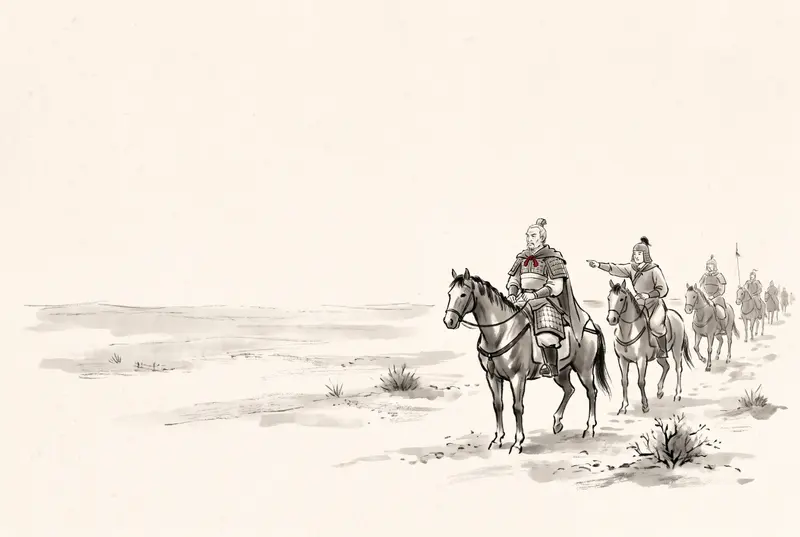
後二歳,大將軍、驃騎將軍大出擊匈奴,廣數自請行。天子以爲老,弗許;良久乃許之,以爲前將軍。是歳,元狩四年也。廣既從大將軍青擊匈奴,既出塞,青捕虜知單于所居,乃自以精兵走之,而令廣并於右將軍軍,出東道。東道少回遠,而大軍行水草少,其勢不屯行。廣自請曰:「臣部爲前將軍,今大將軍乃徙令臣出東道,且臣結髪而與匈奴戰,今乃一得當單于,臣願居前,先死單于。」大將軍青亦陰受上誡,以爲李廣老,數奇,毋令當單于,恐不得所欲。而是時公孫敖新失侯,爲中將軍從大將軍,大將軍亦欲使敖與俱當單于,故徙前將軍廣。廣時知之,固自辭於大將軍。大將軍不聽,令長史封書與廣之莫府,曰:「急詣部,如書。」廣不謝大將軍而起行,意甚慍怒而就部,引兵與右將軍食其合軍出東道。軍亡導,或失道,後大將軍。大將軍與單于接戰,單于遁走,弗能得而還。南絶幕,遇前將軍、右將軍。廣已見大將軍,還入軍。大將軍使長史持糒醪遺廣,因問廣、食其失道狀,青欲上書報天子軍曲折。廣未對,大將軍使長史急責廣之幕府對簿。廣曰:「諸校尉無罪,乃我自失道。吾今自上簿。」
書き下し文
後二歳、大将軍・驃騎将軍大いに出でて匈奴を撃つ。広数しば自ら行かんことを請う。天子以て老いたりと為し、許さず。良久しくして乃ち之を許し、以て前将軍と為す。是の歳、元狩四年なり。広既に大将軍青に従いて匈奴を撃ち、既に塞を出づ。青虜を捕えて単于の居る所を知り、乃ち自ら精兵を以て之に走り、而して広をして右将軍の軍に并わせて、東道に出でしむ。東道は少しく回遠にして、大軍の行くに水草少なく、其の勢い屯行せず。広自ら請いて曰く、「臣の部は前将軍たり。今大将軍乃ち徙して臣をして東道に出でしむ。且つ臣結髪より匈奴と戦い、今乃ち一たび単于に当たるを得たり。臣願わくは前に居りて、先ず単于に死せん」と。大将軍青も亦陰かに上の誡めを受け、以為らく、李広は老いて、数奇なり、単于に当たらしむる毋かれ、欲する所を得ざらんことを恐ると。而して是の時公孫敖新たに侯を失い、中将軍と為りて大将軍に従う。大将軍も亦敖をして与に倶に単于に当たらしめんと欲す。故に前将軍広を徙す。広時に之を知り、固く自ら大将軍に辞す。大将軍聴かず、長史をして書を封じて広の莫府に与えしめて曰く、「急ぎ部に詣れ、書の如くせよ」と。広大将軍に謝せずして起ちて行き、意甚だ慍怒して部に就き、兵を引きて右将軍食其と軍を合わせて東道に出づ。軍に導亡く、或いは道を失い、大将軍に後る。大将軍単于と接戦し、単于遁走し、得る能わずして還る。南のかた幕を絶りて、前将軍・右将軍に遇う。広已に大将軍に見え、還りて軍に入る。大将軍長史をして糒醪を持ちて広に遺らしめ、因りて広・食其の失道の状を問い、青上書して天子に軍の曲折を報ぜんと欲す。広未だ対えず。大将軍長史をして急に広の幕府を責めて簿に対えしむ。広曰く、「諸校尉は罪無し。乃ち我自ら道を失えり。吾今自ら簿に上らん」と。
現代語訳
二年後、大将軍衛青と驃騎将軍霍去病が大軍を率いて匈奴を討つことになった。李広は何度も自ら従軍を願い出た。武帝は老齢だとして許さなかったが、しばらくして許し、前将軍とした。元狩四年のことである。李広が衛青に従って出陣し、長城を越えたあと、衛青は捕虜から単于の居場所を知った。そこで自ら精兵を率いてそこへ向かい、李広には右将軍の軍と合流して東の道を行くよう命じた。東の道はやや遠回りで、水や草が少なく、大軍が進むには向かなかった。李広は願い出た。「私は前将軍です。それなのに大将軍は私を東の道へ移されました。私は若いころから匈奴と戦い、ようやく今、単于と戦う機会を得たのです。どうか先頭に立ち、まず単于と戦って死なせてください」。しかし衛青は、ひそかに武帝から戒めを受けていた。李広は年老いて運がないから、単于に当ててはならない、目的を果たせなくなるおそれがある、というのである。また、この頃公孫敖は侯の位を失って中将軍として従軍しており、衛青は彼にも手柄を立てさせたかった。それで李広を移したのである。李広はこれを察して、かたく辞退した。衛青は聞き入れず、長史に封書を李広の本営へ届けさせて言った。「急いで部隊へ行き、文書のとおりにせよ」。李広は衛青に挨拶もせずに立ち上がり、激しく怒ったまま部隊につき、右将軍の趙食其と合流して東の道を進んだ。ところが軍には案内人がなく、道に迷って衛青に遅れた。衛青は単于と戦ったが、単于は逃げ去り、捕らえられないまま引き返した。南へ砂漠を越えたところで、前将軍と右将軍に出会った。李広は衛青に会って、自分の軍に戻った。衛青は長史に干し飯と濁り酒を届けさせ、道に迷った事情を尋ねた。天子に戦の経過を報告しようとしたのである。李広が答えないでいると、衛青は長史に命じて、李広の本営を厳しく問いただし、調書に答えさせようとした。李広は言った。「校尉たちに罪はない。道に迷ったのは私自身だ。私が自分で調書に答えよう」。
英訳
Two years later, the Grand General and the General of Swift Cavalry led a great expedition against the Xiongnu. Li Guang asked again and again to go. The emperor thought him too old and refused, but after a long while he agreed and made him General of the Van. This was the fourth year of Yuanshou. Once they had crossed the frontier, the Grand General, Wei Qing, learned from a prisoner where the Chanyu was. He set out himself with his best troops and ordered Li Guang to merge with the army of the General of the Right and go by the eastern road. That road was longer, with little water or grass, and a large force could not keep together on it. Li Guang appealed: "My command is the van. Now you move me to the eastern road. I have fought the Xiongnu since I first tied up my hair, and now at last I have one chance to face the Chanyu. Let me stay in front and be the first to die fighting him." But Wei Qing had received secret orders from the emperor: Li Guang was old and ill-starred, and must not be set against the Chanyu, for fear the plan would fail. And at that time Gongsun Ao had just lost his marquisate and was serving as General of the Center; Wei Qing wished to have him share in facing the Chanyu. So he moved Li Guang. Li Guang knew this and pressed his refusal. Wei Qing would not listen. He had his chief of staff send a sealed order to Li Guang's headquarters: "Report to your unit at once, as written here." Without taking his leave, Li Guang got up and went, seething with anger, joined the General of the Right, Zhao Yiji, and set out on the eastern road. The army had no guide. It lost its way and fell behind the Grand General. Wei Qing met the Chanyu in battle, but the Chanyu escaped and Wei Qing could not catch him, and turned back. Having crossed the desert southward, he met the two generals. Li Guang saw the Grand General and went back to his own camp. Wei Qing sent his chief of staff with dried rice and unstrained wine for Li Guang, and asked how he and Zhao Yiji had lost their way, for he wanted to report the course of the war to the emperor. Li Guang did not answer. Wei Qing then had his chief of staff press Li Guang's headquarters hard to answer the charges in the record. Li Guang said: "My commanders are not at fault. It was I who lost the way. I will answer for it myself."
解説(日)
- 元狩四年: 前119年。漠北の戦い。
- 驃騎將軍: 霍去病。衛青の甥。
- 結髮: 成人して髪を結ぶ。若いころから。
- 數奇: 運が悪い。「数奇な運命」の語源となった箇所。
- 公孫敖: 衛青の命の恩人として知られる将。
- 長史: 将軍の幕僚長。
- 幕: 「漠」と同じ。ゴビ砂漠。
- 糒醪: 干し飯と濁り酒。
解説(英)
- Fourth year of Yuanshou: 119 BCE, the great campaign north of the Gobi.
- General of Swift Cavalry: Huo Qubing, the nephew of Wei Qing.
- Since I first tied up my hair (結髮): since coming of age.
- Ill-starred (數奇): unlucky. This is the source of the Japanese word sūki, "strange fate".
- Gongsun Ao had once saved Wei Qing's life.
この節から生まれた言葉: 数奇
英語の語注
- ill-starred/ˌɪlˈstɑrd/adjective
unlucky; likely to fail
本文では: “old and ill-starred”
似た語と違い: unlucky — having bad luck · doomed — sure to fail
- seething/ˈsiðɪŋ/adjective
very angry inside
本文では: “seething with anger”
似た語と違い: fuming — showing great anger · boiling — very angry
節 13
原文
至莫府,廣謂其麾下曰;「廣結髪與匈奴大小七十餘戰,今幸從大將軍出接單于兵,而大將軍又徙廣部行回遠,而又迷失道,豈非天哉!且廣年六十餘矣,終不能復對刀筆之吏。」遂引刀自剄。廣軍士大夫一軍皆哭。百姓聞之,知與不知,無老壯皆爲垂涕。而右將軍獨下吏,當死,贖爲庶人。
書き下し文
莫府に至り、広其の麾下に謂いて曰く、「広結髪より匈奴と大小七十余戦す。今幸いに大将軍に従いて出でて単于の兵に接す。而るに大将軍又広の部を徙して回遠を行かしめ、而も又迷いて道を失う。豈に天に非ずや。且つ広年六十余なり。終に復た刀筆の吏に対うる能わず」と。遂に刀を引きて自ら剄ねたり。広の軍の士大夫一軍皆哭す。百姓之を聞き、知ると知らざると、老壮と無く、皆為に涕を垂る。而して右将軍独り吏に下され、当に死すべきも、贖いて庶人と為る。
現代語訳
本営に着くと、李広は部下に言った。「私は若いころから匈奴と大小七十回あまり戦ってきた。今度は幸いにも大将軍に従って単于の軍と戦えるはずだった。ところが大将軍は私の部隊を遠回りの道に移し、そのうえ道に迷ってしまった。これが天命でなくて何だろう。それに、私はもう六十を過ぎた。今さら筆を持った役人どもの取り調べに応じることはできない」。そして刀を抜いて自ら命を絶った。李広の軍の将兵はみな声をあげて泣いた。民衆もこれを聞くと、李広を知る者も知らない者も、老いも若きも、みな涙を流した。右将軍だけが裁きにかけられ、死罪のところを贖って庶民となった。
英訳
When he reached his headquarters, Li Guang said to his men: "Since I first tied up my hair I have fought more than seventy battles, great and small, against the Xiongnu. This time I was fortunate enough to march with the Grand General against the Chanyu himself. But the Grand General moved my command to the long way around, and then we lost our road. Is this not the will of Heaven? I am past sixty. I cannot stand before clerks with their knives and brushes." Then he drew his sword and took his own life. The officers and men of his whole army wept aloud. When the common people heard, those who had known him and those who had not, old and young alike, all shed tears for him. The General of the Right alone was handed to the law. He should have died, but he paid a ransom and became a commoner.
解説(日)
- 刀筆の吏: 竹簡に書く筆と、誤りを削る小刀を持つ役人。下級の法吏を見下した言い方。
- 自剄: 自ら首を切って死ぬ。
解説(英)
- Clerks with knives and brushes (刀筆之吏): officials who wrote on bamboo and scraped off mistakes with a knife. Li Guang speaks with contempt.
英語の語注
- headquarters/ˈhɛdˌkwɔrtərz/noun
the main base of an army
本文では: “When he reached his headquarters”
似た語と違い: base — a main center · command post — where a commander works
- weep/wip/verb
to cry, usually from sadness
本文では: “wept aloud”
似た語と違い: sob — cry noisily · shed tears — cry
節 14
原文
廣子三人,曰當戸、椒、敢,爲郎。天子與韓嫣戲,嫣少不遜,當戸擊嫣,嫣走。於是天子以爲勇。當戸早死,拜椒爲代郡太守,皆先廣死。當戸有遺腹子名陵。廣死軍時,敢從驃騎將軍。廣死明年,李蔡以丞相坐侵孝景園壖地,當下吏治,蔡亦自殺,不對獄,國除。李敢以校尉從驃騎將軍擊胡左賢王,力戰,奪左賢王鼓旗,斬首多,賜爵關內侯,食邑二百戸,代廣爲郎中令。頃之,怨大將軍青之恨其父,乃擊傷大將軍,大將軍匿諱之。居無何,敢從上雍,至甘泉宮獵。驃騎將軍去病與青有親,射殺敢。去病時方貴幸,上諱云鹿觸殺之。居歳餘,去病死。而敢有女爲太子中人,愛幸,敢男禹有寵於太子,然好利,李氏陵遲衰微矣。
書き下し文
広の子三人、当戸・椒・敢と曰い、郎と為る。天子韓嫣と戯る。嫣少しく不遜なり。当戸嫣を撃つ。嫣走る。是に於いて天子以て勇と為す。当戸早く死し、椒を拝して代郡の太守と為すも、皆広に先だちて死す。当戸に遺腹の子有り、名は陵。広軍に死する時、敢は驃騎将軍に従う。広死するの明年、李蔡丞相を以て孝景の園の壖地を侵すに坐し、当に吏に下して治むべきも、蔡も亦自殺して獄に対えず、国除かる。李敢校尉を以て驃騎将軍に従いて胡の左賢王を撃ち、力戦して、左賢王の鼓旗を奪い、斬首多く、爵関内侯を賜い、食邑二百戸、広に代わりて郎中令と為る。頃之、大将軍青の其の父を恨ましめしを怨み、乃ち大将軍を撃ち傷つく。大将軍之を匿し諱む。居ること何も無くして、敢上に従いて雍に之き、甘泉宮に至りて猟す。驃騎将軍去病、青と親有り、敢を射殺す。去病時に方に貴幸せられ、上諱みて云う、鹿之を触きて殺すと。居ること歳余にして、去病死す。而して敢に女有り太子の中人と為り、愛幸せらる。敢の男禹は太子に寵有り、然れども利を好む。李氏は陵遅衰微す。
現代語訳
李広には当戸、椒、敢の三人の子があり、みな郎となった。武帝が寵臣の韓嫣と戯れていたとき、韓嫣が少し無礼な態度をとったので、当戸が韓嫣を打つと、韓嫣は逃げた。武帝はこれを勇ましいと思った。当戸は早く死に、椒は代郡の太守に任じられたが、二人とも李広より先に死んだ。当戸には父の死後に生まれた子があり、名を陵といった。李広が軍中で死んだとき、李敢は驃騎将軍霍去病に従っていた。李広の死の翌年、丞相の李蔡は景帝の陵の敷地を侵した罪に問われ、裁きにかけられることになったが、自殺して裁判を受けず、領地は没収された。李敢は校尉として霍去病に従い、匈奴の左賢王を討って力戦し、左賢王の太鼓と旗を奪い、多くの敵を斬って関内侯の爵位と二百戸の領地を与えられ、父に代わって郎中令となった。まもなく、父を恨ませて死なせた衛青を怨み、衛青を殴って傷つけた。衛青はこれを隠して公にしなかった。ほどなく李敢が武帝の供をして雍へ行き、甘泉宮で狩りをしたとき、衛青の親族である霍去病が李敢を射殺した。霍去病は当時、武帝の寵愛を一身に受けていたので、武帝は事実を隠し、鹿に突かれて死んだと言った。一年あまりして霍去病も死んだ。李敢の娘は太子の側室となって愛され、息子の禹も太子にかわいがられたが、利を好む人であった。李氏はしだいに衰えていった。
英訳
Li Guang had three sons, Danghu, Jiao and Gan, all of whom became palace gentlemen. Once when the emperor was playing with his favorite Han Yan, Yan was a little insolent, and Danghu struck him so that he ran away. The emperor thought this brave. Danghu died young. Jiao was made governor of Dai, and both of them died before their father. Danghu left a son born after his death, named Ling. When Li Guang died with the army, Gan was serving under the General of Swift Cavalry. The year after that, Li Cai, as chancellor, was charged with encroaching on the land of Emperor Jing's tomb. Rather than face the court he too killed himself, and his marquisate was abolished. Li Gan, as a commander under Huo Qubing, fought hard against the Wise King of the Left, seized his drums and banners and took many heads, for which he was made a Marquis Within the Passes with two hundred households, and took his father's post as Superintendent of the Palace. Before long, angry at Wei Qing for the wrong done to his father, he struck the Grand General and wounded him. Wei Qing hid the matter and said nothing. Not long after, when Gan went with the emperor to Yong and hunted at the Ganquan Palace, Huo Qubing, who was related to Wei Qing, shot him dead. Huo Qubing was then the emperor's great favorite, so the emperor covered it up and said Gan had been gored by a deer. A year or so later, Huo Qubing died. Gan's daughter became a concubine of the crown prince and was much loved, and his son Yu was also a favorite of the prince, but Yu was greedy. The house of Li slowly fell into decline.
解説(日)
- 韓嫣: 武帝の寵臣。
- 遺腹子: 父の死後に生まれた子。
- 壖地: 陵の周りの空き地。
- 雍・甘泉宮: 長安の西北の地と離宮。
- 陵遲: しだいに衰える。
解説(英)
- Han Yan: a favorite of Emperor Wu.
- Marquis Within the Passes (關內侯): a title with income but no territory of its own.
- Ganquan Palace: a summer palace northwest of Chang'an.
英語の語注
- insolent/ˈɪnsələnt/adjective
rude and without respect
本文では: “Yan was a little insolent”
似た語と違い: impudent — rudely bold · cheeky — rude in a playful way
- gore/ɡɔr/verb
to wound with horns
本文では: “gored by a deer”
似た語と違い: pierce — make a hole in · stab — push a point into
節 15
原文
李陵既壯,選爲建章監,監諸騎。善射,愛士卒。天子以爲李氏世將,而使將八百騎。嘗深入匈奴二千餘里,過居延視地形,無所見虜而還。拜爲騎都尉,將丹陽楚人五千人,教射酒泉、張掖以屯衞胡。數歳,天漢二年秋,貳師將軍李廣利將三萬騎擊匈奴右賢王於祁連天山,而使陵將其射士歩兵五千人出居延北可千餘里,欲以分匈奴兵,毋令專走貳師也。陵既至期還,而單于以兵八萬圍擊陵軍。陵軍五千人,兵矢既盡,士死者過半,而所殺傷匈奴亦萬餘人。且引且戰,連鬬八日,還未到居延百餘里,匈奴遮狹絶道,陵食乏而救兵不到,虜急擊招降陵。陵曰:「無面目報陛下。」遂降匈奴。其兵盡沒,餘亡散得歸漢者四百餘人。單于既得陵,素聞其家聲,及戰又壯,乃以其女妻陵而貴之。漢聞,族陵母妻子。自是之後,李氏名敗,而隴西之士居門下者皆用爲恥焉。
書き下し文
李陵既に壮にして、選ばれて建章の監と為り、諸騎を監す。射を善くし、士卒を愛す。天子以て李氏は世々将たりと為し、而して八百騎を将いしむ。嘗て深く匈奴に入ること二千余里、居延を過ぎて地形を視、虜を見る所無くして還る。拝して騎都尉と為し、丹陽の楚人五千人を将い、射を酒泉・張掖に教えて以て屯して胡を衛らしむ。数歳、天漢二年秋、弐師将軍李広利三万騎を将いて匈奴の右賢王を祁連天山に撃つ。而して陵をして其の射士歩兵五千人を将いて居延の北千余里可りに出で、以て匈奴の兵を分かち、専ら弐師に走らしむる毋からんと欲す。陵既に期に至りて還る。而るに単于兵八万を以て陵の軍を囲み撃つ。陵の軍五千人、兵矢既に尽き、士の死する者半ばを過ぐるも、而も殺傷する所の匈奴も亦万余人。且つ引き且つ戦い、連闘すること八日、還りて未だ居延に到らざること百余里、匈奴狭きを遮り道を絶つ。陵食乏しくして救兵到らず、虜急に撃ちて陵を招降す。陵曰く、「面目の陛下に報ゆる無し」と。遂に匈奴に降る。其の兵尽く没し、余の亡散して漢に帰るを得る者四百余人。単于既に陵を得、素より其の家声を聞き、戦うに及びて又壮とし、乃ち其の女を以て陵に妻わせて之を貴ぶ。漢聞きて、陵の母妻子を族す。是より後、李氏の名敗れ、而して隴西の士の門下に居る者皆用て恥と為す。
現代語訳
李陵は成人すると選ばれて建章宮の監となり、騎兵を監督した。弓が上手で、兵士をいつくしんだ。武帝は李氏が代々の将軍の家であるとして、八百騎を率いさせた。あるとき匈奴の地に二千里あまりも深く入り、居延を越えて地形を調べたが、敵に遭うことなく帰った。騎都尉に任じられ、丹陽の楚の兵五千人を率いて、酒泉・張掖で弓を教えながら駐屯し、匈奴に備えた。数年後の天漢二年の秋、弐師将軍の李広利が三万騎で祁連山・天山に匈奴の右賢王を討った。その際、李陵には弓兵と歩兵五千人を率いて居延の北千里あまりに出させ、匈奴の兵を分散させて、李広利に集中しないようにした。李陵が期日どおりに引き返すと、単于は八万の兵で李陵の軍を包囲して攻めた。李陵の軍五千人は武器も矢も尽き、兵の半数以上が死んだが、匈奴にも一万人あまりの死傷者を出した。退きながら戦い、八日間戦い続けて、居延まであと百里あまりのところで、匈奴に狭い道をふさがれた。食糧は尽き、救援も来ず、敵は激しく攻めながら降伏を呼びかけた。李陵は「陛下に合わせる顔がない」と言い、ついに匈奴に降った。兵はほとんど全滅し、散り散りに逃げて漢に帰り着いた者は四百人あまりだった。単于は李陵を得ると、かねて聞く家名に加え、その戦いぶりを立派だと思い、娘を妻として与えて厚く遇した。漢はこれを聞くと、李陵の母と妻子を一族もろとも処刑した。これ以後、李氏の名は地に落ち、李氏の門下にいた隴西の士はみな、それを恥とした。
英訳
When Li Ling grew up he was chosen as inspector at the Jianzhang Palace, in charge of its horsemen. He was a fine archer and cared for his men. The emperor, considering the Li family generals by birth, gave him eight hundred riders. He once went more than two thousand li deep into Xiongnu territory, past Juyan, to survey the land, and returned without meeting the enemy. He was made a commandant of cavalry and given five thousand men of Chu from Danyang, to train as archers at Jiuquan and Zhangye and guard against the Xiongnu. Several years later, in the autumn of the second year of Tianhan, the Ershi General Li Guangli led thirty thousand horsemen against the Wise King of the Right in the Qilian and Tian mountains. Li Ling was sent with five thousand archers and foot soldiers a thousand li north of Juyan, to draw off part of the Xiongnu force so that it would not all fall upon the Ershi General. He had turned back on schedule when the Chanyu surrounded his army with eighty thousand men. Li Ling's five thousand ran out of weapons and arrows, and more than half of them were killed, but they had killed or wounded more than ten thousand Xiongnu. Fighting as they retreated, they battled for eight days. When they were little more than a hundred li from Juyan, the Xiongnu blocked the narrow way and cut the road. Li Ling had no food, no help came, and the enemy pressed the attack and called on him to surrender. He said: "I have no face to report to His Majesty." And he surrendered to the Xiongnu. His army was destroyed; only four hundred or so scattered men got back to Han. The Chanyu, who had long known of his family's fame and had seen how bravely he fought, gave him his daughter in marriage and treated him with honor. When the Han court heard this, it put to death Li Ling's mother, wife and children. From then on the Li name was ruined, and the men of Longxi who had served the family felt the shame of it.
解説(日)
- 建章: 武帝が長安に建てた宮殿。
- 居延: 今の内モンゴル自治区西部の前線基地。
- 天漢二年: 前99年。
- 貳師將軍李廣利: 武帝の寵姫の兄。大宛遠征の将(巻123)。
- 族: 一族を処刑する。
- 司馬遷はこのとき李陵を弁護して武帝の怒りにふれ、宮刑を受けた(巻130)。
解説(英)
- Juyan: a frontier base in the west of present-day Inner Mongolia.
- Second year of Tianhan: 99 BCE.
- Ershi General Li Guangli: brother of the emperor's favorite concubine, who led the war on Dayuan (Volume 123).
- Sima Qian spoke up for Li Ling at this time, angered Emperor Wu and was castrated (Volume 130).
英語の語注
- retreat/rɪˈtrit/verb
to move back from an enemy
本文では: “Fighting as they retreated”
似た語と違い: withdraw — pull back · fall back — move backward
節 16
原文
太史公曰:傳曰:「其身正,不令而行;其身不正,雖令不從。」其李將軍之謂也?余睹李將軍悛悛如鄙人,口不能道辭。及死之日,天下知與不知,皆爲盡哀。彼其忠實心誠信於士大夫也?諺曰「桃李不言,下自成蹊」。此言雖小,可以諭大也。
書き下し文
太史公曰く、伝に曰く、「其の身正しければ、令せずして行わる。其の身正しからざれば、令すと雖も従わず」と。其れ李将軍の謂いか。余李将軍を睹るに、悛悛として鄙人の如く、口道辞する能わず。死するの日に及びて、天下知ると知らざると、皆為に哀を尽くす。彼の其の忠実の心、誠に士大夫に信ぜられたるか。諺に曰く、「桃李言わざれども、下自ら蹊を成す」と。此の言小なりと雖も、以て大を諭すべし。
現代語訳
太史公は言う。古い伝に「自分の身が正しければ、命令しなくても行われる。身が正しくなければ、命令しても従わない」とあるが、これは李将軍のことであろうか。私は李将軍に会ったことがあるが、朴訥で田舎者のようで、うまく話すこともできなかった。ところが死んだ日には、天下の人々が、知る者も知らない者も、みな心から悲しんだ。その誠実な心が、本当に人々に信じられていたからだろう。ことわざに「桃や李はものを言わないが、その下には自然に道ができる」という。この言葉は小さなことだが、大きな道理をたとえている。
英訳
The Grand Historian says: An old text says, "If a man is upright, things are done without his giving orders. If he is not upright, he may give orders, but no one will obey." Might this not describe General Li? I met General Li. He was as plain and earnest as a country man and could hardly put words together. Yet on the day he died, everyone in the empire, whether they had known him or not, mourned him from the heart. Surely it was his loyal and honest heart that won men's trust. The proverb says: "The peach and the plum do not speak, yet a path forms beneath them of itself." It is a small saying, but it can teach a great truth.
解説(日)
- 傳: ここでは『論語』子路篇の言葉。
- 悛悛: まじめで飾り気がない様子。
- 桃李不言、下自成蹊: 徳のある人のもとには、自然に人が集まる。成蹊大学の名もこの句による。
解説(英)
- An old text: Analects 13.6.
- The peach and the plum (桃李不言,下自成蹊): people naturally gather around a person of true virtue, who needs no words. Seikei University in Tokyo takes its name from this line.
この節から生まれた言葉: 桃李成蹊
英語の語注
- earnest/ˈɜrnɪst/adjective
serious and sincere
本文では: “as plain and earnest as a country man”
似た語と違い: sincere — honest in feeling · heartfelt — deeply felt
- proverb/ˈprɑvɜrb/noun
a short traditional saying
本文では: “The proverb says”
似た語と違い: saying — a well-known phrase · adage — an old saying