書 · 巻 25
律書 律書
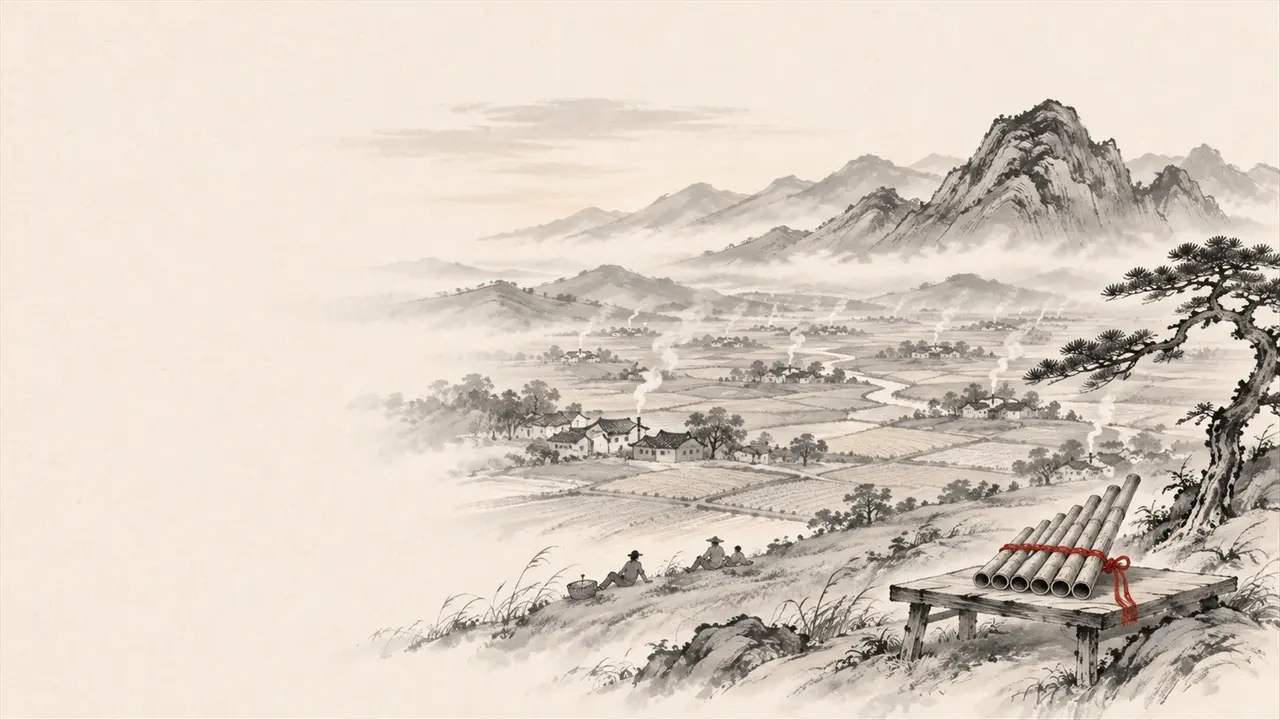
「鶏鳴き狗吠え、煙火万里」(戦をやめた文帝の太平) 鳴鷄吠狗,煙火萬里
音律と兵、そして暦をつなげて説く書。王が法や度量を定めるもとは六律(音の高さの基準)であり、とくに兵では「敵を望んで吉凶を知り、声を聞いて勝敗を占う」とされた。司馬遷は、兵は聖人が強暴を討ち乱世を平らげるためのものだとし、「家に教えのむちがなくてはならないように、天下に討伐がなくてはならない」と論じる。しかし桀・紂や秦の二世は、武力を誇って足ることを知らずに滅んだ。高祖は天下を取ると兵を休め、文帝は南越・朝鮮を討とうという将軍たちの意見を退けて、「兵は凶器だ」と匈奴とも和を結んだ。そのため民は田畑で休み、穀物は十銭あまりまで安くなり、「鶏が鳴き犬が吠え、炊事の煙が万里に続く」太平となった。後半は、八方の風と二十八宿、十二律と十二支を結びつけ、黄鐘の管の長さから音の数を割り出す方法を説く。
この巻のうち「「鶏鳴き狗吠え、煙火万里」(戦をやめた文帝の太平)」の場面を載せています。巻の全文ではありません。
音声
音声は合成音声です。
動画
節 1
原文
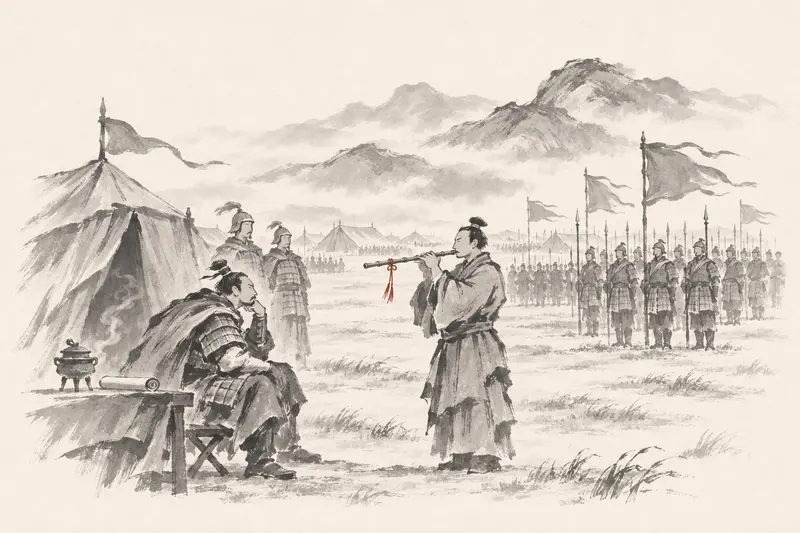
王者制事立法,物度軌則,壹禀於六律,六律爲萬事根本焉。其於兵械尤所重,故云「望敵知吉凶,聞聲效勝負」,百王不易之道也。武王伐紂,吹律聼聲,推孟春以至於季冬,殺氣相並,而音尚宮。同聲相從,物之自然,何足怪哉?
書き下し文
王者事を制し法を立て、物度軌則、壹に六律に禀く。六律は万事の根本為り。其の兵械に於いて尤も重んずる所なり。故に「敵を望みて吉凶を知り、声を聞きて勝負を効す」と云う。百王易えざるの道なり。武王紂を伐つに、律を吹きて声を聴き、孟春を推して以て季冬に至るまで、殺気相並びて、音宮を尚ぶ。同声相従うは、物の自然なり。何ぞ怪しむに足らんや。
現代語訳
王が物事を定め法を立てるとき、ものの度量や決まりは、すべて六律(音の高さの基準)に基づく。六律は万事の根本である。とりわけ兵ではこれを重んじる。だから「敵を望み見て吉凶を知り、声を聞いて勝ち負けを占う」と言われ、これは歴代の王が変えなかった道である。周の武王が殷の紂を討ったとき、律管を吹いて音を聞き、正月から十二月までを推しはかると、殺気がそろって現れ、音は宮(五音の主音)をたっとんだ。同じ声どうしが呼び合うのは、ものの自然である。何も不思議なことはない。
英訳
When a king settles affairs and lays down laws, every measure and rule is drawn from the six pitch standards; the six pitches are the root of all things. Above all they matter in war. So it is said: "Watching the enemy one knows good or ill; hearing the sound one foretells victory or defeat." This is a way no king has ever changed. When King Wu attacked Zhou of Shang, he blew the pitch pipes and listened to the sound; reckoning from the first month of spring to the last month of winter, the air of slaughter gathered, and the sound favoured gong, the ruling note. That like sounds answer one another is the nature of things. What is strange in that?
解説(日)
- 律: 竹の管の長さで決めた音の高さの基準。十二律のうち陽の六つを六律という。
- 宮: 宮・商・角・徴・羽の五音の中心となる音。
- 同声相従う: 『易』の「同声相応ず」をふまえる。
解説(英)
- Pitch standards (律): pitches fixed by the length of bamboo pipes; the six "yang" pitches of the twelve are called the six pitches.
- Gong (宮): the central note of the five-note scale gong, shang, jue, zhi, yu.
- Like sounds answer one another: echoing the Book of Changes.
英語の語注
- pitch/pɪtʃ/noun
how high or low a musical sound is
本文では: “the six pitch standards”
似た語と違い: tone — a musical sound · note — a single sound in music
- foretell/fɔːrˈtɛl/verb
to say what will happen in the future
本文では: “one foretells victory or defeat”
似た語と違い: predict — say in advance · prophesy — foretell by divine help
節 2
原文
兵者,聖人所以討彊暴,平亂世,夷險阻,救危殆。自含齿戴角之獸見犯則校,而況於人懷好惡喜怒之氣?喜則愛心生,怒則毒螫加,情性之理也。昔黃帝有涿鹿之戰,以定火災;顓頊有共工之陳,以平水害;成湯有南巣之伐,以殄夏亂。遞興遞廢,勝者用事,所受於天也。
書き下し文
兵は、聖人の彊暴を討ち、乱世を平らげ、険阻を夷げ、危殆を救う所以なり。歯を含み角を戴くの獣すら犯さるれば則ち校う。而るを況んや人の好悪喜怒の気を懐くに於いてをや。喜べば則ち愛心生じ、怒れば則ち毒螫加わる。情性の理なり。昔黄帝涿鹿の戦い有りて、以て火災を定め、顓頊共工の陳有りて、以て水害を平らげ、成湯南巣の伐有りて、以て夏の乱を殄す。逓いに興り逓いに廃れ、勝つ者事を用う。天に受くる所なり。
現代語訳
兵とは、聖人が強く乱暴な者を討ち、乱れた世を平らげ、険しい所をならし、危うい者を救うためのものである。歯や角を持つ獣でさえ、攻められれば立ち向かう。まして好き嫌いや喜怒の心を持つ人間ならなおさらである。喜べば愛する心が生まれ、怒れば毒針で刺すように攻める。これが人の性情の道理である。昔、黄帝には涿鹿の戦いがあって火の災いを鎮め、顓頊は共工と陣を構えて水の害を平らげ、殷の湯王は南巣を討って夏の乱を絶った。王朝はかわるがわる興り、かわるがわる廃れ、勝った者が政治をとる。これは天から受けたものである。
英訳
Arms are what sages use to punish the strong and violent, calm a disordered age, level dangerous places and rescue those in peril. Even beasts with teeth and horns fight back when attacked; how much more will men, who carry within them likes and dislikes, joy and anger? In joy, love is born; in anger, the sting strikes. That is the reason of human nature. Long ago the Yellow Emperor fought at Zhuolu to put down the disaster of fire; Zhuanxu drew up his ranks against Gonggong to quell the disaster of water; Tang the Accomplished attacked Nanchao to end the disorder of Xia. Dynasties rise and fall in turn, and the victor governs: this is what he receives from Heaven.
解説(日)
- 涿鹿の戦い: 黄帝が炎帝・蚩尤と戦ったとされる戦い(001-five-emperors の章)。
- 共工: 顓頊と争い、怒って不周山に頭を打ちつけて天柱を折ったとされる神。
- 南巣: 湯王に敗れた夏の桀が逃れた地。
解説(英)
- Zhuolu: where the Yellow Emperor is said to have fought the Fiery Emperor and Chiyou (chapter 001).
- Gonggong: the god said to have fought Zhuanxu and, in rage, broken a pillar of Heaven against Mount Buzhou.
- Nanchao: where Jie of Xia fled after his defeat by Tang.
英語の語注
- peril/ˈpɛrəl/noun
serious danger
本文では: “rescue those in peril”
似た語と違い: danger — risk of harm · jeopardy — danger of loss
- dynasty/ˈdaɪnəsti/noun
a line of rulers from the same family
本文では: “Dynasties rise and fall in turn”
似た語と違い: house — a royal family · line — a family succession
節 3
原文
自是之後,名士迭興,晉用咎犯,呉用孫武,申明軍約,賞罰必信,卒伯諸侯,兼列邦土,雖不及三代之誥誓,然身寵君尊,當世顯揚,可不謂榮焉?豈與世儒闇於大較,不權輕重,猥云德化,不當用兵,大至君辱失守,小乃侵犯削弱,遂執不移等哉!故教笞不可廢於家,刑罰不可捐於國,誅伐不可偃於天下,用之有巧拙,行之有逆順耳。
書き下し文
是れより後、名士迭いに興る。晋咎犯を用い、呉孫武を用う。軍約を申明し、賞罰必ず信なり。卒に諸侯に伯たり、邦土を兼ね列す。三代の誥誓に及ばずと雖も、然れども身寵せられ君尊く、当世に顕揚す。栄と謂わざるべけんや。豈に世儒の大較に闇く、軽重を権らず、猥りに徳化を云いて、兵を用うるに当たらずとし、大は君辱められ守りを失い、小は乃ち侵犯せられ削弱せらるるに至るも、遂に執りて移さざる等ならんや。故に教笞は家に廃すべからず、刑罰は国に捐つべからず、誅伐は天下に偃むべからず。之を用うるに巧拙有り、之を行うに逆順有るのみ。
現代語訳
それからのち、名のある人物がかわるがわる現れた。晋は咎犯(狐偃)を用い、呉は孫武を用いた。軍の決まりをはっきりさせ、賞罰を必ず約束どおりに行ったので、ついに諸侯の覇者となり、領土を合わせ広げた。夏・殷・周の三代の王の誓いの言葉には及ばないとしても、身は重んじられ、主君は尊ばれ、その時代に名をあげた。栄誉と言わずにいられようか。それにくらべて、世の儒者は大筋に暗く、物事の軽重をはからず、むやみに徳で人を導くことばかりを言い、兵を用いるべきではないと言う。そのために、大きくは君主が辱められて国を守れず、小さくは攻めこまれて領土を削られても、なお自説にこだわって改めない。そんなものと同じにできようか。だから、教えのむちは家に欠かせず、刑罰は国に捨てられず、討伐は天下からなくせない。ただ、その使い方に上手下手があり、行い方に道理にかなうものと背くものがあるだけである。
英訳
After that, famous men arose one after another. Jin employed Jiu Fan and Wu employed Sun Wu; they made the rules of the army clear and kept rewards and punishments without fail, and in the end became overlords of the lords and joined new lands to their own. Though they did not match the solemn oaths of the Three Dynasties, they were honoured in person, their lords were exalted, and their names shone in their time. Can that not be called glory? How unlike the scholars of the age, who are blind to the great outline and cannot weigh what matters, who babble about transforming people by virtue and say arms should never be used — and who, when at worst their lord is humiliated and his state lost, and at least it is invaded and cut down, still cling to their view and will not change! So the teaching rod cannot be given up in the household, punishment cannot be thrown away in the state, and punitive war cannot be laid down in the realm. It is only that some use them skilfully and some clumsily, some in accord with reason and some against it.
解説(日)
- 咎犯: 狐偃。晋の文公(重耳)の亡命に従った舅(039-chong-er の章)。
- 孫武: 『孫子』の兵法で知られる呉の将(065-sunzi の章)。
- 世儒: 戦を否定する当時の儒者たち。司馬遷はここで、兵を必要なものとして弁護している。
解説(英)
- Jiu Fan: Hu Yan, uncle of Duke Wen of Jin, who followed him into exile (chapter 039).
- Sun Wu: the general of Wu known for The Art of War (chapter 065).
- The scholars of the age: Confucians who rejected war; here Sima Qian defends arms as a necessity.
英語の語注
- overlord/ˈoʊvərlɔːrd/noun
a ruler who has power over other rulers
本文では: “became overlords of the lords”
似た語と違い: suzerain — a ruler over vassals · master — one in control
- babble/ˈbæbəl/verb
to talk a lot in a silly way
本文では: “who babble about transforming people by virtue”
似た語と違い: prattle — talk foolishly · ramble — talk without focus
節 4
原文
夏桀、殷紂手搏豺狼,足追四馬,勇非微也;百戰克勝,諸侯懾服,權非輕也。秦二世宿軍無用之地,連兵於邊陲,力非弱也;結怨匈奴,絓禍於越,勢非寡也。及其威盡勢極,閭巷之人爲敵國,咎生窮武之不知足,甘得之心不息也。髙祖有天下,三邊外畔;大國之王雖稱蕃輔,臣節未盡。會髙祖厭苦軍事,亦有蕭、張之謀,故偃武一休息,羈縻不備。
書き下し文
夏の桀・殷の紂は手ずから豺狼を搏ち、足は四馬を追う。勇微なるに非ざるなり。百戦して克ち勝ち、諸侯懾れ服す。権軽きに非ざるなり。秦の二世は軍を無用の地に宿し、兵を辺陲に連ぬ。力弱きに非ざるなり。怨みを匈奴に結び、禍いを越に絓く。勢寡なきに非ざるなり。其の威尽き勢極まるに及び、閭巷の人敵国と為る。咎は武を窮めて足るを知らず、得るを甘しとするの心息まざるに生ず。高祖天下を有ち、三辺外に畔く。大国の王蕃輔と称すと雖も、臣節未だ尽くさず。会々高祖軍事を厭苦し、亦た蕭・張の謀有り。故に武を偃せて一たび休息し、羈縻して備えず。
現代語訳
夏の桀や殷の紂は、素手で山犬や狼と組み打ちし、四頭立ての馬車に走って追いつくほどで、勇気が乏しかったわけではない。百戦して勝ち、諸侯を恐れ従わせたのだから、権勢が軽かったわけでもない。秦の二世は役に立たない土地に軍をとどめ、国境に兵を並べたのだから、力が弱かったわけではない。匈奴と恨みを結び、越とも災いを起こしたのだから、勢いが少なかったわけでもない。それなのに威勢が尽き、勢いが極まると、村の路地の人々までが敵国となった。その災いは、武力をとことん使って足ることを知らず、手に入れることを喜ぶ心がやまなかったことから生じたのである。高祖が天下を取ったとき、三方の国境では外の者が背き、大国の王たちも漢を支える藩屏と名のりながら、臣下としての節をつくしてはいなかった。ちょうど高祖も戦に疲れきっており、蕭何・張良のはかりごともあったので、武器を伏せていったん休み、ゆるやかにつなぎとめるだけで、備えを固めなかった。
英訳
Jie of Xia and Zhou of Shang fought jackals and wolves with their bare hands and could run down a four-horse team: their courage was not small. They won a hundred battles and made the lords tremble and submit: their power was not slight. The Second Emperor of Qin kept armies in useless lands and lined his frontiers with troops: his strength was not weak. He made enemies of the Xiongnu and brought trouble on himself in Yue: his might was not meagre. Yet when their authority was spent and their power had reached its height, the people of the village lanes became enemy states. The fault came from pushing arms to the limit without knowing when to stop, from a hunger for gain that never rested. When Gaozu won the realm, the three frontiers were in revolt beyond the border, and the kings of the great states, though they called themselves the bulwarks of Han, did not yet fully behave as subjects. But Gaozu was weary and sick of war, and he had the counsel of Xiao He and Zhang Liang, so he laid down his arms to rest for a time, kept the outsiders loosely in hand and did not prepare for war.
解説(日)
- 閭巷の人: 村や町の路地に住むふつうの民。陳勝・呉広のような者を指す。
- 羈縻: 馬や牛をつなぎとめるように、ゆるやかに支配すること。
- 蕭・張: 蕭何と張良。
解説(英)
- People of the village lanes (閭巷之人): ordinary folk, such as Chen Sheng and Wu Guang.
- Keeping loosely in hand (羈縻): a light rein, as on a tethered horse.
- Xiao and Zhang: Xiao He and Zhang Liang.
英語の語注
- meagre/ˈmiːɡər/adjective
small in amount; not enough
本文では: “his might was not meagre”
似た語と違い: scant — barely enough · slight — small
British spelling meagre; American meager.
- revolt/rɪˈvoʊlt/noun
an attempt to overthrow a ruler
本文では: “the three frontiers were in revolt”
似た語と違い: rebellion — armed resistance · uprising — a revolt by people
節 5
原文
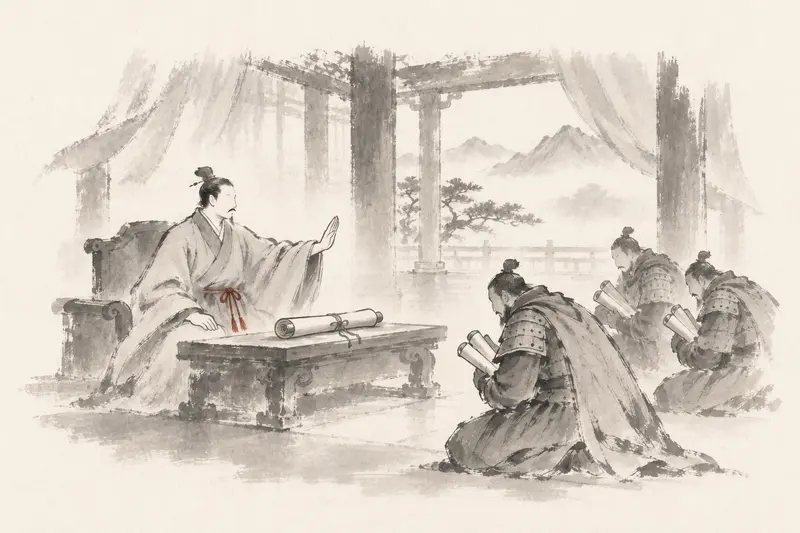
歴至孝文即位,將軍陳武等議曰:「南越、朝鮮髙祖時天下新定,人民小安,未可復興兵。今陛下仁惠撫百姓,恩澤加海内,宜及士民樂用,征討逆黨,以一封疆。」孝文曰:「朕能任衣冠,念不到此。會呂氏之亂,功臣宗室共不羞恥,誤居正位,常戰戰慄慄,恐事之不終。且兵凶器,雖克所原,動亦秏病,謂百姓遠方何?又先帝知勞民不可煩,故不以爲意。朕豈自謂能?今匈奴内侵,軍吏無功,邊民父子荷兵日久,朕常爲動心傷痛,無日忘之。今未能銷距,原且堅邊設候,結和通使,休寧北陲,爲功多矣。且無議軍。」故百姓無内外之繇,得息肩於田畝,天下殷富,粟至十餘錢,鳴鷄吠狗,煙火萬里,可謂和樂者乎!
書き下し文
歴して孝文の即位に至り、将軍陳武等議して曰く、「南越・朝鮮は高祖の時天下新たに定まり、人民小しく安んずるも、未だ復た兵を興すべからず。今陛下仁恵もて百姓を撫し、恩沢海内に加わる。宜しく士民の楽しみて用いらるるに及びて、逆党を征討し、以て封疆を一にすべし」と。孝文曰く、「朕衣冠を任うに能うのみ。念い此に到らず。会々呂氏の乱、功臣宗室共に羞恥とせず、誤りて正位に居る。常に戦戦慄慄として、事の終わらざるを恐る。且つ兵は凶器なり。原う所に克つと雖も、動けば亦た秏病す。百姓遠方を何と謂わん。又た先帝民を労するは煩わすべからざるを知る。故に以て意と為さず。朕豈に自ら能くすと謂わんや。今匈奴内に侵し、軍吏功無く、辺民の父子兵を荷うこと日久し。朕常に為に心を動かし傷痛し、日として之を忘るる無し。今未だ銷距すること能わず。原わくは且く辺を堅くし候を設け、和を結び使いを通じ、北陲を休寧せば、功を為すこと多からん。且く軍を議すること無かれ」と。故に百姓内外の繇無く、肩を田畝に息むるを得たり。天下殷富にして、粟十余銭に至る。鳴鶏吠狗、煙火万里、和楽なる者と謂うべきか。
現代語訳
文帝が即位すると、将軍の陳武らが相談して言った。「南越と朝鮮は、高祖の時代には天下が定まったばかりで、民もようやく少し落ち着いたところでしたから、また兵を起こすことはできませんでした。いま陛下は情け深く民をいつくしみ、恵みは天下に行きわたっています。兵も民も喜んで働くいまのうちに、逆らう者たちを討ち、国境を一つにすべきです」。文帝は言った。「わたしは衣冠をつけて位にいることができるだけで、そこまでは考えが及ばない。ちょうど呂氏の乱があり、功臣と皇族がわたしを恥とせず推してくれたので、まちがって正しい位についた。いつもおそれおののいて、全うできないのではないかと心配している。それに兵は凶器だ。望むとおりに勝っても、動けばやはり損なわれ疲れる。遠い地の民に何と言えばよいのか。また先帝も、民を苦しめてはならないと知っていたから、それを気にかけなかったのだ。わたしにどうしてできようか。いま匈奴が国内に攻め入り、軍の役人は手柄がなく、国境の民の父や子は長いあいだ武器を担いでいる。わたしはいつもそのために心を痛め、一日も忘れたことがない。いまはまだ匈奴を退けることができない。しばらくは国境を固めて見張りを置き、和を結んで使いを通わせ、北の国境を落ち着かせたい。それだけでも大きな手柄になろう。しばらく戦の相談はするな」。そのため民は国の内でも外でも労役がなく、田畑で肩を休めることができた。天下は豊かになり、穀物は一石十銭あまりにまで安くなった。鶏が鳴き、犬が吠え、炊事の煙が万里にわたって立ちのぼる。これこそ和やかで楽しい世と言えるのではないか。
英訳
When in due course Emperor Wen came to the throne, the general Chen Wu and others proposed: "In Gaozu's time Southern Yue and Chaoxian could not be attacked again, for the realm had only just been settled and the people had barely found some peace. Now Your Majesty's kindness comforts the people and your bounty reaches all within the seas. While officers and people are glad to serve, you should punish the rebels and bring the borders under one rule." Emperor Wen said: "I am fit only to wear robe and cap; my thoughts do not reach so far. When the Lü clan rose in disorder, the meritorious ministers and the imperial clan were not ashamed to choose me, and I came by mistake to the rightful throne. I am always fearful and trembling, afraid I shall not see it through. Besides, arms are instruments of ill omen. Even if we win what we wish, to move is to waste and wear ourselves out — and what would the people of far places say? The late emperor, too, knew that the people must not be troubled with labour, so he paid it no mind. How could I claim to do better? Now the Xiongnu invade our land, our officers win no merit, and fathers and sons on the frontier have carried arms for a long time. My heart always aches for them; not a day goes by that I forget it. Since we cannot yet drive the enemy off, I wish for now to strengthen the frontier, set up watch posts, make peace and exchange envoys, and bring quiet to the northern border. That will be merit enough. Let there be no more talk of war for now." So the people had no labour service at home or abroad, and could rest their shoulders in their fields. The realm grew rich, and grain fell to a dozen cash or so. Cocks crowed and dogs barked, and kitchen smoke rose for ten thousand li. Could that not be called harmony and joy?
解説(日)
- 陳武: 柴武。韓王信を討った将(093-lu-wan の章)。
- 兵は凶器なり: 『老子』などに見える考え方。
- 鳴鶏吠狗、煙火万里: 鶏や犬の声が聞こえ、炊事の煙が遠くまで続く。人が多く暮らし、平和なようす。
解説(英)
- Chen Wu: Chai Wu, the general who killed King Han Xin (chapter 093).
- Arms are instruments of ill omen (兵凶器): an idea found in the Laozi and elsewhere.
- Cocks crowing, dogs barking, smoke for ten thousand li: a land thickly settled and at peace.
この節から生まれた言葉: 兵は凶器なり
英語の語注
- omen/ˈoʊmən/noun
a sign of what will happen
本文では: “arms are instruments of ill omen”
似た語と違い: sign — a mark of what is coming · portent — a sign of something big
- bounty/ˈbaʊnti/noun
generous giving
本文では: “your bounty reaches all within the seas”
似た語と違い: generosity — readiness to give · kindness — being kind
節 6
原文
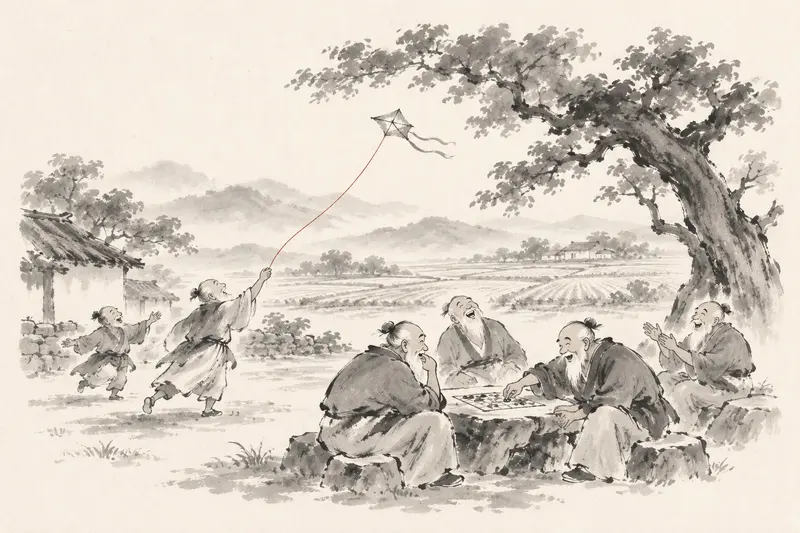
太史公曰:文帝時,會天下新去湯火,人民樂業,因其欲然,能不擾亂,故百姓遂安。自年六七十翁亦未嘗至市井,遊敖嬉戲如小兒狀。孔子所稱有德君子者邪!
書き下し文
太史公曰く、文帝の時、会々天下新たに湯火を去り、人民業を楽しむ。其の欲する然るに因り、能く擾乱せず。故に百姓遂に安んず。年六七十の翁より亦た未だ嘗て市井に至らず、遊敖嬉戯すること小児の状の如し。孔子の称する所の有徳の君子なるか。
現代語訳
太史公は言う。文帝の時代は、ちょうど天下が戦火の苦しみから抜け出したばかりで、民は自分の仕事を楽しんでいた。文帝は民の望むところに従い、かき乱さなかったので、民はとうとう安らかになった。六、七十歳の老人でも、市場へ出かけたこともなく、子どものように遊び楽しんでいた。文帝こそ、孔子の言う徳のある君子ではないだろうか。
英訳
The Grand Historian says: In Emperor Wen's time, the realm had just escaped from boiling water and fire, and the people took joy in their work. He followed what they wished and did not disturb them, and so the people at last found peace. Old men of sixty or seventy had never had to go to the market towns, and played and amused themselves like little children. Was he not the man of virtue that Confucius praised?
解説(日)
- 湯火: 熱湯と火。戦乱の苦しみのたとえ。
- 市井に至らず: 物を売り買いしに町へ出る必要もないほど、村の暮らしが満ち足りていたこと。
解説(英)
- Boiling water and fire (湯火): the sufferings of war.
- Never going to the market towns: village life was so well provided that there was no need.
英語の語注
- amuse/əˈmjuːz/verb
to make time pass pleasantly
本文では: “played and amused themselves”
似た語と違い: entertain — give enjoyment · divert — turn the mind to fun
- disturb/dɪˈstɜːrb/verb
to interrupt or upset someone
本文では: “did not disturb them”
似た語と違い: bother — trouble · unsettle — make uneasy
節 7
原文
《書》曰:「七正」,二十八舍。律暦,天所以通五行八正之氣,舍者,日月所舍。舍者,舒氣也。廣莫風居北方。廣莫者,言陽氣在下,陰莫陽廣大也,故曰:廣莫。東至於虚。虚者,能實能虚,言陽氣冬則宛藏於虚,言萬物變動其所,陰陽氣未相離,尚相胥也,故曰:須女。十一月也,律中黃鐘。黃鐘者,陽氣踵黃泉而出也。其於十二子爲子。子者,滋也;滋者,言萬物滋於下也。其於十母爲壬癸。壬之爲言任也,言陽氣任養萬物於下也。癸之爲言揆也,言萬物可揆度,故曰:癸。東至牽牛。牽牛者,言陽氣牽引萬物出之也。牛者,冒也,言地雖凍,能冒而生也。牛者,耕植種萬物也。東至於建星。建星者,建諸生也。十二月也,律中大呂。大呂者。其於十二子爲丑。
書き下し文
書に曰く、「七正」と。二十八舎なり。律暦は、天の五行八正の気を通ずる所以なり。舎は、日月の舎る所なり。舎は、気を舒ぶるなり。広莫風は北方に居る。広莫とは、陽気下に在り、陰陽に莫きこと広大なるを言うなり。故に広莫と曰う。東して虚に至る。虚とは、能く実し能く虚しきなり。陽気冬は則ち宛藏して虚に於いてし、万物其の所を変動し、陰陽の気未だ相離れず、尚お相胥つを言うなり。故に須女と曰う。十一月なり。律は黄鐘に中る。黄鐘とは、陽気黄泉を踵みて出づるなり。其の十二子に於けるや子と為す。子とは、滋るなり。滋るとは、万物の下に滋るを言うなり。
現代語訳
『書経』に「七正」とあるのは、二十八舎(二十八宿)のことである。律と暦は、天が五行と八方の気を通わせるためのものである。舎とは、太陽と月が宿るところで、気をのびのびと広げる場所である。広莫風は北にある。広莫とは、陽の気が地の下にあり、陰が陽よりずっと広く大きいことをいう。だから広莫という。東へ行くと虚(宿)に至る。虚とは、満ちることも空になることもできるという意味で、陽の気が冬には虚の中に深くしまわれ、万物はその居場所を変えるが、陰と陽の気はまだ離れず、互いに待ち合っていることをいう。だから須女ともいう。これは十一月で、律は黄鐘にあたる。黄鐘とは、陽の気が地下の黄泉を踏んで出てくることである。十二支では子にあたる。子とは滋(しげる)で、万物が地の下で育ち始めることをいう。
英訳
The Book of Documents speaks of "the Seven Regulators" — the twenty-eight lodges. The pitches and the calendar are how Heaven makes the breaths of the Five Phases and the Eight Directions flow. A lodge is where the sun and moon stay; to lodge is to let the breath unfold. The Wind of Broad Desert dwells in the north. "Broad desert" means that the yang breath lies below, and the yin, not the yang, is broad and great; so it is called Broad Desert. Eastward it reaches Void. Void means able to be full and able to be empty: in winter the yang breath lies coiled and hidden in emptiness, all things shift from their places, and yin and yang have not yet parted but still wait on each other; so it is also called the Serving Maid. This is the eleventh month, and its pitch is the Yellow Bell. The Yellow Bell is the yang breath treading the Yellow Springs and coming forth. Among the twelve branches it is zi. Zi means to grow: all things begin to grow below the earth.
解説(日)
- 二十八舎: 天の赤道に沿って並ぶ二十八の星座。月が一日ずつ宿るとされた。
- 八方の風: 書は八つの方角の風を順に説き、それぞれに宿・月・律・十二支を割り当てる。ここではその一つ、北の広莫風だけを載せた。
- 黄鐘: 十二律の基本の音。冬至の月(十一月)にあたる。
- 原文のこの部分には欠けた字が多く、意味のとりにくい所がある。
解説(英)
- The twenty-eight lodges: constellations along the celestial equator, where the moon was said to stay one night each.
- The eight winds: the treatise goes round the eight directions, giving each its lodges, months, pitches and branches; only the north wind is given here.
- Yellow Bell (黃鐘): the base pitch of the twelve, belonging to the month of the winter solstice.
- The original text of this part has many gaps and some obscure passages.
英語の語注
- lodge/lɒdʒ/noun
here, one of the 28 regions of the sky the moon passes through
本文では: “the twenty-eight lodges”
似た語と違い: mansion — a lunar station in astronomy · station — a resting place
節 8
原文
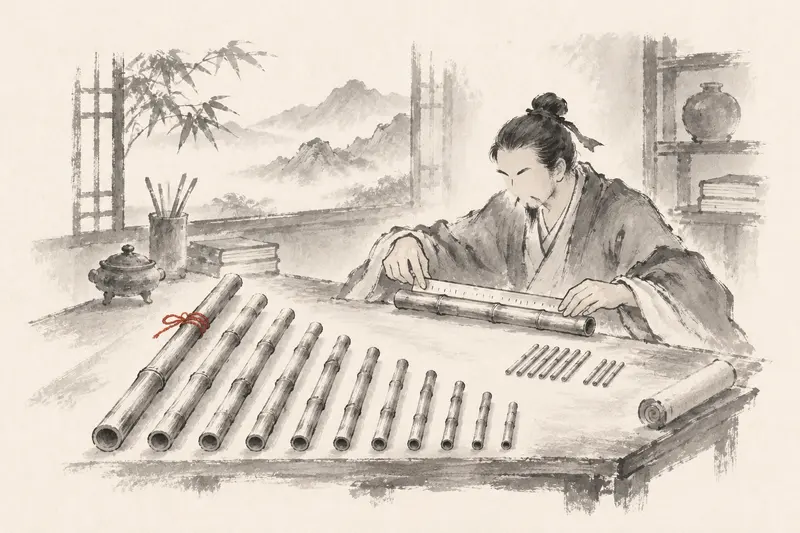
生黄鐘術曰:以下生者,倍其實,三其法。以上生者,四其實,三其法。上九,商八,羽七,角六,宮五,徴九。置一而九三之以爲法。實如法,得長一寸。凡得九寸,命曰:「黄鐘之宮」。故曰:音始於宮,窮於角;數始於一,終於十,成於三;氣始於冬至,周而复生。
書き下し文
黄鐘を生ずる術に曰く、下に生ずる者は、其の実を倍し、其の法を三にす。上に生ずる者は、其の実を四にし、其の法を三にす。上九、商八、羽七、角六、宮五、徴九。一を置きて九たび之を三にして以て法と為す。実法の如くなれば、長さ一寸を得。凡そ九寸を得て、命じて「黄鐘の宮」と曰う。故に曰く、音は宮に始まり、角に窮まる。数は一に始まり、十に終わり、三に成る。気は冬至に始まり、周りて復た生ず。
現代語訳
黄鐘を生み出す方法は次のとおりである。下に生じる(短い管をつくる)ときは、もとの数を二倍し、割る数を三とする。上に生じる(長い管をつくる)ときは、もとの数を四倍し、割る数を三とする。上は九、商は八、羽は七、角は六、宮は五、徴は九。一を置いて、三を九回かけたものを割る数とする。もとの数が割る数と等しければ、長さ一寸を得る。全部で九寸となるものを「黄鐘の宮」と名づける。だから、音は宮に始まって角に終わり、数は一に始まって十に終わり、三によって成り立ち、気は冬至に始まって、一めぐりしてまた生まれる、というのである。
英訳
The method for producing the Yellow Bell: to generate downward, double the dividend and make the divisor three; to generate upward, multiply the dividend by four and make the divisor three. Top nine, shang eight, yu seven, jue six, gong five, zhi nine. Set down one and multiply it by three nine times to make the divisor. When the dividend equals the divisor, one gets a length of one inch. Getting nine inches in all, one names it "the gong of the Yellow Bell". So it is said: the notes begin with gong and end with jue; numbers begin with one, end with ten and are completed by three; the breath begins at the winter solstice and comes round to be born again.
解説(日)
- 下に生じ、上に生ず: 管の長さを三分の二にする(三分損一)か、三分の四にする(三分益一)かをくり返して、十二の音を順に得る方法。
- 一を置きて九たび之を三にす: 三の九乗(一万九千六百八十三)を割る数とすること。
- 数は三に成る: 三分の計算で音が生まれることと、天・地・人の三をかけている。
解説(英)
- Generating downward and upward: taking two-thirds or four-thirds of a pipe's length in turn to obtain the twelve pitches one after another.
- Multiplying one by three nine times: making three to the ninth power (19,683) the divisor.
- Numbers completed by three: both the thirds of the calculation and the triad of Heaven, Earth and Man.
英語の語注
- solstice/ˈsɒlstɪs/noun
the shortest or longest day of the year
本文では: “the winter solstice”
似た語と違い: midwinter — the middle of winter · turning point — a time of change
- divisor/dɪˈvaɪzər/noun
the number you divide by
本文では: “make the divisor three”
似た語と違い: denominator — the bottom number of a fraction · factor — a number that divides another
節 9
原文
太史公曰:旋璣玉衡以齊七政,即天地二十八宿。十母,十二子,鐘律調自上古。建律運歴造日度,可據而度也。合符節,通道德,即從斯之謂也。
書き下し文
太史公曰く、旋璣玉衡以て七政を斉うとは、即ち天地二十八宿なり。十母、十二子、鐘律の調べは上古よりす。律を建て暦を運らし日度を造るは、拠りて度るべきなり。符節を合わせ、道徳を通ずとは、即ち斯れに従うの謂いなり。
現代語訳
太史公は言う。「璇璣玉衡(天を測る器)で七政をととのえる」というのは、天地の二十八宿のことである。十干・十二支や、鐘と律の調子は、大昔から定められてきた。律を立て、暦をめぐらし、日と天の度数を定めることは、これにもとづいて測ることができる。割符を合わせるように天と人を合わせ、道と徳に通じるというのは、まさにこれに従うことをいうのである。
英訳
The Grand Historian says: "Using the armillary sphere and the jade sighting tube to regulate the Seven Regulators" — that is, the twenty-eight lodges of Heaven and Earth. The ten stems, the twelve branches and the tuning of bells and pipes go back to high antiquity. Setting up the pitches, turning the calendar and fixing the degrees of the sun's course can all be measured from them. To match like the halves of a tally and to reach the Way and its virtue means just this: to follow them.
解説(日)
- 旋璣玉衡: 天体の動きを測る器。『書経』舜典の言葉。
- 十母・十二子: 十干と十二支。
- 司馬遷は太史令として暦を作る仕事にも関わり、太初暦の制定に加わった(130-taishigong の章)。
解説(英)
- Armillary sphere and jade sighting tube (旋璣玉衡): instruments for observing the heavens, from the Canon of Shun.
- Ten "mothers" and twelve "sons": the ten stems and twelve branches.
- As Grand Historian, Sima Qian also worked on the calendar and helped make the Taichu calendar (chapter 130).
英語の語注
- antiquity/ænˈtɪkwəti/noun
the distant past
本文では: “go back to high antiquity”
似た語と違い: ancient times — long ago · the past — times gone by